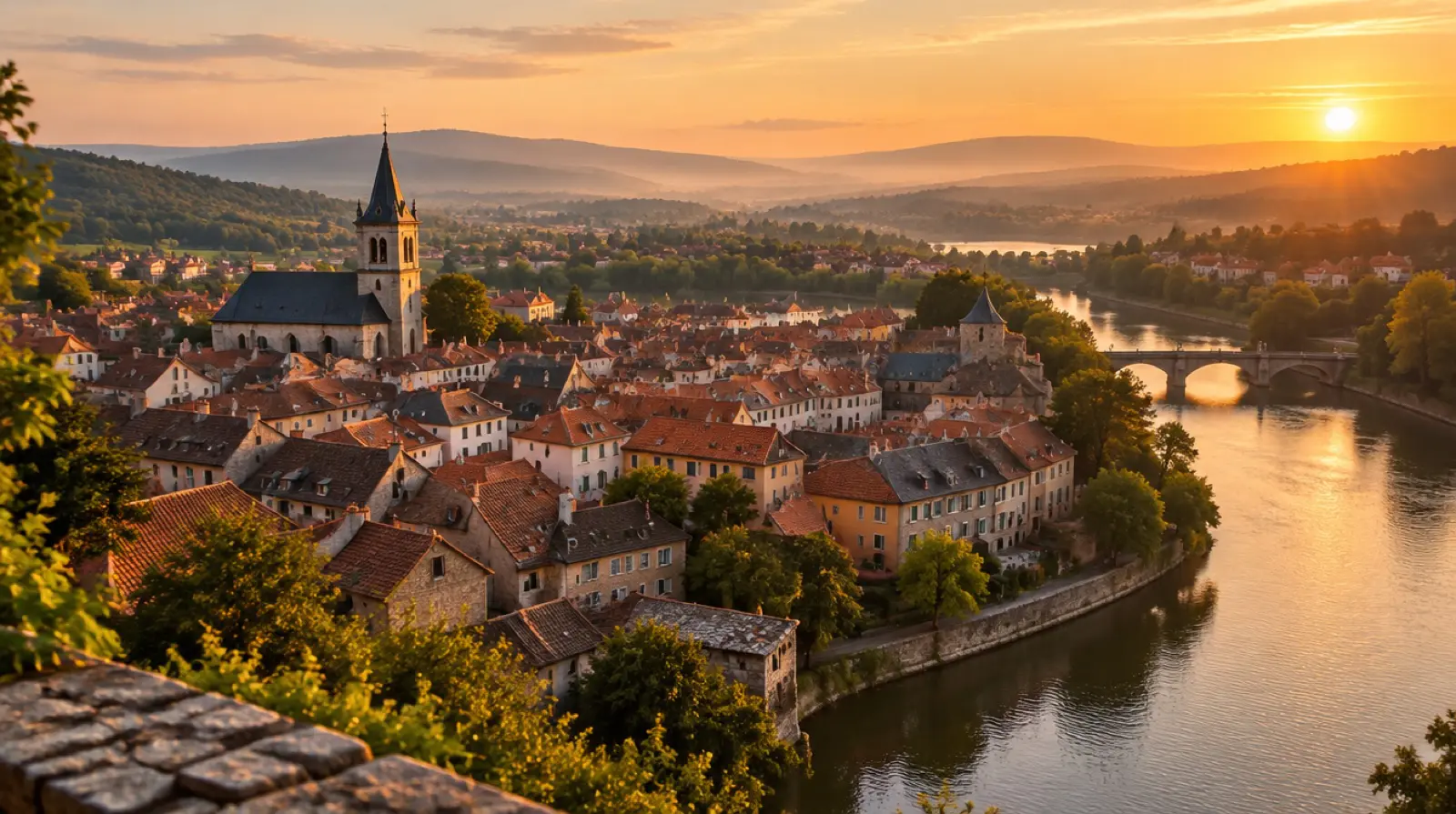
The best European cities for a 3 day city break are compact, with several serious cultural anchors inside a 20-minute walk and no clash between their weekly closing days. On that test, Amsterdam, Antwerp, Ghent, Trieste, Thessaloniki, Syracuse and Sarajevo rank highest in this guide. The ranking is editorial judgement, not data, and every opening pattern below needs checking before you book.
How we rank the best European cities for a 3 day city break
Fame is a poor guide to a short trip. A large capital can swallow three days in transit, while a mid-sized city with a tight core gives you more culture per hour. The ranking uses five criteria, each judged from public descriptions of the city and our own city guides.

- Walkable anchors: how many serious museums, churches or historic districts sit within a 20-minute walk of each other.
- Closing-day overlap: whether the main museums shut on the same weekday, which can wipe out a whole day.
- Airport-to-centre friction: how long it takes to reach the centre by train or bus, and how reliable it is.
- Pairing potential: whether each anchor has a market, waterfront or lively street next to it.
- Season tolerance: whether the plan survives rain, heat or short winter days.
Scores out of 10 are our own and approximate. They are meant to sort, not to measure.
Best European cities for a 3 day city break: the ranking table
Flight bands are typical short-haul times from a large north-west European airport, direct or with one short connection, and they are a rough guide only. Closing patterns are typical, not guaranteed. Verify each one for your dates.

| Rank | City | Anchors in walking range | Typical closing pattern | Flight band | Score |
|---|---|---|---|---|---|
| 1 | Amsterdam | Museum quarter plus canal belt | Major museums often open daily; smaller ones vary | Under 2 hours | 9 |
| 2 | Antwerp | Old centre, Rubens sites, fashion quarter | Monday is a common gap | Via Brussels or Amsterdam by train | 8.5 |
| 3 | Ghent | Cathedral and altarpiece, castle, canals | Monday is a common gap | Via Brussels by train | 8.5 |
| 4 | Trieste | Habsburg squares, literary cafes, waterfront | Varies by museum; check each | 2 to 3 hours, often with a connection | 8 |
| 5 | Thessaloniki | Byzantine and Ottoman sites, waterfront | Varies by site and season | 3 to 4 hours | 8 |
| 6 | Syracuse | Ortigia island, archaeological park | Regional sites often close one day | 3 to 4 hours plus a transfer | 7.5 |
| 7 | Sarajevo | Old town, Ottoman and Habsburg quarters | Varies; hours can be short | 2.5 to 4 hours | 7.5 |
Cities lower down are not worse places. They simply ask for more transport, or their anchors cluster less tightly. A three-day plan rewards tight clusters.
How to read the closing-day column
The closing pattern matters more than the score. If two anchors share a closing day, your trip has one dead day built in, and no amount of clever sequencing fixes it. If they close on different days, you can swap the order and keep every anchor.

A useful habit is to write the three days of your trip across the top of a page, then list each anchor under the days it is open. Anything that fits only one day gets that day. The rest fill the gaps. This takes ten minutes and removes the most common error in short-break planning. Where a city has no clear weekly pattern, as can be the case with seasonal sites, assume nothing and check the official page.
The flight band works the same way. A city 2 hours away with a 90-minute transfer is further than a city 3 hours away with a direct train into the centre. Count door to door, not wheels up to wheels down.
Seven cities, ranked for walkable culture
Each entry gives the anchor, the pairing and the one thing to check. Our linked city guides have the full time-blocked days.
1. Amsterdam
The museum quarter holds several major collections within a short walk, and the canal belt and the Jordaan sit a tram ride or a long walk away. It ranks first because the anchors are strong and the closing-day risk is low at the biggest venues. Book timed tickets, since slots sell out. If you only have one day, take the museum quarter in the morning and a canal-side walk in the afternoon. See the Amsterdam in 3 days guide.
2. Antwerp
Antwerp pairs Rubens-related sites with a fashion district and a working port, all within walking range of the central station and old centre. The pairing logic is strong, and the legs between blocks are short. The risk is the Monday gap. With one day, do the old centre and one Rubens-related stop, then end in the fashion quarter. The Antwerp in 2 days guide shows how to plan around it.
3. Ghent
Ghent is smaller and quieter than its neighbours. Its anchor is the cathedral with the Ghent Altarpiece, and the canals and student streets provide the pairing. Visit the altarpiece in a timed slot early in the day. With one day, that slot, a canal walk and an early dinner are enough. It is also an easy comparison with Bruges for readers who want fewer tour groups. See Ghent in 2 days.
4. Trieste
Trieste is a Habsburg port with large squares, literary cafes and a Karst edge on the hills behind. It is less crowded than other Italian cities and rewards slow café stops. Flights and trains are less direct than for the Belgian pair, so check connections. In one day, the main square, the waterfront and one café stop give the right flavour. The Trieste in 2 days guide covers the squares.
5. Thessaloniki
Byzantine churches, Ottoman buildings and a long waterfront promenade give the city three layers of history in a compact centre. The evening promenade makes a good closing block. If you only have one day, take one Byzantine site, one museum and the promenade at dusk. Greek sites keep their own seasonal hours, so check each one in winter. See Thessaloniki in 2 days.
6. Syracuse
The island of Ortigia is small enough to walk end to end in 20 minutes, and the Neapolis archaeological park sits a short ride away. The anchors are very strong, but the transfer from the nearest big airport adds time. Archaeological sites often have a weekly closing day and seasonal hours, so put the park on a day you have confirmed and walk Ortigia on the others. See Syracuse in 2 days.
7. Sarajevo
The old town compresses Ottoman and Habsburg layers into a few streets, and a chronological route works well. The city has a recent history of siege, and museums and memorials deal with it directly; allow time and go in a respectful frame of mind. Museum hours can be short, so verify them, and for one day, walk the old town in the morning and take one museum in the afternoon. Our own Sarajevo guide covers the route.
Common mistakes when picking a European city for 3 days
- Choosing by headline sight. A single famous museum does not make a three-day city.
- Counting the flight, not the transfer. A 2-hour flight plus 90 minutes in transfers is a 3.5-hour trip each way.
- Ignoring the season. In winter the light ends by about 4.30pm to 5pm in northern cities, which changes the plan.
- Booking low-cost flights at the wrong hours. A 6am departure means leaving the hotel at about 3.30am, and a late arrival costs your first evening.
An edge case: if a trip falls on a public holiday, the closing pattern changes in ways a weekly table does not capture. Treat holidays as separate checks.
What to verify before you rely on this ranking
This is an editorial ranking, built on the typical structure of each city. It will date. Before you book, confirm the following on official sources, and repeat the check a week before you fly.
- Weekly closing day for each anchor, and seasonal hours.
- Timed-ticket requirements for the biggest museums.
- Current flight and rail options, including strikes and engineering works.
- Public holidays and local events that may close or crowd venues.
We do not quote prices here. Airfares and entry fees change too often for a static page to be useful.
Where to go next
The linked city guides above hold the time-blocked days: morning anchor, midday pairing, free block and evening. Tirana is a natural next addition, strong on layered history and best treated as a two-day trip with a cautious eye on opening hours. If you are still undecided, pick the city whose main museum is open on the days you can travel, and let the rest follow.
FAQ about the best European cities for a 3 day city break
Which European city is best for a first 3 day city break?
Amsterdam is the safest first choice: short flights, strong anchors, and a compact centre. If you want fewer crowds, Ghent or Antwerp are easier by train. Choose based on the museums you most want to see, then check their closing days.
Which European cities are the cheapest for a 3 day city break?
Costs vary with season, flights and accommodation, so we do not name prices. As a rule, Balkan and southern European cities tend to be cheaper on the ground than Amsterdam, while flights depend on your departure airport. Compare total trip cost, not nightly rates.
How do I choose between two cities?
Compare the walking distance between anchors, the closing days of the main museums and the airport transfer time. The city with the tighter cluster and fewer clashes will give you more usable hours, even if the other is more famous.
Is 3 days too long for a small city?
For small cities such as Ghent or Trieste, two full days is often enough. Use a third day for a nearby excursion, a longer museum visit or a slower pace. Add days only if the cluster is strong enough to justify them.
When is the best time of year for a European city break?
Spring and autumn are usually the most comfortable for walking and have moderate crowds. Summer brings heat in southern cities and heavier crowds in the north. Winter has short days but fewer visitors. Check seasonal opening hours either way.