Why visit Tunisia
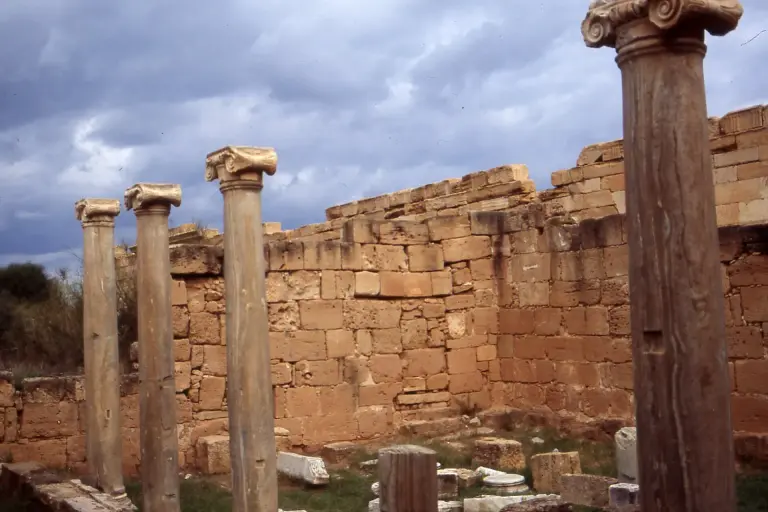
This Tunisia travel guide starts with the main appeal: a small country with an unusually deep and varied history. Carthage was a Phoenician power that rivalled Rome, and the Romans then left some of the best-preserved ruins in the Mediterranean at Dougga, El Jem and Bulla Regia. Kairouan became one of the holiest cities of Islam, and the old medina of Tunis is a UNESCO-listed maze of covered souks. The Wikipedia overview covers the wider story.
Tunisia also packs in 1,300 kilometres of coastline, Roman amphitheatres, pottery towns, olive groves and the northern edge of the Sahara, so a single trip can mix culture, beach and desert. It suits independent travellers, history enthusiasts, families who want sun, and visitors on a budget. It is less suited to travellers who dislike haggling or want fast, polished infrastructure outside the main tourist zones.
Best places to visit in Tunisia
The best places to visit in Tunisia are close enough for short hops by train, louage or car, so most visitors combine the capital, a Roman site and either the coast or the desert.
Tunis and Carthage
Tunis has a lively medina with covered souks around the Zitouna Mosque, plus the Bardo Museum with one of the world’s finest Roman mosaic collections. A light-rail line connects the city to Carthage, whose Punic and Roman remains, including the Antonine Baths, sit by the sea.
Sidi Bou Said
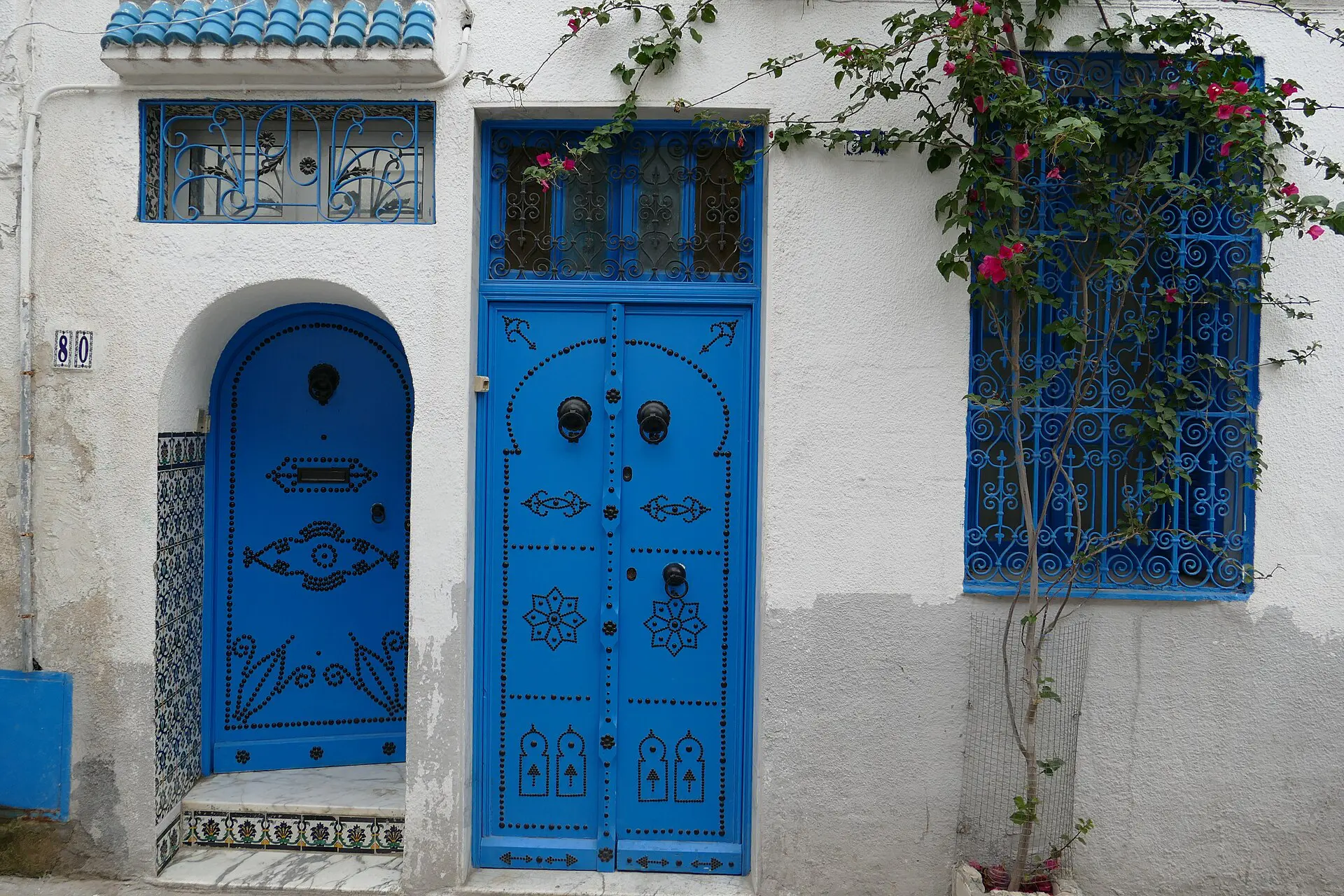
This blue-and-white hilltop village above the Gulf of Tunis is known for its narrow lanes and cafés. It is busiest at midday, so go early or late.
Kairouan
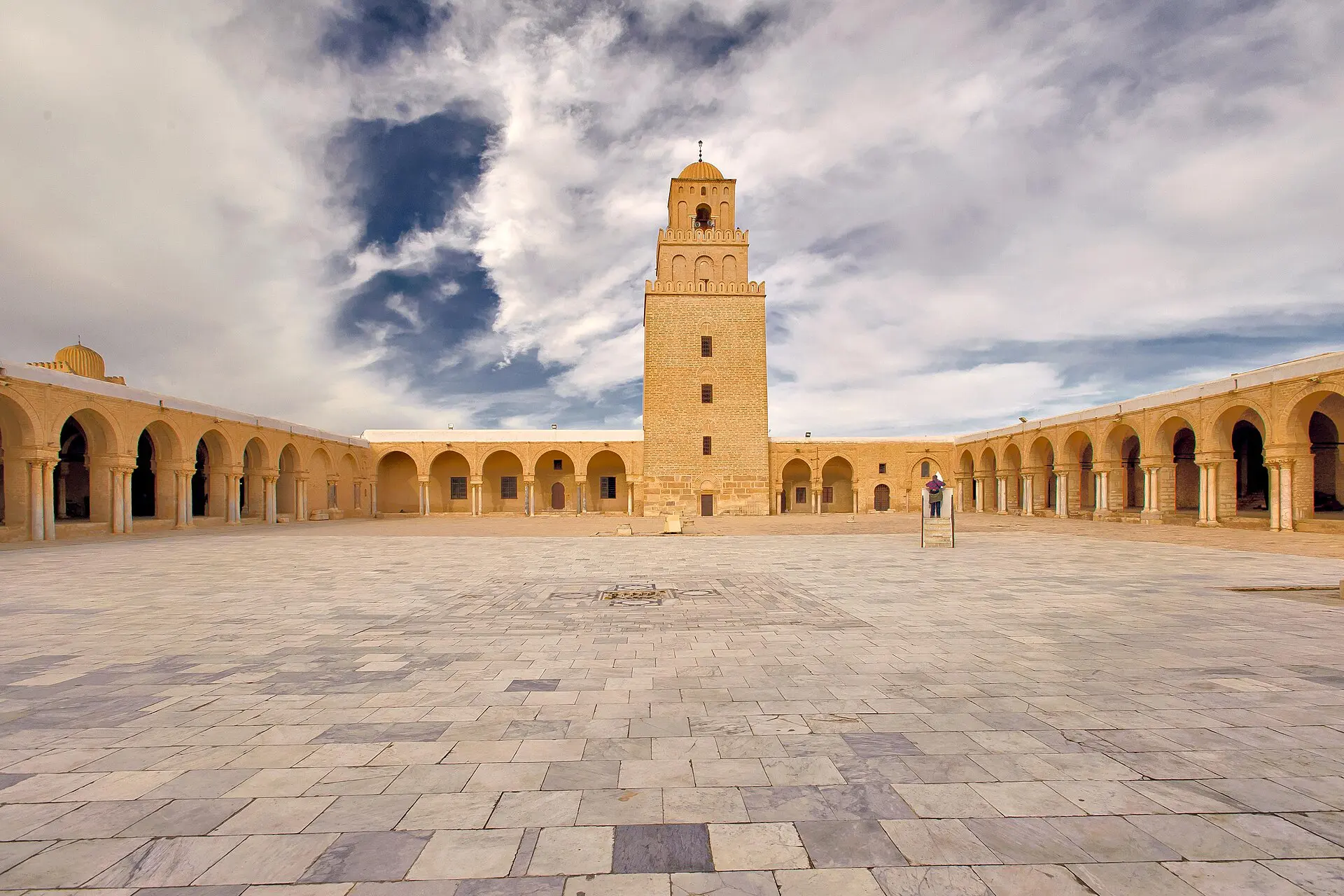
One of Islam’s holiest cities, Kairouan has the Great Mosque, among the oldest in North Africa, and a medina known for carpets. Dress modestly when you visit.
El Jem
The Roman amphitheatre here, built in the 3rd century, is one of the largest and best preserved in the world and can hold tens of thousands. It is easy to reach from Sousse by train or louage.
Djerba
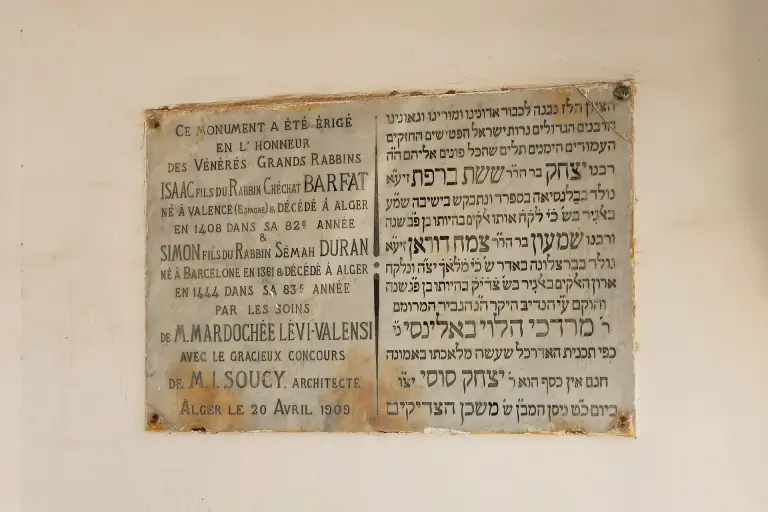
This island in the south offers long beaches, the El Ghriba synagogue, one of the oldest in North Africa, and the pottery town of Guellala.
Douz and the Sahara
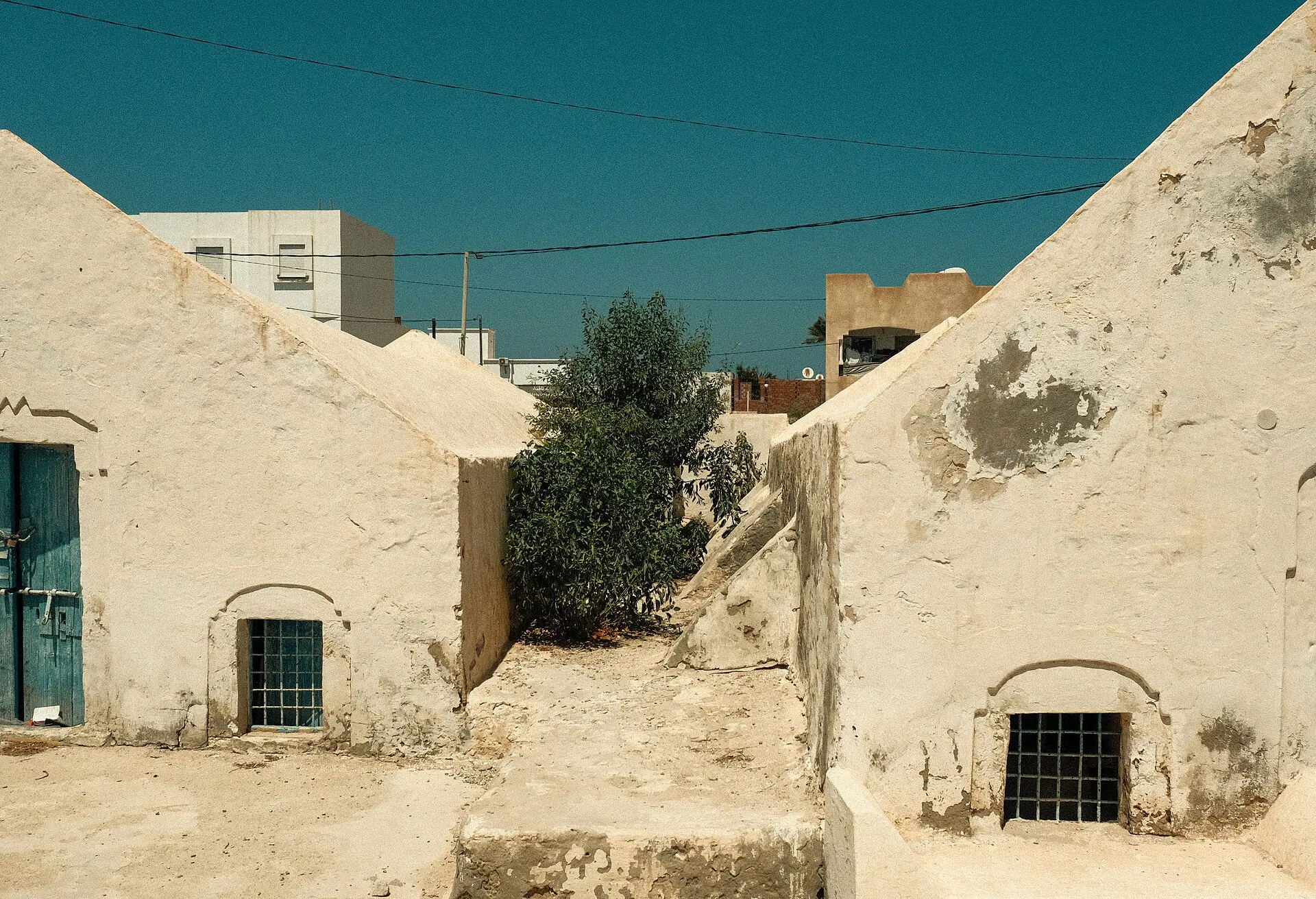
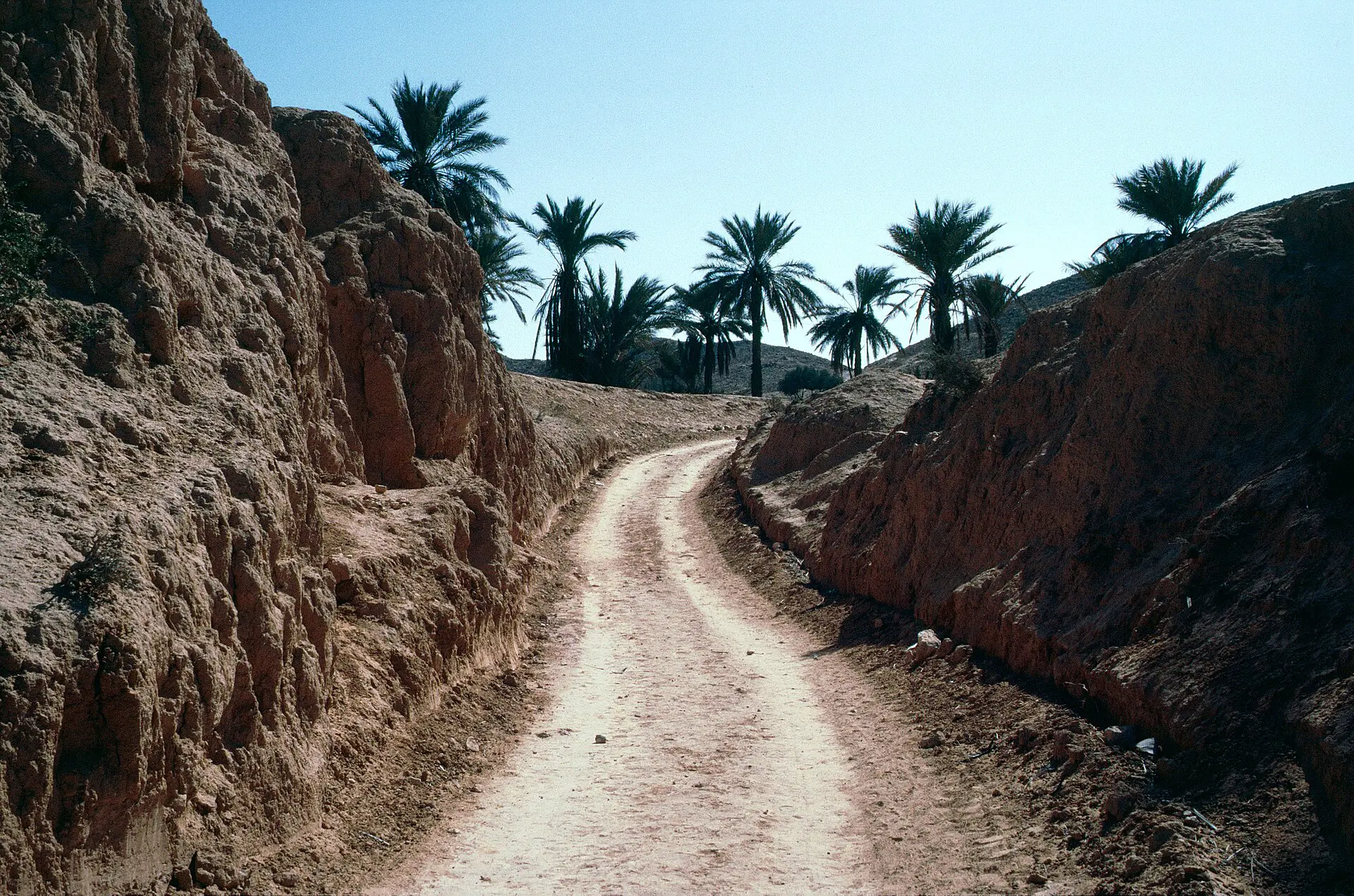
Douz is the gateway to the dunes, with camel treks and overnight camps. Nearby Matmata has underground Berber homes, famous from film sets.
Top things to do in Tunisia
The top things to do in Tunisia mix ancient sites, medinas and desert or coast days, and most fit into a short trip.
- See the Bardo Museum mosaics: the Roman collection includes room after room of floor mosaics from across the country.
- Walk the Carthage ruins: the Antonine Baths and Punic ports sit above the Mediterranean.
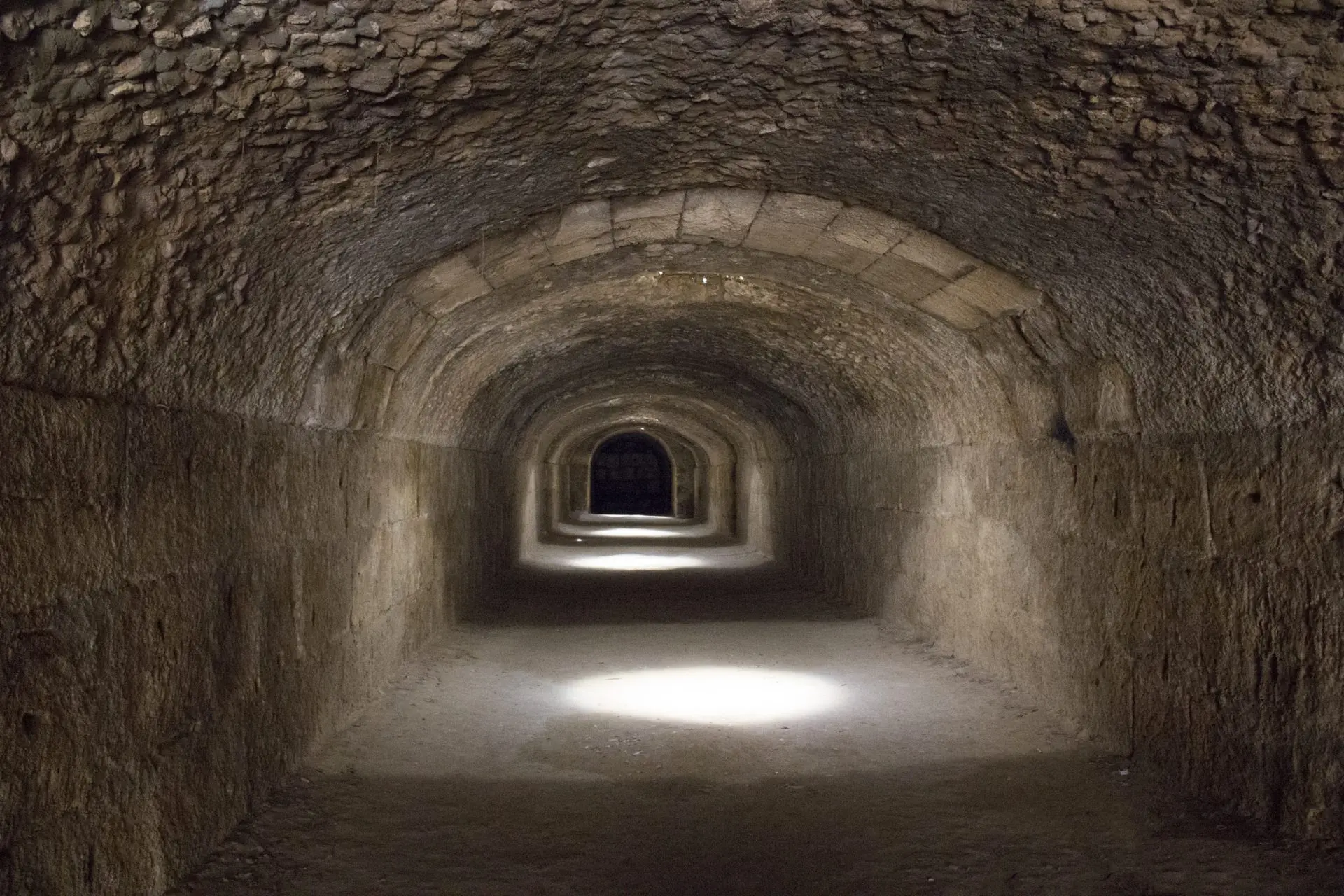
- Climb the El Jem amphitheatre: walk the arena and the underground passages.
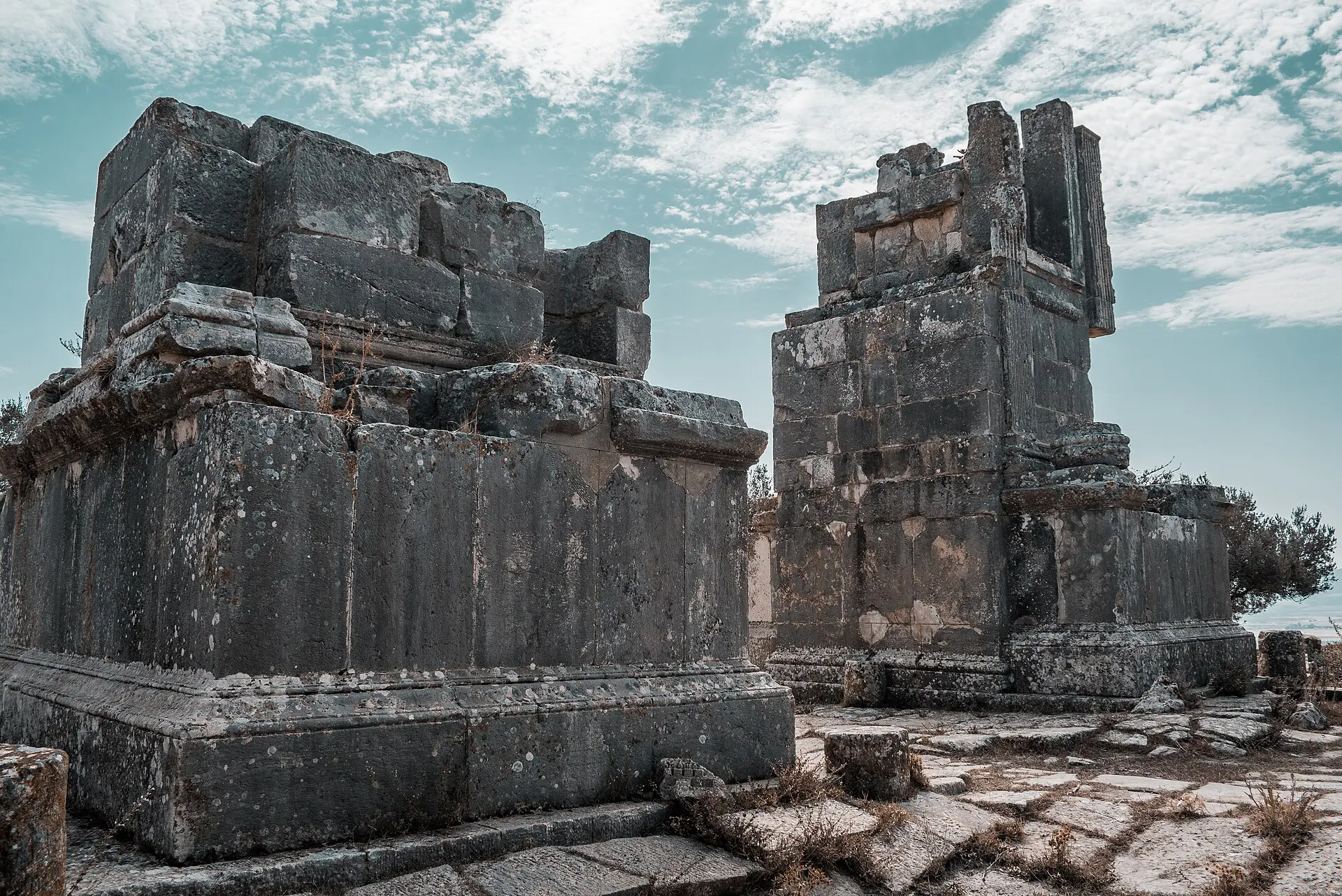
- Explore Dougga: a remote Roman city with a theatre, temples and hillside views, a UNESCO site.
- Haggle in the Tunis medina: buy leather, ceramics, spices and brass, and agree prices before you accept tea.
- Ride a camel into the Sahara: start from Douz and spend a night at a desert camp.
- Visit Matmata: see cave dwellings dug into the earth.
- Relax on Djerba: beach days, souks in Houmt Souk and the Guellala potters.
- Sip mint tea in Sidi Bou Said: sit at a hilltop café overlooking the bay.
- Visit the Great Mosque of Kairouan: non-Muslims can usually see the courtyard from designated areas.
Best time to visit Tunisia
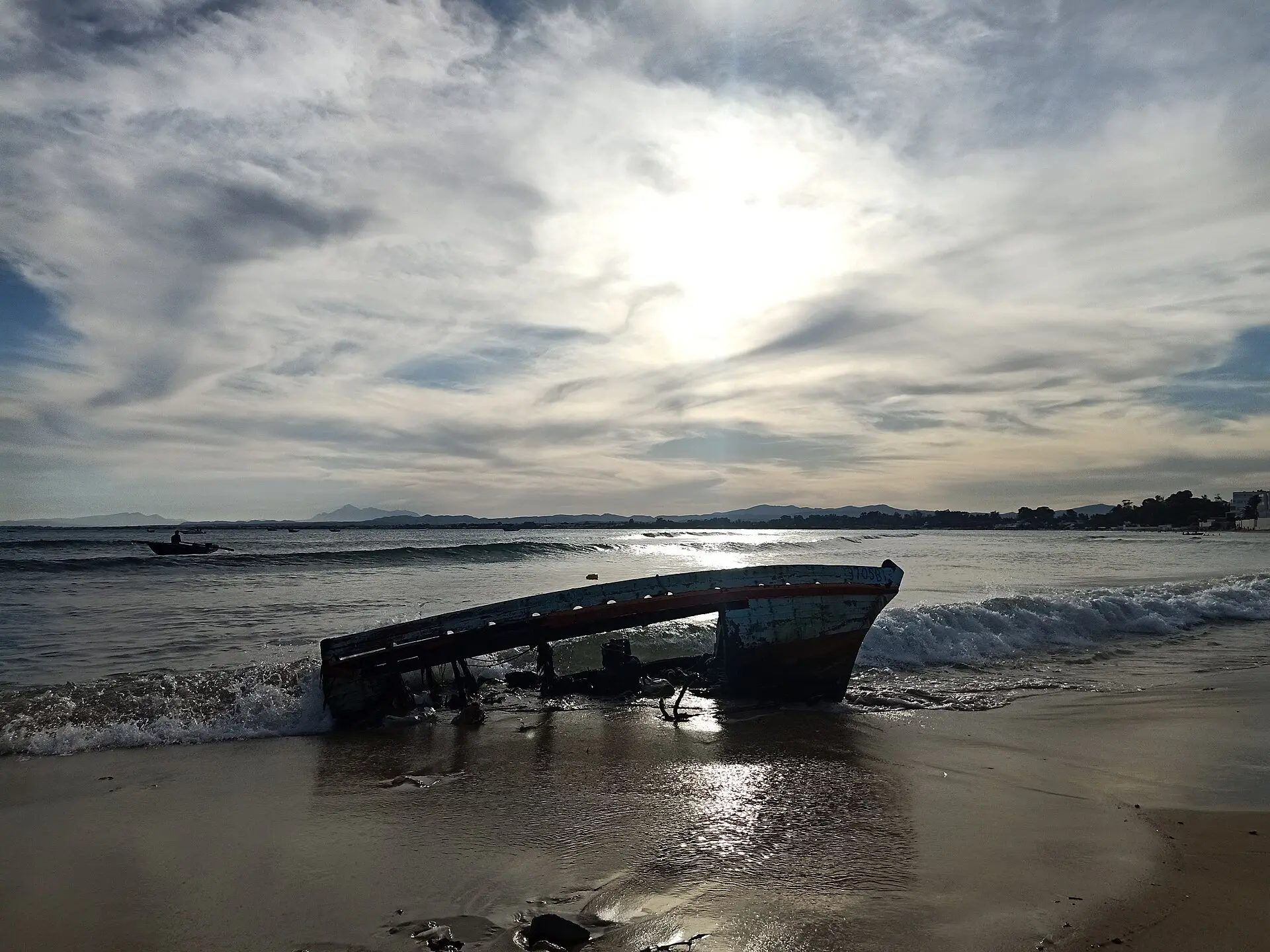
The best time to visit Tunisia is March to May and September to November, when temperatures are pleasant for ruins, medinas and road trips. July and August are very hot inland and in the south, though the coast stays comfortable for swimming and is the peak beach season. The Sahara is best from October to April, because summer days can exceed 40 C.
| Season | Weather | Crowds and prices | Good for |
|---|---|---|---|
| Spring (Mar-May) | Mild to warm, some showers early | Moderate | Ruins, medinas, desert |
| Summer (Jun-Aug) | Hot, over 40 C inland | High on the coast | Beaches, Djerba, Hammamet |
| Autumn (Sep-Nov) | Warm, sea still warm | Falling | Culture, coast, Sahara from October |
| Winter (Dec-Feb) | Cool, rainy in the north | Low | Cities, cheap stays, desert days |
Ramadan shifts each year, and some restaurants close during the day, so check dates before booking.
Is Tunisia safe to visit?
Yes, Tunisia is generally safe in the main tourist areas, but some parts of the country need extra care. Terrorist attacks in 2015 hit tourism hard, and governments still warn about a continuing threat, so check the UK FCDO or US State Department advice before you book. Both advise against travel to certain border and military zones.
Areas to avoid. Do not travel to the border regions with Algeria and Libya or to restricted military areas in the south and west unless your government’s advice allows it. Stay on main roads and with licensed guides in the desert.
Crime and scams. Petty theft and bag snatching occur in busy medinas and on beaches. Touts, fake guides and carpet shop pressure are common, so agree prices first and politely decline.
Roads. Driving is fast and chaotic, and night driving is risky. Many travellers prefer trains, louages and drivers.
Protests and health. Avoid demonstrations. Carry insurance, drink bottled water and protect yourself from the sun. Women travelling alone may face unwanted attention and often dress modestly to reduce it.
Visa and entry requirements for Tunisia
Entry rules vary by nationality. Citizens of many countries, including the EU, UK and US, have generally been able to visit for short tourist stays without a visa, but this can change, so confirm the current rule with the Tunisian Ministry of Foreign Affairs or the nearest embassy before you book.
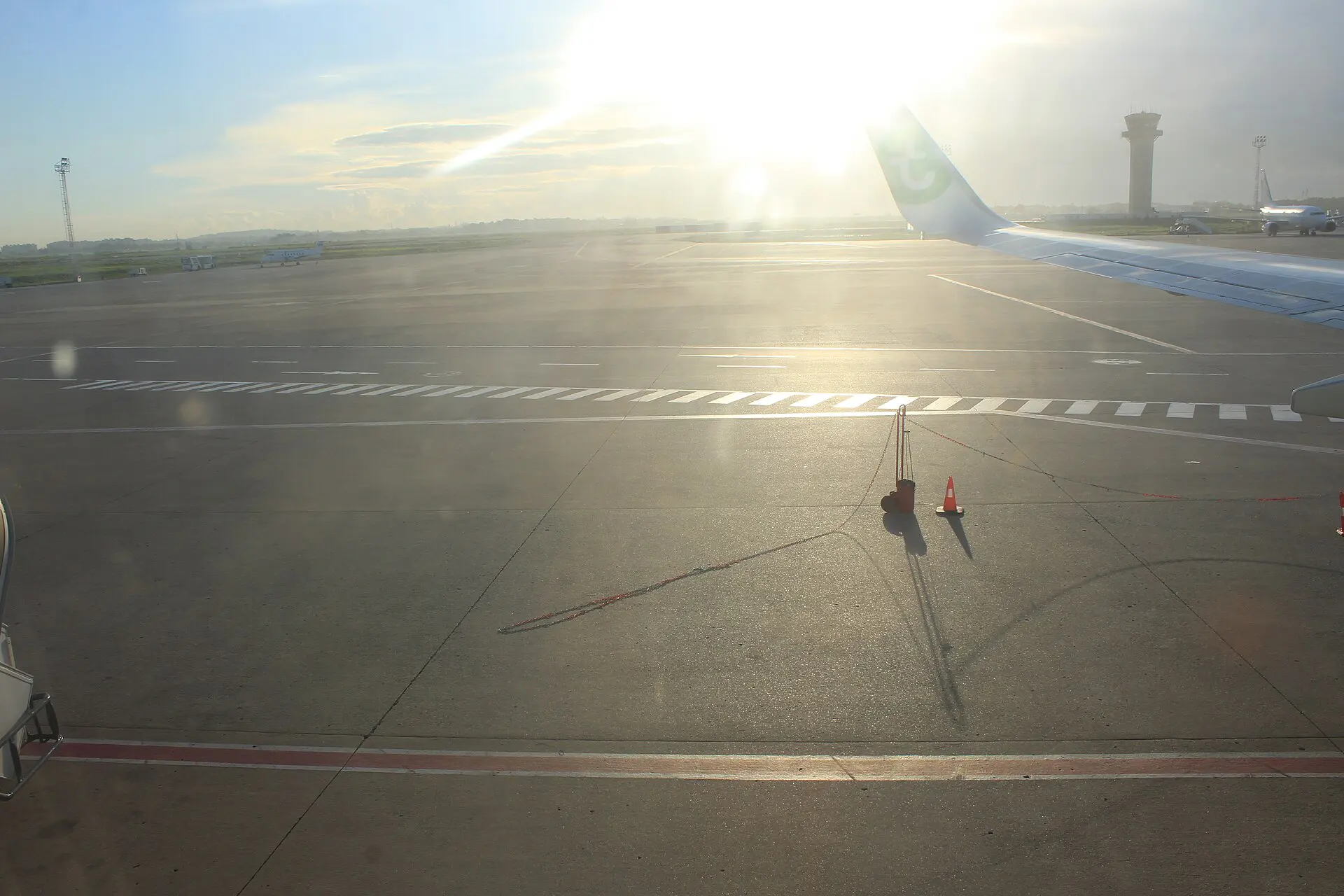
Bring a passport valid for the duration of your stay and, ideally, some months beyond it, along with proof of accommodation and return travel. Airlines and border officers can ask for these. Some travellers need a visa in advance, and an e-visa process has been used for certain nationalities, so check the latest official information.
If you plan to enter by land from Algeria or Libya, check whether the crossing is open to tourists, because rules and government advice change. Keep a photocopy of your passport. For heritage planning, the UNESCO page for Tunisia lists the World Heritage sites, though it does not cover entry rules.
Getting to and around Tunisia
Most visitors fly into Tunis-Carthage Airport, with Monastir, Djerba-Zarzis, Enfidha and Sfax also taking international and charter flights. Ferries connect Tunis with Genoa, Civitavecchia and Marseille, and an overnight crossing from Italy is popular with drivers.
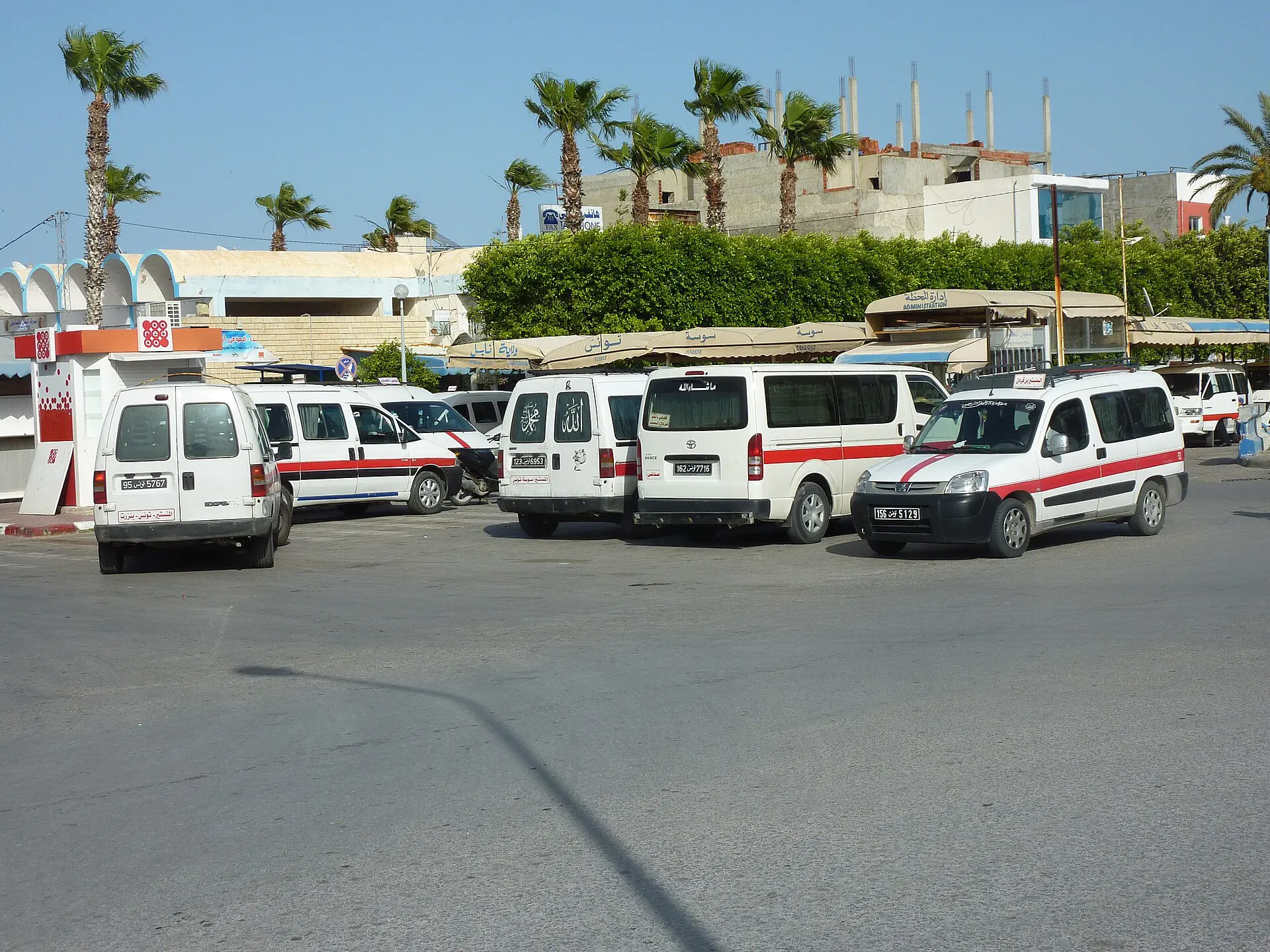
Inside the country, trains run along the north and the eastern coast from Tunis to Sousse, Monastir and Sfax, and they are cheap but can be slow. Louages, shared white minivans with a coloured stripe, leave when full and connect almost every town. Buses are cheaper still and run on set routes. Sousse to El Jem takes about an hour by louage, and Tunis to Kairouan around two hours.
Renting a car lets you reach Dougga, Matmata and the desert, but roads outside major routes can be rough, and police checkpoints are common. Taxis are metered in cities, though you should insist the meter is on. For the Sahara, a guide with a 4×4 is best.
How much does a trip to Tunisia cost?
Tunisia is one of the cheaper Mediterranean destinations. The currency is the Tunisian dinar (TND), which is a closed currency, so you cannot buy it easily abroad. Figures below are rough per-person guides for the 2026 season and may shift with exchange rates.
- Budget: around EUR 25 to 40 per day, with simple hotels, louages and local food.
- Mid-range: around EUR 40 to 80 per day, with comfortable hotels, restaurant meals and some tours or taxis.
- High-end: from around EUR 100 per day, with boutique riads, beach resorts and private drivers or desert excursions.
Accommodation and car hire make the biggest difference. Package holidays to Djerba, Hammamet and Sousse can be very cheap in the shoulder season. Museum and site entry fees are modest, while a desert overnight with a camp and camel trek is usually the largest single extra.
Tunisia food and drink
Tunisia food is Mediterranean with North African heat, built on olive oil, harissa, couscous, seafood and citrus. Meals are inexpensive, and small local restaurants often beat hotel buffets.
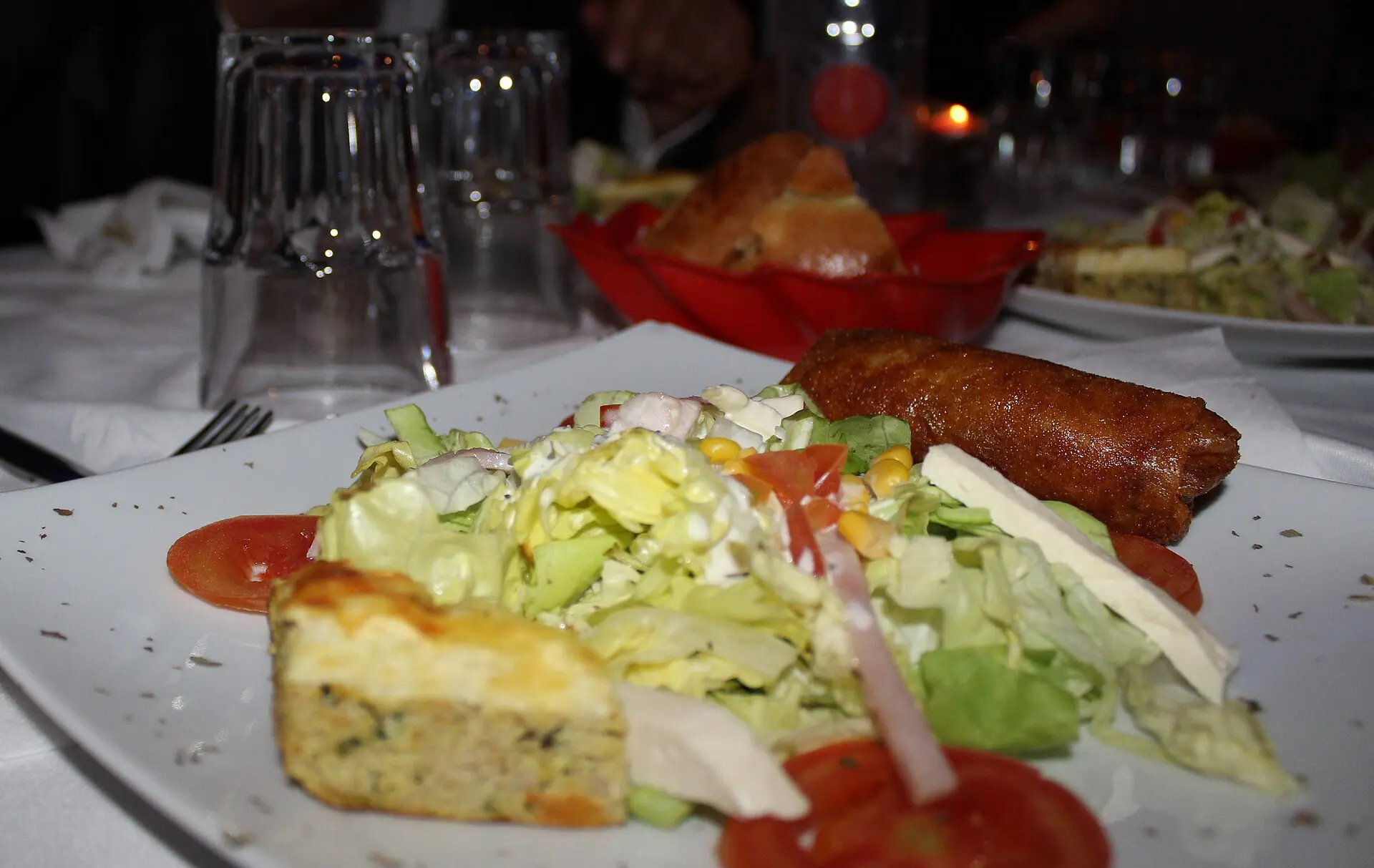
- Brik: a thin pastry parcel filled with egg, tuna and parsley and deep-fried; eat it hot.
- Couscous: steamed semolina served with lamb, fish or vegetables, especially on Fridays.
- Lablabi: a chickpea soup with bread, egg and harissa, often eaten for breakfast.
- Harissa: a red chilli paste served with bread and olive oil as a starter.
- Ojja: a spicy tomato and pepper stew with eggs, sometimes with merguez sausage.
- Fresh seafood: grilled fish and calamari along the coast, especially in Sfax, La Goulette and Djerba.
- Mint tea and pine nuts: tea with pine nuts floating in the glass is a Tunisian habit.
- Dates from Tozeur: the Deglet Nour variety is a national export.
Alcohol is available in tourist areas, with Celtia beer and local wine common. Vegetarians can eat well with salads, bric and vegetable couscous, though many dishes use meat stock or tuna. During Ramadan, many places close during the day.
Culture, language and etiquette in Tunisia
Arabic is the official language, and Tunisian Arabic is the everyday dialect. French is widely spoken in business and hotels, and English is increasingly understood among younger people. A few words help: shukran (thank you) and salam alaykum (peace be upon you) are always welcome.
Tunisia is a Muslim-majority country with a relatively liberal social tone compared with some neighbours, and women’s rights are more established than in many countries in the region. Even so, dress modestly away from beach resorts. Cover shoulders and knees in medinas and mosques and remove your shoes when entering a prayer hall. Non-Muslims may be restricted from some mosque interiors.
Greet with a handshake and a warm exchange of pleasantries. Haggling is normal in souks but should be friendly, and you should not bargain if you do not intend to buy. Use your right hand for eating and giving. Ask before photographing people, and avoid photographing police or military sites. Public displays of affection are best kept discreet.
Tunisia itinerary: a 7-day route
This route loops through the safest and best-served parts of the country and stays on main roads.
- Day 1, Tunis: arrive, walk the medina and visit the Bardo Museum.
- Day 2, Carthage and Sidi Bou Said: take the light rail to the ruins and end with sunset in the blue village.
- Day 3, Dougga: hire a driver or car for the Roman city, then continue towards Kairouan or return to Tunis.
- Day 4, Kairouan: visit the Great Mosque and medina; stay the night.
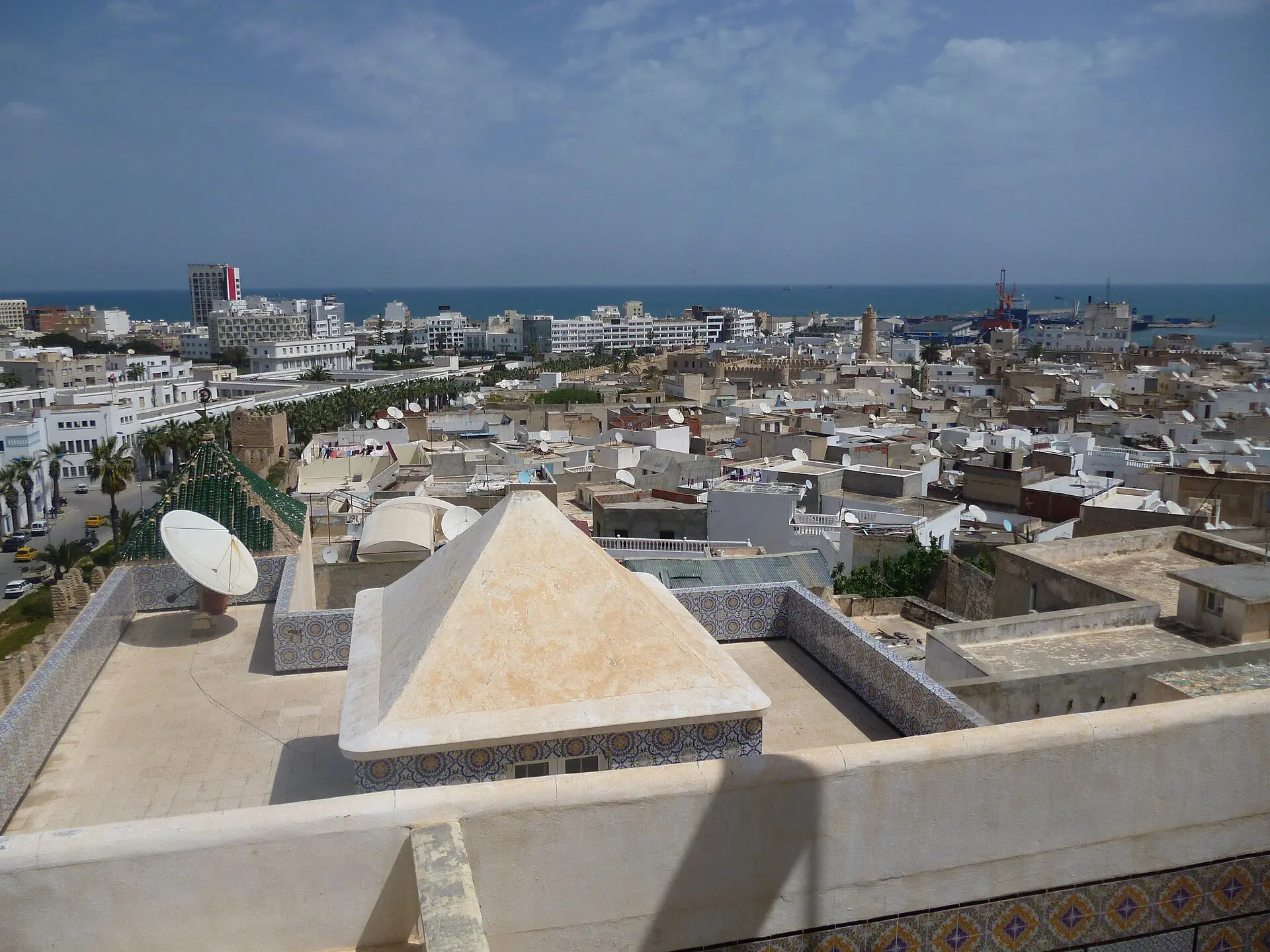
- Day 5, El Jem and Sousse: see the amphitheatre in the morning and walk the Sousse medina in the afternoon.
- Day 6, Djerba: fly or travel south, then explore Houmt Souk, the synagogue and pottery villages.
- Day 7, return: fly back from Djerba or Tunis, or add a beach day.
With extra time, add a Sahara overnight from Douz via Matmata, using an established operator and checking your government’s current advice on southern travel first.
Practical tips for Tunisia
- Money: the Tunisian dinar cannot be taken in or out in significant amounts. Use ATMs in towns and exchange cash at banks or official bureaux, and keep receipts. Cards work in hotels and larger shops but not in small markets.
- SIM and eSIM: local SIMs and eSIMs are cheap and easy to set up at airports and shops; coverage is good in towns and weaker in the desert.
- Plugs: types C and E at 230 V, as in most of Europe.
- Tipping: round up or leave about 10 percent in restaurants, and give small tips to guides and drivers.
- Health: bring sunscreen and stay hydrated; drink bottled water, and carry insurance with medical cover.
- Packing: light, modest clothes, a scarf for sun and mosques, sturdy shoes for ruins and warm layers for desert nights.
- Haggling: start at around half the first price in souks and keep it good-humoured.
For more background, see the Wikivoyage Tunisia guide.
FAQ
Q1Is Tunisia safe to visit?
Yes in the main tourist areas such as Tunis, Sousse, Djerba and the main Roman sites, though the terrorism threat has not disappeared. Avoid border regions and military zones, use licensed guides in the desert and check your government's current travel advice before you book.
Q2What is the best time to visit Tunisia?
March to May and September to November offer pleasant temperatures for ruins and medinas. July and August are best for the beach but very hot inland. The Sahara is most comfortable from October to April, when daytime heat is manageable.
Q3What are the best things to do in Tunisia?
Top picks include the Bardo Museum, the ruins at Carthage and Dougga, the El Jem amphitheatre, the Tunis medina, Sidi Bou Said, beaches on Djerba and a camel trek or overnight camp in the Sahara near Douz.
Q4Do you need a visa for Tunisia?
It depends on nationality. Many visitors, including from the EU, UK and US, have generally been able to enter visa-free for short stays, but some nationalities need a visa. Check the current rule with the official Tunisian source or your nearest embassy.
Q5Is Tunisia safe for solo female travellers?
Many women travel in Tunisia successfully, particularly in tourist areas. Expect unwanted attention in some medinas and on the street. Dress modestly, use licensed taxis, avoid isolated places at night and use reputable accommodation with good reviews.
Q6What food is Tunisia known for?
Tunisia is known for brik pastries, couscous, harissa, lablabi chickpea soup, ojja and fresh grilled seafood. Drinks include mint tea with pine nuts and Celtia beer. Meals are inexpensive, and seafood is best on the coast.
Q7How many days do you need in Tunisia?
Seven days is enough for Tunis, Carthage, a Roman site, Kairouan and Djerba or Sousse at a relaxed pace. Add three or four days if you want a Sahara overnight from Douz or extra beach time.