Trieste in 2 days is enough to read the city properly: a Habsburg port with Italian streets, Slavic neighbours and a coffee culture that doubles as its living museum. Day one is the waterfront, the canal and the cafés. Day two is the hill, one major museum and the coast. If you only have one day, take the central square, the canal district, one café and the San Giusto hill, and leave the rest.
How to use two days in Trieste
Trieste rewards a slow pace, and it punishes a checklist. Trieste was once a political, literary and musical centre under Austro-Hungarian rule, and its architecture across the centre looks closer to Vienna than to Rome. The method is to pair one anchor with one street each block, and to treat the cafés as part of the programme, not a break from it.
The city is compact and sits on a slope, with the sea at the bottom and the Karst plateau behind. Day one stays low, on the flat waterfront. Day two climbs. That order saves your legs and keeps the best light for the right place. Trieste in 2 days also gives you one evening to spare, which is best spent on the seafront promenade as the lights come on, with no ticket and no queue.
Trieste time-blocked plan: two days
Day 1, 9:00 to 11:30: Piazza Unità d’Italia and the Molo Audace
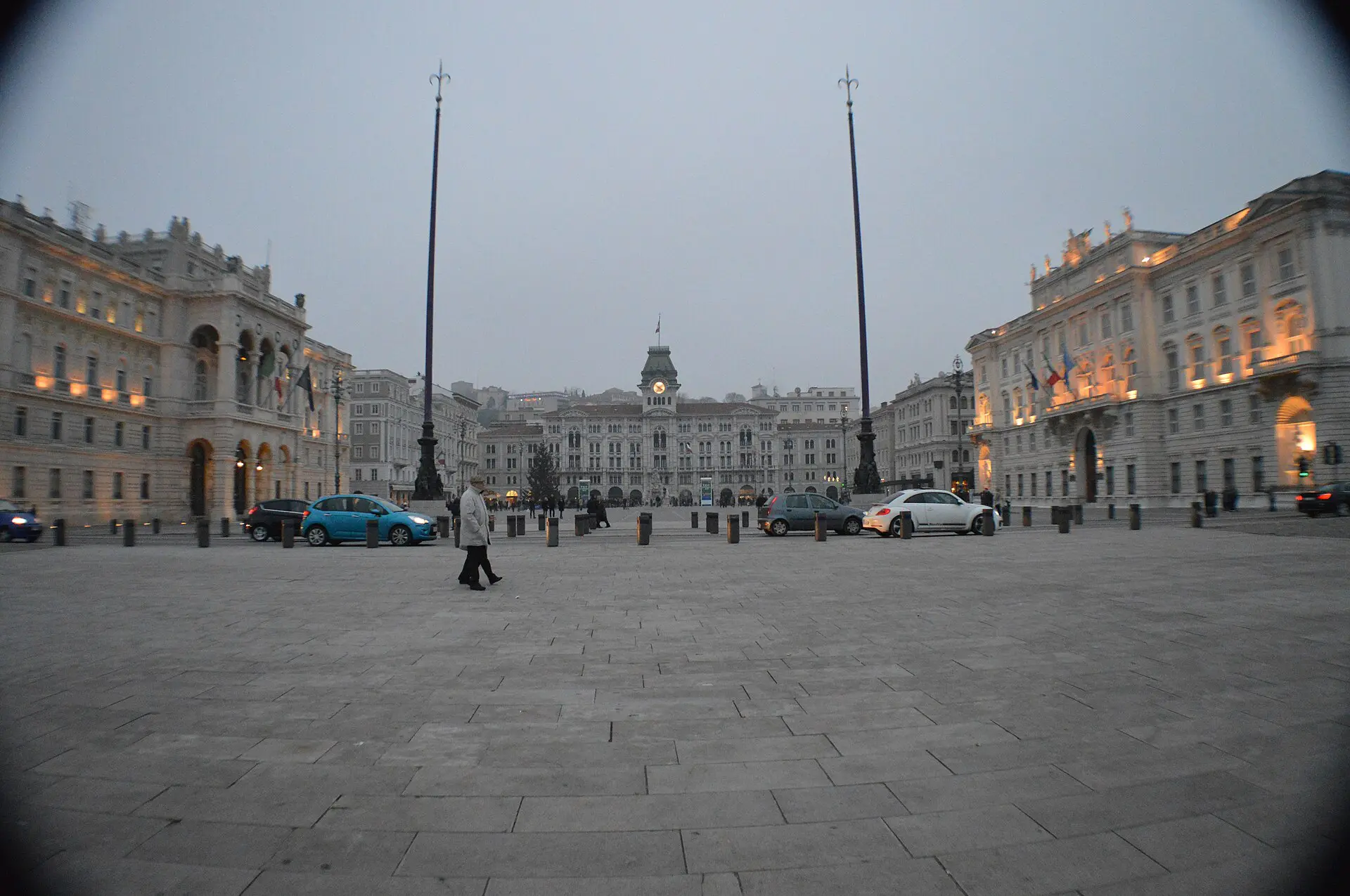
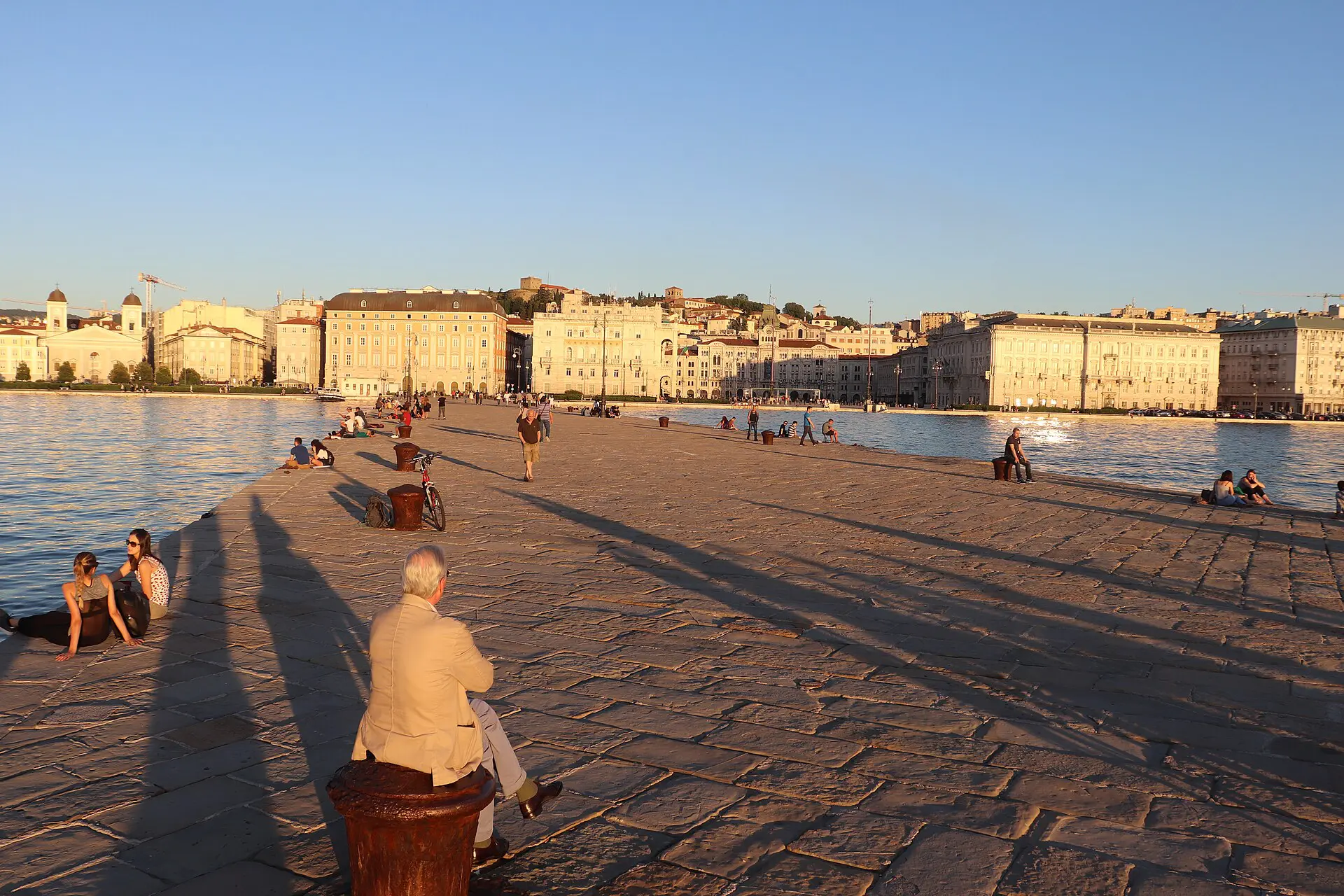
The anchor is the big square that opens to the sea, flanked by 19th-century palaces from the Habsburg period. It is often described as one of Europe’s largest squares open to the water. Walk across it, then out along the Molo Audace, a stone pier. Go before the cafés fill, and enjoy the light on the gulf. Allow 90 minutes. If the sky is clear, the square is the one place worth seeing twice: once in the morning for the buildings, and again after dark, when the palaces are lit and the crowd has gone to dinner.
Day 1, 11:30 to 14:00: Canal Grande, Borgo Teresiano and the Serbian church
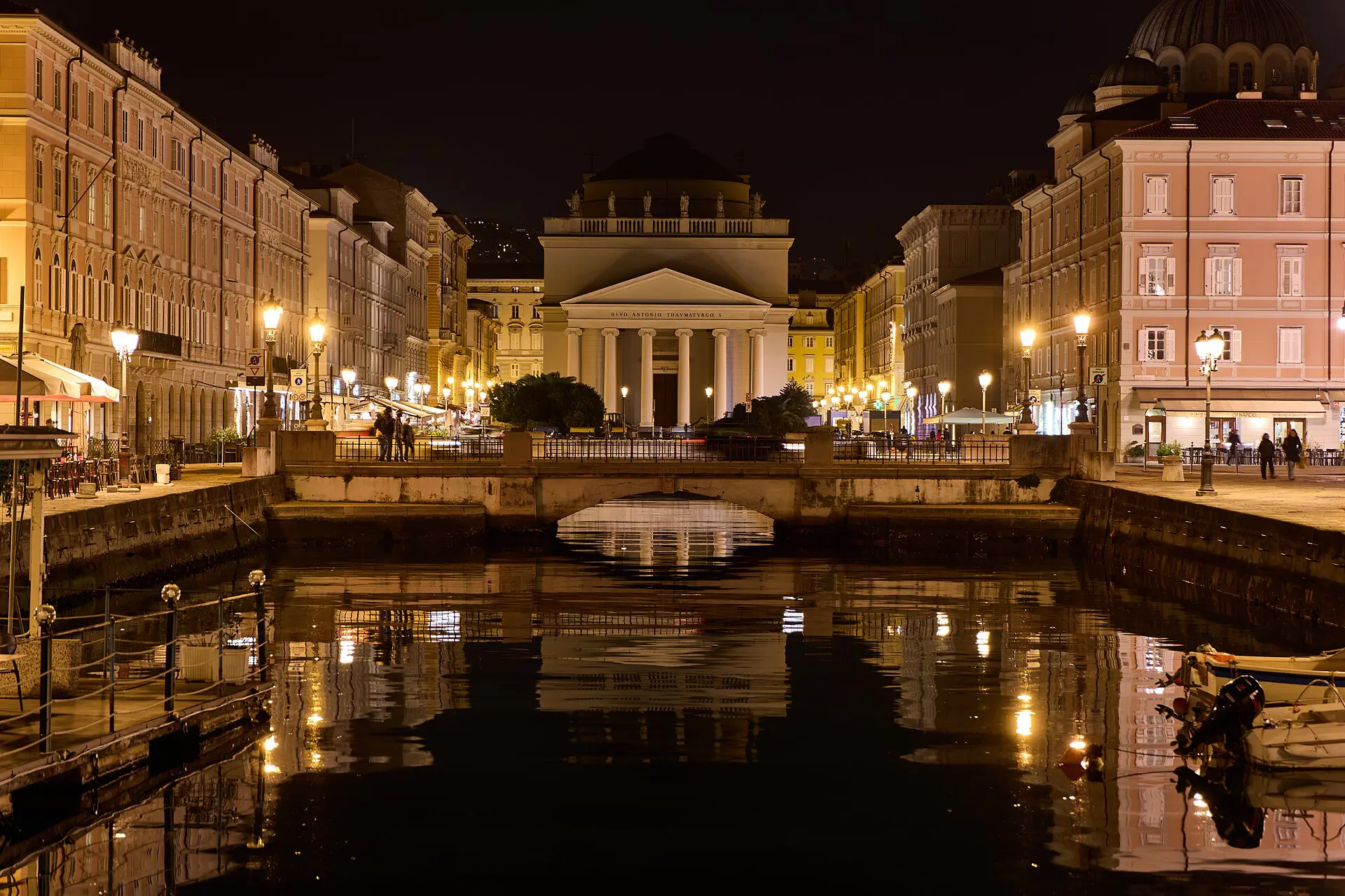
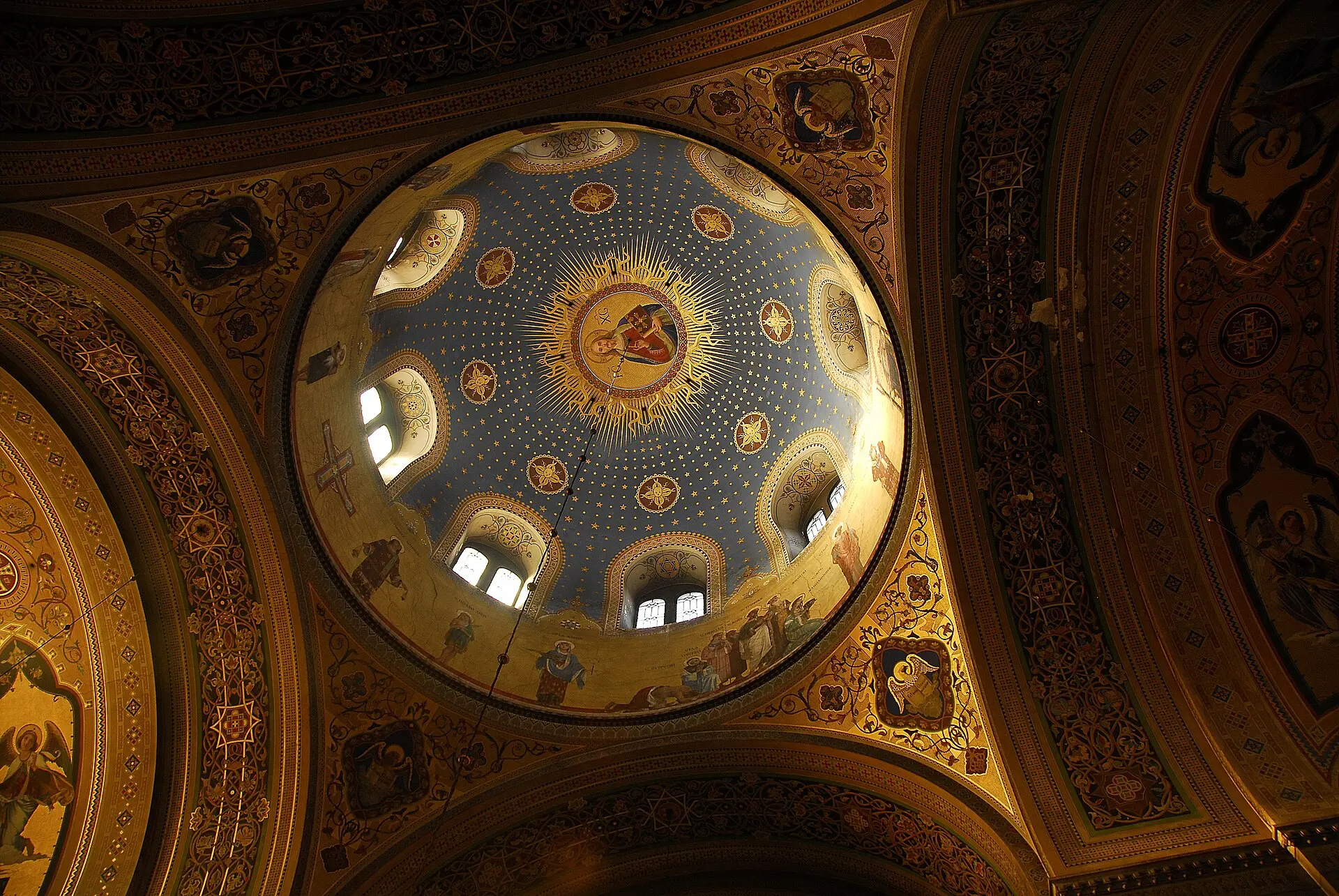
The street pairing is the Borgo Teresiano, the grid laid out in the 18th century behind the square. Walk to the small Canal Grande, where the Serbian Orthodox church of San Spiridione stands at the water’s end, and find the bronze statue of James Joyce on a nearby bridge. Joyce lived in Trieste for a time. Lunch here is simple, and the lanes thin out after 14:00.
Many shops in the district close for a long midday break, and some stay shut on Sundays, so use the quiet hour to look at the facades rather than to shop.
Day 1, 14:30 to 17:30: the literary café block
This is the part of Trieste that other cities cannot copy. The old coffee houses were meeting rooms for writers, merchants and exiles. Order standing at the bar if you are short of time, or sit for an hour if you are not. A local tip: ask for a “capo in b”, a small cappuccino served in a glass, rather than a menu item you recognise.
Plan two cafés, no more, because three will cost you the afternoon and the rest of the block. The point is to read the rooms: the mirrors, the marble tables, the newspapers on wooden holders. Many close in the late afternoon or on one day each week, so check before you walk across town.
Day 2, 9:00 to 12:00: San Giusto hill, cathedral and castle
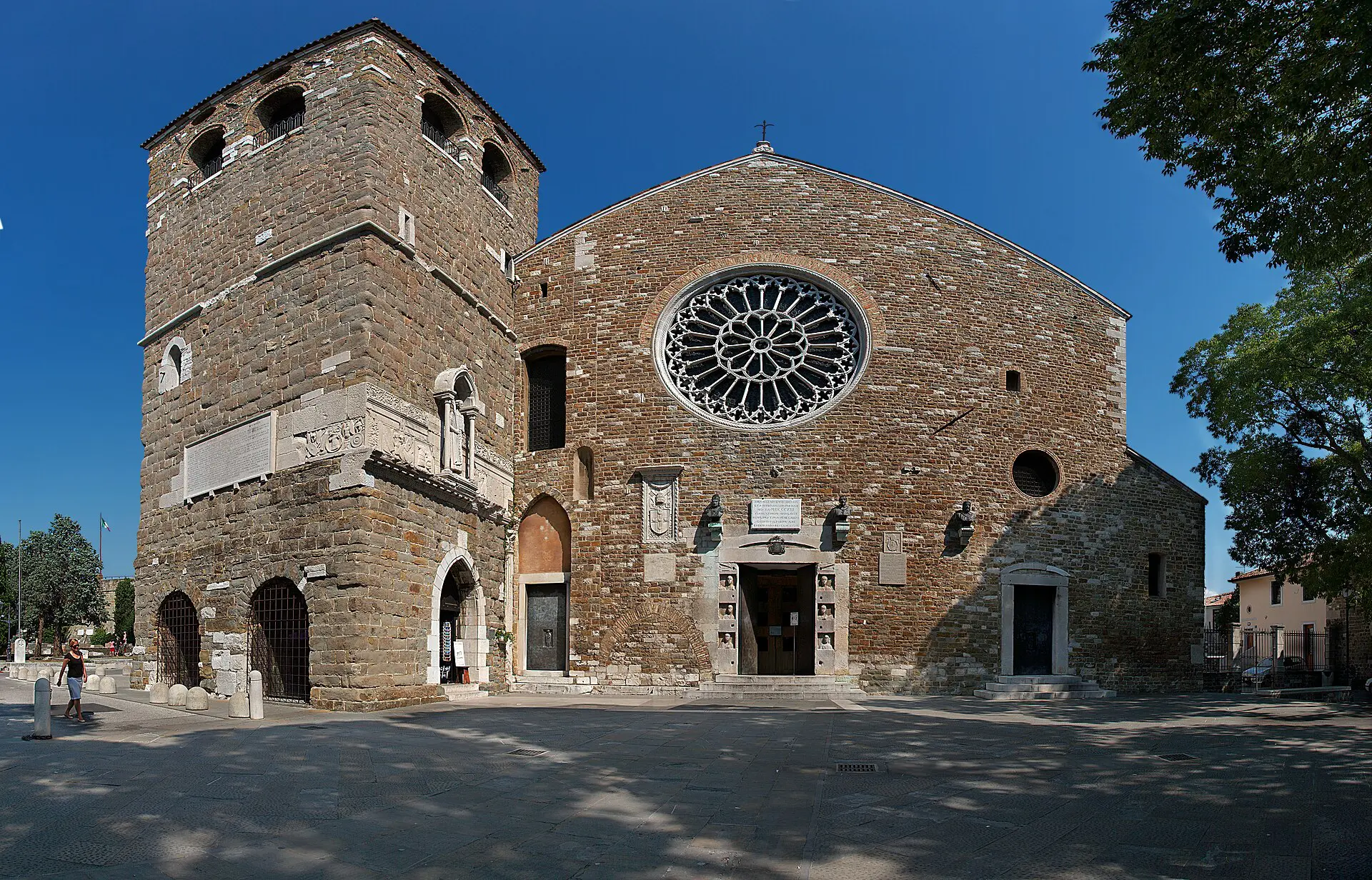
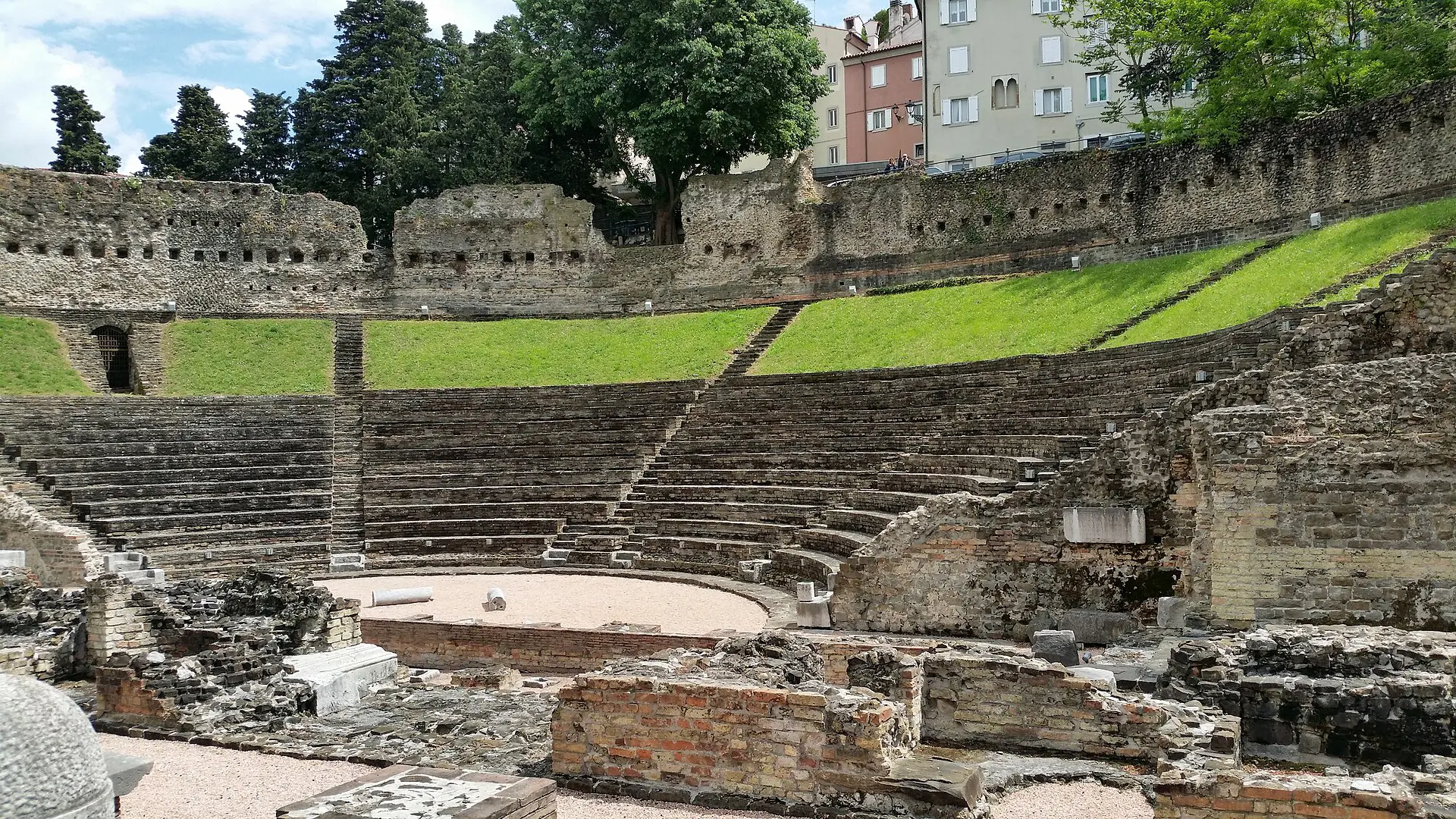
The anchor of day two is the hill above the old city. The cathedral of San Giusto and the castle share the summit, and the Roman theatre sits at the foot, with fragments of the ancient city around it. The Roman theatre, the arch in the old city and the Roman museum are all worth a look. Walk up early, because the climb is steep and the churches close for midday services.
The cathedral keeps visiting hours around worship, and the castle may close on one weekday, so check both before you set out. Come down by a different route to see a second slice of the old town. Allow three hours with the views.
Day 2, 12:00 to 15:30: Museo Revoltella and the lower town
Pair the hill with the city’s main modern art museum, in the Revoltella palace, which joins a 19th-century merchant’s house to a later wing by the architect Carlo Scarpa. It takes about 90 minutes, and a rainy afternoon is the ideal moment for it. After the museum, walk back along the lower streets and the waterfront, which gives you a street scene to balance the gallery. Many Italian civic museums close one weekday, often Monday or Tuesday, and hours vary by season, so confirm the current schedule. Lunch beforehand is easier than after it.
Day 2, 15:30 to 19:00: Miramare Castle or the Karst edge
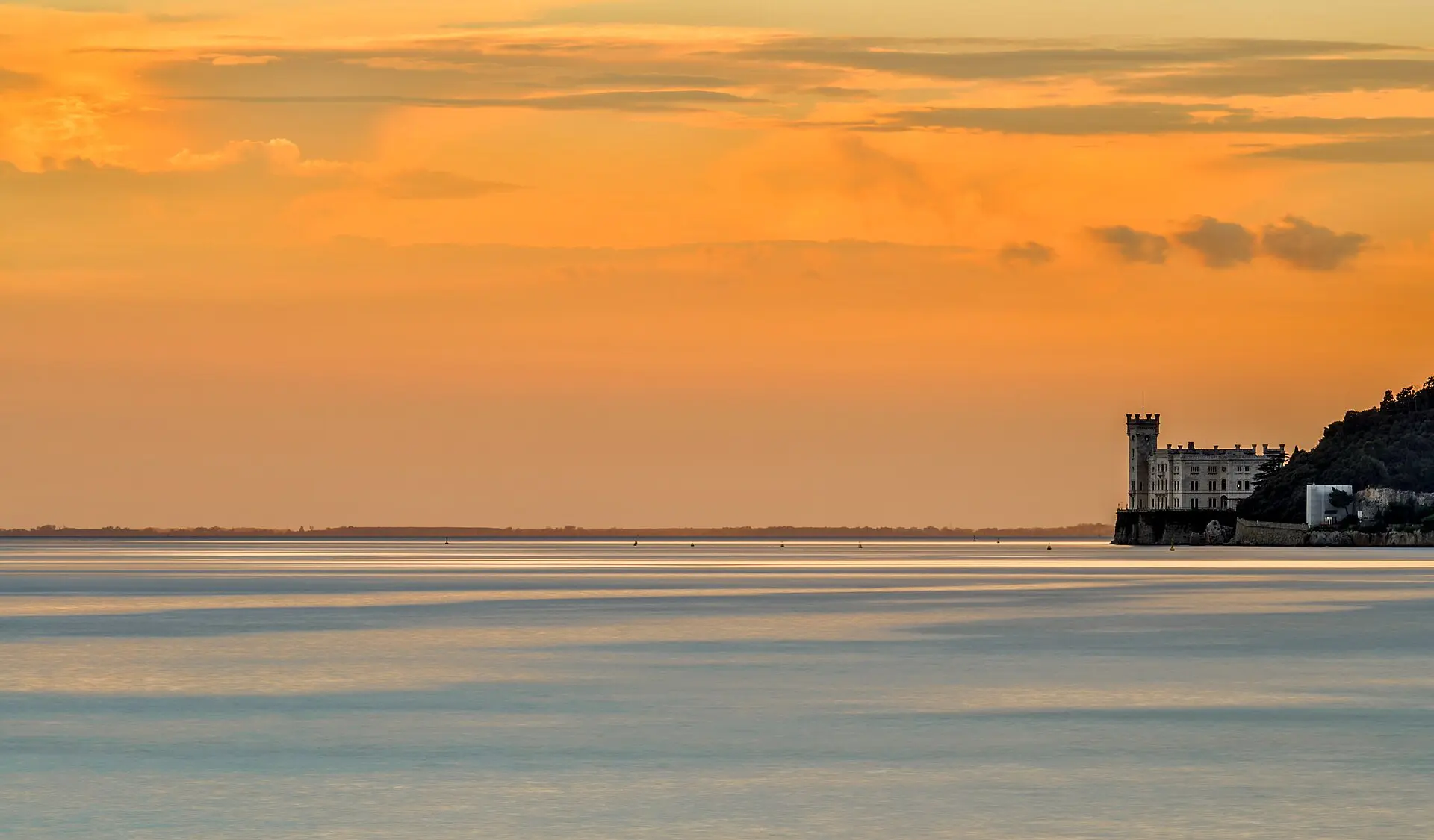
For the last block, take the train to the Miramare station and walk to the white castle on the headland, which the Habsburg archduke built as his seaside home. The alternative is the Karst edge above the city, with its stone villages and wine taverns. As of 2026, check whether the Opicina tram is running before you plan around it. In strong wind, choose the castle, which is sheltered by its park, over the exposed plateau.
Trieste queue-avoidance and bora-wind timing
Trieste is known as the city of the bora, a cold, gusty north-easterly that can be fierce in winter. On a bora day, the waterfront pier is miserable and the high streets are the better place to be. Treat that as the fallback for every outdoor block above.
- Bora day: swap the pier and the hill for the cafés, the Revoltella and the canal streets, and hold the outdoors for the next day.
- Queues: there are few. The castle at Miramare is busiest on weekend afternoons, so go in the morning if you can.
- Cafés: the quietest hour is mid-morning, between 10:00 and 11:30. Lunch brings office workers, and late afternoon brings students and tourists.
- Hill and castle: go first thing. Coach groups arrive from late morning and the paths are narrow.
Getting around Trieste and a border day trip
Most of day one is on foot. Trieste Centrale station is about 15 minutes’ walk from the main square, and city buses cover the rest. For Miramare, regional trains stop at Trieste Miramare. Slovenia is only about 8 km east, and there are bus links from Trieste to Koper, Piran and Ljubljana, so a border-city day trip is realistic if you add a third day.
Venice is about two hours away by regional train, with a reported frequency of two an hour. Check fares and times before you travel. The airport is some distance north, and the airport railway station links to the city centre in roughly 25 minutes. For the wider country, see the Italy travel guide.
Where to stay in Trieste by area
- Around the main square and the old city: the best base for a short stay, with the cafés and sights on your doorstep. It costs more.
- Borgo Teresiano: flat, central and close to the canal. Good value and easy walking.
- Near Trieste Centrale: convenient for trains, and often cheaper. It is a 15-minute walk to the square.
What to skip in Trieste if you are short on time
Skip the castle interior if you have limited time, since the view from the hill is the point. Skip a second café, and skip the Karst edge if the weather is poor. I would also leave the day trip across the border for a longer stay. The core of the city is the square, the canal, one café and the museum. See the Wikivoyage Trieste guide and the Wikipedia entry for more.
FAQ about Trieste in 2 days
Is 2 days enough for Trieste?
Yes. The centre is compact, and two days cover the main square, the canal quarter, the cafés, the San Giusto hill, one museum and a coastal castle. A third day is useful only if you want a trip to Slovenia or the Karst.
What is Trieste best known for?
It is known for its Habsburg architecture, its port, its literary connections, including James Joyce, and its coffee culture. It also sits on a narrow strip of Italy close to Slovenia, which gives it a mixed, Central European character.
Is Trieste walkable?
Mostly yes. The centre and waterfront are flat and easy, while the San Giusto hill and the streets behind the old town are steep. You do not need a bus for day one, and a taxi helps on tired legs on day two.
When is the best time to visit Trieste?
Spring and early autumn are comfortable for walking. Summer is warm, and winter can bring the bora, which makes the waterfront unpleasant but suits a café-and-museum plan. Check the forecast before you commit to outdoor blocks.