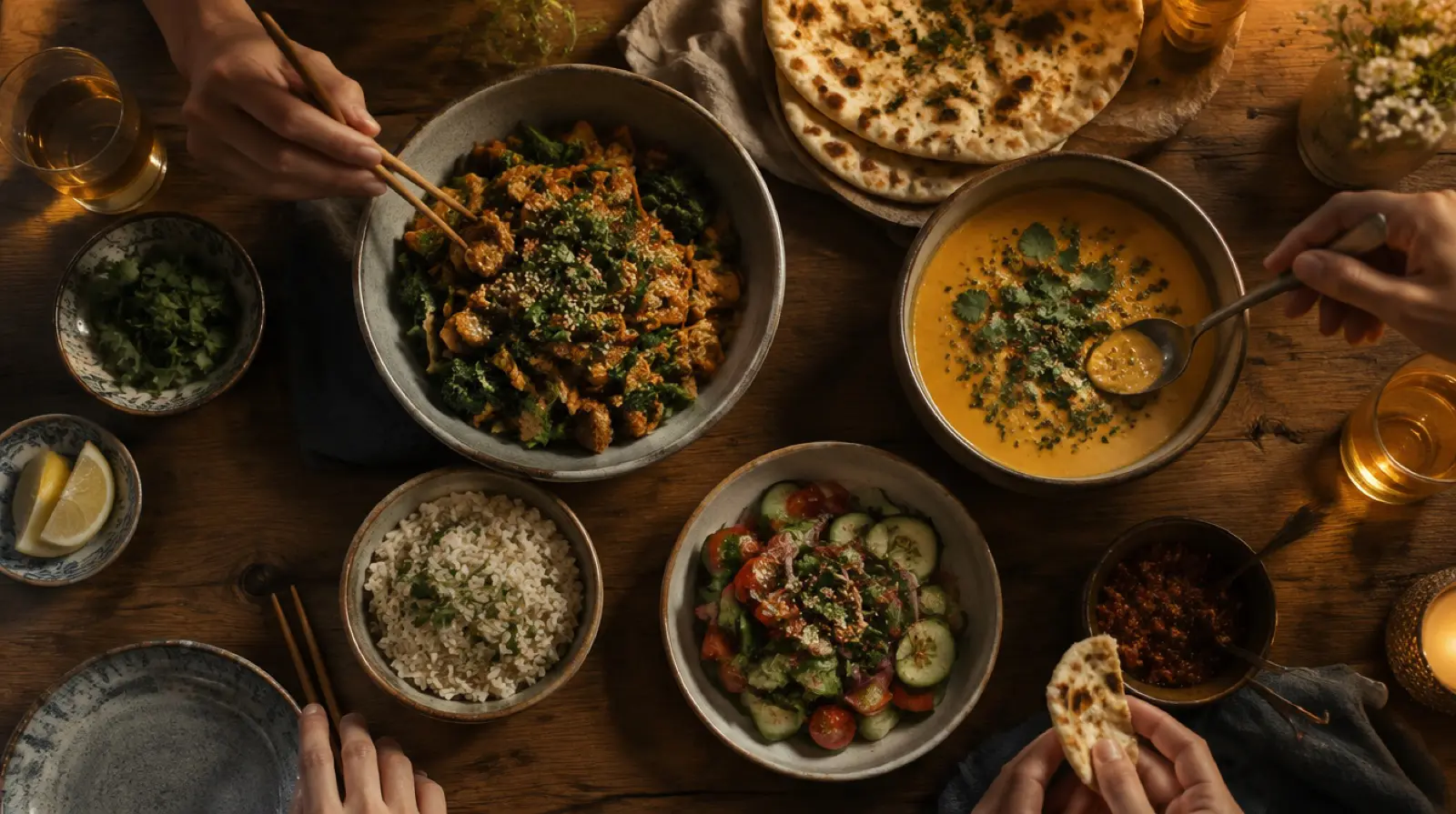
Table etiquette by country comes down to four questions: do you tip, who eats first, which hand or utensil do you use, and is the food shared. In Japan you do not tip, in the United States you almost always do, in India and Ethiopia you eat with your right hand, and in Georgia a toastmaster runs the meal. Details change, so check before you go.
How to use this table etiquette cheat sheet
Etiquette is a set of habits, not a set of laws, and nobody expects a visitor to get every detail right. What counts is a small number of signals that show respect: waiting for the host, accepting what is offered, using the right hand where it matters, and tipping in a way that suits the country. Get those four right and small errors are forgiven.
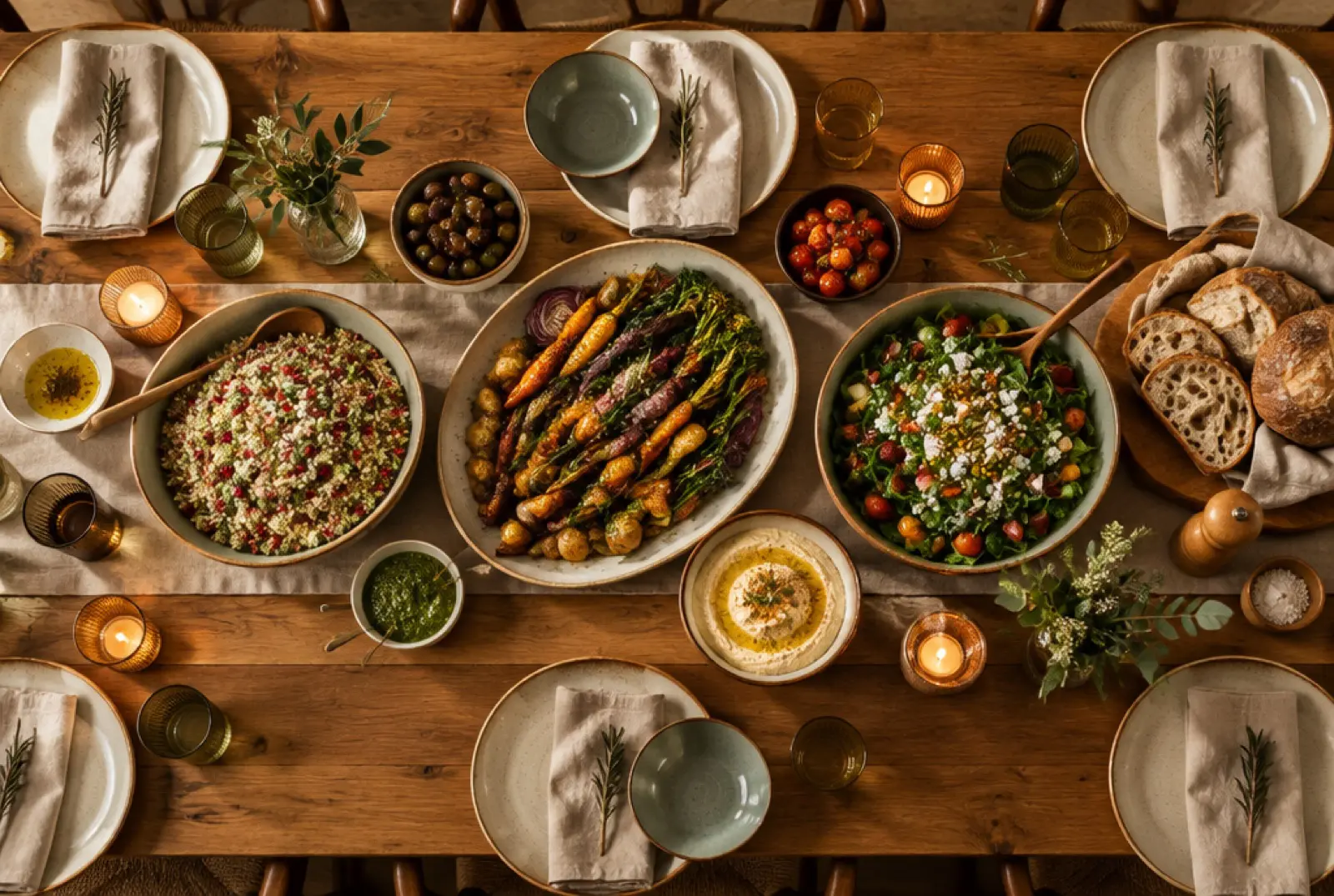
The table covers 16 countries across five continents, and each row gives the habit most likely to matter to a visitor. Tipping figures are hedged as of 2026 and vary by city, venue and whether a service charge is already on the bill. Treat each row as a starting point, then check the country guide and the bill itself.
Table etiquette by country at a glance
| Country | Tipping | Sharing and hands | Utensils and one thing to avoid |
|---|---|---|---|
| Japan | Not expected; may cause confusion | Individual portions are common; say a thanks before and after eating | Chopsticks; do not stand them upright in rice |
| South Korea | Not customary | Shared side dishes; elders start first; pour drinks for others | Spoon for rice and soup, chopsticks for the rest; do not stick chopsticks upright in rice |
| China | Not customary in most places | Dishes shared from the middle of the table | Chopsticks; do not leave them standing in a bowl |
| Vietnam | Not obligatory; rounding up is welcome | Shared dishes with individual bowls | Chopsticks and spoon; do not stand chopsticks upright in rice |
| Thailand | Small tip or change; check for a service charge | Several dishes shared with rice | Fork and spoon; the fork pushes food onto the spoon, and chopsticks are mainly for noodles |
| India | Often about 10 percent if no service charge is added | Right hand for eating; shared dishes common | Avoid using the left hand to eat or pass food |
| Ethiopia | Small tip at restaurants | Shared platter on injera, eaten by hand; hosts may feed you a mouthful | Right hand; wash hands first |
| Morocco | Small tip is normal | Communal dish; eat from the section in front of you, with bread as the tool | Right hand; do not reach across the dish |
| Senegal | Small tip in restaurants | Shared bowl, host pushes the best pieces your way | Right hand or spoon; eat from your own section |
| Georgia | Check for a service charge; round up | A tamada (toastmaster) leads toasts at a feast; many dishes shared | Do not drink before the toast begins |
| Turkey | Often 5 to 10 percent, or rounding up | Hosts insist on more food; refuse politely, twice | Fork and knife, bread by hand |
| Italy | A cover charge (coperto) may be on the bill; extra tip optional | Courses are served in order | Do not ask for cheese on a fish pasta |
| France | Service is normally included; a small extra is optional | Wait for the host to say bon appétit | Keep hands visible on the table, bread on the cloth |
| Mexico | Around 10 to 15 percent for table service | Tacos eaten by hand | Ask for the bill; it does not arrive unprompted |
| Peru | Around 10 percent, check for a service charge | Lunch is the main meal | Ask whether the menu fixed price includes a drink |
| United States | Usually 15 to 20 percent at sit-down restaurants; not included in the price | Portions are large; sharing is informal | Do not skip the tip, even if you pay by card |
Seven rules that carry across most countries
1. Wait for the host or the eldest
In many cultures, nobody starts until the host or the oldest person has begun, or until a short phrase has been said. Sit when you are shown a seat, and watch before you pick up a utensil. This one habit is more valuable than any country-specific rule.
2. Use the right hand for eating and passing
Across much of South Asia, the Middle East, North Africa and East Africa, the left hand is traditionally reserved for other uses, and food is eaten and passed with the right. If you are left-handed, practise with the right for shared dishes. Where you eat with your hands, wash first and eat from the section of the dish in front of you.
3. Know the chopstick rules
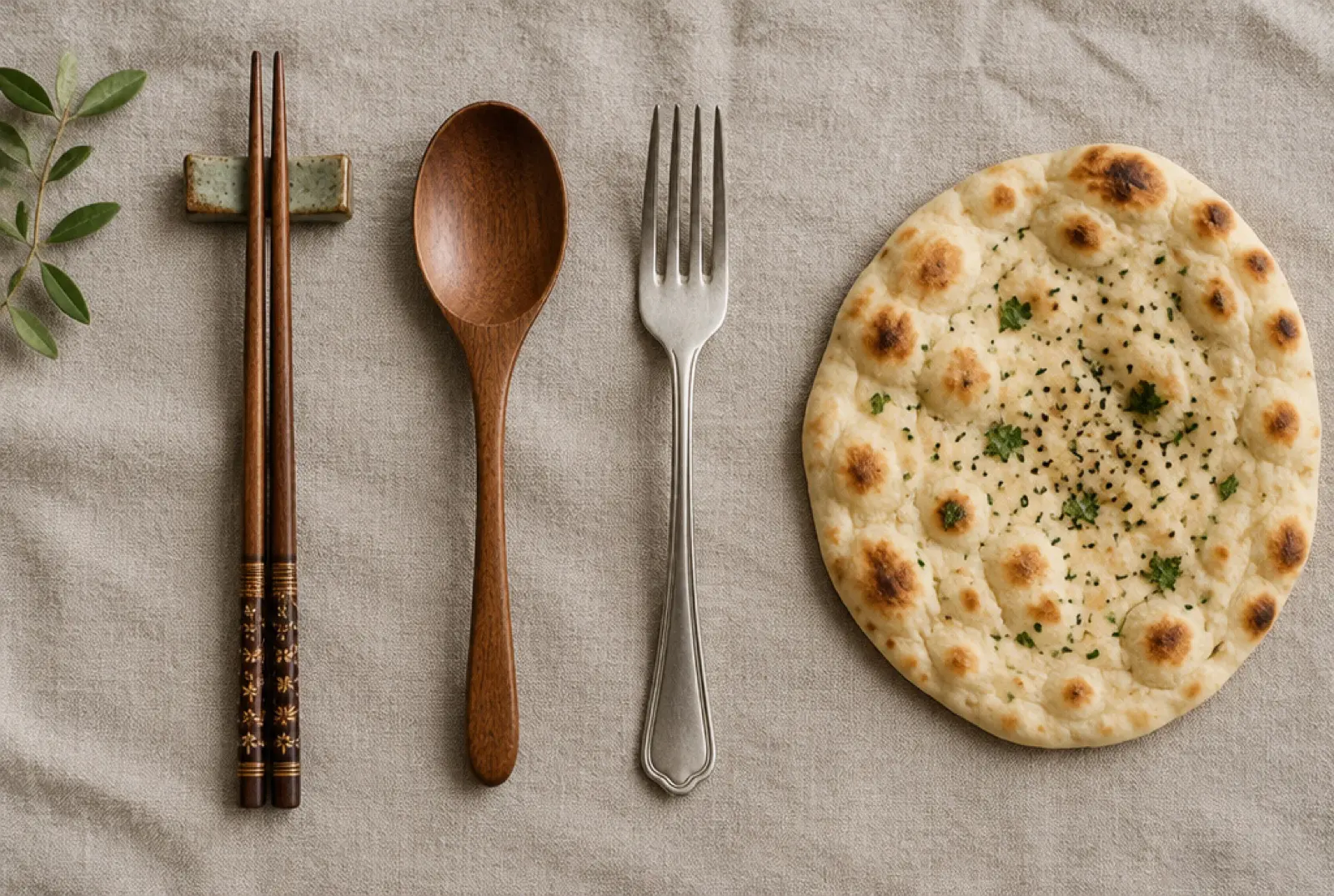
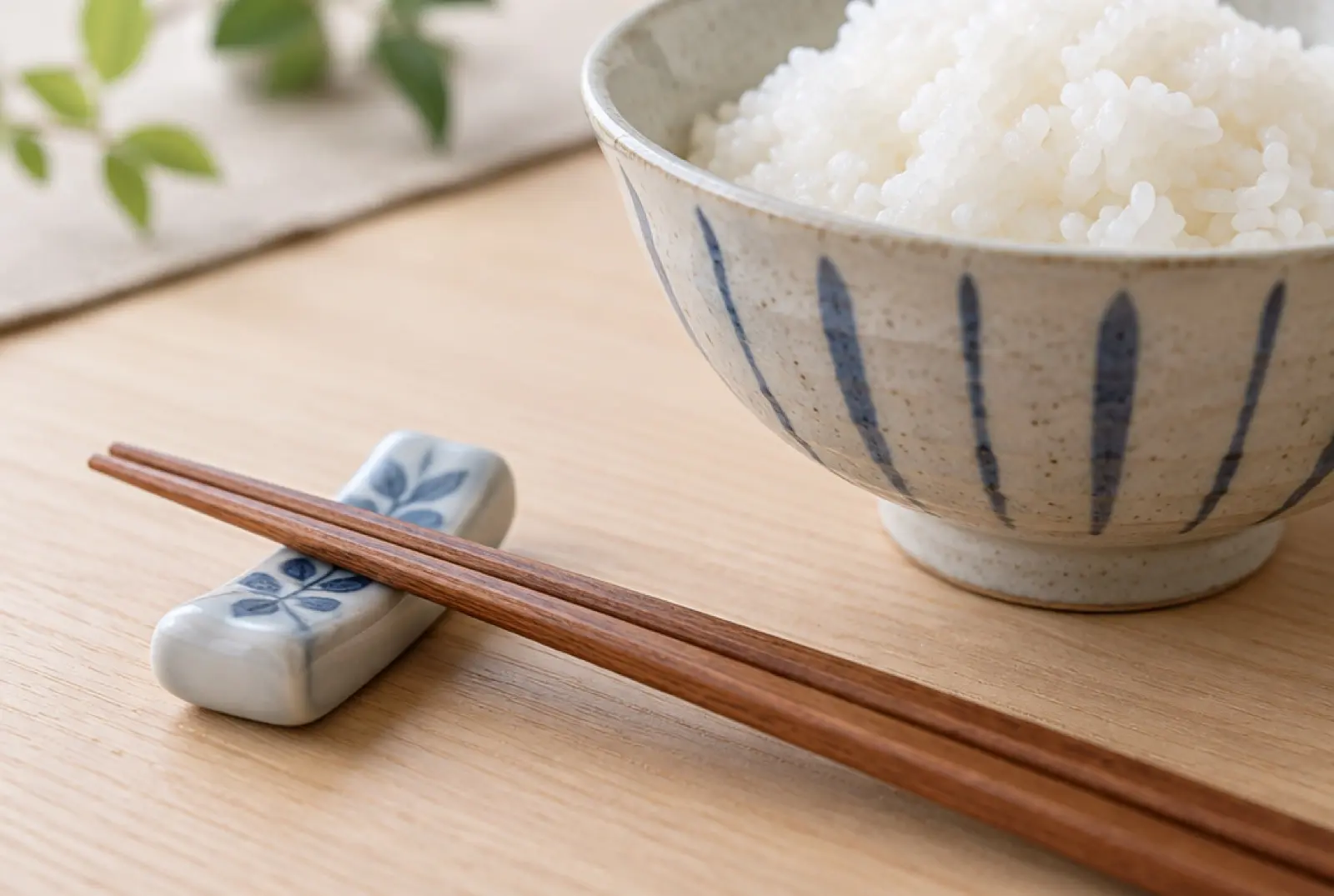
In Japan, China, Korea and Vietnam, a pair of chopsticks stuck upright in rice resembles incense at a funeral and is seen as a serious mistake. Do not pass food from chopsticks to chopsticks, and do not spear food. Rest them on the rest provided, or lay them across the bowl, not standing.
4. Learn how tipping works before you sit down
Tipping runs from customary to unwelcome. In the United States and Canada, tips are a large part of a server’s pay, and 15 to 20 percent is the norm for table service. In Japan, tipping is not expected. In much of Europe a service charge may already be on the bill. Look for the words service, servizio, couvert or cover on the receipt before you add anything.
5. Expect the host to insist
In Turkey, Georgia, Morocco, much of the Middle East and many other places, hospitality means pressing more food on you. Refusing once is polite, accepting is expected, and leaving a clean plate may signal you want more. Say you are full with a smile, or leave a small amount if the custom suits the country.
6. Share the dish the way the table does
A shared bowl, a platter on injera, a tagine or a set of side dishes all have a pattern. Eat from your own section, take from the edge toward the centre, and never reach across the dish. Where there are serving spoons, use them for the dish and your own utensil for your mouth.
7. Pay the way locals pay
In some countries you pay at the counter on the way out, in others you call the server and ask for the bill, and in a few it arrives unprompted. Splitting a bill can be unusual in some places. Ask who is paying before you reach for a card.
Common mistakes and edge cases
The most common mistake is to apply one country’s rules to another. A visitor who tips 20 percent in Tokyo causes confusion. One who leaves nothing in New York causes offence. Another is to assume that tourist restaurants follow local custom, since many of them follow the visitor’s. When in doubt, watch the table beside you.
Religion and regional custom matter too. Some tables do not serve alcohol or pork, some hosts expect you to remove your shoes at the door, and some meals begin with a blessing. Join as far as you are comfortable, and do not comment on the food as a cultural curiosity. In places where hands are used, do not ask for cutlery unless you need it, but do not refuse it if the host offers.
What to verify before you rely on this cheat sheet
Treat the table as a map, not a rulebook, and check the following before you travel:
- Service charges. Look at the menu and bill, since a charge of 10 to 15 percent may already be included.
- Current tipping norms. Local custom can shift, and card machines are changing where tips go.
- Religious and dietary rules. A restaurant, a market or a private home may differ.
- Regional variation. Rules in a capital may not match those in a village.
- The official country guide. Use a recent source, and for the destinations in this article, read the place-level food guide below.
Where to go next: etiquette in the food guides
The place-level food guides give the table habits that matter for one destination, with dishes, timing and price bands.
- For communal tagines and bread, see Moroccan Food: What to Order, Market Timing and Table Etiquette.
- For toasts and shared tables, see Georgian Food: Khachapuri, Khinkali and How a Supra Works.
- For side dishes and shared tables in Korea, see Jeonju Food: Bibimbap, Side Dishes and Market Logic.
- For a meal where lunch matters most, see Arequipa Food: Picanterías, Rocoto and Lunch as the Main Meal.
- For Caribbean market eating, see Dominica Food: Provision Dishes, Fish and Where Eating Is Local.
FAQ about table etiquette by country
Which countries do not expect tipping?
Japan, South Korea and China are the best-known examples, though in big tourist hotels a service charge may be added. Many other places expect only small change. Because rules vary by venue, check the bill for a service charge and watch what local diners do.
Which countries eat with their hands?
Many. India, Ethiopia, much of West Africa, Morocco and parts of the Middle East and Southeast Asia eat with the right hand, often from a shared dish. Wash first, use the right hand only, and do not reach across the dish. Hosts often supply cutlery if you ask.
Is it rude to leave food on your plate?
It depends. In Japan, finishing a meal is a sign of appreciation. In some Chinese and Middle Eastern settings, a clean plate can signal that you want more, and a little left is polite. When unsure, take small servings, finish what you take and decline more politely.
Do I need to learn chopstick manners?
Yes, a few. Never stand chopsticks upright in rice, never pass food from chopsticks to chopsticks, and do not point with them. Lay them on the rest when you pause. Cutlery is available in most tourist restaurants if you struggle, so ask rather than apologise.
How do I find the rules for one country?
Start with the country guide on Remote Guides, then read a recent source from the official tourism board. For a particular meal, ask your host or your guesthouse. A table beside yours is also a good teacher, since local diners show the rules in practice.


