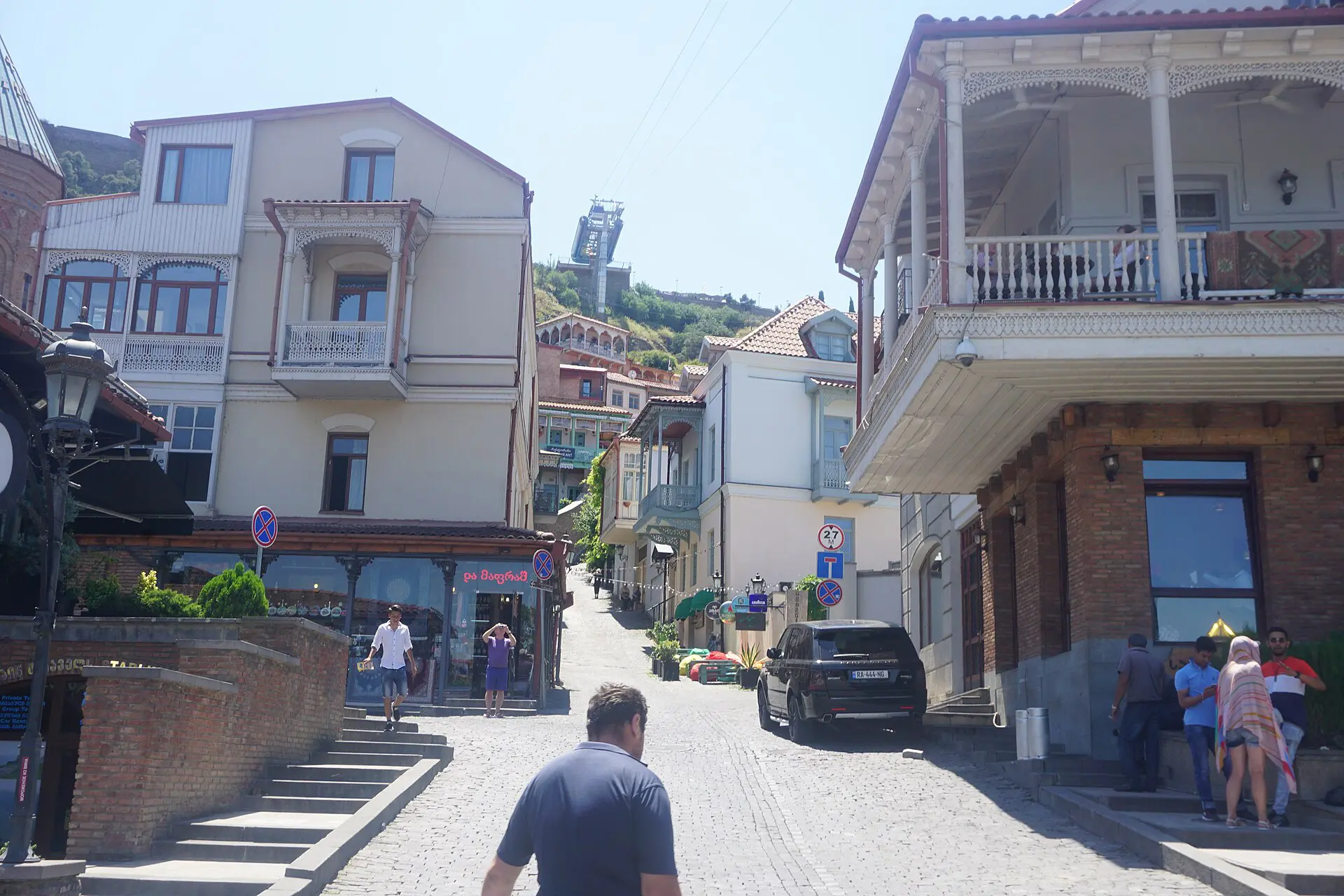
Georgian food is built around bread, cheese, walnuts, herbs and wine, and it is meant to be shared. Order khachapuri first, then khinkali, then a spread of cold vegetable dishes with walnut paste, and let the table fill up. Lunch and dinner are long, the plates arrive together, and a feast with toasts is called a supra. Below: how the day of eating runs, eight dishes to order, market timing, hedged price bands and the rules of the table.
How Georgian food and meals are structured
Georgia sits where the Black Sea coast meets the Caucasus, and its cooking reflects both: corn and beans in the west, wheat bread and meat dumplings in the mountains, and wine from the eastern valleys. The country is considered the oldest wine-making region in the world, with traces going back some 6,000 years BC, and wine is part of the meal rather than a separate event.
Breakfast is light: bread, cheese, eggs, perhaps a pastry from a bakery. The main meals are a late lunch and a long dinner, and in cities many kitchens stay busy until late evening. Dishes are not served in courses. Cold starters, bread, cheese, grilled meat and stews land on the table at the same time, and you take small portions from the shared plates.
The reason is the supra. Hospitality here is a matter of abundance, and the table is set to feed more people than are sitting at it. Treat any large order as normal, not as greed.
What to order: eight Georgian dishes by region
This is a map by dish and place, not by venue. Most of these appear on menus across the country, but each belongs to a region, and the regional version is usually the one worth ordering.
1. Khachapuri, the cheese bread
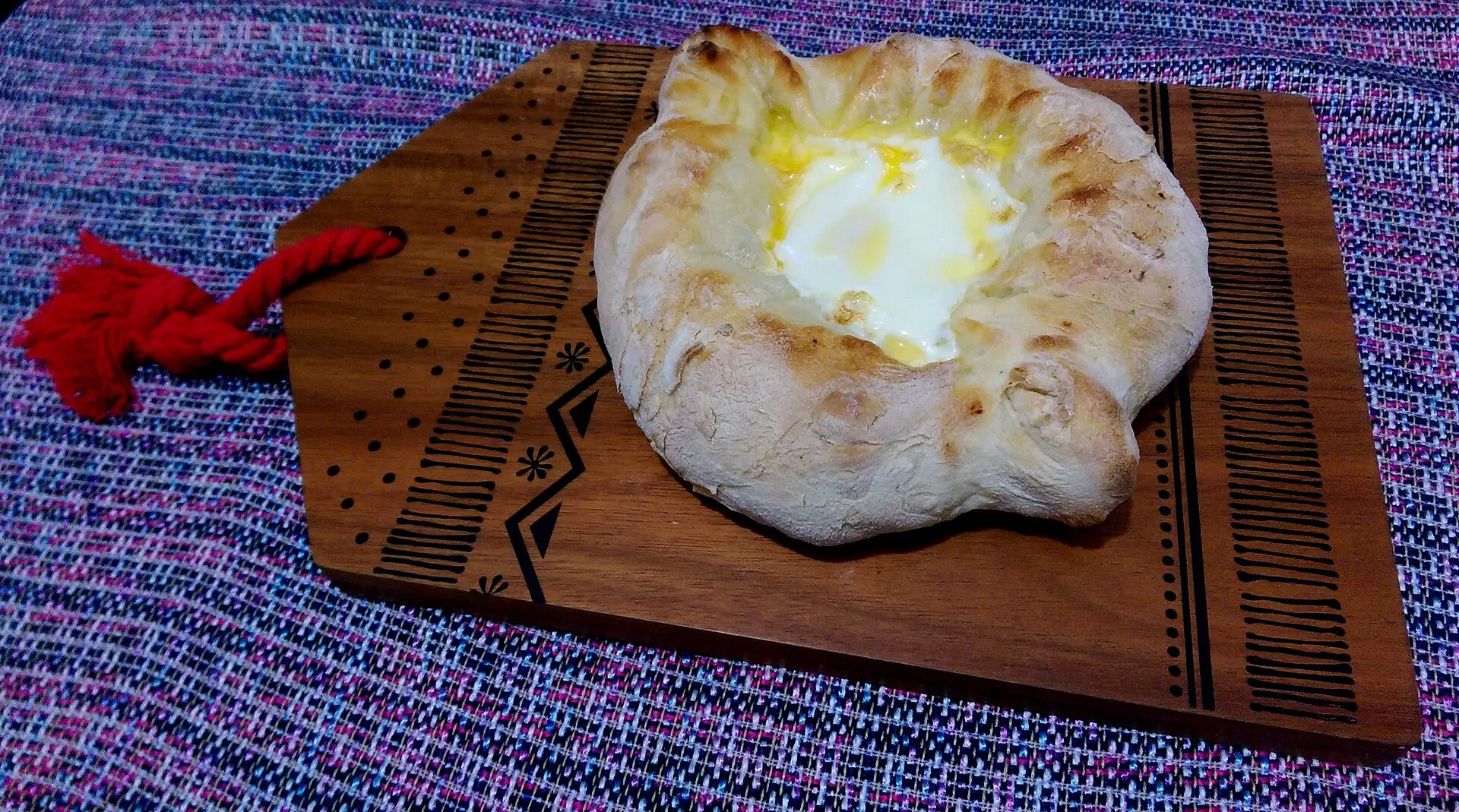
Khachapuri is bread filled with cheese. The Imeretian version is a round, flat loaf with cheese baked inside. The Adjarian version, from the Batumi coast, is boat-shaped, filled with melted cheese and finished with an egg yolk and butter at the table. Stir the yolk into the cheese, tear the crust and dip. A Megrelian version adds more cheese on top. One Adjarian boat suits two people. Expect roughly 4-8 USD for a large one in a casual place, as of 2026.
2. Khinkali, the dumplings with soup inside
Khinkali come from the mountain regions in the north-east. A twisted knot of dough holds spiced meat, usually beef and pork with onion, herbs and a little water that turns into broth as it cooks. Order by the piece, usually five or more per person for a main meal. Cheese, mushroom and potato versions exist for vegetarians. Black pepper is the normal seasoning. Prices are per piece and usually well under 1 USD in casual places.
3. Pkhali and badrijani nigvzit, the cold starters
Pkhali are cold balls or pâtés of minced spinach, beet greens or cabbage with ground walnuts, garlic, vinegar and herbs. Badrijani nigvzit are fried aubergine slices rolled around the same kind of walnut paste, topped with pomegranate seeds. They are the best place to start if you eat little meat. A mixed plate of several costs about 3-6 USD in most casual kitchens.
4. Lobio, beans in a clay pot
Lobio means beans. The classic version is red kidney beans stewed with onion, coriander, fenugreek and walnuts, served hot in a clay pot with a corn bread called mchadi and pickles. It is cheap, filling and vegan in its traditional form, though some cooks add pork fat, so ask. A portion typically runs 2-5 USD.
5. Mtsvadi, skewers over fruit wood
Mtsvadi is Georgian grilled meat on skewers, usually pork or lamb, cooked over embers and served with raw onion, pomegranate sauce and sour plum tkemali. Tkemali is the sauce to learn: sharp, green or red, spiked with herbs and garlic. Meat is sold by weight or by skewer, and a portion is usually 5-10 USD in casual places, as of 2026.
6. Chakhokhbili and chakapuli, the herb stews
Chakhokhbili is chicken or pheasant stewed with tomato, onion and fresh herbs. Chakapuli is a spring dish of lamb or veal cooked with tarragon, sour green plums and white wine. Both are light on spice and heavy on herbs. Chakapuli is seasonal, so ask whether it is on. Mains of this kind cost around 6-12 USD.
7. Satsivi, walnut sauce on cold poultry
Satsivi is poultry in a cool sauce of ground walnuts, garlic and spices such as coriander, fenugreek and cinnamon. It is a festive dish, often served at winter holidays, but many kitchens keep it all year. The sauce is rich, so share a plate. It sits in the 5-10 USD band in sit-down places.
8. Churchkhela and bread, the pocket food
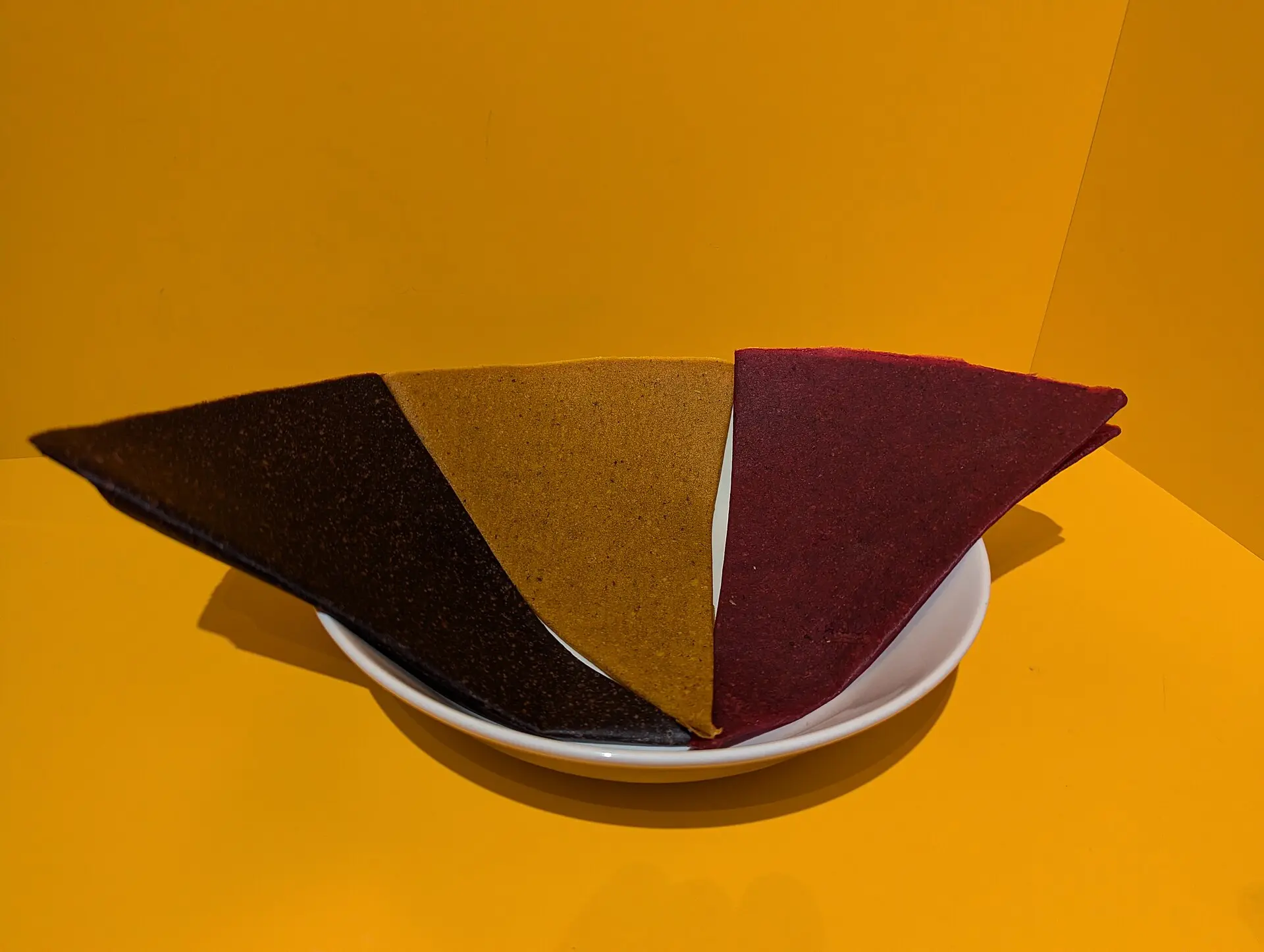
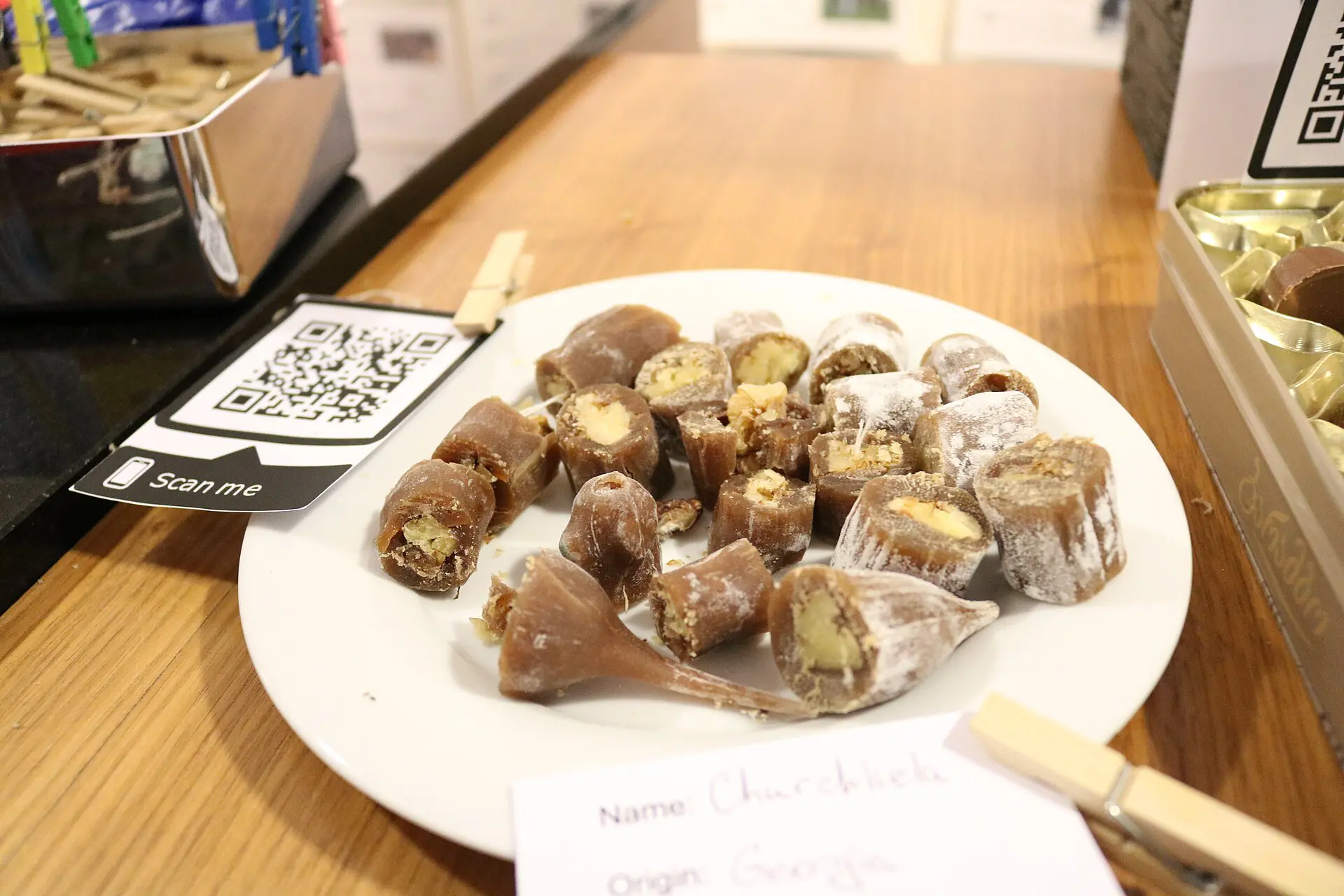
Churchkhela is a string of walnuts or hazelnuts dipped repeatedly in thickened grape must and dried into a chewy candle. It is sold from roadside stalls and markets and keeps well, so it travels. Alongside it, look for shotis puri, long bread baked against the walls of a clay oven. A churchkhela or a bread loaf is usually in the 1-3 USD range.
Market timing: when to shop and snack
| Time | Where | What to look for |
|---|---|---|
| 07:00-10:00 | Bakeries and clay-oven shops | Hot shotis puri, cheese pastries |
| 08:00-12:00 | Covered food markets in Tbilisi, Kutaisi, Batumi | Cheeses, tkemali, spices, churchkhela, fresh herbs |
| 12:00-15:00 | Casual cafes and dumpling kitchens | Khinkali, lobio, lunch plates |
| 19:00-23:00 | Sit-down kitchens | Mtsvadi, shared starters, wine |
Markets are best before late morning, when produce is fresh and sellers have time to let you taste cheese and sauces. Check each market’s days and hours locally, as they change.
How much does Georgian food cost?
These are hedged per-person ranges in USD, as of 2026. Prices rise in resort towns and in the busiest parts of Tbilisi and Batumi.
| Meal | Typical band | What it buys |
|---|---|---|
| Bakery breakfast | about 1-3 USD | Pastry or bread with cheese, coffee |
| Casual lunch | about 4-9 USD | Khinkali or khachapuri, a starter, a soft drink |
| Sit-down dinner | about 10-20 USD | Shared starters, grill, a glass of wine |
| Wine-led feast | about 25-40 USD and up | Many plates, a carafe or bottle |
Georgian table etiquette: supra, toasts and sharing
A supra is led by a toastmaster, the tamada, who proposes a series of toasts in a set order, such as to peace, to family, to those absent. Wine is drunk with each toast and the glass is not meant to be emptied on every round at a restaurant, though in a home you may be expected to join in. Do not drink before the first toast, and do not start a toast of your own unless invited.
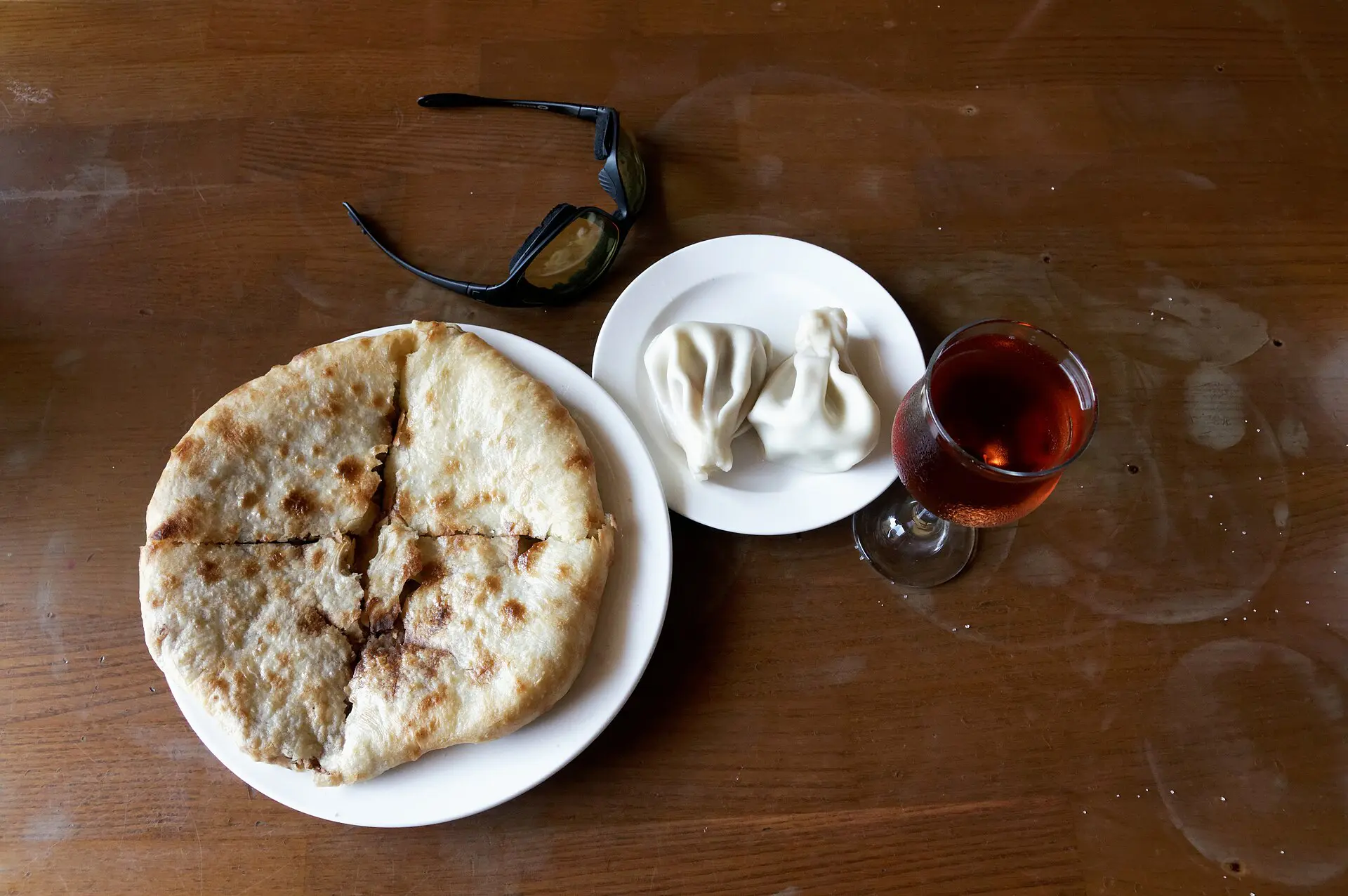
Khinkali are eaten by hand. Hold the dumpling by the knot, turn it, bite a small hole, sip the broth, then eat the rest. Leave the knot on the plate; the count of knots is how the table counts what has been eaten. A fork is considered an insult to the dumpling, and many hosts will smile at it.
- Bread: tear it, do not cut it, and use it to move sauce.
- Tipping: a service charge of around 10 percent is sometimes added, so check the bill before adding more. Rounding up is normal otherwise.
- Refusing food: a polite “enough, thank you” with a hand over the plate is accepted, but expect a second offer.
- Dress and pace: a feast can run for hours. Do not plan another meeting after it.
How to read a Georgian menu with a language barrier
Menus in Tbilisi and Batumi usually have English or Russian translations, and many have photos. Georgian script looks daunting, so learn five words: khachapuri, khinkali, mtsvadi, lobio and pkhali. Each shows up transliterated on almost every menu.
Check whether khinkali are priced per piece, which is normal, and whether meat is priced by weight, which means the number on the menu is for 100 grams. Ask the server to recommend a “plate for two” if the menu is hard to read, and say whether you eat meat. A translation app that reads Georgian script through the camera is useful for small kitchens. Details on the wider country are in our Georgia travel guide.
What to skip in Georgia
I would skip menus with long photo displays of every national dish on one page and a price list in several currencies, as they tend to be aimed at tour groups and sell the same dishes at a higher price. I would also skip khachapuri that has clearly been reheated. And be careful with wine sold in unlabelled plastic bottles by the roadside: it can be excellent home wine or poor, and you cannot tell until you drink it. A medium-sized bottle from a shop with a label is a safer start.
If you plan to stay longer and cook at home, our guide to Georgia for remote workers covers bases and monthly budgets.
FAQ about Georgian food
What is Georgian food known for?
Georgian food is known for khachapuri (cheese bread), khinkali (meat dumplings), walnut-based sauces and starters, grilled meats and wine. Herbs such as coriander, dill and tarragon are used generously, and spice is mild rather than hot. Many dishes suit vegetarians.
What should I order first in Georgia?
Start with an Adjarian or Imeretian khachapuri and a plate of khinkali, then add a mixed plate of pkhali or badrijani nigvzit. Add mtsvadi if you want grilled meat. Order a few dishes to share before adding more.
Is Georgian food spicy?
Mostly not. The flavours come from herbs, garlic, walnuts and sour plums, not chilli. Adjika, a red paste, and some sauces can be hot, so taste a little first. Black pepper on khinkali is the usual heat.
Can vegetarians eat well in Georgia?
Yes, easily. Pkhali, lobio, badrijani nigvzit, cheese-filled khachapuri, mushroom or cheese khinkali and bread with fresh herbs are widely available. Ask about animal fat in beans and stews, as some cooks use it.
Do I need to tip in Georgia?
Tipping of around 10 percent is common in sit-down restaurants, and some add it to the bill as a service charge. Check the receipt before adding more. In bakeries and cafes, rounding up is enough. See also the Wikivoyage guide to Georgia.