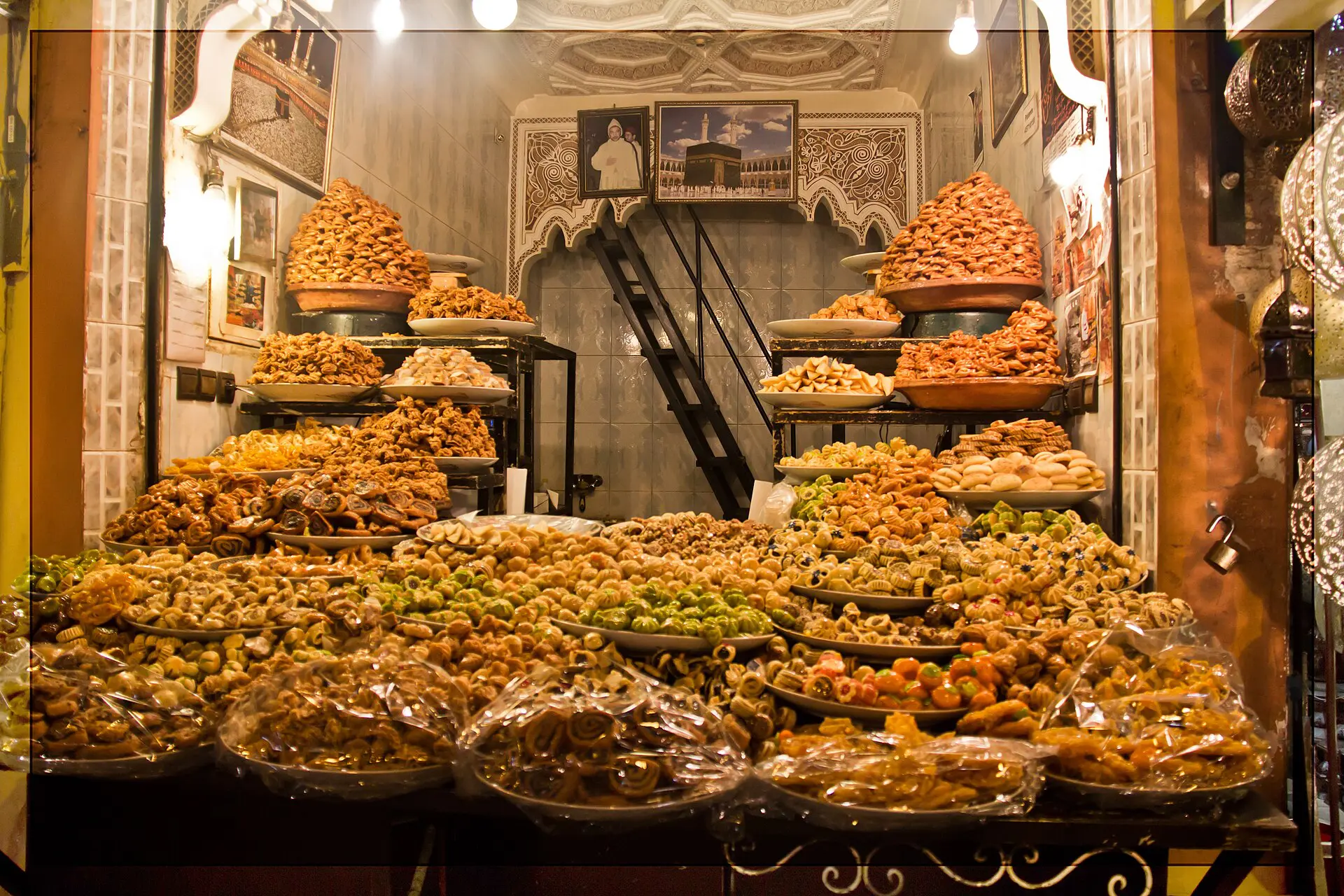
Moroccan food is slow, spiced and shared. Start the day with msemen and mint tea, eat soup and bread at midday, and order tagine or couscous as the main meal, ideally at lunch. Spice here means warmth and aroma, ginger, cumin, saffron and cinnamon, more than chilli. Below: how the day runs, eight dishes by meal, souk and market timing, hedged price bands and the table rules that matter.
How Moroccan meals are structured and timed
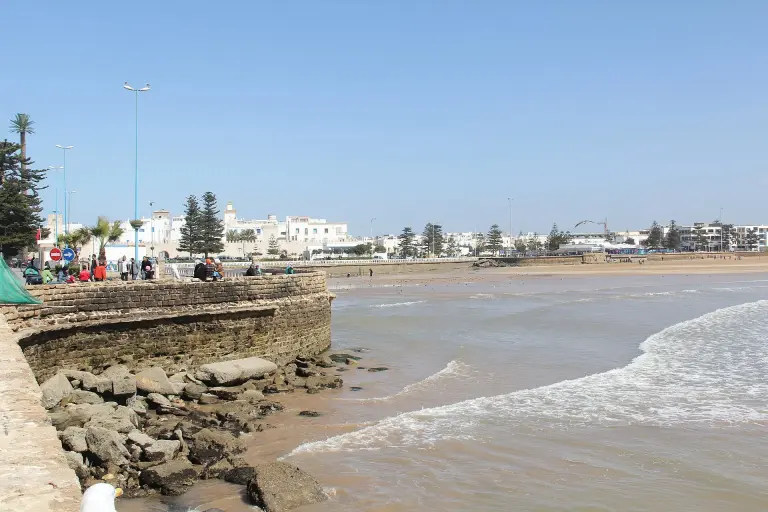
Morocco has coasts on both the Mediterranean and the Atlantic, farmland on the plains, and the Atlas mountains inland, and the table reflects that. The country is a gateway to Africa for many travellers, with souqs and spice markets at the centre of towns. Bread is the base of every meal and also the spoon. Olive oil, preserved lemons, olives, argan oil in the south and fresh herbs run through almost everything.
Breakfast is bread, pancakes, olive oil, jam and tea or coffee. Lunch is the main meal, often a tagine or couscous served in a shared dish. Dinner is lighter, usually soup, grilled meat or leftovers, and it comes late in summer. In households, Friday lunch is traditionally couscous, so that is when it is best.
Why the table looks like this: the clay pot and the low flame came from cooking over charcoal braziers in dense medinas, where a stew could sit for hours while the cook worked. Preserved lemons and olives keep without refrigeration, spices were traded along caravan routes, and bread baked in the neighbourhood oven meant a household could send a tray of dough to be fired for a small fee. The system is communal by design, and it explains why a lot of the best food is cooked in bulk and sold by weight or by the plate.
During Ramadan, many cafes and restaurants close in the daytime and the main meal is at sunset. Plan around it, and check current dates.
What to order in Morocco: eight dishes by meal
1. Msemen and baghrir, the breakfast breads
Msemen is a layered, folded square pancake griddled until crisp at the edges, served with honey, butter or olive oil. Baghrir is the “thousand holes” semolina pancake, soft and spongy, eaten with melted butter and honey. Both come with mint tea or coffee. Expect around 1-3 USD for breakfast from a street cart or small cafe, as of 2026.
2. Harira, the soup
Harira is a thick tomato soup with lentils, chickpeas, herbs, a little rice or vermicelli, and often lamb. It is the standard way to break the Ramadan fast, but it is sold throughout the year at street counters and in cafes. Eat it with dates or a boiled egg and bread. A bowl is usually around 1-2 USD.
3. Tagine, the clay-pot stew
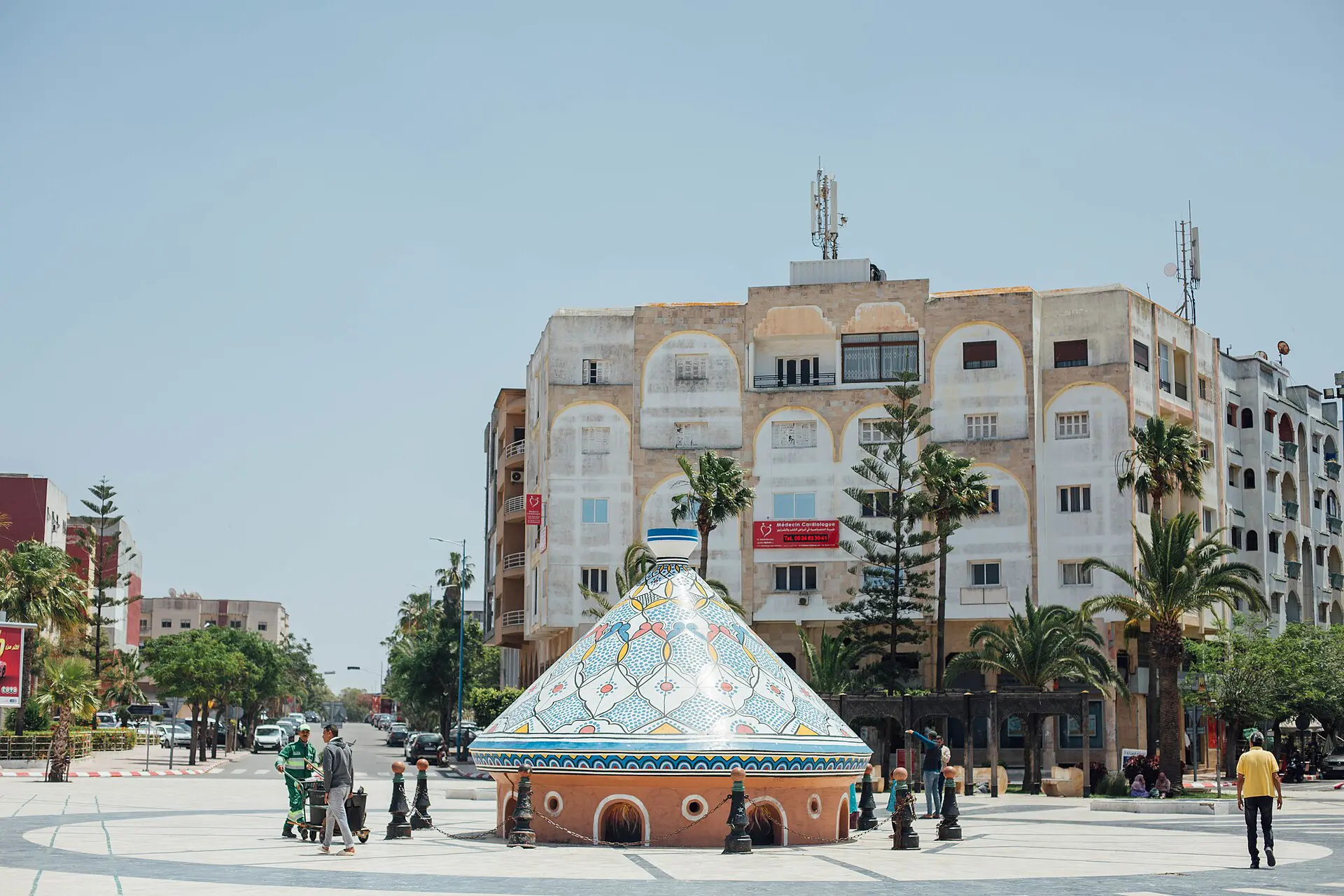
A tagine is named for the conical clay pot in which it cooks slowly over low heat. Common versions are chicken with preserved lemon and olives, lamb with prunes and almonds, and beef with vegetables. The sauce is eaten with bread, not with a spoon. Order a tagine at lunch, and expect about 4-9 USD in a casual place and more in a tourist-facing one.
4. Couscous, the Friday meal
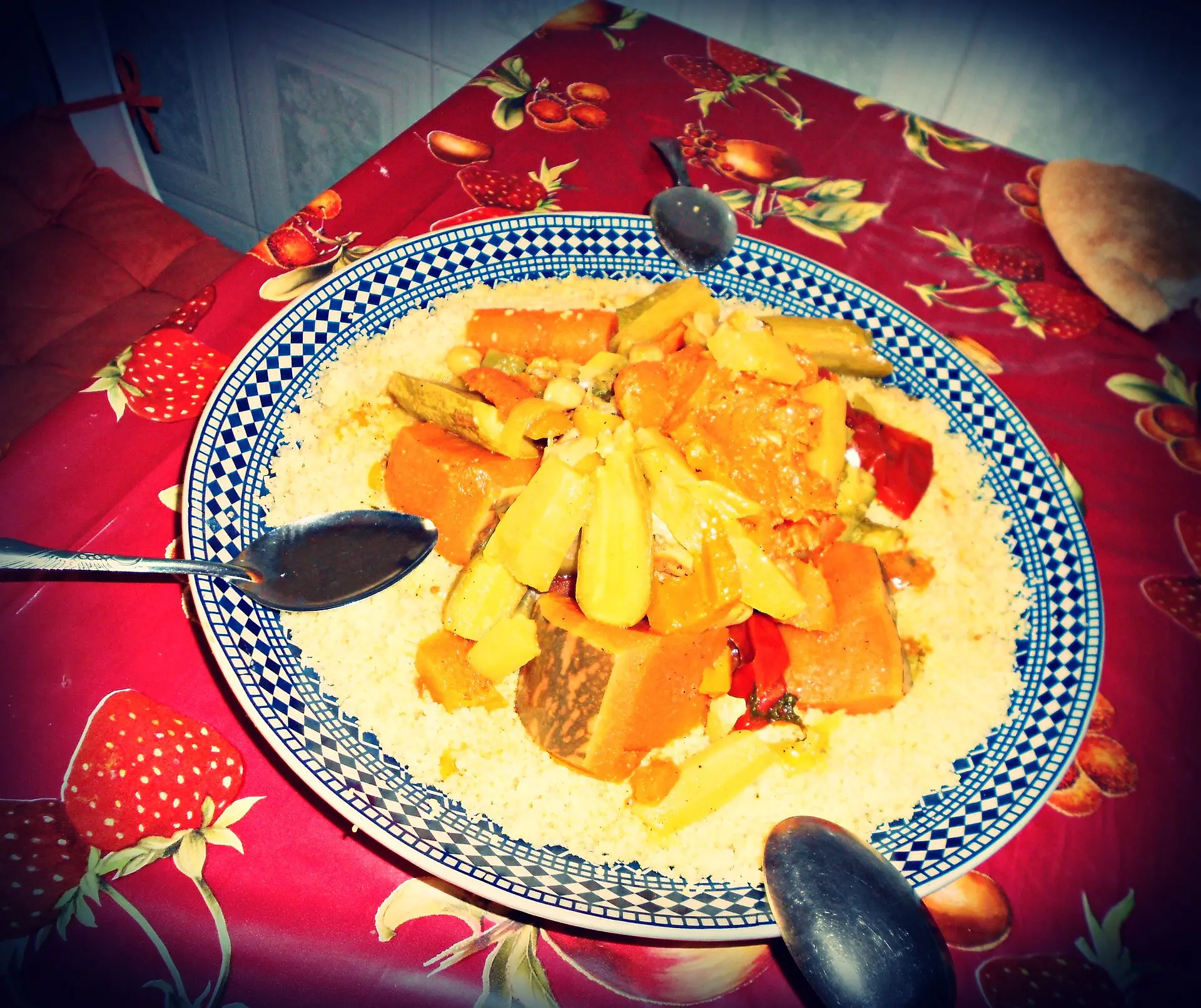
Steamed semolina grains, piled under seven or so vegetables, chickpeas and meat, and moistened with broth. It takes hours to prepare, and it is traditionally a Friday family lunch. Many restaurants serve it only on Fridays or on request. If you see it on a Friday menu, order it. A portion typically costs 5-10 USD.
5. Pastilla, the sweet-and-savoury pie
Pastilla (bastilla) is a pie of paper-thin warqa pastry, traditionally filled with pigeon and now more often chicken, with onion, eggs, almonds, cinnamon and a dusting of sugar. It is a feast dish most associated with Fez. Seafood versions exist on the coast. A single pie typically costs 5-12 USD, and it works as a starter to share. The sweet dusting of sugar and cinnamon on top surprises first-timers, so treat it as part of the dish and not a mistake.
6. Tanjia and mechoui, the slow meat
Tanjia is a Marrakech speciality: beef or lamb cooked for hours in a sealed clay jar with preserved lemon, cumin and saffron, often in the embers of a hammam furnace. Mechoui is a whole lamb or shoulder roasted until it falls from the bone and eaten with salt and cumin. Both are sold by weight at market stalls. Ask for the price before you order, and expect roughly 6-14 USD.
7. Brochettes, kefta and grills
Grilled skewers of beef, lamb or chicken, spiced minced kefta, and merguez sausage are the street food of every medina after dark. They come with bread, salad and a spiced dip. Pick a stall with fast turnover and meat cooked in front of you. A grill plate is about 3-7 USD.
8. Sardines and seafood on the coast
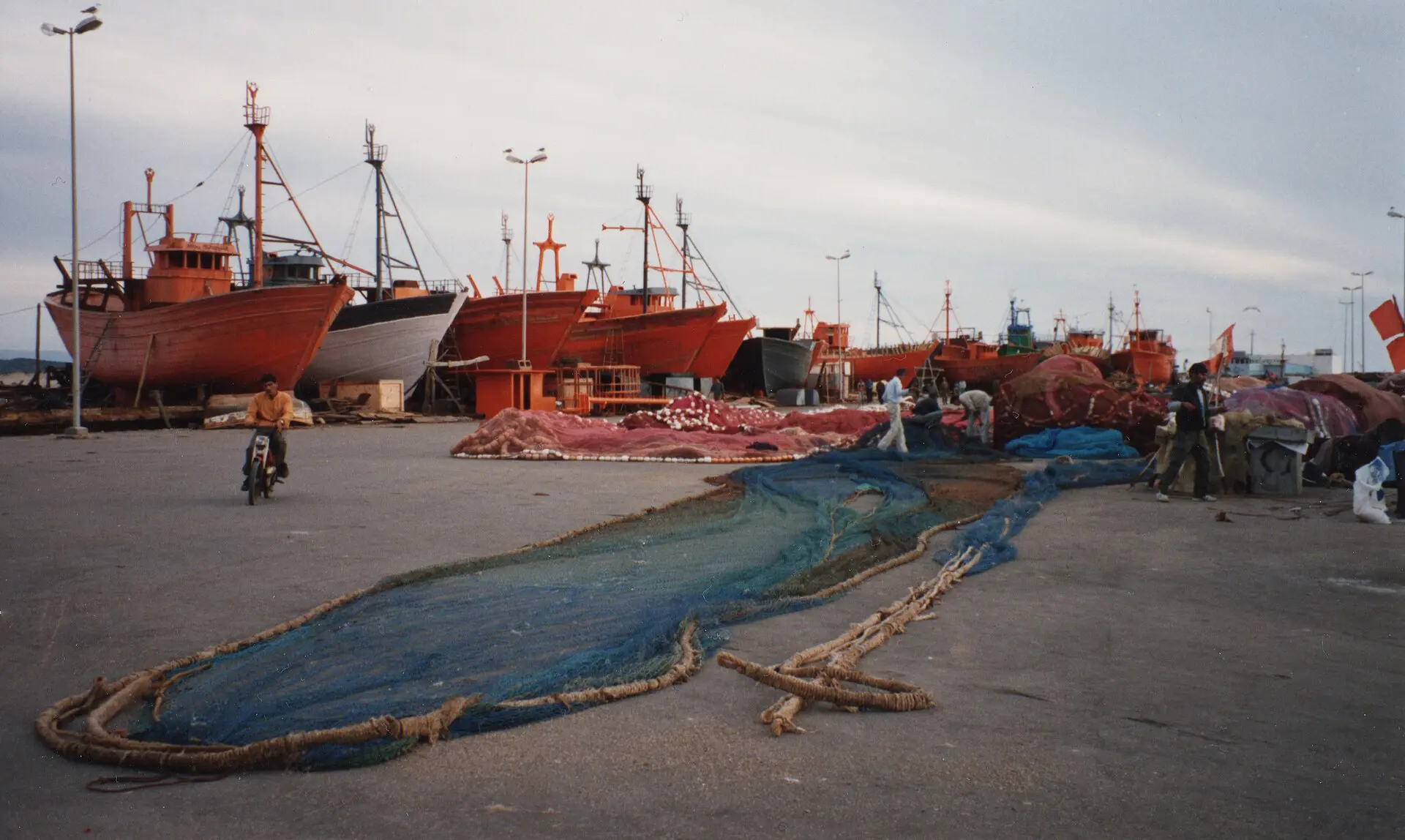
On the Atlantic coast, fish is the lunch. Grilled sardines, sea bream and calamari are cooked at harbour-side stalls and in port markets, sometimes chosen by weight from ice. Essaouira and other ports built their food around this. Walk the stalls first and compare. Ask for the day’s catch and the price per kilo before they cook it. A fish lunch is usually in the 5-12 USD range. Inland, fish is less reliable, so keep seafood for the coast.
Souk and market timing in Morocco
| Time | Where | What to look for |
|---|---|---|
| 07:00-10:00 | Bakery lanes, breakfast carts | Msemen, baghrir, fresh bread, tea |
| 09:00-12:00 | Fresh-food souks and covered markets | Olives, dates, spices, herbs, preserved lemons |
| 12:00-15:00 | Cafes and restaurants | Tagine, couscous (Fridays), seafood grills |
| 17:00-21:00 | Main squares and medina lanes | Harira, grills, sweets, snail soup stalls in some cities |
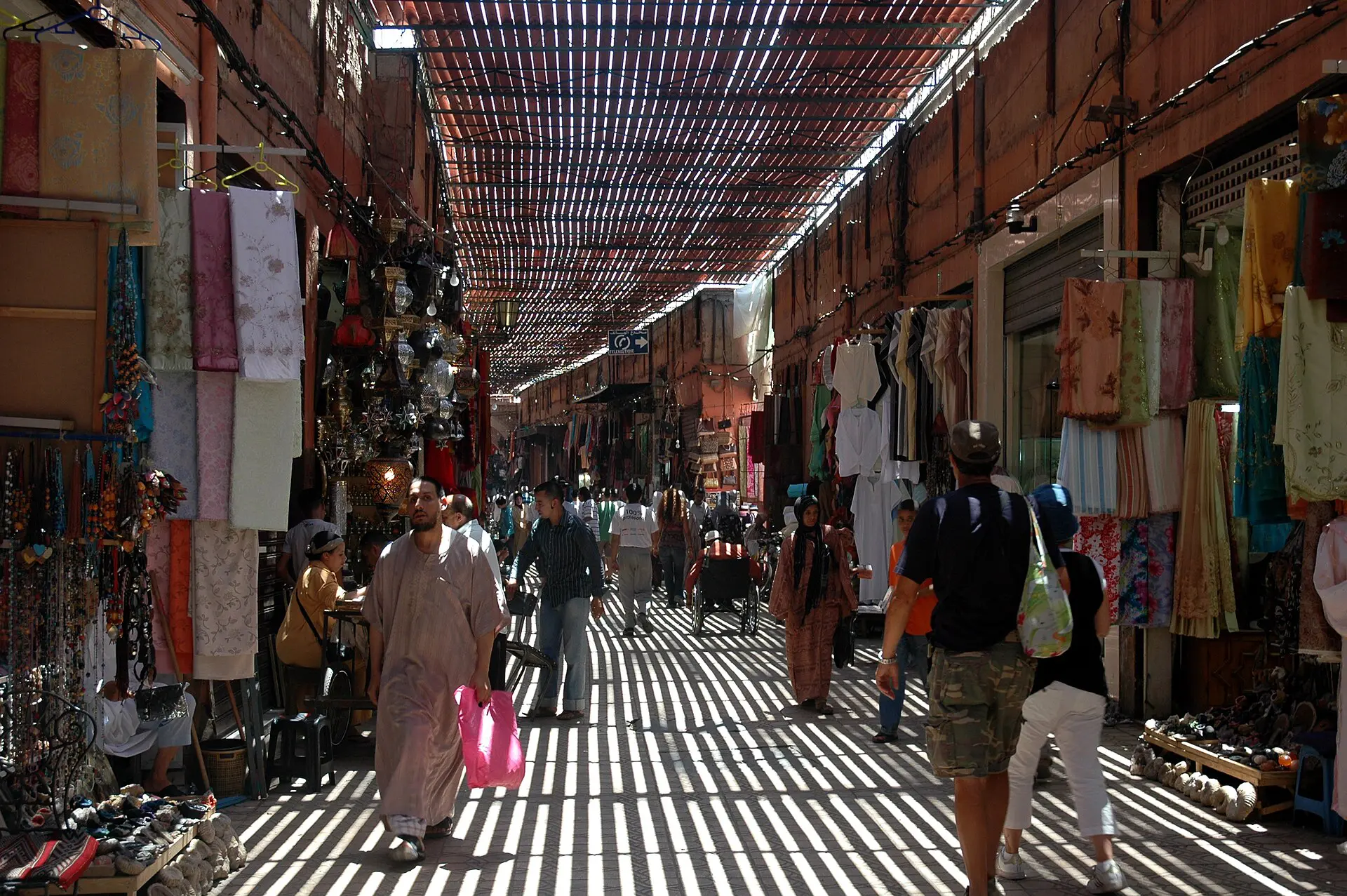
Go to food souks in the morning, when produce is fresh and the heat is mild. Buy spice blends such as ras el hanout in small quantities from a stall with high turnover, since ground spices lose aroma within months, and ask the seller to name the main ingredients. Many shops slow down at midday and some close on Friday around the prayer. Check opening hours locally.
How much does Moroccan food cost?
Hedged per-person ranges in USD, as of 2026. Prices rise in Marrakech’s main square and on tourist routes.
| Meal | Typical band | What it buys |
|---|---|---|
| Breakfast | about 1-4 USD | Pancakes or bread, tea or coffee |
| Street lunch | about 2-6 USD | Soup, sandwich or grill plate |
| Sit-down lunch | about 6-15 USD | Tagine or couscous, salad, bread, drink |
| Dinner in a tourist district | about 12-25 USD and up | Set menu with starters and dessert |
Moroccan table etiquette
- Right hand: eat and pass with the right hand. Bread is the utensil.
- Shared dish: eat from the section in front of you. A host may push meat toward you, which is a gesture of welcome.
- Wash hands: a pitcher and basin may come before and after the meal.
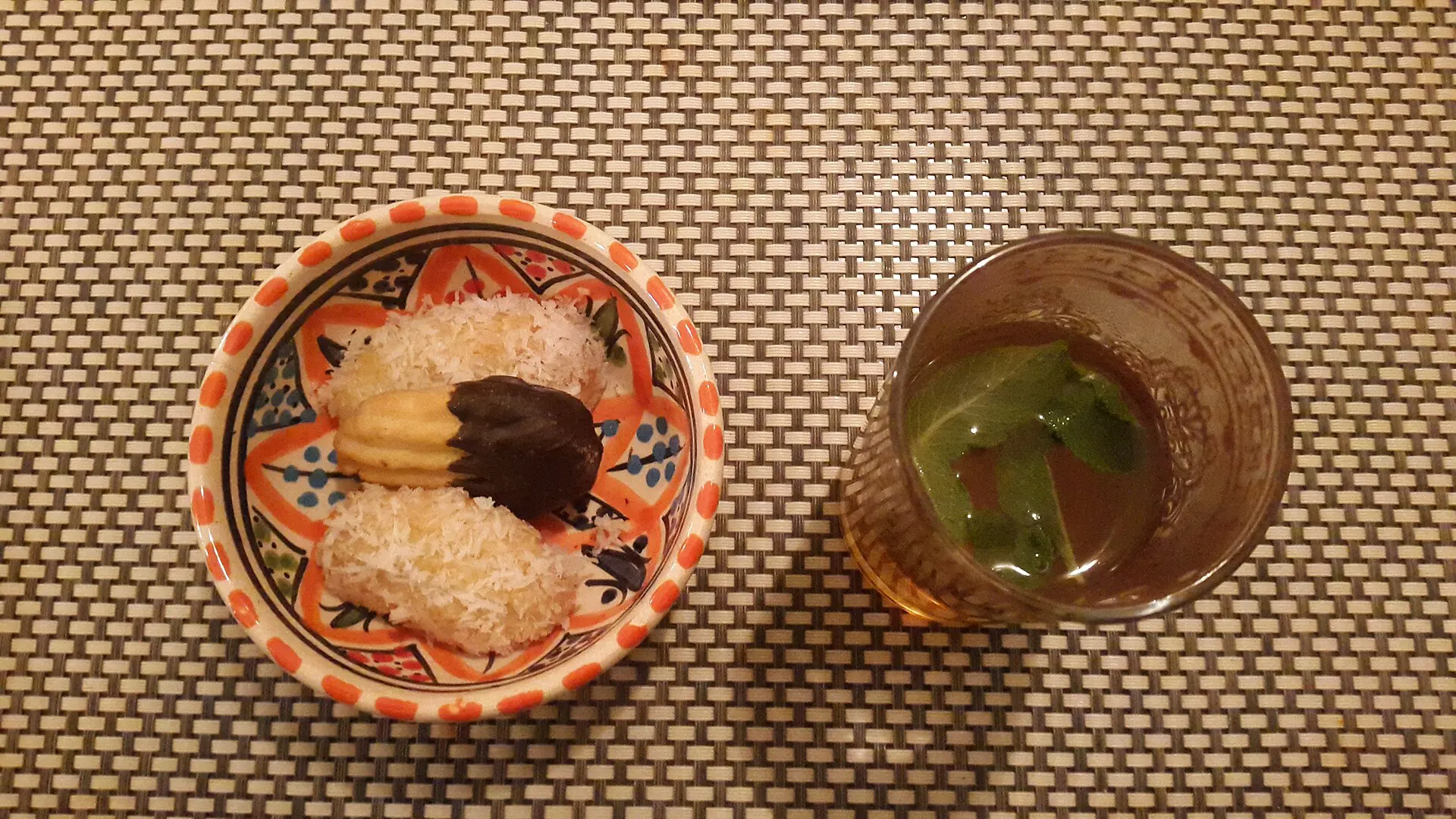
- Mint tea: it is poured from height and offered several times. Accepting at least one glass is polite.
- Tipping: around 10 percent in a sit-down restaurant is common, and small change for cafes and guides. Check whether service is included.
What to skip in Morocco
I would skip touts who walk you to a restaurant, since the price tends to include their commission. Skip menus with the same tagine at three times the market price, in the main squares of the biggest cities. And skip unpeeled fruit or salads washed in tap water in your first days. When a stall lacks a price board, ask before you sit, not after.
FAQ about Moroccan food
What is the national dish of Morocco?
Couscous and tagine are the two dishes most associated with Morocco. Couscous is the traditional Friday family meal, and tagine is the everyday stew cooked in clay. Harira soup and pastilla complete the classic list, and mint tea closes most meals.
What should I order first in Morocco?
Start with harira and bread, then a chicken tagine with preserved lemon and olives at lunch. If it is Friday, order couscous instead and let the table share it. End with mint tea and a pastry or fresh fruit, then walk it off through the souk.
Is Moroccan food spicy?
Not usually. It is aromatic and warmly spiced, with ginger, cumin, paprika, saffron and cinnamon. Heat comes from harissa, a chilli paste, which is served on the side, so you control it.
Is street food safe in Morocco?
Choose busy stalls where food is cooked hot to order, and skip raw salads and ice at first. Drink sealed water. Visitors with sensitive stomachs usually do well sticking to grilled meat, soup and bread. Check current health advice before travel.
Do you tip in Morocco?
Yes. Around 10 percent is common in sit-down restaurants, and small change is normal in cafes and with guides. Check whether service is already on the bill before adding more, and carry coins for stalls. See the Wikivoyage Morocco guide for background.