
What is a digital nomad? Someone who earns a living online and chooses where to live, moving between cities or countries instead of settling in one home base. The work travels with a laptop and a connection. The lifestyle also involves visas, taxes, time zones and a monthly budget, which is where most plans succeed or fail. This guide covers how it works in practice and what to verify first.
What is a digital nomad, and who counts as one?
The label is loose. Most of us use it for people whose job, freelance work or business does not depend on a fixed office, and who deliberately change location every few weeks or months. A remote worker who lives in one city and commutes to a spare room is not usually called a nomad, though the skills overlap.
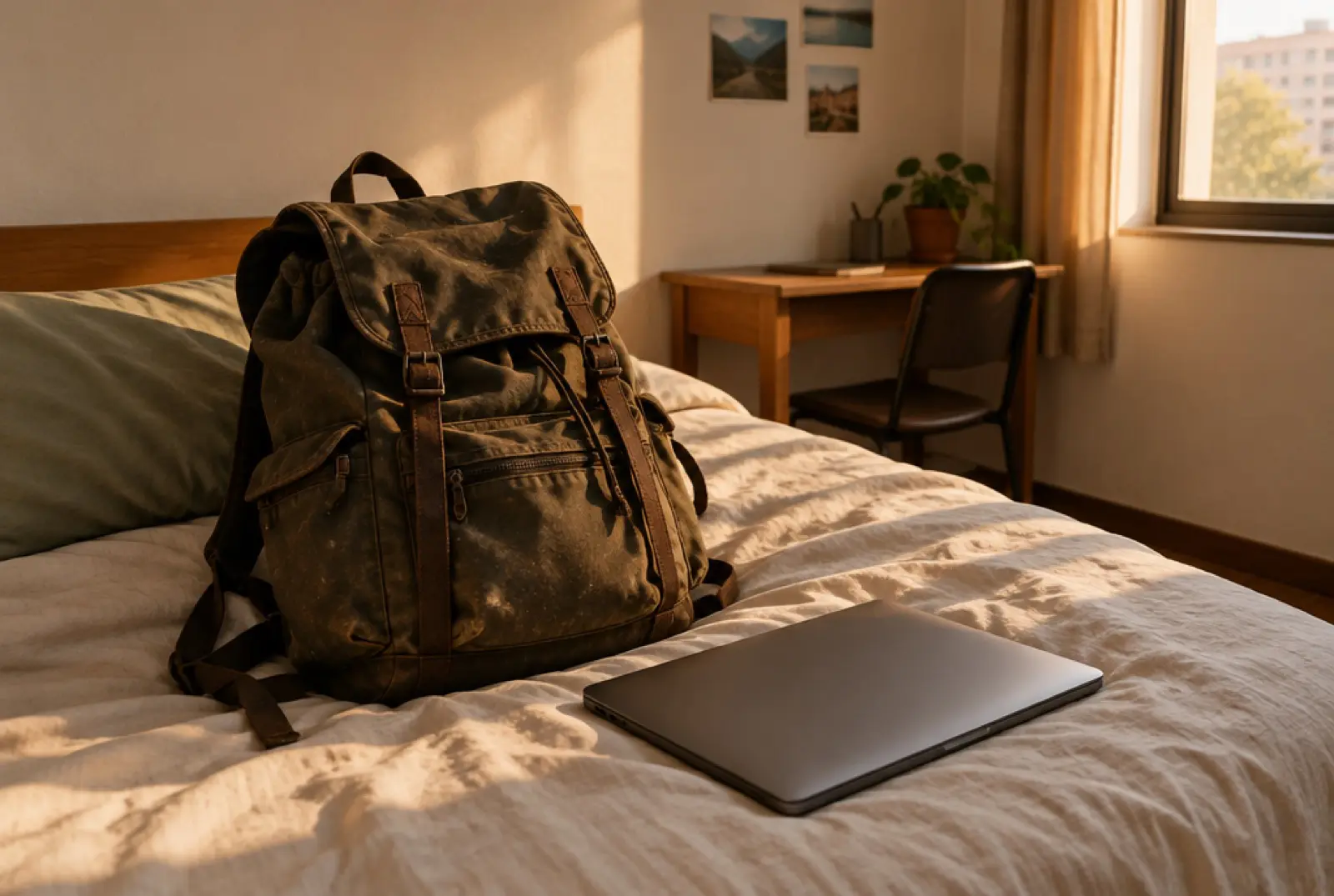
People asking what is a digital nomad often expect a permanent holiday. It is closer to a normal job done from rotating addresses, and the best versions are quite routine: a fixed morning, a regular desk, a predictable lunch. The adventure is in the evenings and weekends.
The idea sits between travel and ordinary working life. Workdays still exist, with deadlines and calls, but the weekend is spent somewhere new. That trade-off is the whole point, and also the main source of tiredness for people who move too often.
The main types of digital nomad compared
Not everyone who works while travelling lives the same way, and the differences decide your costs, your legal position and how tired you get.

The table sorts the common patterns by stay length and what each tends to cost. Treat the stay lengths and costs as rough, since they depend on destination and personal habits. Check the official source for any legal limit before relying on it.
| Type | Typical stay per place | Main appeal | Watch for |
|---|---|---|---|
| Fast mover | days to two weeks | Variety, many countries | Burnout, high transport costs, patchy work routine |
| Slow nomad | one to three months | Real routine, lower rent per night | Visa and stay limits, tax residency questions |
| Seasonal base | three to six months | Warm winters, cheaper rent | Residency rules, health cover, lease terms |
| Workcation visitor | one to four weeks | A trip without using all leave | Employer rules, time zones, tax on work performed abroad |
| Long-term expat | a year or more | Settled life abroad | Work permits and local tax, often not called a nomad |
Seven things to work through, in order
This is the framework we would use. Each step answers one practical question, and each can end a plan if it goes wrong.

1. Your income and how portable it is
Start with the money. A salaried job with an employer that allows work abroad is the simplest. Freelancing and online businesses are more flexible but less predictable. Many people want a buffer of several months of expenses before they start. Check whether your employer permits work from another country, because some do not.
2. Your time zone
Time zones shape the working day more than scenery does. A nomad in Asia with a client in the US can end up working nights. Before you pick a place, list your fixed calls and count the hours of overlap. A time difference of three to five hours is usually comfortable, and eight or more tends to affect sleep and social life.
3. Visa route and stay length
Many countries now offer a remote-work or digital nomad visa, with income requirements and limits that differ by country and change often. Others rely on tourist entry, which usually does not cover work. Our guide to Spain’s digital nomad visa shows what to check. Verify with the official source for each country, because blogs go out of date.
4. Tax and residency
Tax is the least glamorous part and the most expensive to get wrong. Staying in one country for a long enough period can create tax residency there, and your home country may still tax you. Rules vary by country and by personal situation. For anything more than a short stay, a qualified tax adviser is worth the fee.
5. Insurance and health
Ordinary travel insurance may not cover long stays, and standard home health plans often do not apply abroad. Look for expat or long-stay travel insurance, and read what it excludes. Check how it treats working abroad and any pre-existing conditions. Some policies exclude certain countries or activities, and some only cover trips under a set number of days, so read the schedule rather than the brochure.
6. Your setup and connection
A laptop, a reliable second power adapter, a mobile data plan and a backup connection cover most needs. We cannot vouch for any particular Wi-Fi network or cafe, so test your own before depending on it. Work-friendly spots fall into four types: cafes with outlets, coworking spaces, libraries and your rental.
7. Where to base yourself and for how long
Match the base to your work. Deep-focus work suits a quiet, mid-sized city. Calls suit somewhere with a friendly time zone. A social life suits a place with coworking and regular events. A slow month beats a rushed week, so pick fewer places and stay longer. Our guide to the best places to live in the world weighs bases for remote workers.
A useful rule is to spend the first week learning the neighbourhood and checking that the setup works, the second and third weeks in a settled routine, and the last week deciding whether to extend or move. If the first week fails, leave early rather than waiting out a bad lease.
A rough one-month budget band
Costs depend on country more than anything else. As a rough guide, a single person might spend about US$1,000 to 1,800 in a lower-cost city in Southeast Asia, US$1,800 to 3,000 in Southern or Eastern Europe or parts of Latin America, and US$3,500 or more in expensive Western cities. These are broad ranges as of 2026 and housing is the swing factor.
Our country cost guides show how this plays out, from the cost of living in Thailand at the lower end to the cost of living in Switzerland at the top. Most other countries fall between them.
Whatever the budget, a few fixed costs repeat every month: housing, food, local transport, a mobile plan, insurance and a coworking or cafe habit of perhaps US$50 to 200. Flights between bases are the line people forget, so average them over the year. Moving every 30 days with one flight each time adds roughly US$100 to 400 a month, depending on distance.
Common mistakes and edge cases
- Moving too fast: changing city every few days leaves little room to work or rest.
- Relying on tourist entry: working on a visitor stay can be a grey area in some countries.
- Ignoring tax: overstaying in one country can create obligations you did not plan for.
- Booking long leases unseen: reserve a short first stay, then negotiate a longer one on arrival.
- Trusting one speed test: internet changes by time of day and building.
- Underestimating loneliness: plan community, such as coworking days or meetups, from the start.
- Forgetting the return: a home address, bank access and healthcare rights can lapse if you stay away too long.
What to verify before you rely on it
Treat anything in a general guide as a starting point. Before you book, confirm these with the official source or a professional.
- The visa or entry rule for your passport and the number of days allowed.
- Whether remote work is permitted under that entry type.
- Your tax position in your home country and the country you will stay in.
- Your employer’s policy on working abroad.
- Insurance terms for long stays and for working abroad.
- The cost of the place, using a country guide and a first-week spending check.
- The real internet speed and power reliability at your accommodation, tested yourself in the first days.
Where to go next
If you are deciding where to try it first for 30 days, start with countries that have a clear stay route and a good value rating. Our guide to the easiest countries to move to from the US compares options.
FAQ about being a digital nomad
What does a digital nomad do for work?
Common jobs include software development, design, writing, marketing, customer support, consulting and online business. Some employees work remotely for a company, while others freelance. The requirement is that the work can be done with a laptop and a connection, and that your employer or clients accept it.
Is being a digital nomad legal?
It depends on the country and your entry type. Many countries have remote-work visas, while others treat work on a tourist stay as a grey area. Tax rules also apply. Verify with the official immigration and tax sources for each country before you rely on any route.
How much money do you need to be a digital nomad?
It varies widely. A single person might spend roughly US$1,000 to 1,800 a month in lower-cost places and US$3,500 or more in expensive cities, plus flights and insurance. Many people also keep a buffer of a few months of costs, which matters if a client pays late or a visa takes longer than planned. Treat these figures as rough ranges.
What is the difference between a digital nomad and a remote worker?
A remote worker works away from an office but usually lives in one place. A digital nomad deliberately moves between places, often across borders. The two overlap, and many nomads are remote employees. The difference is mostly about travel and the legal questions it raises.
Can anyone become a digital nomad?
Only if their work can be done remotely and their employer, clients and visa situation allow it. Reliable income matters more than the idea. A short trial month in one place is a sensible way to find out whether the routine suits you before you commit further.