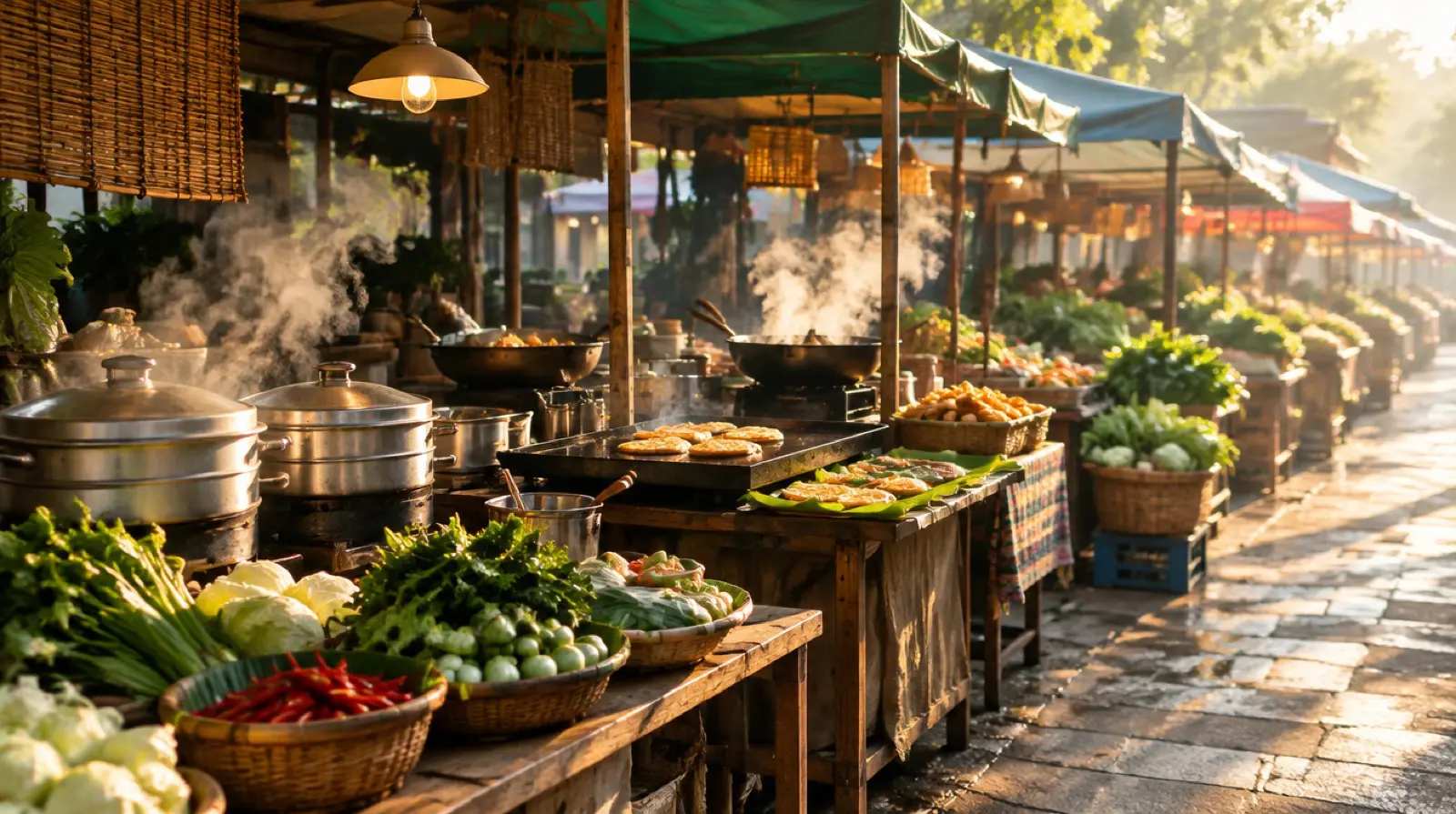
How to eat at a local market when travelling comes down to timing and observation. Arrive early, walk one full lap before you buy anything, and order from the stall with the shortest menu and the longest line of local customers. Start with whatever the stall is built around, pay in small notes, and eat on the spot. A market is a schedule, not just a place, so read the schedule first. Most of the good eating happens in a window of about 3 to 4 hours.
How to read a market before you eat in it
Every working food market runs on the same logic: produce arrives before dawn, cooks buy first, and the prepared food follows. Stalls that cook for market workers open early and sell out. Stalls that cook for shoppers open mid-morning and run through lunch. Stalls aimed at passers-by come last and tend to stay open longest.
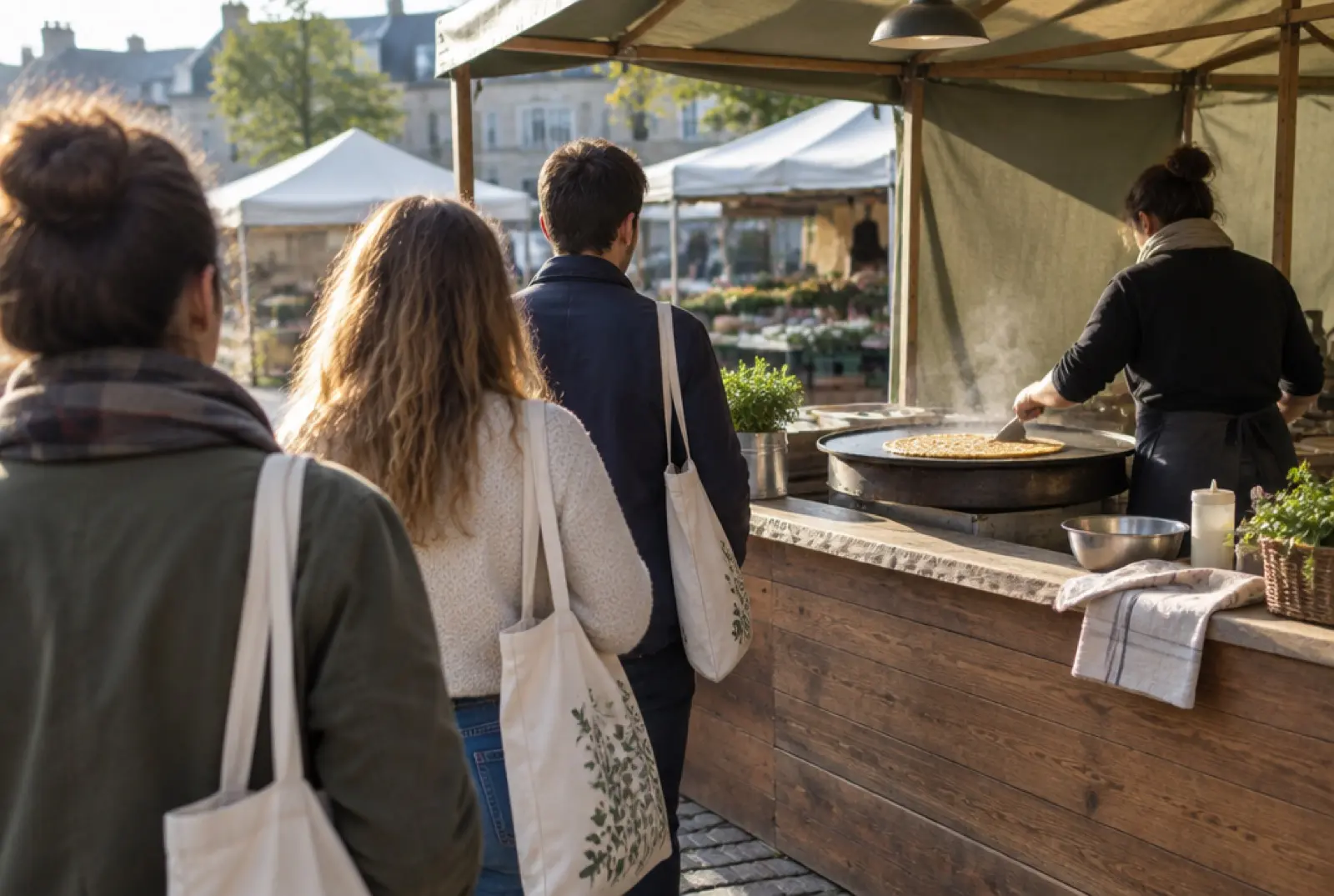
So the method is about timing and signals, not about finding a famous address. Four signals do most of the work: who is queuing, how short the menu is, how much is cooked in front of you, and how fast the food turns over. A stall that makes one thing, all morning, to a queue of people carrying shopping bags is telling you what to order.
The table below turns that into a first-pass checklist. The seven steps after it explain each row. Every market differs, so treat the times as typical patterns and check local hours before you plan around them.
The market-reading checklist at a glance

| Step | What to look for | What it tells you |
|---|---|---|
| Timing | Early morning for breakfast stalls; late morning to early afternoon for the main meal | Food is freshest and the menu is fullest before the produce stalls wind down |
| The lap | One slow walk before buying | Shows where the queues are and what each stall specialises in |
| The menu | One to three dishes, often no written menu | The cook is built around that dish |
| The queue | Locals, workers and families rather than only visitors | Turnover, which usually means fresher food |
| The heat | Food cooked to order, or held piping hot | Lower risk and better texture |
| Payment | Small notes and coins in the local currency | Fast service and fewer awkward moments over change |
| The seat | Shared tables, stools, or a standing counter | Eat there and then; leftovers travel badly |
Seven steps to eating well at any local market
1. Choose the right hour
Markets have a food day with a shape. In many places the first meal is a hot breakfast for people who have been working since before light: noodle soups, rice porridge, stews, fried dough, flatbread with something savoury. Lunch is the second peak, often the main meal of the day. By mid-afternoon the best stalls have sold out or packed up. Arrive in the first half of the market’s opening window and you meet the full menu.
2. Walk one lap before you buy
Do one slow circuit with your hands free, the way a regular would. Notice the stalls with a crowd, the ones with a single enormous pot or griddle, and the ones where the cook never looks up. Notice what people carry away: if every second person leaves with the same parcel, that is the dish of the market. A lap costs 10 minutes and saves you from the first stall you pass, which is usually the one built for foot traffic.
3. Follow the short menu
A stall that sells forty dishes is reheating most of them. A stall that sells one or two is making them over and over, which means the pot is fresh and the cook has done it thousands of times. Look for the stall with a signature item and a repeated motion: pulling noodles, turning skewers, flipping the same flatbread. If there is no menu, point at what the person ahead of you received.
4. Read the queue, not the sign
Signs and photos are written for visitors. Queues are written by regulars. A line of office workers, market porters or parents with school bags is a better recommendation than any review. A queue made up only of other visitors is weaker evidence, and a stall with no customers at the peak hour is a signal to keep walking.
5. Prefer food cooked hot, in front of you
Food that is fried, grilled, boiled or steamed to order, then served at once, is both the best bet for flavour and the sensible choice for your stomach. Be warier of food that has sat warm in the open, cut fruit left out in the sun, and ice of unknown origin. Peel your own fruit where you can.
If you are unsure about local water, stick to sealed bottled drinks, and ask your doctor or national travel-health service what applies to your destination.
6. Pay the way the market pays
Bring small notes and coins in the local currency, because a vendor selling a snack for a few coins cannot break a large note. Check how people pay before you order: some markets use cash only, others take mobile payments that visitors cannot easily use. Ask for the price when it is not displayed, and ask before you are served, not after. Withdraw cash from a bank machine rather than exchanging at a stall.
7. Eat there, then buy to take home
Eat prepared food at the stall. It is designed for the moment it leaves the pot. Once you have eaten, shop for things that travel: dried spices, tea, salted or cured goods, packaged sauces and sealed sweets, subject to your airline’s liquid rules and your country’s customs limits on food and plant products. Ask what the item is called and how locals use it, and write the name down for later.
Common mistakes and edge cases
The most common error is eating at the stall nearest the entrance. Prime pitches near gates often serve visitors and charge accordingly. Walk two or three rows deeper before you decide. How to eat at a local market when travelling is partly the discipline of not choosing first.
The second is ordering too much. Many market dishes are small and meant to be eaten in sequence, so order one, finish it, and order the next. Three or four small plates from different stalls make a better meal than one large order, and you can stop when you have had enough. This is also the easiest way to taste several specialities in one sitting.
Edge cases matter. Some markets are tourist-facing and close to a food court. The method still works, but the queue signal is weaker. Some run only on specific days of the week. Night markets reverse the pattern entirely, with the best stalls opening after dark. Religious holidays, fasting periods and public holidays can change hours, and market food in some regions is partly seasonal.
If you have an allergy or a dietary rule, learn the local word for the ingredient before you arrive and show it written down. When you plan how to eat at a local market when travelling, build in that preparation, since a short conversation at a noisy stall rarely goes well.
What to verify before you rely on this
This guide is a method, not a timetable, and anything with a price or a time attached is volatile. Before you go, check the following from an official or recent source:
- Opening days and hours. Check the market operator’s page or a recent local listing, since many markets close one day a week.
- Currency and payment. Confirm whether cash is still dominant and which notes are common.
- Water and food safety. Follow your national travel-health advice for the country.
- Customs rules. Rules on carrying meat, dairy, fruit, seeds and honey home vary by country, so check the border authority before you buy.
- Local dietary rules. Pork, alcohol and beef may be absent or restricted in some markets.
Where to go next: food guides by place
The method for how to eat at a local market when travelling works anywhere, but the details are local. These guides apply it to specific places, each with its own timing, dishes and price bands.
- For island spice markets, see Grenada Food: What to Eat, Spice Markets and Price Bands.
- For breakfast stalls and market hours in West Africa, see Accra Food Guide: Market Timing, Breakfast Dishes and Price Bands.
- For a morning route through a Mexican city, see Guadalajara Food: Tortas Ahogadas, Birria and Market Mornings.
- For a sequence of small dishes from breakfast to midnight, see Tainan Food: A Breakfast-to-Midnight Order of Operations.
- For hawker mornings, see Ipoh Food: White Coffee, Hawker Mornings and What to Order First.
- For souks and table manners, see Moroccan Food: What to Order, Market Timing and Table Etiquette.
FAQ about eating at local markets
Is it safe to eat at a local market?
Generally, food that is cooked hot and served immediately carries less risk than food held warm or served raw. Choose busy stalls with fast turnover, avoid ice and raw items when unsure of the water, and wash or sanitise your hands first. Follow your national travel-health advice for the specific country.
What time should I go to a food market?
Typically early morning for breakfast dishes and late morning to early afternoon for lunch, but markets vary. Produce markets tend to wind down by early afternoon, while night markets start around dusk. Check the local opening hours before you go, because many markets close one day a week.
How do I know which stall to choose?
Pick a stall with a short menu, food cooked in front of you and a queue of local customers. A crowd of regulars at peak hour usually means high turnover. Do one full lap first, and avoid the first stall by the entrance unless it also passes those tests.
Should I bargain for cooked food?
Usually not. Prices for prepared food and drinks are normally fixed and low, and haggling over a snack is awkward. Bargaining is more common for produce, spices, textiles and souvenirs, and even there it depends on the country. Watch how locals pay, and follow their lead.
What if I do not speak the language?
Point at the dish, hold up fingers for quantity, and carry the dish name written in the local script or in your phone. Watch what the person ahead orders and ask for the same. A smile and a greeting in the local language help, and most vendors will show you the price on a phone or calculator.


