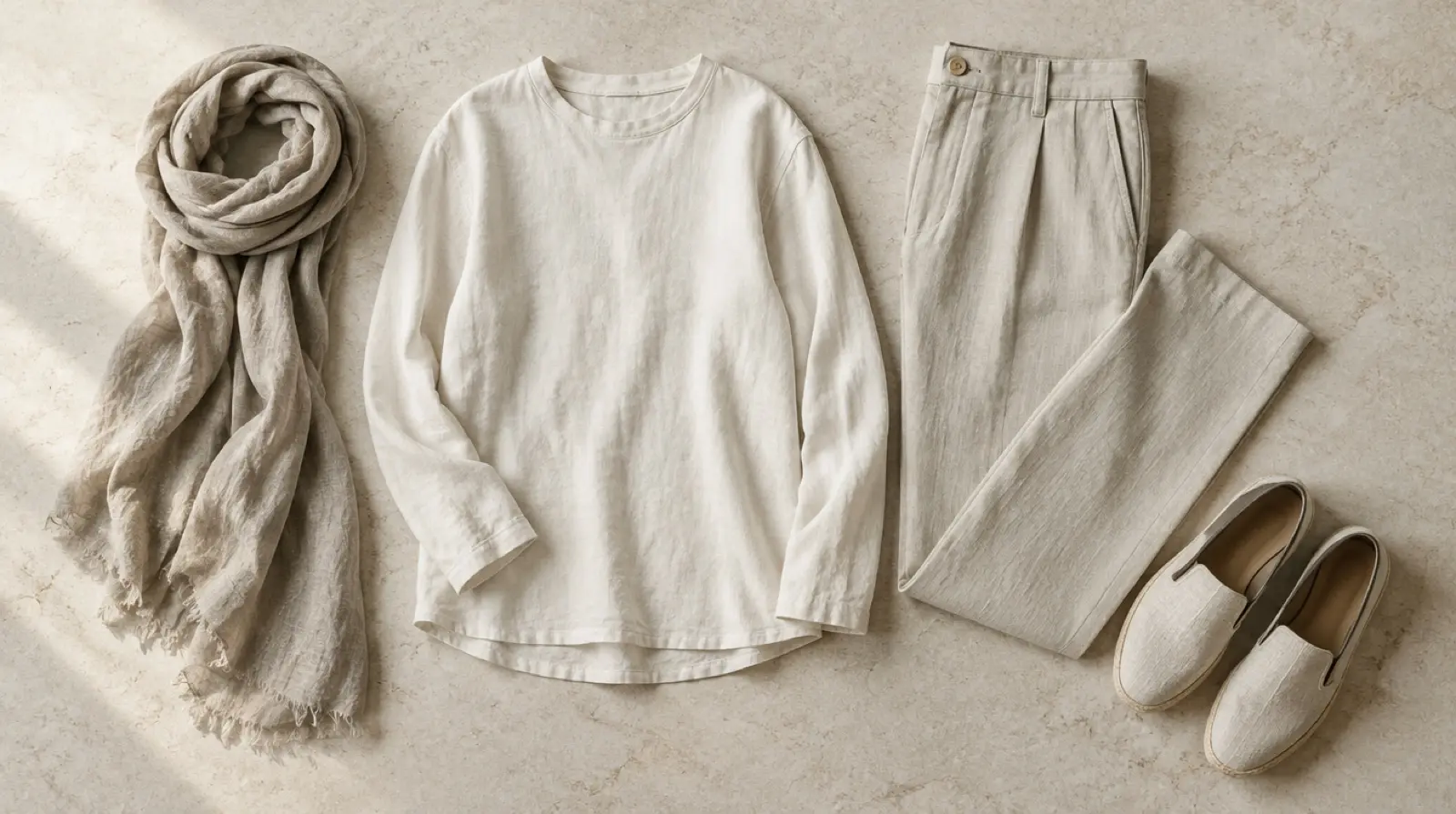
What to wear in churches and mosques is simpler than it looks: cover your shoulders and knees, keep clothing plain and not see-through, and carry a scarf you can use as a head covering where it is expected. If you only have one day of sightseeing, pack one outfit that works at every religious site and skip changing midday. Local rules vary, so check the signs.
The short version
- Wear shoulders and knees covered. A light shirt and long trousers, or a knee-length skirt, will do.
- Carry a scarf or wrap in your bag, large enough to cover your shoulders or hair.
- Choose shoes that come off and go on quickly, with clean socks.
- Follow signs, dress notes at the door and staff directions, even if they differ from this guide.
What to wear in churches and mosques, by type of site
1. Churches and cathedrals
Most churches expect covered shoulders and knees, and many large cathedrals check at the door. Tank tops, short shorts, short skirts and hats are the common problems. Men are often asked to remove hats inside. Some large sites sell or lend wraps at the entrance, but queues build at peak times, so carry your own. Services take priority over sightseeing, and visiting areas can close during worship, so go early or check the schedule.
2. Mosques
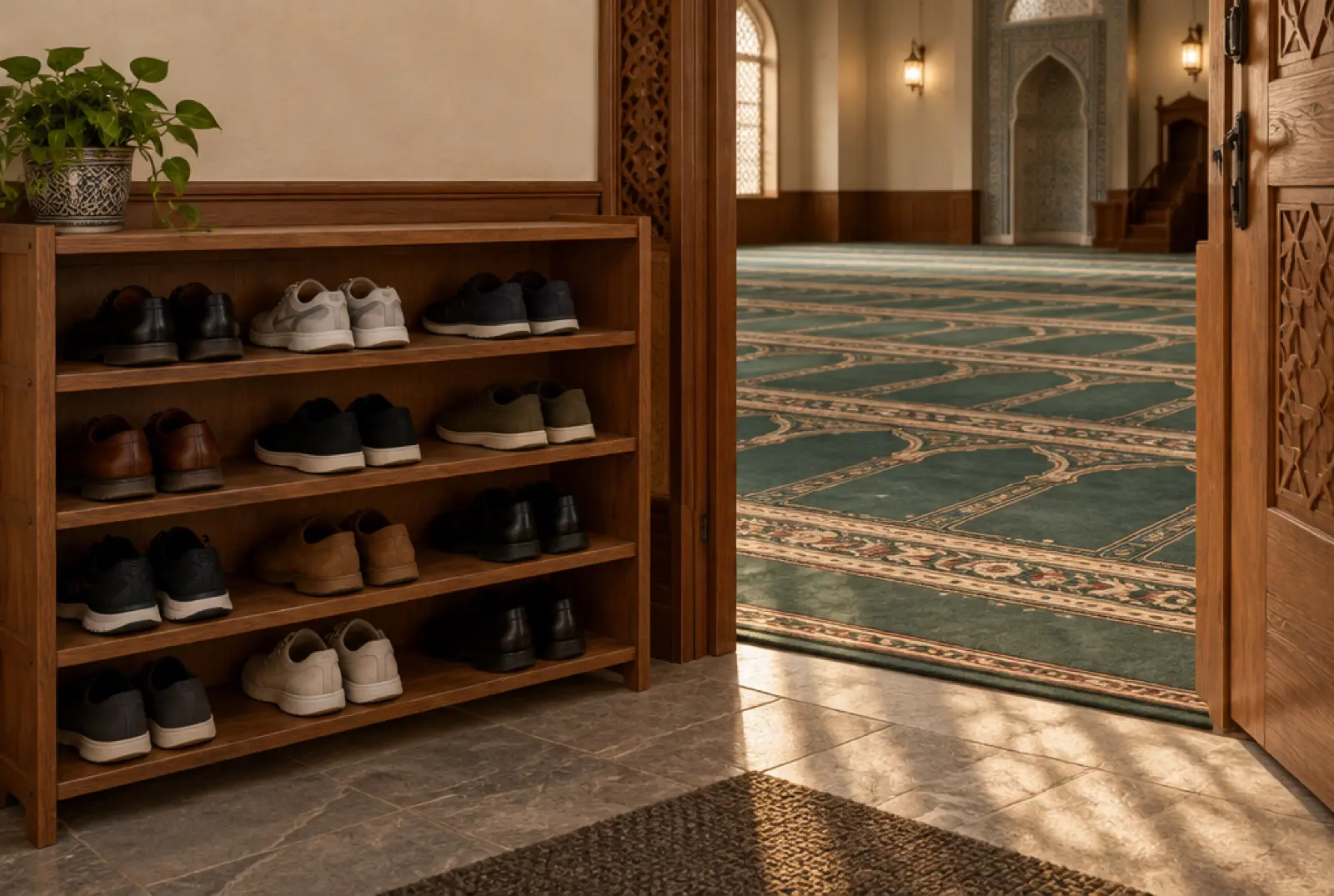
Modest dress is expected for everyone. That usually means long sleeves or covered upper arms, long trousers or a long skirt, and a head covering for women. Shoes come off at the entrance, so wear socks without holes. Many large mosques open to visitors outside prayer times and may close for 30 to 60 minutes at midday prayer, so build your visit around that. Some provide robes or scarves, but supply varies.
3. Buddhist, Hindu and Shinto temples
Dress is similar: shoulders and knees covered, with shoes removed at temple halls and sometimes at shrines. Leather items and hats may be restricted in some places, and in some temples you should not point your feet at altars or statues. Watch the people ahead of you at the entrance and copy the routine. Open sandals or slip-ons save time at every shoe rack.
4. Synagogues and gurdwaras
Synagogues usually expect modest clothing, and men may be asked to cover their heads with a provided or personal cap. Gurdwaras expect everyone to cover their heads and remove shoes, and they usually provide head coverings at the door. In both, call or check the website first, as visiting hours may be limited and security checks may be strict.
5. The one outfit that works everywhere
For a city break with several sites in a day, wear light long trousers or a long skirt, a short-sleeved top that covers the shoulders, and a loose scarf. Add easy slip-on shoes. This works for most churches, temples and mosques, and it is cool enough for summer. It also means you do not have to plan a change of clothes between a morning cathedral and an afternoon market, which is the time-efficient point of the whole routine.
6. What to carry for the door
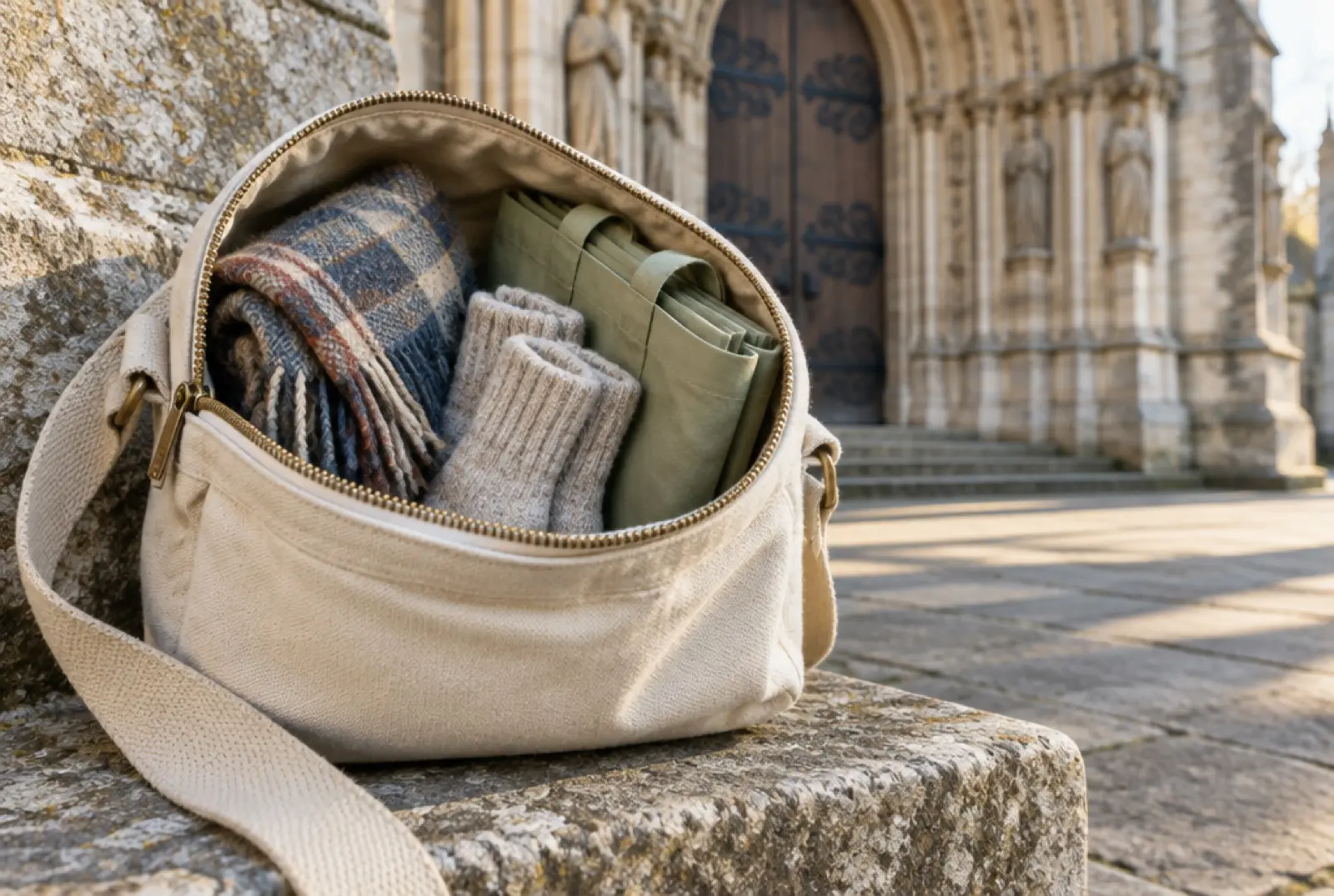
A large scarf serves as a shawl, head covering and knee wrap. A small bag with a spare pair of socks and a folded tote for your shoes keeps you moving at doors with no shoe racks. Carry a light layer for cold stone interiors. Before you go, check opening hours and prayer times, because the best time to enter is usually early morning. For a worked example of timing a day around closing times, see our Sarajevo in 2 days plan or the Kanazawa one day itinerary.
A practical order for a day with 3 religious sites: start at the one with the strictest dress rule while you are freshly dressed, take the market or street scene next, and keep the site with the loosest rule for late afternoon. Opening patterns matter more than the dress code in practice. Many interiors close for 1 to 2 hours around midday or on one weekday, and large sites can shut for ceremonies without notice. That is why the opening hour is the safest time to enter.
Quick checklist by site
| Site | Shoulders and knees | Head | Shoes |
|---|---|---|---|
| Church or cathedral | Covered | Hats off for men; usually no covering for women | On |
| Mosque | Covered, often arms and legs fully | Scarf for women, usually | Off at the entrance |
| Buddhist or Hindu temple | Covered | Varies; hats often removed | Off at halls and shrines |
| Gurdwara | Covered | Everyone covers, usually provided | Off |
| Synagogue | Covered | Cap for men, depending on the site | On |
Common mistakes
Most refusals at the door come from the same few items, and all of them are easy to fix before you leave your room.
- Arriving in beachwear or a sleeveless top after a hot morning and being turned away at the door.
- Relying on a rental robe at the entrance. Supply can run out at peak times and queues add 15 to 30 minutes.
- Wearing shoes that take two minutes to unlace at every hall.
- Assuming rules are the same across a country. Practice varies by region and by site.
- Visiting during prayer or services without checking, which can mean the interior is closed to sightseers.
What to verify before you go
Dress expectations, hours and visitor access change, and they can differ between a main hall and a side chapel. Check the site’s official page or posted notice, and confirm prayer times and any days when visitors are not admitted. If you are unsure, ask staff at the door and follow their instruction. Government travel advice sites sometimes include local customs notes for specific countries, so read the one for your destination. Plan to arrive early in the day, when doors open and queues are shortest.
FAQ about what to wear in churches and mosques
Do men need to cover their legs in churches and mosques?
Usually yes. Knee-length shorts may be accepted in some churches, but long trousers are safer. In mosques men are generally expected to wear long trousers and a shirt covering the shoulders, and to remove shoes at the entrance.
Do I need to cover my hair?
In mosques, women are usually asked to cover their hair, and many sites provide a scarf. In most churches it is not required. Gurdwaras expect everyone to cover their head. Carry a scarf so you can follow whichever rule applies.
Can I wear shorts or a sleeveless top?
Often not. Many major sites refuse entry for shoulders or knees that are visible, and the rule can be strict at large cathedrals. Pack a scarf or a light overshirt so you can cover up quickly if you are stopped at the door.
What should I do if I am turned away?
Do not argue. Ask whether a wrap or robe is available, or come back with the right clothing. A scarf in your bag solves most cases. Check whether another entrance or a visiting time is available before leaving.