Sarajevo in 2 days is best walked in chronological order: Ottoman Baščaršija first, the Habsburg streets next, then the 20th-century history that made the city known worldwide. The old town is compact, and the hills give you views of all three layers. If you only have one day, take Baščaršija in the morning, the Latin Bridge and Habsburg centre at midday, and the Yellow Fortress at sunset.
How to spend 2 days in Sarajevo
Sarajevo is a city where mosques, churches and a synagogue stand within a short walk of one another. The eastern half of the old town, Baščaršija, is Ottoman. The western half carries the architecture that arrived with Austria-Hungary. Sort the days by that line, and the city explains itself.
A note on framing. The 1992 to 1996 siege and the 1914 assassination are part of daily life here, not a theme park. Visit the related sites with the same manners you would at any memorial: quiet voices, no posing, and no asking residents to retell what they lived through. Bullet marks remain on some buildings. For wider context, see the Bosnia and Herzegovina travel guide and the Sarajevo guide.
Sarajevo in 2 days: the time-blocked plan
Day 1, 9:00: Baščaršija and the Ottoman core
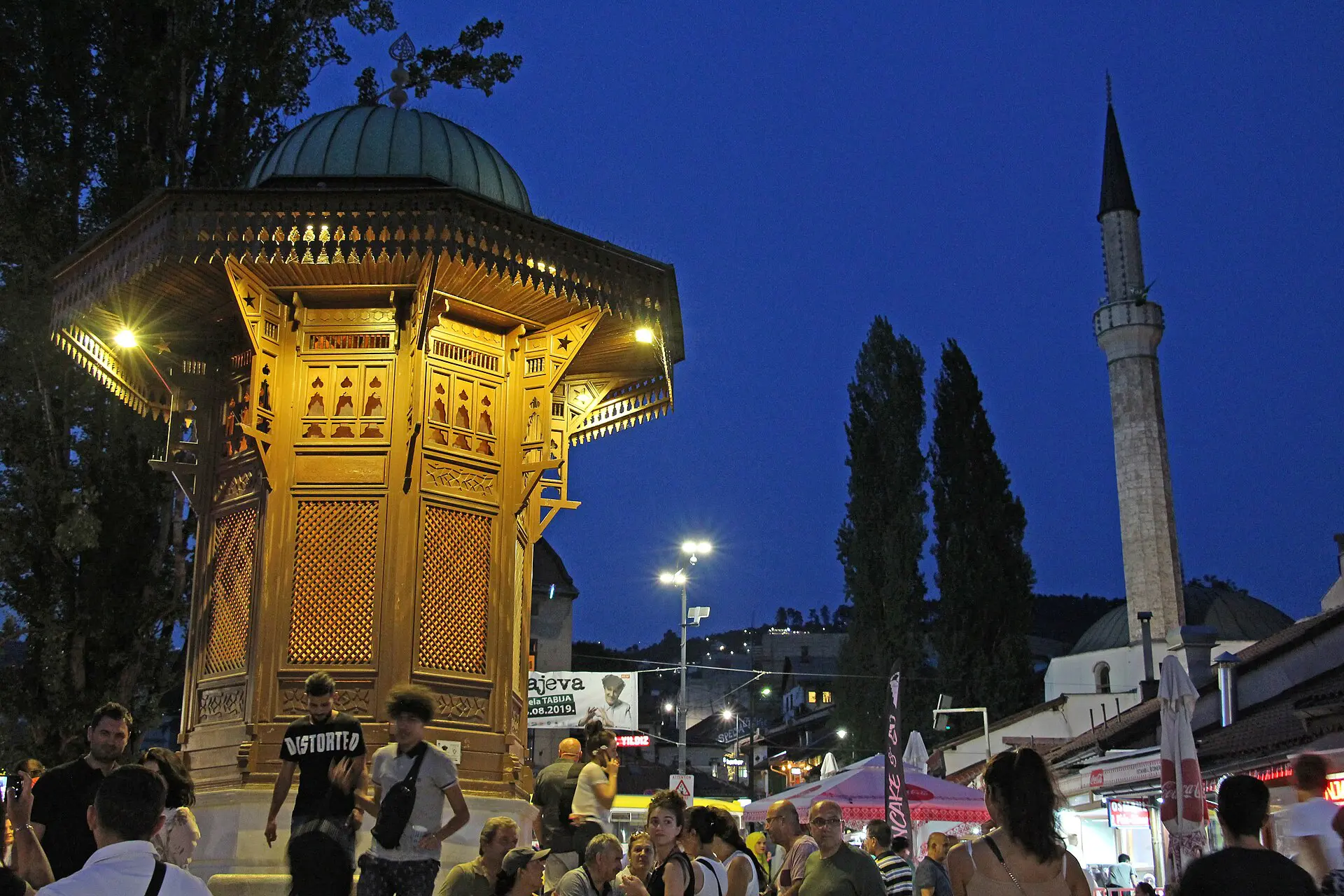
Start at the old bazaar, where the Sebilj fountain marks the centre. The craft lanes, especially the coppersmiths’ street, open as shops raise their shutters between 9:00 and 10:00. Walk in before that and you see the quarter without the crowds. Allow 90 minutes. Mosque interiors are open to visitors outside prayer times, with modest dress and covered shoulders expected, so check the posted times at the entrance.
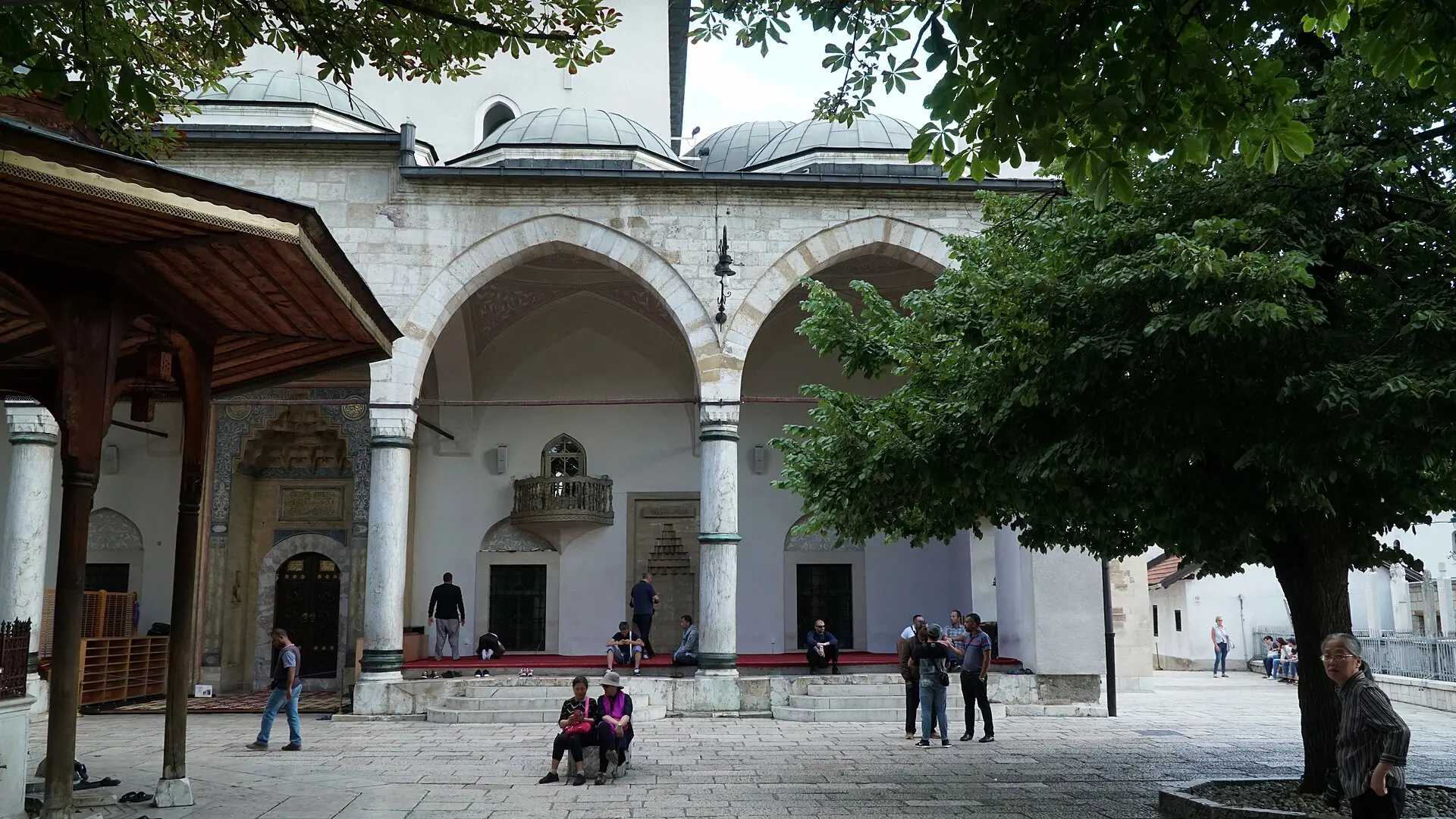
The Gazi Husrev-beg Mosque, from the 16th century, is the main Ottoman landmark here, and the courtyard around it is a quiet place to orient yourself before the lanes fill. Keep your visit short if worshippers are arriving, and do not photograph people at prayer.
Day 1, 11:30: Coffee and the market lanes
Pair the anchor with a street scene. Take Turkish-style coffee in a courtyard or on a pavement, and spend an hour in the lanes north of the main square. Savoury pastry or grilled meat in bread is an easy, cheap lunch, but prices are by the portion, so ask first. The bazaar is quieter on Sunday mornings, when some stalls open late or stay shut. Plan accordingly.
Cevapi, small grilled minced-meat sausages served in flatbread with onions, are the standard lunch at this end of town. Order a half portion if you plan a large dinner. Bosnian coffee comes in a small copper pot with a sugar cube and a glass of water, and takes a few minutes to drink properly. Treat it as a break rather than a quick refuel.
Day 1, 14:00: Habsburg Sarajevo and the Latin Bridge
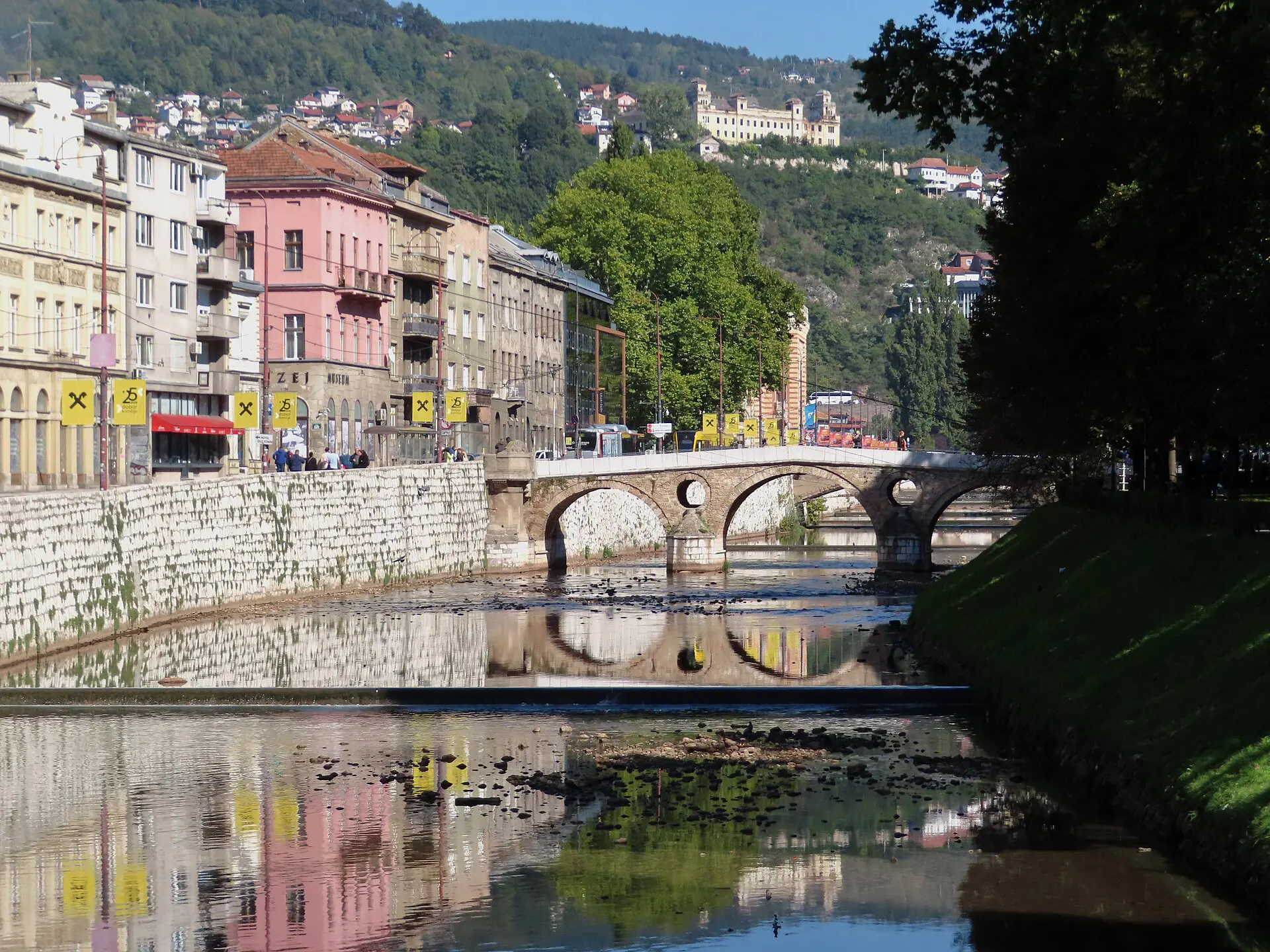
Walk west along the pedestrian streets towards the Austro-Hungarian centre. The buildings here are distinctly Central European, and the shift is visible within a few blocks. Reach the Miljacka river and the Latin Bridge, near where the 1914 assassination took place. A small museum on this period is nearby, and may close on a weekday, so confirm hours. The City Hall, a restored 19th-century landmark, stands by the river, and its exterior alone is worth ten minutes.
Then walk back along Ferhadija, the pedestrian spine of the Habsburg centre, where a mosque, a Catholic cathedral, an Orthodox church and a synagogue lie within a short walk of each other. Entry rules differ at each, so check them at the door.
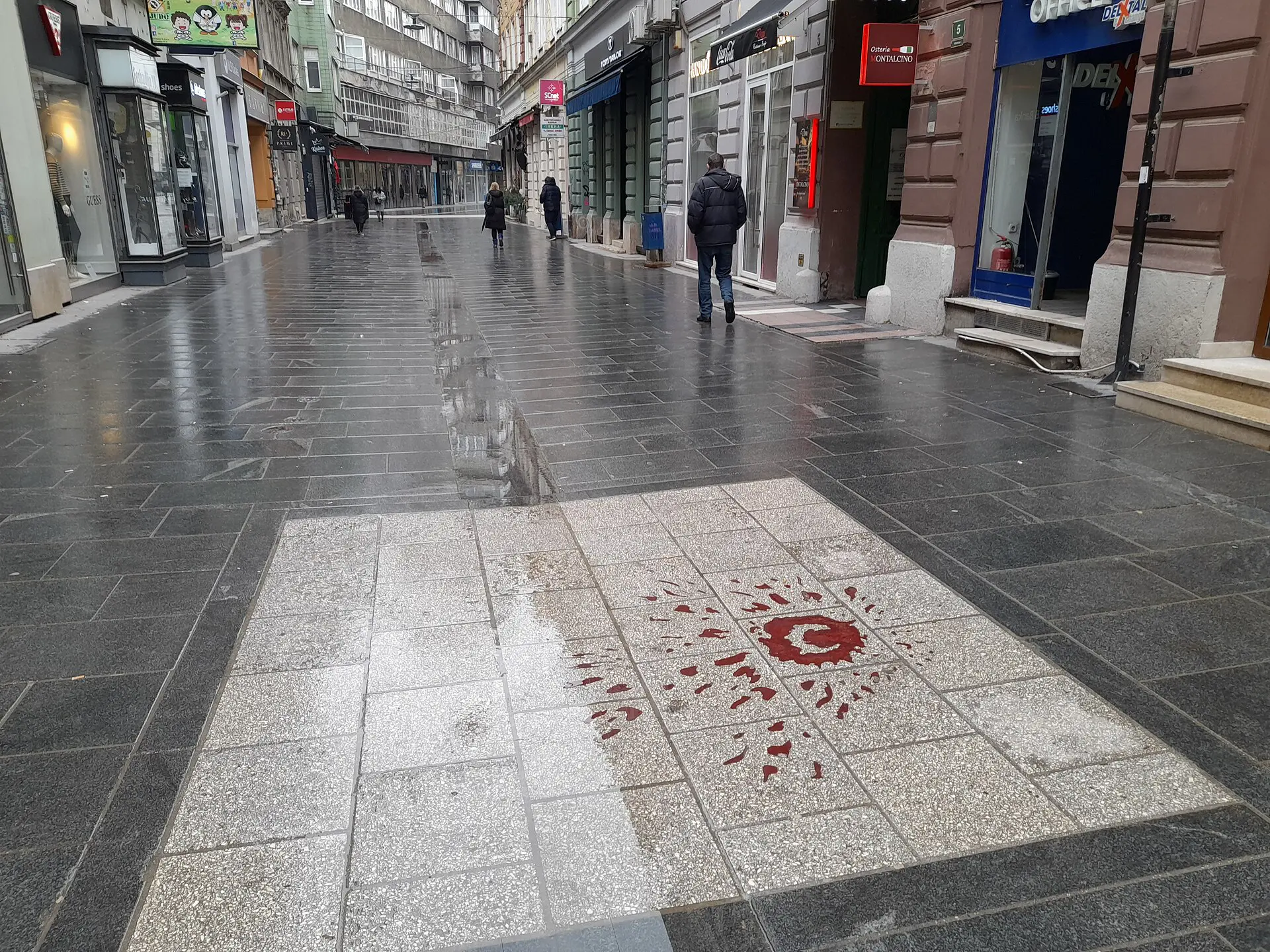
On the pavements of the centre you may notice Sarajevo roses, resin-filled shell marks that commemorate shelling victims. Treat them as memorials and step around them.
Day 1, 18:00: Yellow Fortress at sunset
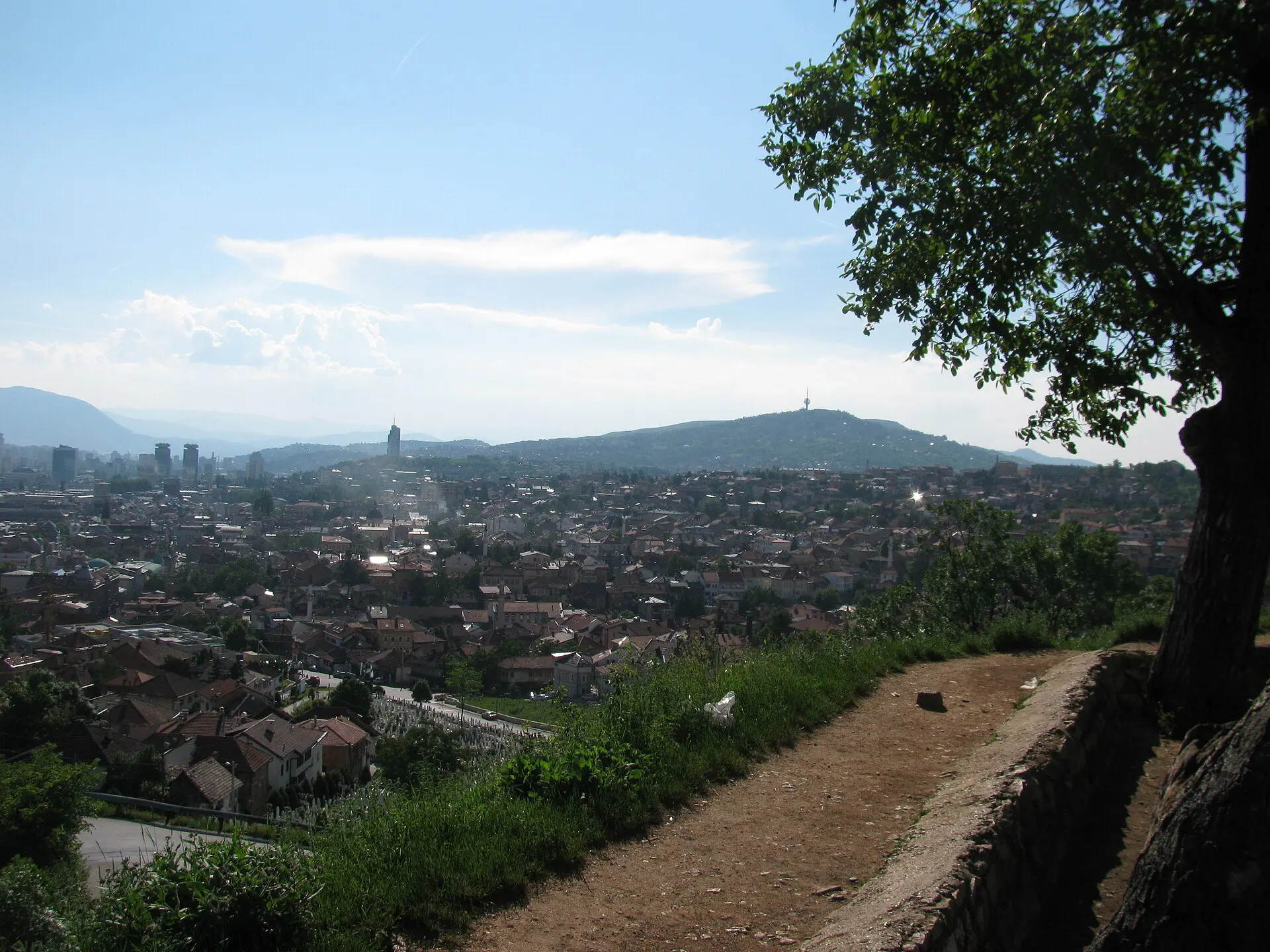
Climb to the Yellow Fortress (Žuta Tabija) on the hillside above the old town. The view takes in the whole valley, the minarets and the river. The walk up is steep, and the stones can be slick after rain, so take a taxi up and walk down. It is a popular spot at sunset, so arrive 30 minutes early for a seat.
Day 2, 10:00: Siege history and the Tunnel of Hope
Day two turns to the 1990s. The Tunnel of Hope museum sits on the south side of the airport runway, where a tunnel dug in 1993 gave the besieged city a lifeline. It is about 6 km from the old town, so reach it by taxi or a guided transfer, and agree the fare first. Taxi overcharging is a known problem, so use the meter. Allow 90 minutes there plus travel.
Some visitors combine it with a guided tour that explains the siege lines and the lifeline routes in context, which is sensible if you want depth rather than a quick look. Frame the visit as listening, not sightseeing. Opening hours vary, so check before you go.
Day 2, 14:30: Olympic Sarajevo and the Trebević hillside
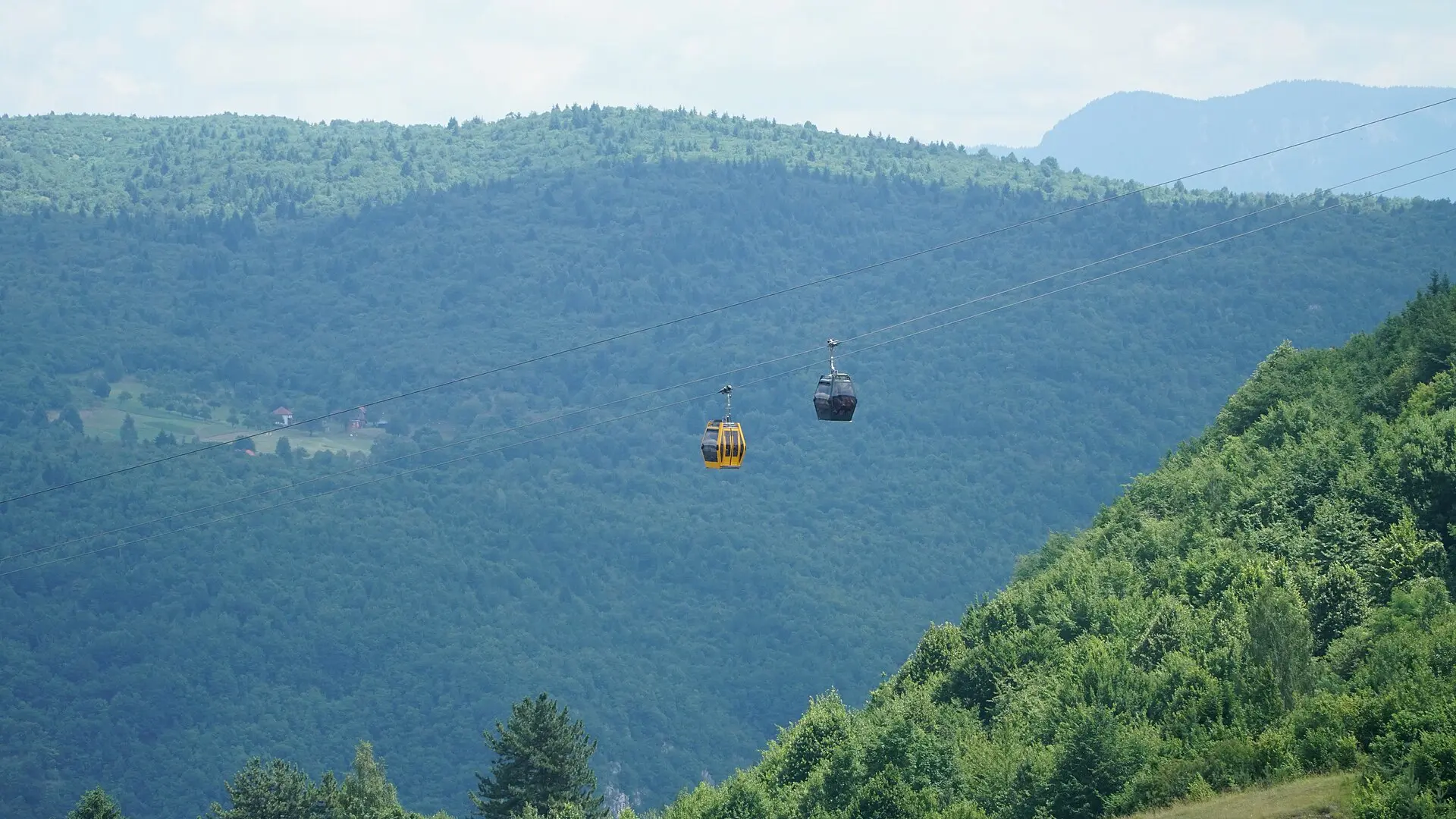
The 1984 Winter Olympics are the city’s other global moment. The Trebević cable car is a regular way up the hill, with the abandoned bobsleigh track nearby, now covered in graffiti. The cable car runs only in suitable weather, and often closes for maintenance, so verify before you set out. Allow three hours with travel. On a wet or windy day, swap this block for the National Museum or a gallery in the centre, noting that museum hours are limited and Monday closures are common.
How to avoid queues in Sarajevo
- Baščaršija: go early. By 11:00 in summer, tour groups fill the main square.
- Cable car: weekday mornings are quietest, and weekends in good weather are busiest.
- Museums: there are few queues, but small museums close early, often mid-afternoon, so visit before 15:00.
- Yellow Fortress: go 30 minutes before sunset, and avoid Friday evenings in summer.
- Ramadan: eating places and opening hours shift. Check dates for the year of your visit.
Getting around Sarajevo
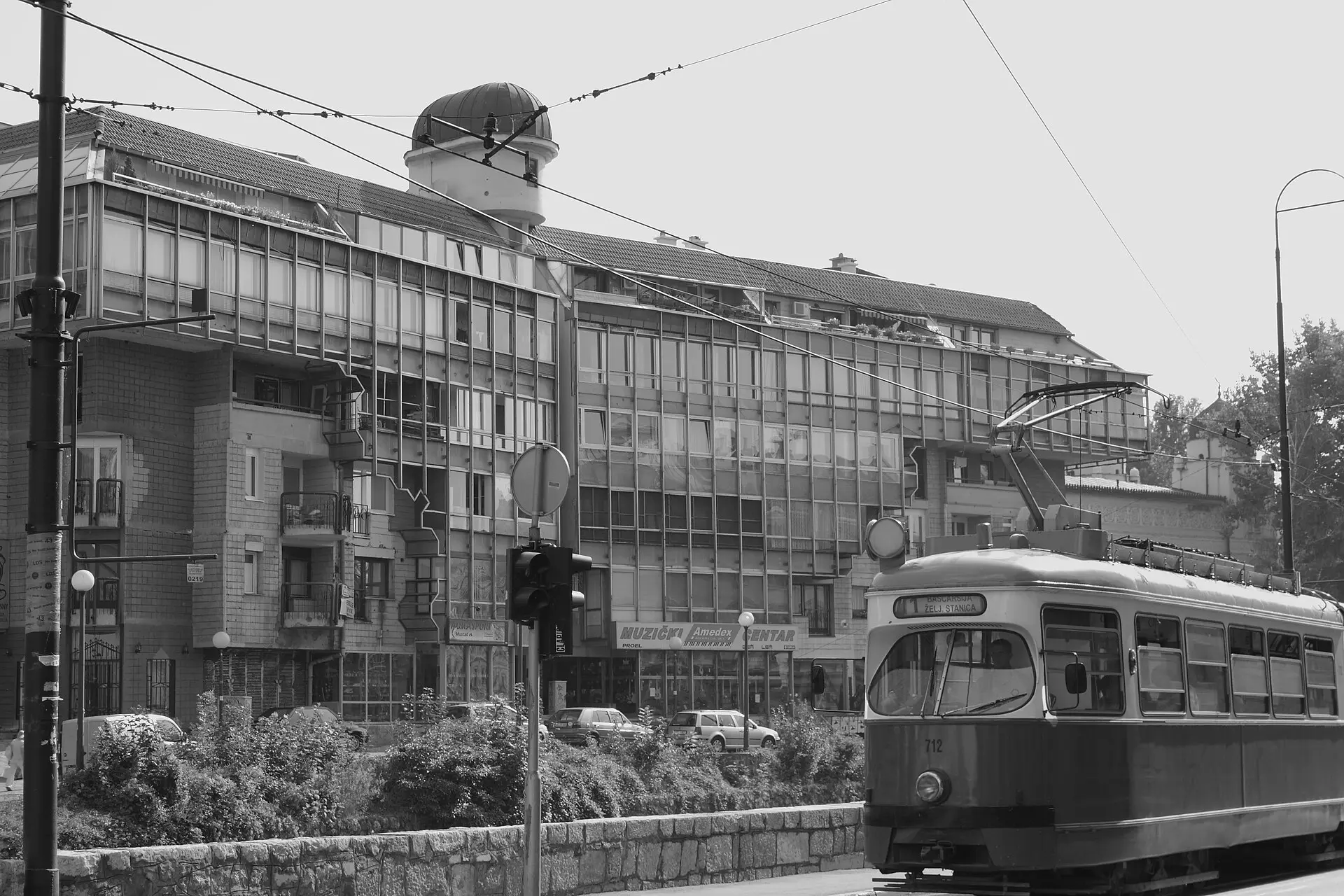
The old town is walkable and largely pedestrian. Trams and trolleybuses follow the river valley from west to east, with tickets bought from kiosks or on board, so carry coins in the local convertible mark. Sarajevo Airport is about 6 km from the centre, and a Centrotrans bus connects it to Baščaršija roughly hourly. Taxis are notorious for scams. Insist on the meter and refuse any airport supplement.
Where to stay in Sarajevo
- Baščaršija and the old town: best for a short stay, with everything on foot. It is lively until late, and light sleepers should ask for a back room.
- Habsburg centre near Ferhadija: quieter and still central, with shops and cafes on the doorstep.
- Hillside streets (Vratnik): views and calm, but steep walks and fewer places to eat.
What to skip in Sarajevo if time is short
Skip the Trebević block first, then the Tunnel of Hope if you cannot spare half a day. If you can do only one siege-history stop, I would choose the museum that fits your schedule rather than try to rush both. Never cut Baščaršija. Sarajevo in 2 days should always leave an evening for the old town, because it is when the lanes are most alive.
FAQ about Sarajevo
Is 2 days enough for Sarajevo?
Yes, for the old town, the Habsburg centre, one siege-history site and a viewpoint. A third day lets you add the hillside cable car or a half-day trip into the surrounding mountains, which is worthwhile in good weather.
What is the best order for Sarajevo’s sights?
Go chronologically. Ottoman Baščaršija first, then the Austro-Hungarian streets and the Latin Bridge, and finally the 20th-century sites, including the siege museums and Olympic sites. The route keeps your walking efficient.
Is Sarajevo safe for visitors?
There is little street crime, and the city ranks among the safer cities in Southeastern Europe. Watch for taxi scams, and avoid walking into unmarked land near the hills outside the city, where mine risks may remain.
Which currency do I need in Sarajevo?
The convertible mark (KM) is the local currency, and cards are widely accepted in the centre. Carry some cash for the bazaar, small museums and taxis. Check rates and card fees before you travel.
Further reading: Wikivoyage on Sarajevo.