The packing list overland travel needs is short, layered and repairable. Aim for a single bag, ideally under 10 to 12 kg, with clothes for cold and heat, a small repair kit, and documents and money split in two places. Buses, boats and long waits punish heavy bags. Below: the list by category, with weights, skip-this-if rules and a repair kit.
The short version
- Choose one bag you can carry for 20 minutes without stopping, and a daypack for the cabin.
- Build a layer system rather than a pile of clothes.
- Split documents, cards and cash into two separate places.
- Carry a repair kit and a light, a power source and a basic health kit.
- Test the full bag at home, then remove the heaviest 10 per cent.
Packing list overland travel, step by step
1. The bag and the weight limit
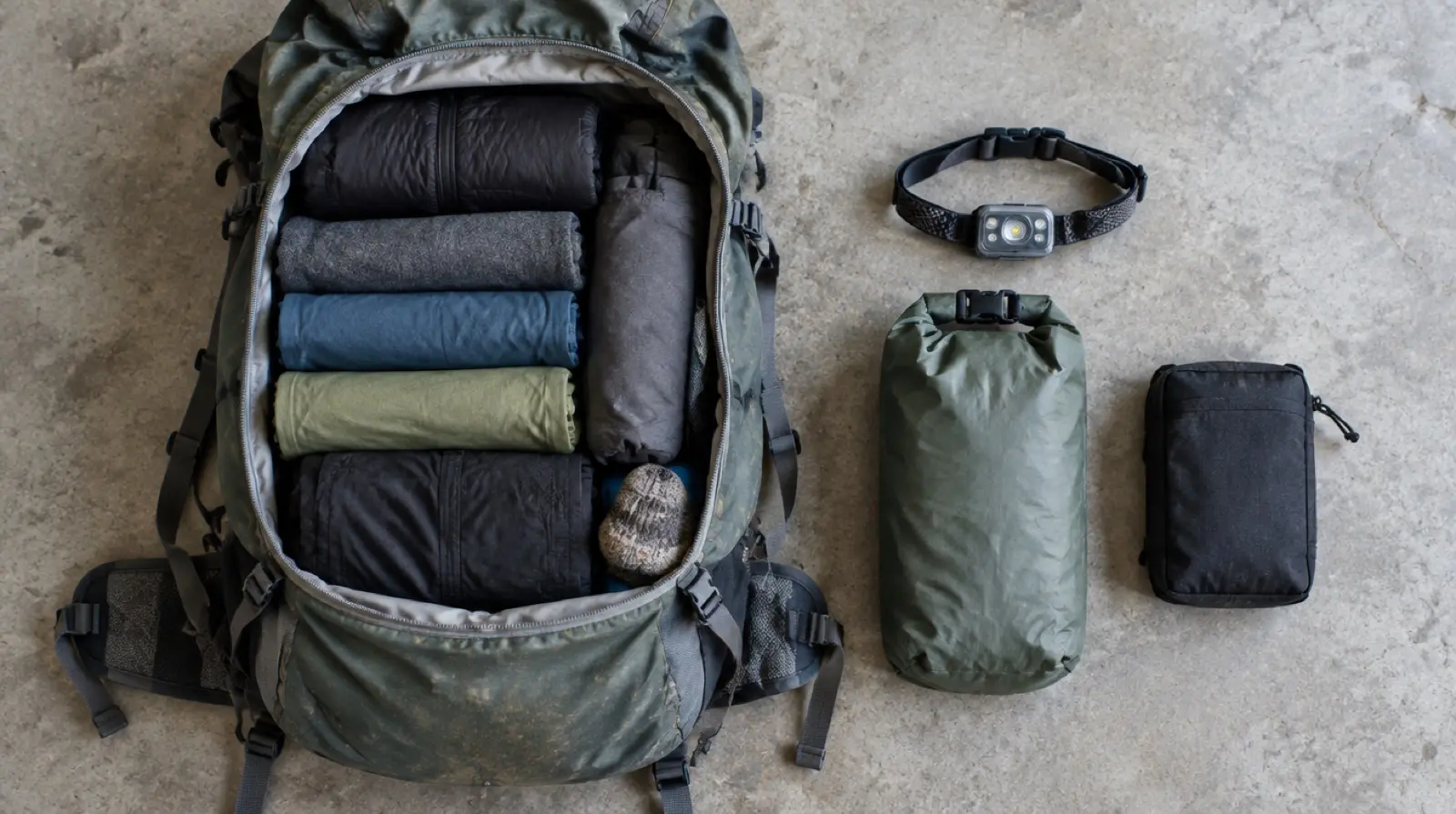
A 40 to 50 litre backpack or a carry-on size duffel with straps suits most multi-week routes. Soft bags squeeze into bus holds and boat decks, and wheeled cases fail on gravel and stairs. Weigh the packed bag: over about 12 kg and you will start leaving things behind. Add a daypack of 15 to 25 litres for the cabin. Skip a hard case if your route includes unpaved roads and boat transfers. Fallback: a dry bag liner keeps contents usable if rain or spray hits the pack.
2. Clothing as layers
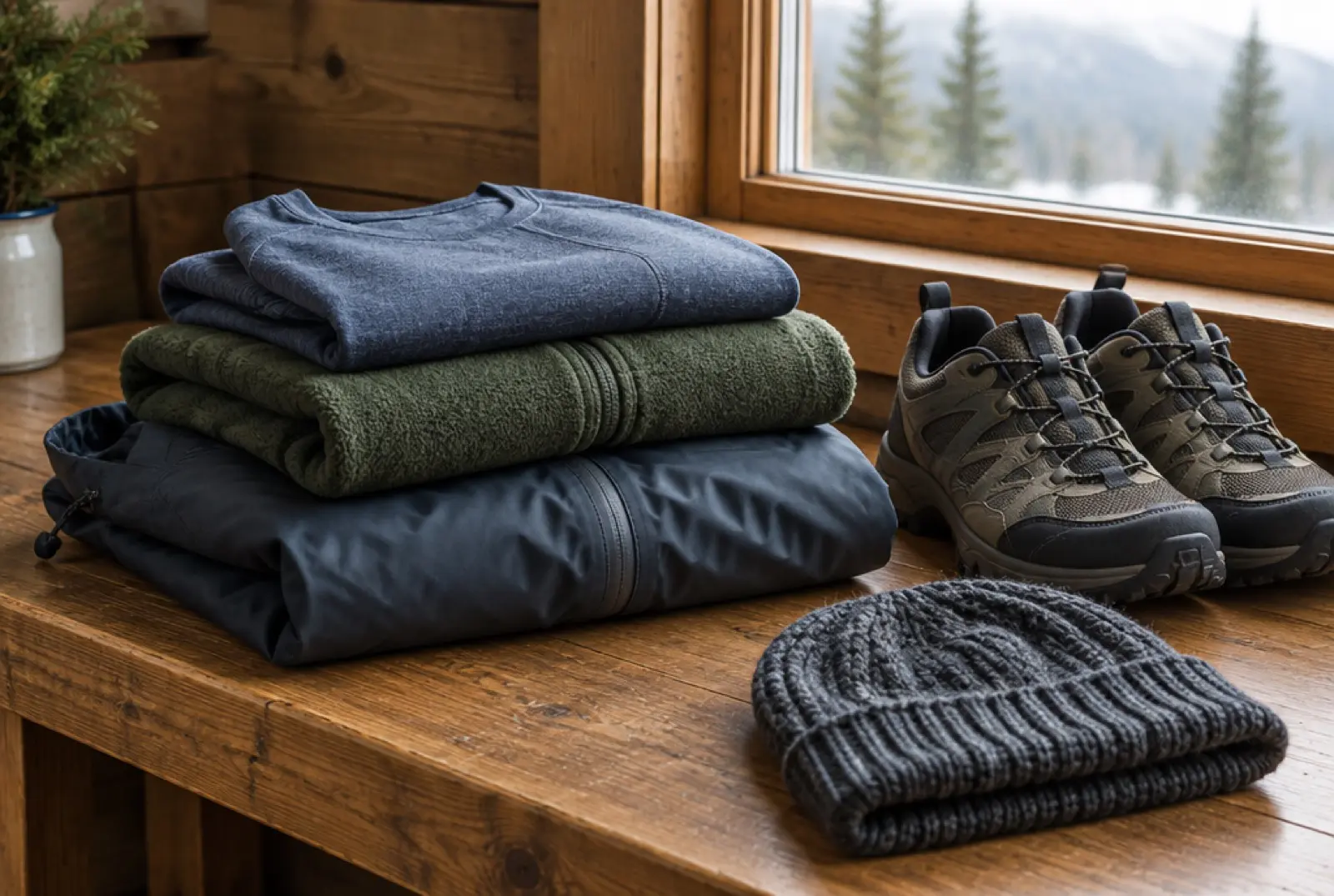
Plan on 3 to 5 days of clothing and wash on the road. A base layer, a warm mid layer, a rain shell, two pairs of trousers and quick-drying underwear covers most climates. Wool or synthetic fabrics dry faster than cotton. Closed shoes with grip, plus light sandals for showers and hot days. Add a warm hat and thin gloves for night buses and passes. Weight for the clothing is typically 3 to 4 kg. Leave the jeans at home.
3. Documents, money and phone
Carry your passport, a second photo ID if you have one, and printed and phone copies of your passport, insurance and bookings. Split cards and cash: some in a belt or neck pouch, some in the main bag, a small float in the daypack. Bring a power bank, a universal plug adapter and a short cable. A basic phone and an offline map cover most failures. Fallback: store scans of everything in an offline folder, not only in cloud storage.
4. Sleep, light and power
Long rides and basic stays call for a sleep liner of silk or cotton, earplugs, an eye mask and a headlamp with spare batteries or a charging cable. A lightweight sleeping bag is worth the weight only if your route has cold nights, high altitude or no bedding. Check what the altitude plan requires in our guide to altitude sickness itinerary planning. Skip the full sleeping bag in hot lowland routes where hostels supply blankets.
5. The repair kit
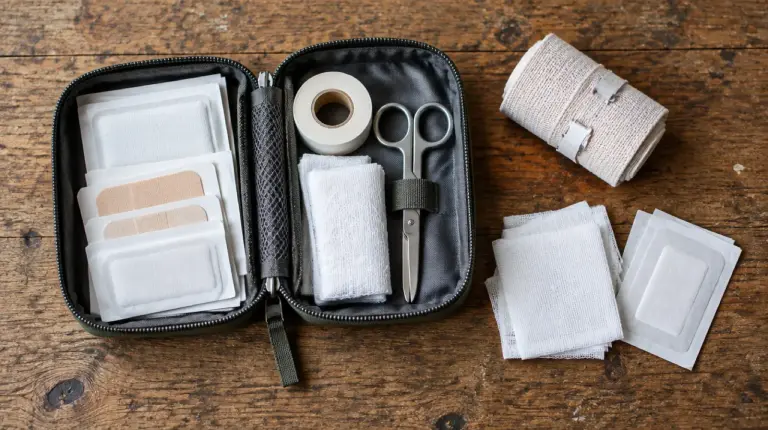
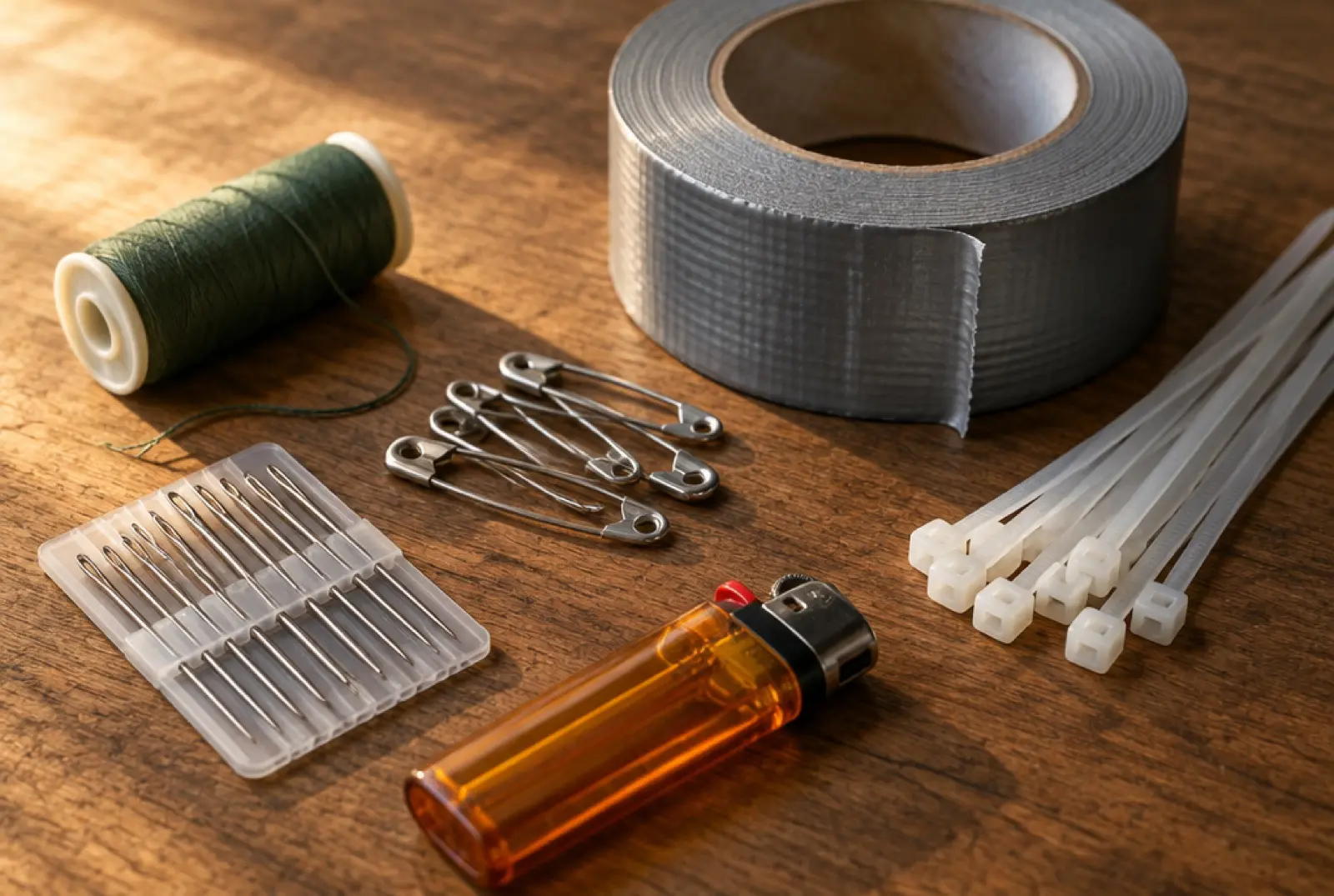
Overland gear breaks. A repair kit weighs about 200 to 300 g and saves days. Carry a small sewing kit with strong thread, a few safety pins, duct tape wrapped around a bottle or pen, cable ties, a spare zip pull, a lighter and a multi-tool or small knife if rules for your transport allow it. Add a patch for a sleeping mat or dry bag if you carry one. Fallback: a local tailor or cobbler can fix most things for little money, if you can pay them.
6. Health, hygiene and what to skip
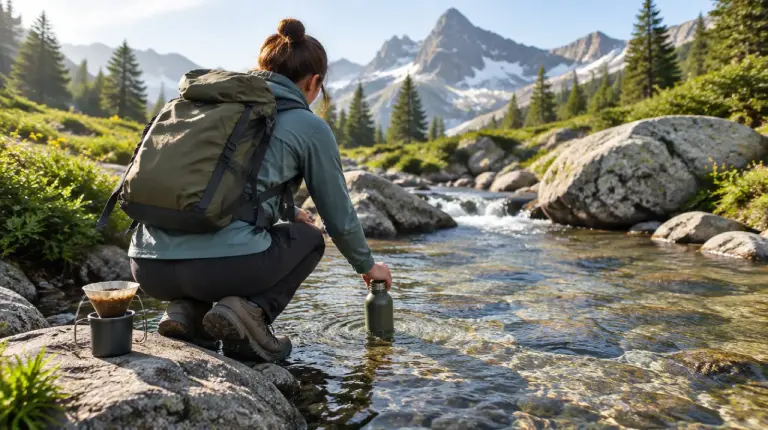
Carry a compact health kit, prescription medicine in original packaging with a doctor’s letter, sun protection, insect repellent and a method of making water safe. Ask a travel clinic what your route needs. Skip these: more than one pair of heavy shoes, a heavy towel, a full toiletry range, and anything you would cry about losing. I would pack a small travel towel, a dry bag and a single spare of every critical item. For an example of what long dry routes demand, see Big Bend National Park hikes.
Weights by category
Use this packing list overland travel table as a budget, not a shopping list.
| Category | Typical weight | Skip if |
|---|---|---|
| Bag and daypack | 1.5 to 2.5 kg | Wheeled hard case on unpaved routes |
| Clothing layers | 3 to 4 kg | Cotton jeans and extra shoes |
| Sleep and light | 0.3 to 1.5 kg | Sleeping bag in hot lowlands |
| Electronics and power | 0.5 to 1 kg | A laptop you will not use |
| Repair kit | 0.2 to 0.3 kg | Never skip |
| Health and hygiene | 0.5 to 1 kg | Bulky toiletries you can buy locally |
| Documents and money | 0.1 to 0.2 kg | Never skip |
The totals are guides, not rules. Your climate, season and route set the final list.
Common packing mistakes
- Packing for every scenario instead of the likely ones.
- Putting all money and documents in one bag.
- Bringing a pack that is not waterproof or lined.
- Buying new boots right before the trip with no break-in time.
- Leaving warm layers out because the first week is hot.
- Carrying valuables in the underbus hold.
What to verify before you go
- Airline and transport baggage rules, including lithium battery and blade limits, with each carrier.
- Health and vaccine advice for your route, from a doctor or travel clinic and the CDC travel health pages or WHO travel advice.
- Seasonal temperatures along the whole route, including high passes.
- Entry requirements for medicines and electronics in each country.
- Your insurance conditions for gear loss and delays.
FAQ about a packing list overland travel
How much should my bag weigh for overland travel?
Aim for about 10 to 12 kg for a main bag, plus a light daypack. If you cannot carry it for 20 minutes and then climb stairs, it is too heavy. Test it at home and remove the heaviest 10 per cent.
Backpack or duffel for overland travel?
A backpack suits walking between stations and stairs. A duffel with shoulder straps packs into bus holds and is easier to access. Whichever you choose, avoid wheels on unpaved ground and pick a bag with lockable zips and a rain cover.
What should be in an overland repair kit?
Thread and needles, safety pins, duct tape, cable ties, a spare zip pull, a lighter and a small multi-tool where rules allow. It should weigh around 200 to 300 g and fit in a pouch you can reach quickly.
Should I pack for the coldest or hottest day?
Plan for the coldest part of the route, since you can shed layers but cannot add ones you left at home. Night buses, high passes and unheated rooms cause most cold problems. Check seasonal temperatures along each leg.