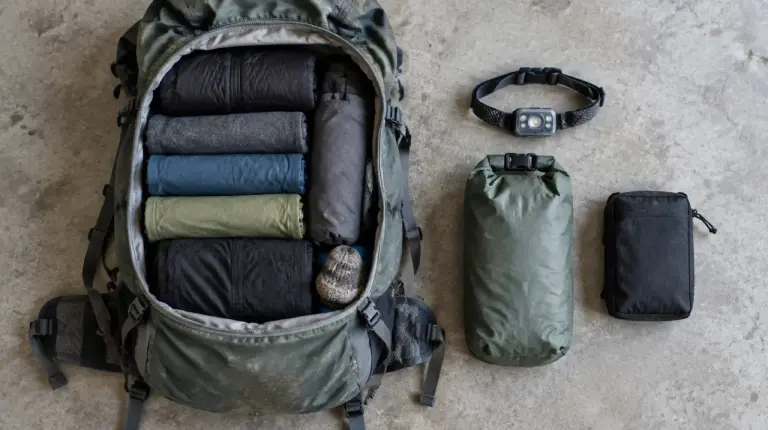
A travel first aid kit should cover wounds, blisters, stomach upsets, pain and your own prescriptions, in a pouch that weighs under 500 g. The more important part is a rule for when to stop self-treating and see a doctor. This guide gives a short kit, an escalation list and what to ask a travel clinic. It is general information, not medical advice.
The short version
- See a doctor or travel clinic 6 to 8 weeks before a rough trip.
- Build a compact kit for wounds, blisters, stomach trouble and your own medicines.
- Keep prescriptions in original packaging, with a letter from your doctor.
- Write down your escalation rules before you leave.
- Check insurance and the nearest care along the route.
Building a travel first aid kit, step by step
1. Start with a travel clinic, not a shopping list
What you need depends on where you go, how long, and your own health. A doctor or travel clinic can advise on vaccines, malaria risk, altitude and any medicines for your route and condition. Book early, because some courses take weeks. Bring your itinerary and list of regular medicines. Fallback: if you cannot get an appointment, use official advice from the CDC travel health pages or WHO travel advice and ask a pharmacist.
2. Wounds, blisters and burns
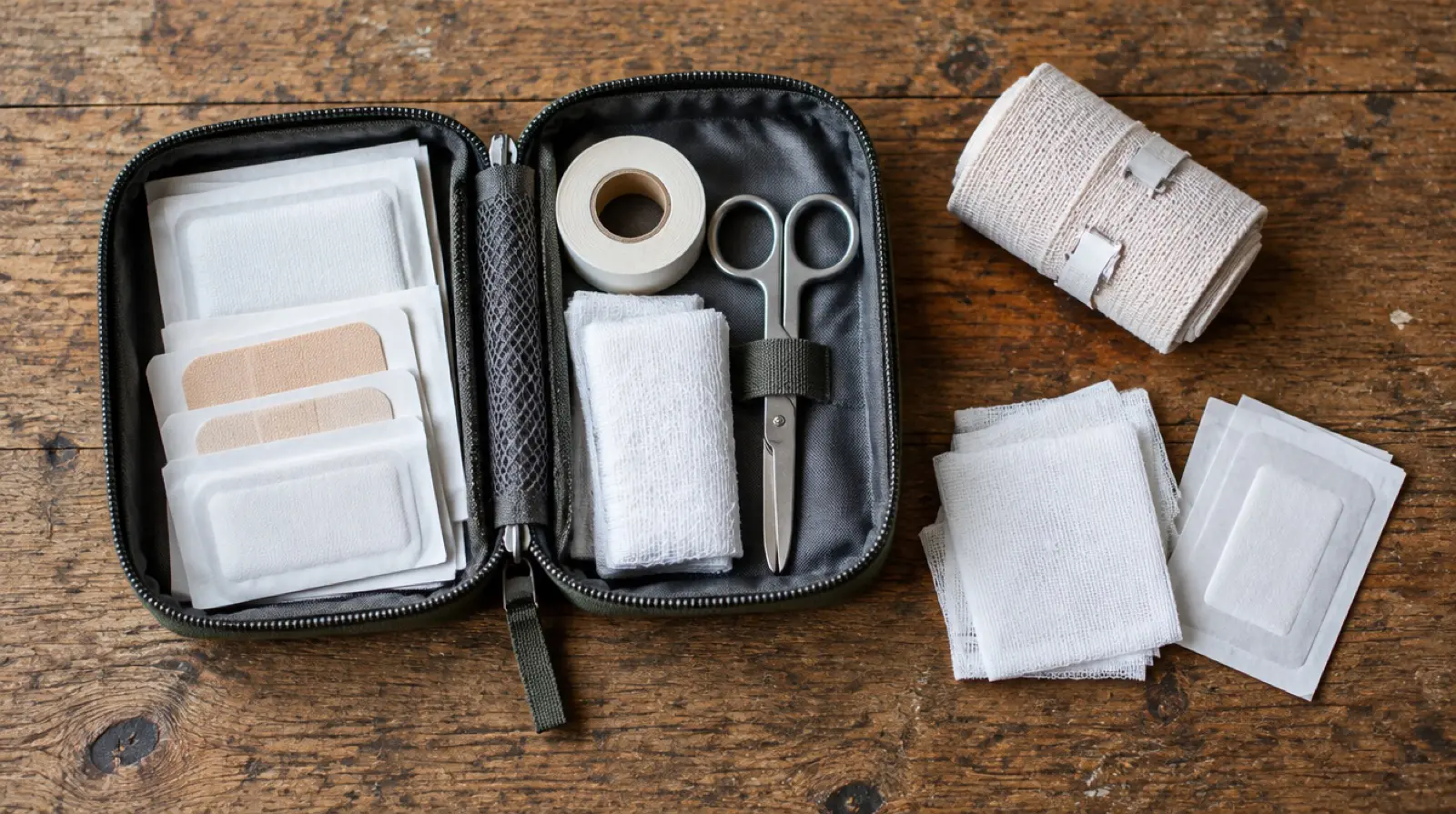
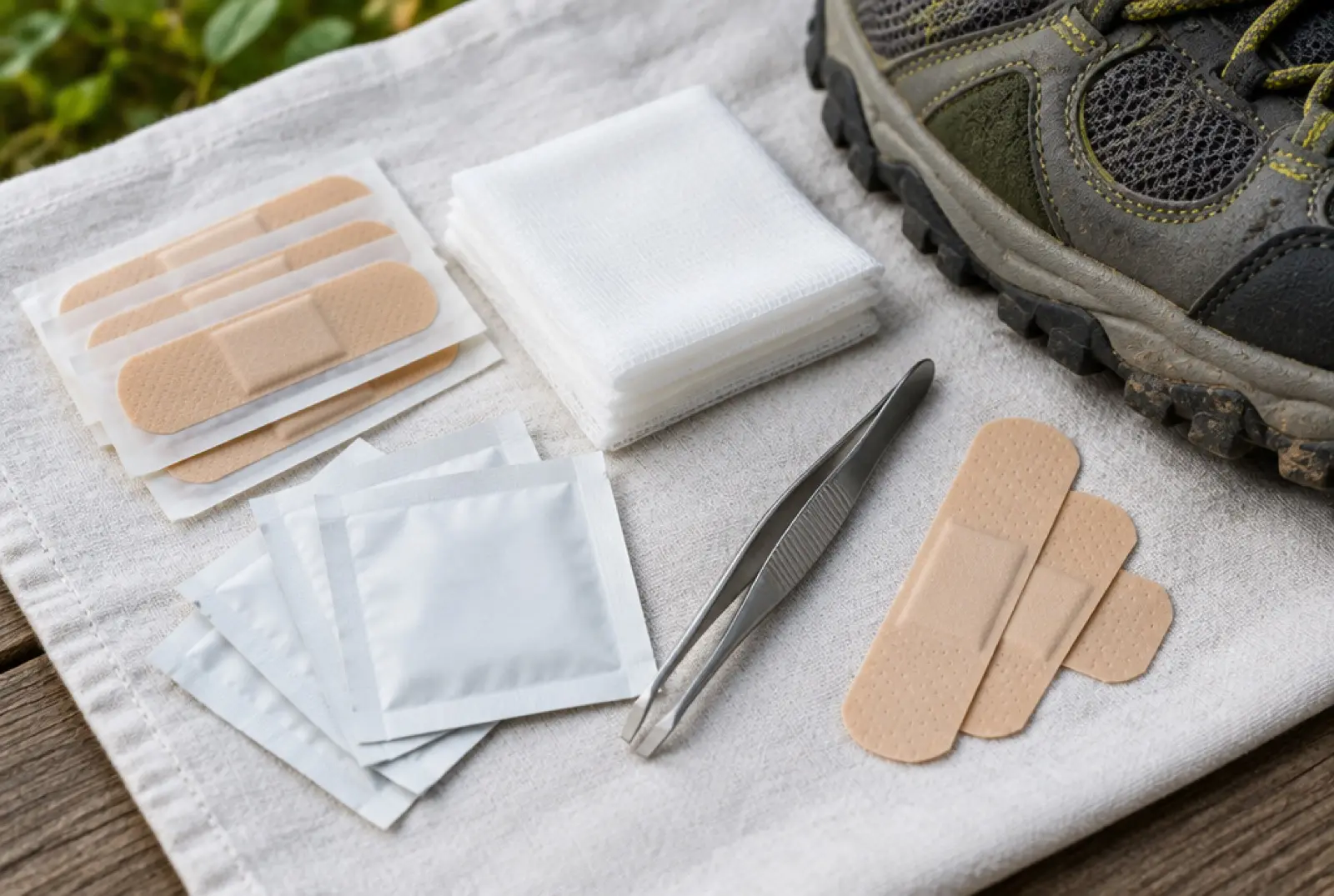
Most injuries on rough routes are small: cuts, scrapes, blisters and minor burns. Pack adhesive dressings in a few sizes, sterile gauze, medical tape, a roll bandage, antiseptic wipes, blister plasters, small scissors, tweezers and disposable gloves. Add a small bottle of clean water or saline for rinsing wounds. Clean the area, cover it and check it daily. Skip trying to treat deep, dirty or gaping wounds yourself: those need professional care.
3. Stomach trouble and dehydration
Traveller’s diarrhoea is the most common problem. Oral rehydration salts are light and cheap and are the core item. Ask your doctor or pharmacist whether to carry other stomach medicines and when to use them. Drink safe water, wash hands, and eat food that is hot and fresh. Keep sipping fluids if you are unwell, as dehydration is the main danger. Fallback: if you cannot keep fluids down, stop and get care.
4. Pain, allergy and motion sickness
Many travellers carry a simple pain and fever reliever, an antihistamine for mild allergic reactions and something for motion sickness on long road or boat legs. Ask a pharmacist or doctor which ones suit you and how to use them: I would not guess. If you have a severe allergy, carry your prescribed emergency medicine, tell travel companions where it is and check rules for carrying it across borders.
5. Your own prescriptions and the basics
Carry enough of your regular medicine for the whole trip plus a buffer of several days, split between two bags. Keep them in original packaging with a copy of the prescription and a doctor’s letter, since some medicines are restricted in some countries. Add a digital thermometer, sun protection, insect repellent, a few face masks and hand sanitiser. For altitude routes, read our guide to altitude sickness itinerary planning and discuss medicines with a doctor.

6. Know when to stop and see a doctor
Write the escalation rules before you leave. In general, get medical help for: a high fever that does not settle, severe or bloody diarrhoea, vomiting that stops you keeping fluids down, a wound that spreads redness or swelling, a bite from an animal, chest pain, trouble breathing, severe headache, confusion or any symptom that worsens fast. Fever after travel in a malaria area is urgent. Skip waiting it out when in doubt. In an emergency, use the local emergency number or your insurer’s help line.
Kit contents table
| Group | Typical contents | Approx. weight |
|---|---|---|
| Wounds and blisters | Dressings, gauze, tape, bandage, blister plasters, scissors, tweezers, gloves | 100 to 200 g |
| Stomach and fluids | Oral rehydration salts, other items on medical advice | 50 to 100 g |
| Everyday symptoms | Pain and fever reliever, antihistamine, motion-sickness item | 50 to 100 g |
| Personal medicines | Prescriptions, letter, emergency medicine if prescribed | Varies |
| Prevention | Sun protection, repellent, hand sanitiser, thermometer | 100 to 200 g |
Check each item is allowed on your flights and in each country, and replace expired items before every trip. This travel first aid kit table is a starting point, not a prescription.
Remote routes: extend the plan, not the kit
On rough routes the limit is distance to care, not the size of the pouch. Note the nearest clinic on each leg, how long the road takes in the rain, and who can drive you. Carry a printed card with your blood group if known, allergies, regular medicines, insurer number and an emergency contact. Tell someone your route and expected check-in times. A bigger kit does not replace a way out. Fallback: if the road is closed, know the second route or the radio, phone or satellite option in the area.
Common mistakes with a travel first aid kit
- Carrying a huge kit and no plan for when to see a doctor.
- Packing medicines without knowing what they are for.
- Putting all prescriptions in one bag, or in the hold.
- Ignoring expiry dates.
- Treating a deep wound, an animal bite or a high fever as a DIY job.
- Forgetting that some countries restrict common medicines.
What to verify before you go
- Vaccines, malaria and altitude advice for your route, with a doctor or travel clinic.
- Whether your medicines are legal in each country, checked with the embassy or an official source.
- Your travel insurance: medical cover, evacuation and any exclusions.
- How far the nearest clinic or hospital is on each leg, and how you would reach it.
- Airline rules for liquids, sharps and medical supplies.
FAQ about a travel first aid kit
What should a basic travel first aid kit contain?
Dressings, gauze, tape, blister plasters, antiseptic wipes, scissors, tweezers, oral rehydration salts, a thermometer and your own medicines. Add items for your route on medical advice. Keep it compact and check the expiry dates before each trip.
Can I carry my medicines through airports?
Usually yes, in original packaging with a prescription or doctor’s letter, and in hand luggage for essentials. Rules differ by country, and some medicines are restricted. Check with your airline and the destination’s official sources before you travel.
When should I see a doctor abroad?
See one for a high or persistent fever, severe or bloody diarrhoea, vomiting that stops you drinking, chest pain, breathing trouble, a spreading wound infection, an animal bite or any fast-worsening symptom. When unsure, ask your insurer’s helpline.
Do I need a travel clinic visit for a short trip?
It is worth it for rough routes, remote areas, altitude, or a country with disease risk. Book 6 to 8 weeks before departure where possible. A clinic can tailor advice to your health, your route and the season.