How to order coffee abroad starts with dropping your home order. In Italy, ask for a caffè and you get an espresso. In Spain, say cortado or café con leche. In Turkey, ask for Turkish coffee and say how sweet. In Vietnam, ask for cà phê sữa đá. Names, timing and where you stand all change what arrives.
The short version
- Learn one local name per country, because a generic “coffee” gets the default cup, not the one you want.
- Match the time of day: milk drinks are mostly a morning habit in Italy, while Turkish coffee follows a meal or a chat.
- Check whether you are standing at a counter or sitting at a table, since the price often differs.
- Say how sweet you want it when the drink is made sweet by default.
- Pay as locals do, at the till first or after, and watch what the person ahead of you does.
Coffee by country, step by step
1. Italy: say caffè, drink it at the bar
A caffè is an espresso: a small, strong shot, finished in a few sips. Cappuccino, a shot with steamed and foamed milk, is traditionally a morning drink, and many Italians avoid it after a meal. Standing at the bar is the everyday habit, and the price there is typically lower than at a table. A macchiato is espresso with a drop of milk. Pay at the till first in busy places, then hand the receipt to the barista. Our Trieste in 2 days guide shows how a coffee-minded city eats through the day.
2. Spain: choose by the amount of milk
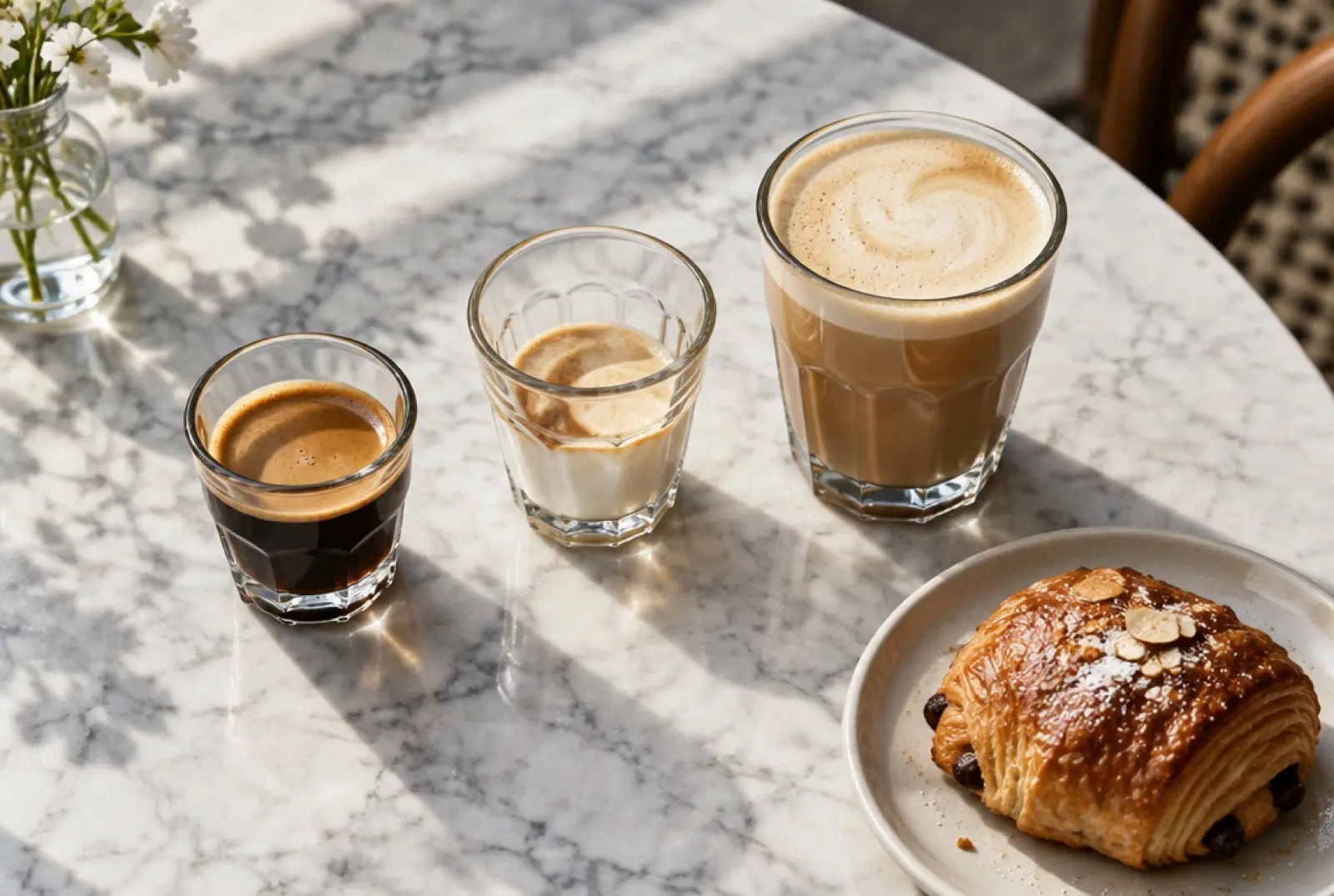
In Spain, coffee is a ladder of milk. A café solo is a short black espresso, a cortado adds a splash of milk, and a café con leche is about half coffee and half hot milk, served in a larger cup. A café con hielo comes with a glass of ice to pour over in summer. Coffee is part of the morning routine, often with a pastry or toast, and is often taken again after lunch. Ask for the bill by catching the waiter’s eye, as it rarely arrives unprompted.
3. Turkey: ask for Turkish coffee and state the sugar
Turkish coffee is finely ground coffee simmered in a small pot, called a cezve, and served in a small cup with the grounds left in. You choose the sweetness when you order. The usual levels run from no sugar to medium to sweet, and the sugar goes into the pot, so it cannot be adjusted afterwards. Do not stir it, and stop before the thick layer at the bottom. It is often served with a glass of water and sometimes a sweet, and it is a drink for sitting and talking.
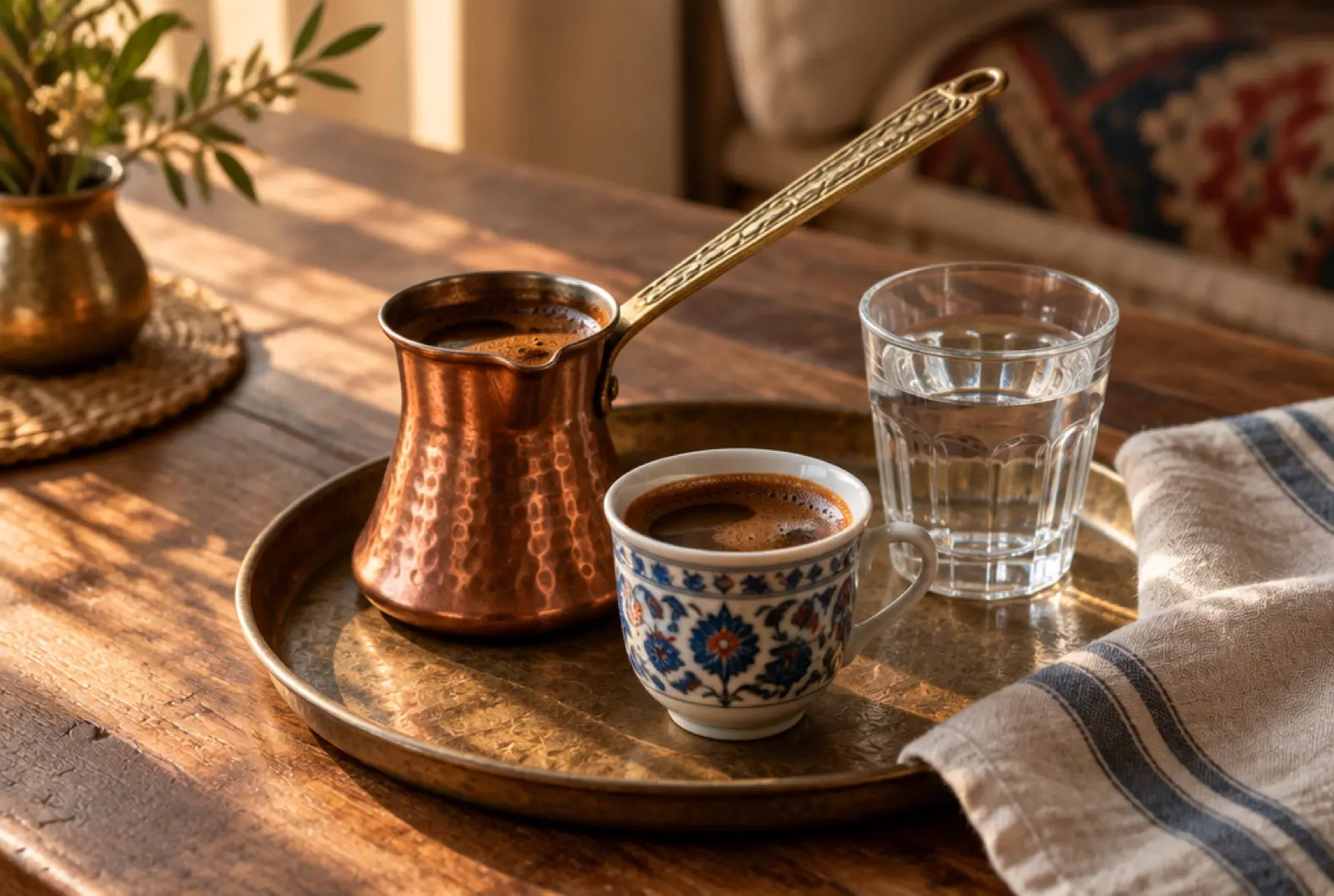
4. Vietnam: ask for cà phê sữa đá, then wait
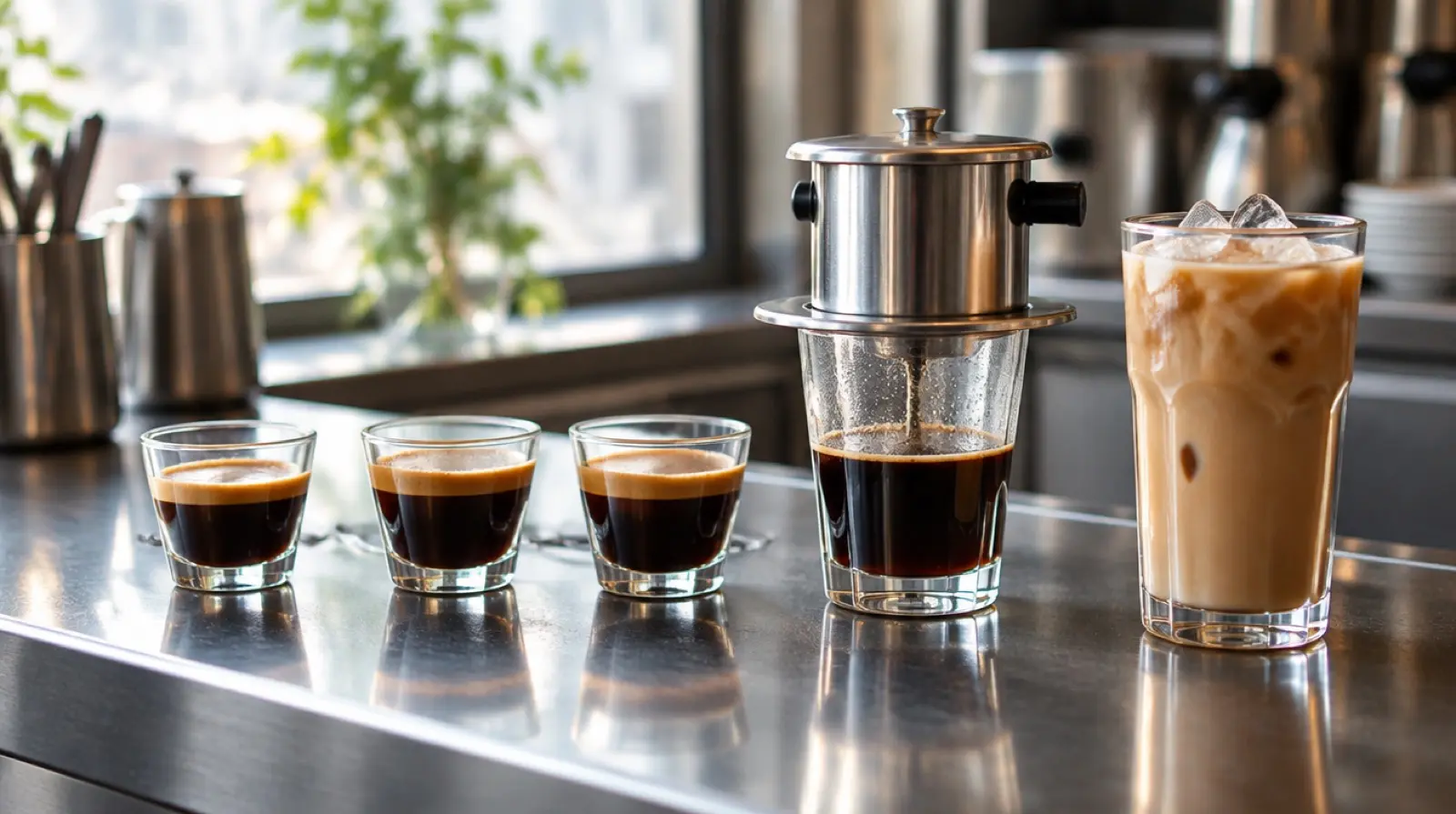
Vietnam is a major coffee producer, and robusta beans are widely grown, which gives the drink its strong, bitter, chocolate edge. Cà phê sữa đá is coffee with sweetened condensed milk over ice. It often arrives with a small steel filter, a phin, dripping slowly into the glass, so wait for it to finish. Cà phê đen is black coffee, and cà phê trứng is whipped egg coffee.
5. Learn the timing norms before you order
Timing matters as much as the name. In Italy, an espresso after lunch is normal, and a milky cappuccino at that hour draws a smile. In Spain, a café con leche with breakfast and a cortado after the meal fit the day. In Turkey, coffee closes a meal rather than starting it, and tea fills the hours between. In Vietnam, iced coffee drinkers cluster in the morning and in the hot mid-afternoon. Watch the next table and follow.
6. Ask for what you want in plain words
If the menu is unclear, point and ask for the “short” or “long” version, with or without milk, hot or iced. A small phrase in the local language is a courtesy and gets you a better cup. Say you want it to stay, for the table, or to go, as the cup and the price can differ. If you take decaf, soy or oat milk, ask first, as availability varies. Our notes on table etiquette by country cover the wider habits.
Coffee orders at a glance
| Country | Order this | What you get | Timing norm |
|---|---|---|---|
| Italy | Un caffè | Espresso | Any time; cappuccino mainly mornings |
| Spain | Un cortado | Espresso with a little milk | Morning and after lunch |
| Turkey | Türk kahvesi, orta | Medium-sweet coffee with grounds | After meals or conversation |
| Vietnam | Cà phê sữa đá | Iced coffee with condensed milk | Morning and hot afternoons |
Common mistakes when ordering coffee
Most errors in how to order coffee abroad come from home habits.
- Asking for a latte in Italy. In Italian, latte means milk, so you may get a glass of it.
- Taking the table by default. In several countries a seated coffee costs more than one at the counter.
- Stirring Turkish coffee. It stirs up the grounds and ruins the cup.
- Drinking the Vietnamese coffee too soon. It is meant to drip, then be stirred with the ice.
- Expecting a large cup. Cups are small by design, and refills are not a given.
What to verify before you go
Customs, prices and the way tips and table fees are handled change, so check current local advice rather than relying on a single list. Ask your host or hotel what a normal coffee costs, and confirm if a cover charge applies for sitting. Caffeine, dairy and allergy needs are personal: speak to a doctor, and see official traveller health advice at the CDC travel health site. Hot drinks are generally safer than ice made from unknown water, so be careful with ice where tap water is doubtful.
FAQ about ordering coffee abroad
What is a latte in Italy?
Latte is the Italian word for milk, so ordering one alone gets you a glass of milk. For a milky coffee, ask for a caffè latte or a cappuccino. Both are mostly morning drinks, and many locals avoid them after a meal.
Is coffee cheaper standing at the bar?
Often, yes, especially in Italy and Spain. A seated order can include a table charge, and in tourist areas the gap is wider. Look for a price list near the till, and ask if you are unsure before you sit.
How do I order a regular filter coffee abroad?
It is not the default in many places. Ask for a long black or a diluted espresso, called an americano in many countries. In Vietnam, ask for the phin to get a drip filter. Prepare for a smaller cup than at home.
Can I get coffee with plant milk abroad?
Often in big cities and cafes aimed at visitors, less so in traditional bars. Ask before you order, and expect a small extra charge in some places. If you are unsure of the milk’s ingredients and have an allergy, ask your doctor for advice.