Travelling with food allergies takes planning, not avoidance. Talk to your doctor or allergist before you go, carry a written allergy card in the local language, ask how the food is cooked rather than only what is in it, and favour simple, freshly cooked dishes. No restaurant can promise zero risk, so keep your own emergency plan and medicines with you. This guide is general information, not medical advice.
The short version
- See your doctor or allergist before travel and agree an emergency plan.
- Carry a clear allergy card translated into the local language.
- Ask about cooking oil, shared surfaces and sauces, not only ingredients.
- Choose simple dishes cooked to order, and be cautious with sauces and street snacks.
- Keep medicines in hand luggage and know how to reach local emergency help.
Eating with allergies step by step
1. Plan with a doctor before you book
Your doctor or allergist knows your condition, and no guide does. Ask what to carry, how to describe your allergy, what to do after an accidental exposure and whether any destination or activity is unwise for you. Ask about travel documents for medicines, since rules about carrying them differ by country. Do this weeks before departure, not at the airport.
2. Build an allergy card
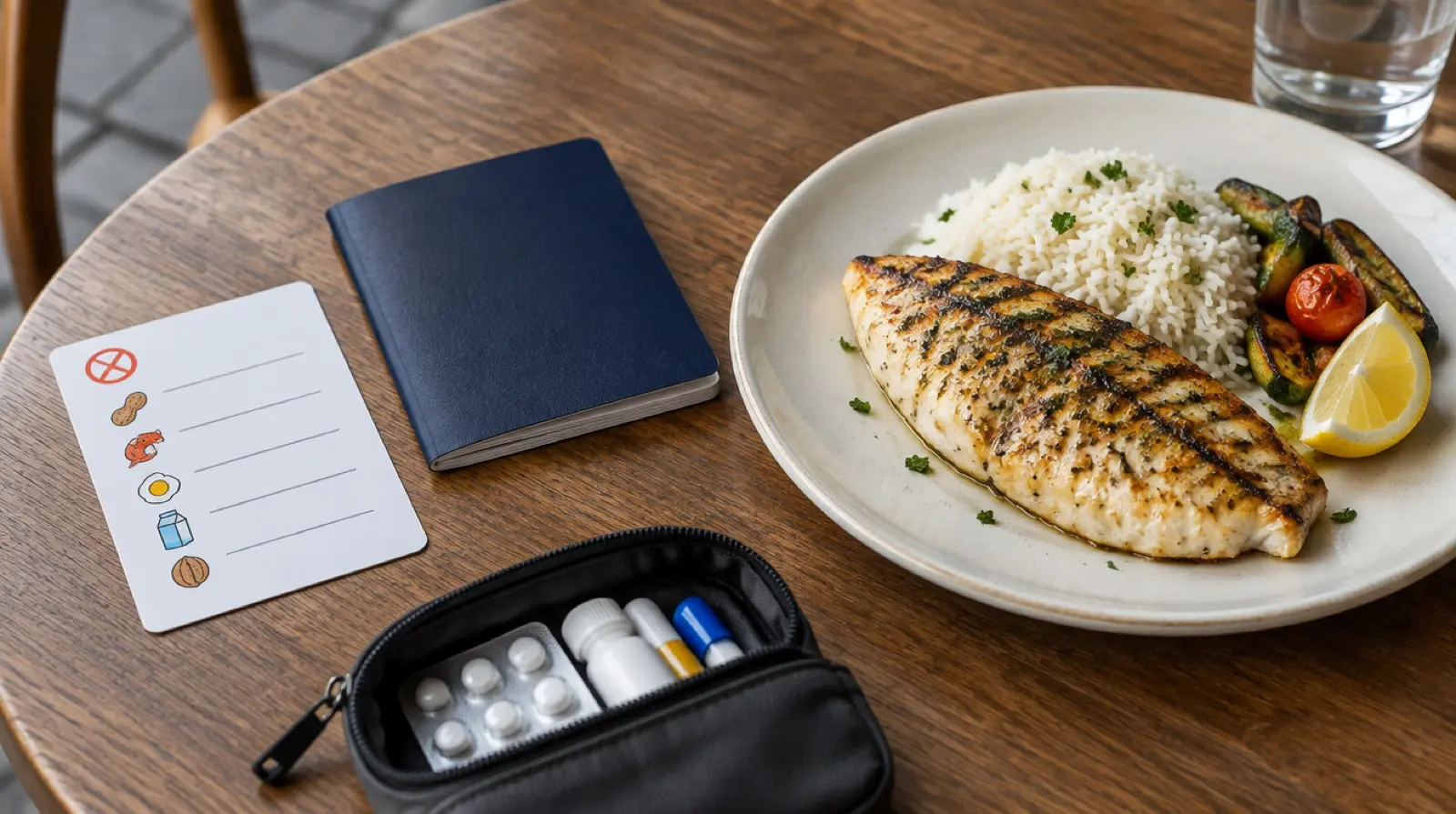
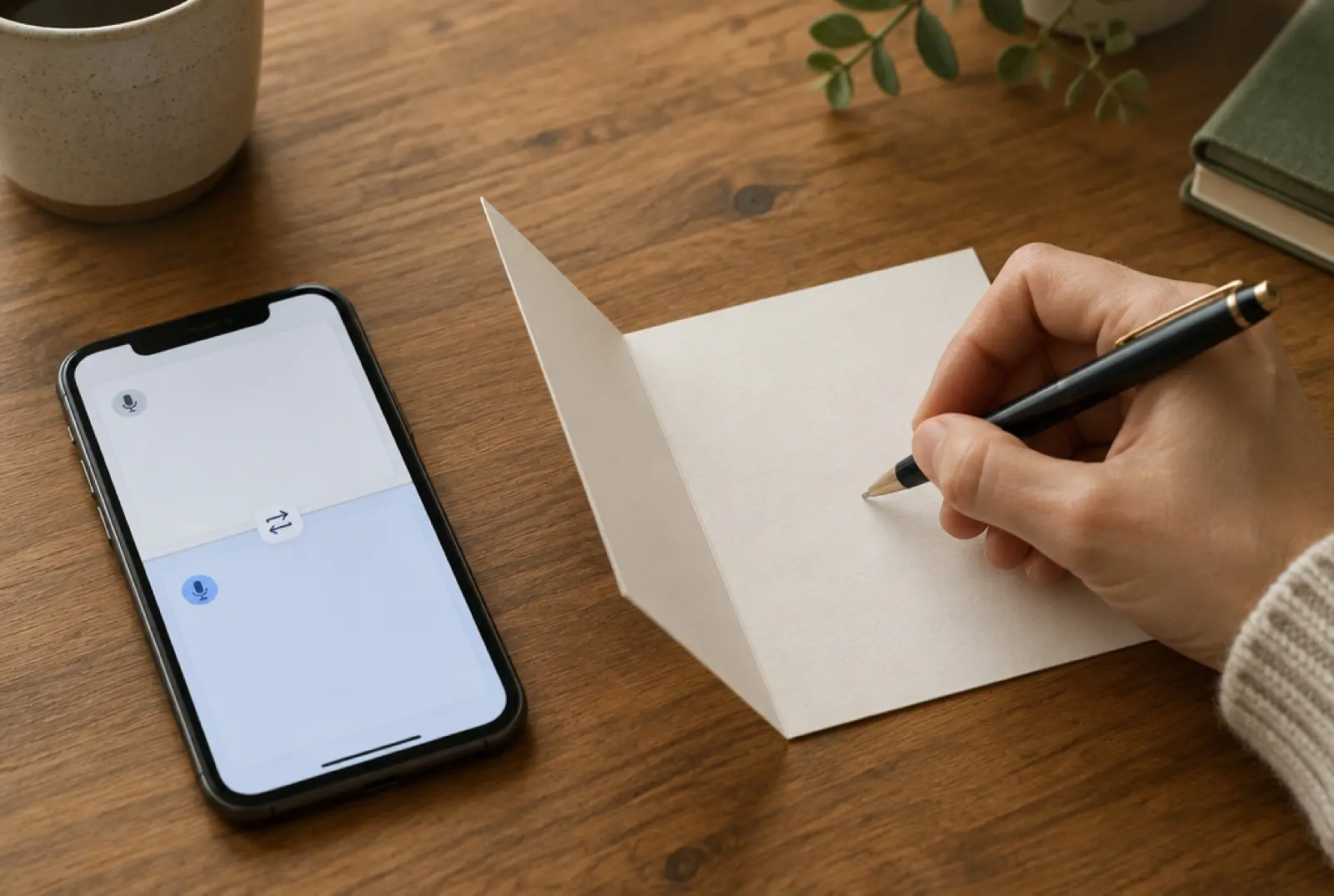
A card should name the allergen in plain words, state that exposure is serious, and list foods and cross-contact sources to avoid. Have it translated by a reliable source, ideally a native speaker or a professional service, and carry it printed and on your phone. Remember that some languages use different names for the same ingredient, so include the common names for nuts, shellfish, sesame, fish, egg, milk, wheat and soy.
3. Ask kitchen-risk questions
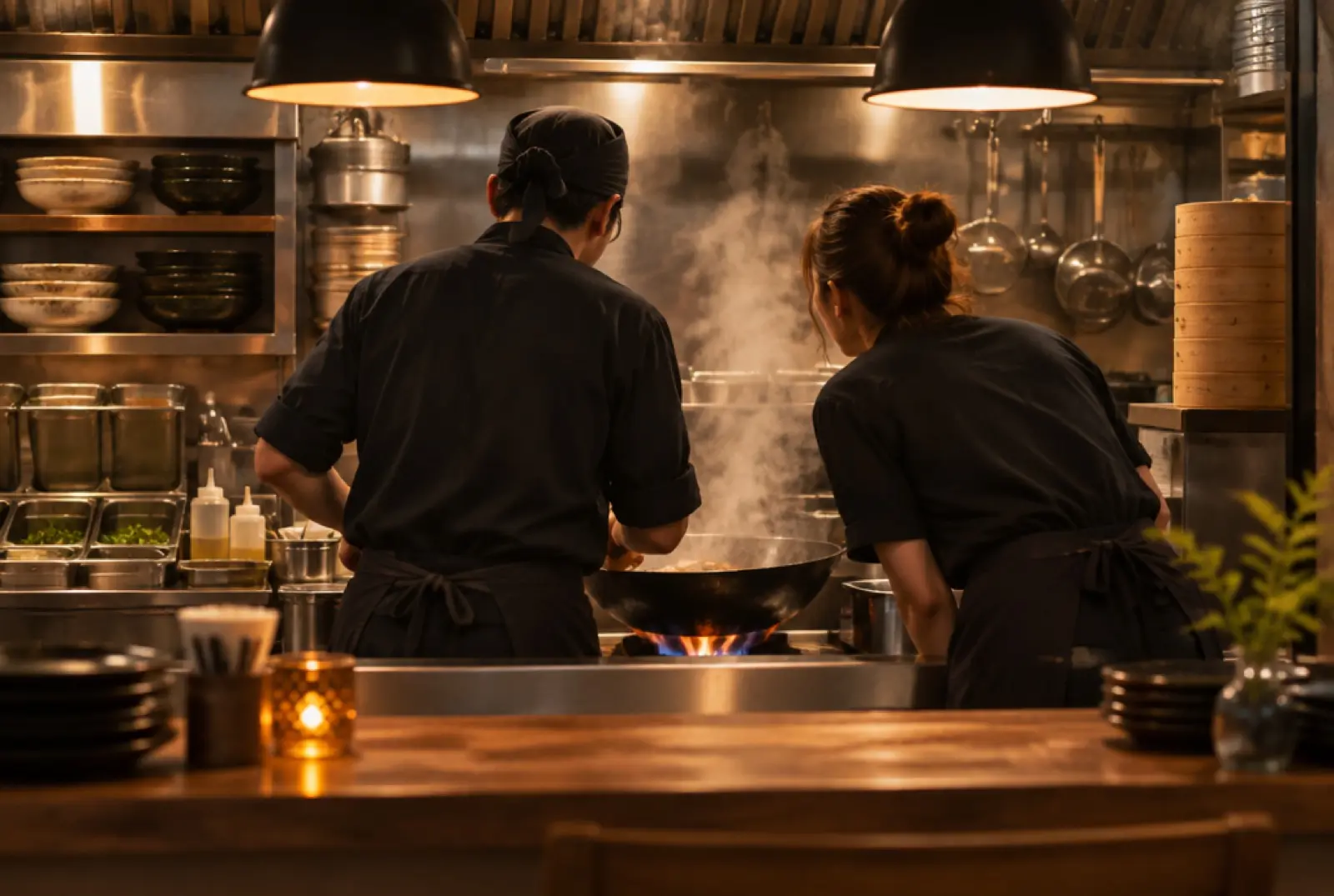
Ingredients are only half the question. Ask whether the same oil, grill, wok or board is used for other dishes, whether sauces or stocks contain the allergen, and whether anything is garnished or finished with it. Fried food shares oil, noodles share woks, and many sauces and pastes contain shellfish, fish, nuts or sesame. Ask the person who cooks, not only the person who takes the order.
4. Choose dishes and markets carefully
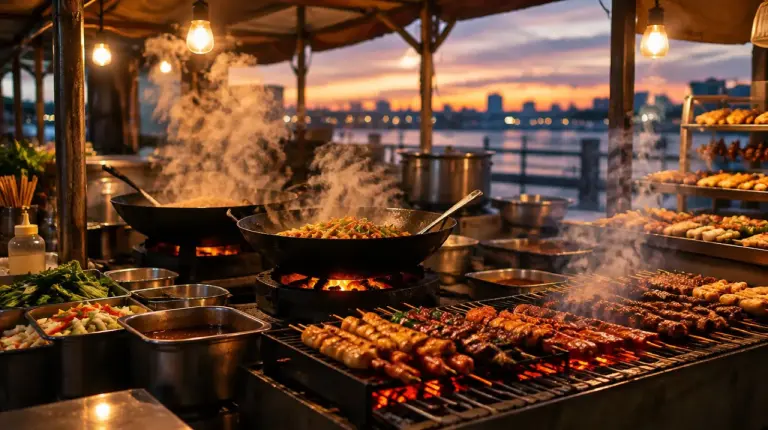
Market timing helps: stalls are less rushed early in the day, so the cook has time to listen. What to order first is the simplest dish with the fewest ingredients, such as grilled plain meat or fish, steamed rice, boiled vegetables or an egg dish if eggs are safe for you. Be wary of buffets, shared serving tools, fried snacks and desserts, where cross-contact is common and labelling is rare.
5. Understand the local food system
The ingredient story matters here. In some cuisines, peanut or sesame oil is the standard cooking fat, fish sauce or shrimp paste seasons many dishes, and wheat or soy appear in sauces you might not expect. Learn the basics about your destination before you go, then ask locally. Labelling rules vary widely between countries, so packaged food from one place may follow different standards from another.
6. Manage price, etiquette and tone
Price band per meal can rise when you eat somewhere calmer or order a plain dish, and it is usually worth it. Be polite and clear, and thank staff who take the time. In some places, refusing food is awkward, so explain that it is a medical need, not a preference. Customs vary, and table etiquette by country helps with how to decline and how to handle shared dishes.
Allergy travel checklist
Use this as a prompt for the conversation with your doctor, not a replacement for it. Add anything your own plan requires, such as a spare supply of prescribed medicine, a note from your doctor, or contact details for your insurer.
| Item | Why it matters | When to do it |
|---|---|---|
| Doctor or allergist visit | Personal advice and emergency plan | Weeks before travel |
| Translated allergy card | Clear message without a shared language | Before departure |
| Medicines in hand luggage | Available if checked bags are lost | When packing |
| Travel insurance check | Medical cover and what it excludes | When booking |
| Airline and hotel notice | Possible meal and room arrangements | At booking and again before travel |
| Local emergency details | Faster help if something goes wrong | On arrival |
Common mistakes with food allergies abroad
Most problems come from assumptions rather than bad luck, and each of these is avoidable with a little preparation. Keep the list in mind when you are tired, hungry or in a hurry, because that is when shortcuts happen.
- Relying on ingredient lists alone: cross-contact from oil, grills and shared utensils is a separate risk.
- Using a poor translation: a vague card can be misunderstood, so use a reliable translation.
- Trusting a yes from a busy server: ask again, ideally of the cook, if the answer seems rushed.
- Packing medicines in checked luggage: keep them with you.
- Eating unfamiliar street snacks without checking: sauces and fillings are often hidden.
What to verify before you go
Allergy rules are not the same everywhere, and what is routine at home may be unknown elsewhere.
Rules for carrying medicines, airline meal policies, allergen labelling and emergency numbers all differ and change, so check them with your doctor, airline, insurer and the official source for each country. For general health advice for your destination, see the official CDC travel health pages or your own government’s equivalent. Ask your doctor whether you should carry extra supplies and what to do if you are far from a hospital.
FAQ about travelling with food allergies
Should I tell the airline about my food allergy?
It is usually sensible to contact the airline before travel to ask about its policy, since practices differ between carriers. Bring your own safe food, keep medicines in hand luggage and ask your doctor what else to prepare.
How do I explain my allergy in another language?
Use a printed card in the local language, prepared with a reliable translation, and show it to the cook or server. Keep a copy on your phone. Do not rely on gestures or a quick app translation for something serious.
Are street food and markets safe with allergies?
They can be risky because of shared oil, utensils and hidden sauces, but a simple dish cooked to order may be manageable. Talk to the cook, show your card and walk away if the answer is unclear. Ask your doctor first.
What should I do if I have a reaction abroad?
Follow the emergency plan your doctor gave you, use your prescribed medicine and call local emergency services immediately. Know the local emergency number and the nearest hospital in advance, and keep your insurer’s contact details to hand.