How to choose a food tour comes down to what you want to leave knowing. A walking tour suits a first look at a district, a market visit with a cook suits ingredients, and a cooking class suits hands-on skill. Then ask about group size, stops and who explains the food. A good one teaches you how to order alone afterwards.
Which format fits your situation?
| Situation | Best choice | Why |
|---|---|---|
| First day in a new city | Small walking food tour | Gives you a map of dishes and neighbourhoods |
| You want to cook the dishes at home | Market visit plus cooking class | You learn ingredients, then technique |
| Short on time, limited budget | Self-guided market route | Costs only what you eat; see below |
| Travelling with a food allergy | Private or very small tour | Easier to control ingredients and ask questions |
| Interested in one dish or craft | Specialist workshop | Depth beats breadth for a single product |
| Travelling solo and wanting company | Shared group class | Cooking and eating together breaks the ice |
When each option wins
1. A walking tour wins on your first day
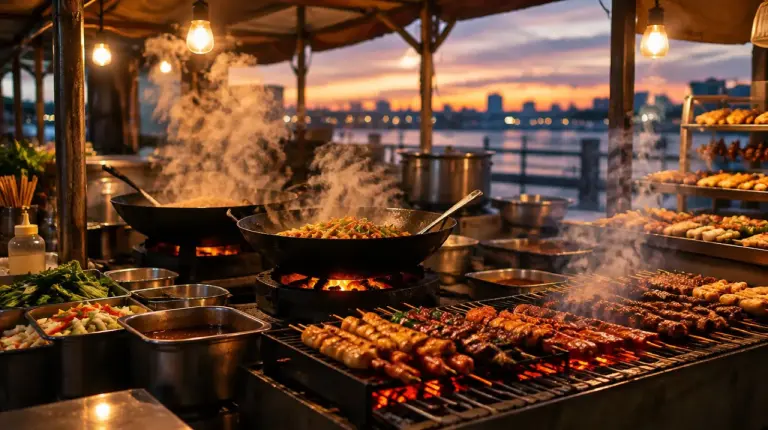
If you arrive without a plan, a guided walk gives you vocabulary quickly: the names of the dishes, which stalls open when, and what locals eat at breakfast compared with supper. The best ones follow a sequence, savoury before sweet and light before heavy. Aim for four to six tastings, not ten, so you still have room for lunch. Ask what the route covers and whether it follows market hours, which in many places run strongest in the morning.
2. A cooking class wins when you want the method
A class is worth it when you want a dish to repeat at home. Look for one that starts at a market, where you see the ingredients raw, and ends at a table where everyone eats what they cooked. Ask how many people share one stove and how much you cook yourself. If the instructor does the work while you watch, you have bought a demonstration, not a class.
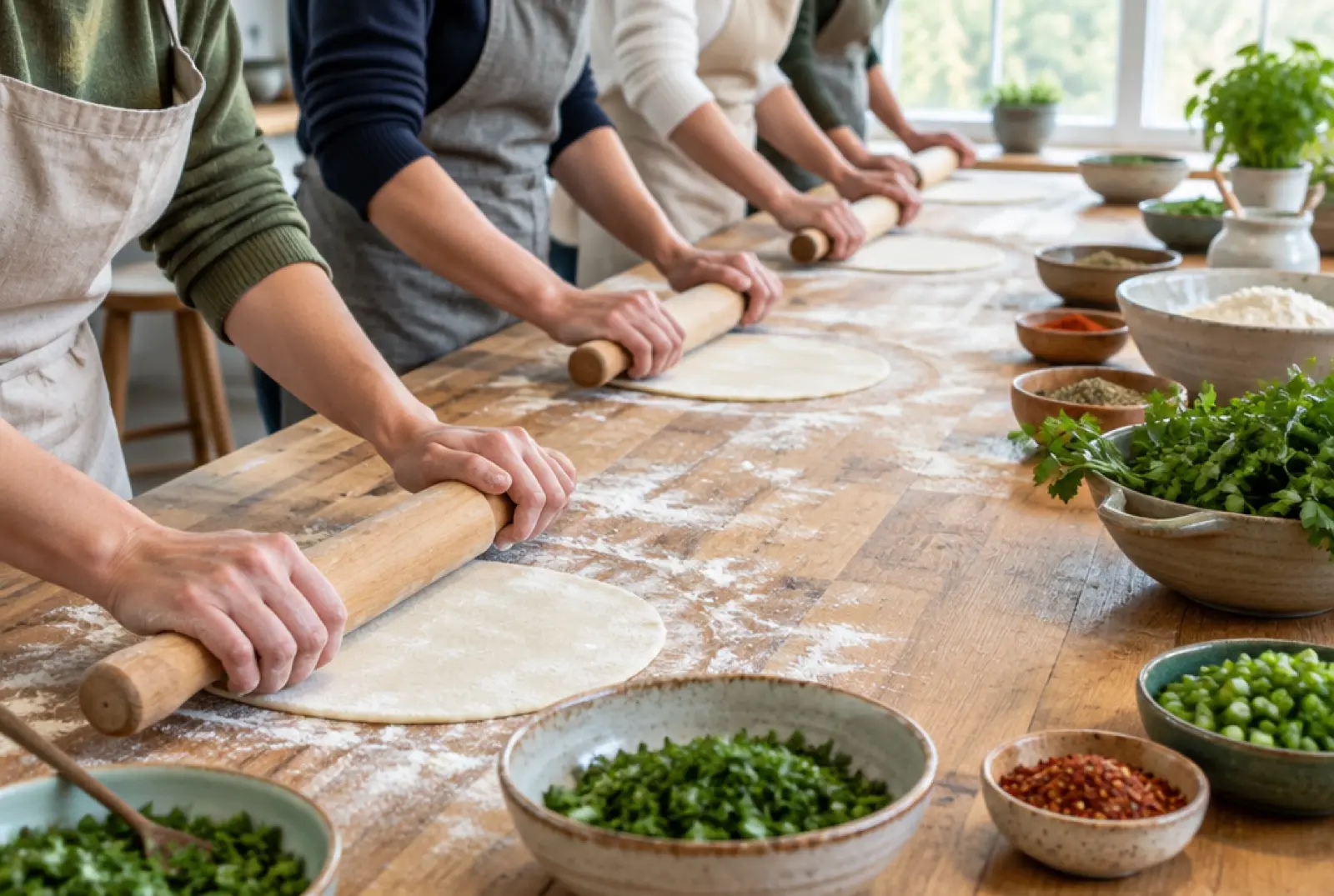
3. A market visit with a cook wins for ingredients
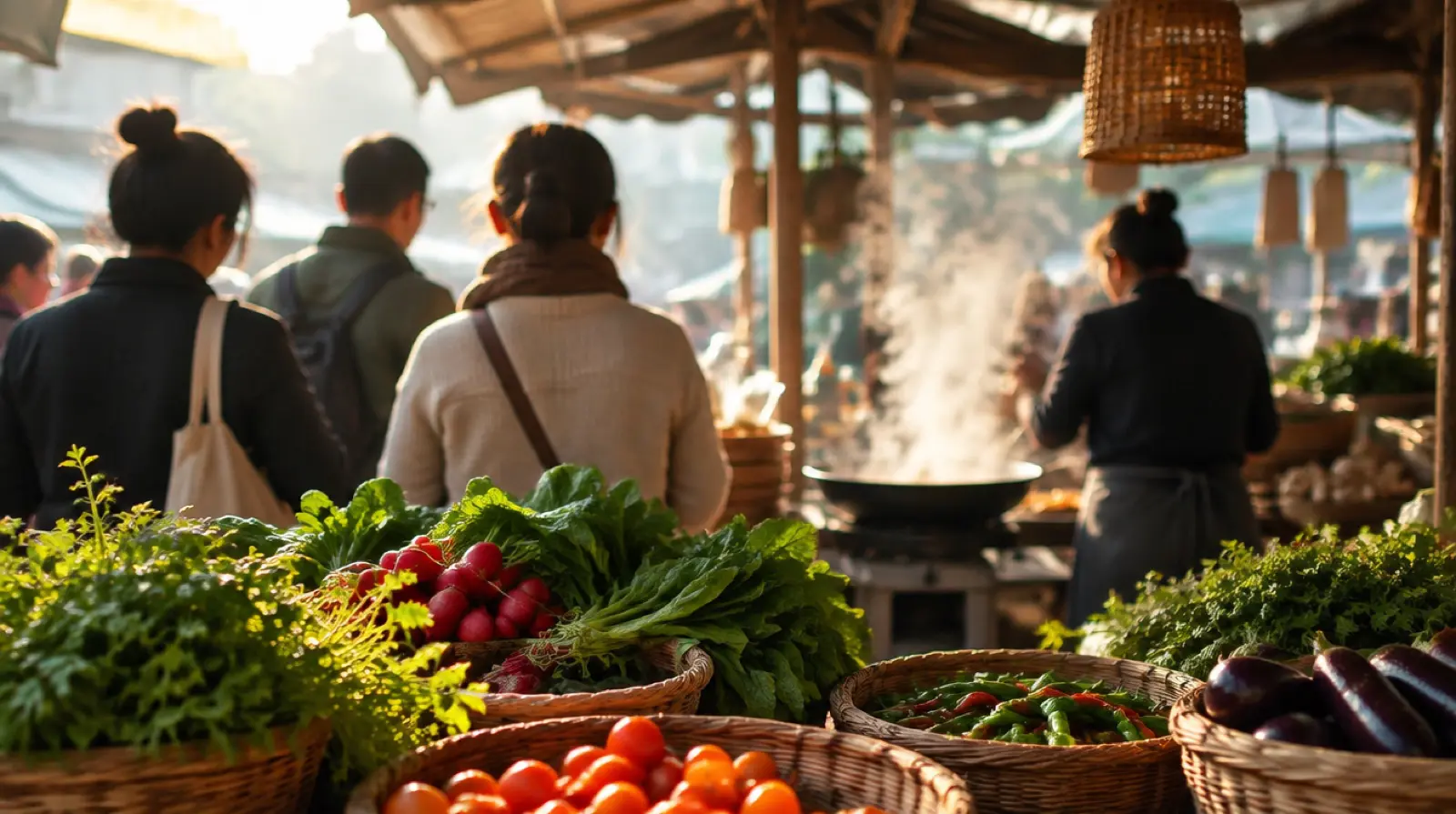
Here the story is the supply chain: where the produce comes from, which stalls the cook trusts and why one fish or one pepper is chosen over another. This is the format closest to how food actually arrives on a plate. It pays off most in a place with a strong regional product, such as a spice, a cheese or a fish. Our guide on how to eat at a local market when travelling covers the self-guided version.
4. A self-guided route wins when budget or time is tight
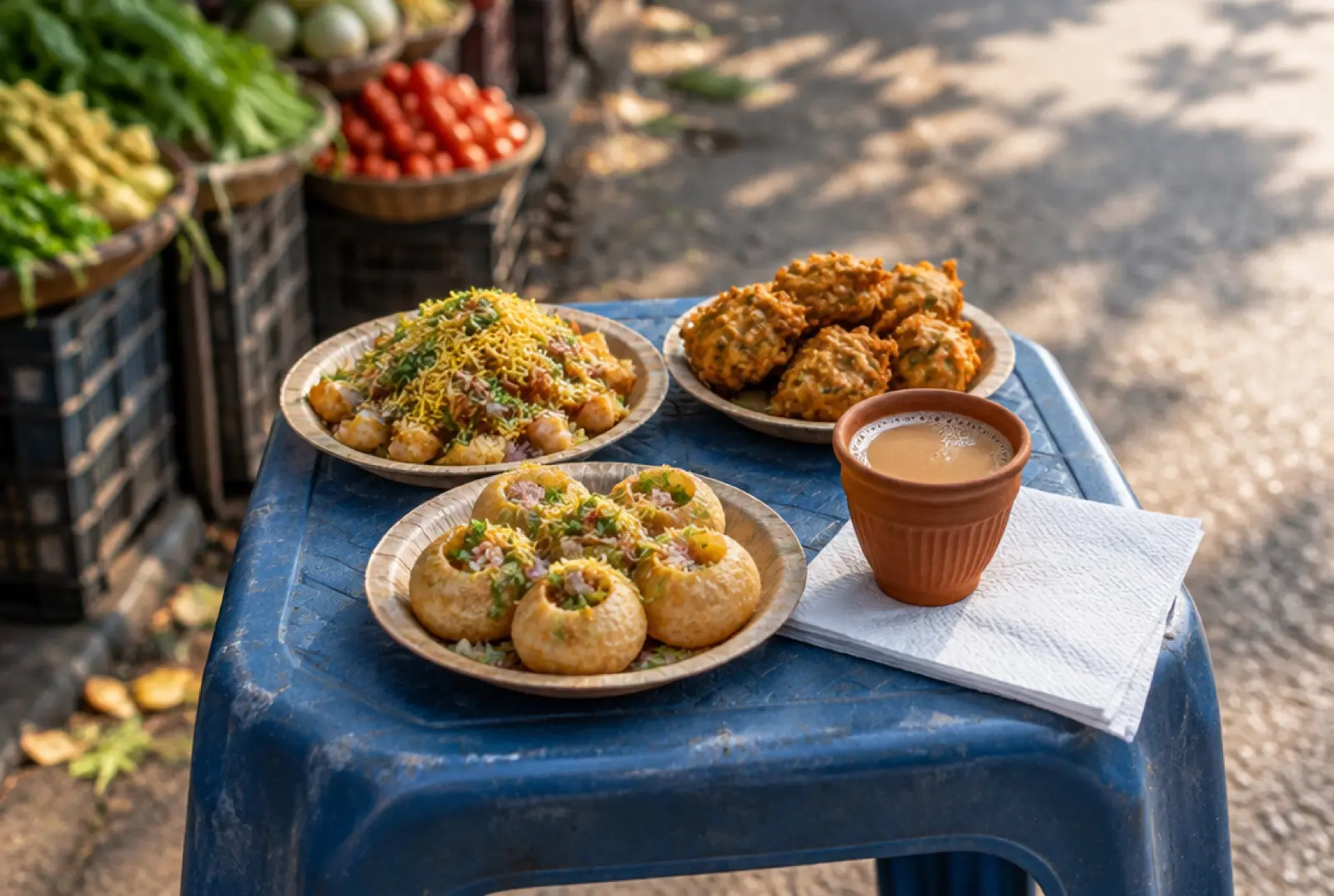
You can build your own food tour for the price of the food. Pick a market, go early, eat one small thing at each of three or four stalls, and ask the vendor what to order first. It is slower and you will miss the backstory, but you control the pace. Read a country guide first, such as georgian food, to learn dish names before you arrive.
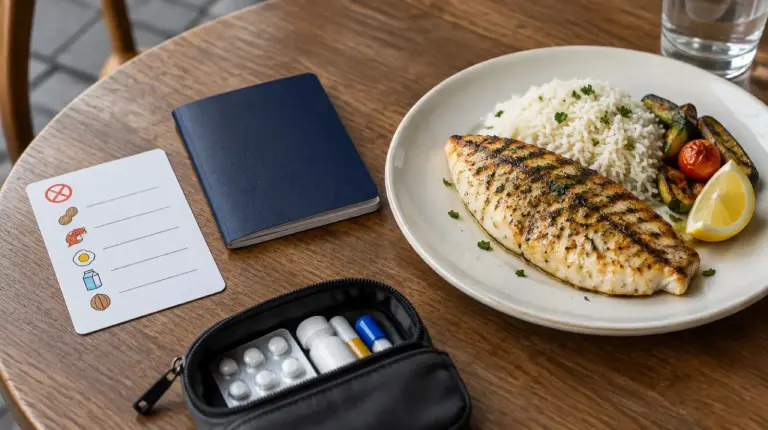
5. A private tour wins for allergies and dietary rules
If you avoid certain foods for health, religious or personal reasons, a small or private tour is easier to adapt. Write your needs down in the local language and send them in advance. No guide can promise a kitchen is free of an allergen, so treat any assurance with care. This is general information: for allergies and food safety, speak to your doctor and read the official advice at the CDC travel health site.
6. A specialist workshop wins for a single craft
Bread, noodles, cheese, tea, chocolate and street snacks often have their own short sessions. They go deeper on one subject than a general tour can, and you leave with a skill you can repeat. The trade-off is range: you learn one thing well and see little else of the city. Pair one with a free morning of wandering to balance it out.
Costs and trade-offs
Prices vary widely by city and format, and they change, so check the current listing. As of 2026, a small walking food tour may run from about 30 to 80 USD per person, a cooking class with a market visit about 50 to 150 USD, and a private tour more. Tastings usually count as a meal, so factor that into your day. Larger groups are cheaper but you hear less and eat less. Smaller ones cost more per head and let you ask questions. If tips are not included, ask the host how they are shared.
Red flags and mistakes to avoid
These are the usual warning signs when you decide how to choose a food tour from a long list of listings.
- Too many stops. Ten tastings in two hours means rushed portions and little explanation.
- Large groups. Past about 12 people, those at the back often cannot hear the guide.
- Vague menus. If the operator cannot say what you will eat, expect filler dishes.
- No local voice. A guide who cannot explain a dish or an ingredient is selling a walk, not a food tour.
- Stops that are all one chain of venues. It can mean the route is built around commissions, not around the food.
- Booking blind. Read recent reviews across more than one platform and check the cancellation terms.
What to verify before you go
Confirm the meeting point, the length, whether the price covers all food and drinks, and the cancellation policy. Ask how the operator handles allergies, and what happens in bad weather. For vaccines and food and water safety, see the traveller advice from your government health agency and a doctor or travel clinic. You should leave a good tour able to say what you ate, why it exists in that place and how to order it again.
FAQ about choosing a food tour
How many people should be on a food tour?
Smaller is generally better. Groups of about 6 to 12 let everyone hear the guide, ask questions and reach the table together. Past that, expect more waiting and less explanation, so ask for the cap before you book.
Is a cooking class better than a food tour?
Neither is better. A class teaches technique and gives you a dish to repeat at home. A tour shows you what to eat across a district. Choose a class for skills and a tour for orientation, and consider doing one of each on a longer stay.
Should I eat before a food tour?
Eat lightly. Most tours count as a meal, and portions add up quickly. A small breakfast, or a late start on an empty stomach, is the usual advice. Ask the operator how much food to expect.
Can I join a food tour with allergies or dietary rules?
Often, but tell the operator before booking and ask exactly what they can change. No operator can guarantee zero risk, so talk to your doctor first and follow official health advice. A private tour gives you more control.