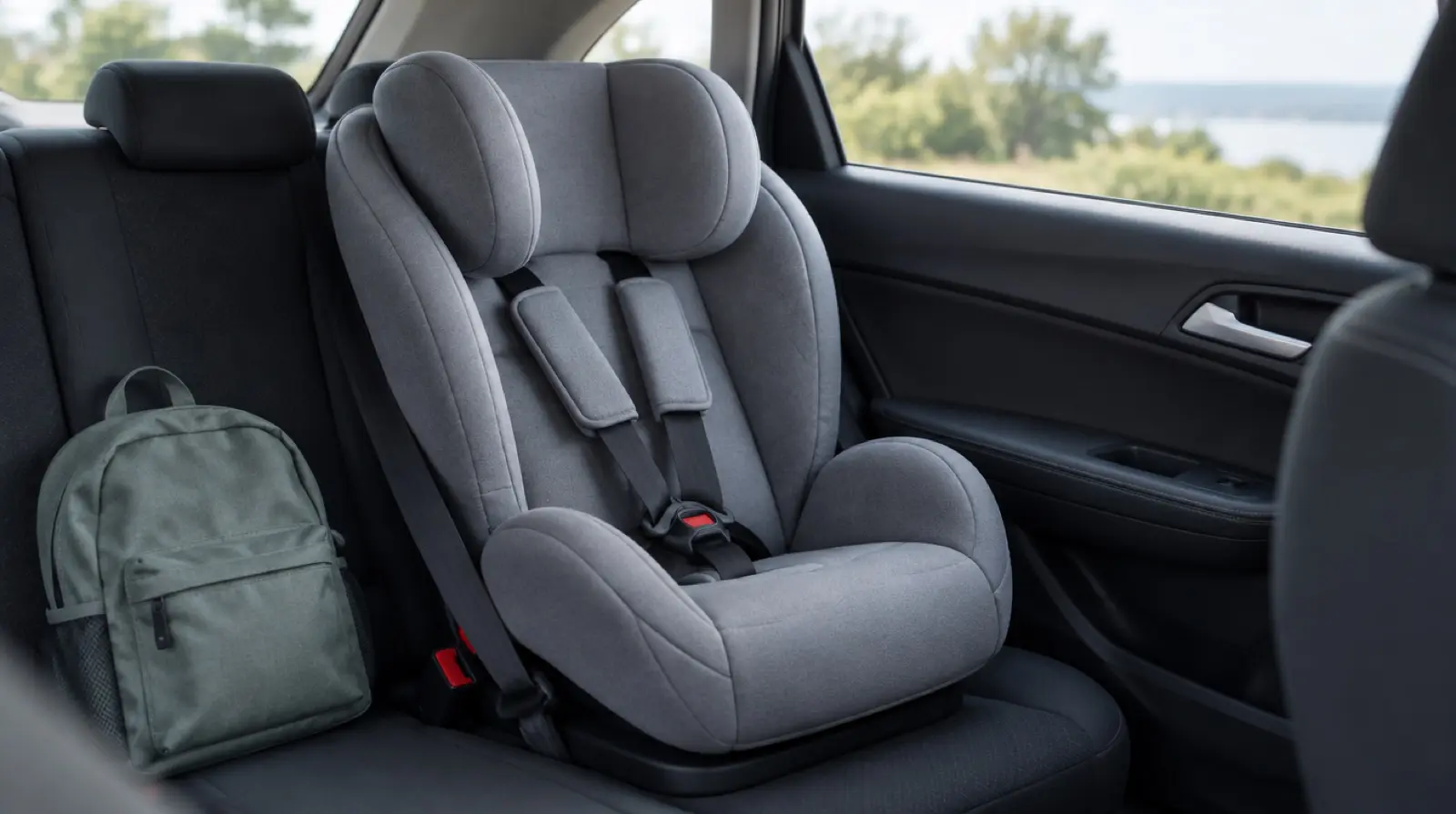
For car seats abroad travel, the choice is usually bring, rent or buy, and trip length and local rules decide it. Bring your own seat for short, car-heavy trips where fit matters, rent for one or two car journeys, and buy for stays of several weeks. Check local law and rental terms before you commit.
Decision table
Use this as a first pass, then confirm details with the airline, rental company and local authority.
| Situation | Best choice | Why |
|---|---|---|
| One airport transfer, no other driving | Rent from the transfer provider or use a service that supplies seats | Avoids carrying a seat for a single short ride |
| Road trip of one week or more, child under about 7 | Bring your own | Known fit, known condition, no daily rental fees |
| Short city break with public transport | Skip a seat where law allows, or rent for one trip | Little driving, so weight is not worth it |
| Stay of three weeks or more with regular driving | Buy locally or bring your own | Rental costs may exceed the price of a basic seat |
| Older child with a booster-only need | Bring a light booster | Small, cheap to carry and widely accepted by airlines as checked luggage |
| Destination with unclear rental standards | Bring your own | You control condition and approval |
When each option wins
1. Bring your own seat on a road trip
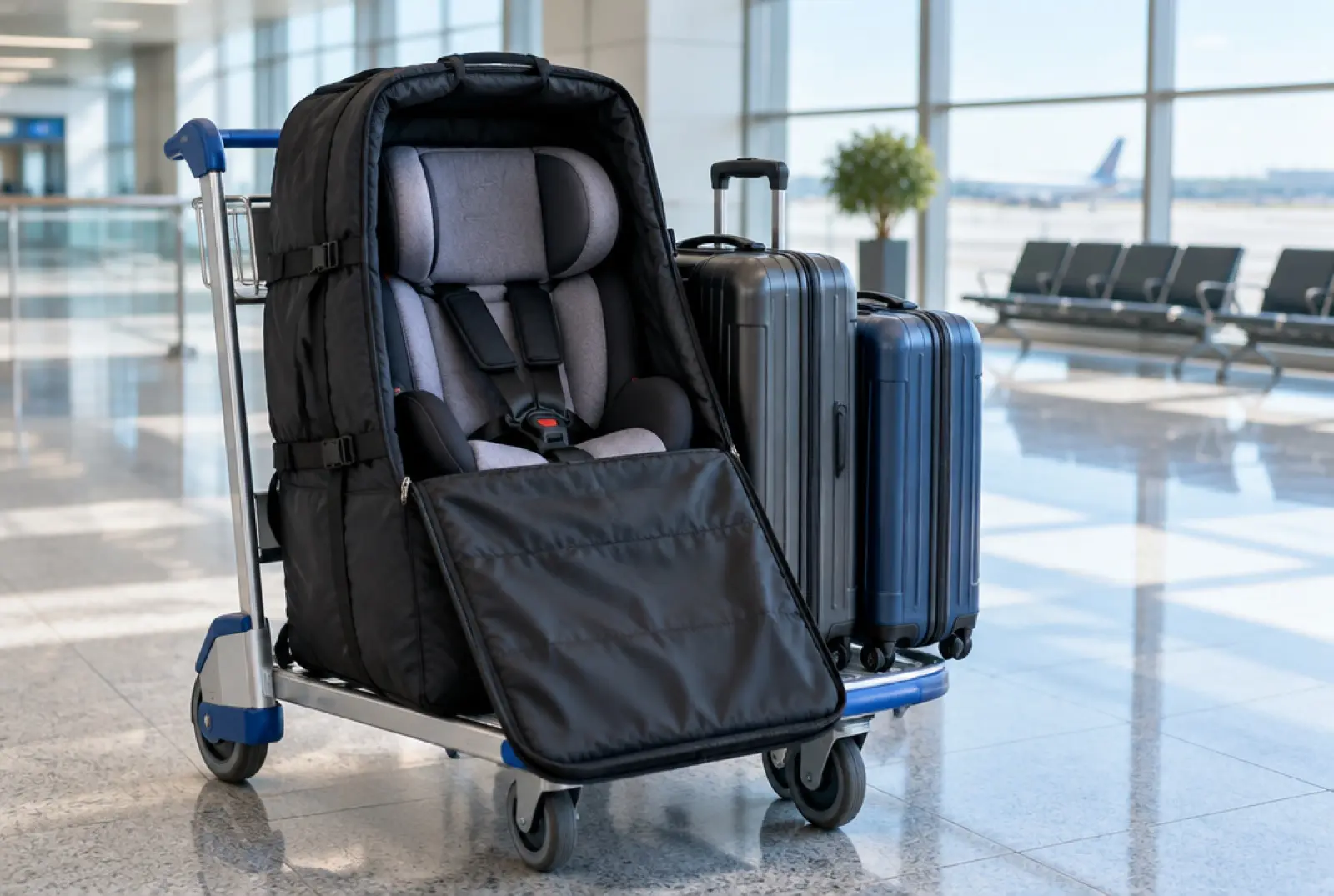
If you will drive most days, a seat you know is worth the luggage space. You know its history, the straps are adjusted to your child and the child is used to it. The cost is carriage and the risk of damage on the flight. Many airlines carry child seats free as checked items, but allowances vary, so check with the airline. A bag with padding helps, and so does a quick inspection on arrival.
2. Rent for a short trip with one or two drives
Rental suits a stay with only a few car journeys. Book the seat with the car, confirm the child’s age and size band, and ask about condition at the desk. Typical daily fees can add up over a long stay, so work out the total before you book. As of 2026, rental seats are common in many countries, but supply is not guaranteed in busy seasons, so reserve early.
3. Buy for a long stay
For stays of about three weeks or more, a basic seat bought at a large retailer can cost less than the rental, and you can leave or sell it at the end. Check that the seat meets the local approval standard and fits the car you will drive. A used seat of unknown history is a poor bargain, so avoid it unless you know the seller.
4. Use a travel booster for older children
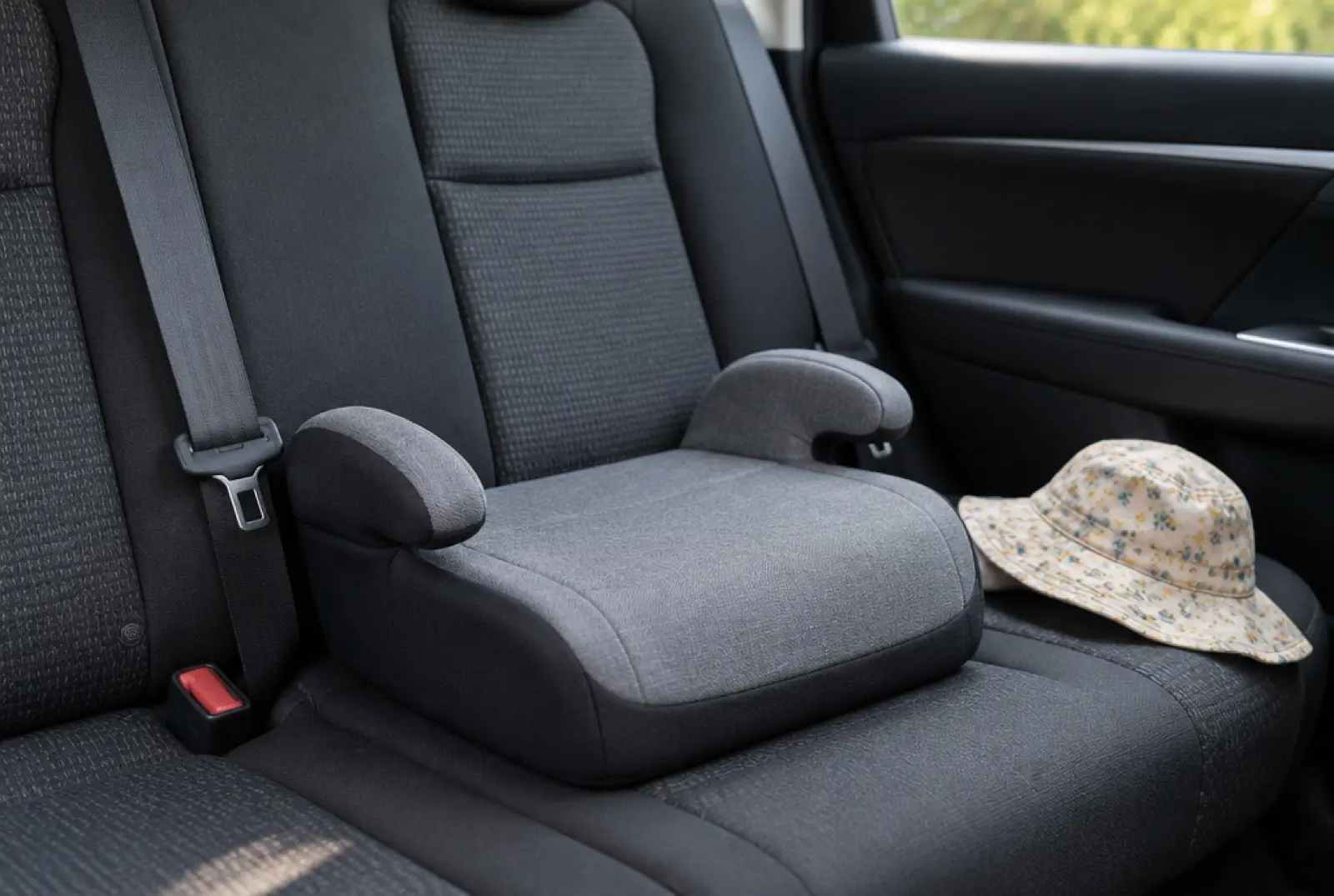
An older primary-school child who has outgrown a harnessed seat often needs only a booster. Lightweight boosters fold small, fit in a daypack or a suitcase and are widely accepted. Check the child’s height and weight against local rules, since requirements differ by country. For the airline, a booster is usually carried as luggage, not used on board.
5. Skip the seat where law and safety allow
Some taxis and ride services in some cities do not carry child seats, and local law may allow children to ride without one. This is a legal grey area, and the rules vary. Treat it as a last resort for a short ride, and prefer a seat where you can. When you hire a private driver, ask in advance whether they carry seats for your child’s age.
6. Use a ride service with seats supplied
Some transfer firms and private drivers supply seats on request. This suits airport transfers where renting a car is not worth it. Ask for the age band and the type of seat, confirm by email and keep the confirmation. A guarantee is better than a promise made at the door.
Costs and trade-offs
Rental fees commonly run from a few dollars to about $15 a day, often with a cap per rental, though they vary by company and country. Carrying your own seat costs luggage space and a little hassle at the airport, but the seat itself is free. Buying locally costs roughly the price of a week or two of rental, so buy only if you will use it. Convenience, familiarity and condition all matter more than the headline price.
For how car seats abroad travel plans fit a trip plan, see our Ireland itinerary with kids, which uses a limited driving day, and the Costa Rica itinerary with kids, where road time shapes the base.
Age and stamina notes
Car seats abroad travel choices change with the child. Seat needs follow height, weight and age, not only age. A child aged 5 to 7 often moves from a harnessed seat to a high-back booster, and 8 to 12 is the band where a backless booster or the adult belt becomes legal in some places. Long drives are hard on tired children, so cap a driving day and plan rest stops, snacks and a short walk about every 90 minutes.
Questions for the rental desk
- Which seat will you give us, and for what weight and height range?
- Is it clean, undamaged and within its expiry date?
- Can you show how to fit it, and can we check it before we drive?
- Is the seat fixed with the belt, or does it need a base the car lacks?
- What is the total fee, and is there a daily or per-rental cap?
Mistakes to avoid
Most problems with car seats abroad travel come from assumptions made at home.
- Assuming the rental will have a seat when you arrive, without a confirmation.
- Bringing a seat that does not fit the rental car or lacks the right attachment points.
- Relying on a rule you remember from home. Local law applies where you drive.
- Planning a long first drive on arrival day, when the children are tired.
- Leaving a seat unchecked after the flight, when damage may be invisible.
What to verify before you go
- Local child restraint law for the country and the child’s age, height and weight, from the official road safety authority.
- Airline rules on carrying a car seat as checked luggage, as a cabin item or on board, and any size or weight limit.
- Whether your seat carries an approval label recognised in the destination country.
- Your travel insurance and rental agreement, including damage to a seat.
- Health and safety advice for your destination on the CDC travel pages, which also cover road injury risk.
FAQ about car seats abroad
Can I take a car seat on a plane?
Usually yes, but the rules vary. Many airlines carry a seat free as checked luggage, and some allow it at the gate. Some let you use an approved seat on board in its own seat. Check the airline’s policy and the seat’s approval label before you fly.
Is it cheaper to rent or bring a car seat?
For a week or longer, bringing your own is usually cheaper, since airlines often carry it free. For a stay of a few days, rental can win, because there is no baggage hassle. Compare the total rental fee with your luggage cost.
Do I need a car seat in a taxi abroad?
It depends on the country and the type of vehicle. Some places exempt taxis, while others do not. Rules also change, so check local law. Where you can, pre-book a transfer with a seat, or carry a light booster.
Are rental car seats safe?
Many are fine, but condition varies. Ask for the age of the seat, check for damage and make sure the straps and buckle work. If it looks worn or you cannot fit it, ask for another or use your own.