The best public transport with stroller tips are simple, and most of the work happens before you leave the hotel: choose a light, quick-fold stroller or a carrier to match the city, check the step-free route before you leave, and travel outside rush hour. In cities with many stairs, a carrier is often easier. A tired-day fallback, such as a taxi, makes the rest manageable.
The short version
- Match the stroller or carrier to the city: step-free and flat, or stairs and cobbles.
- Check the step-free route and lift status for each journey before you leave.
- Travel outside rush hour, and board at the doors with space for pushchairs.
- Pack so one adult can fold, carry and hold a child with one hand free.
Public transport with stroller tips, step by step
1. Choose stroller or carrier by age and city
A light stroller suits flat cities with lifts and low-floor trams. A carrier suits old towns, stairs, ferries and crowded metros. Age and stamina note: a baby fits a carrier from the early months if the model suits their age and weight, a toddler may tire after about 20 minutes of walking and want a ride, and a child over about four may need a stroller for long days only. Decision point: if you expect more than a few flights of stairs a day, take the carrier.
2. Check the step-free route before you leave
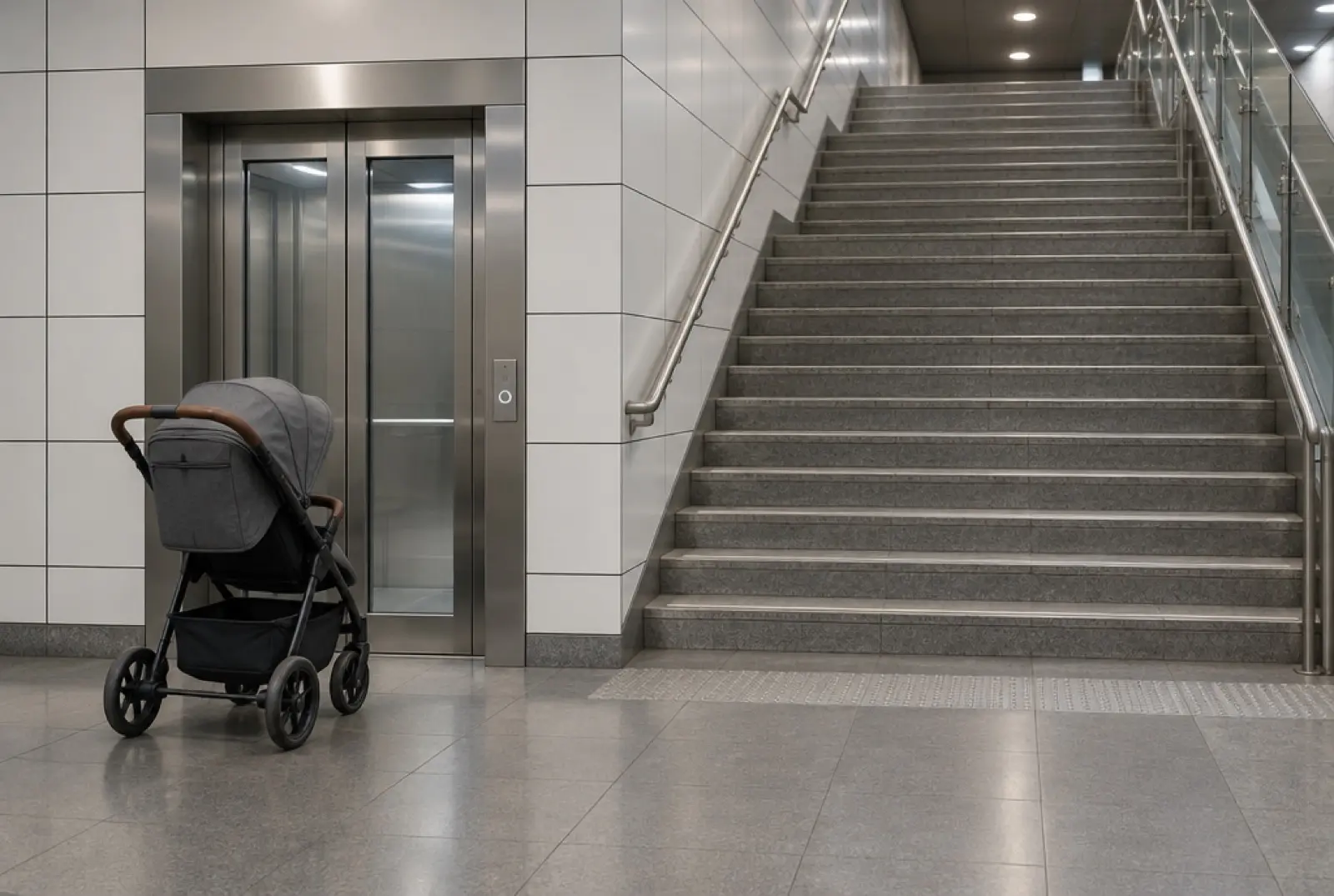
Many stations have lifts, but lifts break, and routes between platforms can be long. Look at the transport operator’s map for step-free access, and check live lift status if it is offered. Plan the exit as well as the entrance, because the far end of a journey is where families get stuck. Fallback: note a second station on the same line with level access, so you can switch if a lift is out of service.
3. Know which vehicles are easiest
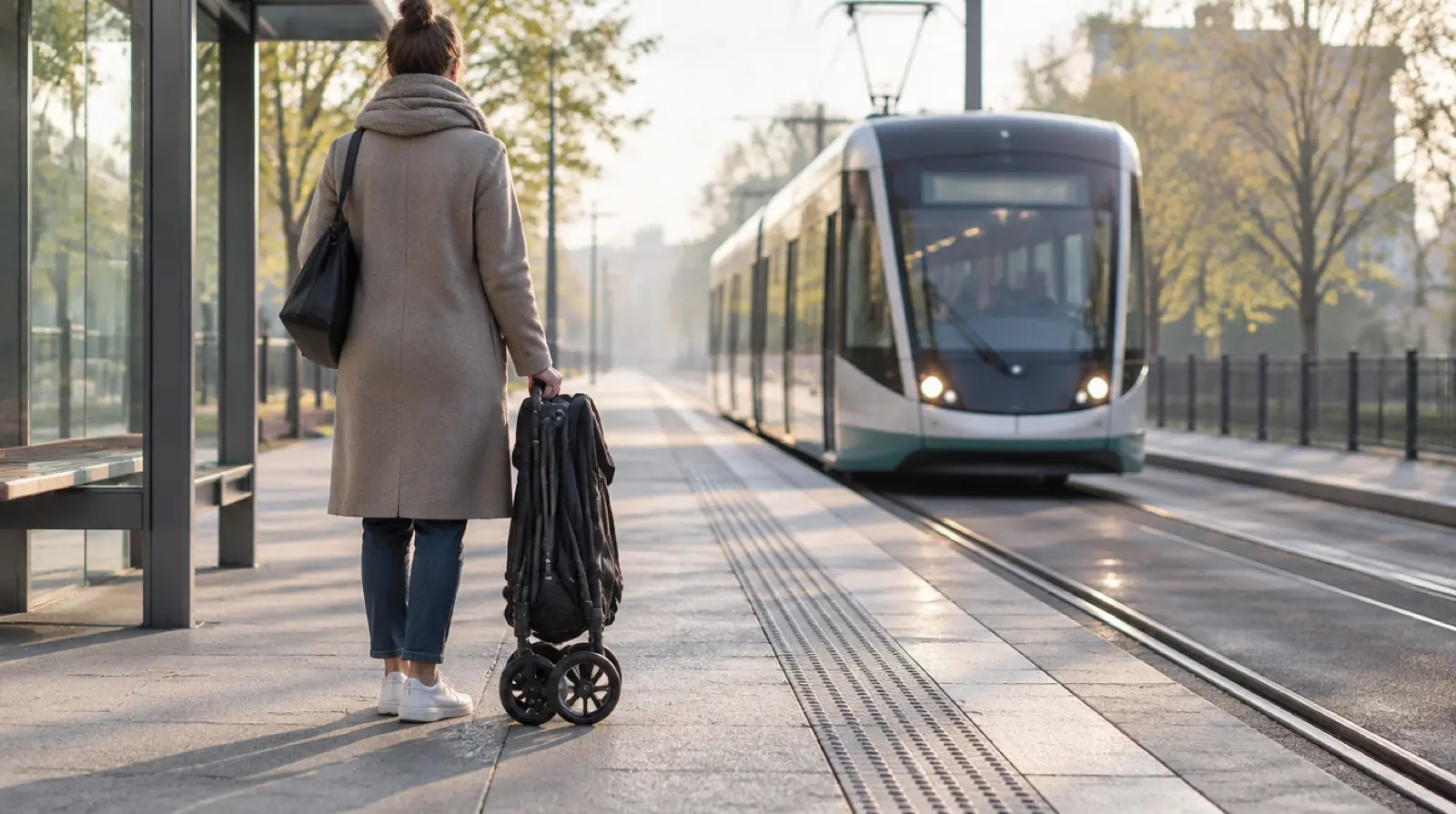
Low-floor trams and modern buses are usually the simplest, with level boarding and space for pushchairs. Older metros, regional trains and some ferries have steps and gaps. In many cities the middle doors of a bus or tram have the most space. Ask the driver or staff if unsure. Rules on whether a stroller must be folded vary by operator and by how busy the vehicle is, so check before travelling.
4. Pick the time of day
Rush hour, usually around 7:30 to 9:30 in the morning and 4:30 to 6:30 in the evening, is the hardest time for a stroller. Use the quieter middle of the day for transfers. Rest anchor: build the day around a nap, meal and rest, with the longest journey during sleep. Plan no more than two changes in a journey, and give yourself ten extra minutes for each one.
5. Practise the fold and the load
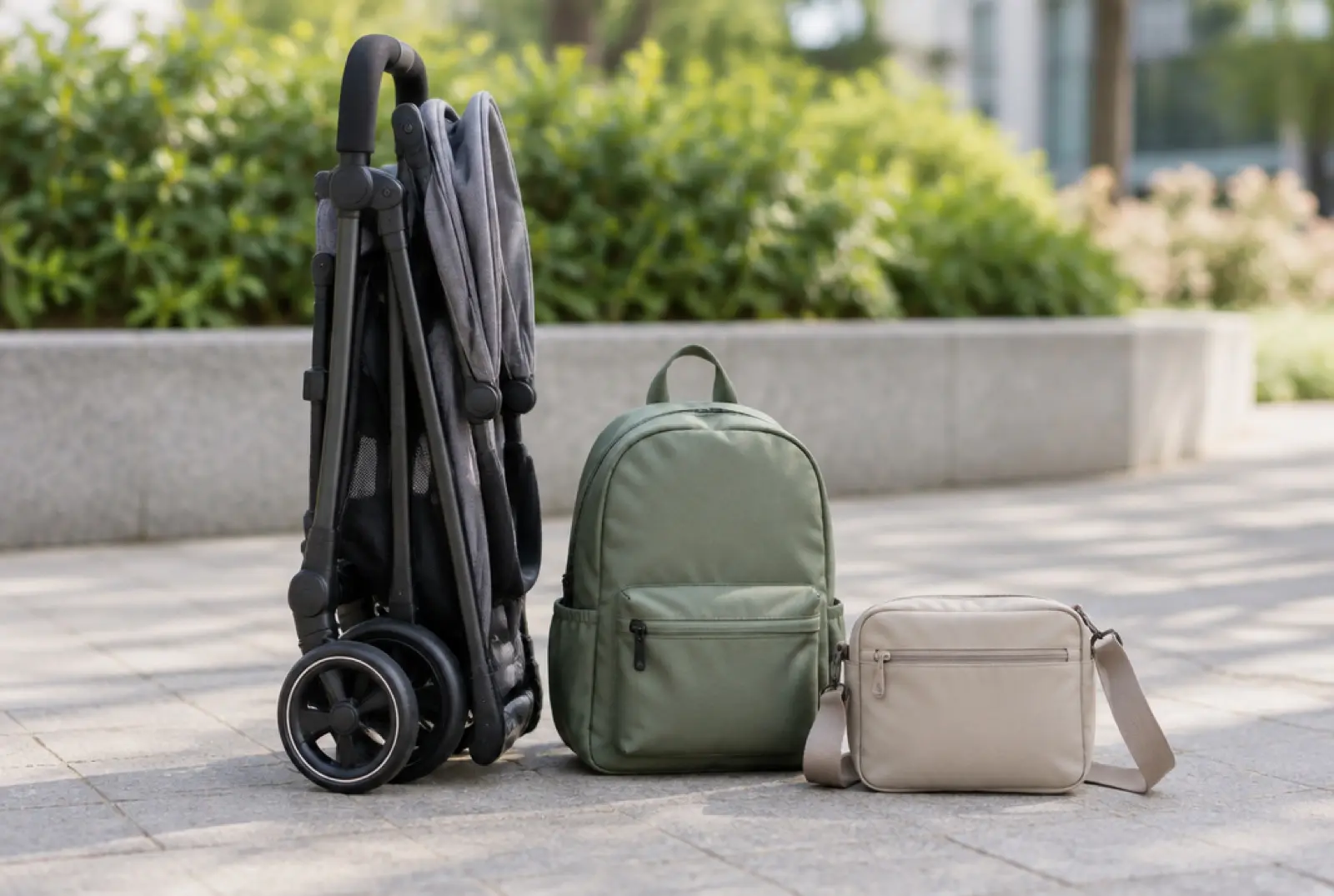
Practise folding the stroller at home with one hand. Keep bags light, and use a cross-body bag or backpack so both hands are free. Do not hang heavy bags on the handles, which makes a stroller tip when you lift it. Before boarding, take the child out if the vehicle is crowded, fold and carry. Keep your ticket, card or phone where you can reach it without unpacking.
6. Plan for the tired day
Some days, stairs and delays are too much. Keep a fallback in the plan: a short taxi or ride-hail, a walk instead of a transfer, or a rest day near your base. Meal anchor: carry water and a snack, because a hungry child on a delayed train is the real problem. Drop one stop rather than rush. The day is still a success if one anchor activity happened.
A short pacing grid helps. Morning: the longest journey, outside rush hour, with a snack in the bag. Midday: a meal and a rest near a station with a lift. Afternoon: one short ride or a walk back, with the option to take a taxi. Keep each day to two or three journeys, and one of them can be dropped without breaking the rest.
Quick reference: stroller or carrier
| Situation | Better choice | Why |
|---|---|---|
| Flat city, lifts, low-floor trams | Light stroller | Easy boarding, a place for bags |
| Old town, cobbles, many stairs | Carrier | No lifting, hands free |
| Ferries and boats | Carrier or compact fold | Steps, gaps and narrow gangways |
| Long day with a nap | Stroller, plus a carrier for stairs | The child can sleep while you travel |
Common mistakes with strollers on public transport
- Choosing a large stroller for a city with stairs and narrow doors.
- Assuming every station has a working lift.
- Travelling in rush hour when the day does not require it.
- Hanging heavy bags on the handles.
- Planning four or five changes in one day.
- Leaving no plan for the tired afternoon.
To see how this works in practice, read our guides to Amsterdam with kids and Singapore with kids, two cities with very different transport and pacing.
Tickets, strollers and other passengers
Children’s fares, and whether a stroller counts as luggage, differ by operator and age, so check before you travel. If a vehicle is full, wait for the next one rather than forcing your way on. Most passengers help when asked, and a short, calm request works better than an apology. Keep the child’s hand or carrier strap secure while the vehicle moves, and apply the brakes on the stroller whenever you stop on a platform or in a vehicle.
What to verify before you go
Stroller rules, ticket rules for children, accessibility features and lift status all differ by operator and change often. Check the transport operator’s website or app, and ask the airline about stroller allowances. For general health advice for travellers with children, see the CDC travel health pages, and ask a doctor or travel clinic about your own family.
FAQ about public transport with a stroller
Do I have to fold my stroller on a bus or train?
It depends on the operator, the vehicle and how busy it is. Many buses and trams have a space for pushchairs, while older vehicles may ask you to fold. Check the operator’s rules before you travel.
Is a baby carrier better than a stroller for travel?
For stairs, cobbles and crowds, a carrier is usually easier. For flat cities and long days with naps, a stroller carries bags and lets a child sleep. Many families bring a light stroller and a carrier together and choose daily.
How do I find step-free routes?
Use the transport operator’s map or app, which often marks step-free stations, and check live lift status if it is offered. Plan the exit as well as the entrance, and note a backup station in case a lift is out of order.
What is the best time to travel with a stroller?
Outside rush hour, usually the middle of the day or after about 7 pm in the evening. Vehicles are emptier, and boarding is easier. Plan transfers around naps and meals so the child is rested for the longer journeys.