These flying with kids tips come down to one idea: treat the flight as a series of short blocks, not one long ordeal. Seat the children together, anchor each block to a meal, a screen, a rest or a walk, and carry a spare plan for the tired hour. For primary-school ages, a prepared bag matters more than any single trick.
The short version
- Book seats together as early as you can, and check the booking again a week before departure.
- Split the flight into blocks of roughly 60 to 90 minutes, each with one job.
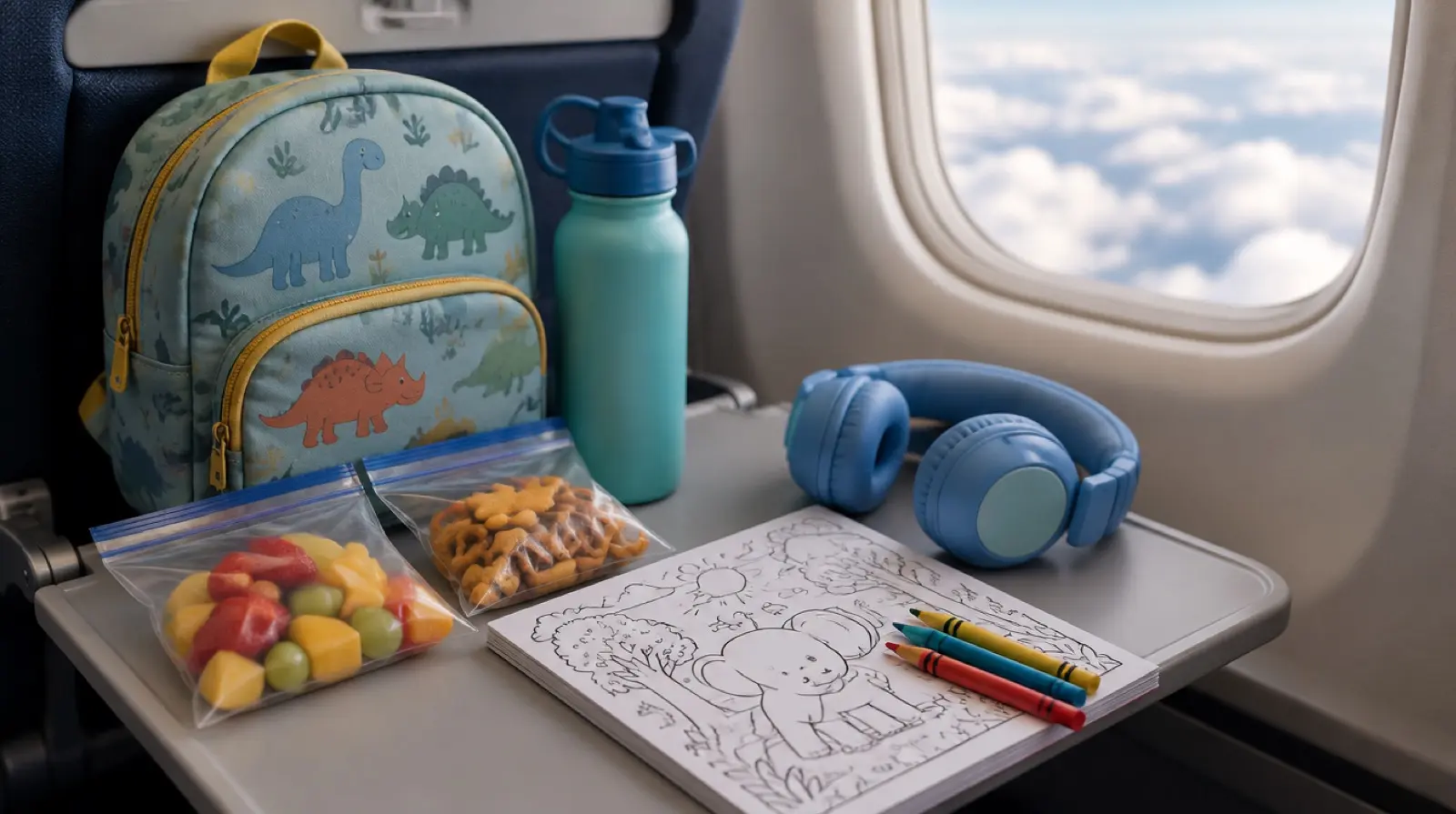
- Pack one small bag under the seat with food, a charged screen, a change of clothes and a few quiet activities.
- Agree on the tired-child fallback before boarding, so nobody invents it at hour six.
Step by step
1. Choose seats and a boarding plan
Seat choice is the first decision point. Seats together matter more than window views, and a row of three plus an aisle gives the adult easy access. Many airlines now charge to select seats, so decide early whether that fee is worth paying. If seats are split at check-in, ask at the desk and again at the gate. Board when the queue is short, not first: a child who sits for twenty extra minutes before takeoff is already tired.
2. Build the flight in blocks
Think of the flight as a pacing grid. A flight of four to six hours fits roughly four blocks: settle and snack, screen, rest or nap, then a walk and landing preparation. Write the plan on your phone, not for the children, and let each block end naturally. If a block fails, drop it and move to the next. Nothing in the plan needs to run to the minute, and no block depends on the one before it.
3. Anchor meals and snacks
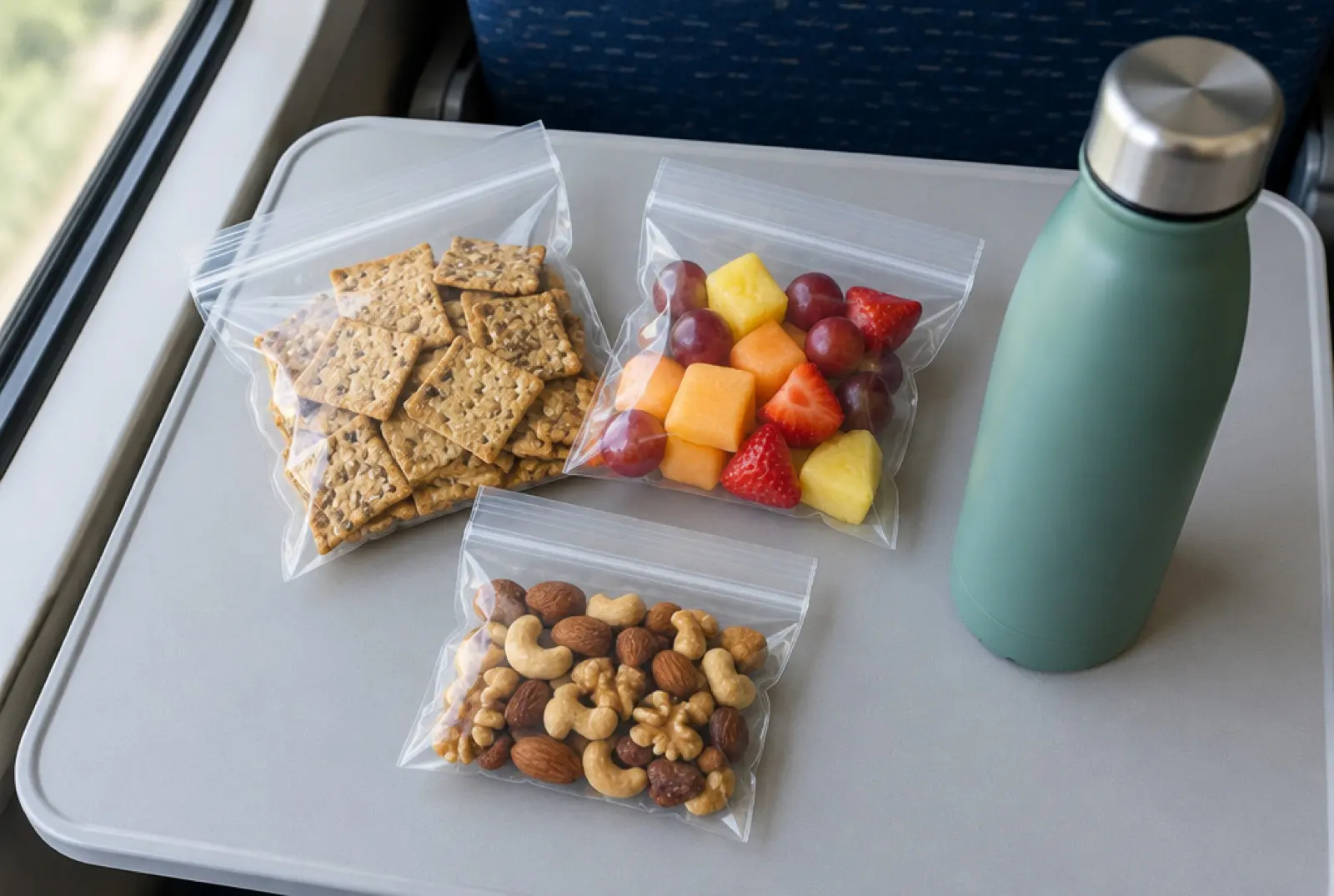
Food is the cheapest way to change a child’s mood. Pack two snacks per hour of flight, in resealable bags, with a mix of something salty, something sweet and something with fibre. Airlines usually serve meals late, so a child who eats at the usual time may wait an hour or more for the trolley. Carry an empty refillable bottle through security and fill it at a fountain on the other side.
4. Plan screens without guilt
Screens work well on flights, and a parent need not apologise for using them. Download shows before leaving home, since seatback entertainment can fail or be limited, and carry a child-sized pair of wired headphones as a backup for any wireless set. Keep the screen block for the middle of the flight, after the first meal. Charge devices fully and pack a battery pack in the cabin bag, as spare batteries cannot go in the hold.
5. Manage ears, pressure and comfort
Children often feel ear pressure at takeoff and landing. Swallowing helps, so schedule a drink, a snack or a chewy sweet for those moments, and offer a bottle or beaker to younger children. A child with a cold or an ear infection may find descent painful, so ask a doctor or travel clinic before you fly. Keep the advice general and follow your doctor’s guidance on any medicine.
6. Prepare the tired-child fallback
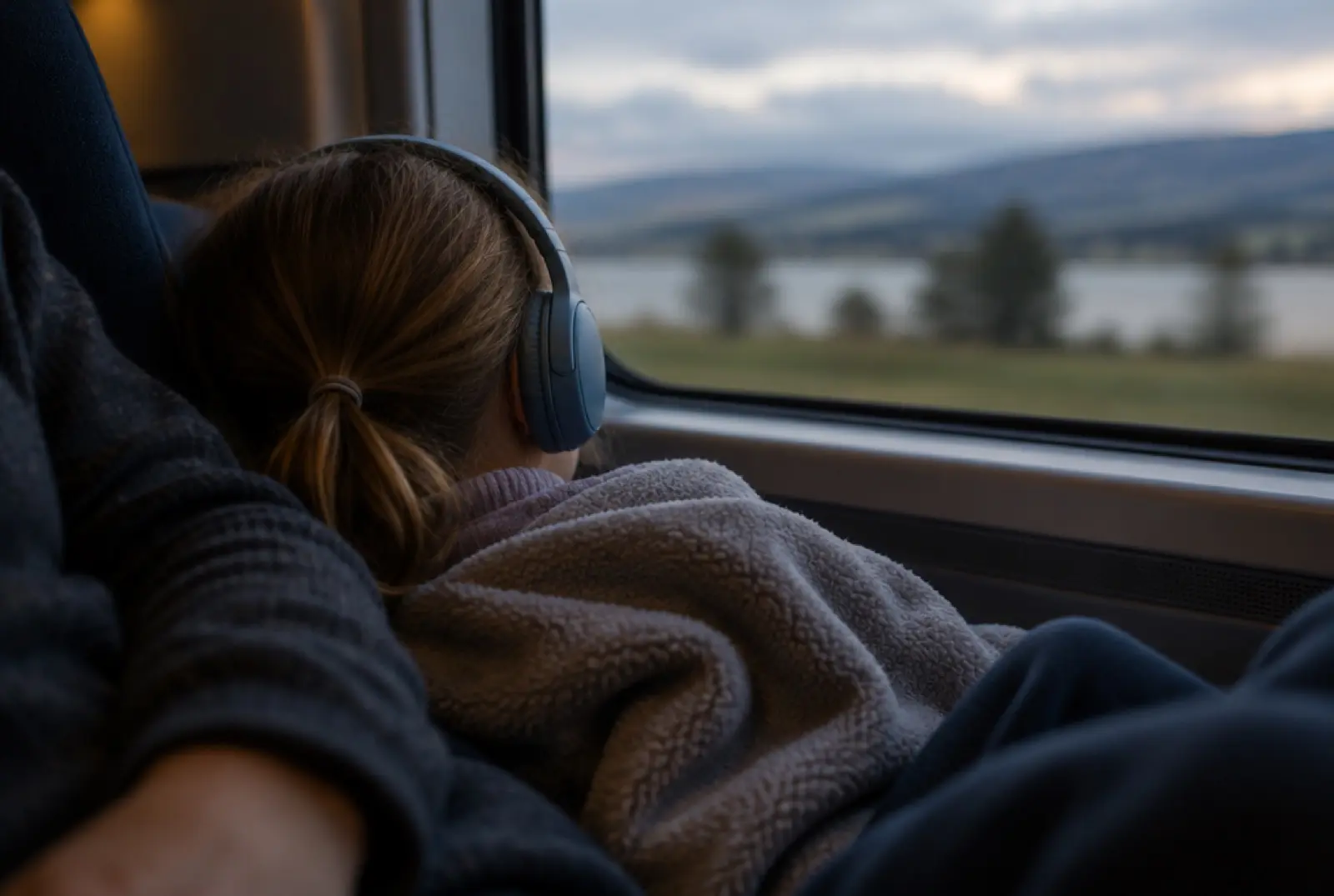
Every flight reaches an hour when a child is done. The fallback is a short list agreed in advance: a walk to the back of the cabin, a change of clothes, a new small item from the bag and a rest with a blanket and headphones. Lowering the lights in your row, even with a scarf over the seat gap, helps a child settle. Keep expectations modest for the last 30 to 45 minutes before landing, and start packing up about 20 minutes earlier than you think you need.
Age and stamina notes
The flying with kids tips above flex with age. Primary-school children vary, but these bands are a fair starting point for planning, not a rule.
| Age band | Typical stamina | What helps most | Bag contents |
|---|---|---|---|
| 5 to 6 | 20 to 30 minutes per activity | Frequent changes, snacks, short walks | Sticker book, small figures, spare clothes, wipes |
| 7 to 9 | 30 to 45 minutes per activity | Downloaded shows, a book, card games | Cards, headphones, notebook, chargers |
| 10 to 12 | Up to an hour | Own screen, audiobook, some responsibility for the bag | Own small bag, headphones, snacks they choose |
A good bag for a short-haul flight weighs about what the child can carry in one hand. For anything longer, the adult carries the heavy items.
Rest, meal and nap anchors
Match the flight to the body clock where you can. A morning departure suits a child who is wide awake and ready for a screen block, while an evening flight lets a tired child sleep. For longer trips, see our guide to long travel days with kids, which covers connections, layovers and the first evening on arrival. Offer a drink and a snack about every hour, and plan one real meal in the middle.
Common mistakes
Most flying with kids tips fail on over-packing and over-planning, so watch for these.
- Packing too many toys. Four or five well-chosen items last longer than a bag of twenty.
- Saving every treat for the end, so that it arrives after the child has already melted down.
- Letting children use the tray table as a work area, then packing it away in a hurry at descent.
- Skipping the toilet before boarding, which costs a trip down a crowded aisle ten minutes after takeoff.
- Treating the first delay as a disaster. A short delay is a good moment for a snack and a walk.
Choosing a destination that suits the children also shortens the journey. Our list of the best countries to travel with kids includes a note on flight times from major hubs.
What to verify before you go
- Seat policy, cabin bag size and weight limits, and whether a stroller can go to the aircraft door. Check with the airline, as rules differ and change.
- Passport validity and entry rules for every child, which your government’s official travel advice lists.
- Health advice for your destination and any vaccinations, from a doctor or travel clinic. The CDC travel health pages are a useful starting point.
- Rules on liquids, baby food and powders at security, which differ by airport.
FAQ about flying with kids
How early should I arrive at the airport with children?
As a rule, allow a little more than you would alone, often about three hours for an international flight. Security, toilet stops and a snack take longer with children. Check the airline’s guidance, and add time if you are checking in a stroller or a car seat.
What age is easiest for a first flight?
There is no perfect age, and primary-school children are often easier than toddlers, because they can follow a plan and hold a screen. Choose a short first flight, usually under three hours, and build up from there so the children learn what to expect.
Should I give my child medicine for sleep or ear pain?
Ask a doctor or travel clinic before the flight. Advice depends on age, health and the medicine, and this guide cannot say what is right for your child. Drinking, swallowing and a calm routine are the general measures most families try first.
How do I keep children entertained for a long flight?
Mix screen time with low-effort activities such as cards, drawing, audiobooks and a small new item to open mid-flight. Plan one new thing per two hours, and keep the best one for the hour you expect to be hardest.