
Where to stay with kids depends on three things: the children’s ages, how many nights you are staying and how flexible meals need to be. Apartments suit stays of four nights or more and young children who eat at odd hours. Hotels suit short stays and city days. Resorts suit beach weeks with fixed meal times. The table below shows each case.
How we choose where to stay with kids
Accommodation is not a view or a style. For a family it is the rest anchor of every day, so the question is how well the place supports the afternoon. We score each type on four things: space for sleep and quiet time, meal flexibility, how far it is from the day’s activities and how easy it is to recover from a bad day.

Price and star rating do not appear in the table, because they vary by city, season and booking date. Rates change widely, so check current prices on the booking page and read the room details, not just the headline. The advice here is a planning framework, and the accommodation facts are volatile, so verify each one with the property.
How the stay shapes the day: age and stamina notes
The same day looks different in each type of stay, and that is the real comparison.
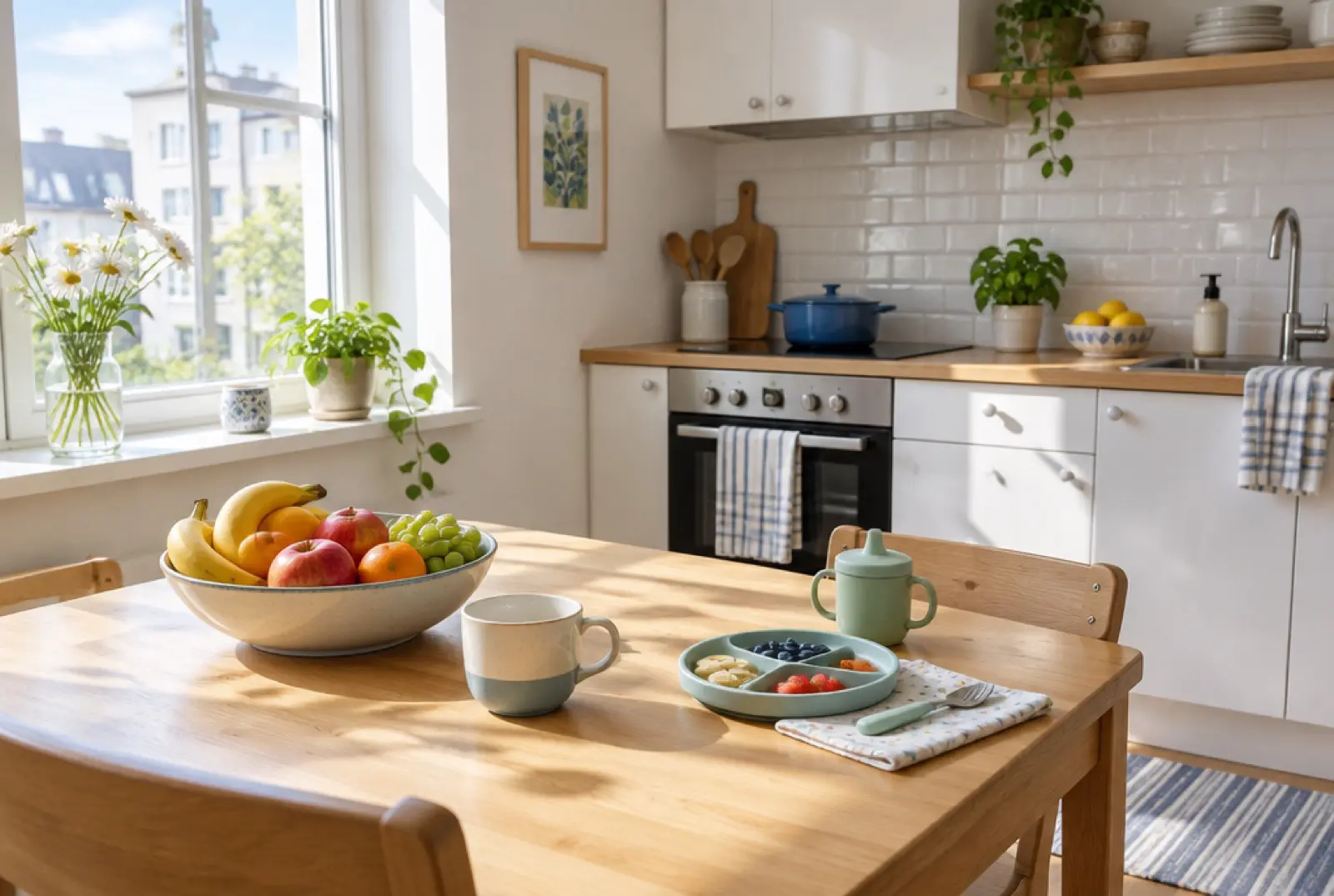
- Apartment day: breakfast in, an outing from 09:00 to 12:00, lunch at home, a rest block until 15:00, then a park and an early dinner you cook or collect. It gives the most control, with the cost of shopping and cooking on your side.
- Hotel day: breakfast downstairs, an outing, a midday return to the room and a restaurant dinner. It is the simplest in a city, as long as children can manage a restaurant at 18:00.
- Resort day: pool and beach in the morning, lunch on site, a rest and a second swim. It needs the least planning, and it asks for the least from you, but you see little outside the gate.
Decision point: if a child needs a nap, pick the type that lets you return to a dark, quiet room within 20 minutes of your last activity. For under-fives this is more important than any amenity. Older children need less downtime, and for ages 10 and over a shared apartment with two bedrooms often gives teenagers the privacy they now expect.
Tired-day swap: in all three types, the fallback is to stay in. A pool, a courtyard or a nearby park is what turns a cancelled outing into a good afternoon.
Apartment, hotel or resort: the decision table
| Situation | Apartment | Hotel | Resort |
|---|---|---|---|
| Under 3, any length | Best: kitchen, separate sleeping space, laundry | Works for 1 to 3 nights with a cot | Works if a kids’ pool and early meals exist |
| 3 to 6, 1 to 3 nights | Overkill | Best: simple, central | Only for a beach stop |
| 3 to 6, 4 to 10 nights | Best for flexible meals | Good with a family room | Good for a single-base week |
| 7 to 11, 1 to 3 nights | Optional | Best: pool and breakfast | Rarely needed |
| 7 to 11, 4 to 10 nights | Good: space and laundry | Good with a pool | Best for activity-heavy weeks |
| 12 and over | Good for two bedrooms | Good with connecting rooms | Good when activities are on site |
Meal flexibility decides close calls. If your children eat at fixed, early times and only a few foods, the kitchen in an apartment pays for itself. If meals are not the problem, a hotel with breakfast is simpler.

Seven rules for choosing where to stay with kids
1. Choose the area before the property
A room in the right place beats a better room in the wrong one. Aim for a base within a 10 to 15 minute walk of a park, a supermarket and the main transport stop. The wrong location adds a transfer to every day, which counts against the daily transfer cap of about two to four hours for primary-school children.
In practice this means reading the map. In Amsterdam or Lisbon, a base near a tram or metro stop and a park matters more than a canal view. On a beach island or in Kauai, a base on the side you will spend most days on cuts the drive. In a national park gateway town, the nearest park entrance is the key distance.
2. Count sleeping space, not beds
A room that sleeps four on paper may leave no space to move when the children are awake. Look for a separate sleeping area or a door that closes, so an adult can stay up after a child falls asleep. For ages under 3, ask where the cot goes and whether it is included, and confirm it in writing.
3. Ask about the kitchen
A kitchen means different things: a full range, a kettle and a fridge, or a microwave and a sink. Check the listing for the specific items you need, such as a fridge for milk or a hob for pasta. A fridge and a kettle cover most needs for children under five.
4. Check the laundry option
For a stay of seven nights or more, a washing machine halves the clothes you pack and removes one source of stress. Hotels may offer a laundry service, but check the price, because charges per item add up. As of 2026, many apartment listings state whether a washer is in the unit or in the building.
5. Match the pool to the child
A pool is a rest anchor for hot climates, but a deep pool without a shallow end is not suitable for non-swimmers. Check whether there is a children’s area, what the opening hours are and whether the pool has lifeguards. Supervision is your job in any case, as many pools have no lifeguard on duty.
6. Plan the quiet hours
Look for rooms away from lifts, bars and street noise, since a child’s sleep affects the next day. Ask for a high floor or a room at the back, and read recent reviews for the word noise. A resort with evening shows can be loud late into the night.
7. Keep a cancellation margin
Children get ill, and flights change. Choose a rate that allows changes, at least for the first and last nights, and check the cancellation deadline in the confirmation email. A refundable rate usually costs more, but it can cost less than losing a night.
Common mistakes and edge cases
- Booking a resort for a city trip. Resort amenities are of no use when the days are spent elsewhere, and you pay for them anyway.
- Choosing an apartment far from transport. The saving on the rate vanishes in taxi fares and lost time.
- Splitting stays too often. Changing base every night costs a transfer and a pack-up each time. For children under 8, aim for no more than one move every three to four nights.
- Ignoring check-in times. An early arrival with no room ready is a bad start. Ask about luggage storage or early check-in before you travel.
- Assuming a room fits a cot. Some rooms are too small. Ask the property directly.
One more edge case is the family of mixed ages. A toddler who naps at 13:00 and a ten-year-old who wants activity need two spaces, so choose an apartment with a second room or a hotel with a balcony. Where the budget does not allow it, split the day: one adult does the activity with the older child while the other stays with the nap.
The tired-day fallback is built into the stay: choose a place where a day of doing nothing is comfortable, with a pool, a park or a quiet room nearby.
What to verify before you book
- Exact bed set-up, cot availability and any extra charge, confirmed with the property.
- Check-in and check-out times, plus luggage storage on the day.
- Kitchen and laundry contents, as listed, and whether they are in the unit.
- Pool hours, depth and supervision rules.
- Distance to the nearest supermarket and to your day-one activity, using a map, not the listing’s description.
- Local taxes or fees paid at the property, which some countries charge separately.
The property’s own page and your booking confirmation are the sources to trust. If something matters, ask before you pay.
Where to go next
Each of our family guides states a recommended base and how long to stay in it. The Portugal itinerary with kids uses two bases, the Italy itinerary with kids uses three, and Outer Banks with kids shows how a rental week works, with an arrival day and rest days. For a city with the hotel position as the main decision, see Amsterdam with kids.
FAQ: where to stay with kids
Is an apartment better than a hotel with young children?
For stays of four nights or more, usually yes. A kitchen, a separate sleeping space and laundry make meals and naps easier. For one to three nights, a central hotel with breakfast is simpler, and you avoid the extra steps of check-in and shopping.
Are all-inclusive resorts good for families?
They suit a single-base beach week with children who eat at set times. They are less useful when you plan to explore, since you pay for meals you do not eat. Check what the plan includes, the kids’ pool and the opening times before booking.
What should I look for in a family room?
Look at the floor plan: a door between sleeping areas, a space for a cot or extra bed and a bathroom with a bath or a safe shower. Ask for the room size and the bed types in writing, because listing photos can mislead.
How many nights should we stay in one place with kids?
Aim for three or four nights in each base for children under 8, and a week where possible. Each move costs a transfer and a day of lower energy, so fewer moves usually give a calmer trip. Ten days with two bases is a common pattern.
Is it better to stay in the city centre or outside it?
For short stays, the centre saves transfers and gives you a quick return to rest. For longer stays with a car, an area outside can offer more space and cheaper parking. Choose by the day’s route, and avoid a base that adds a long transfer every morning.