Thai street food is best approached by the clock. Order a rice-and-basil plate or a noodle soup at breakfast and lunch, move to grilled skewers and papaya salad in the afternoon, and eat stir-fried dishes from the evening carts. Most single plates cost roughly 40-100 baht (about 1-3 USD) as of 2026. Below: the eight dishes worth ordering first, when stalls run, what a meal costs, and how to behave at a plastic table in Thailand.
How Thai street food works in Thailand
Thailand does not have one eating schedule so much as a rolling one. Stalls cook what their customers want at that hour: congee and soy milk early, noodles and rice plates at midday, grilled meat and salads when the heat drops, and fried or sweet things late. Few people sit down to a three-course meal. They eat several small, cheap plates across the day.
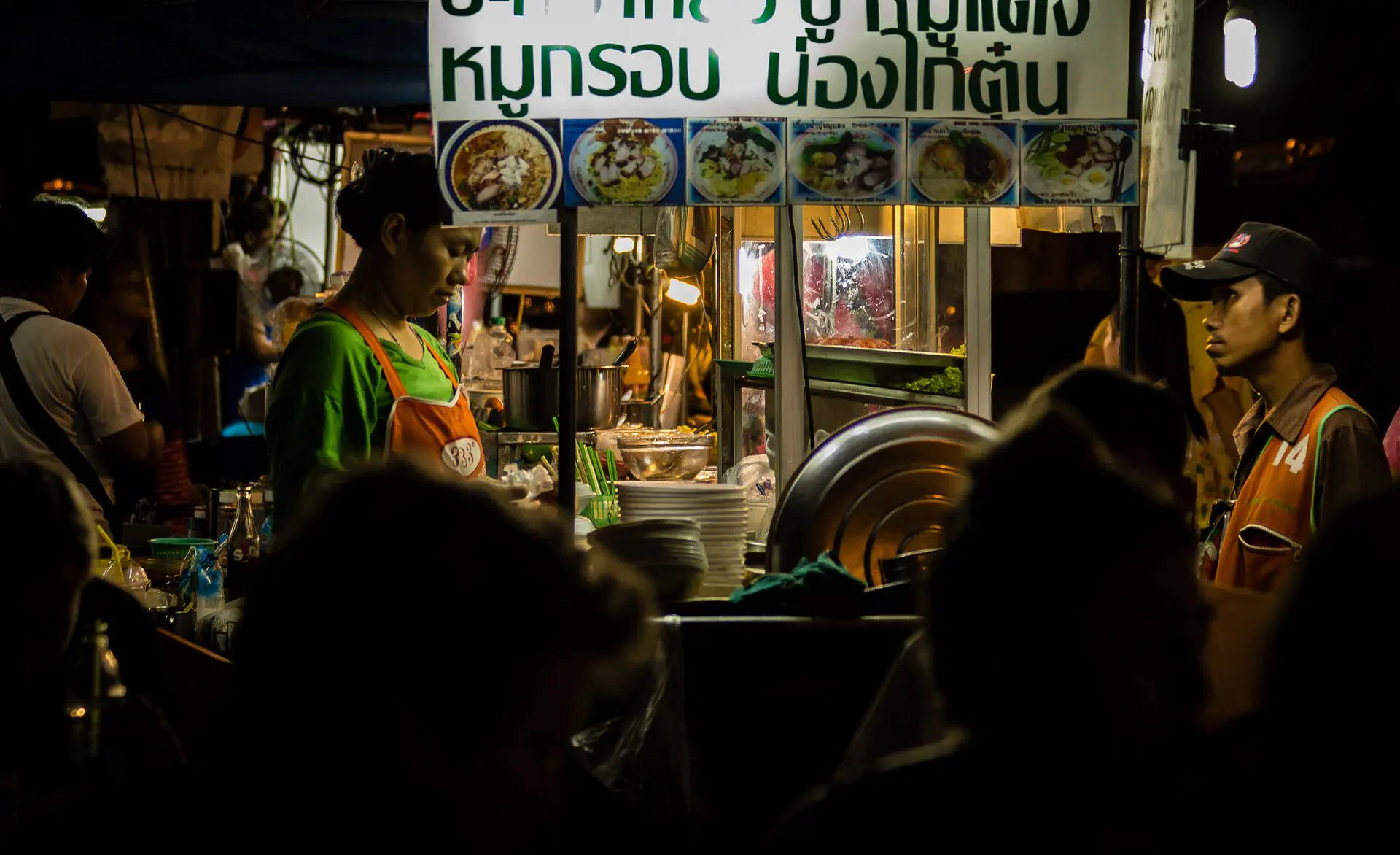
The system behind it is the single-dish stall. Each cart or shophouse counter does one thing well, such as boat noodles, chicken rice or papaya salad, and repeats it all day. That is why prices stay low and why the menu is short. If a stall sells twelve unrelated dishes, it usually does none of them with much care.
Meals are built around rice or noodles, then seasoned at the table. Every noodle shop keeps a caddy of fish sauce with chillies, sugar, dried chilli flakes and vinegar, so the cook sets the base and you set the balance. Regional cooking matters too: Wikivoyage describes Thai food as spicy and varied, and the north, the northeast, Bangkok and the south each have their own habits.
8 Thai street food dishes to order first in Thailand
1. Pad kra pao (basil stir-fry over rice)
Minced pork, chicken or beef is wok-fried with garlic, bird’s eye chillies, soy and oyster sauce, then finished with holy basil, which tastes peppery and clove-like and is not the same as sweet basil. It comes over rice, often with a fried egg on top. It is the default quick lunch for Thai office workers. Expect roughly 50-80 baht. Say how hot you want it before the cook starts.
2. Khao man gai (chicken rice)
The dish came with Hainanese migrants. Chicken is poached gently, the rice is cooked in the stock and chicken fat, and the plate arrives with cucumber, a clear broth and a dipping sauce of fermented soybean, ginger and chilli. The sauce is the point, so taste it first. It is a mild, filling option for a first day. Typical price is around 45-70 baht.
3. Boat noodles (kuay teow reua)
Named for the canal boats that once sold noodles from the water, this is a dark, intense broth with rice noodles, pork or beef, morning glory and often a little blood to thicken it. Bowls are deliberately small, so people order two or three. Add condiments gradually. Most bowls cost about 15-30 baht at traditional stalls, though touristy areas charge more.
4. Som tam and gai yang (papaya salad and grilled chicken)
Som tam is shredded green papaya pounded to order in a mortar with lime, fish sauce, palm sugar, chillies, dried shrimp and peanuts. It comes from the northeast, called Isan, where it is eaten with grilled chicken and sticky rice. Tell the cook the chilli level, because the default can be fierce. A set of salad, chicken and rice is usually 100-180 baht.
5. Khao soi (northern coconut curry noodles)
Khao soi is a northern dish: egg noodles in a coconut-milk curry broth, topped with a nest of crispy fried noodles. It comes with pickled mustard greens, shallots and lime on the side. It is rich, so one bowl is a meal. It is the dish to look for in Chiang Mai and Chiang Rai, and it is less common, and often less good, in the south. Expect 50-100 baht.
6. Moo ping with sticky rice
Pork skewers are marinated in coconut milk, garlic, coriander root and soy, then grilled over charcoal until the edges caramelise. They are sold from roadside carts in the morning as a take-away breakfast, with a small bag of sticky rice. Pinch off the rice, roll it into a ball and eat it with the pork. A skewer is typically 10-15 baht, so a breakfast is under 60 baht.
7. Pad thai
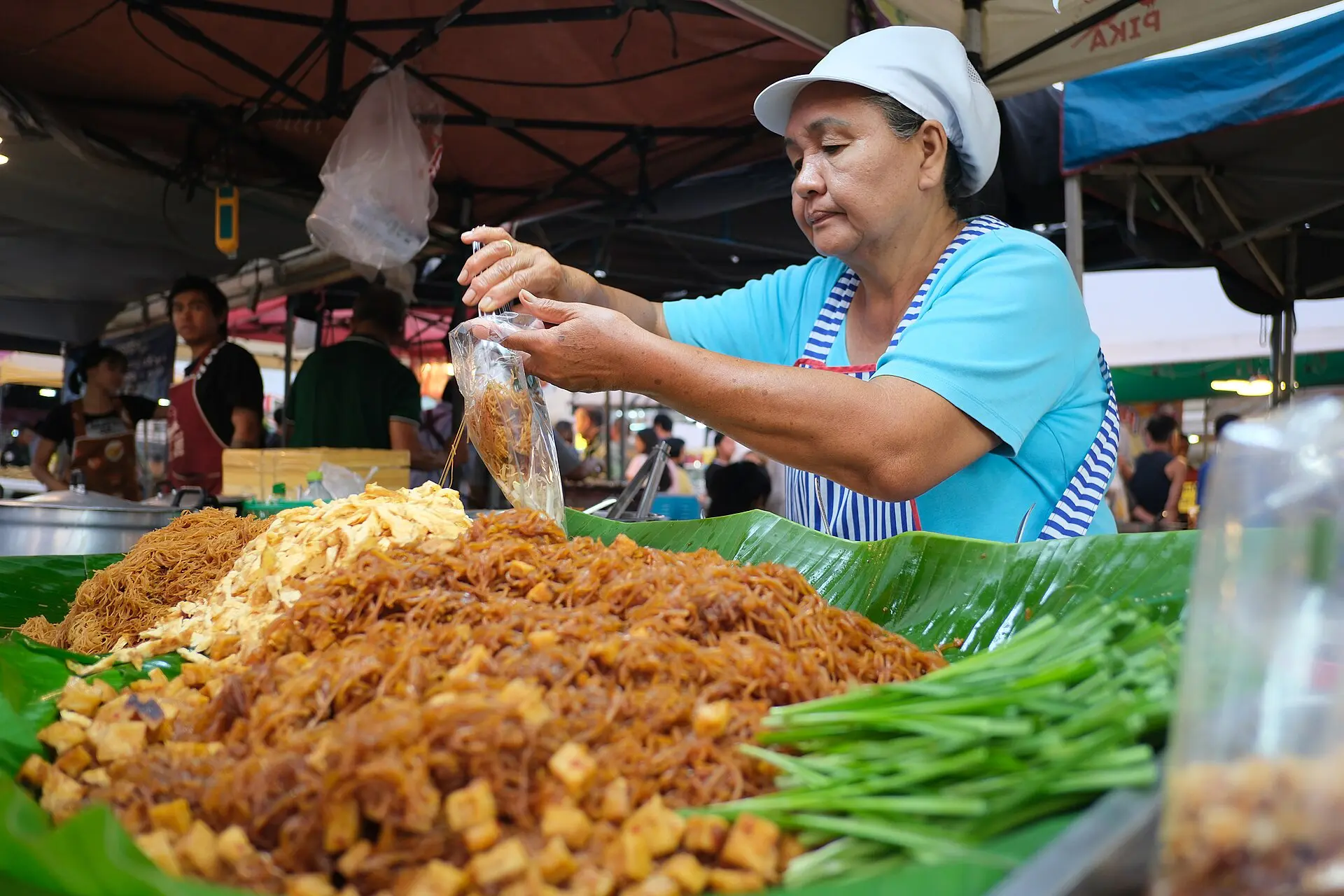
Stir-fried rice noodles, tamarind, fish sauce, palm sugar, egg, tofu, dried shrimp and bean sprouts, finished with crushed peanuts and lime. It became a national dish in the 20th century, as part of a push to promote Thai identity, and it is more sweet and sour than most people expect. Cooked on a flat griddle, it takes minutes. A plate costs roughly 50-100 baht. Use the table condiments to adjust.
8. Mango sticky rice and other sweets
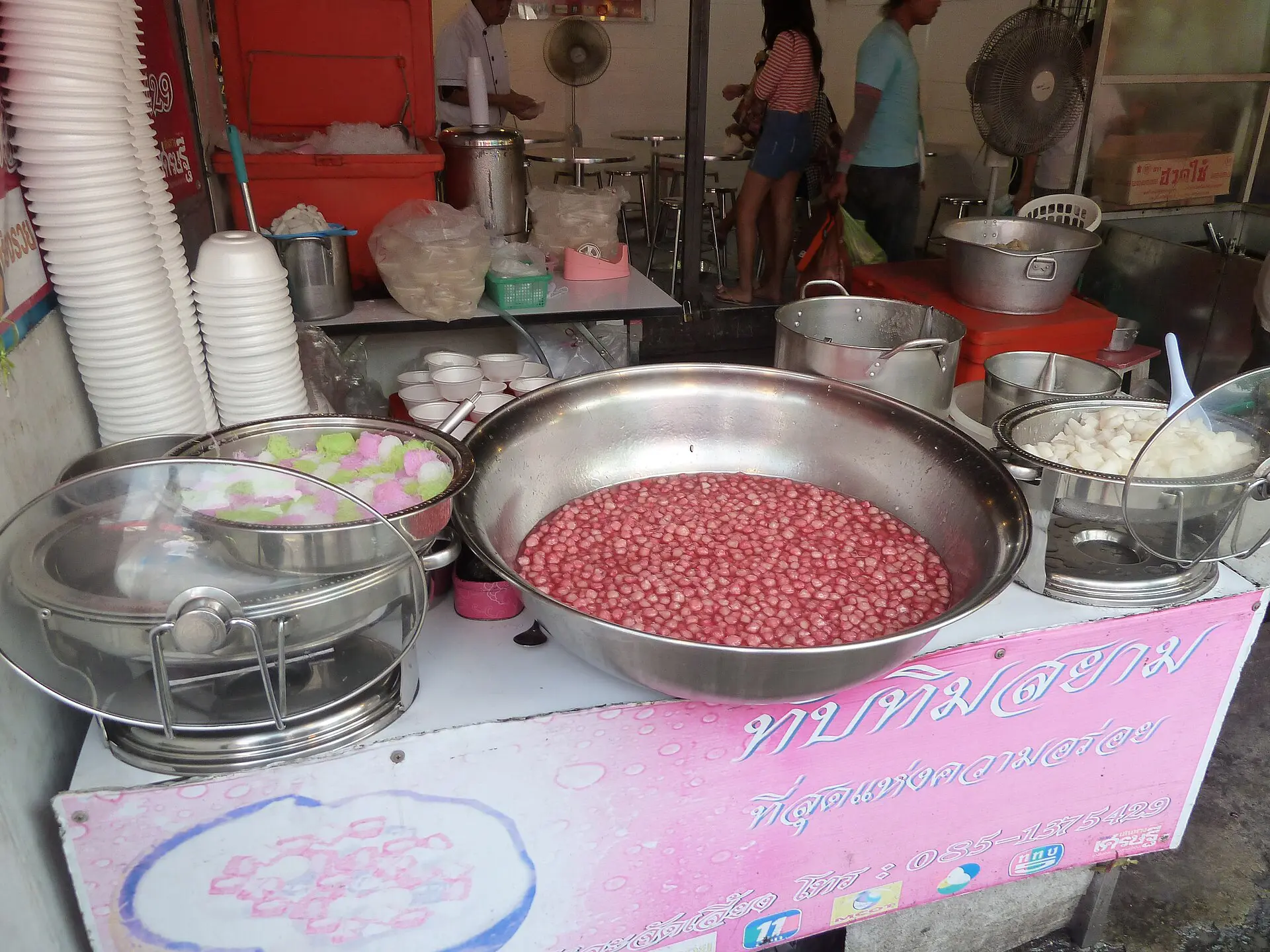
Sticky rice steamed with coconut milk, sugar and a pinch of salt, served with sliced ripe mango and a spoon of salted coconut cream. It is a seasonal dish, at its best in the hot months when mangoes are ripe, roughly March to June. Out of season, look for roti with banana and condensed milk, or coconut ice cream. A serving is typically 60-120 baht.
Thai street food market timing in Thailand
The same street can have four different kitchens in one day. Use this as a guide, and check posted hours, because stalls close when they sell out.
| Time | What is on | Order first |
|---|---|---|
| 06:00-09:00 | Morning carts, fresh markets | Moo ping, congee, soy milk, fried dough |
| 11:00-14:00 | Lunch rush, rice and noodle stalls | Pad kra pao, khao man gai, boat noodles |
| 15:00-18:00 | Snack hour, grill carts | Gai yang, som tam, fruit |
| 18:00-23:00 | Night markets, wok stalls | Pad thai, seafood, mango sticky rice |
Rainy-season months, roughly May to October, can shift evening plans. For weather and crowds, see our guide to the best time to visit Thailand.
How much Thai street food costs in Thailand
Prices vary by city and by how tourist-facing the street is. These are hedged ranges per dish, as of 2026, so check before you go. Central Bangkok shopping districts and island resorts sit at the high end, and provincial towns are cheaper.
| Type of meal | Typical price (baht) | Roughly in USD |
|---|---|---|
| Skewer or snack | 10-30 | Under 1 |
| Noodle bowl or rice plate | 40-100 | 1-3 |
| Salad and grilled meat set | 100-180 | 3-5 |
| Seafood by weight, night market | 200-500+ | 6-15+ |
| Fruit shake or iced drink | 25-60 | 1-2 |
A full day of street meals, three plates plus snacks and drinks, usually lands around 8-15 USD. For longer stays, the cost of living in Thailand guide covers how food fits into a monthly budget.
Street food etiquette in Thailand
- Spoon and fork: the fork pushes food onto the spoon, and the spoon goes in your mouth. Chopsticks are for noodle soups.
- Sticky rice: eaten by hand, using your right hand and small balls of rice.
- Sharing: dishes are often shared at a table, and each person takes a little at a time.
- Tipping: not expected at stalls. Rounding up or leaving small change at a sit-down shop is welcome but optional.
- Heat: say the level before cooking starts. Asking for less is normal and not an insult.
- Pay: at most carts you pay when you finish, and at some you pay on ordering. Watch the locals.
How to read a Thai street food menu without Thai
Many stalls have no menu at all. A photo board, a pointed finger and a number of fingers do the job. Learn four phrases: “mai phet” (not spicy), “phet nit noi” (a little spicy), “mai sai pak chi” (no coriander) and “kor nam plao” (a glass of water). Translation apps that read signs work well, so photograph the sign first.
Menus also use dish categories. “Khao” means rice, “kuay teow” is rice noodle, “tom” is a soup, “yam” is a spicy salad, “pad” is stir-fried, “yang” is grilled and “tod” is fried. Add “kai” for chicken, “moo” for pork, “nuea” for beef and “goong” for shrimp, and you can decode most boards. Put a word for the topping at the end, such as “pad kra pao moo” for the pork version.
What to skip in Thailand
- Food held for hours in hot sun, especially cut fruit and cooked rice, rather than cooked to order.
- Menus with no prices in busy tourist zones. Ask first, since prices there tend to be a premium.
- Seafood priced by weight without a quoted total. Agree the price before it is cooked.
- Very busy tourist streets where pad thai costs triple the local price. Walk two streets away.
- Tap water and ice of unknown origin. Most travellers drink sealed bottled water.
Want to see where the dishes above sit in the country? Our Thailand travel guide covers regions and routes, and Wikivoyage’s Thailand page has background on Thai cuisine.
FAQ about Thai street food in Thailand
Is Thai street food safe to eat?
Generally yes, if you pick busy stalls with high turnover, where food is cooked hot and to order. Avoid anything that has sat out in the heat. Wash your hands or use sanitiser before eating, and drink sealed bottled water. Check your own health advice for travel before you go.
What is the most popular Thai street food?
Pad kra pao, basil stir-fry with rice and a fried egg, is probably the most common everyday order, with noodle soups, papaya salad and grilled pork close behind. Pad thai is the best-known abroad but is more of a tourist order than a local lunch. Ask what the stall does best.
How much should I budget for street food in Thailand?
Around 8-15 USD a day covers three street meals, snacks and drinks in most places, as of 2026. Bangkok’s tourist streets and islands cost more, and small towns less. Seafood and drinks with alcohol raise the bill quickly. Check current prices on the street you choose.
Can vegetarians eat Thai street food?
It takes care, because fish sauce, shrimp paste and oyster sauce appear in many dishes. Say “gin jay” for a strict vegetarian meal, which is the term used during the vegetarian festival and understood at stalls that offer it. Fruit, grilled corn, fried tofu and som tam without fish sauce are easier options.
Do I tip at Thai street food stalls?
No, tipping at street stalls is not expected. Pay the price shown and say thank you. At a sit-down shop with table service, leaving small change or rounding up is common but optional. Service charges are sometimes added in larger restaurants, so check the bill before adding more.