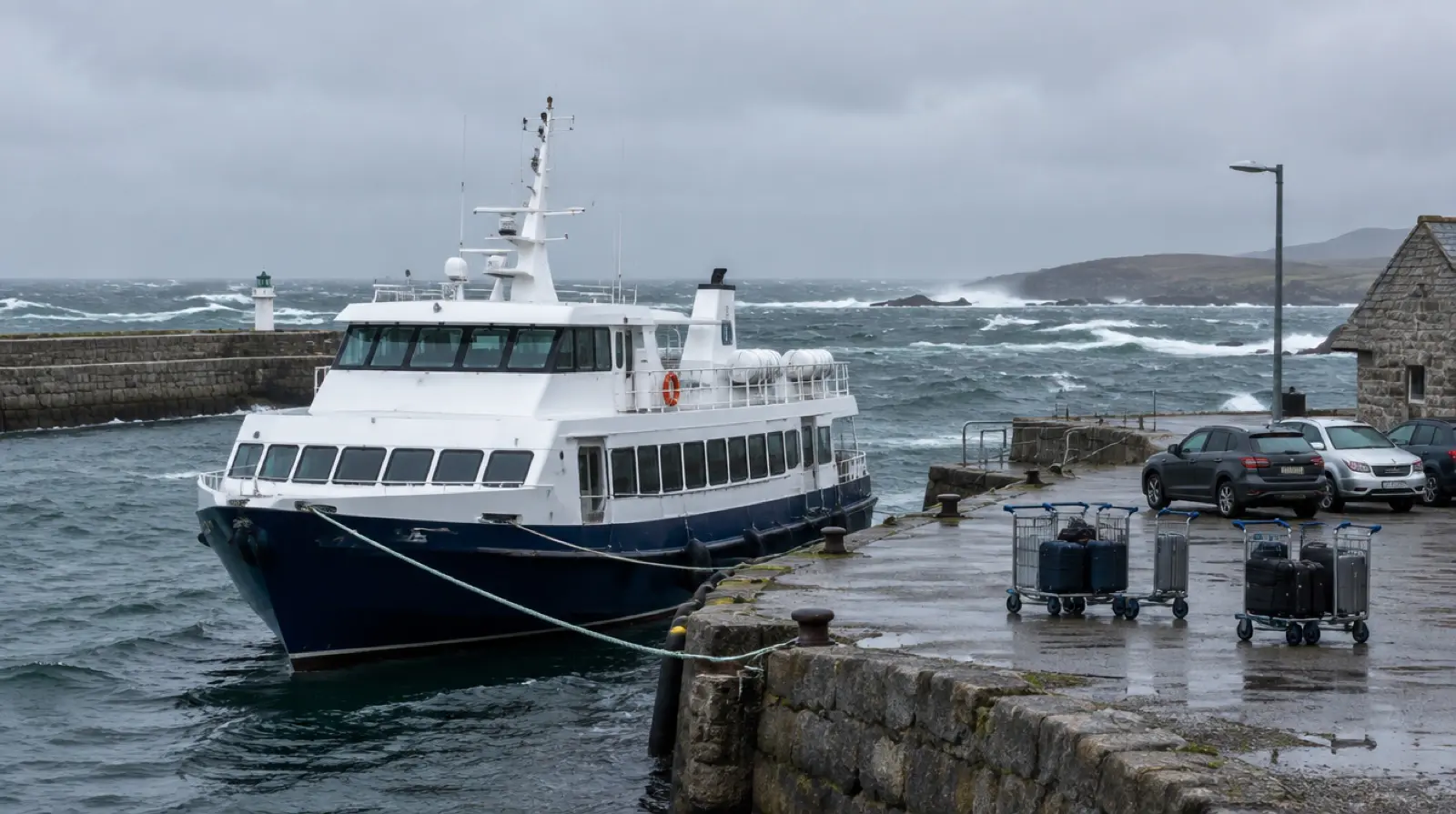
Ferries cancel for wind, swell and visibility, and the ones most likely to cancel are the small, fast or exposed crossings. For ferry cancellations weather buffer travel, add one spare day to any island trip, two on exposed routes, and keep the booking that matters most, usually the flight home, on the mainland side of the gap.
How to size a weather buffer for ferry cancellations
A buffer is not a vague cushion. It is a number of days, chosen from three facts: how exposed the crossing is, how often the operator cancels in your season, and what you lose if you are stuck. Rate each one before you book, then add days to match.

- Exposure: open water, a long crossing or a small boat makes cancellation more likely. A short, sheltered hop between two harbours rarely stops.
- Season: winter storms and summer wind seasons both cancel sailings, but not in the same places. Ask which months are bad for your route.
- Cost of delay: a missed international flight, a trek permit or a non-refundable tour costs far more than an extra night.
Operators publish no guarantee, so use ranges and treat every crossing as probable rather than certain. If the fixed commitment sits on the far side of the water, add a full day. If you can absorb a day, add less.
A worked example shows the arithmetic. An island has two sailings a day and one flight home on Saturday. The ferry is a 3-hour open-water crossing in autumn. Exposure is high, the season is bad and the cost of delay is a lost flight. The rule gives two spare days, so you leave the island on Thursday and spend Friday on the mainland. If the Thursday sailing cancels, Friday still works.
The buffer table by crossing type
Greek meltemi winds in July and August, North Atlantic gales from October to March, and Irish Sea and Atlantic swell in winter are the usual culprits in Europe. Patagonian wind affects lake and channel boats. Monsoon swell affects Indonesian and Indian Ocean routes. Each has a bad window, usually several months long.
These are planning rules, not statistics. Cancellation rates vary by operator, ship and year; check the official source for the route you plan.
| Crossing type | What cancels it | Typical buffer | What to keep flexible |
|---|---|---|---|
| Short sheltered ferry (under 1 hour) | Strong wind, fog, strikes | Half a day to 1 day | Onward bus or train legs |
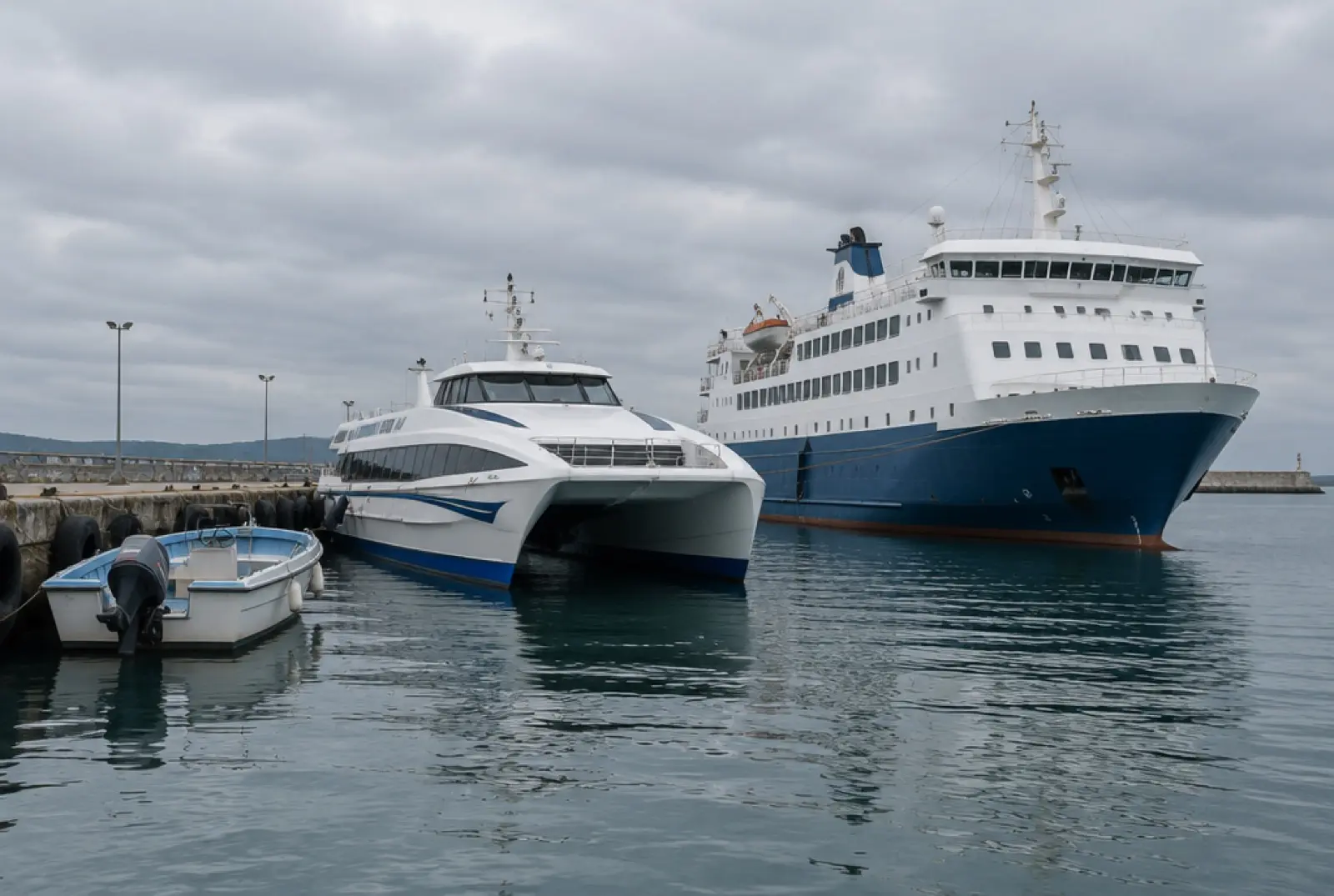
| Fast catamaran or high-speed craft | Moderate wind and swell; cancels sooner than a conventional ship | 1 day; have a slower option | The next night’s bed |
| Open-sea crossing of several hours | Gales, large swell, port closures | 1 to 2 days | Flights, hire cars, tours on the far side |
| Small-boat island hop (a few passengers) | Wind, wave height, tide and operator choice | 2 days or more in shoulder seasons | Everything with a fixed date |
| Long overnight ferry | Storms, mechanical faults, strikes | 1 day | Connecting flights, even in peak season |
Seven buffer rules for island itineraries
1. Put the hard commitment on the mainland side
Fixed things, such as an international flight, a wedding or a trek start, belong where the ferry delivers you, not where it can strand you. If the island leg must come last, go back to the mainland a full day early and sleep near the airport. The cost of that night is the cheapest insurance in the trip. Keep onward tickets, trek permits and tour deposits on the same side of the water as your final departure, and treat any item on the island side as movable.
2. Read the forecast the way the captain does
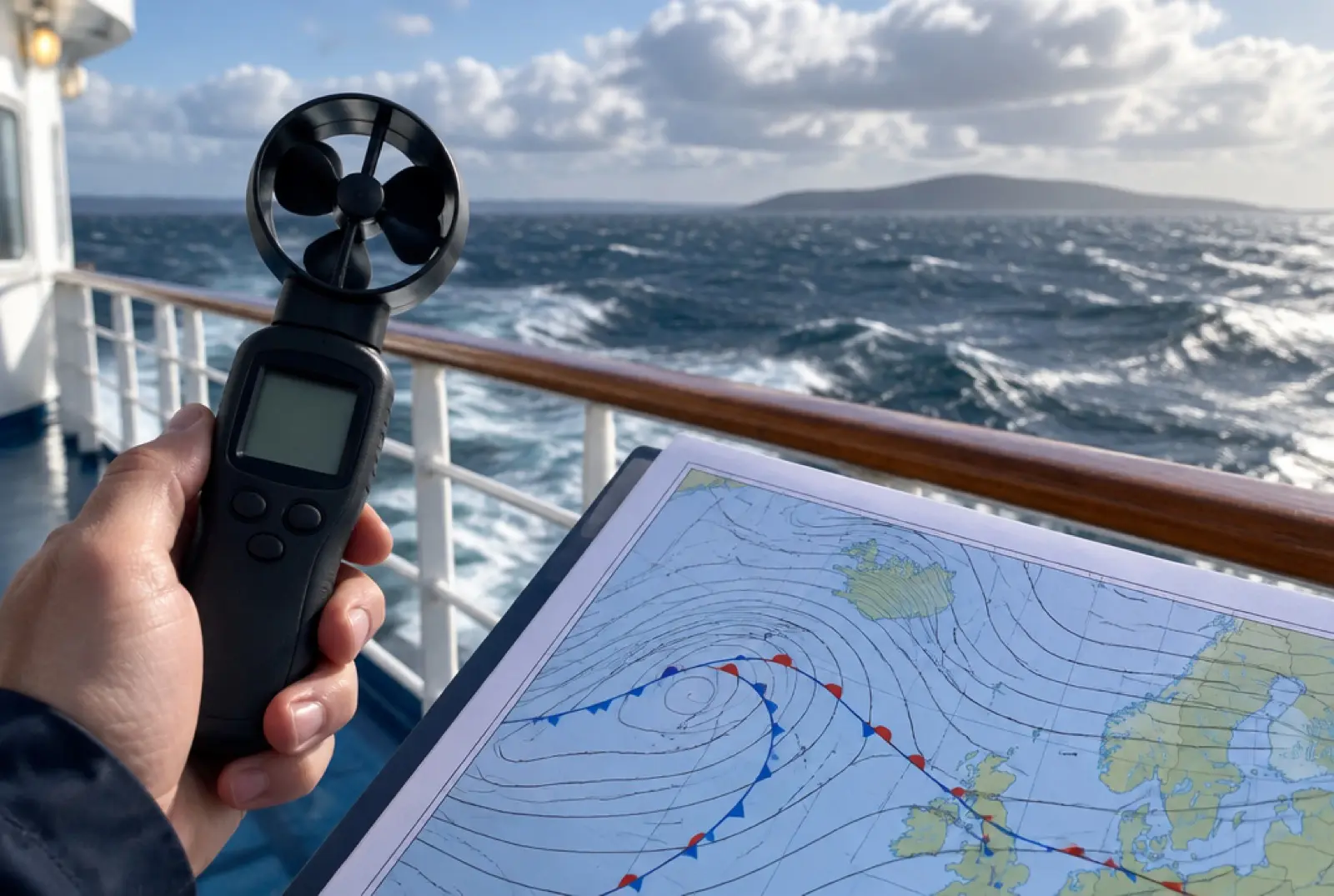
Wind speed and direction matter more than rain. Look at the marine forecast, not the town forecast, and check wind in knots or the Beaufort scale. Many operators stop sailing at force 7 to 8 (roughly 28 to 40 knots) or lower for small or fast craft, but limits differ by vessel and flag. A forecast of rising wind two days ahead is a reason to move early, not a reason to hope.
3. Leave on the first sailing
Morning crossings are usually calmer, because wind often builds through the afternoon, and a cancelled first sailing leaves room for a later one the same day. The last sailing of the day has no spare slot behind it. Book the earliest boat that fits, and avoid the final departure when any deadline follows.
On a route with 2 sailings a day, a cancelled morning boat leaves 1 chance; on a route with 1 sailing a day, it leaves none until tomorrow, so a 24 hour buffer is the minimum there. Check how many days a week the route runs, too: some run only 3 or 4.
4. Book transport that bends, not bargains that break
Choose ferry tickets that allow rebooking or a refund on cancellation, and accommodation with a late free-cancellation window. A cheaper non-refundable fare is a bet that the weather will behave. On exposed routes, the flexible price is worth paying for.
5. Have a second way off the island
A flight, a bridge, a different port or a second operator turns a trapped day into a rerouted one. Check what the alternatives are before you travel, and know their schedules. In some places the second way is a small plane, which weather also grounds, so do not treat it as a guarantee.
6. Plan the stuck day
Choose in advance what you will do if the boat is off: a museum, a lowland walk, laundry and rest. A prepared stuck day is a short rest. An unplanned one turns into a scramble for rooms, since stranded travellers fill the available beds. Keep cash, medication and a charged phone with you, not in the luggage in the hold.
7. Watch the operator, not only the weather
Operators post cancellations on their websites, social media or phone lines, often the evening before or on the morning of sailing. Strikes and technical faults cancel boats in calm weather too. Save the harbour or operator contact, and check status at a fixed time each day. Some routes also publish a decision time, the hour by which the operator confirms or cancels the next sailing. Learn it and plan the evening around it, rather than waiting at the quay.
Common mistakes and edge cases
- Assuming a calm day means a sailing. Swell can persist after the wind drops, and a port can close even when the sky is clear.
- Cancelling the wrong thing. If a boat is off, call the operator first. Many have policies for rebooking, and travel insurance may require proof of the cancellation.
- Booking tight transfers. A ferry that arrives 90 minutes before a flight is a plan that works only on perfect days.
- Counting the fast boat as the safe one. Faster craft often have lower wind limits than conventional ships, so a slower ferry can be the more reliable option.
- Forgetting the return. The same wind that blocks you from reaching an island can keep you on it. Buffer both directions.
- Over-trusting islands with air links. Small planes cancel in fog and wind, often at the same time as ferries.
Insurance deserves its own check. Many policies pay for delay only after a set number of hours, and some require a written statement from the operator. Photograph the notice at the terminal and keep every receipt for food and rooms bought during the delay.
What to verify before you rely on it
Facts here change, so check the official source for each point before you travel.
- The current timetable and how many sailings run in your month.
- The operator’s rebooking and refund rules for weather cancellations.
- Whether vehicles or large bags need a reservation, and the check-in cut-off.
- What your travel insurance covers: some policies exclude weather delay unless you buy a specific cover.
- Where the ship departs from, since a route may use more than one port depending on the wind.
- Whether the route runs year-round, or only in a summer season.
Where to go next
Ferry cancellations weather buffer travel rules look different in each place. These guides apply the same rules to specific places. The Aran Islands ferry guide covers the two ports and what happens when the sea says no. The Athens to Paros ferry guide explains wind cancellations on Greek routes. For northern isles, see the Orkney travel guide and the Faroe Islands travel guide, where crossings and weather windows shape the whole plan.
FAQ about ferry cancellations weather buffer travel
How many spare days should you add for a ferry trip?
Add one day for most sea crossings and two for exposed or small-boat routes, especially if a flight follows. If nothing is fixed after the crossing, half a day may do. The more rigid the next commitment, the bigger the buffer.
What causes ferry cancellations?
Mostly wind and swell, then fog and poor visibility, port conditions, strikes and mechanical faults. Fast and small vessels cancel sooner than large ships. The operator’s decision is final, and it can come at short notice.
Will you get a refund if a ferry is cancelled for weather?
Usually you can rebook or claim a refund from the operator, but terms differ by company and country. Check the conditions at purchase, keep proof of the cancellation, and ask whether your insurance covers extra costs.
Is a fast ferry or a slow ferry more reliable?
The slow, larger ship is often more reliable in rough weather because it has higher limits. Fast craft are quicker but cancel in moderate wind and swell. If a deadline follows, choose the slower ship or leave a day early.
How can you check if your ferry is running?
Use the operator’s website, social media or phone line, and check the evening before and on the morning of travel. Marine forecasts show wind in advance. Local harbour offices and your accommodation also know early.