The Colca Canyon trek from Arequipa is a 1,000 m descent to the canyon floor and a 1,000 m climb back out, reached by a 6 to 7 hour road transfer over a pass of almost 4,900 m. Two days is possible and tight. Three days is safer for knees and for altitude. Arequipa sits at 2,380 m, so spend at least a night there before you go. Below: the transfers, a stage table, and what to do if the trek is off.
How to get from Arequipa to the Colca Canyon
The canyon is about 160 km north of Arequipa. Public buses run from the main bus terminal to Chivay, the market town at about 3,650 m, in roughly 3.5 to 4.5 hours. Morning departures are the useful ones; confirm times at the terminal the day before. From Chivay, local buses and shared vans continue to Cabanaconde, the usual trek start, in about 1.5 to 2 hours. Fallback: shared taxis from Chivay fill up in the morning and thin out by afternoon, so do not rely on an afternoon transfer if the last bus has gone.
The road crosses the Patapampa pass at roughly 4,900 m, one of the highest points on any standard tourist road in Peru. That is a sudden altitude jump for anyone who has been at sea level a few days earlier. One-day condor tours leave Arequipa around 02:00 to 03:00 and spend 6 or more hours a day in a vehicle. I would not choose that if you can spare two nights.
Bookings and entrance fee
Agencies in Arequipa sell two-day and three-day packages with transport, a guide and basic lodging. Independent trekking is common. The only fee is the Colca tourist ticket, charged to foreign visitors at a road checkpoint, and it has been in the tens of soles. Check the current amount. Pay for a guide if steep trails in heat are new to you.
Colca Canyon trek stages and terrain
Figures are approximate and depend on the route and where you stay.
| Stage | Distance | Time | Difficulty | Water and food |
|---|---|---|---|---|
| Arequipa to Chivay (3,650 m) | about 160 km | 3.5 to 4.5 h by road | Easy; pass at about 4,900 m | Cafes at Chivay; cold at the pass |
| Chivay to Cabanaconde (3,300 m) | about 50 km | 1.5 to 2 h | Easy; unpaved stretches possible | Shops in both towns |
| Cabanaconde to Sangalle oasis (about 2,150 m) | about 6 to 7 km | 2.5 to 3.5 h down | Moderate; steep, loose, no shade | Carry 2 to 3 L; basic food at the oasis |
| Sangalle to Llahuar (3-day route) | about 8 to 10 km | 3 to 4 h | Moderate; contouring, river crossings | Lodges sell meals and water |
| Llahuar or Sangalle to Cabanaconde | about 6 to 8 km | 2.5 to 4 h up | Hard; about 1,000 m climb | Carry 3 L; start by 05:00 |
| Cabanaconde to Arequipa | about 210 km | 5.5 to 7 h | Easy; long | Snacks from Chivay |
Colca Canyon trek from Arequipa, stage by stage
1. Arequipa to Chivay over the pass
Drink water, eat lightly and do not hurry at the pass: stay in the vehicle or walk slowly if you stop. Headache here is common and usually passes as you descend. Do not take sleeping pills. Fallback: if you feel ill at Chivay, rest there; the canyon will still be there tomorrow.
2. Chivay and the hot springs
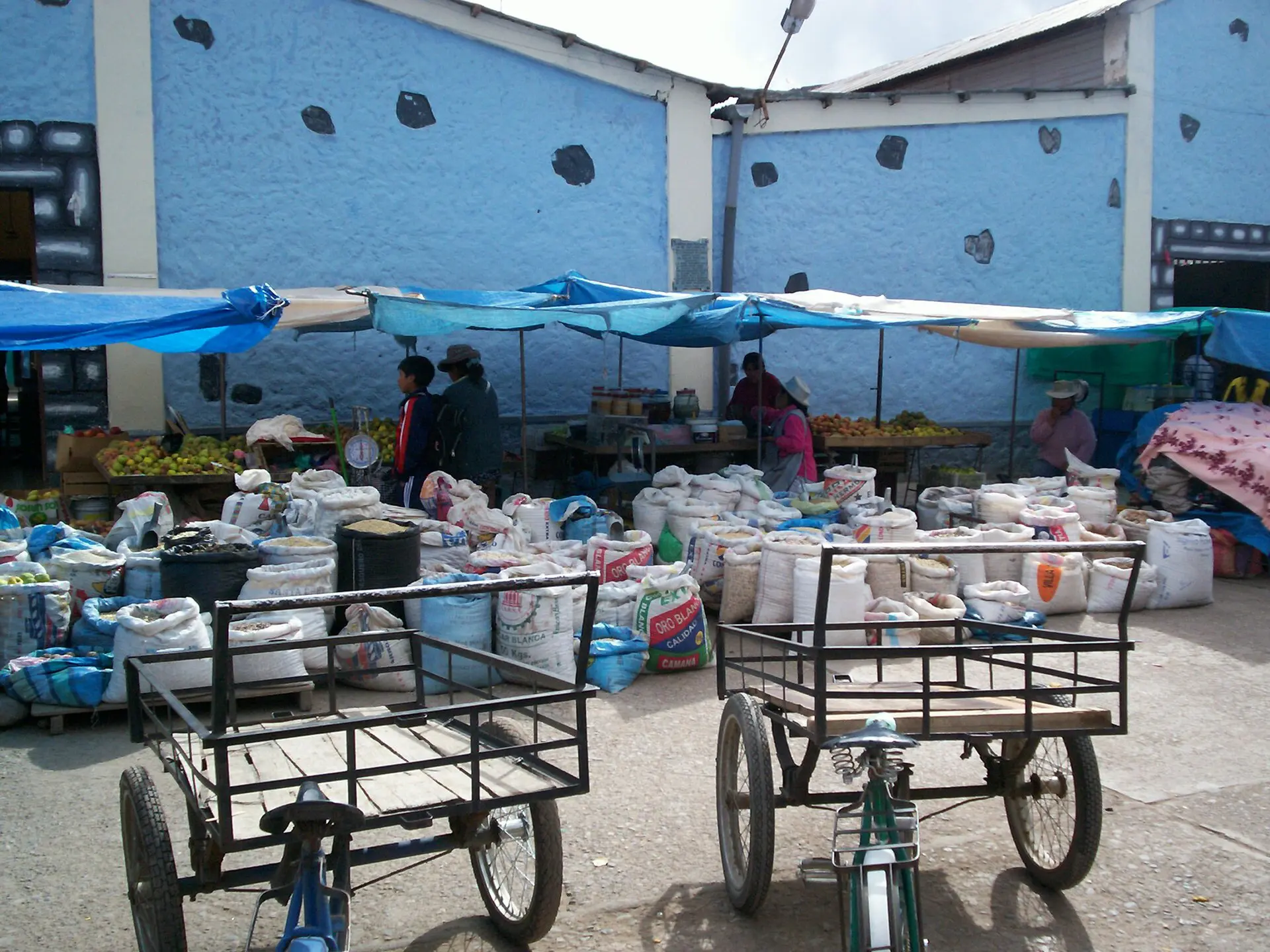
Chivay is the logical first night: it has lodging, food, shops and warm baths nearby. At 3,650 m you will sleep badly the first night, which is normal. Eat and drink more than you want to. Fallback: if you are not coping with altitude, take the day off and join a later group.
3. Chivay to Cabanaconde and the Cruz del Cóndor
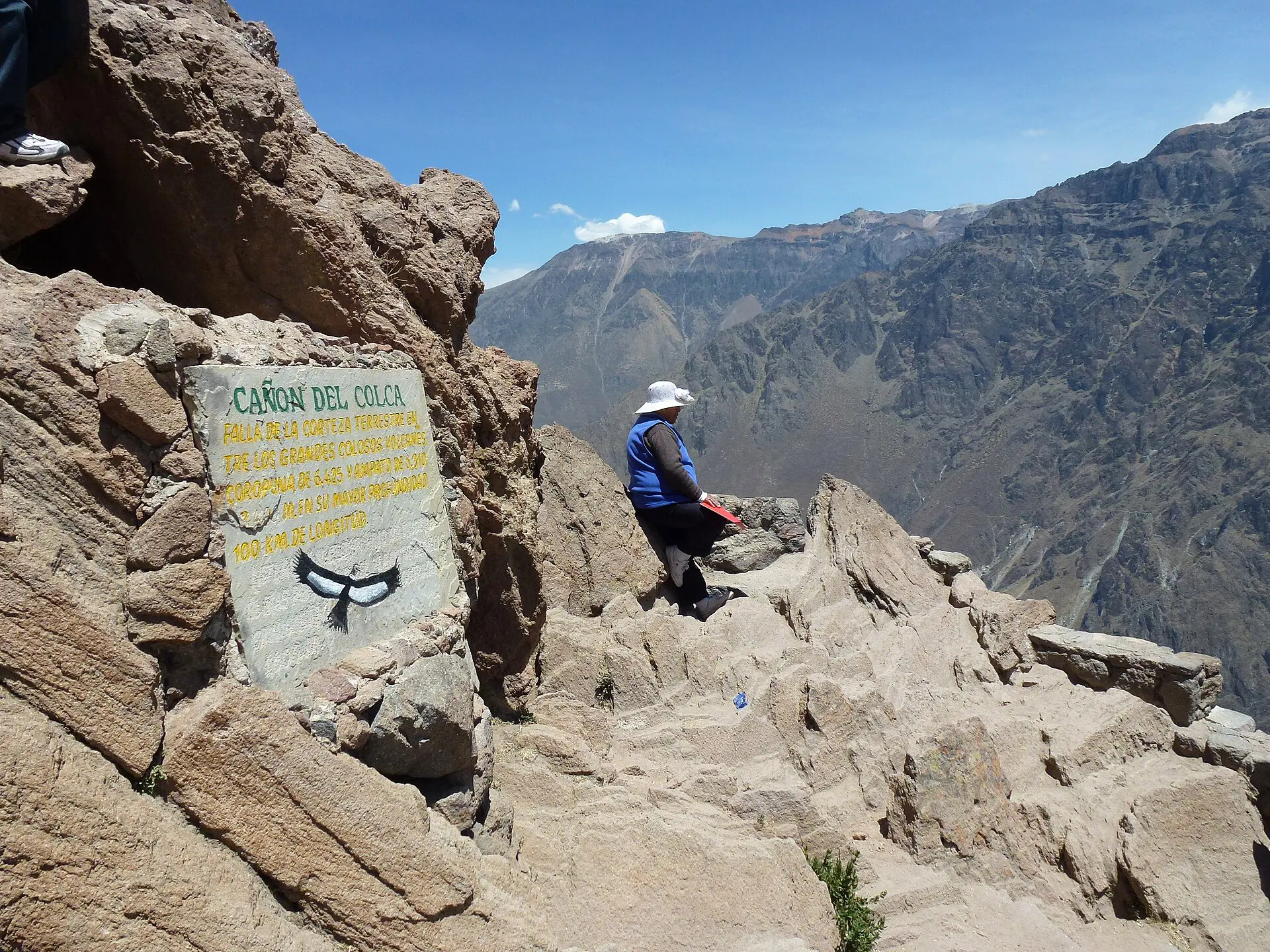
The road follows the canyon rim and stops at several viewpoints, including the Cruz del Cóndor. Condors ride morning thermals, and your best chance is roughly 08:00 to 09:30. They are wild animals and some mornings none appear. Fallback: if the condors do not show, the canyon view is still worth the stop, and you can try again on the way out if you are going back by the same road.
4. Cabanaconde to the canyon floor
The trail drops steeply with loose gravel and almost no shade, so start early and wear shoes with grip. Poles help the knees. The descent is quicker than the climb but more dangerous in rain or on tired legs. Fallback: if you feel unsteady, turn back at the first switchbacks; there is no shame in it.
5. A night at Sangalle
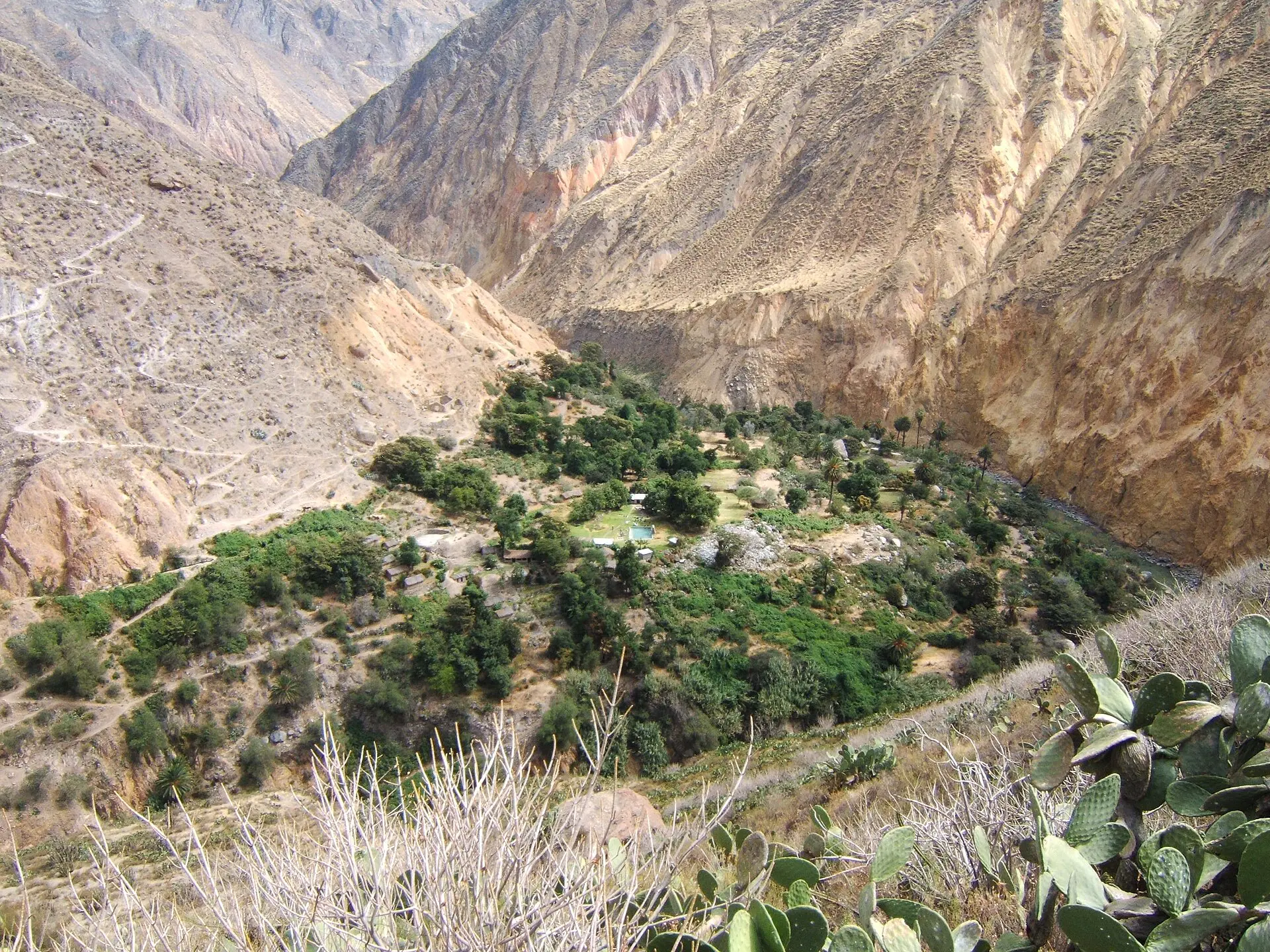
The oasis is a cluster of simple lodges with pools in a warm part of the canyon. It is hot by day, cool at night and quiet. Bring cash, a head torch and insect repellent. Electricity is limited. Fallback: a lodge may be full in peak months, so ask your guide or book in advance.
6. Sangalle to Llahuar on the three-day route
This is a gentler day: a traverse along the canyon wall, with some stream crossings and little vertical gain. It gives your legs a rest before the climb and lets you see the quieter side. Llahuar has lodging near a hot spring. Fallback: if a river is high or a path is blocked, retrace your steps rather than try a crossing.
7. The climb out and the bus back
The climb out is about 1,000 m in a few hours. Leave by 05:00 to be done before the heat. Carry 3 L of water and take rests every 45 minutes. Buses back to Chivay and Arequipa leave from Cabanaconde in the morning and early afternoon. Fallback: if you miss the bus, a shared taxi can take you to Chivay, and from there you can connect onward the next morning.
Two-day or three-day Colca Canyon trek
- Two days: Arequipa, then the condor viewpoint, down to the oasis the same day, and out the next morning. It saves a night, but the drawbacks are a very early start, little time to adapt to the altitude, and a long drive home on tired legs after the climb out of the canyon.
- Three days: a night in Chivay or Cabanaconde, a second night in the canyon, and a rest day. It costs one more night, and in exchange it is considerably easier on both your knees and your head, which is why most guides prefer it.
The altitude rule is the same as anywhere else in the Andes: arrive rested, ascend slowly and descend if symptoms worsen. I would pick three days if you have it.
Weather and season for Colca Canyon
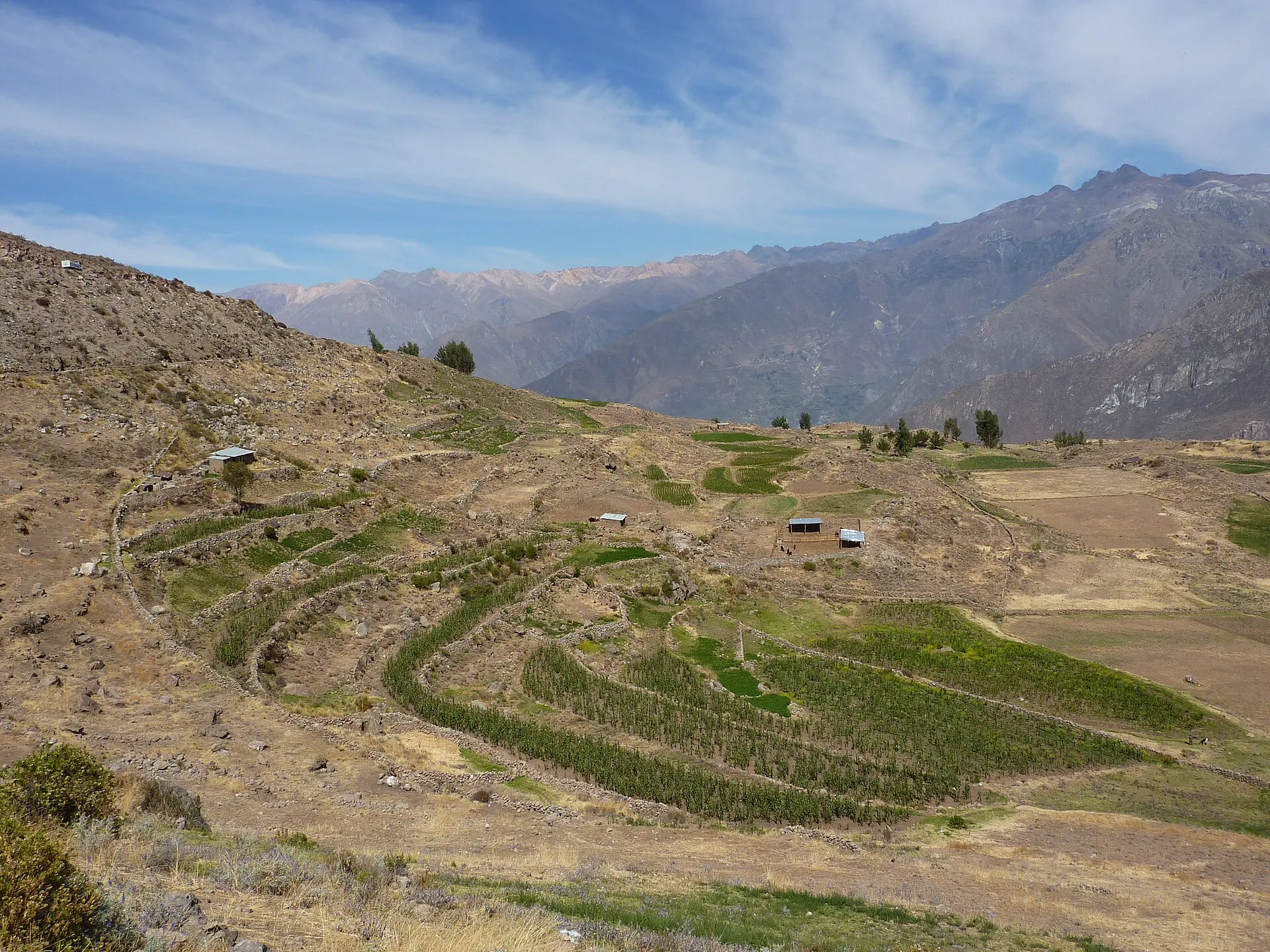
The dry season, roughly May to October, has the clearest skies and the safest trails. Nights at 3,300 m can drop to freezing in June and July. The wet season, roughly December to March, brings afternoon rain, slippery paths and a higher risk of rockfall and washed-out sections. Check conditions with your lodge or guide before descending, and do not start a descent in heavy rain.
Fallback days and short alternatives
- Chivay day: use the hot springs and the market and skip the descent.
- Rim walk near Cabanaconde: a few hours on the canyon edge, with views and no climb.
- Arequipa rest day: walk the historic centre, then eat well with our guide to food in Arequipa. The Arequipa guide covers the city if the transfer is cancelled.
Skip the Colca Canyon trek if
- You flew to Arequipa from the coast and have less than a day to adjust.
- You have bad knees or are not used to steep ascents.
- You have only one day. The condor tour is a long road day with limited trail time.
- It is the rainy season and the forecast is wet.
Costs for the Colca Canyon trek
Roughly, as of 2026: a two-day package from Arequipa has been sold in the range of 100 to 200 soles per person, plus the park ticket, and a three-day package costs more. Independent buses are cheaper, in the range of 20 to 40 soles each way. Meals and lodging in the canyon are basic. Verify every price with the agency or terminal before you commit.
For wider context, see the Arequipa page on Wikivoyage and our Peru travel guide.
FAQ about the Colca Canyon trek from Arequipa
How many days do you need for the Colca Canyon trek?
Two days is the minimum for the trek, three is more comfortable. A one-day bus tour only reaches the viewpoint. If you have the time, three days gives you a better chance of enjoying the descent and the walk out.
How high is the Colca Canyon trek?
The trek itself runs from about 3,300 m at Cabanaconde down to about 2,150 m at the oasis. The road crosses a pass of about 4,900 m, and Chivay is at about 3,650 m. Altitude bites on the road more than on the trail.
Can you do the Colca Canyon trek without a guide?
Yes, many people do. The trail is clear and the oasis lodges are easy to find. A guide helps in rain, if you are slow on steep ground, or if you want local knowledge. Tell your lodge your plans.
When do condors appear at Cruz del Cóndor?
Mostly between 08:00 and 09:30, when the air warms and they rise on thermals. Sightings are not guaranteed. Arrive before 08:00, as buses and tours crowd the viewpoint by mid-morning.
Is the Colca Canyon trek hard?
The descent is steep but short, and the climb out is the hard part: about 1,000 m, often in heat and at altitude. A normal fitness level is enough if you go slowly, start early and carry enough water.