
The best cheaper alternatives to expensive European cities are usually a second city in the same country or a neighbouring one: Porto for Lisbon, Valencia for Barcelona, Bologna for Rome, Utrecht for Amsterdam. Lodging is where you save most, often by a fifth to a third, as of 2026. You give up some headline sights, so the table below shows what changes in each pair.
The method: what makes a city a good cheaper alternative
A cheaper city is only a good swap if it keeps most of what you wanted from the original. I use four tests, in this order.

- Same reason to go. If you want a canal city, pick one with canals; if you want food and old streets, pick one with a strong historic core.
- Lower lodging bill. Rooms are the biggest single line in most city breaks, so the saving has to show up there.
- Easy transport. The alternative should be reachable by direct train or a short flight, because a slow transfer cancels the saving.
- Enough to fill the days. Two or three days is the minimum a swap should support.
A city can fail on any of these, and I would drop it. Price levels also move with the season and with events, so the comparison below is about relative bands, not exact amounts. Use it to pick candidates, then price your dates.
City-pair table: expensive city versus cheaper alternative
Cost bands are relative for a mid-range city break in the shoulder season: € is lower, €€€€ is highest. They are rough and will not match every month.

| Expensive city | Cheaper alternative | Cost band | What you give up | What you keep |
|---|---|---|---|---|
| Amsterdam | Utrecht, Haarlem or Rotterdam | €€€€ to €€€ | The densest set of famous museums | Canals, cycling, short rail links |
| Lisbon | Porto | €€€ to €€ | Some scale and sightseeing range | Riverside old town, food, hills |
| Barcelona | Valencia | €€€ to €€ | Gaudi and the famous skyline | Beach, old town, food, mild weather |
| Rome | Bologna | €€€ to €€ | Ancient sites | Arcades, food, rail hub in the north |
| Venice | Verona or Padua | €€€€ to €€ | The lagoon itself | Historic centres, easy day trips |
| Paris | Lyon or Lille | €€€€ to €€€ | Major-museum depth | Food, old quarters, fast trains |
| Vienna | Bratislava or Graz | €€€ to €€ | Imperial scale and the music scene | Compact old town, river setting |
| Copenhagen | Malmo or Gothenburg | €€€€ to €€€ | Design-city density | Scandinavian feel, cycling, food |
| Dubrovnik | Split, Kotor or the Albanian coast | €€€ to €€ | The walled-city setting | Adriatic sea and old towns |
| London | Manchester or Newcastle | €€€€ to €€€ | Scale, the big museums | Culture, music, shorter queues |
Seven of these pairs repay a closer look. The rest follow the same logic.
1. Amsterdam to Utrecht, Haarlem or Rotterdam
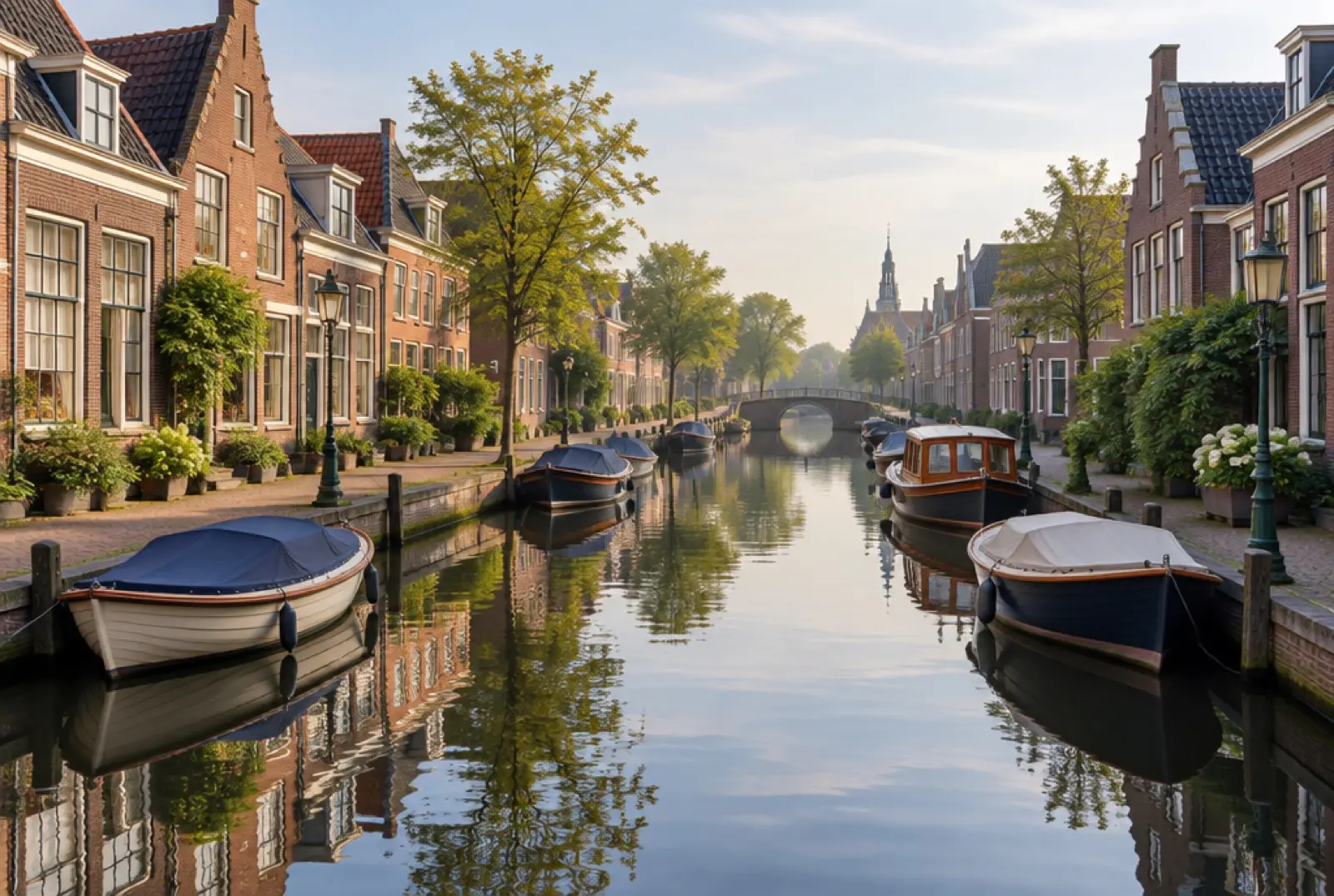
Cheaper alternatives to expensive European cities work best where two places are close. The Dutch cities form a cluster. Utrecht and Haarlem keep the canals and the small scale, and Rotterdam offers modern architecture. Staying outside Amsterdam and visiting for a day is a common way to cut the lodging line. Our Amsterdam on a budget guide compares the three in detail. The usual trade-off is fewer headline museums for quieter streets and, typically, lower room rates. Rail links are frequent and short, so a day in Amsterdam from a base elsewhere is easy to add.
2. Lisbon to Porto, and what Portugal costs
Porto is generally cheaper than Lisbon for lodging, and the two are linked by regular trains. The saving is not uniform, so check your dates. Porto is hillier and more compact, which suits two or three days, while Lisbon rewards a longer stay. Choose Porto if your budget is the tight constraint and you want one city, not several. See Portugal cost per day for a three-way comparison with the Algarve.
3. Barcelona to Valencia
Valencia has a beach, a historic centre and a large food scene, and it is a plausible weekend replacement for Barcelona. Lodging tends to be lower, and the city is less crowded. Beaches and a lower-cost food scene are the draw, and the main cost is the loss of the architecture that makes Barcelona famous. If you can fly or take a train for a day, book it ahead. For a wider Iberian comparison, read Spain vs Portugal.
4. Rome and Venice to Bologna, Verona and Padua
Northern Italian cities sit on fast rail lines, which makes a base in one of them practical. Bologna and Verona keep the historic centres and the food, with lodging that typically undercuts Rome and Venice. You lose the ancient sites and the lagoon.
Compare the room rate with the return rail fare for a day trip, since a single day in Rome or Venice can cost more than the nights you save. Student-heavy university towns also tend to have a wider range of cheaper food.
5. Paris to Lyon or Lille
Both are reachable on high-speed trains. They are not cheap in absolute terms, but they cost less than the capital for rooms and meals. Book rail in advance, since walk-up fares on the fastest trains can erase the saving. Lyon in particular suits a food-led trip, and Lille is close to the Belgian border, so it combines with a short cross-border hop if you want a second stop.
6. Dubrovnik to the wider Adriatic
Dubrovnik is among the priciest places in its region in summer. Split and Kotor offer similar coastal settings with lower typical rates, and Albania’s coast is cheaper again, though transport there is slower and less predictable. Albania vs Croatia weighs the trade-offs, including transport.
7. London to northern English cities
Manchester and Newcastle offer strong museums and music scenes at lower hotel rates. Rail fares are the catch, and advance tickets decide whether the swap works. London to Newcastle by train shows how.
Pay more for / save on in these swaps
Cheaper alternatives to expensive European cities still need a plan for where the money goes. A swap does not mean spending less everywhere. Some lines are worth keeping or raising.
- Pay more for: a central room in the smaller city. It is cheaper than a central room in the capital, and it removes daily transport.
- Pay more for: advance rail tickets between the cities, booked as early as the schedule opens.
- Save on: lodging, where the biggest gap sits, and on restaurant meals, which often run lower in second cities.
- Save on: attractions, by picking one paid sight per day and filling the rest with free streets and markets.
Common mistakes and edge cases
- Counting only the room. If you stay in the cheaper city and visit the capital by train, add the train fare. Four day trips can erase the saving.
- Assuming every second city is cheaper. Some, such as Swiss and Nordic cities, remain expensive. Check a live price.
- Picking by price alone. A cheaper city you do not enjoy is poor value. Match the reason you want to go.
- Ignoring season. A second city in high summer can cost more than the capital in winter, so compare the same dates.
- Underrating the original. If your main goal is a specific museum or monument, the swap defeats the purpose. Pay for the original.
I would not swap in a city you plan to see for only a night. Cheaper rooms matter less on a short stay than the time lost moving.
What to verify before you rely on it
The bands in this guide are broad, and city prices move quickly. Before you book, confirm:
- Live room rates in both cities for your exact dates, including taxes and city tourist charges.
- Rail or flight options between the cities, with advance and walk-up prices.
- Opening days and ticket rules for any sight you plan to use, as museums often close one day a week.
- Event dates that can lift prices in the smaller city, such as festivals and fairs.
- Any local rules on tourist tax, which vary by city and can add a few euros a night.
Where to go next
Not every pair needs a switch. In winter, when capital-city rates fall, the original can cost little more than the alternative, and the saving is worth less than the extra transfer. Run the numbers for the months you can travel.
If you are comparing the whole cost of a trip, not just the city, read the guides linked above. Each one takes the same pair-based view and adds local detail on transport and lodging. Start with the pair closest to your plan, price your own dates, and keep the bigger name as a one-day option if a single sight matters to you.
FAQ: cheaper alternatives to expensive European cities
Which European cities are the most expensive for tourists?
Capitals and resort-style old towns in Western and Northern Europe tend to rank highest, including Paris, London, Copenhagen, Zurich and Venice. Ranking shifts by season and exchange rate, so compare your dates before you assume.
Is it cheaper to stay outside a big city and visit?
Often, for stays of three nights or more, if the train is frequent and the fare is moderate. For short stays, the transport time and cost can cancel the saving. Compare the room difference with the total return fares.
Are second cities less crowded as well?
Usually, though not always. They tend to have fewer queues at the main sights, but events and festivals can fill rooms. Check dates for fairs and holidays before you book.
When does the famous city still make sense?
When you have a specific sight you cannot get elsewhere, when you travel in winter and rates drop, or when you can book far ahead. Then the original may cost little more, and you avoid the extra transfer.
How much can you save with a cheaper alternative?
Lodging is typically where the saving shows, often 15 to 35 percent on the room, as of 2026. Meals and local transport vary less. Total trip savings are smaller, so use the worksheet approach to compare real totals for your dates.