How to get cash abroad for the least money: use a debit card at a bank-run ATM, paid out in the local currency, in fewer and larger withdrawals. Airport exchange desks and “no commission” booths tend to cost the most. Below, the three routes are compared by cost per withdrawal, with the places where a fee hides and where paying more makes sense.
The short version
- Check your card’s foreign transaction fee and your bank’s ATM policy before you leave, and carry a second card as backup.
- Withdraw once or twice a week in larger amounts, from an ATM attached to a bank branch, and always choose local currency.
- Keep a small emergency stash of cash for arrival, and pay by card wherever cards are accepted.
How to get cash abroad, step by step
1. Know the three routes and what each costs
You can pull local cash from an ATM with a debit card, take a cash advance on a credit card, or buy currency at an exchange desk. Each route has up to three cost layers: a fee from your bank, a fee from the machine operator, and a margin hidden in the exchange rate. Compare all three layers, not just the one printed on screen. Typically the ATM route is cheapest and the credit card cash advance is the dearest.
2. Ask your bank three questions
Before departure, ask what your bank charges per foreign withdrawal, whether it adds a percentage on top, and whether it refunds third-party ATM fees. Some accounts charge nothing, others charge a flat amount plus a percentage. Also confirm the daily withdrawal limit and tell the bank you are travelling if its app asks for that. Policies change often, so rely on the bank’s current fee page, not on this article.
3. Use bank-branded ATMs, not stand-alone ones
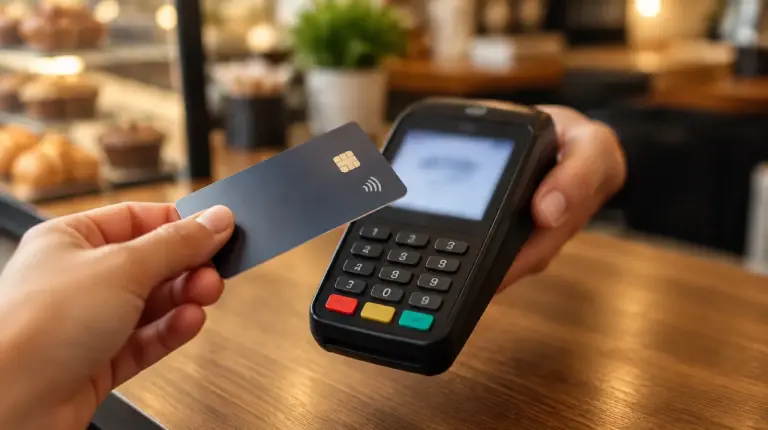
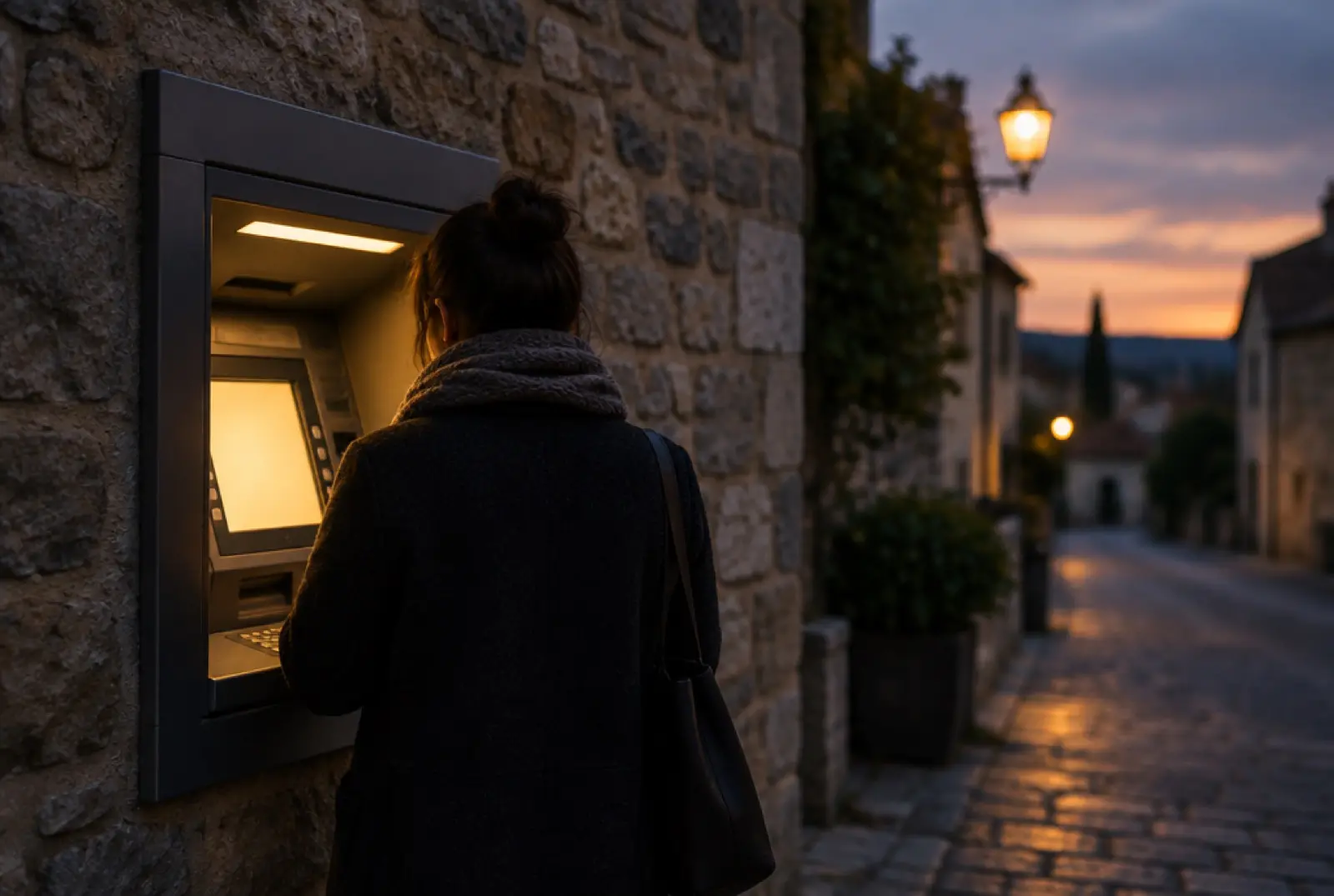
Machines inside or beside a bank branch tend to charge lower operator fees than free-standing machines in tourist streets, shops and airports. Stand-alone machines can add a flat fee that is large relative to a small withdrawal. It is also safer: a branch machine in daylight is easier to check for tampering. I would walk two minutes to a branch before using the first machine I see.
4. Always choose local currency at the machine
Some ATMs offer to convert the amount into your home currency before dispensing. This is called dynamic currency conversion, and it usually applies a poor exchange rate. Decline it and choose the local currency, so your own bank does the conversion at a rate closer to the market. The screen may word the home-currency option as the “guaranteed” or “convenient” choice. It is neither, as a rule.
5. Take out fewer, larger withdrawals
Flat fees punish small withdrawals. A fixed fee of a few dollars is a larger share of a modest withdrawal than of a bigger one. So plan roughly how much cash you need for several days, withdraw that, and keep it secure in two places. The trade-off is risk: more cash on you means more to lose. Pay more in fees for small, frequent withdrawals only if you are carrying the cash in a risky setting.
6. Pay more for a backup, save on everything else
Pay a little more for a second card on a different network and a small reserve of home-currency cash, because a blocked card abroad can cost far more than any fee. Save on exchange desks, airport kiosks and pre-ordered currency delivered at home, which usually carry weaker rates than the ATM route. An emergency stash covers a transport transfer on arrival, and nothing more.
Cost per withdrawal: the three routes compared
These are rough ranges, not quotes. Fees and margins vary by bank, country and machine.
| Route | Typical fee layers | Rough cost on a mid-size withdrawal | Where the fee hides |
|---|---|---|---|
| Bank-branded ATM, local currency | Possible bank fee, possible operator fee | About 0% to 3% | Your own bank’s foreign fee |
| Stand-alone ATM, local currency | Operator flat fee, bank fee | About 2% to 8% | Flat fee on the screen’s last page |
| ATM with home-currency conversion | Poor rate on top of fees | About 4% to 10% or more | Exchange-rate margin, not shown as a fee |
| Exchange desk or airport kiosk | Rate margin, sometimes commission | About 3% to 10% or more | “No commission” with a wide rate gap |
| Credit card cash advance | Advance fee plus interest from day one | About 3% to 6% plus interest | Interest starts immediately |
Total cost box: a sample week
- Cash needed: about $150 to $400 for a week where cards are widely accepted, more where they are not.
- Two smart withdrawals: about $0 to $12 in total fees if your bank is fee-friendly.
- Six small withdrawals at stand-alone machines: perhaps $15 to $50 in total fees.
- Airport exchange of the same amount: often the equivalent of $10 to $40 lost in the rate.
The gap between the best and worst route over a week can pay for a few meals. For the wider picture, see how to compare total trip cost.
Common mistakes when you get cash abroad
- Accepting the home-currency option at the machine because it looks familiar.
- Exchanging all your money at the airport because it feels urgent.
- Using a credit card for cash without knowing that interest starts at once.
- Carrying one card only, in one bag.
- Assuming cash is needed everywhere. In some countries almost everything runs on cards or phones, and in others cash still rules. The Japan trip cost guide is one example of a place where checking this beforehand matters.
What to verify before you go
- Your bank’s current foreign transaction and ATM fees, on its own fee page.
- Daily withdrawal limits and what happens if the card is declined abroad.
- Whether your destination relies on cash, and whether ATMs are easy to find outside the cities.
- Your government’s travel advice on local currency rules and any limits on bringing cash in or out.
FAQ: how to get cash abroad
Is it better to exchange money before you travel?
Usually not. Pre-ordered currency at home often has a weaker rate than an ATM abroad. A small amount for arrival is reasonable, because it protects you if the first machine is out of order or your first transfer needs cash.
How much cash should I carry abroad?
Enough for a few days of expected cash spending, plus a small reserve. The right amount depends on how card-friendly the country is, so check current guidance for your destination, and keep the cash split between two places.
Should I use my debit or credit card at an ATM?
A debit card is typically cheaper, because a credit card cash advance usually adds a fee and interest from the first day. Check both cards’ terms with the issuer, since conditions vary widely and change over time.
Why does the ATM show a different amount than my bank statement?
The screen shows the amount before your own bank applies its fee and exchange rate. Statements can also update a day or two later. If the difference is large, check whether you accepted a home-currency conversion at the machine.