
How to find bus and ferry timetables abroad: start with the operator or port authority, then cross-check a second source, then confirm with a person on the ground the day before. Aggregator sites and map apps lag behind seasonal changes, and in remote places a published time is often only a target. Plan the day with a fallback.
The short version
- Find the operator’s own page, the port or station authority, or the regional transport body.
- Cross-check against a second source, ideally a local one such as a tourist office or an accommodation host.
- Save the timetable offline as a screenshot, with the date you captured it.
- Confirm by phone, message or in person the day before, and again that morning.
- Pick a fallback departure and know the last one of the day.
How to find bus and ferry timetables abroad, step by step
1. Rank your sources before you search
Not all timetables are equal. Rank them: the operator or authority that runs the service first, local tourist offices and regional transport pages second, accommodation hosts and drivers third, aggregators and map apps fourth, forums and old blog posts last. A higher source overrides a lower one. If two high sources disagree, assume the later change is correct, and ask someone locally which one is current.
2. Check the date and the season on every page
Many timetables are seasonal. Ferries run a reduced winter schedule in many regions, and rural buses often drop to school-day or market-day patterns. Look for the validity dates, the day-of-week columns and notes about public holidays. If a page shows no date, treat it as a guess. Check whether the schedule applies to your travel month, not only to the current month.
3. Use offline maps and saved pages
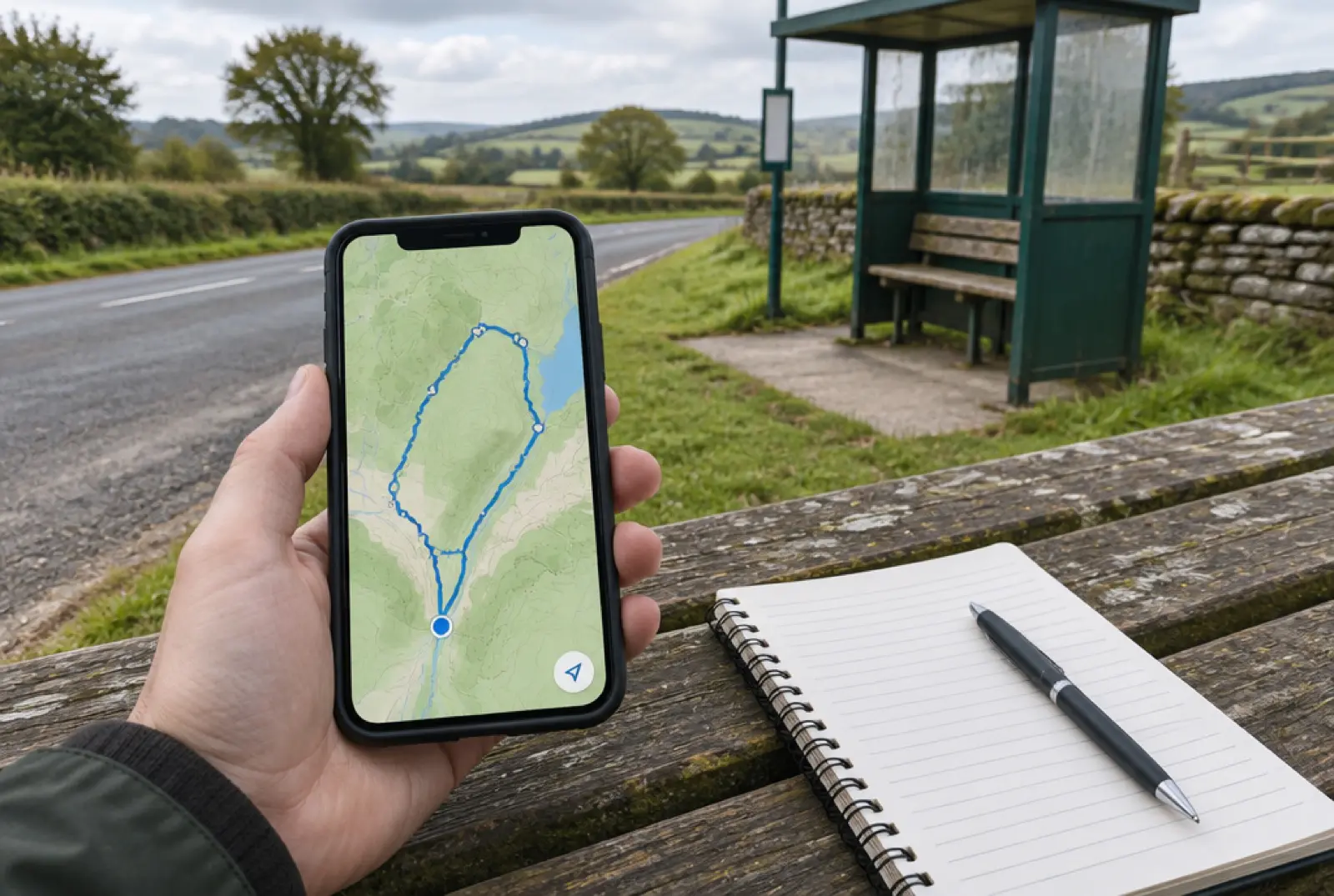
Signal vanishes exactly where the timetable matters most. Before you leave Wi-Fi, download the offline map for the area, screenshot the timetable with its date visible, and save the operator’s phone number. A map app can show stops and distances offline, but departure times shown in it come from an uploaded feed and may be months old. Use the map for the route and the operator for the time.
4. Ask locally, and ask the right question
Ask your accommodation host, the nearest tourist office or the person at the ticket window. Do not ask “is there a bus tomorrow?” Ask “what time does the last service leave, and does it run every day?” Then ask what happens if it is full or cancelled. Local answers often reveal informal shared vans or a second boat that never appears online. Note the answer and the name of who gave it.

5. Confirm the day before, and again that morning
Confirm the exact departure point, time and fare basis the day before, by phone or message if you can. Many services leave early when full or run late and stop altogether in bad weather. Wind, tide and low water stop ferries first; fuel shortages and roadworks stop buses. A second check at breakfast takes one minute and can save a day. Arrive 30 to 60 minutes early where tickets are sold on the spot.
6. Plan the fallback before you need it
Every plan needs one. Know the last service of the day, the next day’s first service and one alternative such as a shared taxi, a different route or a night in town. Do not book non-refundable lodging or a flight on the same day as a ferry or a rural bus. Keep a buffer of a day for island and mountain crossings. The logic behind buffers is covered in the Aran Islands ferry guide, where sailings can be cancelled by the sea.
Sources compared
| Source | Reliability | Typical lag | Best used for |
|---|---|---|---|
| Operator or port authority | High | Days to a few weeks | Base timetable, cancellations notices |
| Regional transport body | High to medium | Weeks | Bus networks and integrated fares |
| Local tourist office or host | Medium to high | Current, if they use the service | Last-minute changes, informal options |
| Map or booking app | Medium | Weeks to months | Stops, distances, rough duration |
| Forums, blogs, social posts | Low | Months to years | Ideas, not times |
Common mistakes
- Trusting a single map app for a rural bus. Many small operators never upload their schedules.
- Ignoring the day-of-week column. Services that run Monday to Friday often skip Sundays and holidays.
- Forgetting the return leg. A one-way boat can leave you stuck on the far side.
- Planning a tight connection between a bus and a ferry with no gap for delay.
- Assuming card payment. In remote areas, ticket offices may take cash only, so carry small notes in local currency.
Skip a plan that depends on a single departure with no later one. If it is the last service and it is cancelled, you spend the night where you are. Long overland trips in thinly served countries need the same slack, as the Mongolia overland guide shows.
What to verify before you go
- The operator’s official contact details and whether they answer messages in a language you speak.
- The validity dates of the timetable and whether it covers your travel month.
- Whether tickets can be bought in advance or only at the terminal, and whether foreign cards work.
- The last departure each day and the first on the following day.
- Any national or regional transport authority page that publishes service alerts. Check as close to departure as you can.
FAQ about bus and ferry timetables abroad
Are Google Maps bus times reliable abroad?
They are a good starting point in cities with public feeds and unreliable in rural areas. Many small operators never upload schedules, and feeds can be months old. Use the app for the route, then confirm the time with the operator or a local.
How far ahead should I confirm a ferry?
Check when you plan the trip, the day before and the morning of travel. Weather cancellations are usually announced within hours of departure. For island crossings, keep a spare day in the itinerary, as a single check cannot cover a storm.
What if there is no online timetable at all?
Ask locally: the accommodation host, the nearest tourist office, a driver or the ticket window. Ask for the last departure, the days it runs and what happens when it is full. Arrive early, carry cash and treat the first answer as provisional until a second person agrees.
Do bus and ferry timetables change by season?
Yes. Winter schedules are often reduced, and rural routes often run on market days or school days. Check the validity dates on the timetable and compare against your travel month. If the page has no dates, confirm directly with the operator.