The best family hotel room tips come down to three checks: who sleeps where, how much floor is left once beds and cots are in, and how noisy the room is after 9 pm. Ask about all three before you pay, in writing. A room that looks fine in photos can fail on the first night.
The short version
- Ask for the exact bed set-up, not just the room category, and get the reply in writing.
- Check floor space, the bathroom and the noise risk before you pay, not after.
- On arrival, spend ten minutes fixing the room before anyone unpacks.
- Keep a tired-day fallback: a second option you can switch to if the first night goes badly.
Family hotel room tips, step by step
1. Ask for the bed layout in plain words
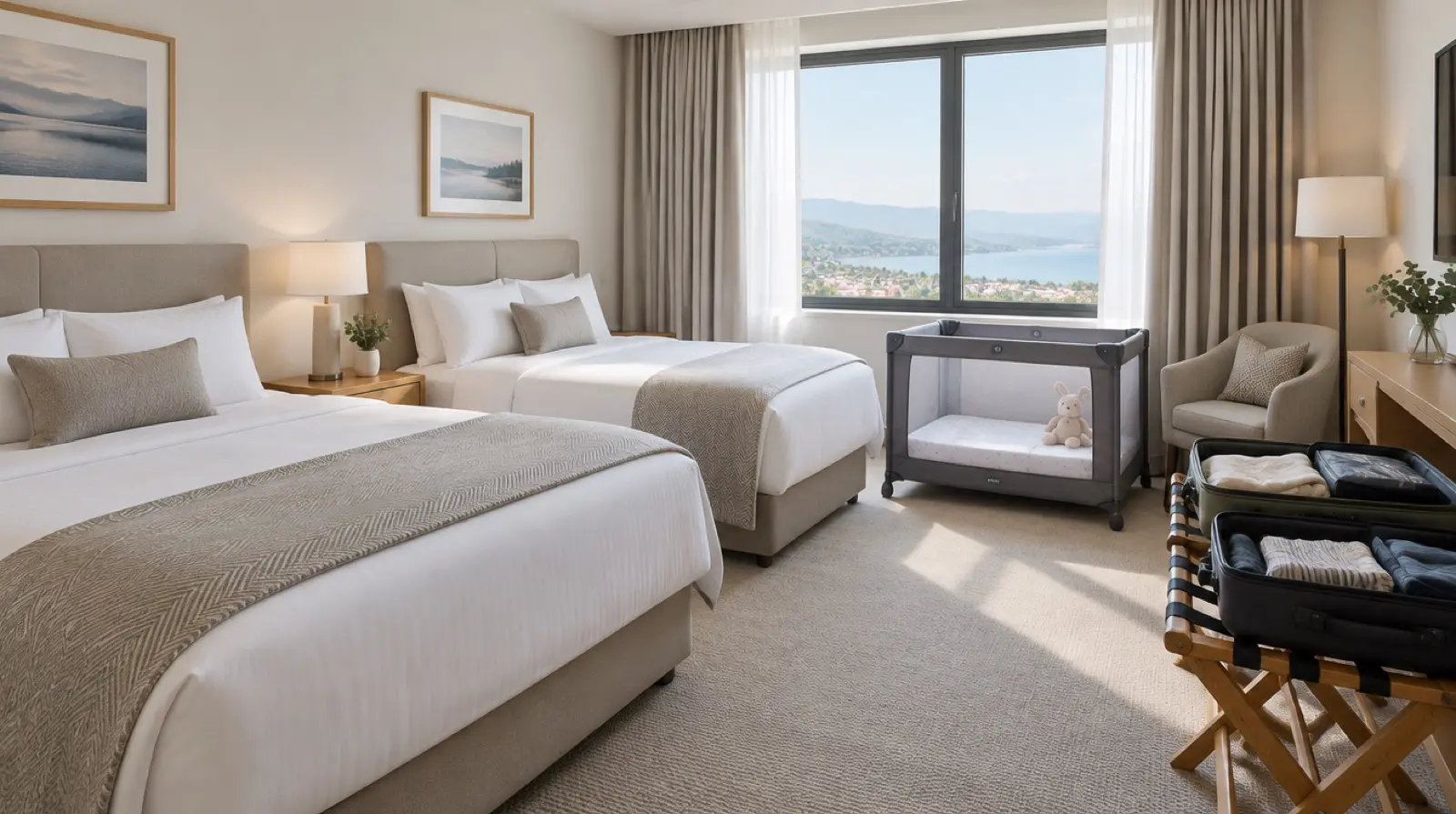
“Family room” can mean two doubles, one double plus a sofa bed, or a double with a folding cot squeezed in. Ask: how many separate sleeping places, what size, and are they beds or sofas? Age and stamina note: children under about six often cope with a shared bed, while a school-age child who sleeps badly may need their own. Decision point: if the answer is vague, book a different room type rather than hoping.
2. Check the real floor space
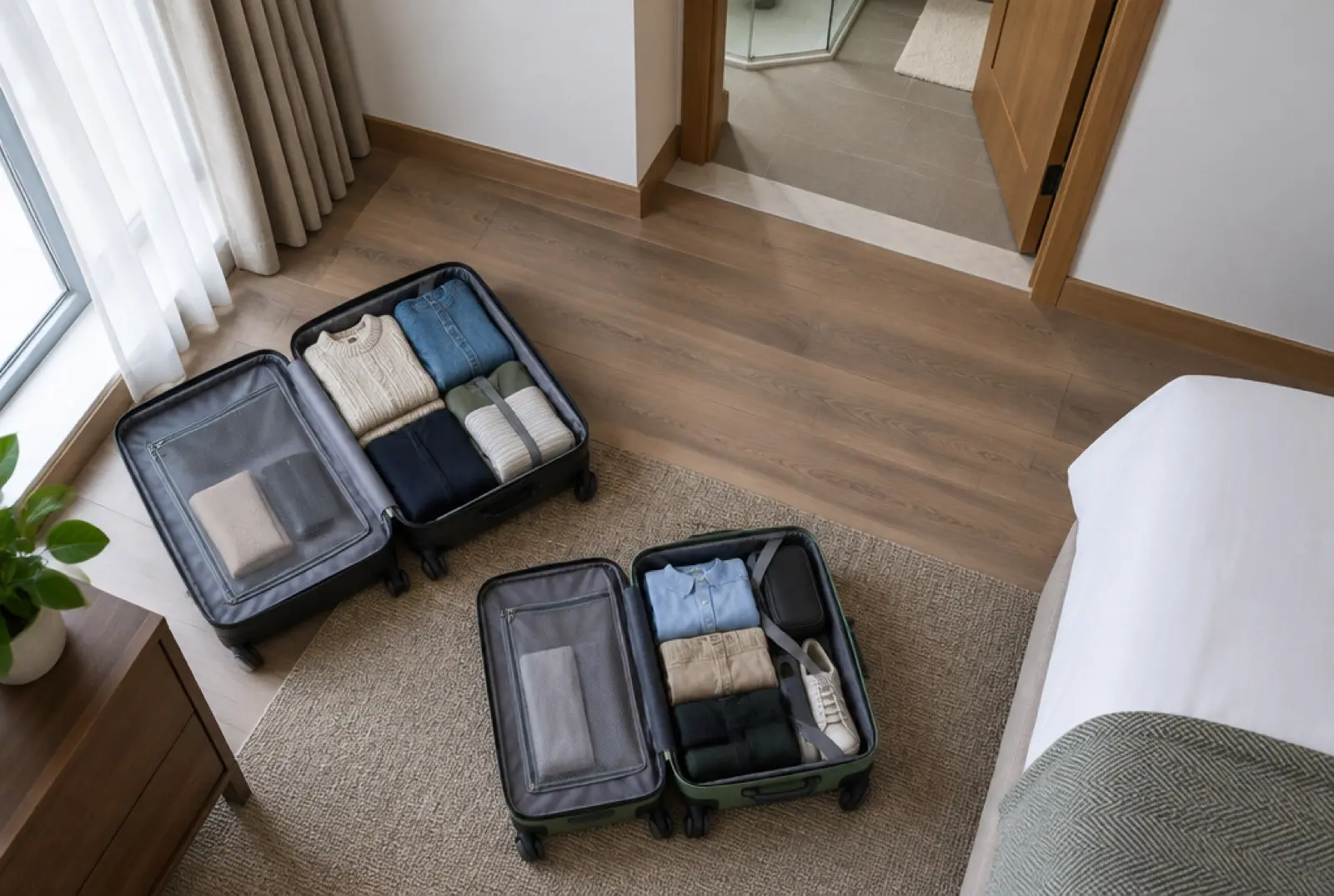
Room size in square metres is a better guide than the category name. As a rough guide, a room for two adults and two children is comfortable from about 28 to 35 square metres, and tight below about 24. Look at the photos for how much floor remains around the beds. You need a path to the bathroom in the dark and a place to open two suitcases without climbing over a bed.
3. Ask about cots, extra beds and what they cost
Many hotels supply a cot or extra bed on request, sometimes free and sometimes for a fee, and stock is limited. Ask whether it is guaranteed for your dates, who checks the safety of the cot, and what it costs per night. Policies change, so confirm by email. For a baby, ask for the cot to be made up before you arrive, so the first evening does not start with a search for sheets.
4. Judge the noise before you book
Noise is the usual reason a family night goes wrong. Ask for a room away from the lift, ice machine, bar, pool terrace and street. Request a higher floor if the street is busy, and check whether the room has connecting doors, which carry sound. Rest anchor: children who nap or go to bed early lose sleep to a late-night bar below. A quiet room matters more than a view.
5. Look at the bathroom, the kitchen and the fridge
A bath or a shower with a low step matters for young children, and a bathroom door that locks from the inside is a risk with toddlers. A fridge, a kettle and a small table make breakfast and snacks easy and save an early restaurant stop. Meal anchor: a fridge for milk, fruit and cheese removes the pressure to eat out three times a day. Ask directly, because listings are often incomplete.
6. Use the first ten minutes on arrival
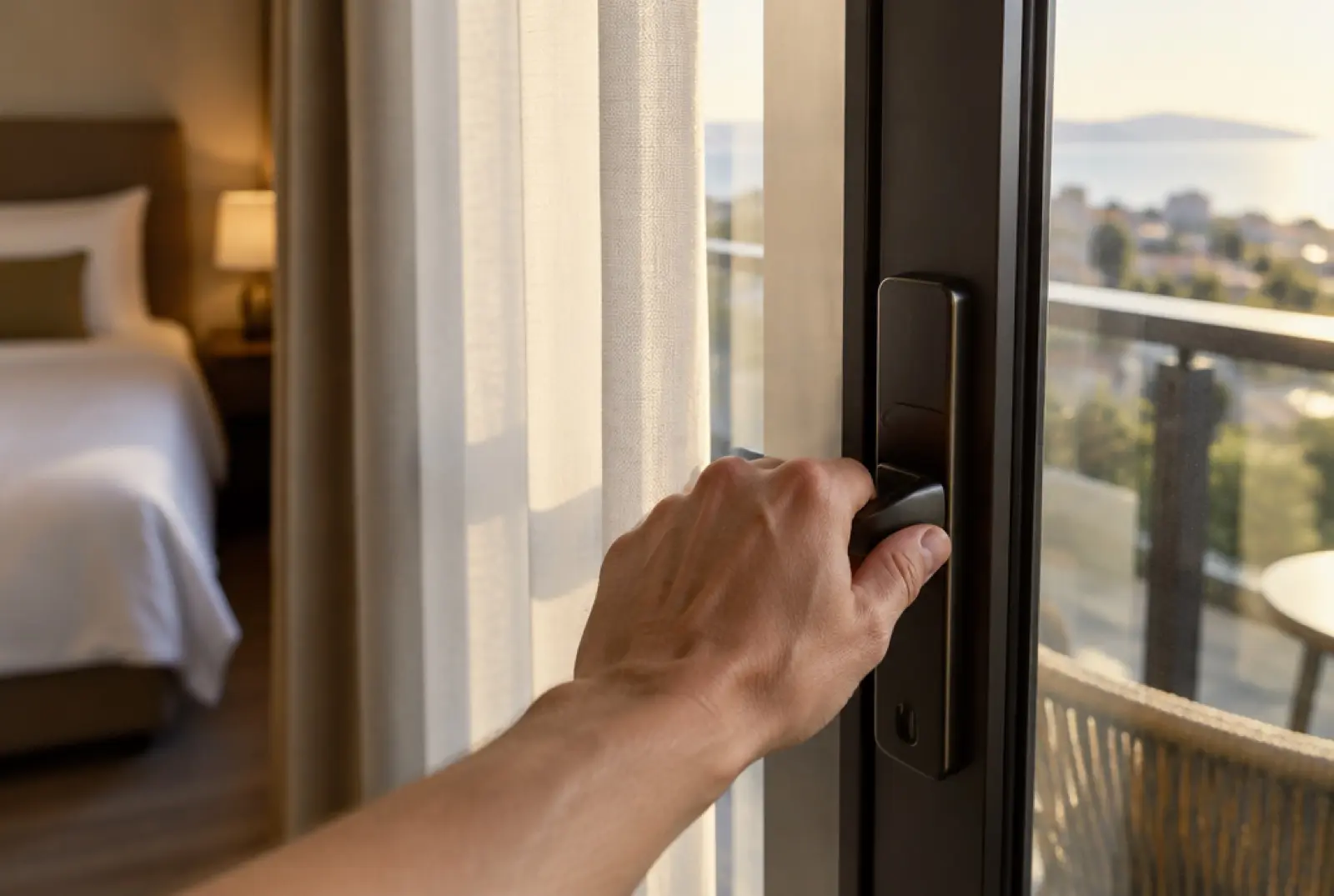
Before unpacking, walk the room with a short checklist. Check window locks and balcony doors, move any breakable items out of reach, test the air conditioning and the blackout curtains, and note where the sockets are. Ask reception for what is missing: extra pillows, a cot, a bath mat, a second key card. A small problem raised at 4 pm is easy to fix. At 9 pm it is a bad night.
A quick checklist table
| Question | What to ask | Good answer |
|---|---|---|
| Beds | How many separate sleeping places, and what size? | Named bed types, confirmed in writing |
| Space | What is the room size in square metres? | Roughly 28 to 35 for four people |
| Cot or extra bed | Is it guaranteed for my dates, and is there a fee? | Yes, with the price stated |
| Noise | Which side is the room on, and what is nearby? | Away from lift, bar and street |
| Facilities | Is there a fridge, a kettle and a locking bathroom door? | Fridge and kettle, a simple bathroom |
Common mistakes with family hotel rooms
- Booking the cheapest room and adding a child afterwards, which often means an extra bed that does not fit.
- Trusting the category name instead of the bed layout.
- Asking for a quiet room on arrival, when the hotel is full and cannot move you.
- Skipping the tired-day fallback. If the first night is poor, know in advance whether you can change room, extend a day or shorten the next morning.
- Planning an early start the morning after a long travel day. Leave the first morning free.
For a wider view of where to base yourself, see our guide to where to stay with kids, which compares apartments, hotels and resorts by age group.
What to verify before you go
Hotel policies on cots, extra beds, child ages and maximum occupancy vary by country and change often, so confirm them with the hotel directly and keep the reply. Check the child age rules for free or discounted beds. If your destination has health considerations, such as mosquito-borne illness, the CDC travel health pages are a sensible starting point, and a doctor or travel clinic can advise on your own family. Check cancellation terms too, in case you need to switch rooms.
FAQ about family hotel rooms
What size hotel room do four people need?
Roughly 28 to 35 square metres is comfortable for two adults and two children, and below about 24 gets tight. The bed layout matters as much as the size, so ask how many beds and what type, not only the room category.
Is a family room better than two connecting rooms?
A single family room is cheaper and keeps everyone together, which suits younger children. Connecting rooms give more privacy and a quieter evening for adults, but the door carries sound. Choose by age: young children usually sleep better in one room, older ones in two.
Should I ask for a cot in advance?
Yes. Cots and extra beds are limited, and policies vary, so ask when you book and again a few days before arrival. Ask for written confirmation, and ask the hotel to set it up before you check in so the first evening is not spent waiting.
How do I get a quiet room?
Request it at booking, then again at check-in. Ask for a high floor, away from the lift, bar, pool terrace and street. Request is not a guarantee, so if the room is noisy, tell reception in the first hour, while moving you is still possible.