A good family day bag checklist sightseeing days can rely on has six groups: drinks and food, comfort and clothing, health, wet and sun cover, small entertainment, and papers and money. One adult carries it, and the weight stays low enough for a full day of walking. The rest of this guide shows what goes in each group and what changes for rain or heat.
The short version
- Choose one main bag for an adult and one small bag for each child.
- Fill it by category, so you find things without unpacking everything.
- Keep the loaded weight to roughly 10 percent of the carrier’s body weight, and lower for a long day.
- Swap two or three items for the forecast, then reload the evening before.
Step by step
1. Drinks and food
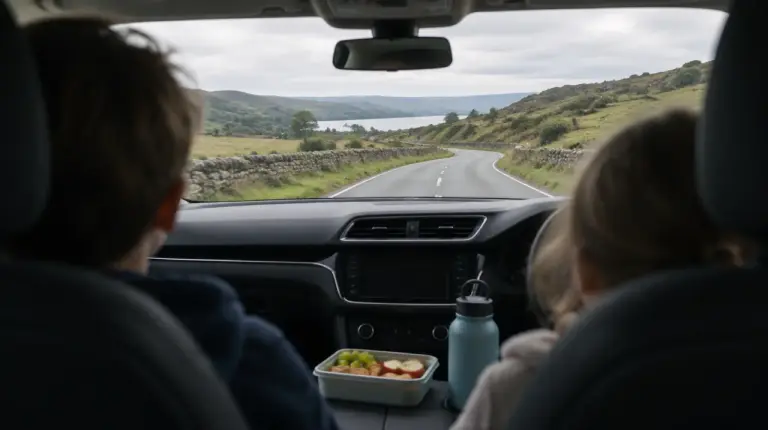
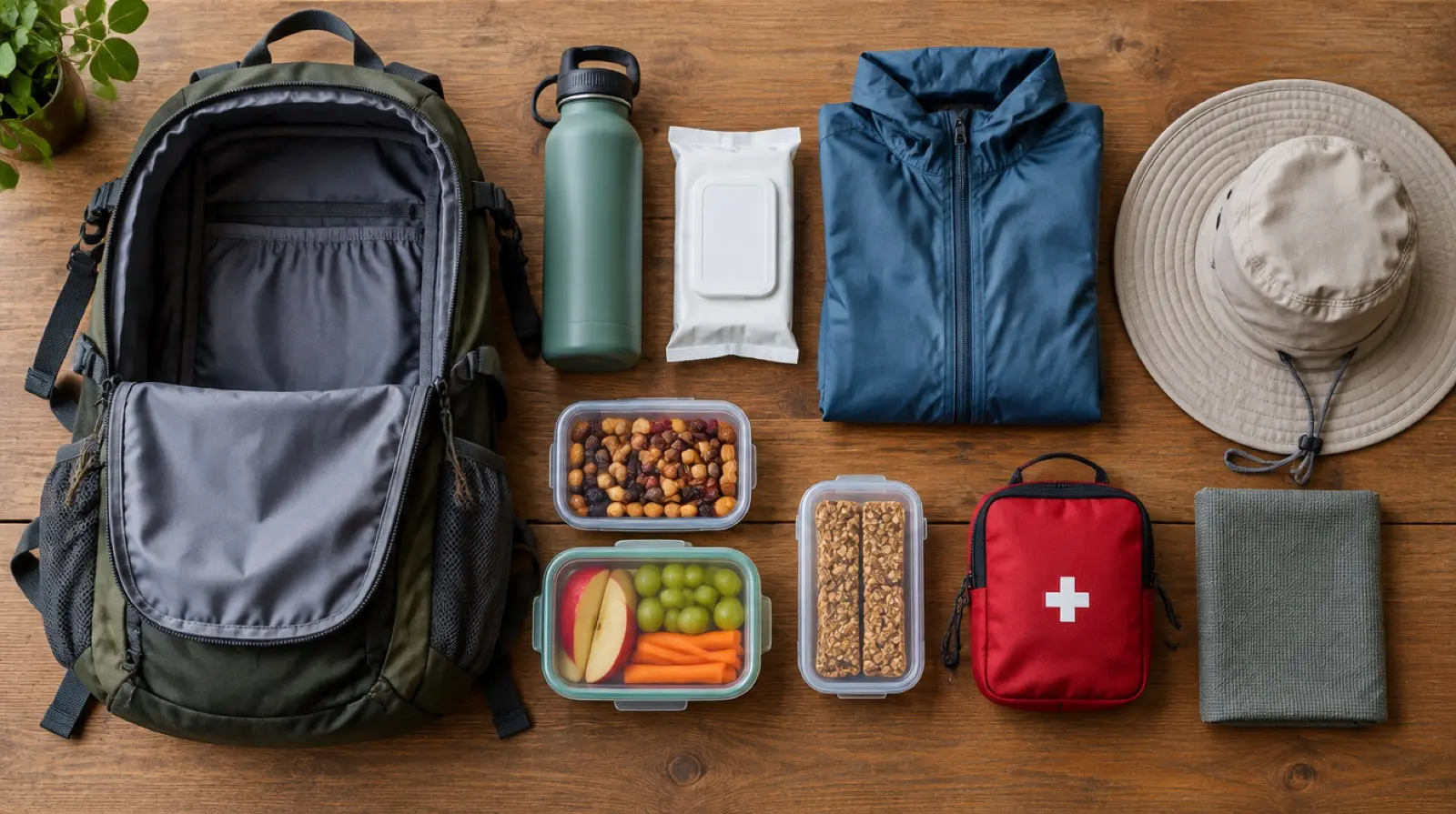
This group comes first because hunger and thirst cause most mid-afternoon trouble. Carry a refillable bottle per person, filled each morning and topped up at drinking points. Pack two snacks per child for a morning and an afternoon anchor, such as fruit, crackers, nuts where allergies allow or a plain bar. Add a small reusable lunch container if you plan a picnic. Check local tap water advice before assuming you can refill.
2. Comfort and clothing
One spare layer per child goes in the bag, even in warm weather, because air conditioning, wind and splashes change the plan. Add a spare top and a spare pair of socks for each younger child, and a light folding hat. Wipes and a small hand towel handle messy moments. A thin scarf or a small blanket doubles as a rest mat, a sun cover or a warm layer on a cold train.
3. Health and first aid
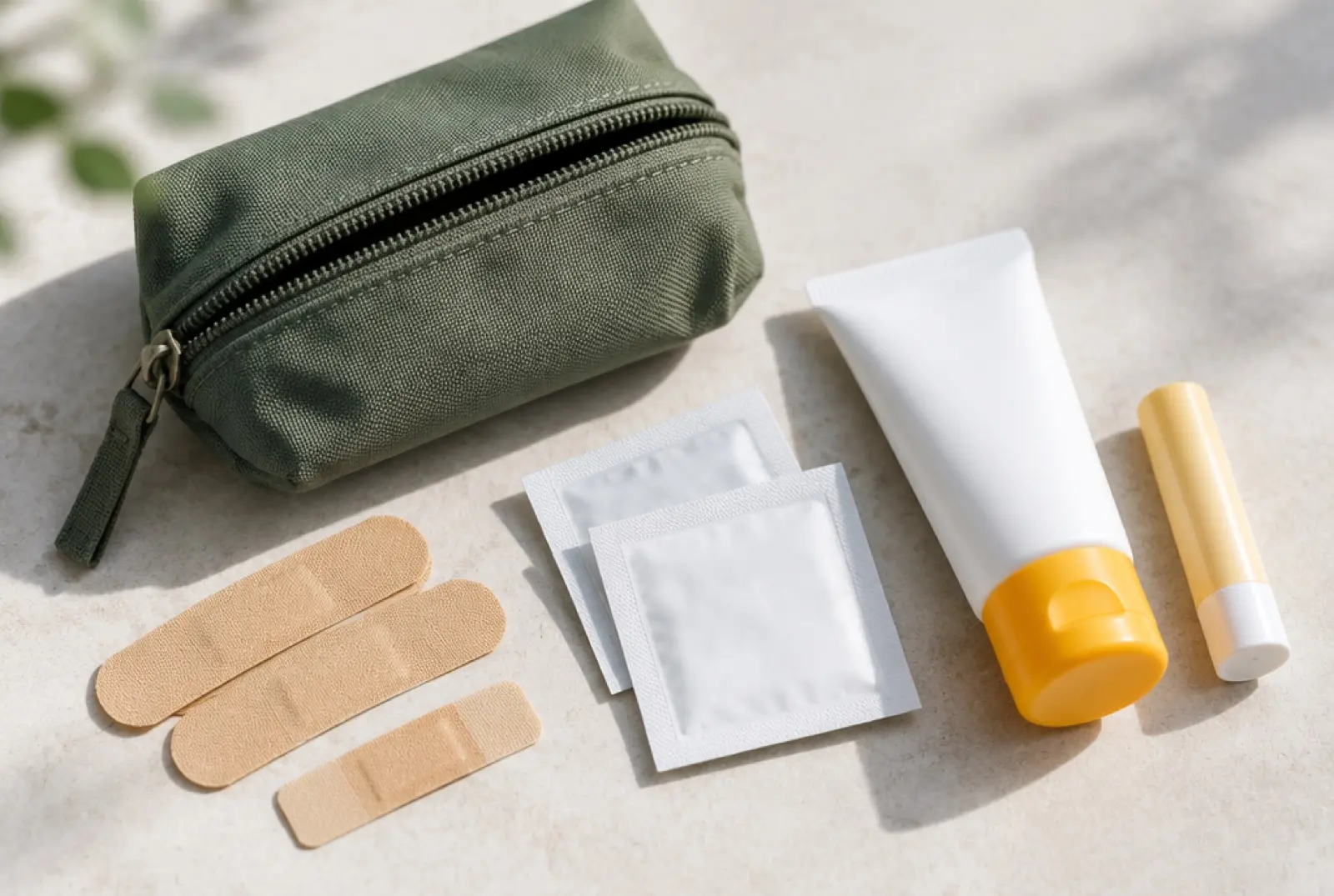
Keep the first aid kit small: plasters, antiseptic wipes, a tick or splinter tool and any personal medicines your child takes. Add sunscreen suited to the climate, lip balm and insect repellent where relevant. Hand sanitiser is useful for places without soap. Ask your doctor or travel clinic what to carry for your destination and your child’s needs, and check the rules for carrying medicines across borders.
4. Rain and heat variants
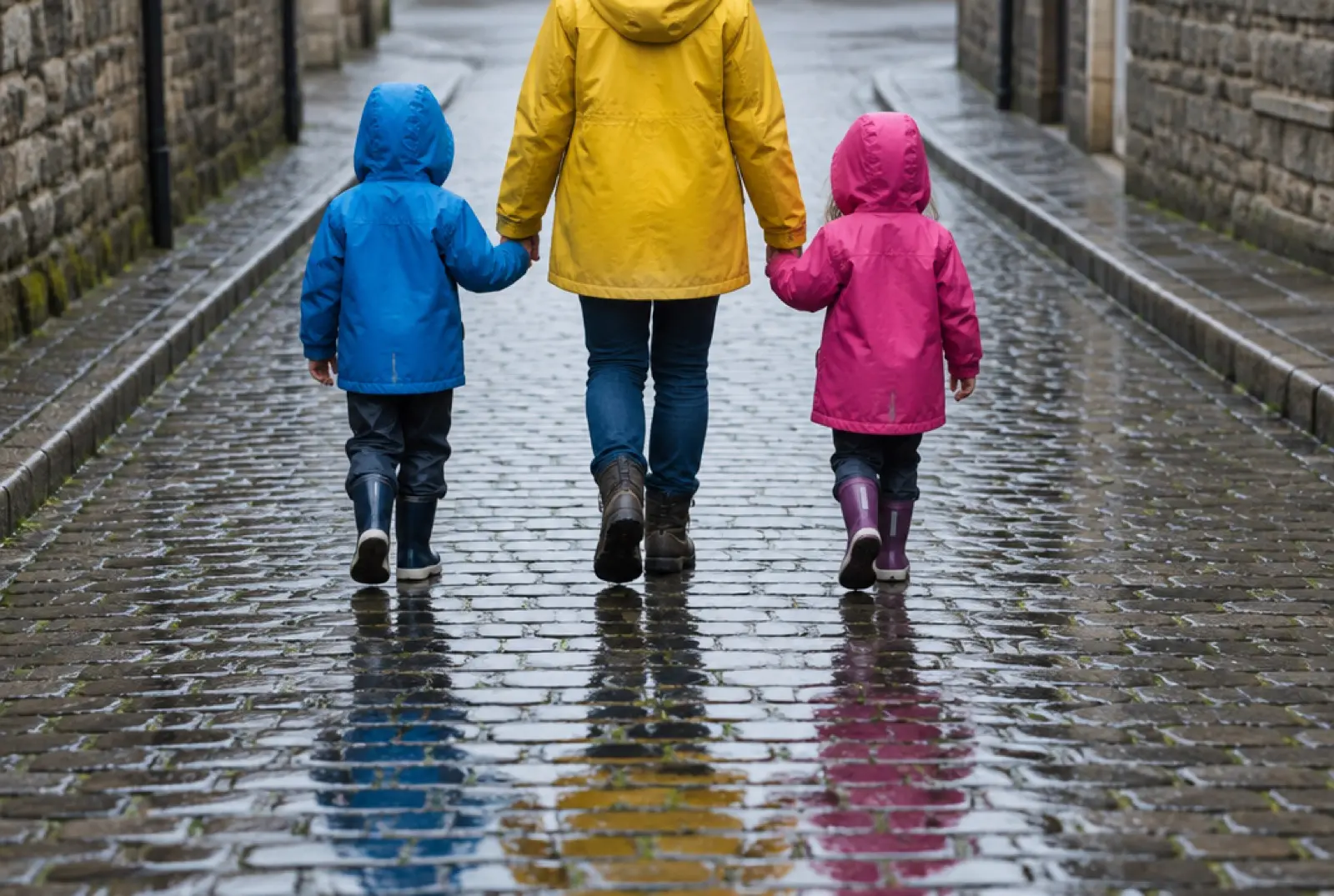
Weather decides two or three items. For rain, carry a packable waterproof per person, a plastic bag for wet clothes and a spare pair of dry socks, and plan an indoor fallback for the afternoon. For heat, swap the spare layer for a second water bottle or a cooling cloth, add a hat and sun cream, and plan shade or indoor time at midday. Check the forecast the evening before, not at the door.
5. Small entertainment and rest anchors
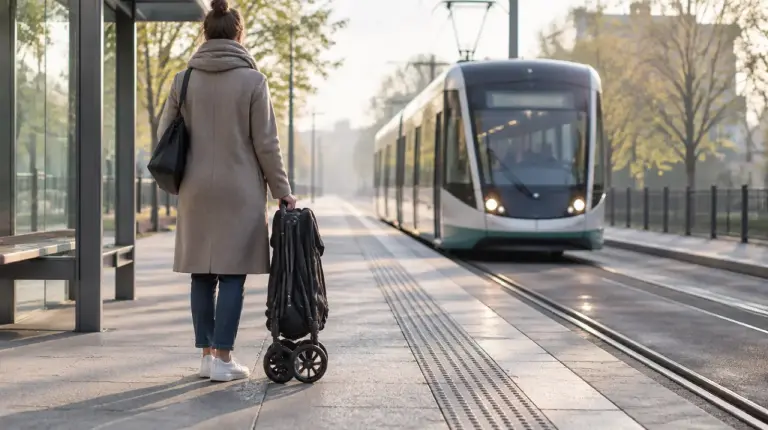
Plan for the wait: the queue, the restaurant, the tram. A small notebook with a pen, a pack of cards, a pocket-sized game and a book weigh little and cover about an hour of waiting. Keep one item hidden for the hour when a child is done, since a surprise works better than a bargain. For a rest anchor, choose a park bench, a library or a cafe and plan it into the day before you leave.
6. Papers, money and contact details
Carry a small card with the accommodation’s address and phone number, and put it in each child’s pocket. Keep a photo of the passport and key documents on your phone, with the originals locked at the accommodation unless you need them. Take a little cash in small notes for places that do not take cards, and one card kept separate. A phone battery pack belongs here too.
Checklist by category and weight
Use this family day bag checklist sightseeing table as a starting point. These figures are rough guides. Adjust them for age, route and climate.
| Category | Core items | Typical weight |
|---|---|---|
| Drinks and food | Bottles, 2 snacks per child, lunch container | 1.5 to 3 kg |
| Comfort and clothing | Spare layer, hat, wipes, small towel | 0.5 to 1 kg |
| Health | Small first aid kit, sunscreen, personal medicines | 0.3 to 0.6 kg |
| Weather variant | Waterproofs or extra water and shade cloth | 0.3 to 0.8 kg |
| Entertainment | Cards, notebook, book, headphones | 0.3 to 0.5 kg |
| Papers and power | Address card, cash, battery pack | 0.3 to 0.4 kg |
Age and stamina notes
Children aged 5 to 7 usually manage a small bag with a water bottle, a hat and one toy, and no more than about 500 grams. Children aged 8 to 10 can carry a light bag with a layer and snacks. By 11 or 12 they can carry their own spare layer and bottle. A good rule is that the adult bag carries everything heavy, and a child who asks to be carried gets the bag in return.
Tired-afternoon fallback
When energy falls, the bag becomes the plan. Stop at a bench, bring out the snack and a drink, give everyone ten minutes of nothing, then choose: a playground, a cafe, a short indoor stop or a return to base. Drop one planned stop without discussion. For examples of how this works in a real itinerary, see our Amsterdam with kids plan, which pairs one anchor per day with a free-play reset.
Common mistakes
- Carrying everything for every possible event, which makes a bag too heavy for the afternoon.
- Forgetting a spare layer because the morning was warm.
- Packing snacks no child will eat, or buying new ones the day of a long outing.
- Putting valuables in an outer pocket that can be reached by someone behind you.
- Skipping the evening reload, so the bag starts the next day half empty.
Your family day bag checklist sightseeing plan also depends on where you sleep: a base near a shop, a park or a station lets you carry less. Our guide to where to stay with kids explains how to choose one.
What to verify before you go
- Bag size and security rules at museums and attractions, which often limit large bags or ban some items. Check each venue’s official website.
- Rules on food, drinks and medicines at attractions, and across borders.
- Health advice for your destination, including sun, insects and water, from a doctor or the CDC travel health pages.
- Typical weather for your dates, as of the week before you travel.
FAQ about a family day bag
How heavy should a family day bag be?
A common guideline is no more than about 10 percent of the carrier’s body weight, and less for a long walking day. For an adult, that is often 5 to 8 kg with water. Weigh it at home once, then remove the least useful item.
What should a child carry in their own bag?
A water bottle, a hat, a small toy or book and a snack. Younger children carry about 500 grams, and older ones a spare layer too. A child’s bag works best as a small sense of ownership, not as a load.
Do I need a first aid kit for a day trip?
A small one is worth carrying: plasters, wipes, any personal medicines and a few basics for blisters and scrapes. Ask a doctor or travel clinic if your child has a medical need. For anything serious, use local emergency services.
Is a backpack or a cross-body bag better for sightseeing?
A backpack with padded straps spreads weight better for long days. A zipped cross-body bag can suit a short outing or a busy crowd. Whichever you choose, keep the valuables at the front and zipped.