Dynamic currency conversion abroad is the offer to pay in your home currency instead of the local one. You should usually decline. The terminal or ATM sets its own rate, and it tends to be worse than the one your card issuer applies. Below is a decision table, a worked example with ranges, and the wording to use at the counter.
Decision table: which currency to choose
| Situation | Best choice | Why |
|---|---|---|
| Shop or restaurant card terminal | Local currency | Your card issuer’s rate is typically closer to the market |
| ATM withdrawal | Local currency | Home-currency option often adds a wide margin |
| Hotel check-out bill | Local currency | Large amounts make a few percent expensive |
| Card with a high foreign fee and a weak issuer rate | Compare both, rarely switch | The gap may be small, but the terminal rate is rarely better |
| You cannot tell what the screen says | Cancel and retry in local currency | Unclear choices default to the costlier one |
| Tiny purchase | Either, but local is still safer | The loss is small in absolute terms |
When each option wins
1. Local currency wins at almost every terminal
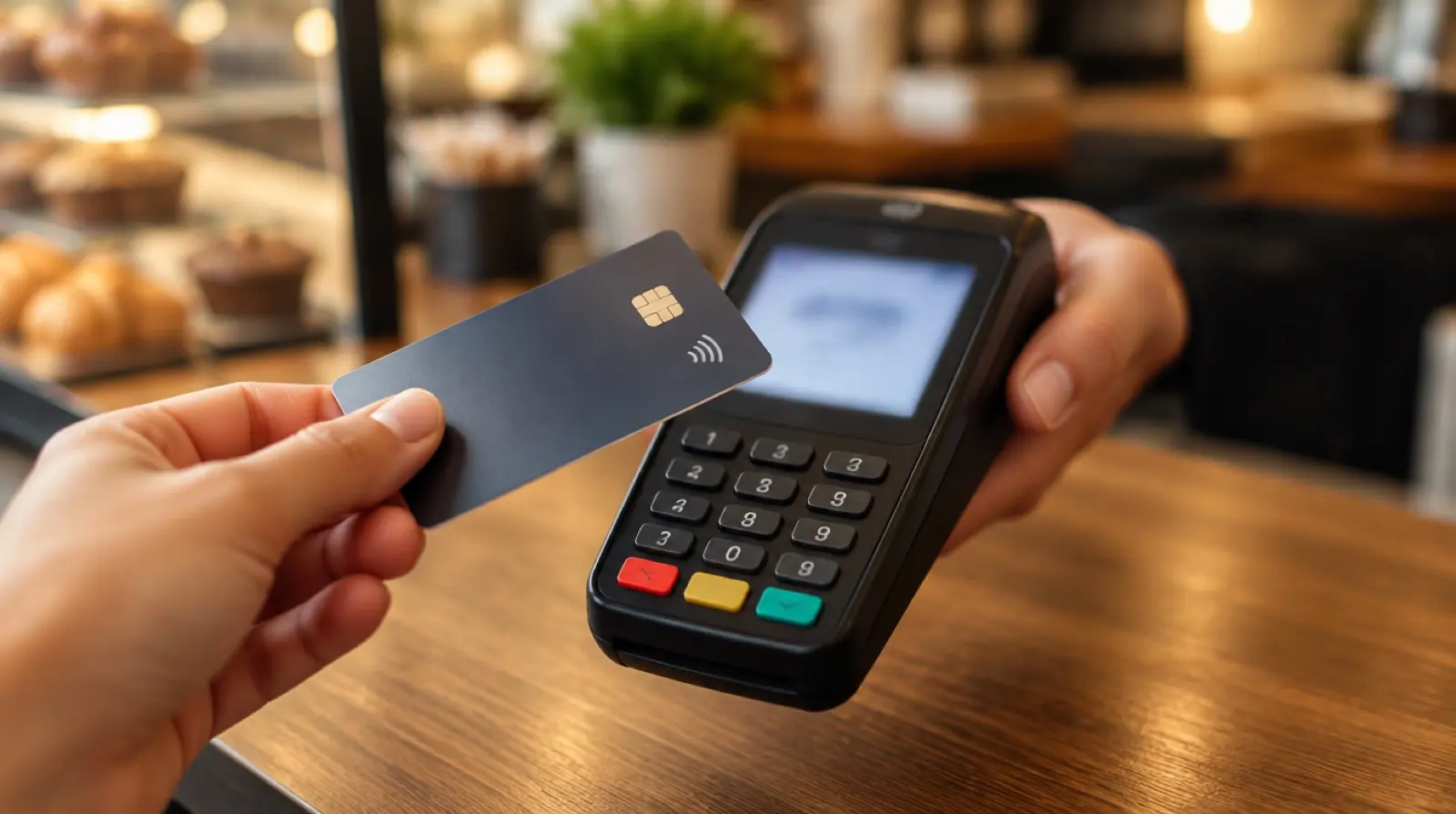
If a screen asks whether to pay in the local currency or your home one, pick the local one. Your card network and issuer then convert the amount at their own rate, which is typically close to the market rate plus any foreign fee you already know about. The terminal’s rate carries the merchant’s or processor’s margin on top, and it is rarely shown as a fee.
2. Local currency wins at the ATM too
The same logic applies when withdrawing cash. A screen that says your home currency is “guaranteed” is describing a rate that is guaranteed to include a margin. Choose the local currency, even if the amount looks unfamiliar. You can always do the mental maths afterwards.
3. Local currency wins on large bills
A hotel bill or a rental deposit is where this matters most, because the margin scales with the amount. A few percent on a small coffee is pocket change. A few percent on a week of accommodation is a dinner or two. Ask to pay in local currency before the card is inserted, since changing it afterwards may mean a refund and a new charge.

4. Home currency can win if your own rate is poor
This is the rare case for dynamic currency conversion abroad. Some cards charge a high foreign transaction fee, and a few terminals offer a rate that is not much worse than the market. Even then, you cannot see the issuer’s rate at the counter, so you are guessing. I would only accept the offer if I had already checked my card’s fee and seen the terminal’s rate in writing.
5. Home currency can win when you need certainty
Rarely, a traveller on a tight budget may want to see the exact home-currency charge, for example to claim an expense or stay under a limit. If that matters more than the cost, accept it knowingly. Treat it as paying for certainty, set aside the extra few percent, and do not make it a habit across the whole trip.
6. Neither wins if the screen is unclear
If the choice is hidden in small print, or the staff press the button for you, stop. Ask for the receipt to be cancelled and run the card again in local currency. A common pattern is that the first option shown is the one that costs you more. Take a moment to read the screen before you tap, and check the total as well as the currency symbol.
Costs and trade-offs of dynamic currency conversion abroad
These are illustrative ranges. Your real figures depend on the terminal, the country and your card issuer.
- Paying in local currency: your issuer’s rate, plus a foreign fee of about 0% to 3% depending on the card.
- Accepting conversion at the terminal: a margin of roughly 3% to 12% over the market rate, sometimes more, on top of any card fee.
Worked example: a hotel bill of about $400 equivalent. Declining the offer might cost $0 to $12 in card fees. Accepting it might add roughly $12 to $50. Over a trip with several bills, restaurant meals and a rental car deposit, the difference can reach $50 to $150.
- Pay more for: a card with no foreign transaction fee, if you travel often.
- Save on: every conversion offered at the counter.
For how this fits into the full budget, see how to compare total trip cost.
Mistakes to avoid with dynamic currency conversion abroad
- Letting the cashier choose the currency for you.
- Saying yes because the home-currency price “looks easier”.
- Skipping the receipt check. The currency and amount are printed on it.
- Assuming the problem only exists in tourist areas. Hotels, car rental desks and ATMs everywhere can offer it.
- Forgetting that the rule also applies in places with strong card use, such as the ones covered in the Ireland trip cost guide.
Wording that works at the terminal
Say, “Local currency, please,” before the card goes in. If the machine already asked, say, “Please cancel and charge it in local currency.” You do not need to explain. Staff handle this request routinely, and on receipts the local currency line is normally the one to keep.
What to verify before you go
- Your card issuer’s current foreign transaction fee and exchange-rate policy, on its own website or app.
- Whether your card can block or alert on such conversions in its settings.
- Your national consumer or financial regulator’s guidance on card use abroad, as rules and disclosure requirements differ by country and change over time.
FAQ about dynamic currency conversion
Is dynamic currency conversion a scam?
It is usually legal and disclosed on the screen, so not a scam in the strict sense. The issue is that the rate is typically worse than your issuer’s, and the wording makes it sound like a benefit. Decline it as a habit.
Can I reverse it after I have paid?
Sometimes. Ask the merchant straight away to cancel the transaction and rerun it in local currency. Once it has settled, a refund may take days and may not restore the rate. Prevention is easier than repair.
Does it apply when I pay with a phone wallet?
It can, because the terminal sets the offer, not the device. Watch the screen or ask the cashier which currency is being charged before you tap. Check the receipt or your banking app after the payment.
Is paying in my home currency ever required?
Usually not. Some online or booking sites price in a fixed currency, which is a different case. At physical terminals the choice is normally yours, so confirm it with staff and check local rules if you are unsure.