Can you drink tap water abroad? Sometimes yes and sometimes no, and the answer changes by country, region and even building. The safe habit is to check official health advice for your destination, ask someone local, and use sealed, boiled or properly filtered water whenever you are unsure. Water also reaches you through ice, salad, juice and brushing your teeth, so decide for all of them at once.
Tap water decision table
| Situation | Best choice | Why |
|---|---|---|
| Official advice says tap water is safe | Drink from the tap | Cheapest and produces no plastic waste |
| Advice is unclear or mixed | Sealed bottled water | Easy and reliable, with a small cost |
| Advice says avoid tap water | Bottled, boiled or filtered | Removes the doubt for drinking and teeth |
| Staying a week or more | Large refill bottles or a filter | Lower cost and less waste over time |
| Camping or remote travel | Boil, filter or treat the water | Source quality is unknown |
| Hotel offers filtered water | Ask staff how it is treated | The answer shows whether it is dependable |
When each option wins
1. Tap water: when the source is known to be treated
In many countries, tap water is treated and monitored, and locals drink it without a thought. Where official health advice agrees, you can too. Even then, a few places have safe water at the treatment plant but old pipes at the building, so notice how locals behave. If everyone around you buys bottles or fills from a dispenser, follow them rather than the tap.
2. Sealed bottled water: the default when you are unsure
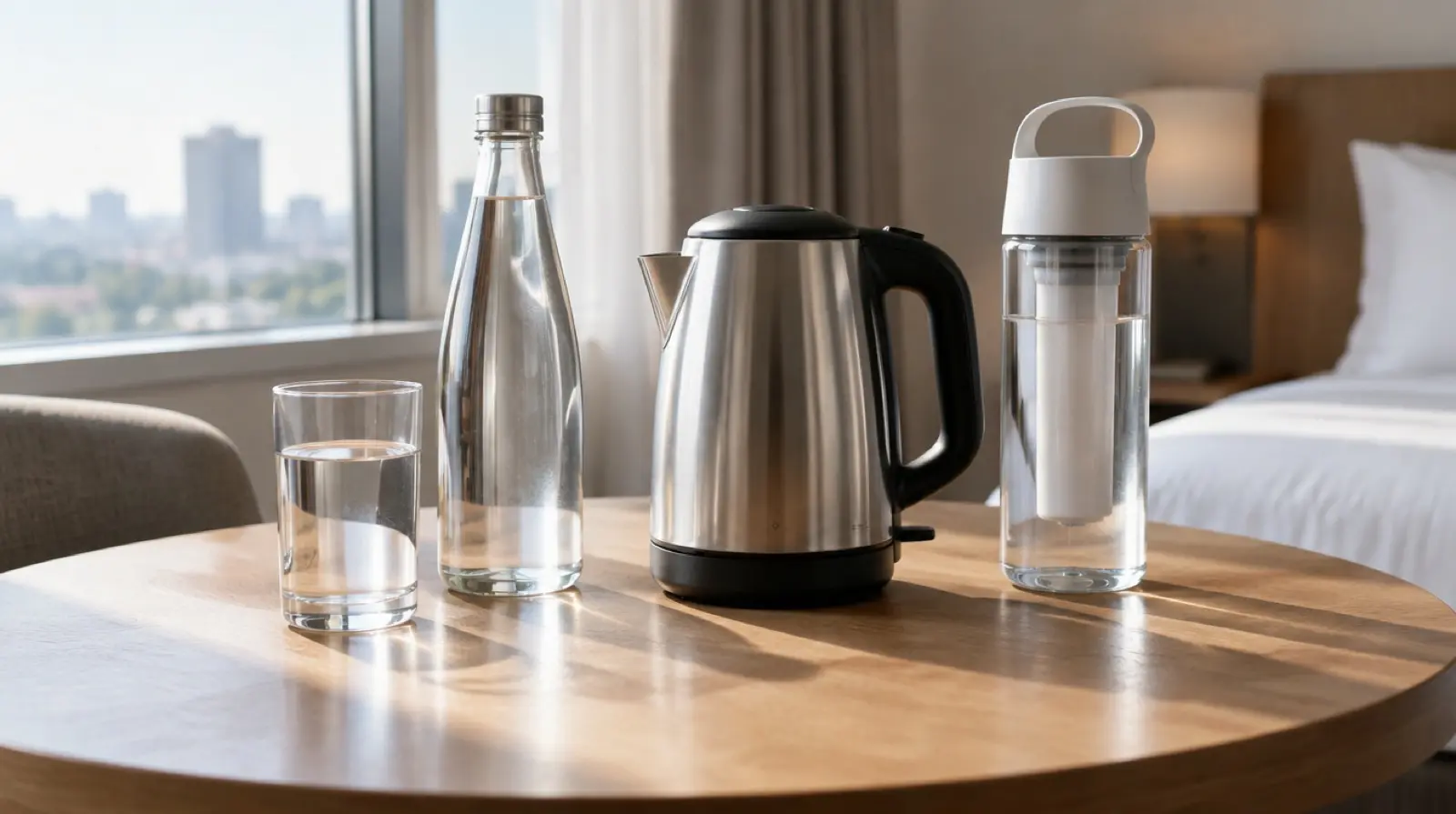
Sealed bottles are the simplest answer on arrival. Check that the cap seal is unbroken, as refilled bottles are a known problem in some places. As of 2026, the cost of bottled water is usually a small part of a daily budget, though airports, resorts and tourist districts charge much more than shops. Buy larger bottles from a shop or market and refill a small one.
3. Boiled water: the dependable fallback
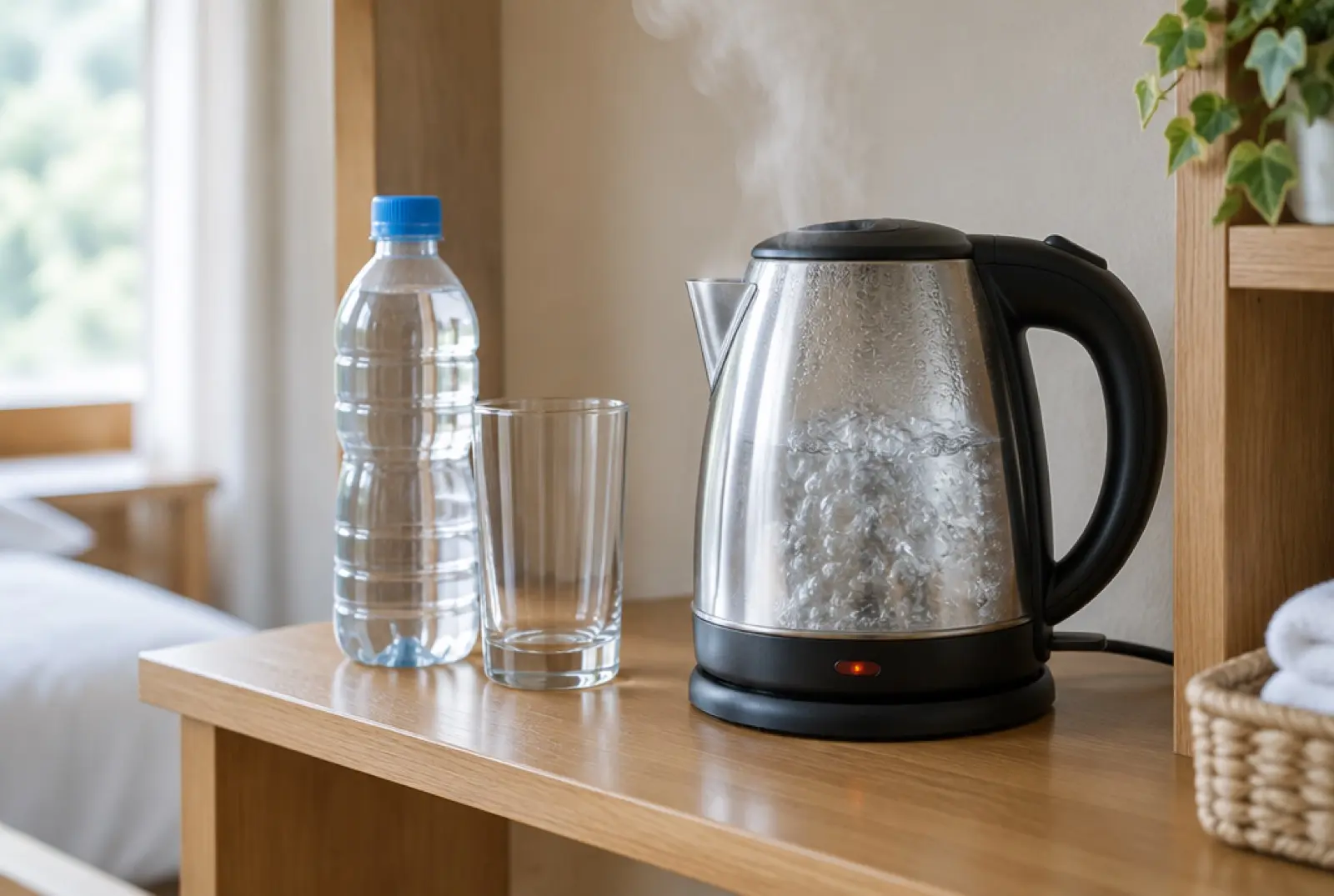
Bringing water to a full rolling boil is one of the standard ways to make it safer, and official health sites give the exact guidance for time and altitude. Many hotel rooms and guesthouses have a kettle, and in some regions, tea and coffee are made with boiled water, which makes them lower-risk drinks. Let boiled water cool on its own and keep it in a clean, lidded container.
4. Filters and treatment: for longer or remote trips
A filter bottle, a pump or treatment tablets help on long stays, treks and places where bottled water is expensive or wasteful. They vary a lot in what they remove, so read what a product claims to cover and match it to the risk in your destination, for example bacteria, parasites or viruses. If you are unsure, ask a travel clinic which kind suits your route.
5. Ice, salad and juice: the hidden water
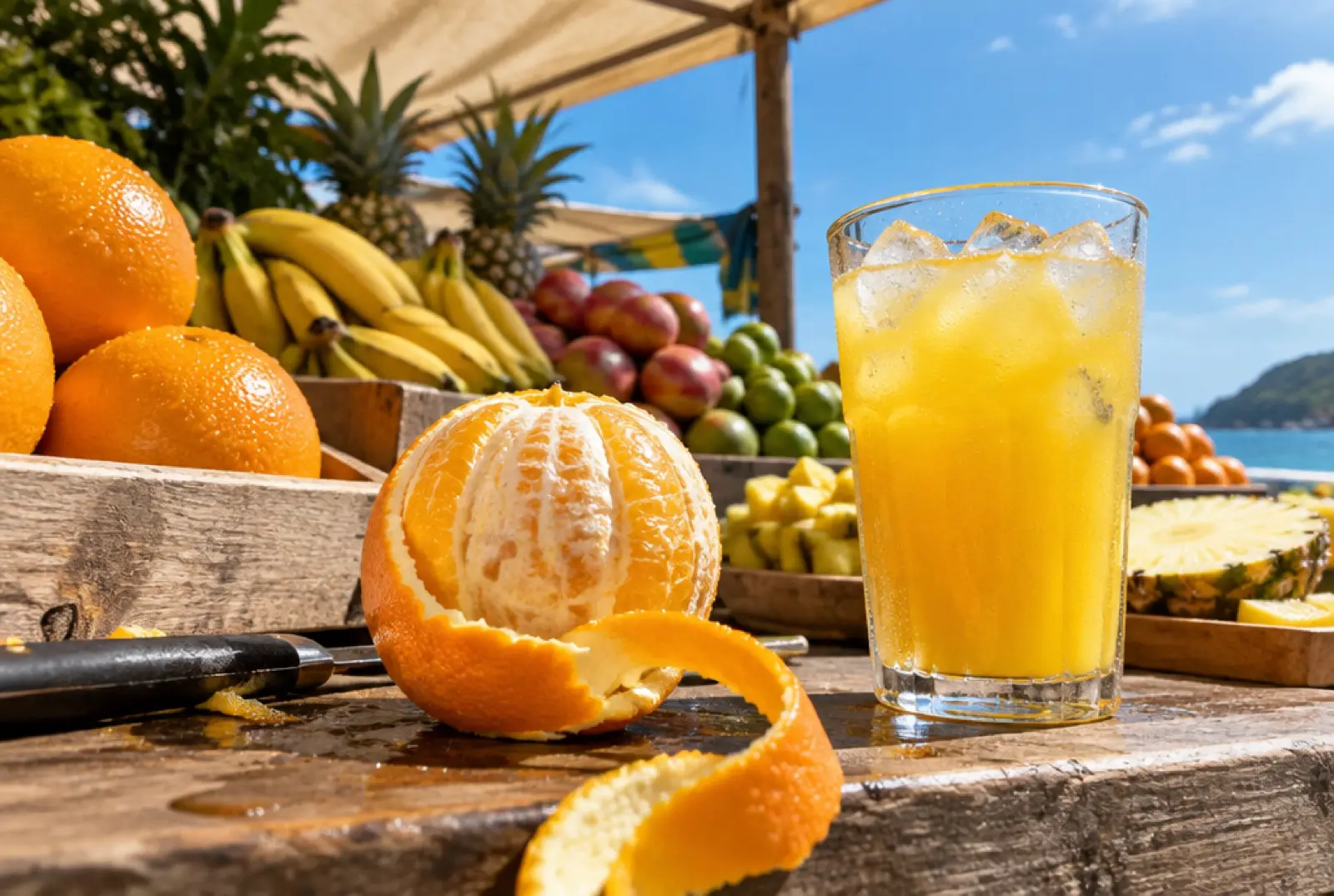
Water travels in your food. Ice cubes, rinsed lettuce, washed herbs, fruit juice, smoothies and cut fruit rinsed in tap water can all carry what the tap carries. In an area where you avoid tap water, ask for drinks without ice, favour cooked vegetables and peel fruit yourself. At busy places that turn over stock quickly, the risk is generally lower, as covered in how to eat at a local market when travelling.
6. Brushing your teeth and washing up
Many travellers drink bottled water but brush their teeth with the tap and then swallow a little. If you avoid tap water for drinking, use the same water for brushing, rinsing your toothbrush and washing anything that goes in your mouth. Keep your mouth closed in the shower, and dry plates and cups before using them if they were rinsed in tap water.
Costs and trade-offs of safe water
Safe water costs little in money but more in waste and convenience. Typical ranges, as of 2026:
- Bottled water: a few cents to a couple of dollars per bottle, depending on size and where you buy it.
- Refill station or large jug: often cheaper per litre, and better for the environment.
- Filter bottle or tablets: an upfront cost of roughly 10 to 50 USD, then a small ongoing cost.
- Boiling: only the cost of a kettle and time, if your lodging provides one.
Prices vary widely by country and by vendor, so check locally.
Mistakes to avoid when you drink tap water abroad
- Trusting a bottle with a broken seal: buy from busy shops and check the cap.
- Forgetting ice: a cold drink with ice undoes careful bottled-water habits.
- Assuming a hotel tap is safe because it is in a hotel: ask, and look for signs.
- Using one rule for the whole country: water quality can differ between a capital, a village and an island.
- Skipping hydration to avoid risk: in hot places, dehydration is a real problem, so always carry safe water.
What to verify before you go
The question of whether you can drink tap water abroad has no single answer. Look up your destination on the official CDC travel health pages or your own government’s advice, which usually mention food and water precautions. Ask a doctor or travel clinic about vaccines and any health condition that makes you more vulnerable to stomach illness. On arrival, ask your host or hotel which water is safe and note the answer, since conditions can change after floods or repairs.
FAQ: can you drink tap water abroad?
Is it safe to brush my teeth with tap water abroad?
Where drinking tap water is not advised, use bottled or boiled water for brushing too. Small amounts get swallowed, and rinsing the brush in tap water can carry the same risk. Where official advice says tap water is safe, the tap is fine.
Is ice in drinks safe abroad?
It depends on what the ice is made from. Where you avoid tap water, ask for no ice or use ice you know comes from treated water. Commercial ice is often made differently, but you cannot always tell, so choose cautiously.
Do I need to boil bottled water?
Not if the seal is intact. Sealed bottled water is intended to be ready to drink. If a bottle looks refilled or the seal is broken, do not drink it. Choose another from a busy shop with a quick turnover.
How do I know if tap water is safe where I am going?
Read the official travel health page for the country, ask your host or hotel, and watch what locals do. Rules can differ inside one country. If you cannot confirm, treat the water as unsafe and use bottled, boiled or filtered water.