Why visit Lauterbrunnen
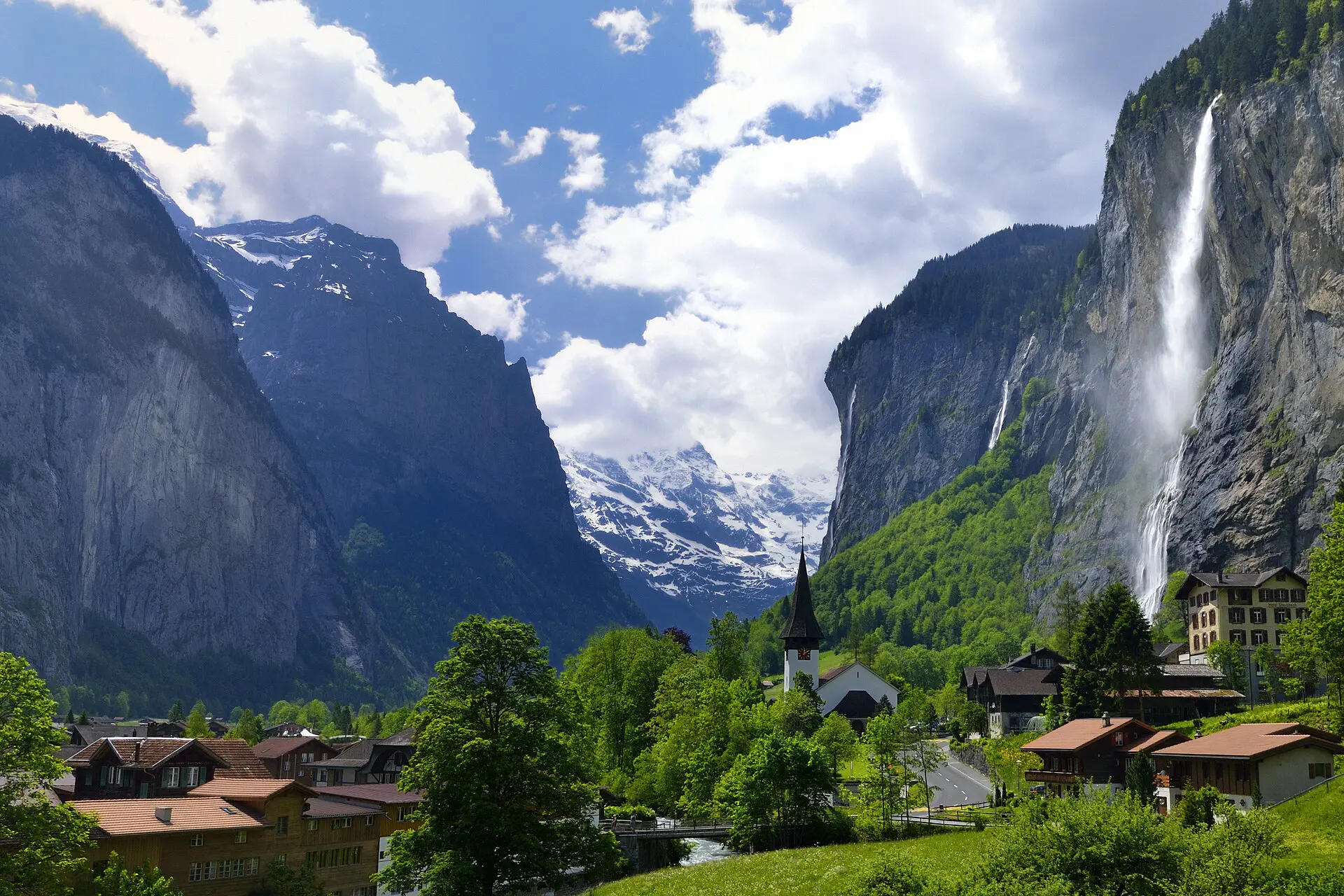
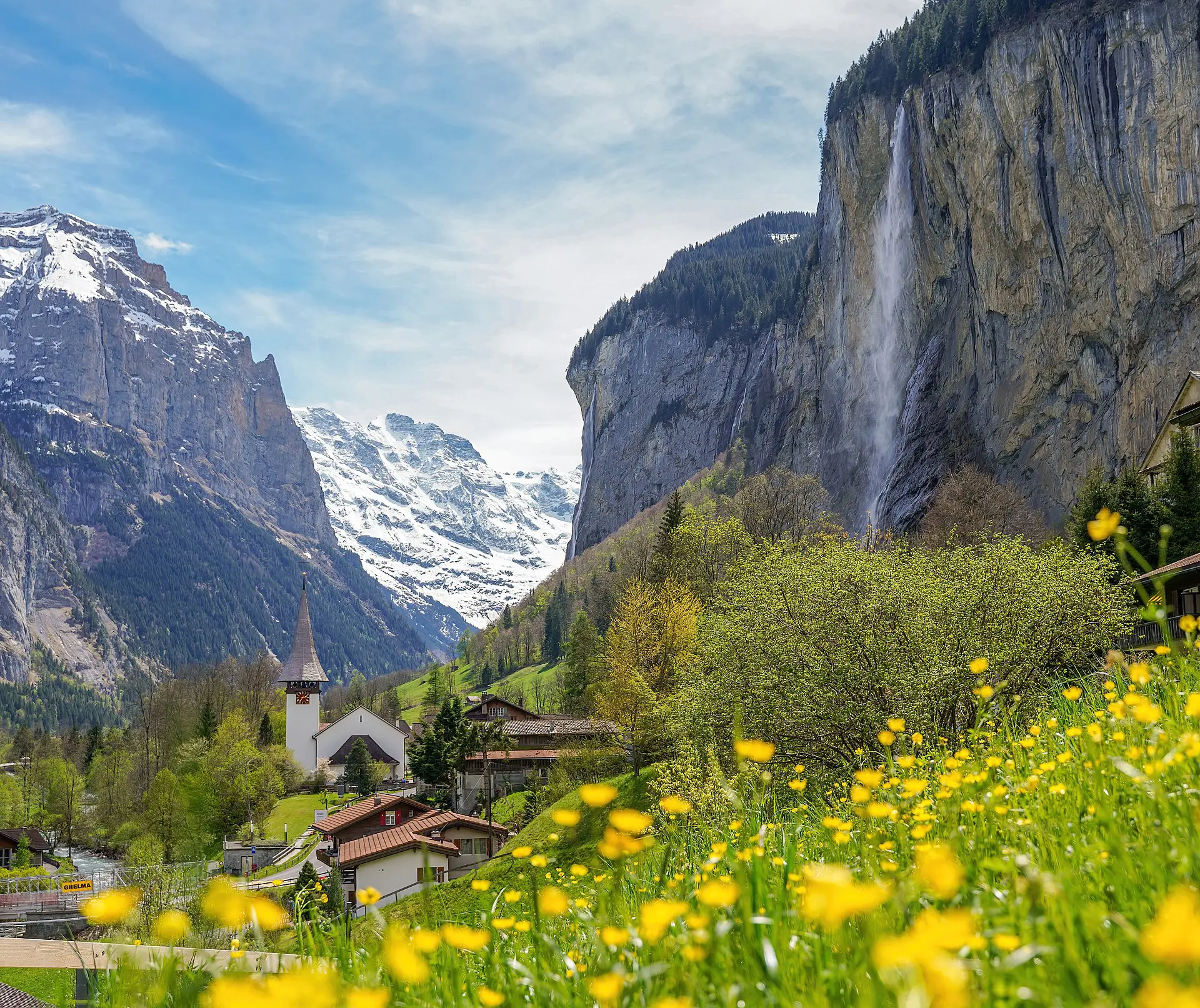
If you are planning things to do in Lauterbrunnen, start with the valley itself. Lauterbrunnen is a village in the Bernese Oberland with about 2,290 residents in 2018, set in a dramatic sheer-sided U-shaped valley with scores of waterfalls. Its name means “clear springs”, though it is often rendered as “loud springs” for the roar in spate.
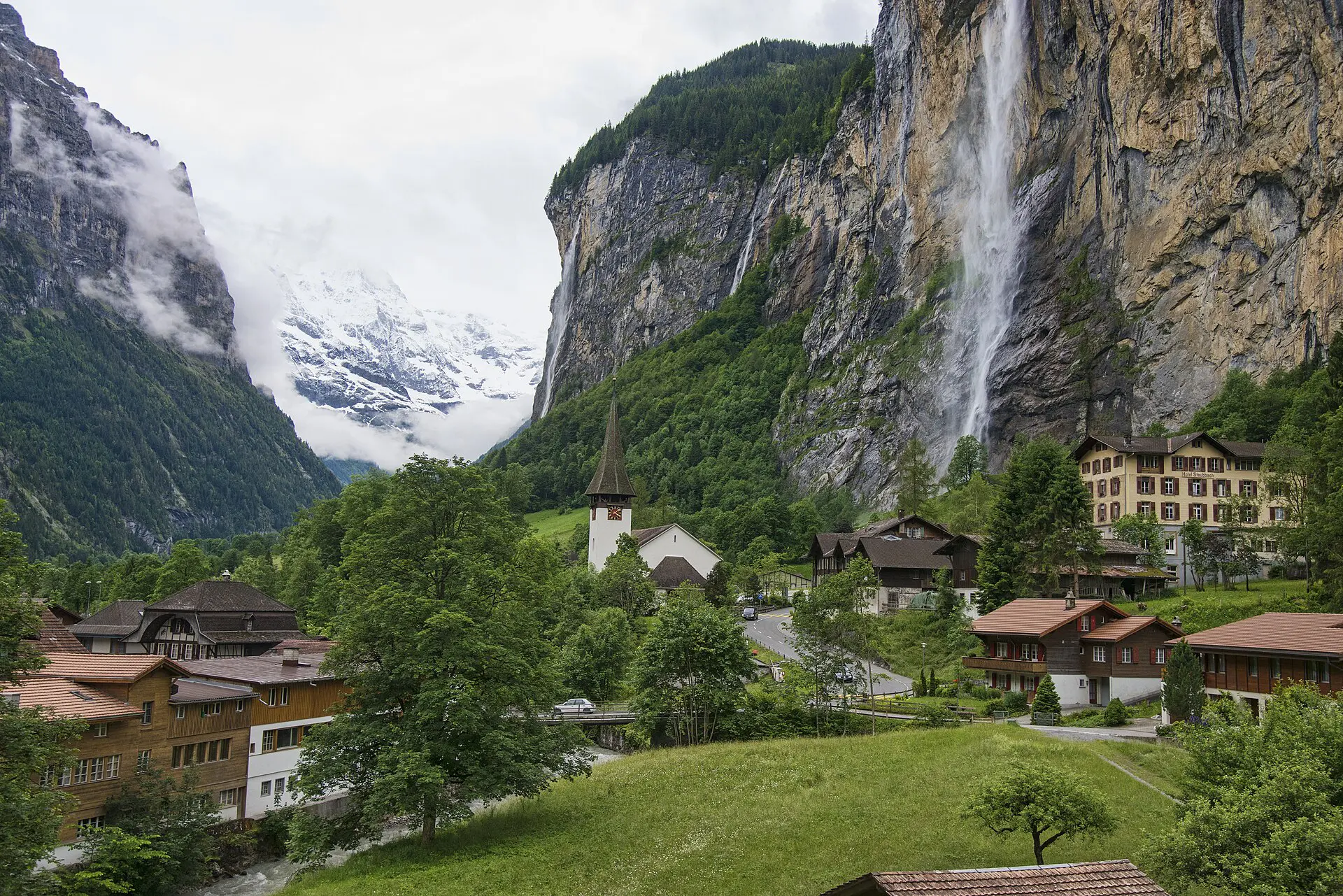
The valley sits at about 800 m. It was linked by road from Interlaken in 1834 and by rail in 1890, which helped the tourist trade. J. R. R. Tolkien hiked through at 19, in 1911, and later drew on the landscape for Rivendell.
As railways wound higher, ski tourism followed, and for many travellers Lauterbrunnen is the place to change trains. It remains a summer hiking base and a cheaper alternative to the higher resorts.
Top things to do in Lauterbrunnen
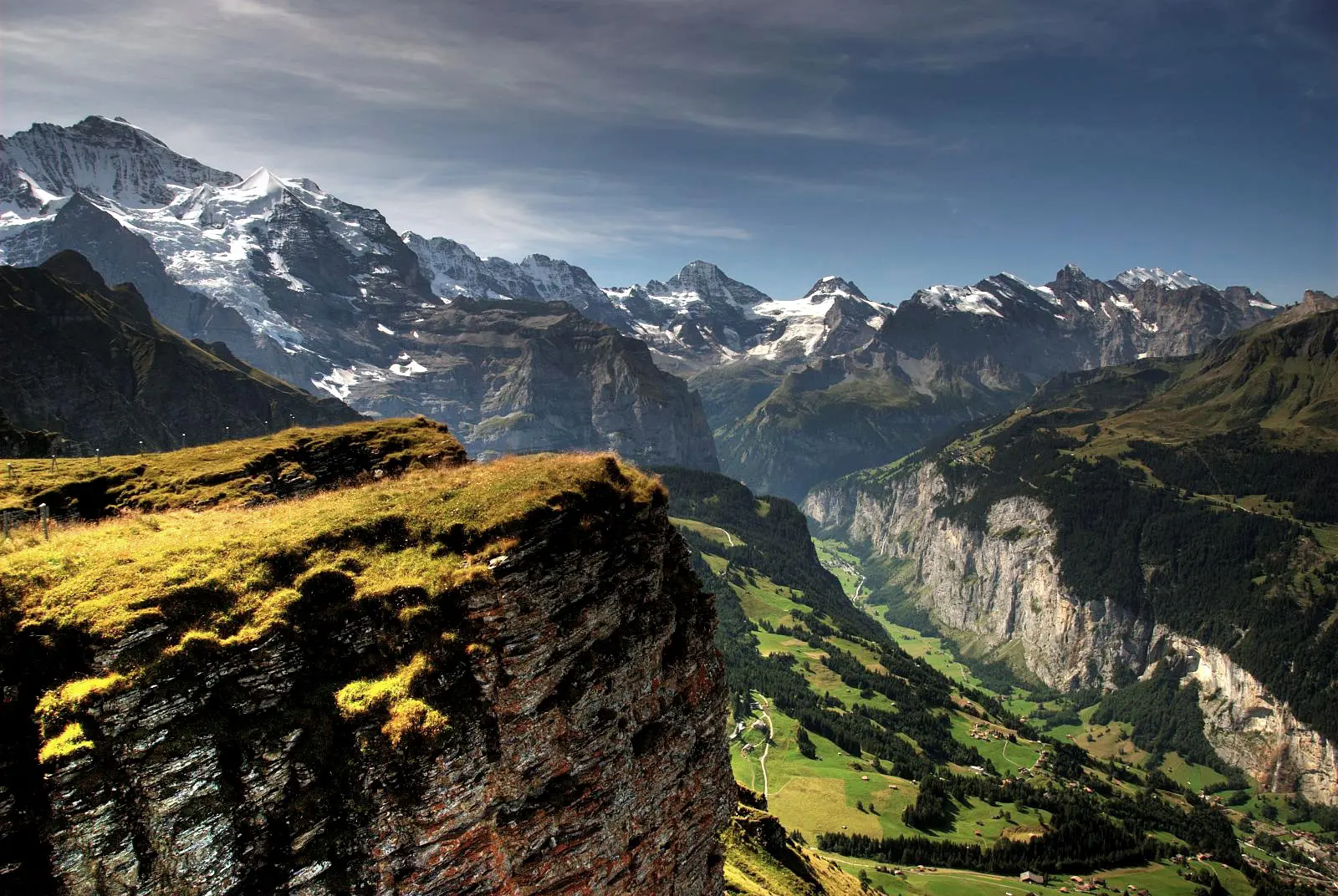
Staubbach Falls
The waterfall drops from the cliff right above the village and is visible from the main street. It is a short walk from the station. Allow half an hour, and walk up towards the base of the falls for a closer view, where the paths are open.
Trümmelbach Falls
These falls flow through the rock inside the mountain, with walkways and lifts that lead you through the gorge. Allow one to two hours. The site is usually open in the warmer months only, so check dates and take a light waterproof.
Valley floor walk
A flat path runs along the valley floor, past meadows, farms and waterfalls. Allow two to three hours for the stretch to Stechelberg and back. It suits most fitness levels, and the walk is good in wet or dry weather.
Mürren and the cable car
The car-free village of Mürren sits on a ledge high above the valley, reached by cable car and rail. Allow half a day. Check timetables and weather, since views vary, and bring warm layers.
Wengen and the Jungfrau region
Wengen is another car-free village, reached by rack railway, with trails and views of the Jungfrau massif. Allow half a day. Higher excursions are costly, so check ticket options and the weather first.
Hiking higher trails
Marked trails climb from the valley to alpine meadows and viewpoints, with routes for different abilities. Check conditions, carry water and layers, and consult local advice on snow and trail closures, especially early and late in the season.
BASE jumping spectators and viewpoints
The cliffs are known to experienced BASE jumpers, and you may see them from the valley. It is an advanced and dangerous sport, and it is not something to try without proper training. Watching from the ground is an easy stop.
Best time to visit Lauterbrunnen
Lauterbrunnen has an alpine climate. Summer suits hiking and waterfalls at full force, while winter brings snow and skiing in the higher villages. Spring and autumn can be quiet, but some lifts and trails close for maintenance.
| Season | Weather | Crowds and prices |
|---|---|---|
| Spring (April to May) | Cool, melting snow, strong waterfalls | Quiet; some lifts closed |
| Summer (June to September) | Mild to warm, best for hiking | Busiest; prices highest |
| Autumn (October to November) | Cool, crisp, short days | Quiet; limited services |
| Winter (December to March) | Cold, snow, skiing above | Busy in holiday weeks |
Check lift and trail opening dates before you travel, because they vary by year and conditions.
How to get to Lauterbrunnen and around
For inter-city routes, travel via Interlaken, which has trains every 30 minutes from Bern. Change at Interlaken Ost for the Berner Oberland-Bahn (BOB) train to Lauterbrunnen. Do not get off at Interlaken West, which is the town centre.
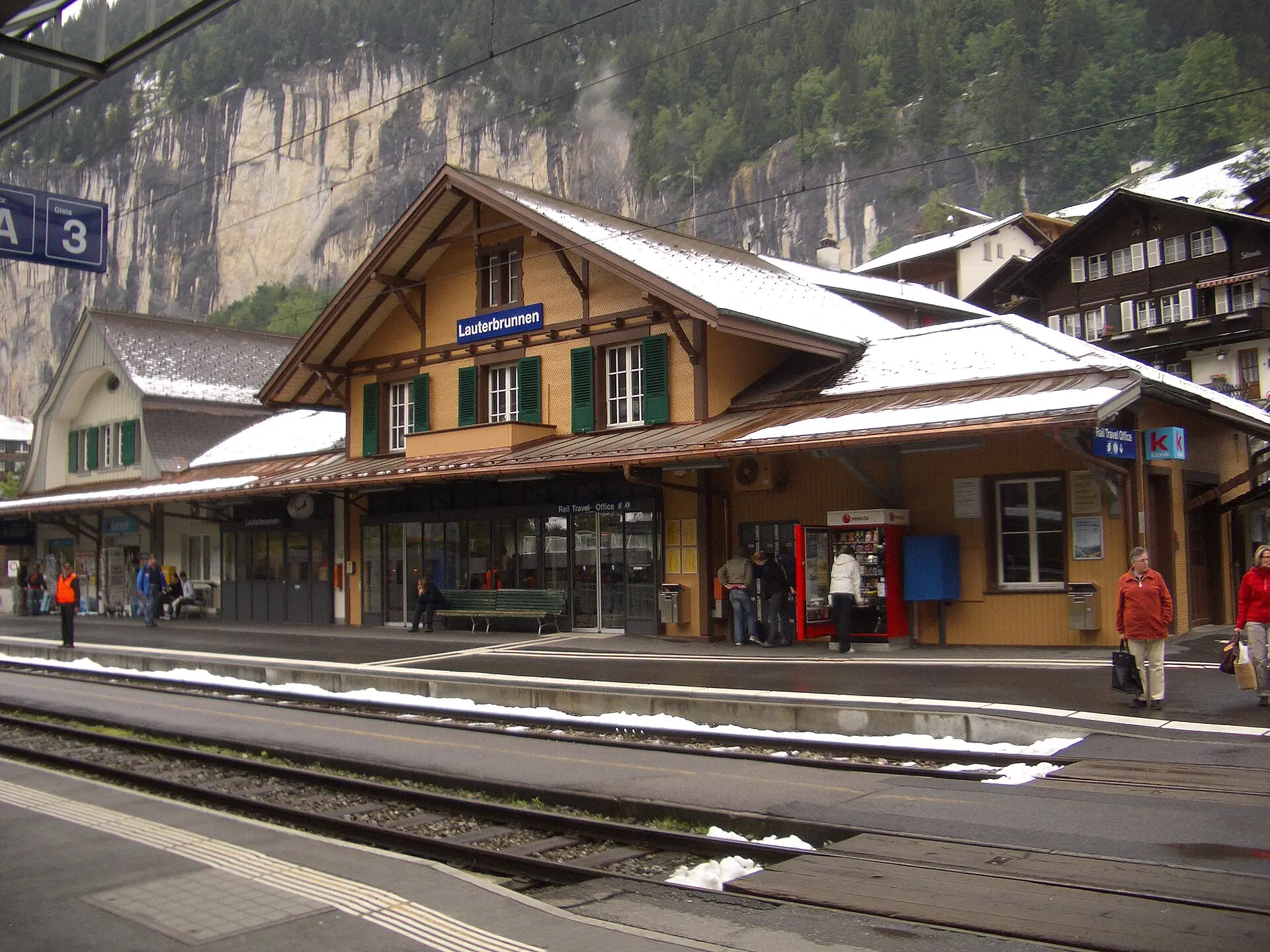
You need to be in the front portion of the BOB train, as the rear section goes to Grindelwald, which splits at Zweilütschinen. The ride to Lauterbrunnen takes about 20 minutes, with trains roughly every 30 minutes.
The Tourist Office is opposite the railway station, with opening hours that vary, so check before you go. In the valley, walking is easiest, with local buses and rail connections to higher villages. Zurich and Geneva are the main airports, each a few hours away by train.
Where to stay in Lauterbrunnen
Lauterbrunnen village is the most practical base, with easy rail access, waterfall views and a range of guesthouses and hotels. It suits walkers and budget travellers, and many places are close to the station.
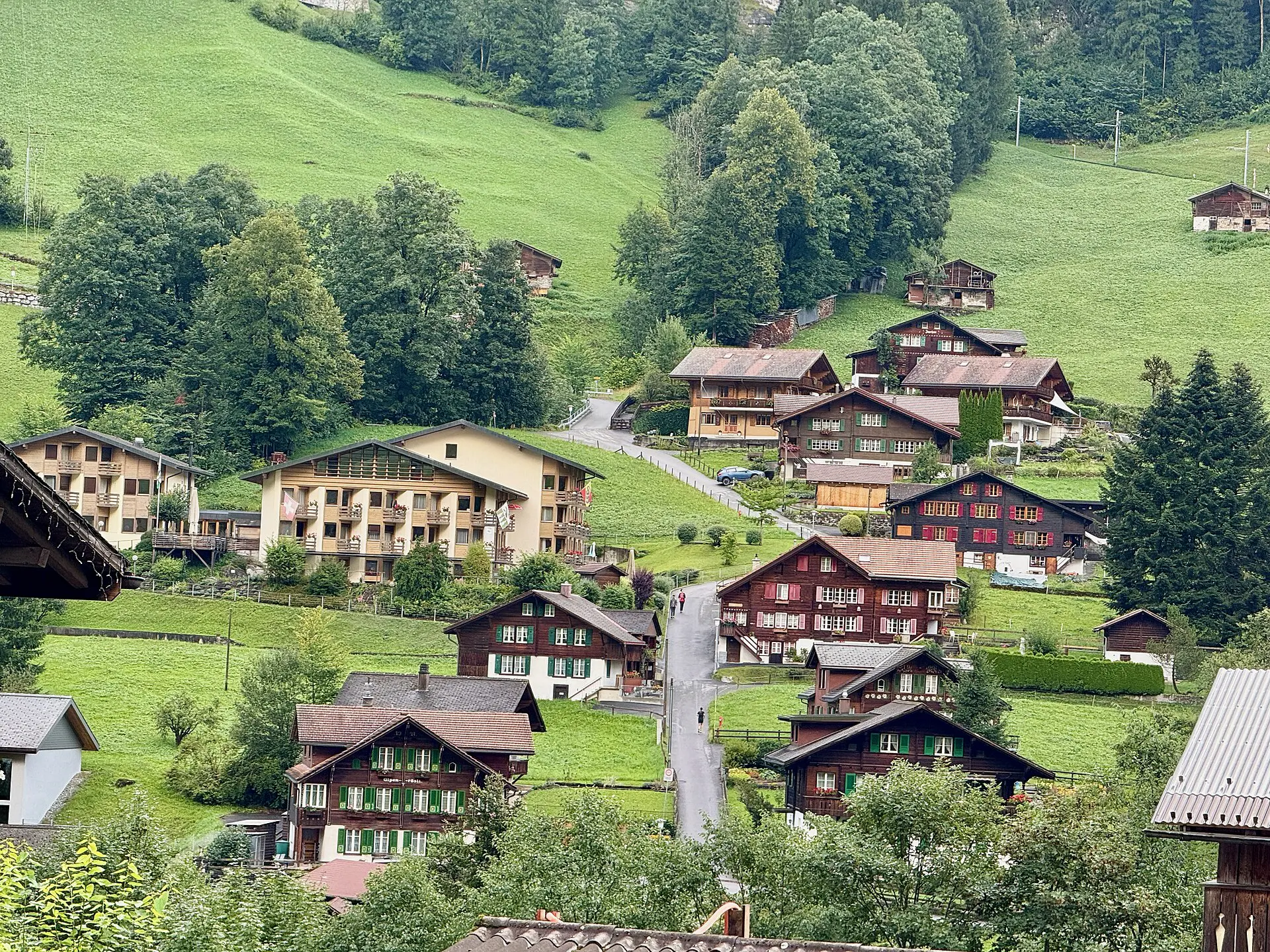
Camping and hostels offer lower-cost options, popular with backpackers and hikers. Book early in summer, since beds fill fast.
Higher villages such as Wengen and Mürren suit travellers wanting mountain views and a car-free setting, though you will pay more and need to manage luggage on the lifts. Interlaken, a short train ride away, offers more choice of hotels and restaurants. Book early for July, August and the ski season.
How many days do you need?
Two days is enough for the valley and a higher village, but walkers will want three or more.
- Day 1: Staubbach Falls, the Trümmelbach Falls and a valley floor walk.
- Day 2: Take the cable car or train to Mürren or Wengen, and hike if conditions allow.
- Day 3: A longer hike, or a mountain railway excursion towards the Jungfrau region.
Weather can hide the peaks, so keep your plans flexible and check forecasts each morning.
Day trips and nearby
Interlaken
Interlaken lies between Lake Thun and Lake Brienz and is the hub for the region. It is about 20 minutes by train, with shops, restaurants and boat trips.
Grindelwald
Grindelwald is a nearby village and resort at the foot of the Eiger, reached by train from Interlaken. It has trails, viewpoints and lifts, making a good full-day excursion.
Bern
The Swiss capital is reached via Interlaken, in roughly an hour and a half. Its UNESCO-listed old town makes a good rainy-day alternative to the mountains.
Lucerne and Zermatt
Lucerne is reachable by rail in a couple of hours, while Zermatt is a longer journey. Both suit onward travel more than a quick day trip from the valley.
FAQ
Q1How many days do you need in Lauterbrunnen?
Two days covers the valley waterfalls and one higher village such as Mürren or Wengen. Walkers and photographers may want three to five days, especially if they plan longer hikes or a mountain railway trip, with a spare day for weather.
Q2When is the best time to visit Lauterbrunnen?
June to September is best for hiking and open lifts, though it is the busiest and most expensive time. Spring has strong waterfalls but some closures. Winter suits skiing in the higher villages.
Q3How do you get to Lauterbrunnen?
Take the train to Interlaken Ost, then change to the BOB train for Lauterbrunnen, about 20 minutes. Trains from Bern to Interlaken run every 30 minutes. Zurich and Geneva are the nearest major airports.
Q4Is Lauterbrunnen expensive?
Switzerland is costly, and mountain railways add a lot, but Lauterbrunnen is cheaper than the higher resorts. Camping, hostels and supermarket meals keep costs down, while excursions to high viewpoints are the main extra expense.
Prices, schedules and entry rules change. Check current details with official sources before you travel. Read the Switzerland travel guide.