Why visit the Karkonosze
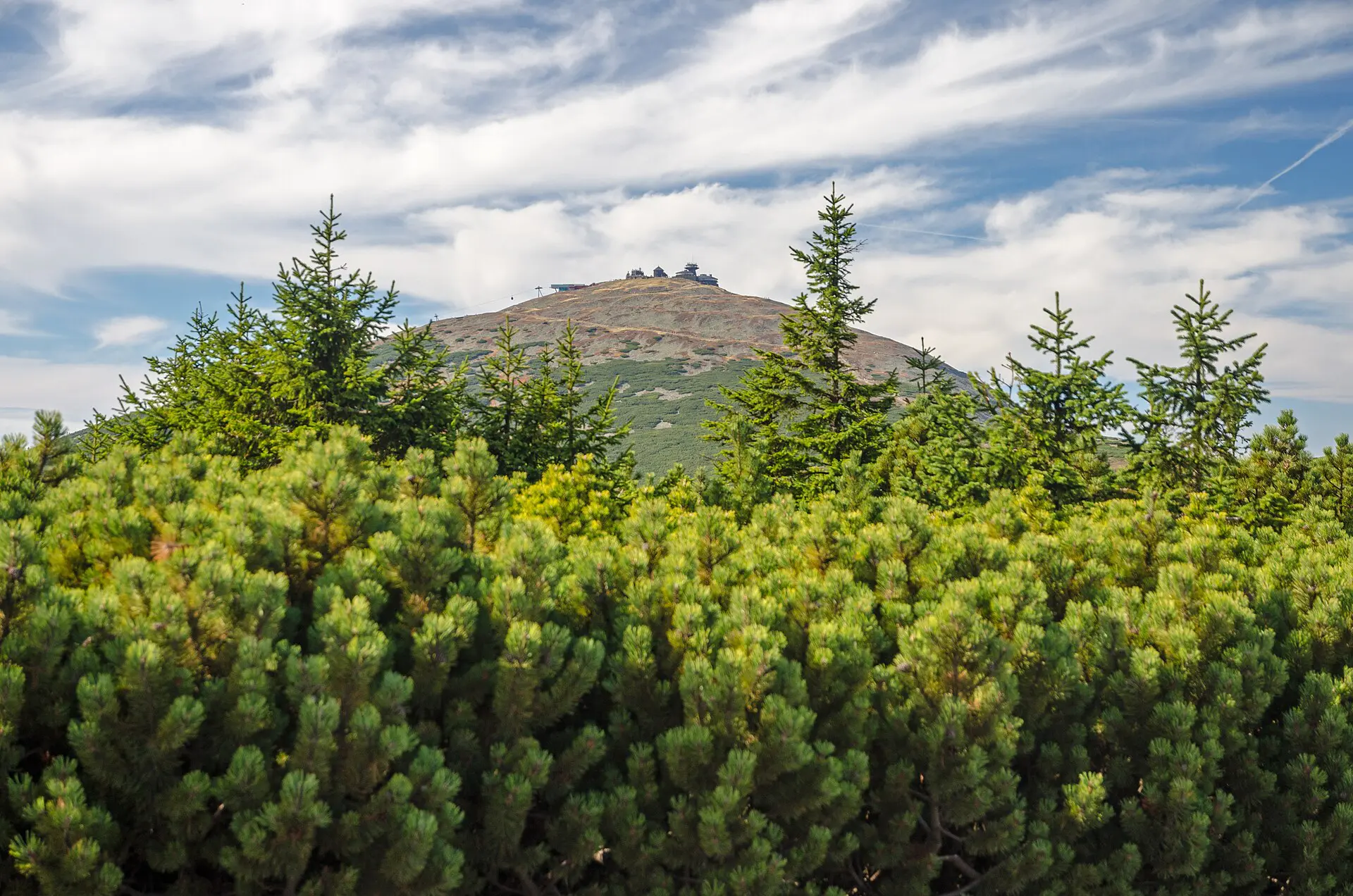
The top things to do in the Karkonosze all follow the same long ridge, which runs along the border between Poland and the Czech Republic and peaks at Śnieżka, 1,603 metres. Known in English as the Giant Mountains and in Czech as Krkonoše, this is the highest part of the Sudetes. Ice carved deep cirques on the Polish side, leaving lakes and cliffs below a broad upland of subalpine meadow and dwarf pine.
Karkonosze National Park protects about 5,950 hectares on the Polish side, with a matching park across the border. Trails are well marked, and a network of staffed huts means you rarely need to carry much. The mountains are modest in height but sit in the path of strong western winds. The park lists fog, ice, avalanches and falling trees among its hazards, and they should be taken seriously.
Top things to do in the Karkonosze
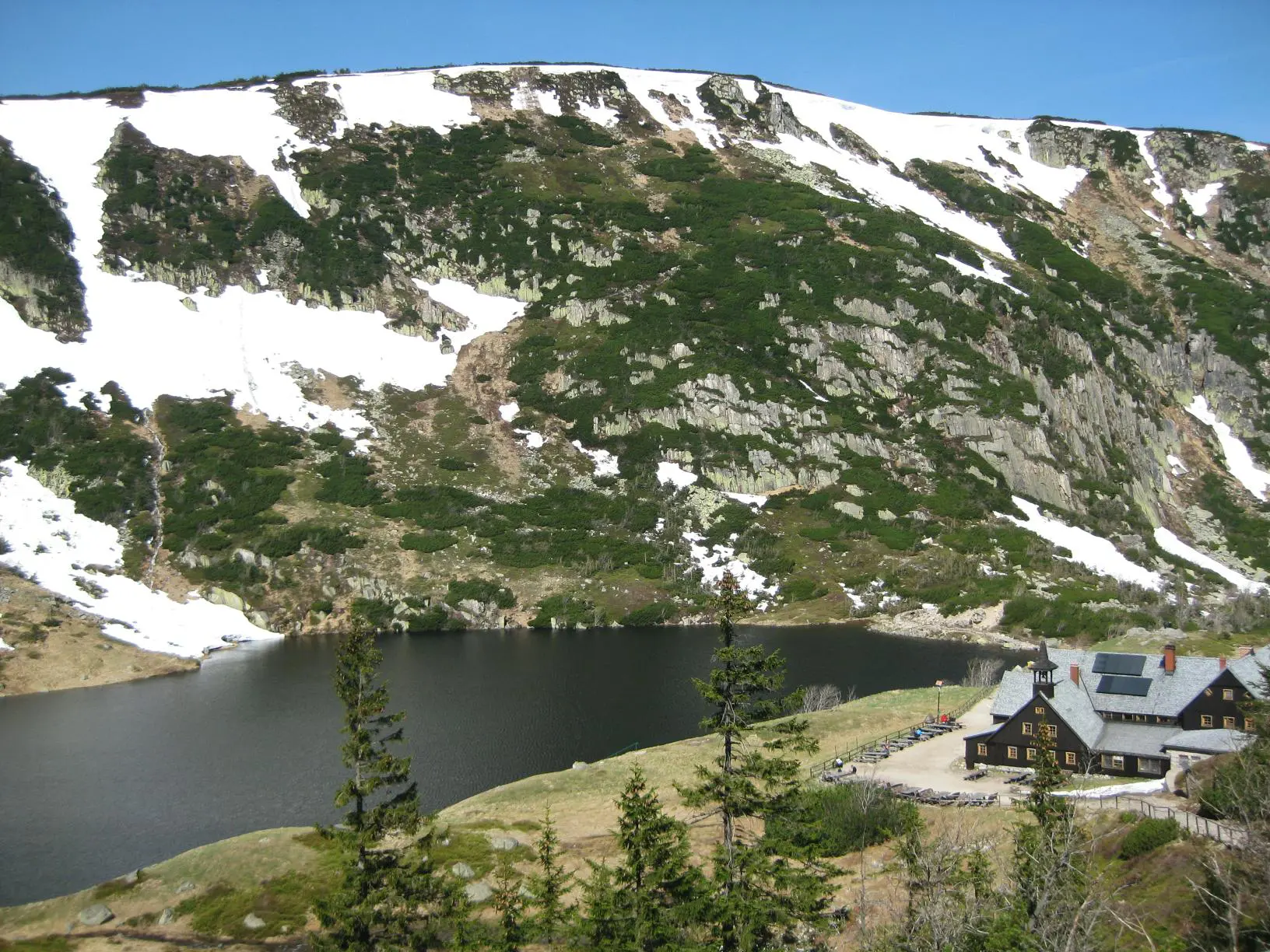
Climb Śnieżka
The highest peak in the range is the classic goal, reached from Karpacz in a long day or more easily with the Kopa chairlift. The summit is bare and windy, and has a 17th-century chapel and a closed observatory. On busy summer days, start early to avoid the crowds.
Small Pond and Great Pond
Two glacial lakes sit in cirques below the ridge. The Samotnia hut on Mały Staw is an obvious target and is reachable in a half day from Karpacz. The park also describes a loop of about 15 km around both cirques. Swimming is prohibited, and you should stay away from the edges above.
Walk the ridge
The ridge between Szrenica and Śnieżka is about 25 to 30 km and can be broken up with a night at a hut such as Odrodzenie. It follows the border on open ground marked with poles for poor visibility. Walk it only with a good forecast and an escape route planned.
Snow Cirques
Śnieżne Kotły are twin cliffs topped with a distinctive relay station building, and the ridge trail gives the view straight down. They are reached from Szklarska Poręba or Jagniątków in a long day. Do not go near the edge, particularly when it is corniced or icy, as the drop is steep.
Kamieńczyk Waterfall
The tallest waterfall in the Polish Sudetes, about 27 metres, drops into a short gorge above Szklarska Poręba and is an easy walk from town. It needs its own ticket, separate from the general park entry fee. It is often busy, so go early in the day.
Chojnik Castle
This medieval ruin stands on a rocky hill inside the park at its northern edge, well below the ridge, and is a good choice when cloud covers the high ground. The walk from Sobieszów takes about one and a half to two hours there and back.
Stay in a mountain hut
Staffed huts such as Samotnia, Strzecha Akademicka, Dom Śląski and Pod Łabskim Szczytem offer beds and hot food. They are the only legal overnight option inside the park, as camping is banned. Book well ahead for holidays and weekends, and confirm whether a hut is open before you rely on it.
Best time to visit the Karkonosze
June to September is the safest and most comfortable hiking window, with long days, open trails and huts in full operation. July and August are the most crowded months, especially on Śnieżka and at the waterfalls. Storms can arrive quickly on summer afternoons, so aim to be off the ridge early.
Winter conditions can begin on the ridge by early November, with ice and snow on the trails and wind chill well below zero even when the valleys are mild. From December to March, Karpacz and Szklarska Poręba become ski resorts, and winter routes apply on some trails. Avalanches are a real risk in the cirques. Spring is often wet, with snow lingering up high into May.
How to get to the Karkonosze and around
Wrocław has the nearest major airport. Jelenia Góra is the transport hub, with onward trains to Szklarska Poręba and Karpacz and regular buses. On the Czech side, Pec pod Sněžkou and Špindlerův Mlýn serve as bases, and Harrachov has a rail link to Szklarska Poręba.
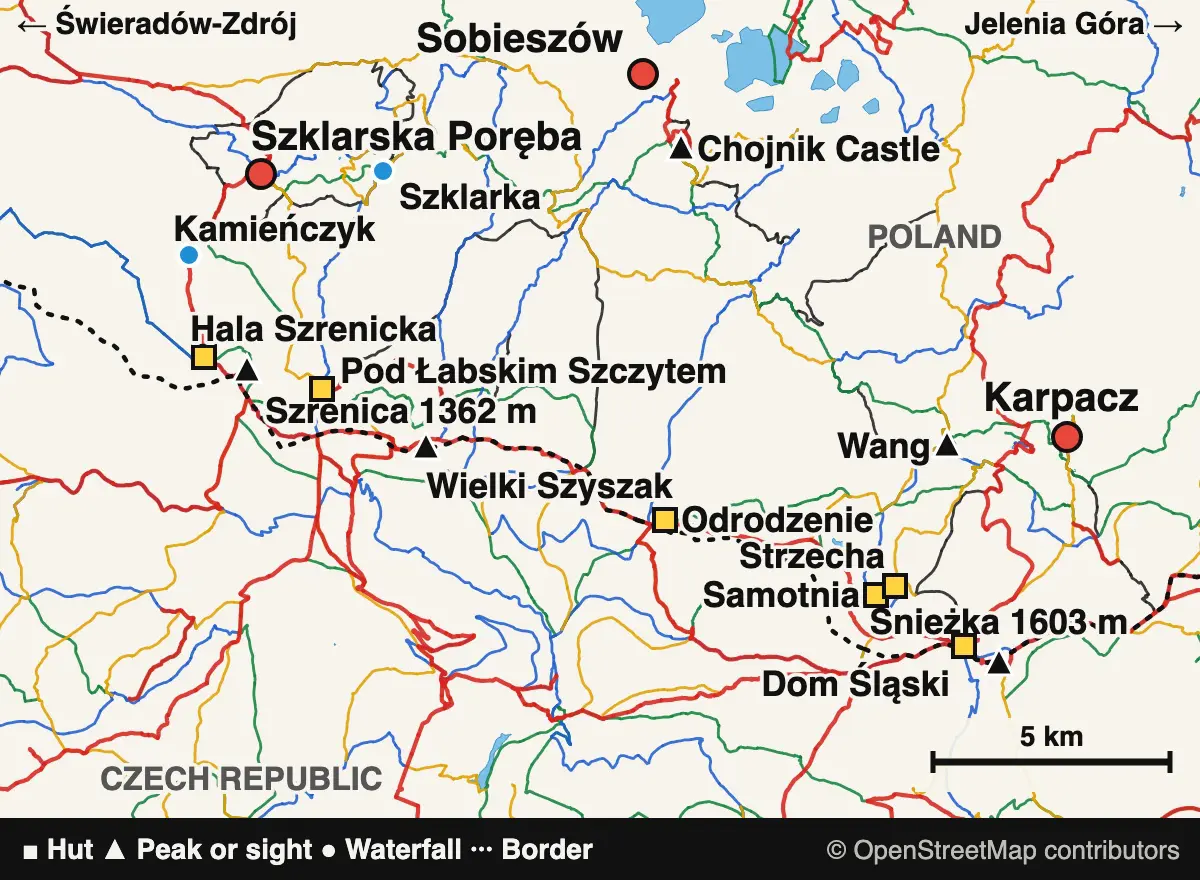
The two main Polish bases sit at opposite ends of the range, so travel between them takes about an hour by road. Park entry costs around 11 zł for one adult day, 20 zł for two and 26 zł for three, as of late 2026. Buy online or at booths on the main routes, and check for changes before you go.
The map above is for orientation only; the coloured lines are marked hiking trails. For navigation on the trail, use the Mapy.com tourist map, which offers offline downloads in its app, or the park’s interactive trail map. Before you set out, check the park’s daily notice for closed trails.
Where to stay in the Karkonosze
Karpacz is the choice for Śnieżka and the glacial ponds, with the widest range of hotels and guesthouses. Szklarska Poręba suits walkers heading for Szrenica and the western ridge, along with those arriving by train. Staying in both on a longer trip saves a good deal of driving.
Jelenia Góra is cheaper and has better transport, but you will need to spend time getting to the trails each day. A night or two in a hut gives you early starts on the ridge. Book early for holidays, as both hut and town beds can sell out.
How many days do you need?
Three days covers the highlights and five let you cross the range at a relaxed pace with time left for weather delays, which are common up high.
- Day 1: Arrive in Karpacz and walk to the Small Pond.
- Day 2: Climb Śnieżka and return to town, or stay in a hut.
- Day 3: Move to Szklarska Poręba and visit Kamieńczyk Waterfall and Szrenica, or walk the ridge if conditions allow.
Day trips and nearby
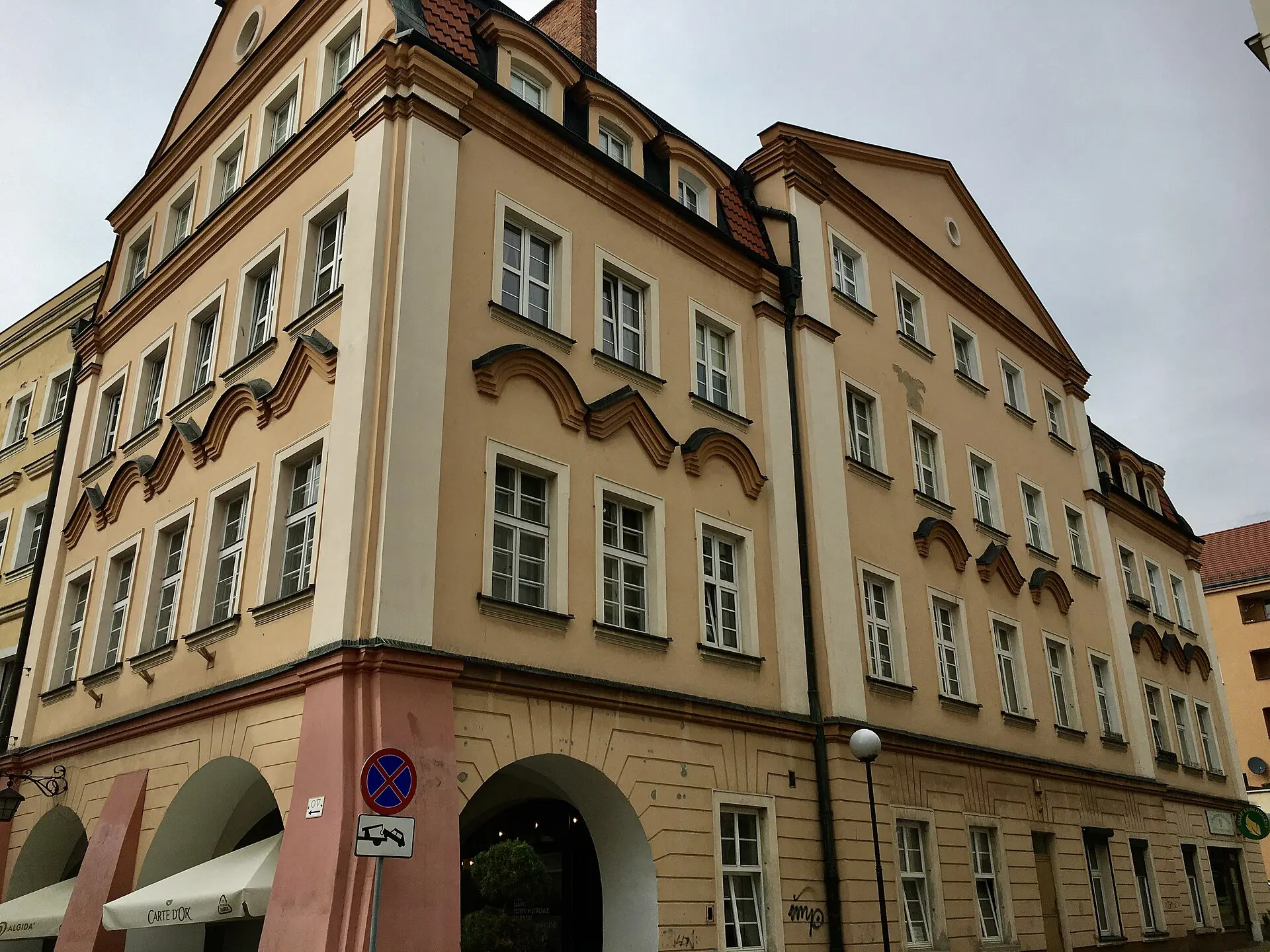
Jelenia Góra
The nearest city offers an arcaded square, museums and the Cieplice thermal pools. It is a dependable fallback when the ridge is in cloud and it is also where most trains and buses connect.
Izera Mountains
The neighbouring range west of Szklarska Poręba has gentler walks, cross-country ski trails and dark night skies. Base yourself in Świeradów-Zdrój or start from Jakuszyce.
Valley of Palaces and Gardens
The basin at the northern foot of the range holds dozens of historic residences, some now hotels. It is ideal for an easy day or a rest between hikes, preferably with a car.
Czech Krkonoše
You can cross the open border on foot at several points along the ridge to reach Czech huts and resorts such as Špindlerův Mlýn. Carry ID, and check Czech trail notices as well, since some closures differ from those on the Polish side.
FAQ
Q1Are the Karkonosze suitable for beginners?
Yes, on the lower routes and in good weather. The Small Pond, Kamieńczyk Waterfall and Chojnik Castle are all realistic for a beginner with proper shoes. The ridge and Śnieżka are more serious, not because of technical difficulty but because of wind, fog and ice. Check the park's daily notice before going high.
Q2What is the emergency number in the Karkonosze?
On the Polish side, call the GOPR mountain rescue on 985 or the general emergency number 112. Install the Ratunek app before setting out, and keep your phone charged. On the Czech side, mountain rescue is the Horská služba, so check its number before crossing. Insurance is worth having for a trip across the border.
Q3Can you hike the Karkonosze in November?
Yes, with winter preparation. In early November 2026, the park warned of ice on the trails, gusts up to about 45 km/h and wind chill well below zero on the ridge, even in sunshine. Bring traction aids, warm layers, poles and a headlamp. Days are short, so plan to finish well before dark.
Q4Can you camp in Karkonosze National Park?
No. Camping is banned inside the park, and overnight stays are allowed only in mountain huts. Walking is permitted only on marked trails between dawn and dusk. Open fires, barbecues and smoking are prohibited, and drones require special permission. Fines apply, so check the park's rules before you plan a multi-day route.
Prices, schedules and entry rules change. Check current details with official sources before you travel. Read the Poland travel guide.