Vietnamese food by region follows the country’s long shape. The north is clear, savoury and restrained, the centre is spicier and more intricate, and the south is sweeter, herb-heavy and generous. Order pho or bun cha in Hanoi, bun bo Hue or mi Quang in the middle, and com tam or banh xeo in the south. Meal timing matters as much as the dish: many noodles are breakfast food. Below: the logic, eight dishes, market hours, prices and etiquette.
How Vietnamese meals are structured and timed
Vietnam is about 1,600 km from top to bottom, with a cool, dry north, a narrow central strip between mountains and sea, and the Mekong Delta in the south. It is a country with great food, and the three-region split is a useful way to read the menu. The north has less sugar and less chilli, the centre has the most chilli and fermented shrimp, and the south uses coconut, sugar and fresh herbs most freely.
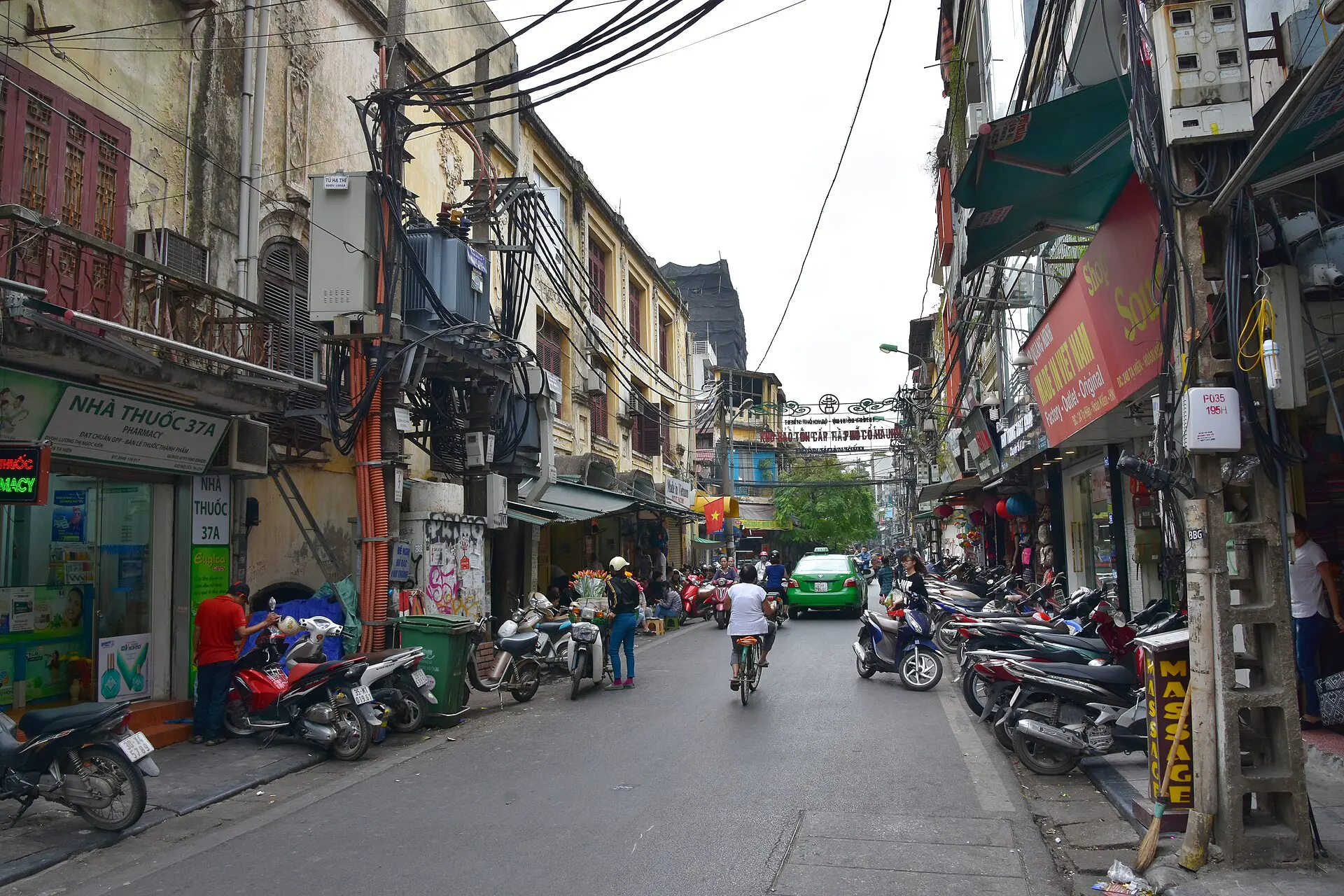
The day has rules. Breakfast is the noodle meal: pho, bun and congee are mostly sold from early morning until about 10:00, and many stalls close when the broth is gone. Lunch is rice with a few dishes, or a bowl of noodles. Dinner is an ongoing event, with grills, hotpots and snacks at plastic stools on the pavement until late. A stall that sells one dish does that dish only.
Read each stall by its signboard. The name of the dish is usually the name of the stall, and that is what you order.
What to order in Vietnam: eight dishes by region
The regional split is a guide, not a wall. Hanoi has southern pho stalls and Ho Chi Minh City has northern noodle shops, since people moved after 1975 and brought their cooking. Still, the best bowl of a regional dish is usually found in its home region, where the herbs, the broth and the noodle shape are right.
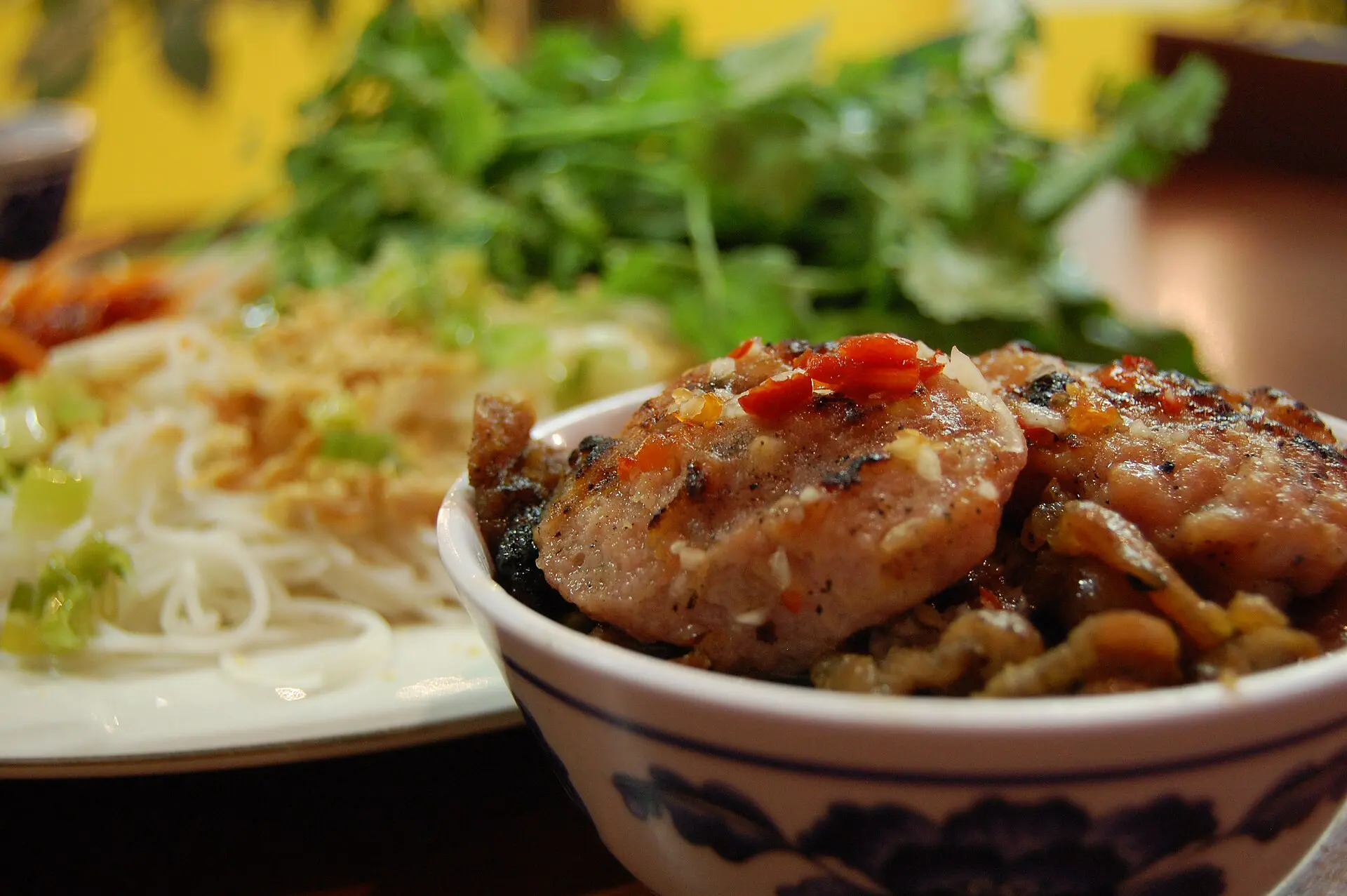
1. Pho, the northern breakfast
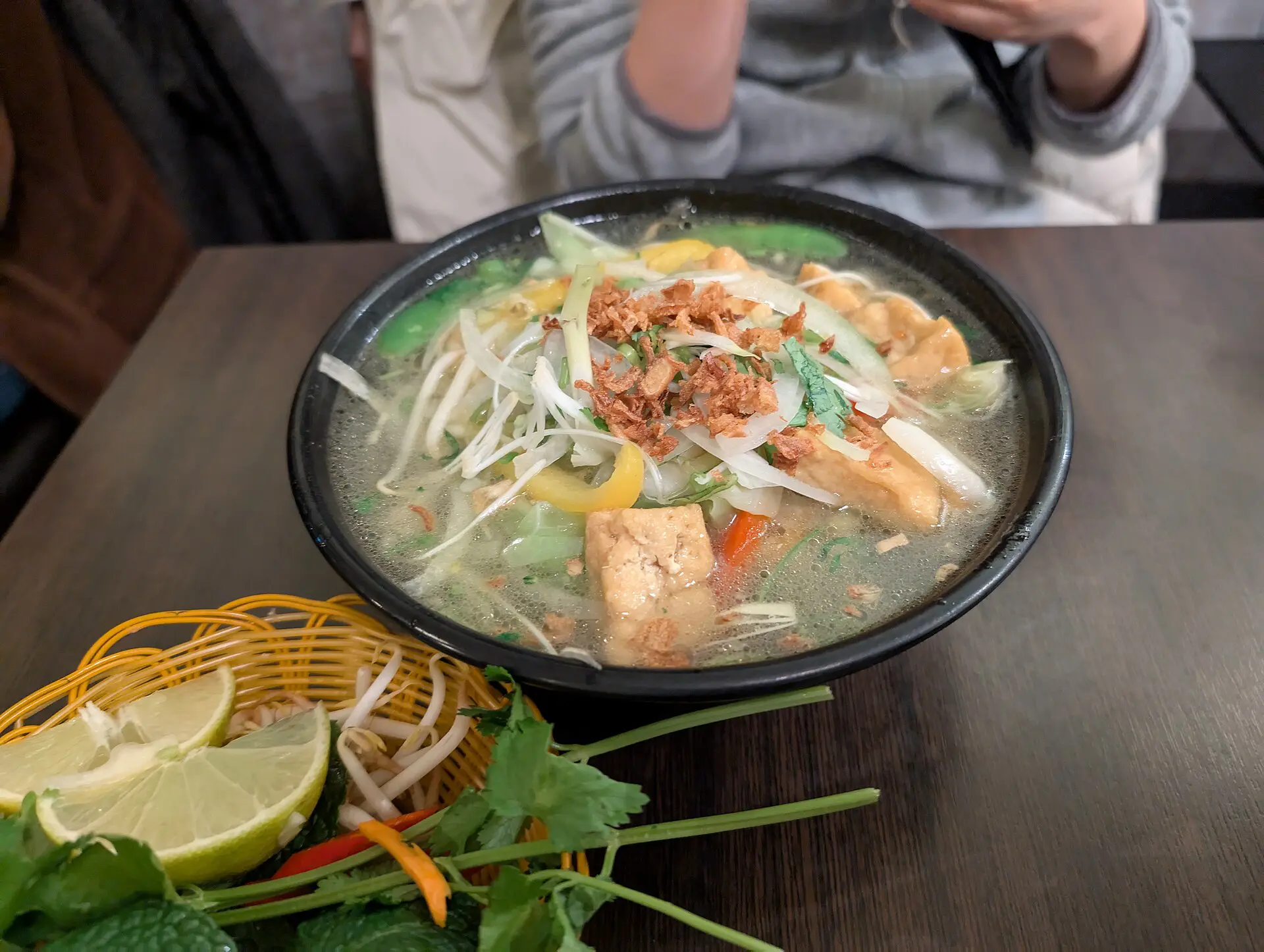
Pho is rice noodles in a clear beef broth, simmered with charred ginger, onion, star anise and cinnamon, topped with thin beef or chicken and spring onion. Hanoi’s version is restrained: a few herbs, lime and chilli, and no sweet sauces. Southern pho comes with a plate of basil, bean sprouts and hoisin. Eat it before 10:00. A bowl costs about 1.5-3 USD at a street stall, as of 2026.
2. Bun cha, Hanoi’s lunch
Grilled pork patties and slices in a sweet-sour broth of fish sauce, vinegar and sugar, with a basket of cold rice vermicelli and fresh herbs. You dip the noodles into the broth and eat with the herbs. Lunch is the time, since the charcoal grills are lit late morning. Expect roughly 2-4 USD.
3. Bun bo Hue, the central classic
A spicy beef broth built with lemongrass, shrimp paste and chilli oil, with thick round noodles, beef shank and sometimes pork. It comes from Hue, the former imperial capital, and is served as breakfast and lunch. The broth is heavy, so share the herb plate. A bowl costs about 1.5-3 USD.
4. Mi Quang, the turmeric noodles
Mi Quang is a dish of the Da Nang and Quang Nam area: wide yellow rice noodles with just a spoon or two of rich broth, topped with pork, shrimp or chicken, peanuts, herbs and a crisp rice cracker. It is eaten more as a “dry” noodle than a soup. Look for it at breakfast and lunch. Prices are about 1.5-3 USD.
5. Cao lau, the Hoi An noodle
Cao lau is a Hoi An noodle that is chewy and brown, traditionally tied to a local well and ash water, topped with slices of roast pork, greens and crisp noodle pieces, with little broth. It is hard to find elsewhere. Order it for lunch, and expect about 2-4 USD in the old town.
6. Banh mi, the French roll made Vietnamese
A light crisp baguette, a legacy of French rule, filled with pâté, pork, pickled carrot and daikon, cucumber, herbs, chilli and sauce. It is a breakfast and street-snack food everywhere, and each region fills it differently. Eat it fresh from a cart, ask for it without chilli if you are unsure, and watch for the fish-sauce and soy dressing the seller brushes on. Central Vietnam fills it with grilled pork and local herbs. A roll runs about 1-2.5 USD.
7. Com tam, the broken-rice plate
The southern signature. Broken rice grains, once the cheap grade, served with a grilled pork chop, shredded pork skin, egg and pickles, with a bowl of fish-sauce dressing. It is breakfast and lunch food in Ho Chi Minh City and the delta. A plate costs around 2-4 USD.
8. Banh xeo, the sizzling pancake
A turmeric rice pancake fried until crisp, folded over pork, shrimp and bean sprouts. You wrap pieces in lettuce and herbs and dip in fish sauce. Southern versions are large, central ones small and crunchier. It is a late-afternoon and dinner food. A pancake costs about 1.5-4 USD.
Market and street timing in Vietnam
| Time | Where | What to order |
|---|---|---|
| 05:30-09:30 | Morning markets, noodle stalls | Pho, bun, banh mi, sticky rice, coffee |
| 10:00-13:30 | Lunch stalls, rice counters | Bun cha, com tam, mi Quang, cao lau |
| 14:30-17:00 | Snack carts, cafes | Sweet soups (che), iced coffee, fruit |
| 17:30-22:00 | Evening street kitchens | Banh xeo, grills, hotpot, snails |
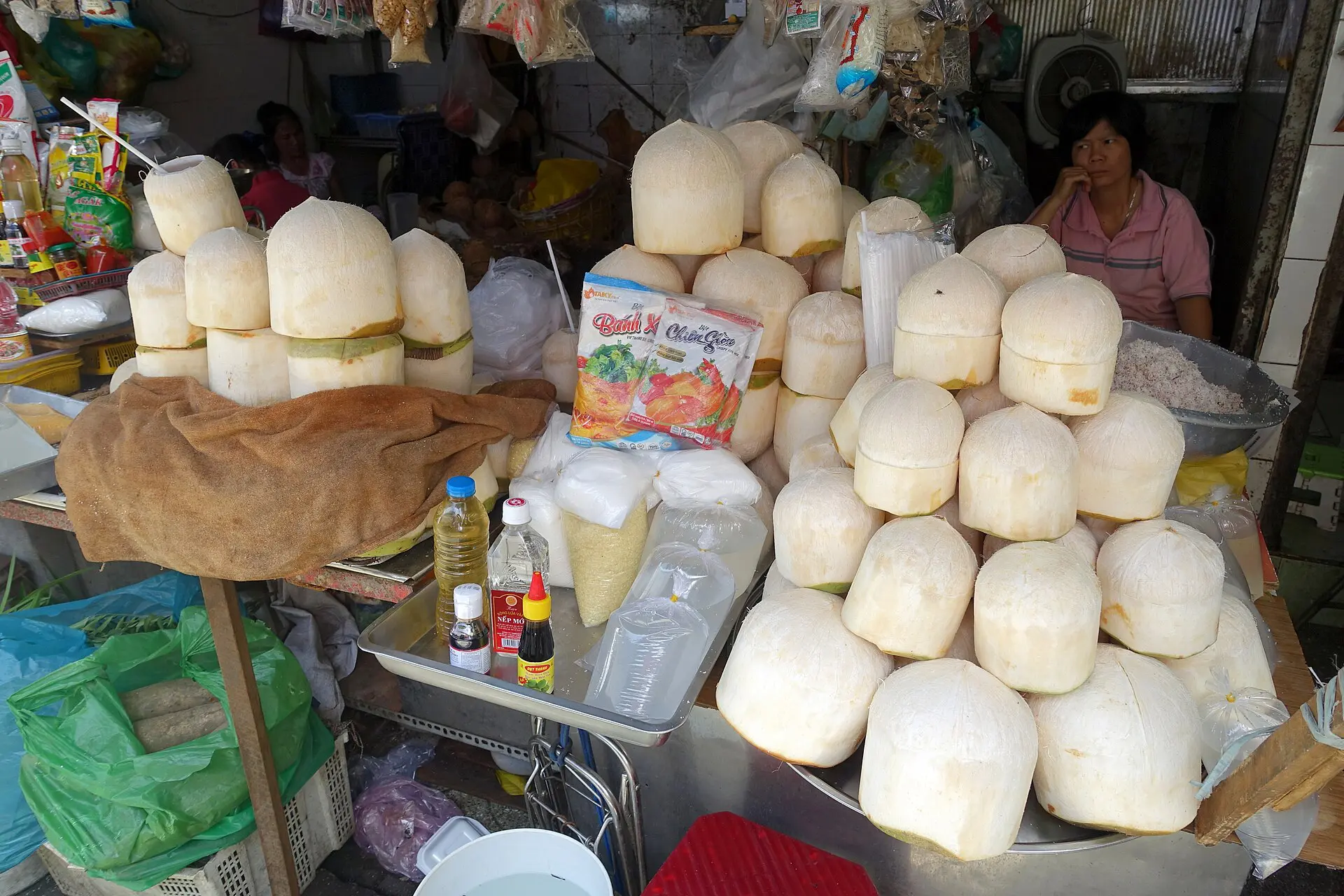
Fresh markets are the best place to see how a region eats: baskets of herbs, rice noodles made that morning, fish sauce, shrimp paste and dried squid. Vietnamese food by region is easiest to understand there. Markets are best before 08:00, when produce, herbs and fish arrive. Stalls vary by city and by day, so check hours locally.
How much does Vietnamese food cost?
Hedged per-person ranges in USD, as of 2026. Tourist districts and resort areas cost more.
| Meal | Typical band | What it buys |
|---|---|---|
| Street breakfast | about 1.5-3 USD | Pho, banh mi or noodles, coffee |
| Lunch plate or noodle | about 2-5 USD | Com tam, bun cha or mi Quang |
| Sit-down dinner | about 6-15 USD | Several dishes shared, a drink |
| Seafood or hotpot night | about 12-30 USD and up | Priced by weight, so ask first |
Vietnamese table etiquette
- Chopsticks and spoon: chopsticks for noodles, a spoon for soup. Do not stand chopsticks upright in rice.
- Seasonings: taste the broth first, then add lime, chilli or herbs. Locals rarely drown a bowl before tasting.
- Shared plates: use the serving chopsticks or your clean ends. Hosts may place food in your bowl.
- Tipping: not expected at street stalls. In sit-down restaurants, around 5-10 percent is welcome if no service charge is added.
- Toasts: beer is drunk with calls of “mot, hai, ba, yo”. Wait for the glasses to clink.
What to skip in Vietnam
I would skip restaurants with a photo menu in six languages beside a tourist square, since the dishes are usually adapted and the prices higher. Skip raw herbs and ice at first if your stomach is untested, and skip the “fresh” seafood tanks with no price tags. Stalls near sights sometimes raise prices for foreigners. A posted price list is a good sign, and so is a queue of locals. If a price is not shown, ask before you order, and agree it with a smile.
Coffee, drinks and sweets across Vietnam
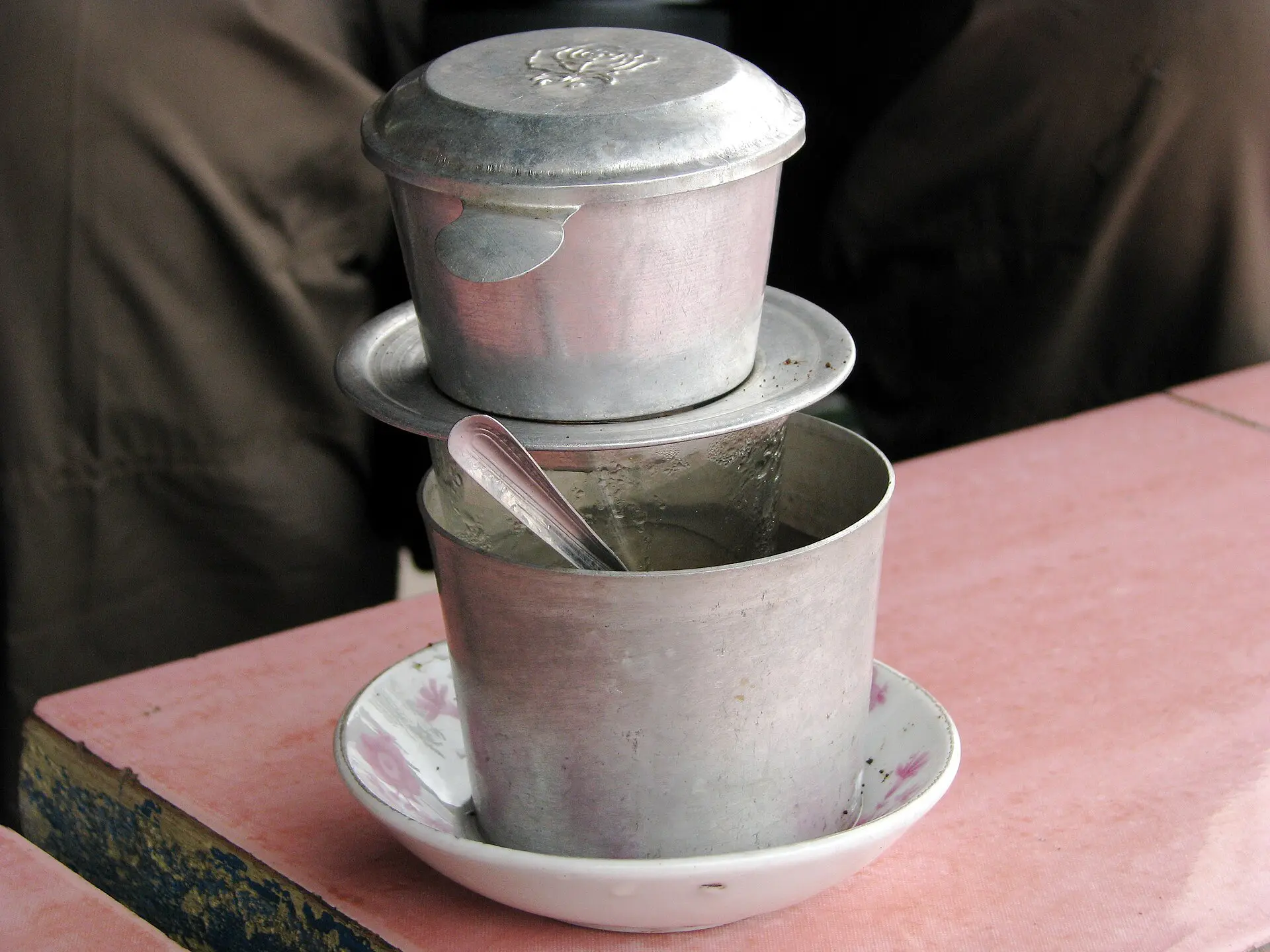
Drinks follow the regions too. Vietnamese coffee is brewed strong through a small metal filter and served over sweetened condensed milk, hot or iced, while in Hanoi you may also find egg coffee, whipped yolk and sugar over a shot of robusta. Fresh sugarcane juice, coconut water and iced tea are sold at every corner. The sweet soups called che, made with beans, jelly, coconut milk and ice, are the standard afternoon snack in the south and centre. Budget about 0.7-2 USD for most drinks, as of 2026.
FAQ about Vietnamese food by region
What is the difference between northern and southern Vietnamese food?
Northern food is milder, saltier and less sweet, with fewer herbs. Southern food uses more sugar, coconut and fresh herbs. Central food is the spiciest, built on chilli and fermented shrimp. The same dish, such as pho, changes by region.
What should I order first in Vietnam?
Order pho or a local noodle at breakfast, then a regional lunch dish, such as bun cha in Hanoi, mi Quang in the centre or com tam in the south. End the day with a banh xeo or grilled dishes at an evening stall.
Is Vietnamese street food safe?
Choose busy stalls where food is cooked fresh and served hot, and drink sealed water. Skip raw herbs and ice at first if your stomach is sensitive. Visitors who eat where locals queue usually do well, since turnover keeps ingredients fresh. Check current health advice before you travel.
Is Vietnamese food spicy?
It depends on the region. The centre is the spiciest, and the north and south are milder, with chilli served on the side. You can always add heat with sauce and sliced chilli from the table.
Do you tip in Vietnam?
Not at street stalls. In sit-down restaurants, 5-10 percent is welcome if no service charge is on the bill. See Wikivoyage’s Vietnam guide for background. Round up small bills for good service in cafes.