The best things to do in Busan are built around food: the fish market at dawn, a bowl of pork-and-rice soup at lunch, a sweet pancake from a street cart at dusk. The sights, from the hillside village of Gamcheon to the cliff temple at Haedong Yonggungsa, fit in the hours between meals. Busan is a port, and ports eat early, eat well and eat cheaply. Plan your days around when markets open and when kitchens close, and the city makes sense.
Best time to visit Busan
Busan has hot, humid summers and mild winters, and typhoons can arrive between July and September. For eating, autumn and spring are the sweet spots: the sea is calm, the markets are comfortable to walk and the beaches are not yet a wall of umbrellas.
| Season | Weather | Crowds and prices | Good for |
|---|---|---|---|
| Spring (Mar-May) | Cool to mild, some rain | Busy in cherry-blossom weeks, otherwise moderate | Coast walks, temple visits, market grazing |
| Summer (Jun-Aug) | Hot, humid, typhoon risk | Beaches packed, hotel prices at their highest | Swimming, night markets, cold noodles |
| Autumn (Sep-Nov) | Warm then crisp, mostly dry | Moderate, film festival draws a crowd in October | Everything, and the best seafood season for many diners |
| Winter (Dec-Feb) | Mild by Korean standards, snow is rare | Quiet, lower prices | Hot soups, fish cake, empty viewpoints |
Top things to do in Busan
If you are asking what to do in Busan with only a few days, the order below follows a food-minded rhythm: markets early, noodles and soup mid-day, views in the afternoon, street snacks in the evening.
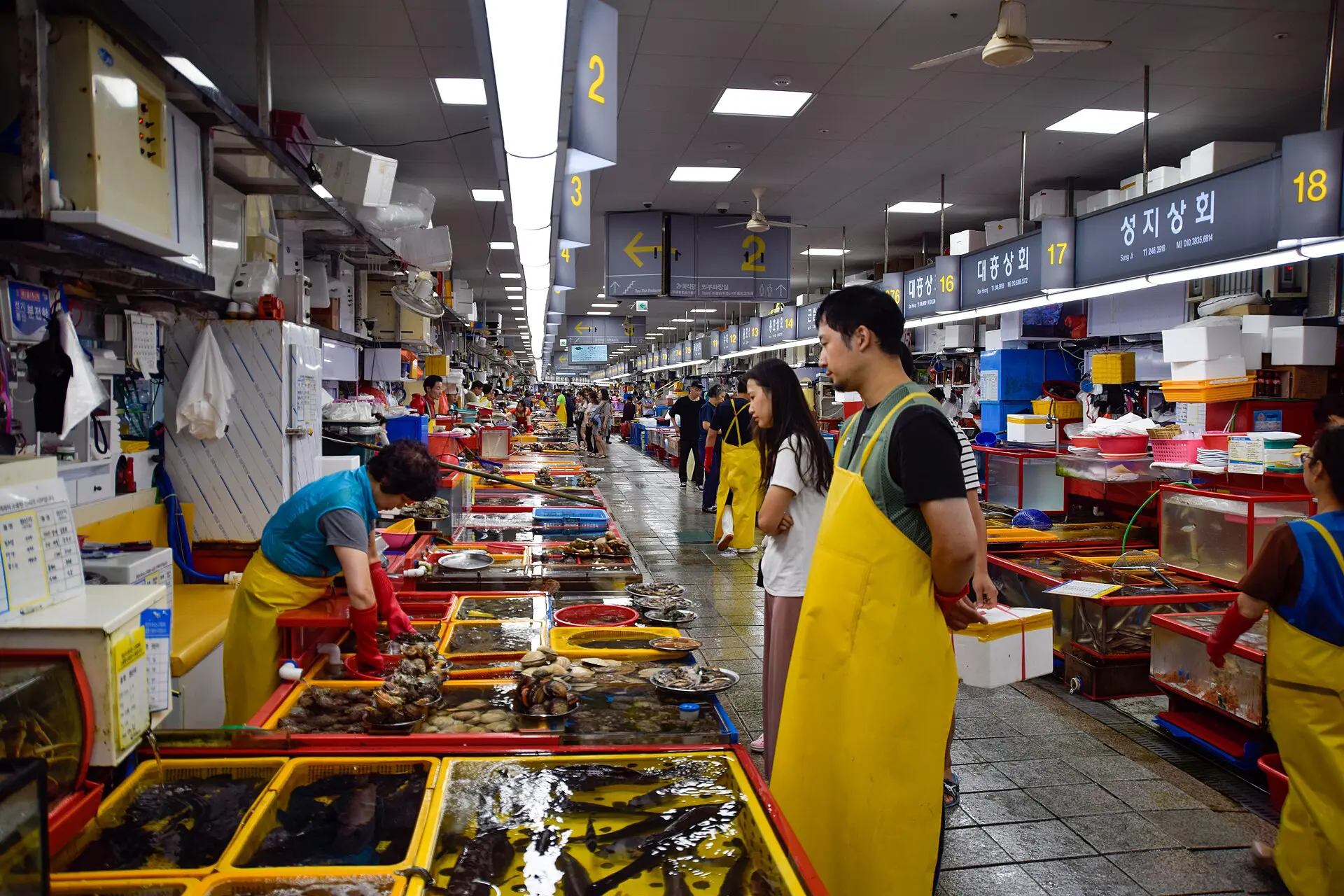
1. Walk Jagalchi Market before the crowds
Jagalchi is the best-known seafood market in Korea, and it is at its best in the early morning, when boxes of fish, squid, sea cucumber, shellfish and eels are still being sorted. Go before 9am if you want to watch the trade rather than the tourists. Vendors are used to curious visitors, but ask before photographing a stall and do not touch the stock. Upstairs, restaurants will cook what you choose below. Agree the price per weight or per plate before anything goes on the scale.
2. Eat dwaeji gukbap, the city’s pork-and-rice soup
This is the dish to order first. A milky pork-bone broth arrives with rice, slices of boiled pork and a tray of side dishes: chives, salted shrimp, kimchi, raw garlic. You season it yourself, a spoon of salted shrimp for savour, chives for sharpness. Eat it hot, spoon in one hand, and add rice to the broth if you like it thicker. Lunchtime is busy, so arrive before noon or after 1pm.
3. Try milmyeon, wheat noodles in cold broth
Milmyeon is a Busan specialty with roots in refugee kitchens of the Korean War era, when wheat flour was easier to find than buckwheat. The noodles are springy and the broth is cold, savoury and slightly sweet, served with a spoon of chili paste and a little mustard that you stir in as you go. It is a better summer lunch than it sounds.
4. Eat ssiat hotteok around BIFF Square
The streets around BIFF Square, in the Nampodong district, are where the city’s street snacking is concentrated. The classic is ssiat hotteok, a fried pancake pressed flat on a griddle and filled with brown sugar and seeds such as sunflower and pumpkin, often with chopped nuts. It arrives in a paper cup, too hot to hold. Eat it where you stand. Late afternoon into evening is the busiest window, so expect a short queue at the popular carts and a very small bill.
5. Graze the stalls of Gukje Market and Bupyeong Kkangtong Market
These adjoining markets sit in the old downtown and mix household goods with prepared food. Bupyeong Kkangtong is known for its food stalls and its night market, which runs in the evening, so arrive around dusk. The sensible method is to share small plates rather than order a full meal at one stall: fish cake, a bowl of noodles, rice rolls, braised or fried snacks. Carry some small notes.
6. Wander Gamcheon Culture Village
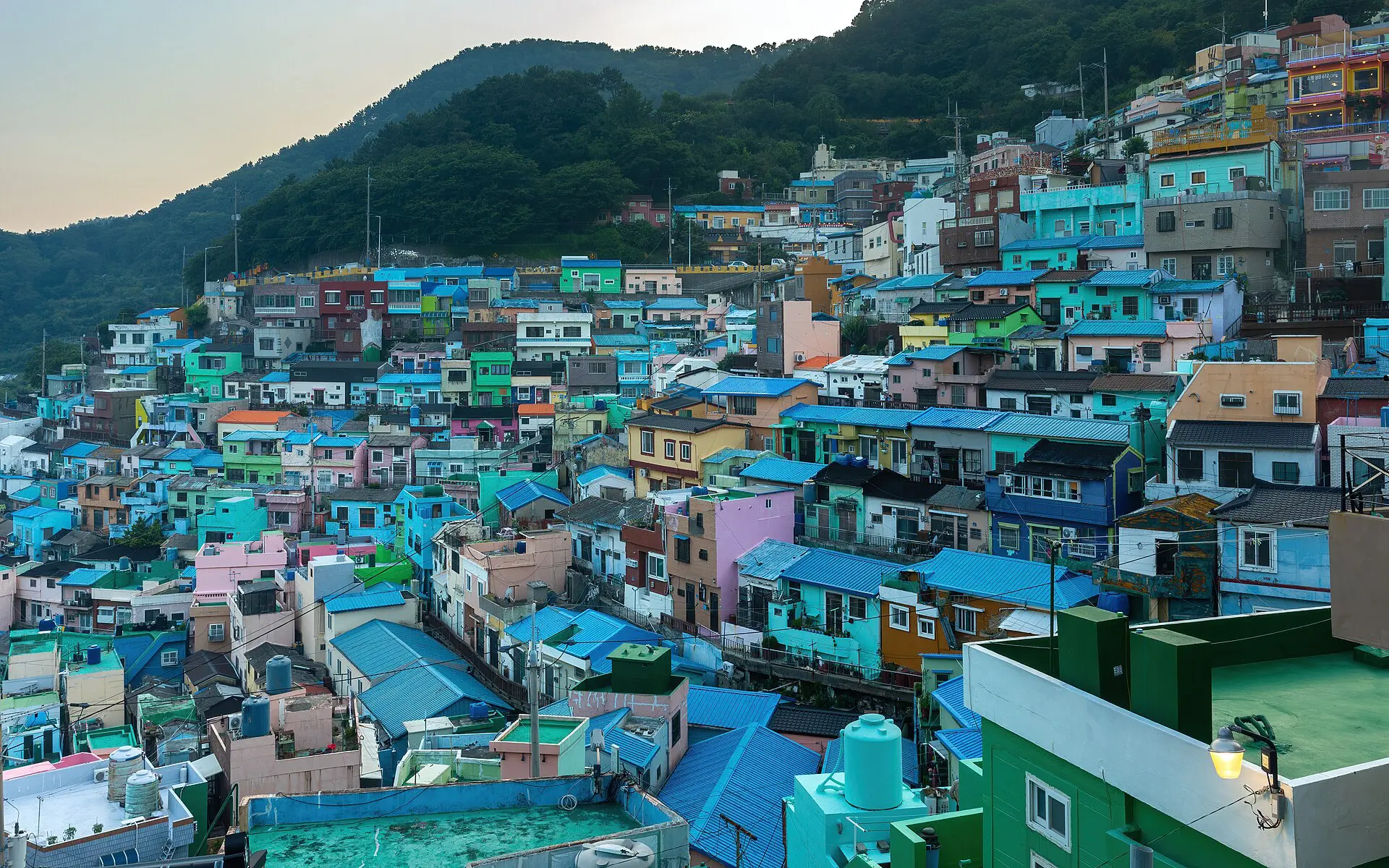
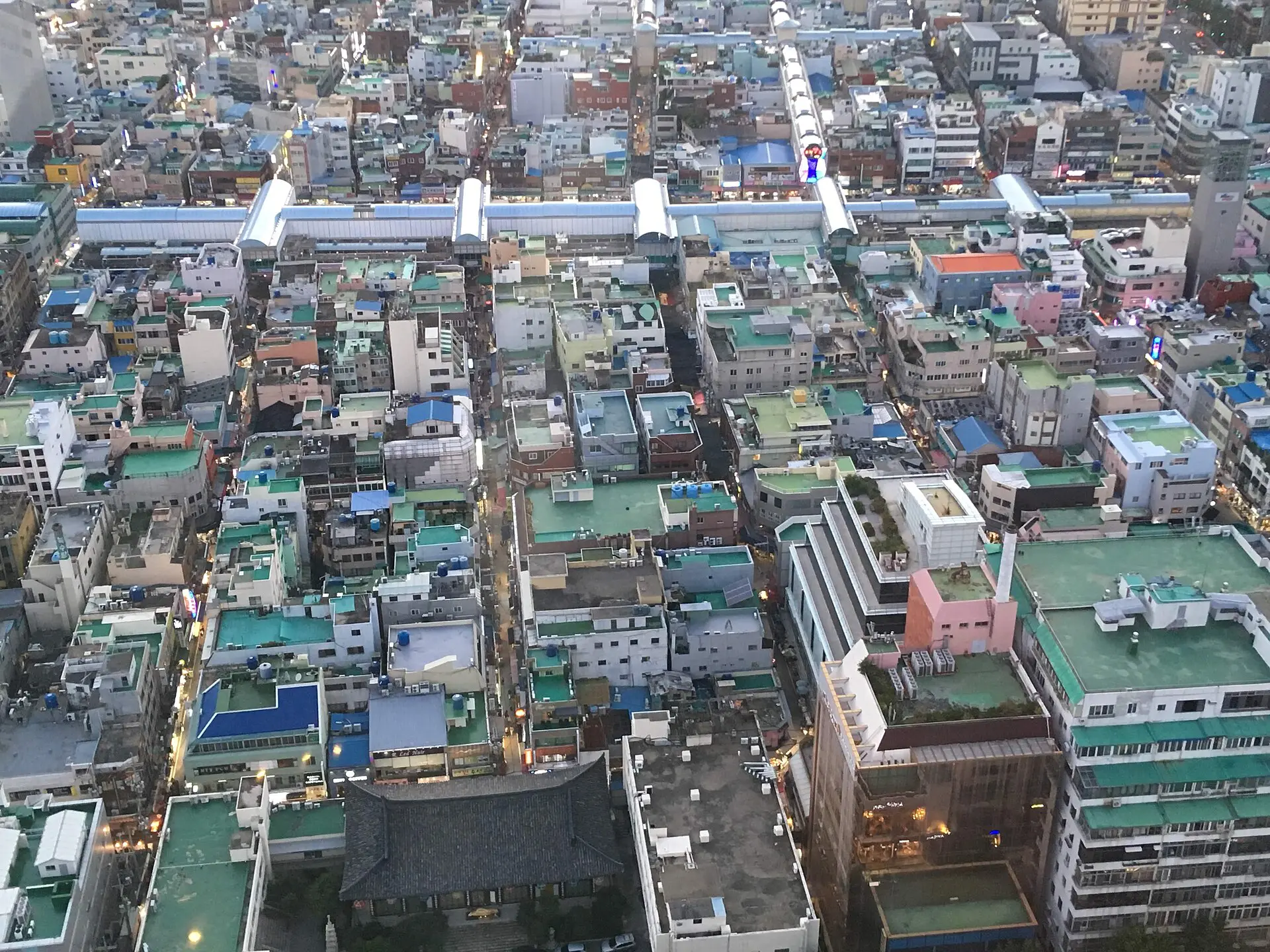
Gamcheon is the hillside neighborhood of stacked, painted houses that has become Busan’s most photographed corner. It began as a settlement for refugees and is now a maze of stairways, murals and small shops. It is steep, so wear shoes with grip. Go in the morning, ahead of tour groups, and treat the cafes and snack counters as the village’s real economy: buy something. People live here, so keep your voice down in the lanes.
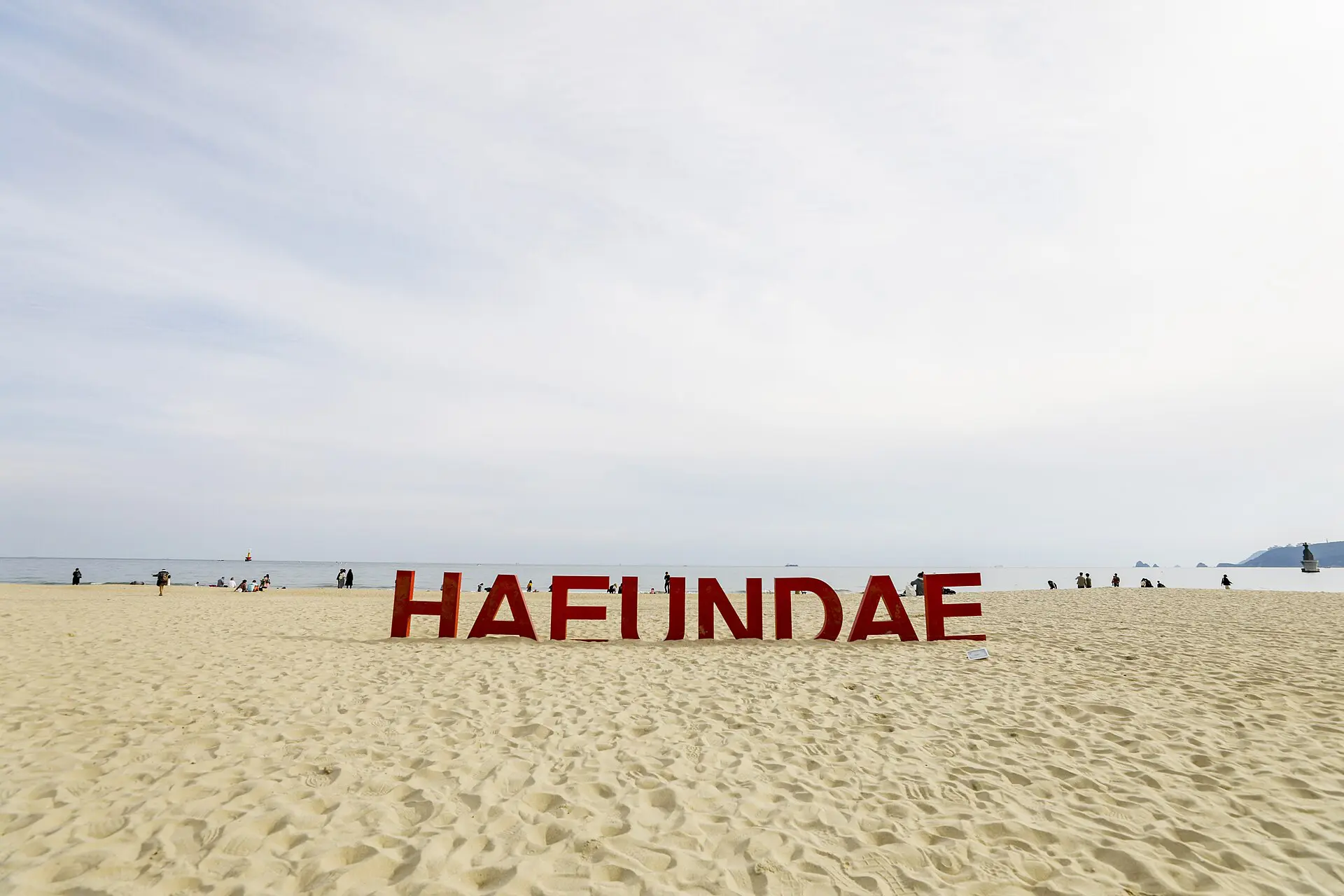
7. Take a morning swim or walk at Haeundae Beach
Haeundae is Busan’s best-known beach, and in July and August it is packed from end to end. Visit at dawn or outside summer and it becomes a long, quiet curve of sand with the towers of the resort district behind it. Walk the whole length at low tempo, then eat breakfast nearby; the streets just back from the beach have simple soup and rice places that open early.
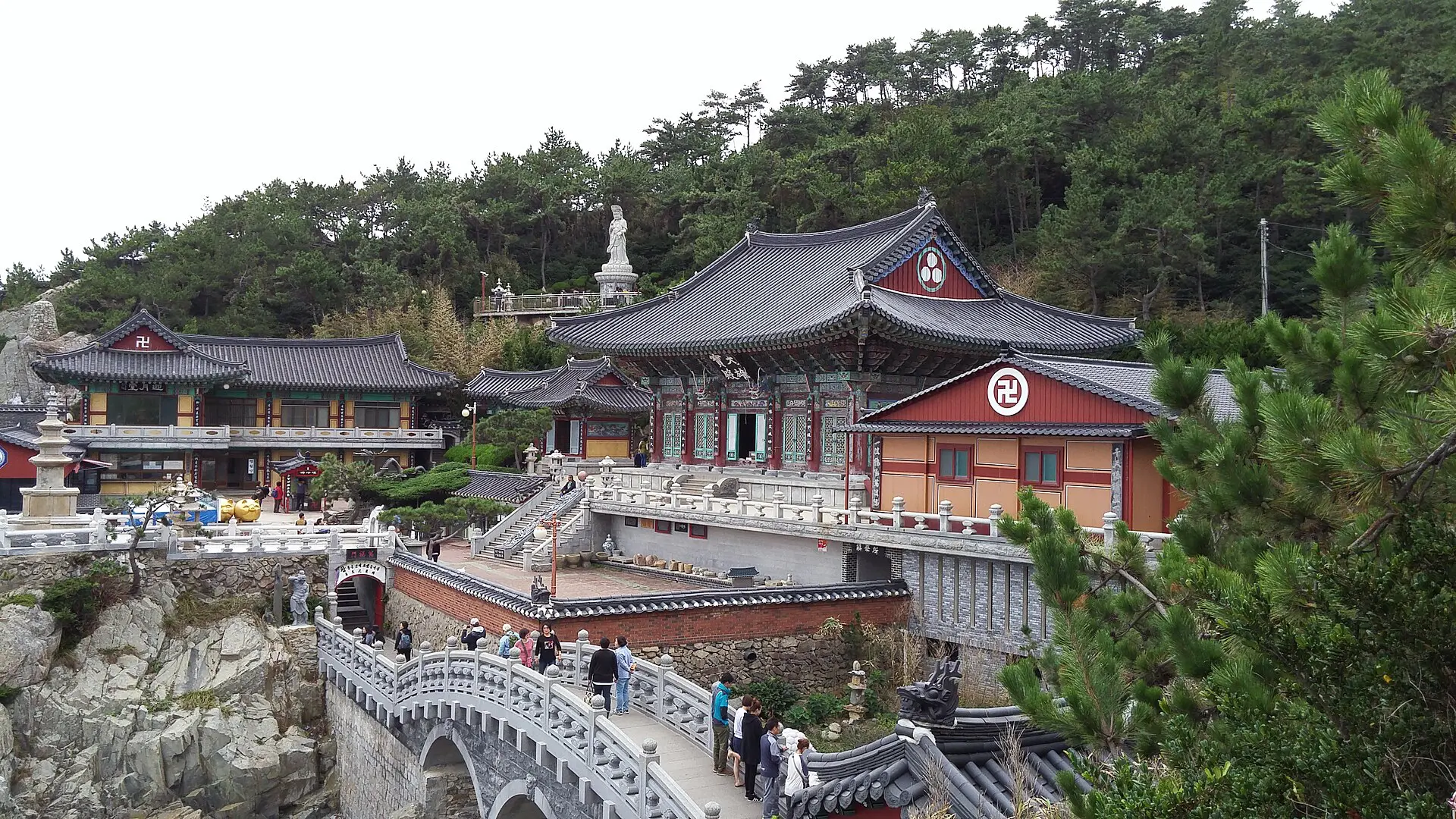
8. Visit Haedong Yonggungsa, the temple on the rocks
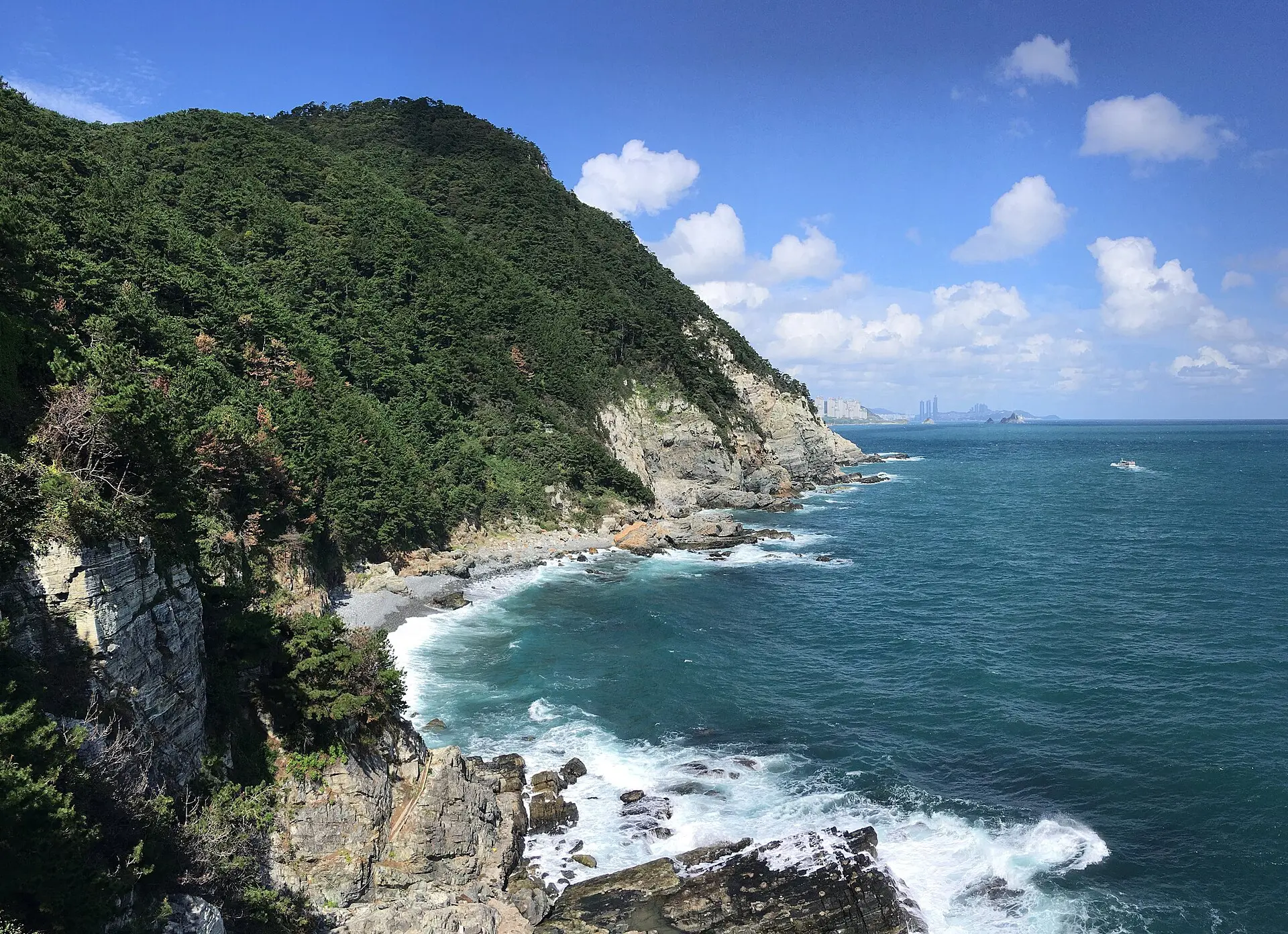
Few Korean Buddhist temples sit directly on the sea, and this one does, with halls and stone lanterns perched along a rocky shore on the eastern edge of the city. It is far from the center, so give it a half day and arrive early, since it fills up by mid-morning. Dress modestly, speak softly, and do not point your camera at monks or worshippers in prayer. The walk down to the water is a series of steps, and sea fog can make the approach feel remote.
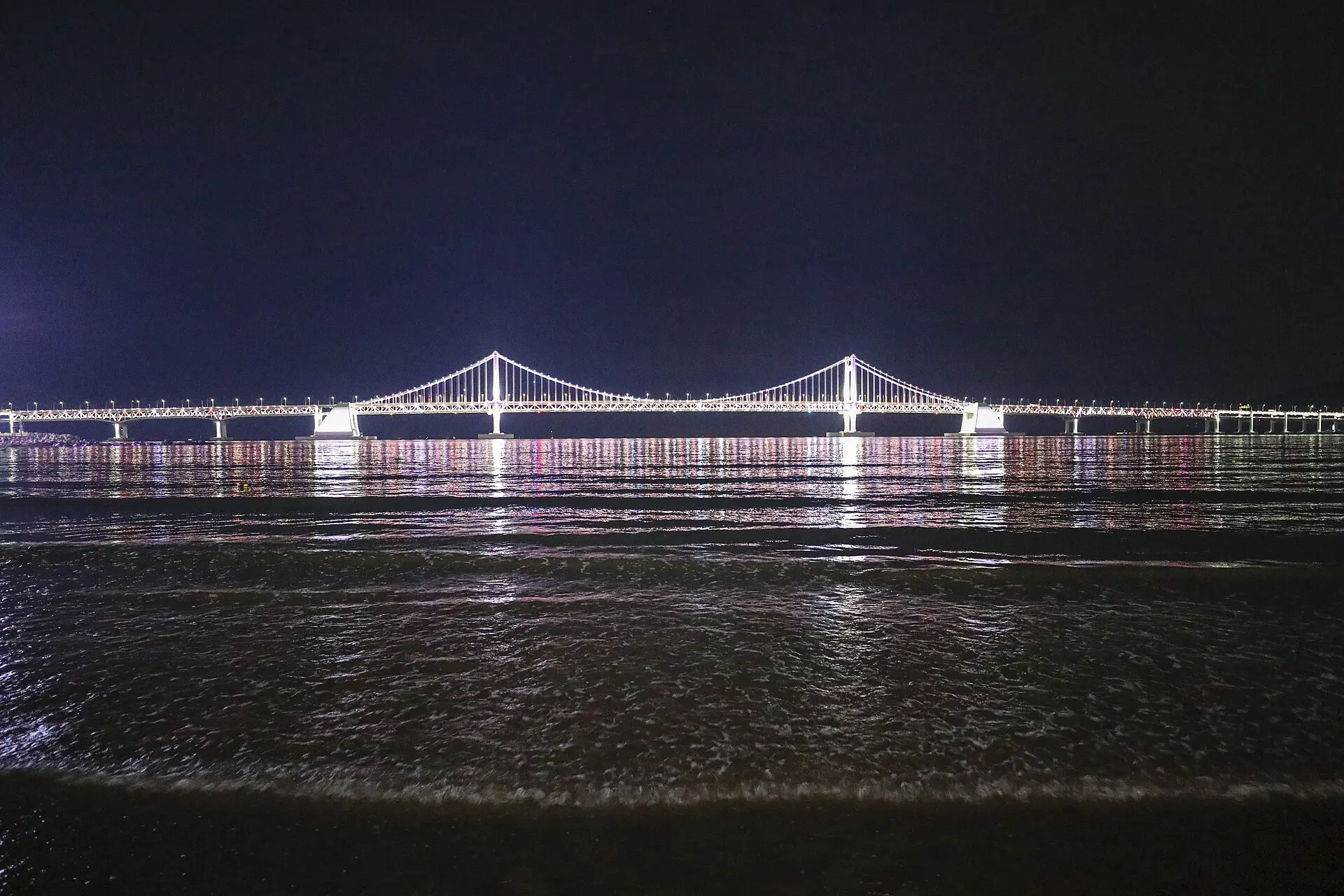
9. Watch the lights at Gwangalli Beach
Gwangalli is smaller and calmer than Haeundae, and its strength is the evening view of the illuminated Gwangan Bridge across the bay. The waterfront is lined with places for grilled seafood, raw fish and beer, and the promenade is a good place to eat at an unhurried pace. Come at sunset, choose a table facing the water, and order to share.
10. Hike the coast at Taejongdae
Taejongdae is a park on the southern tip of Yeongdo island, with forested paths, sea cliffs and a lighthouse. A walking loop takes a couple of hours at a relaxed speed, and a shuttle train runs the circuit for those who prefer not to walk. Go in the morning for the best light and the freshest air. Pack water; there are fewer food stalls here than in town.
11. Taste eomuk, Busan’s fish cake
Busan is Korea’s fish cake capital. Ground fish paste is shaped, fried or steamed into bars, balls, twists and stuffed pockets, and sold hot from counters and carts all over the city. The simplest version is a skewer in a cup of hot broth, which you drink as you eat. Winter evenings are the ideal time. Pick a counter with steam and a line of locals, and take what is freshly out of the fryer.
12. Eat Dongnae pajeon in an old neighborhood
Dongnae, in the north of the city, is the home of pajeon, a thick scallion pancake made with seafood, a batter of rice and wheat flours, and plenty of green onion. It is traditionally eaten with makgeolli, the cloudy rice wine, on a rainy afternoon. Dongnae is also close to old fortress walls and a hot-spring district, which makes it a good unhurried afternoon. Share one pancake between two, cut it with the kitchen scissors, and dip it in the soy-vinegar sauce.
Day trips from Busan
Gyeongju
The old Silla capital is about an hour or so away by train or bus, depending on the service. Burial mounds, royal tombs, a hilltop temple and a flat, walkable downtown make it easy. Come for the history, and finish with a regional lunch of rice, grilled fish and many side dishes. Check train schedules in advance, since the fastest services do not leave from every Busan station.
Tongyeong
This harbor town on the southern coast is known for oysters and fresh fish, and for a lively morning fish market. Allow a long day by bus. Winter is especially good, when oysters are in season, but any time of year yields a good fish lunch and a ride up the harbor-side cable car.
Jinhae
Jinhae is famous for its cherry blossom in late March and early April, and the festival draws huge crowds. If you can time the trip, go early in the day and weekday. Outside blossom season it is a quiet naval town, hardly worth the journey.
Fukuoka by ferry
Ferries and fast boats link Busan and Fukuoka in Japan, and the crossing takes several hours. It is a legitimate overnight rather than a day trip. Check current schedules and passport requirements before you plan around it.
Where to stay in Busan
Busan is spread along the coast between mountains, so choose a base by what you want to eat and do.
- Haeundae: the most convenient area for visitors, with the beach, the resort towers and plenty of hotels and restaurants. Suits first-timers and families.
- Seomyeon: the commercial center where metro lines 1 and 2 cross, with a dense mix of restaurants, bars and late-night eating. Suits people who want transport convenience and cheap, plentiful food.
- Nampodong and the old center: close to Jagalchi, BIFF Square and the markets, and handy for early-morning market trips. Suits food-focused travelers on a budget.
- Gwangalli: calmer, with bay views and waterfront dining. Suits couples and travelers who prefer a quieter base.
Getting around Busan
The metro is the backbone, with several lines linking Seomyeon, Nampodong, Haeundae and the main stations. Buses fill the gaps and taxis are plentiful and moderately priced. A rechargeable transit card works across metro and buses and is the easiest way to pay. Add time to your plan: the city is long, and a trip from Haeundae to the old center can take around an hour. From Seoul, the high-speed KTX train is faster and simpler than flying, taking roughly 2.5 to 3 hours; Gimhae airport sits to the west of the city.

How much does a trip to Busan cost?
Busan is cheaper than Seoul for food, and the street-to-table tier is very affordable. These are rough daily figures per person in US dollars, as of 2026 and subject to exchange rates; check before you go.
- Budget, about $50-80: a hostel or simple room, market and street meals, soup and noodle lunches, metro rides.
- Mid-range, about $100-180: a decent hotel, a mix of sit-down restaurants and street food, a taxi now and then, entry fees.
- High, about $220 and up: a beachfront or resort-district hotel, seafood dinners with a view, private transport.
A single bowl of gukbap or milmyeon is often in the single-digit dollar range, which is why the budget traveler eats well here.
Is Busan worth visiting?
Yes, if you eat. Busan rewards travelers who like markets, seafood, beaches and a slower pace than Seoul. The food is regional, specific and inexpensive, and the city’s coastal geography gives every day a changing backdrop. I would skip it if your priority is ancient palaces or nightlife on the scale of the capital, or if you can only visit in peak summer and dislike crowds. Typhoon season can also scramble plans, so keep a flexible day. For more background, see the Busan travel guide on Wikivoyage or the Wikipedia entry on Busan.
FAQ about Busan
How many days do you need in Busan?
Three days covers the main sights and the essential dishes: markets, a temple, a village walk and the beaches. Four or five days lets you add a day trip and a slower pace. Two leaves you rushing between districts.
What food is Busan famous for?
Dwaeji gukbap (pork and rice soup), milmyeon (cold wheat noodles), eomuk (fish cake), ssiat hotteok (stuffed sweet pancake), Dongnae pajeon (scallion pancake) and fresh raw fish from Jagalchi. Most of these are inexpensive and easy to find without a reservation.
Is Busan better than Seoul?
They differ. Seoul has the palaces, the museums and the scale. Busan has the sea, the beaches, the seafood and an easier pace. Many travelers spend most of a trip in Seoul and give Busan three or four days, which is a sensible split.
How do you get from Seoul to Busan?
The KTX high-speed train takes roughly 2.5 to 3 hours and is the usual choice. Express buses are slower and cheaper, and domestic flights exist, but with airport transfers they rarely save time. Book train seats ahead on weekends and holidays.
Is Busan good for a beach holiday?
Partly. Haeundae and Gwangalli are real city beaches with swimming in summer, but they are crowded then and the water is cooler than in tropical destinations. Treat them as a part of a city trip, not a stand-alone beach holiday.
What is the best month to visit Busan?
Spring and autumn suit eating best: the sea is calm, the markets are comfortable to walk and the beaches are less crowded. Summers are hot and humid, and typhoons can arrive between July and September, so leave slack in your schedule if you travel then.