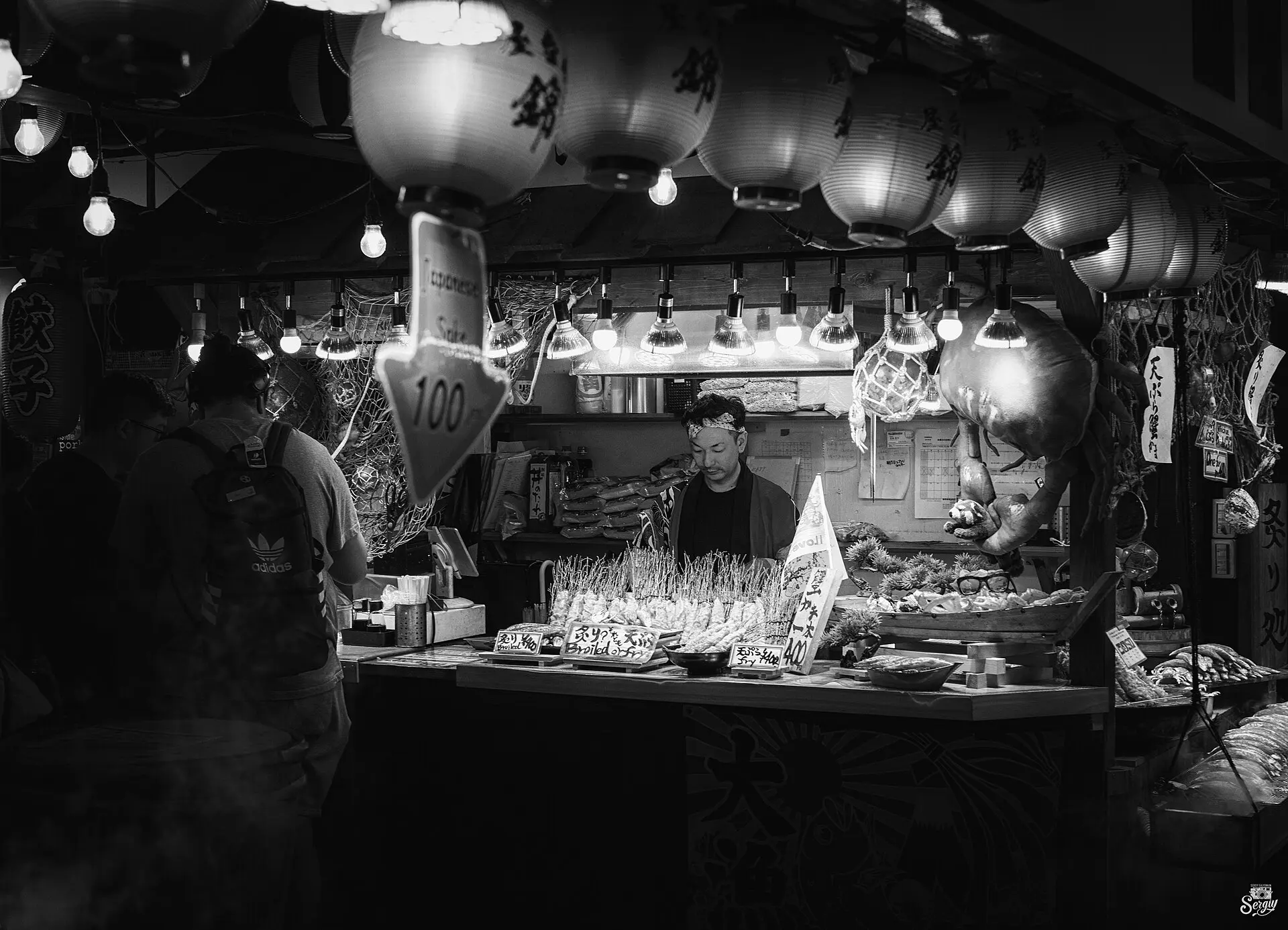
Japanese street food is a small, precise category: grilled skewers, battered octopus balls, sweet griddle cakes and rice balls, sold at markets, festival stalls and a few evening districts. Start with takoyaki or yakitori, add a sweet skewer or taiyaki, and eat at the stall, since eating while walking is frowned upon. A snack typically costs about 300-800 yen, roughly 2-5 USD, as of 2026. Below: the dishes, when and where they appear, what they cost and the manners that keep the stall owner happy.
How Japanese street eating is structured and timed
Japan has fewer street carts than many Asian countries. Most everyday eating happens in small counters, convenience stores and station food halls, so street food clusters around specific places: market streets, shrine approaches, festival days and a handful of evening districts. Per Wikivoyage’s Japan guide, food is one of the draws of the country, and this is where it is most casual.
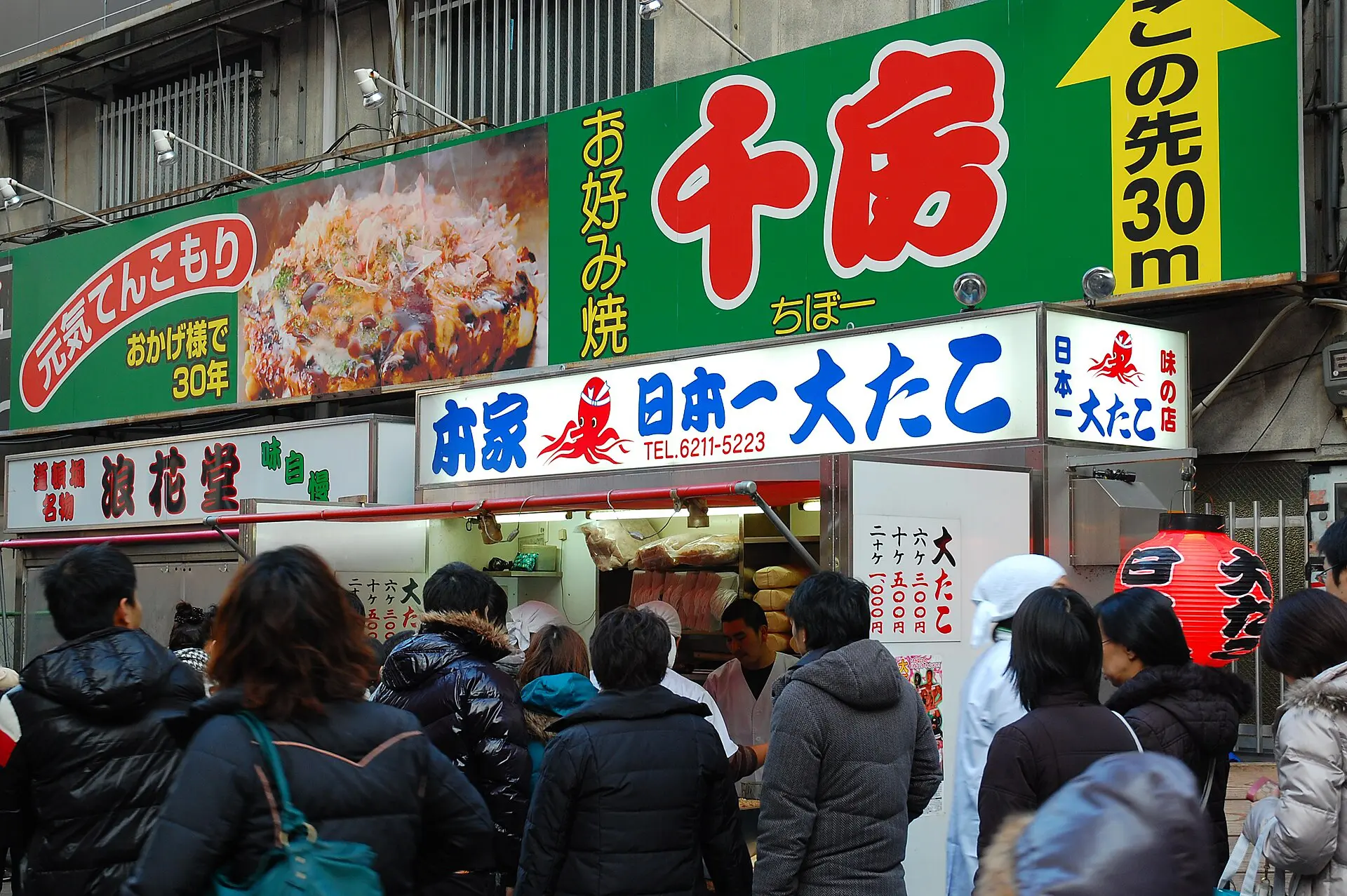
- Morning: market streets open and sell seafood skewers, tamagoyaki (rolled omelette) and rice balls.
- Midday to afternoon: sweets, skewers, fried chicken and snacks near temples and shrines.
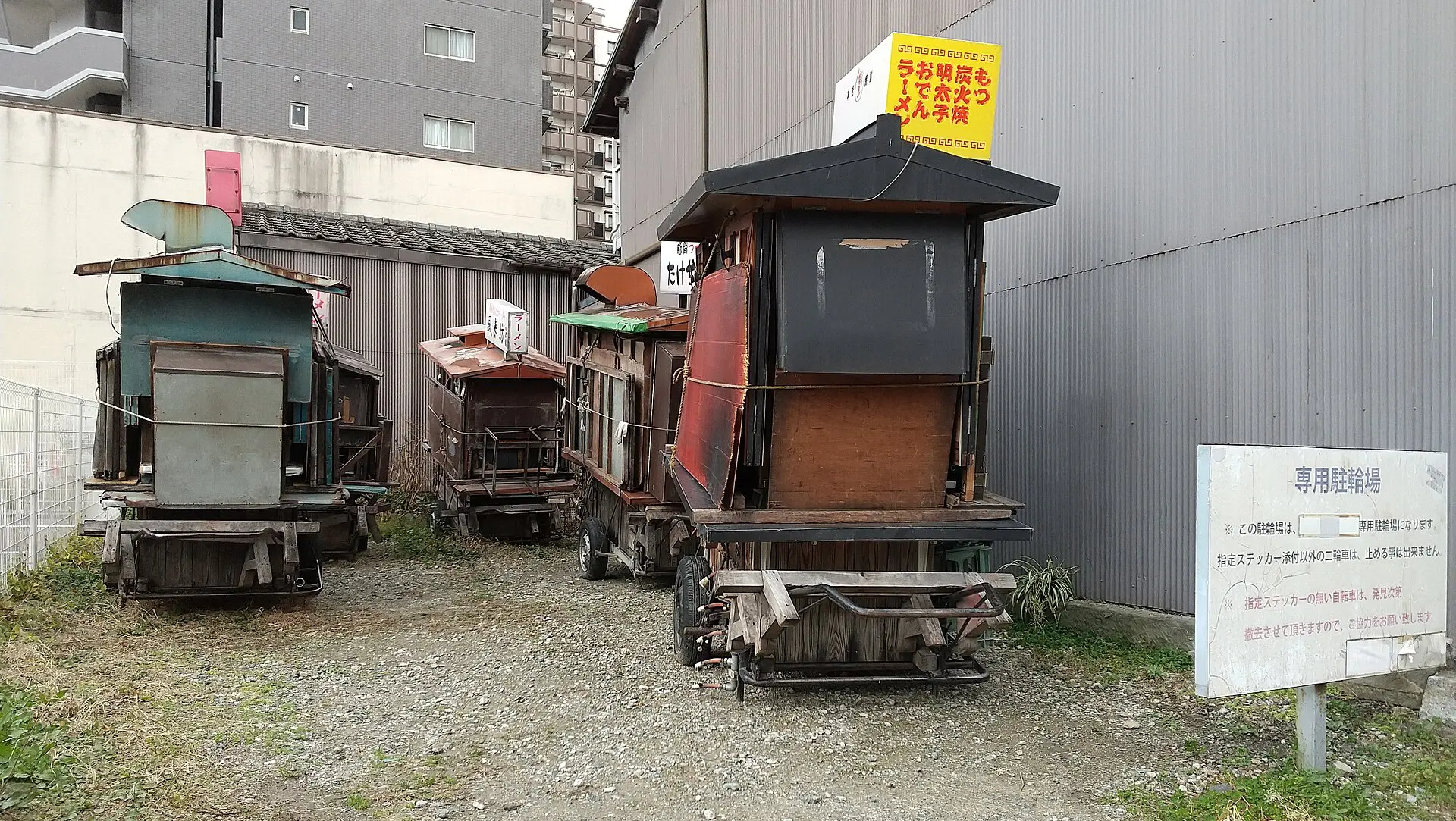
- Evening: yatai (small open-air stalls) in some cities, festival lines and izakaya-style grilled skewers.
The system exists because Japanese eating culture prizes the counter and the specialist: one person making one thing, to order, in front of you. Festival stalls, also called yatai, carry that habit onto the street for a few days at a time.
Best Japanese street food to order first: 8 dishes
These eight cover the main techniques: griddled, grilled, fried and sweet. Availability depends on the city, the season and whether a festival is on. See the Japan travel guide for the regions.
1. Takoyaki, octopus balls
A wheat batter with a piece of octopus, ginger and spring onion, poured into a hot cast-iron mould and turned by hand with picks until round and crisp. It is topped with a sweet-savoury sauce, mayonnaise, dried bonito flakes and seaweed powder. Associated with Osaka, it is a late-afternoon and evening snack. Eight balls cost roughly 500-800 yen, as of 2026.
2. Okonomiyaki, the savoury pancake
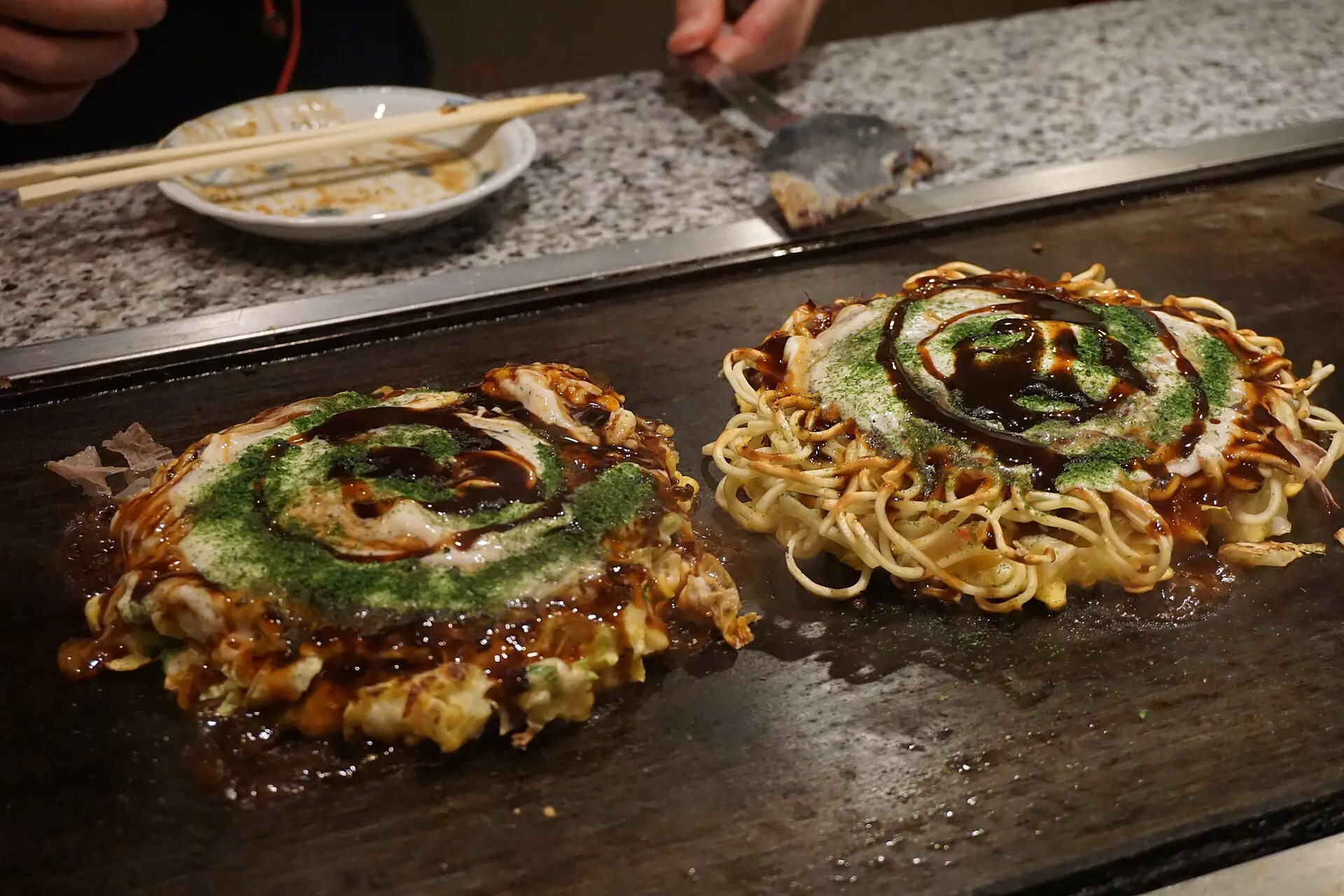
A batter of flour, egg and shredded cabbage with pork, seafood or cheese, cooked on a flat griddle and glazed with sauce. Osaka style mixes everything first, and Hiroshima style layers it with noodles. It is more a meal than a snack, served at counters and some festival stalls. Expect about 700-1,200 yen.
3. Yakitori, grilled skewers
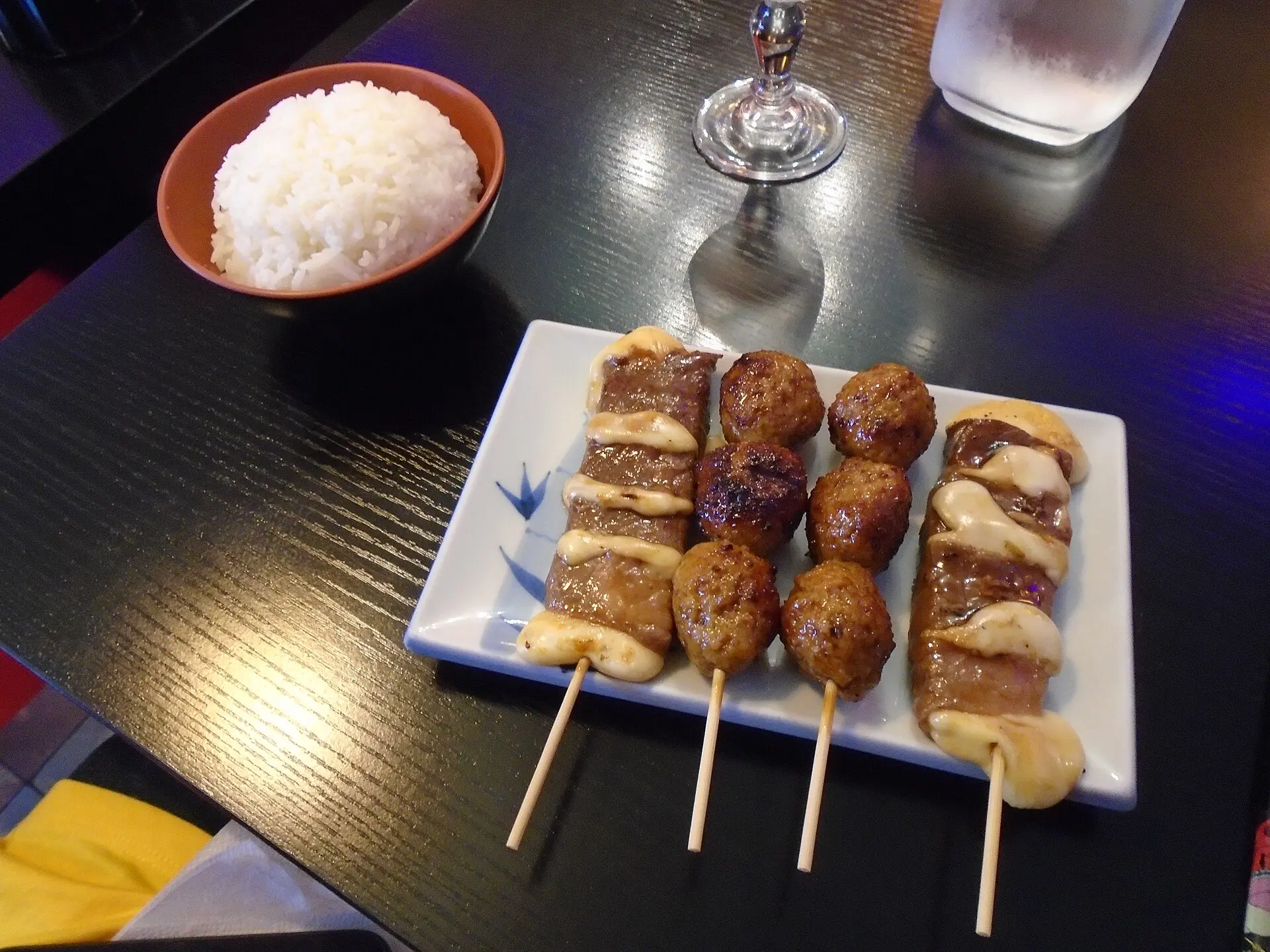
Chicken pieces, skin, liver and vegetables threaded on bamboo skewers and grilled over charcoal, seasoned with salt or a sweet soy glaze (tare). It is an evening food, eaten near stations and in lanes where grills smoke from about 17:00. Skewers typically cost 150-400 yen each, so a few add up to a light meal.
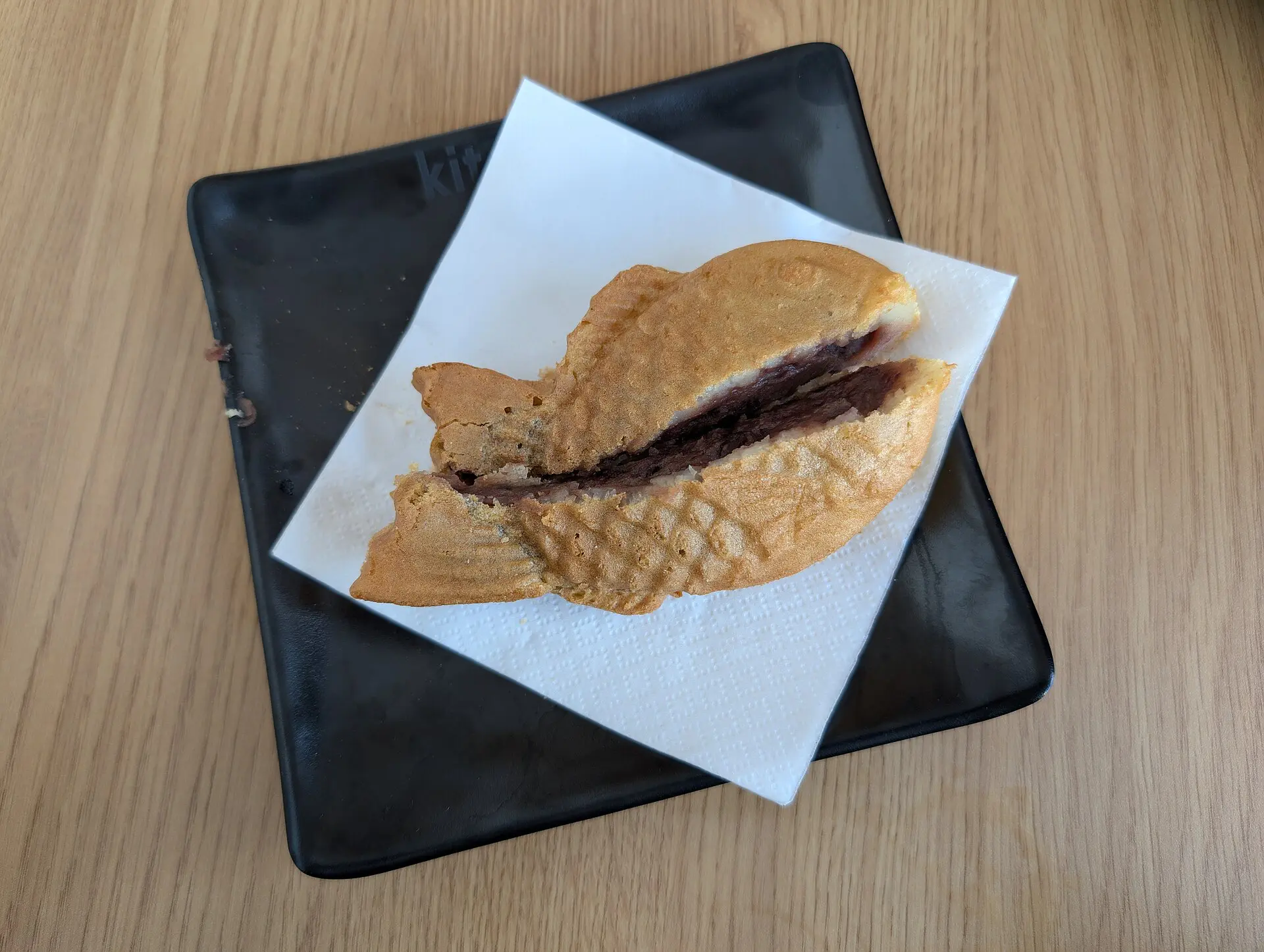
4. Taiyaki and imagawayaki, sweet griddle cakes
Taiyaki is a fish-shaped cake filled with sweet red bean paste, custard or chocolate and cooked in iron moulds. Imagawayaki is round, in the same style. They are cold-weather snacks, sold from small shop windows and stalls. A cake costs around 150-300 yen. Eat them warm, the same day.
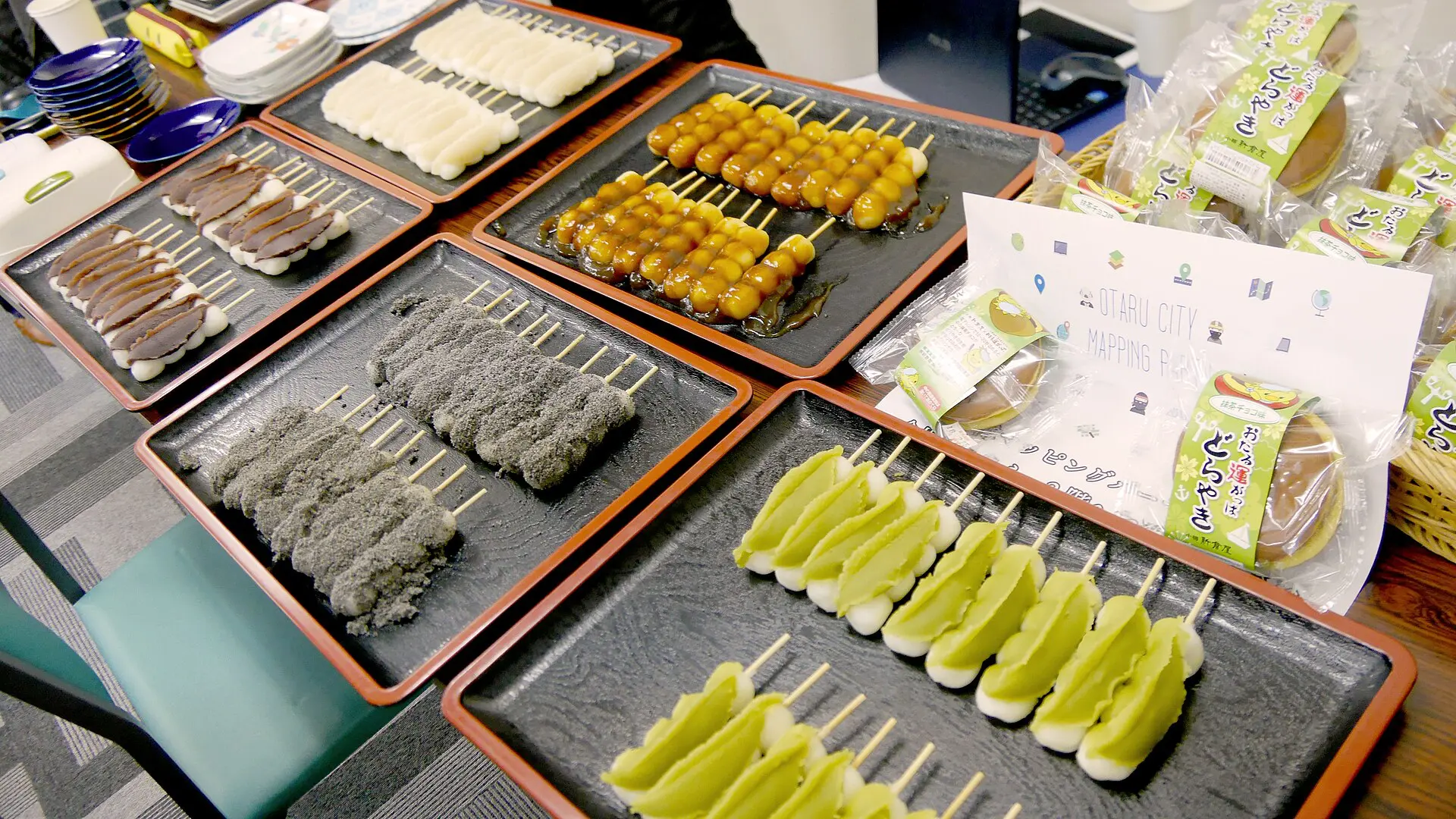
5. Dango, rice dumplings on a stick
Skewered chewy rice dumplings, either grilled with a soy glaze (mitarashi) or coated in sweet bean paste. They are classic shrine and temple-approach snacks, often seasonal, with colours that change with spring and autumn. A stick is about 100-300 yen and a good light stop between meals.
6. Onigiri and tamagoyaki, the morning market bites
Onigiri are rice balls wrapped in seaweed, filled with salted salmon, pickled plum or fish roe. Tamagoyaki is a layered, slightly sweet rolled omelette, sold on a stick in market streets. Both are mild and good for breakfast. Markets in cities such as Tokyo and Kanazawa have seafood-stall variants where you eat standing, and prices vary widely, so look before you order.
7. Karaage and korokke, the fried snacks
Karaage is bite-size chicken marinated in soy, ginger and garlic, coated in starch and deep fried. Korokke are breaded croquettes filled with potato or minced meat, often sold from butcher counters. Both are cheap and hot, and they suit a mid-afternoon stop. Karaage runs about 300-600 yen a portion, korokke less.
8. Yaki imo and grilled corn, the seasonal sweets
Yaki imo is a sweet potato roasted slowly in stones or an oven until the flesh turns syrupy. It is an autumn and winter street food, sold by weight from small trucks and stalls. Grilled corn glazed with soy appears at summer festivals. Both are inexpensive and best eaten warm.
Seasonality gives the year its shape. Spring brings sakura-flavoured sweets and dango in pink, white and green. Summer festivals, usually from July to August, are the peak for grilled corn, shaved ice and fried noodles. Autumn is for roasted sweet potato and chestnuts, and winter for hot taiyaki, oden (fish cake and radish simmered in broth) and sweet bean soup. Menus rotate with the weather, so the same lane looks different in April and in December.
Japanese street food market and festival timing
The big opportunity is in timing. Market streets are best in the morning, shrine fairs in the afternoon and evening on festival days, and yatai districts after dark.
- Markets: many open about 08:00-09:00 and slow down by mid-afternoon, with some stalls closing earlier. Check hours before you go, as many close one day a week.
- Festivals (matsuri): food stalls line the approach to a shrine, usually from afternoon to about 21:00. Dates change by year and area, so check local listings.
- Yatai: open-air stalls, best known in Fukuoka, set up in the evening, often from around 18:00, and seat only a handful of people each.
Weather matters: rain can close festival stalls and open-air counters, and winter is the time for hot sweets and skewers.
How much does Japanese street food cost?
Japan is not as expensive for snacks as many visitors expect, though a meal of several snacks adds up. These bands are rough, per person, converted to USD, as of 2026. Check the guide to japan trip cost for the wider picture.
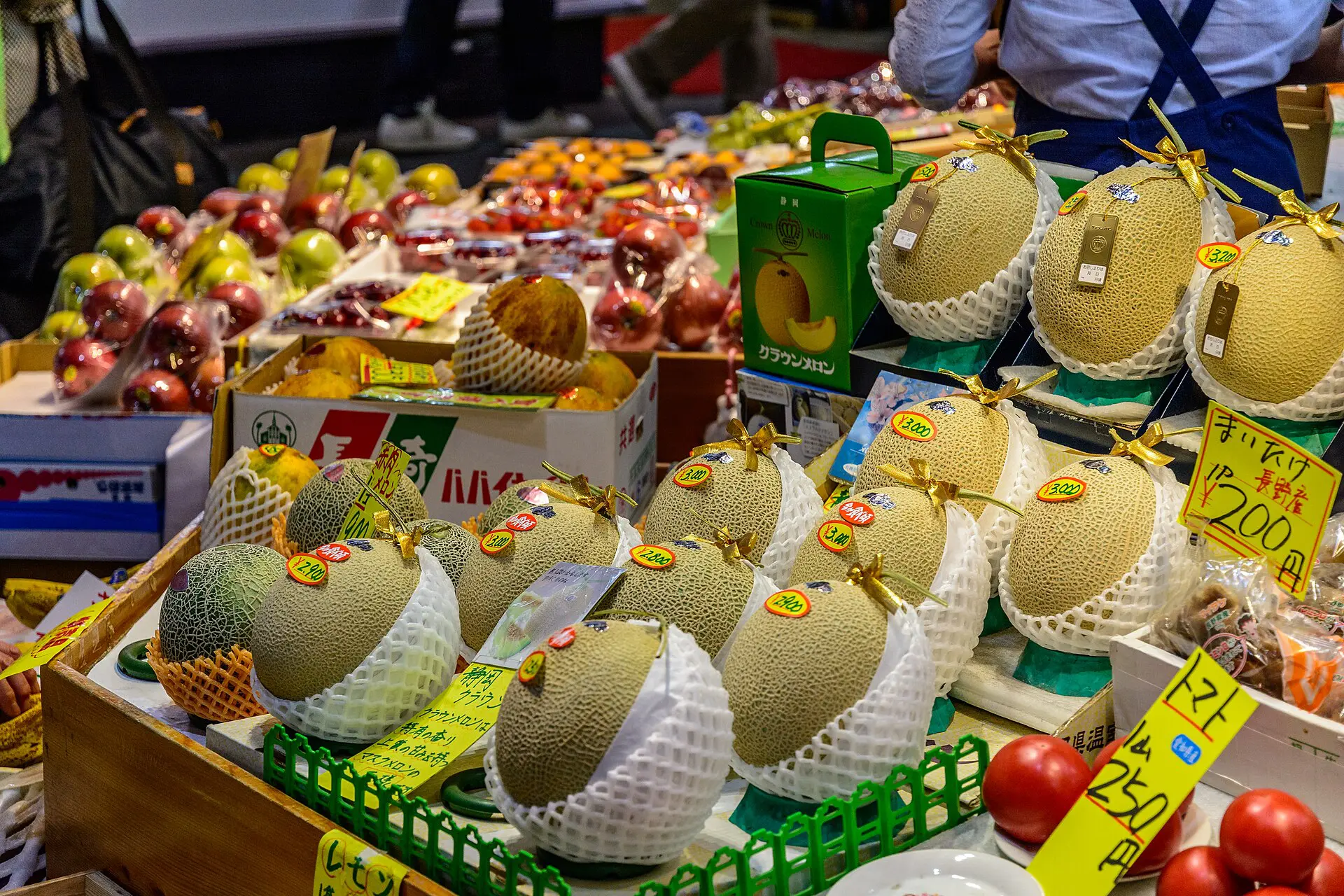
| Item | Typical street option | Rough band (USD) |
|---|---|---|
| Small snack | Dango, taiyaki, korokke | 1-2 |
| Snack portion | Takoyaki, karaage, yakitori skewers | 2-5 |
| Griddle meal | Okonomiyaki, yakisoba | 5-9 |
| Snack crawl | 3-4 items across a market | 8-15 |
Prices at festival stalls are fixed and often slightly higher than shop prices. Some stalls take cash only, so carry coins and small notes.
Japanese street food etiquette
The key rule is to eat where you buy. Walking and eating is considered impolite in many places, and some markets and shrine streets ask visitors not to do it. Stand near the stall, finish, then dispose of your waste.
- Bins are rare. Carry a small bag, return sticks and trays to the stall, and take rubbish with you.
- No tipping. Tipping is not part of Japanese service, and attempts to tip can cause confusion.
- Use two hands for money. Place cash on the small tray if there is one, and receive change politely.
- Say “itadakimasu” before eating and “gochisosama” when you finish. It is a small courtesy, not a demand.
- Chopsticks: do not pass food from chopstick to chopstick, and do not stand them upright in rice.
How to read a Japanese street food menu with a language barrier
Tourist markets tend to show photos, English signs or plastic models. Elsewhere, point to the item and hold up fingers. A translation app that reads Japanese text through the camera is useful for menu boards.
- Yaki means grilled or griddled, age means fried, mushi means steamed.
- Shio or tare: salt or sauce, the two ways yakitori is seasoned.
- Ippon, ni-hon: one stick, two sticks, and so on. Hold up fingers for quantity.
What to skip with Japanese street food
I would skip any stall with no queue and no turnover, and any item that has been sitting in a warmer for a long time. Raw seafood from open-air stalls in hot weather is worth checking carefully. Tourist-district lanes with rows of identical, oversize skewers are priced for visitors, not locals. If you have allergies, learn the words for egg, wheat, shellfish and soy before you go, as ingredients often hide in sauces. For more background, read the Wikipedia entry for Japan.
FAQ about Japanese street food
What is the most popular snack?
Takoyaki and yakitori are among the best known, with okonomiyaki, taiyaki and dango close behind. Which one dominates depends on the city and season. Osaka is known for takoyaki, Fukuoka for yatai stalls, and shrines for sweet dumplings.
Is street food common in Japan?
Less than in many Asian countries. Most casual eating happens at counters, convenience stores and food halls. Street stalls appear at markets, festivals and in a few evening districts. It is easy to find on festival days and at famous market streets.
Can you eat while walking in Japan?
It is usually considered impolite, and some markets and temple streets post signs against it. The norm is to eat at the stall or in a marked area. Rules vary by place, so follow local signs and what other people do.
How much should I budget for street food in Japan?
Roughly 8-15 USD for a snack crawl of several items, as of 2026, and less for a single snack. Costs vary by city and market, and festival stalls are often a little higher. Carry cash, because some stalls do not take cards.
Is Japanese street food safe?
Japan has strict hygiene standards, and food is cooked hot to order. Choose busy stalls, avoid anything that has sat out, and be careful with raw seafood in warm weather. If you have allergies, check ingredients, because sauces often contain wheat, soy or egg.