Cambodian street food starts at dawn with grilled pork over rice and a bowl of noodle soup, and it carries on through baguette sandwiches, fried snacks and night-market grills. Order bai sach chrouk (pork and rice) for breakfast, kuy teav (noodle soup) for the morning and num pang (a filled baguette) for a cheap lunch. A street meal is typically a few dollars, as of 2026. Below: what each dish is, when the stalls are at their best, what to pay and how to eat at a shared table.
How street meals are structured and timed in Cambodia
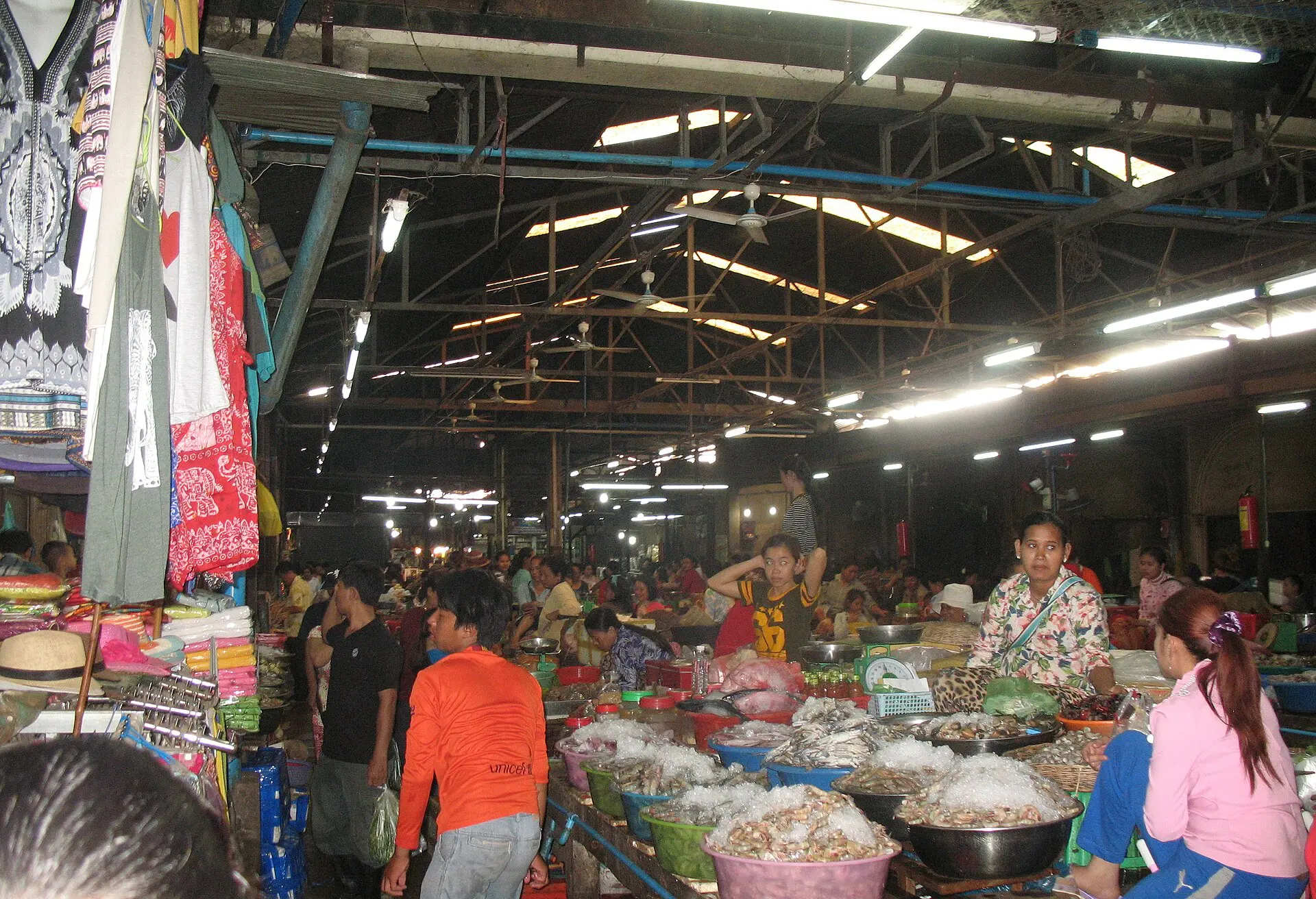
Cambodians eat early. Many stalls set up before 06:00, and breakfast is a full meal of rice or noodles, not a pastry. By 09:00 the best breakfast dishes are often gone, and the stalls move on to lunch rice plates and soups.
Lunch is the main meal for office workers and families, and it runs from about 11:00 to 13:00. Late afternoon brings sweet snacks, fruit and fried things. Evening is for night markets and grills, which start around dusk and run late.
Most Khmer meals are rice with shared side dishes. Even at a street stall, the logic is balance: something grilled, something sour, something salty and fresh herbs.
The ingredient story: rice, river fish and fermentation
The country is organised around rice paddies, the Mekong, the Tonle Sap lake and the coast. That gives you rice, freshwater fish and a long habit of fermenting. Prahok, a fermented fish paste, is the flavour base of many Khmer dishes. Kroeung, a fresh paste of lemongrass, galangal, turmeric, garlic and kaffir lime, flavours soups and curries. French colonial rule left bread, which is why a baguette sandwich is part of the street menu. Wikivoyage describes Khmer cuisine as less spicy than Thai, with chilli served on the side.
Eight Cambodian street foods and what to order first
1. Bai sach chrouk
Thin slices of pork, marinated with garlic and coconut milk and grilled over charcoal, served on broken rice with pickled cucumber and daikon. It is the breakfast dish, and one sign of a good stall is a charcoal grill already smoking while the street is still dark, because the pork has to be marinated and grilled fresh each morning. Order it first, and ask for a bowl of clear soup on the side. Often costs about 1-3 USD.
2. Kuy teav
A clear pork-bone broth with rice noodles, minced pork, herbs and fried garlic. You season it at the table with lime, chilli, sugar and fish sauce. It is a breakfast and a morning-after dish, and every region has its own version. Some stalls add offal, beef or seafood, so look at what is in the pot before you point.
3. Nom banh chok
Khmer noodles, made from fermented rice and pressed into fine strands, topped with a cool fish-based green curry made with lemongrass and turmeric, then heaped with banana flower, cucumber, green beans and herbs. It is served in the morning and sold from baskets and carts, and it is the dish locals often name as the real Cambodian breakfast. A bowl is typically under 2 USD.
4. Num pang
The Cambodian baguette sandwich, with pate, pickled carrot and daikon, cucumber, coriander and chilli, plus grilled pork or egg. It comes from the French era and the filling is local. Crisp bread is the key, so buy it from a stand with a steady queue, and eat it within minutes.
5. Amok
The signature dish of the country: fish, or sometimes chicken, in a coconut-milk custard with kroeung, steamed in a banana leaf. It is richer and more restaurant-style than street style, but market stalls and night markets sell smaller versions. It should be soft, not soupy. Check it is cooked hot and eat it with rice.
6. Lok lak
Stir-fried beef cubes in a dark, sweet-savoury sauce, served on lettuce, tomato and onion with a dip of lime juice and black pepper. It is a quick plate for lunch or dinner and is common at casual stalls and cafes. The pepper-and-lime dip is the point, so use it.
7. Grilled skewers and night-market snacks
From dusk, grills turn out chicken, pork and beef skewers, sausages, grilled fish, corn and sweet potato. Fried insects such as crickets and grasshoppers are sold as snacks, and the town of Skuon is known for fried tarantula. Fried insects are salty, crunchy and best eaten hot, with a squeeze of lime. They are for the curious, and entirely optional.
8. Num krok, sugarcane juice and kralan
Num krok are small coconut-rice cakes cooked in a hot mould, crisp outside and soft inside. Sugarcane juice is pressed to order and served over ice with a little lime. Kralan is sticky rice with beans and coconut milk, cooked in bamboo. Together they are the afternoon snack, and a rewarding end to a street walk.
Market timing for street food in Cambodia
- 05:30-08:30: breakfast pork and rice, noodle soups and fresh baguettes. Go early, because the best dishes sell out.
- 11:00-13:00: lunch rice plates, soups and stir-fries.
- 15:00-17:00: sweet snacks, fruit, juice and coconut cakes.
- From dusk: night markets with grills, skewers, noodles and sweet drinks.
Wet markets are busiest in the early morning and fade by late morning, while night markets in tourist towns open later in the evening. Hours vary by town and season, so check locally.

How much does Cambodian street food cost? Price bands
US dollars circulate alongside the riel, and many stalls quote in either. Small change often comes back in riel. The ranges below are indicative per person, as of 2026, and prices are usually higher in tourist areas.
| Meal | Where | Rough band (USD) |
|---|---|---|
| Breakfast noodles or pork and rice | Market or roadside stall | about 1-3 |
| Num pang | Baguette cart | about 1-2 |
| Lunch rice plate | Local eatery | about 2-4 |
| Night-market grill meal | Night market | about 3-6 |
| Sugarcane juice, snack | Street cart | under 1-2 |
Table etiquette for street food in Cambodia
- Spoon and fork: the spoon goes in your right hand, and the fork pushes food onto it. Chopsticks are used for noodle soups.
- Hands: use your right hand for passing and taking. Do not point with your foot or touch heads.
- Sharing: dishes arrive for the table. Take a little at a time, and leave the last piece for the host.
- Tipping: not expected at street stalls. In cafes and restaurants, small change or a dollar is welcome.
- Bargaining: food prices are usually fixed. Ask the price first if there is no board, and do not haggle over a few cents.
- Paper napkins: a tissue box on the table is normal, and wiping the spoon and fork before eating is common, so you will not offend anyone by doing it.
Where Cambodian street food is best by town
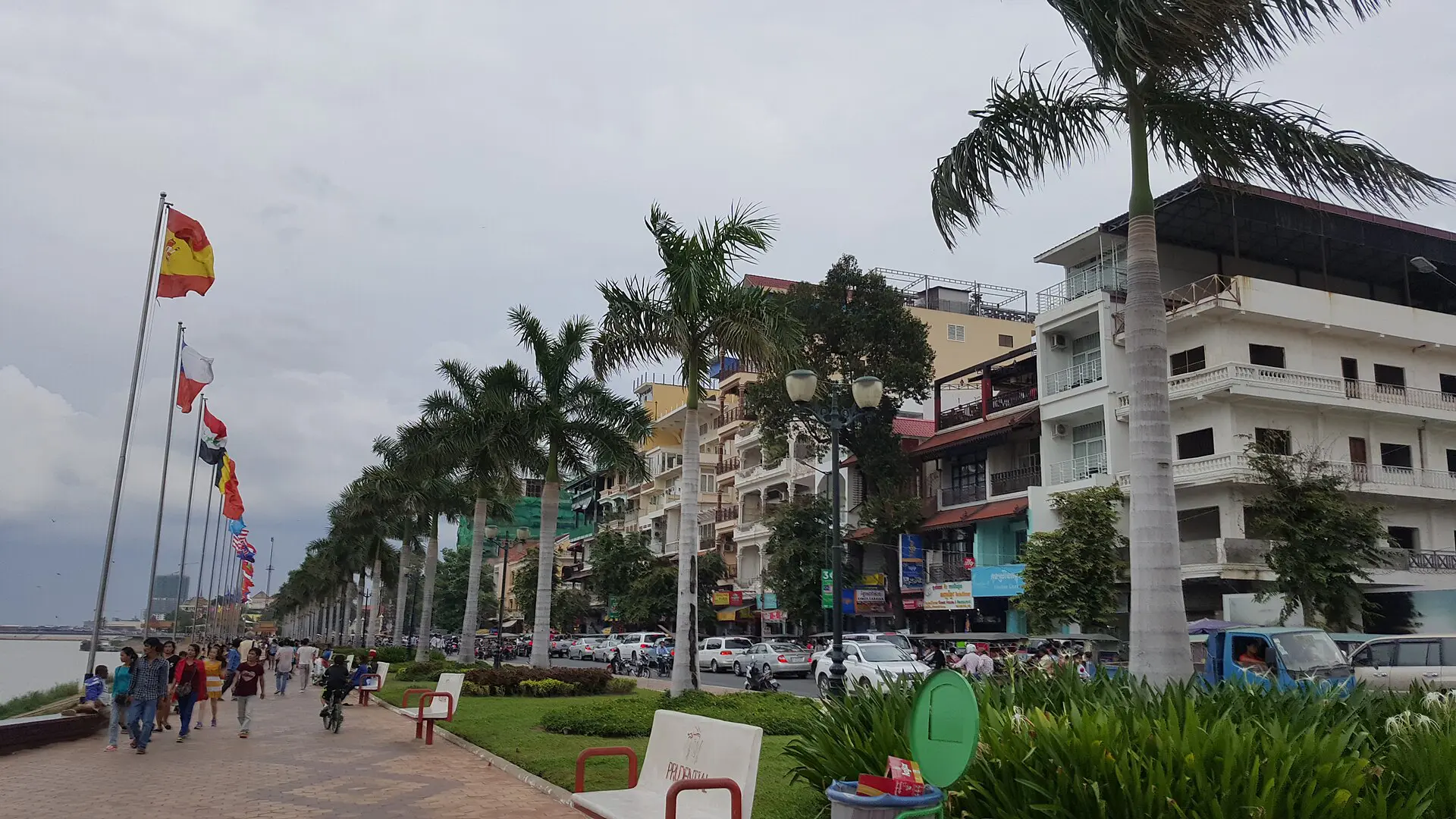
Phnom Penh has the widest range, from riverside breakfast stalls to evening grills in the residential districts, and it is the best place to compare kuy teav and nom banh chok side by side. Siem Reap has a visitor-oriented night-market scene and a good morning market, where Khmer breakfast is still cheaper than in the tourist streets.
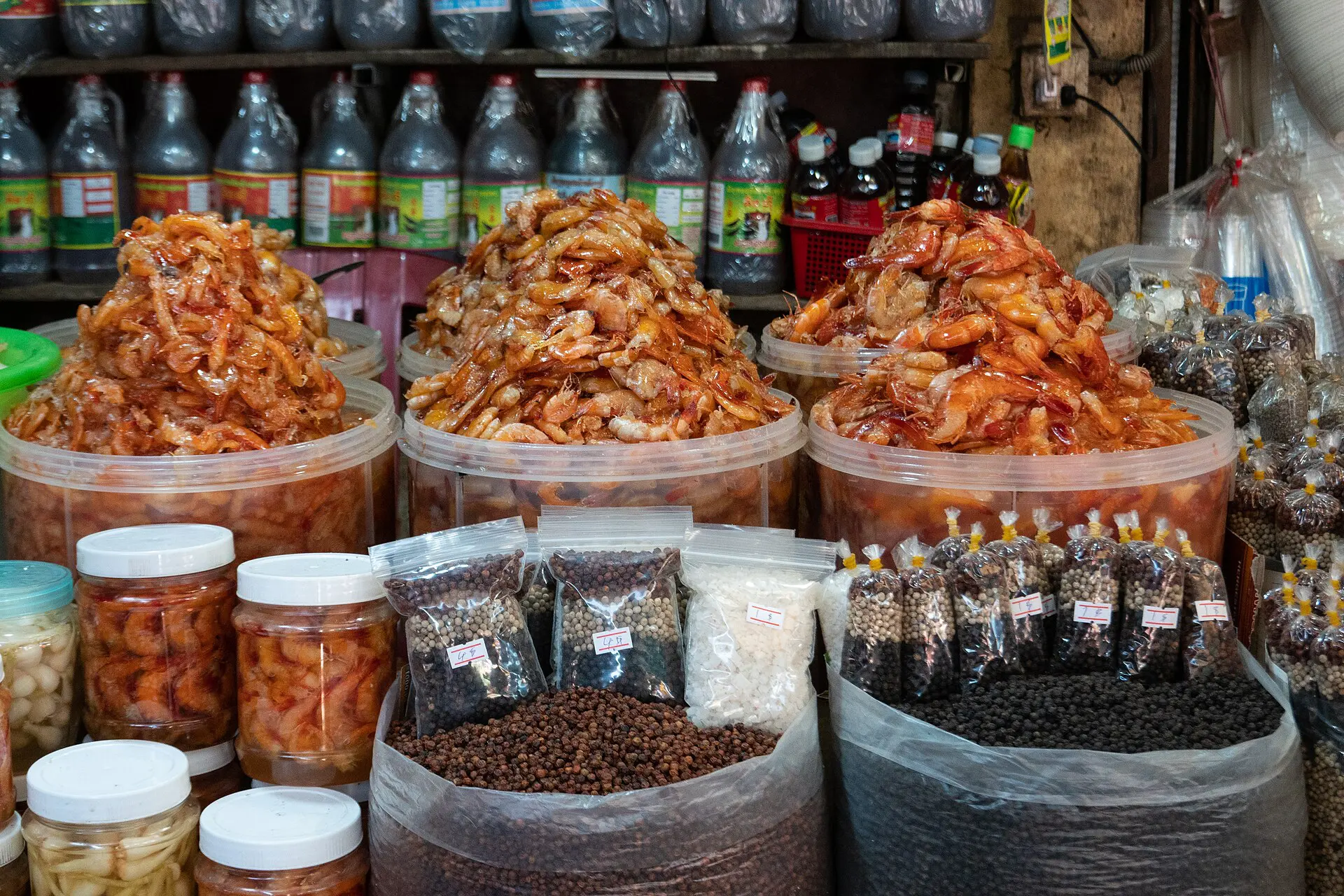
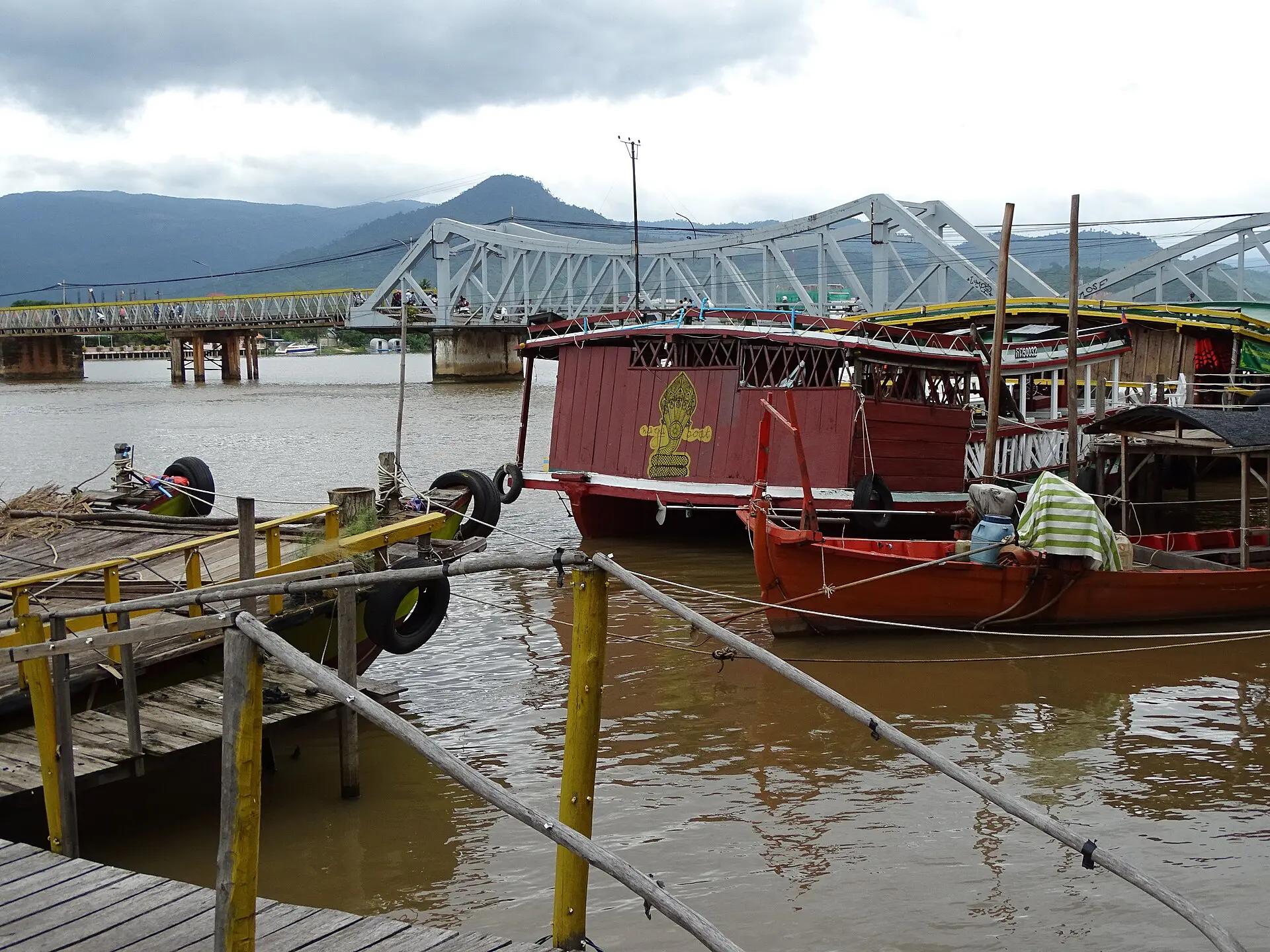
Battambang, in the north-west, is known for its rice-growing hinterland and quieter markets. On the south coast, Kampot is known for its pepper, and Kep for its crab market, where crab is cooked in Kampot pepper and sold by weight. Cambodia has no single food capital, which means that anyone interested in the regional variation in ingredients and technique is better off moving between several towns than staying in one.
How to order Cambodian street food with a language barrier
Point and smile is accepted. Most stalls show the food, so you can see raw ingredients, and many vendors in cities and tourist areas know basic English numbers. Useful words: som (please), aw kun (thank you), ot sa’art (not spicy) and mouy (one), which is enough to order a single portion.
A translation app helps with menu boards, which are often in Khmer. Look for the stalls with locals queuing and food turning over quickly, since that signals freshness better than any sign. For dishes with fish paste, ask before ordering if the smell is a concern, as prahok has a strong aroma.
What to skip when eating street food in Cambodia
- Ice of unknown origin. Cambodian cities usually make tube ice commercially, but if in doubt stay with bottled drinks.
- Food that has been sitting out, especially fish and meat in the heat. Choose grills cooked in front of you.
- Raw or lightly cooked river fish and uncooked herbs if you have a sensitive stomach.
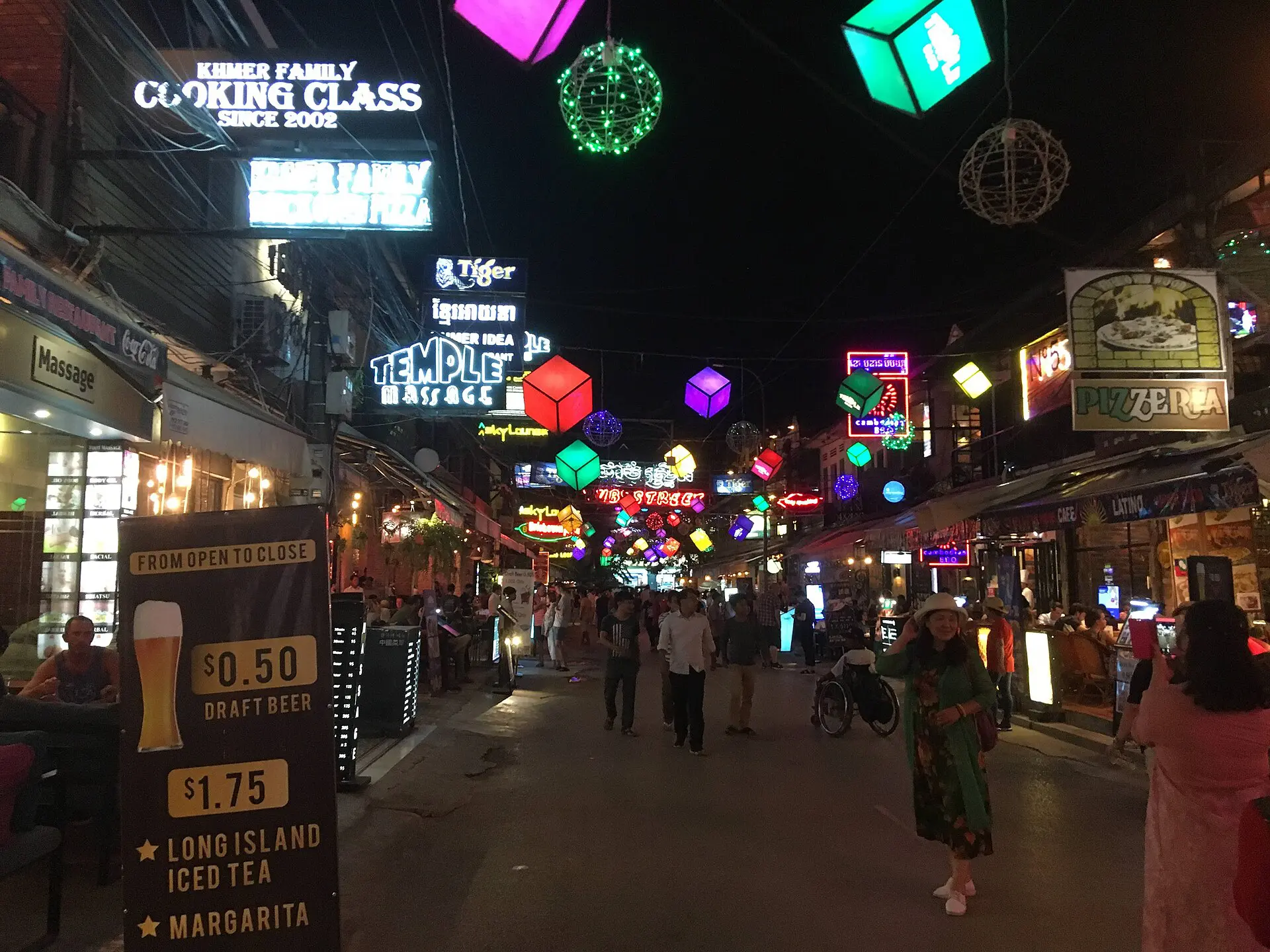
- Over-photographed tourist strips, where prices are often higher than at the next market.
- Fried tarantula, unless you are curious. It is a novelty, not a staple.
I would also bring hand sanitiser and tissues, since many stalls have no sink. See the Cambodia travel guide for planning, Wikivoyage’s Cambodia page for practical notes and the Wikipedia entry for Cambodia for background.
FAQ about Cambodian street food
Is Cambodian street food safe to eat?
Mostly, if you choose well. Pick busy stalls with fast turnover, food cooked hot in front of you and clean utensils. Avoid anything that has been sitting out, and be careful with ice and raw salads. Ask your doctor about vaccines and stomach advice before you travel.
Is Cambodian food spicy?
Not by default. Khmer cooking relies on herbs, lemongrass, galangal and fermented fish paste for flavour, with chilli added at the table or served as a side. It is generally milder than Thai food, so you control the heat.
What is the national dish of Cambodia?
Amok, a coconut and fish curry steamed in a banana leaf, is usually named as the national dish. Nom banh chok, the morning rice-noodle dish with green fish curry, is the one many Cambodians would call everyday food.
Do I need cash for street food in Cambodia?
Yes. Street stalls take cash, either US dollars or riel, and some accept local QR payments. Carry small notes, because change for large bills can be hard to find. Small bills of both currencies are useful, and ATMs usually dispense dollars.
Can vegetarians eat Cambodian street food?
It is harder than in some countries. Fish sauce, prahok and meat stock are widespread, even in noodle soups and vegetable dishes. Fruit, sticky rice, coconut cakes, fried bananas and sugarcane juice are safe snacks. Ask for “no meat, no fish sauce” in Khmer with a translation app, and expect some misunderstanding.