A first solo trip checklist for the final week is short: confirm your documents, book your first night and your route from the airport, set up your phone and money, and tell one person your plan. Everything else can stay loose. Settling the first 24 hours is what makes the rest of the trip feel easy.
First solo trip checklist: the short version
- Seven days out: check passport validity, entry rules and insurance, then book the first two nights.
- Three days out: sort your phone, money and backups, and pick your airport route and arrival window.
- The day before: share your plan, charge everything and pack one day of essentials in your carry-on.
- On arrival: get to your bed in daylight if you can, and leave days two and three open.
Step by step: seven days out to departure
1. Seven days out: documents, rules and insurance
Check that your passport is valid for the length of time your destination requires, which often extends beyond your travel dates. Check entry rules, visas and any online forms with the official government source for the country. As of 2026 these change often, so do not rely on a blog. Get travel insurance that matches your plans and read what it excludes. Take photos of your passport and policy and store them somewhere other than your phone.
2. Six days out: choose your area and book the first two nights
Pre-book two nights, not the whole trip. Pick a central, well-reviewed neighbourhood within a short, simple ride of where you arrive, and read reviews for mentions of staff, lighting on the street and the walk to food. A hostel with a common room or a small guesthouse with a host makes it easier to meet people. Check the check-in hours and message ahead if you will arrive late.
3. Four days out: set your arrival card
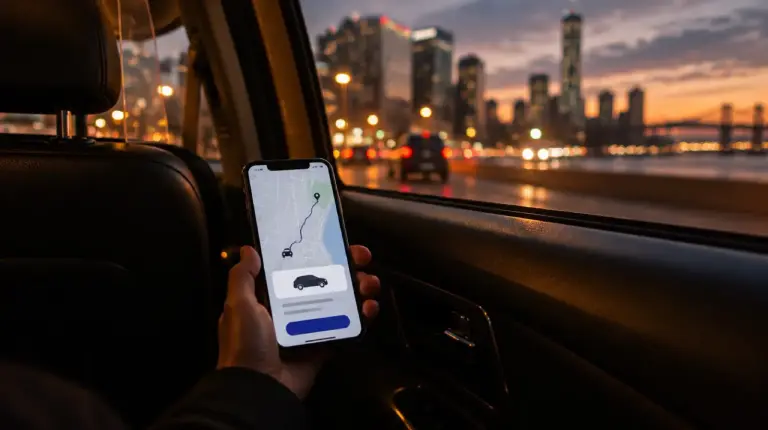
Write a simple arrival card: flight time, a realistic landing-to-bed time of about two to three hours, the route from the airport, a fallback ride and the accommodation address in the local language. Aim for daylight or early evening if you can choose. If your flight lands late, arrange a pickup or book a room next to the airport for one night. The best countries for a first solo trip compares places where this first day is simplest.
4. Three days out: phone, money and backups
Unlock your phone, or choose a travel eSIM or local SIM, and download offline maps for your arrival area. Carry two payment cards stored separately, a small amount of local cash and a note of your bank’s overseas phone number. Tell the bank your travel dates if it asks. Set up a password manager or a recovery email so a lost phone does not lock you out of everything.
5. Two days out: meet-people plan and what to leave open
Pick one low-pressure way to meet people in your first three days: a walking tour, a cooking class, a hostel dinner or a day trip with a small group. Book that one thing. Leave everything else open, because plans change with weather, energy and company. The how to meet people when travelling solo guide has more options, starting with the easiest.
6. The day before: share your plan and pack your carry-on
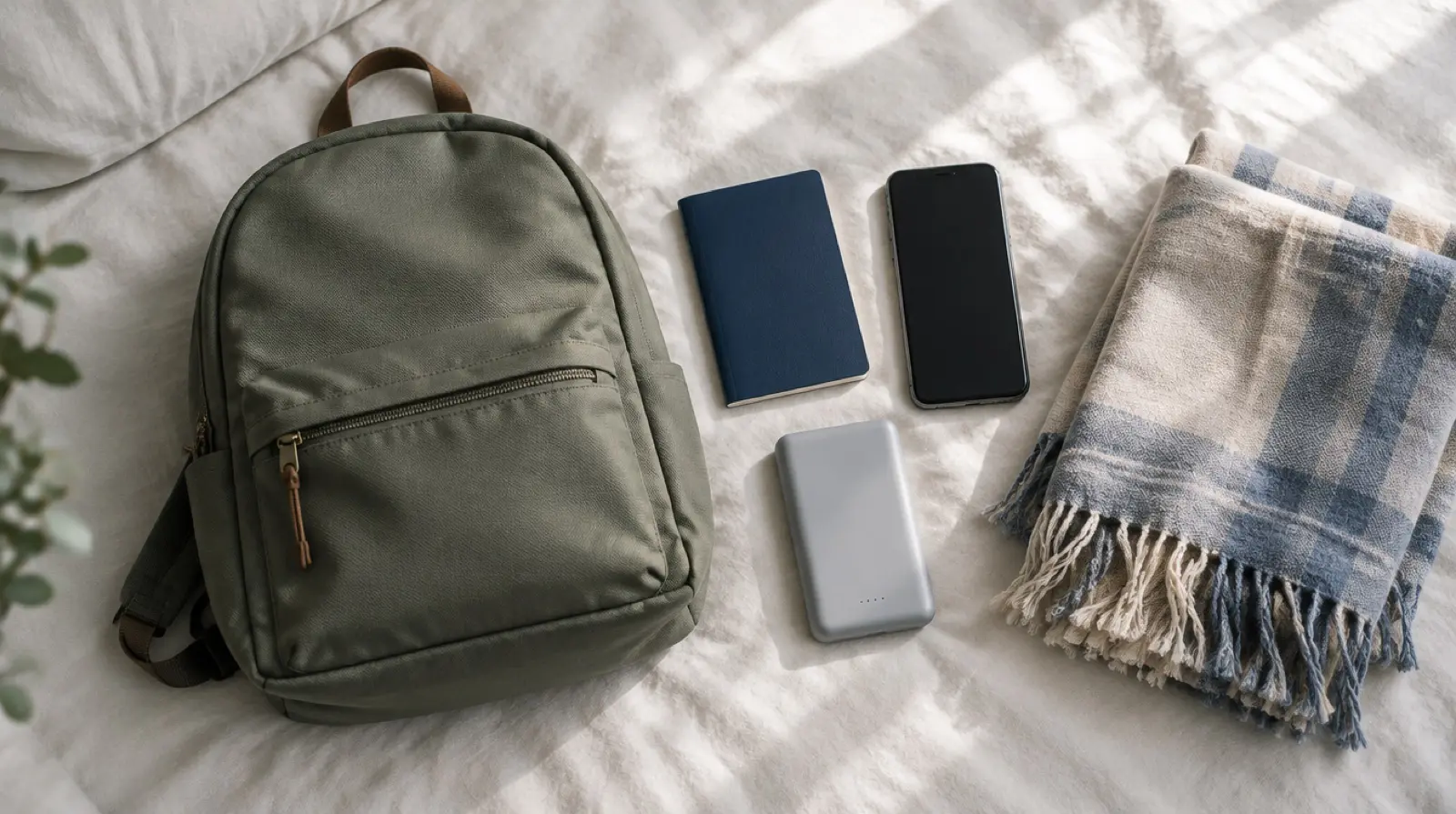
Send one trusted person a short note: flights, accommodation for the first nights, your phone number abroad and when you will check in. Agree a simple rhythm, such as a message every day or two. Pack your carry-on as if the checked bag arrives late: a change of clothes, chargers, medication, copies of documents and a small power bank. For after dark, save the numbers of a taxi firm and your accommodation.
Week-before timeline at a glance
| When | Do | Leave open |
|---|---|---|
| 7 days out | Passport, entry rules, insurance, first nights | Everything after night two |
| 4 days out | Airport route, arrival window, fallback ride | Sightseeing order |
| 3 days out | Phone, cards, cash, offline maps | Where you eat |
| 2 days out | One group activity or day trip | Free afternoons |
| 1 day out | Share plan, pack carry-on, charge devices | The next stop |
Common mistakes before a first solo trip
- Booking every day, then feeling trapped by the schedule. Pre-book the start and one activity.
- Arriving late and tired because the flight was cheaper. Count the cost of a stressful first night.
- Carrying everything in one bag. Split cards, cash and copies between two places.
- Skipping a plan for the evening. Know where you will eat on night one and how you will get there.
- Over-packing. A bag you can lift alone on a staircase is the right size.
It also helps to decide your boundaries in advance. A script such as “No, thank you, I’m fine” is enough, and you do not need to explain. Knowing it in advance makes it easier to use on a tiring day.
What to verify before you go
Rules about entry, health and local conditions change, so check them close to departure. Read the destination page on the UK foreign travel advice or the US State Department travel advisories. Ask a doctor or travel clinic about vaccines and any medication, and confirm with your insurer what your policy covers, including delayed bags, cancellations and your phone. Check airline baggage rules directly before you pack.
First solo trip FAQ
How far ahead should I book my first solo trip?
Flights and long-distance transport are often best booked several weeks ahead, depending on season and route. Accommodation for the first two nights should be fixed before you fly, and the rest can be booked as you go. Check cancellation terms so that changing your mind costs little.
What should I pack for a first solo trip?
Pack light enough to carry your bag alone up a flight of stairs. Include copies of documents, a power bank, a basic first-aid kit, any regular medication and a change of clothes in your carry-on. A zipped cross-body bag and a lock for hostel lockers are worth having.
Should I tell people where I am going?
Yes, share your flights, accommodation and a way to reach you with at least one trusted person, then agree how often you will check in. You do not need to post anything publicly. Many people share plans after arriving rather than in real time online.
What if I get lonely or overwhelmed on a solo trip?
It is common and usually passes. Rest, eat and call someone at home. Book a group activity or choose a social hostel for a night. You can also change your plan: a slower day, a longer stay or even an earlier flight home are all fine options, and none of them is a failure.