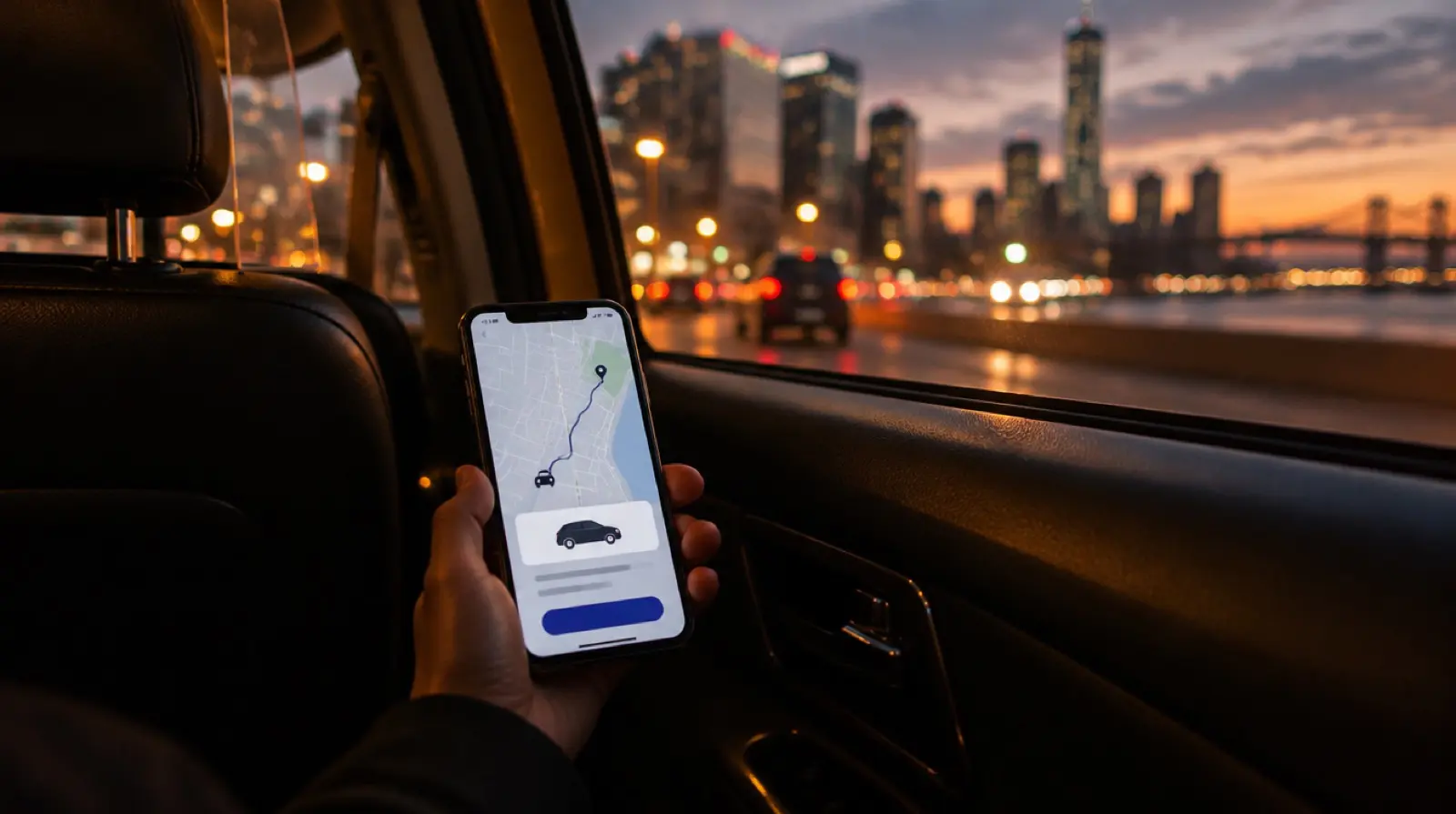
How to take a safe taxi abroad comes down to one habit: decide the ride before you are standing at the kerb with luggage. Pick an official rank or a booked ride, match the car and driver to your booking, sit in the back and share the trip with someone. That takes about two minutes and works in almost any city.
How to take a safe taxi abroad: the short version
- Choose your ride type before you land: an official rank, an app, or a pickup arranged by your accommodation.
- Check the car, the plate and the driver against what you were sent before you open the door.
- Sit behind the passenger seat, keep your bag with you and share the trip with a person you trust.
- Know your exit: if the ride feels wrong, ask to stop somewhere busy and lit, and get out there.
Step by step: a pre-ride routine you can repeat anywhere
1. Pick the ride type before you arrive
The most pressured moment is the arrivals hall, tired, with bags, when strangers offer lifts. Remove the decision. Before you fly, look up how people usually get from the airport or station to the centre: a fixed-price desk, a metered rank, a ride-hailing app, or a transfer your guesthouse can book. Screenshot the answer. If you land after dark, a pre-booked pickup is worth a few extra dollars; the arriving alone at night travel tips cover the full first-evening plan.
2. Set up your apps and data before you need them
Ride apps need a working phone, a payment method and often a local number or data. Download the main ride-hailing app for your destination at home, add a card, and check it opens with your foreign account. Sort out roaming, a travel eSIM or a local SIM so you are not hunting for Wi-Fi on the pavement. Save your accommodation address in the local language, plus an offline map, so you can follow the route.
3. Run the five-second car check
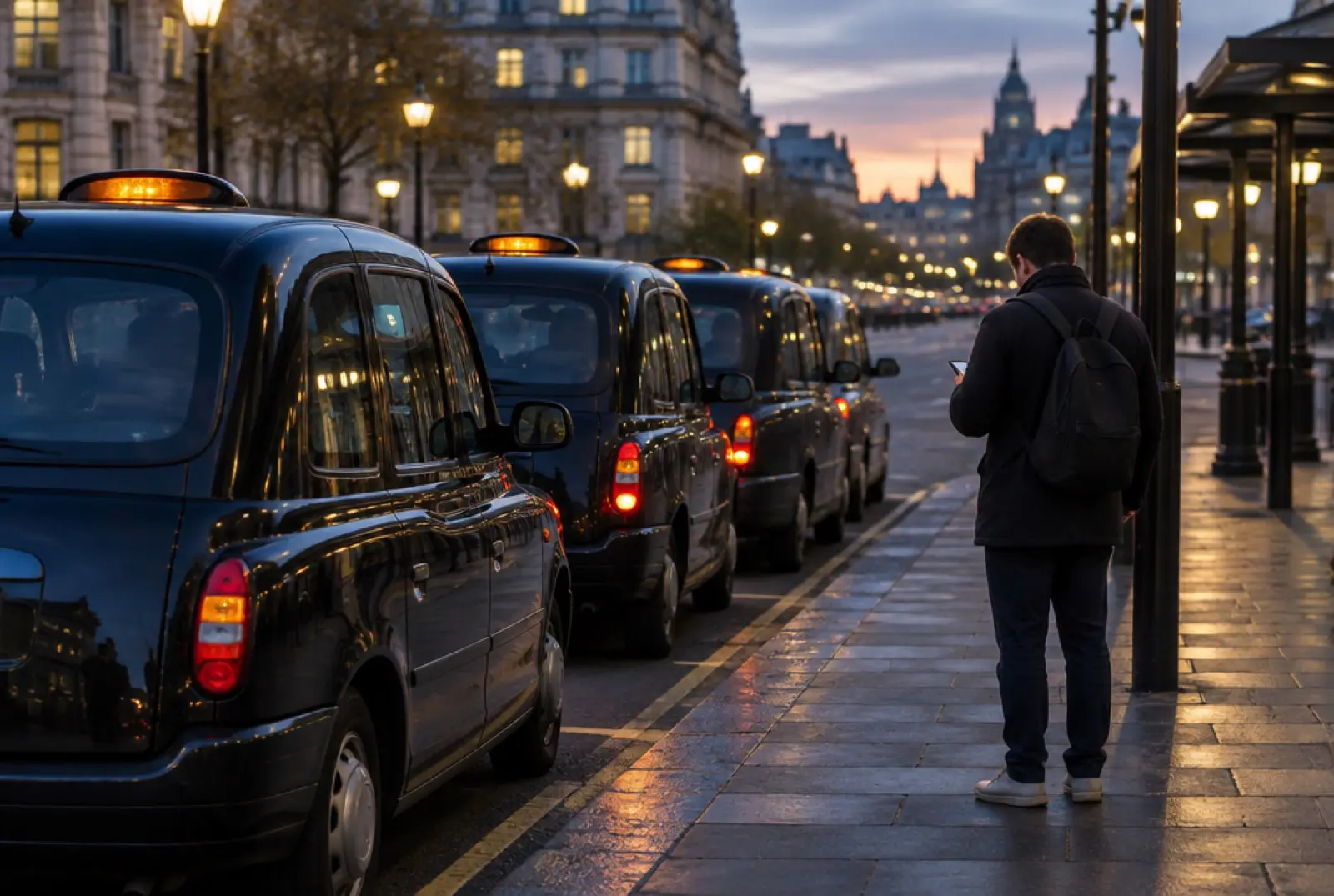
Before opening the door, compare four things with your booking: the plate, the car make and colour, the driver’s name and the driver’s photo. Ask “who are you here for?” rather than “are you my driver?”, so a stranger cannot just say yes. For street taxis, look for a licence, a meter and official markings, which vary by country. If any detail does not match, do not get in. Cancel and request again.
4. Agree the price, or insist on the meter
Disputes over fares are the most common taxi problem, and they are usually about money rather than safety. With an app, the price is on the screen. With a street taxi, either ask for the meter to be on before you move or agree a total fare out loud and confirm it twice. Check the local currency and note rough fares in advance so a quote does not surprise you. Pay with small notes you have separated earlier.
5. Sit in the back and share the trip
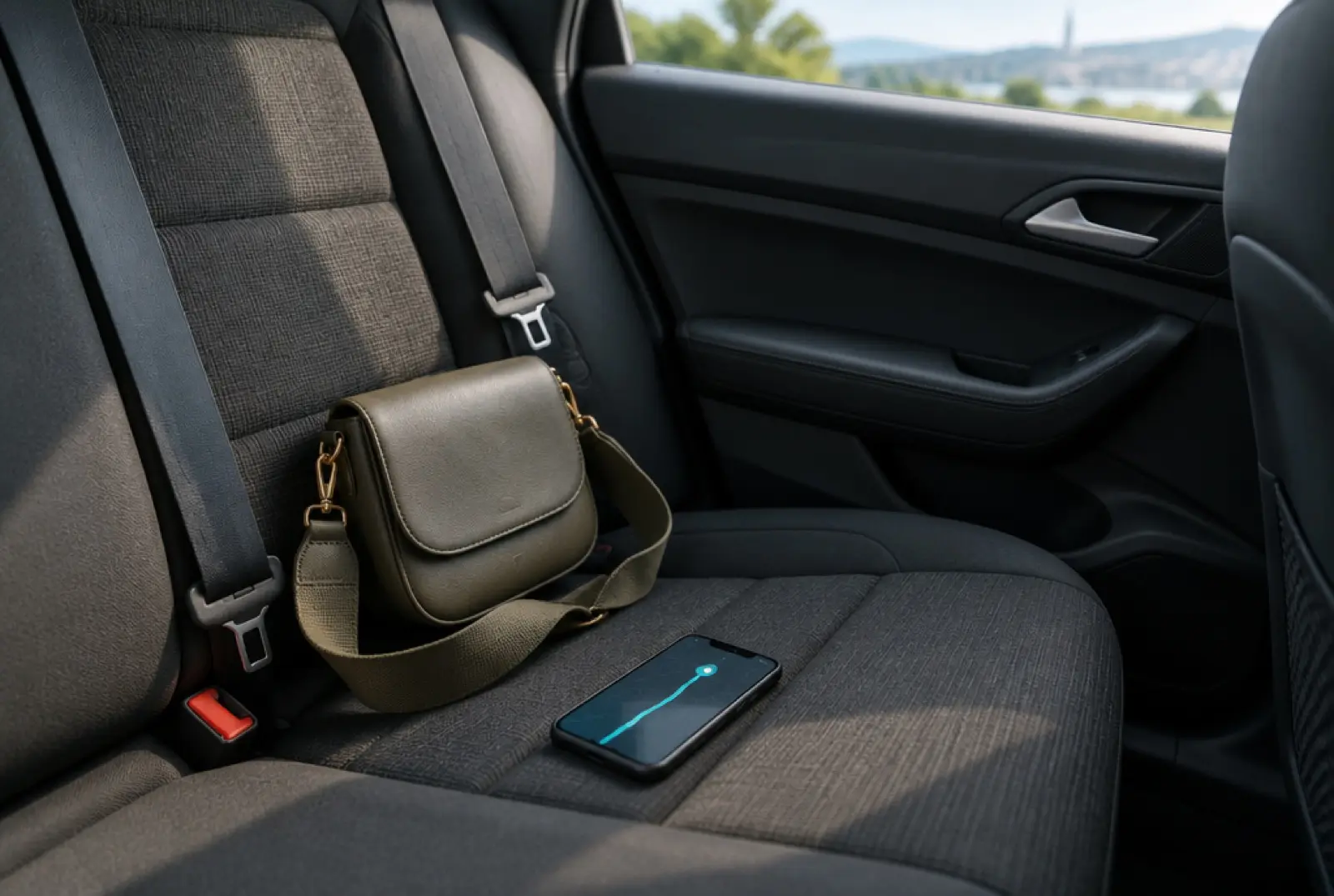
Take a rear seat behind the front passenger, where you can reach either door and the driver cannot easily turn to you. Keep your phone and bag on your lap or beside you rather than in the boot. Use the app’s share-trip feature, or message a friend the plate number and a screenshot of the route. Follow the route on your offline map; a different road is not always a problem, but you can then ask about it calmly.
6. Use a boundary script if it feels wrong
You do not need proof to leave a ride that feels off. Say it plainly: “Please stop here, this is fine for me.” If the driver wants to chat and you do not, “I need to take a call” works. If the driver ignores a request to stop, call someone on speaker and say your location out loud, then ask for the next busy junction, petrol station or hotel entrance. Getting out first and arguing about the fare later is a sound trade.
Taxi and ride-hailing options compared
| Option | Good for | Check before you go |
|---|---|---|
| Official airport or station desk | Fixed fare, first arrival, late flights | Where the desk is and how to pay |
| Ride-hailing app | Seeing the driver, plate and route | Whether it works in your destination and what local data you need |
| Hotel or hostel pickup | Arriving after dark | Driver name and plate sent in advance |
| Licensed street taxi | Short hops where apps are patchy | Meter on, licence visible, fare agreed |
| Unmarked offers in arrivals | Nothing: skip it | Walk to a rank or open your app |
Common mistakes with taxis abroad
- Accepting the first offer in arrivals because you are tired. Walk to the rank or open the app instead.
- Sharing a ride with strangers at night. Your own booking is easier to track.
- Waiting at the roadside with your phone out. Wait inside, in a lobby or shop, until the car arrives.
- Letting your battery fall below 20 percent before a late ride. Charge it first, or carry a small power bank.
- Feeling you must be polite. A short, calm no is complete.
It also helps to stay in an area where it is easy to find a reliable ride home. Neighbourhoods near a busy station or a main road usually make this simpler than a quiet backstreet, and hostels or guesthouses can often order a car for you.
What to verify before you go
Taxi rules, fares and app availability change by city and over time, so check them rather than relying on this page. Read the transport section of your government’s advice: the UK foreign travel advice or US State Department travel advisories. Ask your accommodation which ride options they trust and what a normal fare from the airport looks like, and check with your insurer whether your policy covers what you carry. If you are heading somewhere with specific advice for women, solo female travel in Colombia shows how a country plan fits together.
Safe taxi abroad FAQ
Are ride-hailing apps safer than street taxis abroad?
Often, because the app records the driver, plate and route and lets you share your trip. But apps are not available or reliable everywhere, and an unofficial car can still pose as yours. Match the details every time, and in places without apps, use an official rank or a pickup arranged by your accommodation.
Where should I sit in a taxi as a solo traveler?
Most people choose the back seat behind the front passenger. You can reach both rear doors, keep distance from the driver and keep your bag beside you. Check that the rear door opens from the inside when you get in.
What should I do if a taxi driver takes a different route?
Follow your offline map. If the route seems longer but traffic or roadworks explain it, a calm question is enough. If you feel uneasy, ask to stop at the next busy, well-lit place and get out. You can settle the fare afterwards from a safer spot.
Should I tell the driver I am travelling alone?
You do not need to share it. If asked, you can say you are meeting friends or that someone is expecting you, and keep any detail about your plans short. A shared trip and a friend who knows your plate number matter more than anything you say aloud.