Why visit Uganda
This Uganda travel guide starts with the main reason people go: wildlife that is hard to match for its variety. The country holds about half of the world’s mountain gorillas, chimpanzees, savannah elephants, lions, tree-climbing lions and more than a thousand bird species, spread across a land area of about 241,550 square kilometres (see the Wikipedia overview for background). Winston Churchill called it the Pearl of Africa, and the nickname still sticks because the landscape ranges from snow-capped Rwenzori peaks to Lake Victoria and the upper Nile.
Uganda suits travellers who want serious wildlife and adventure without the crowds of Kenya or Tanzania, and who accept that logistics take effort: long drives, rough roads in the west and a tourism sector that is still developing. It works for couples on a gorilla-focused trip, birdwatchers, backpackers using local transport and families on a guided safari. English is an official language, which makes independent planning easier than in many neighbouring countries.
Best places to visit in Uganda
The best places to visit in Uganda are mostly in the south and west, with the Nile and one major savannah park to the north. Distances are large, so choose two or three regions rather than trying to see everything.
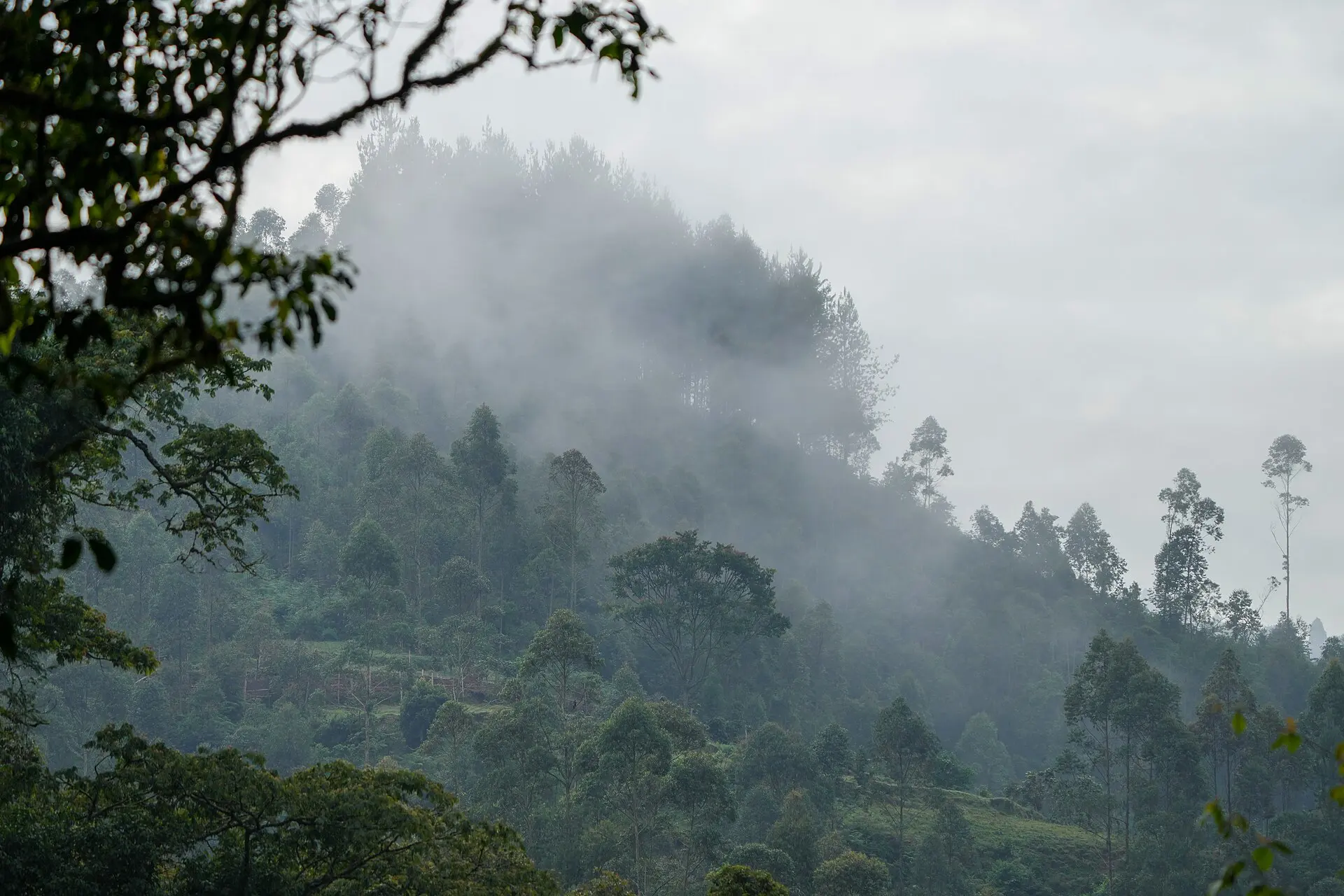
Bwindi Impenetrable National Park
This UNESCO-listed forest in the south-west is the main base for mountain gorilla trekking. Treks are by permit, in small groups, and last from one hour to most of a day depending on where the gorilla family has moved. Sectors such as Buhoma, Ruhija, Rushaga and Nkuringo each have their own lodges.
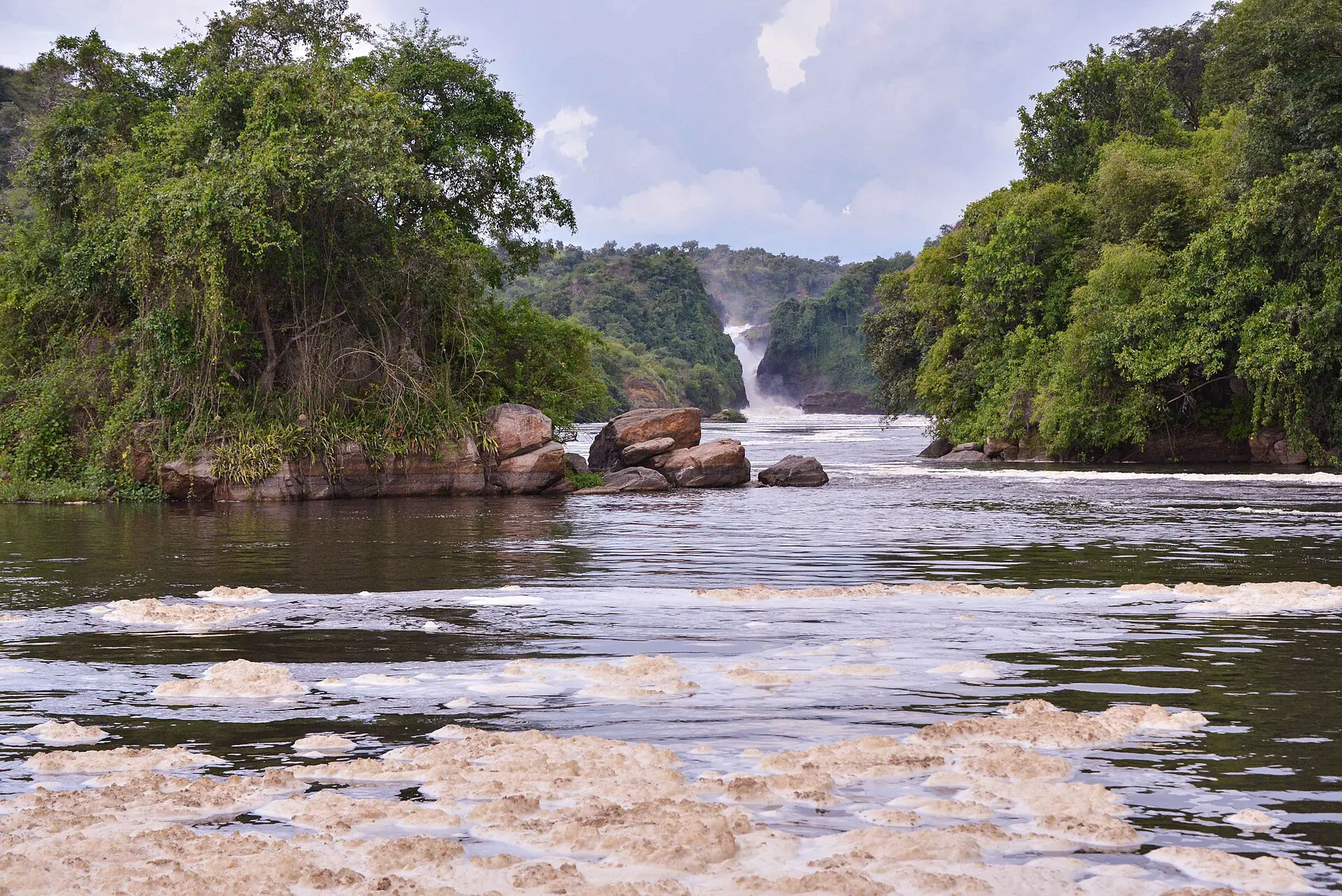
Murchison Falls National Park
In the north-west, the Nile squeezes through a narrow gap and drops about 43 metres. The park combines boat trips below the falls, game drives for giraffe, elephants and lions, and a walk to the top of the falls.
Queen Elizabeth National Park
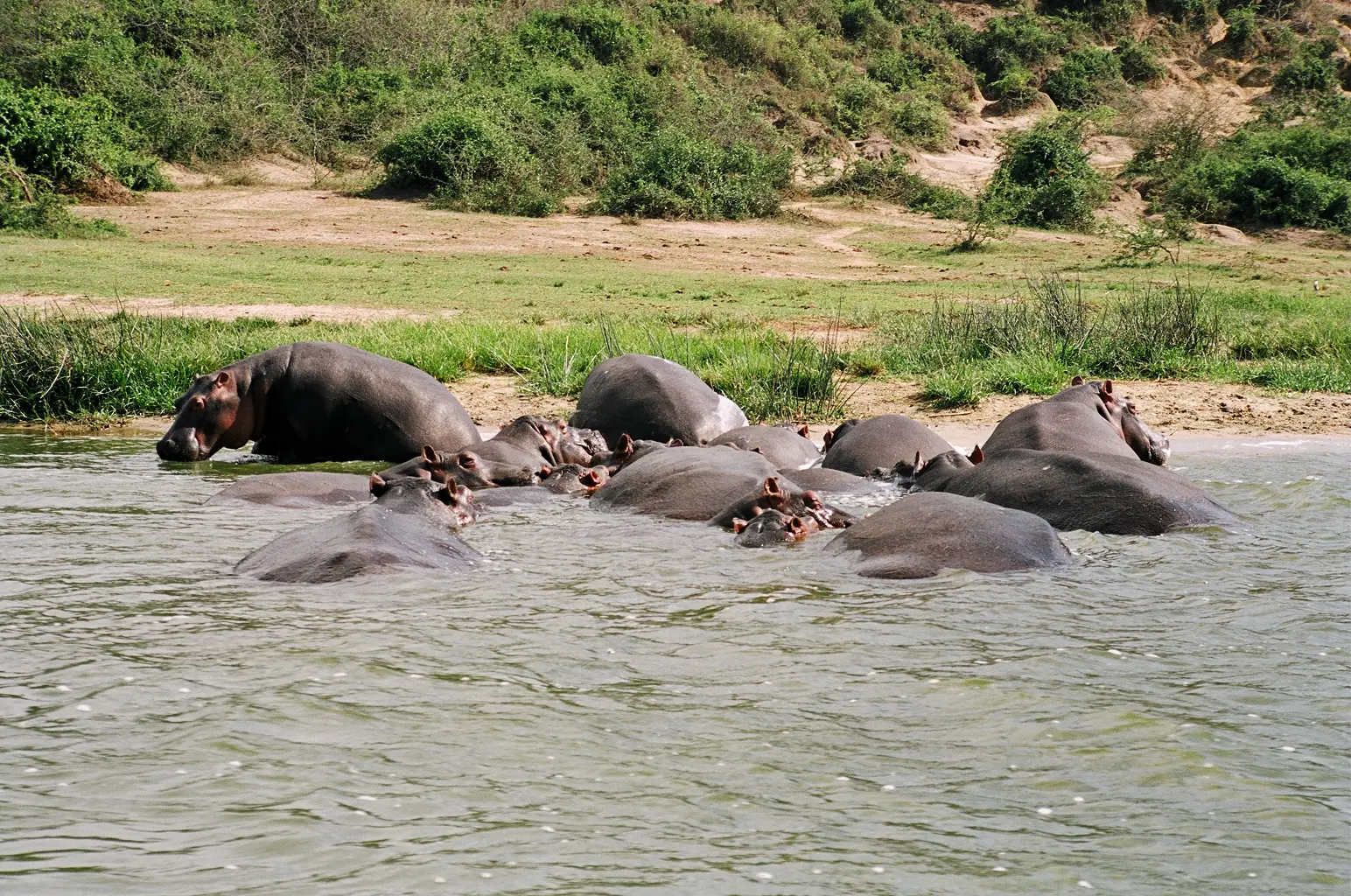
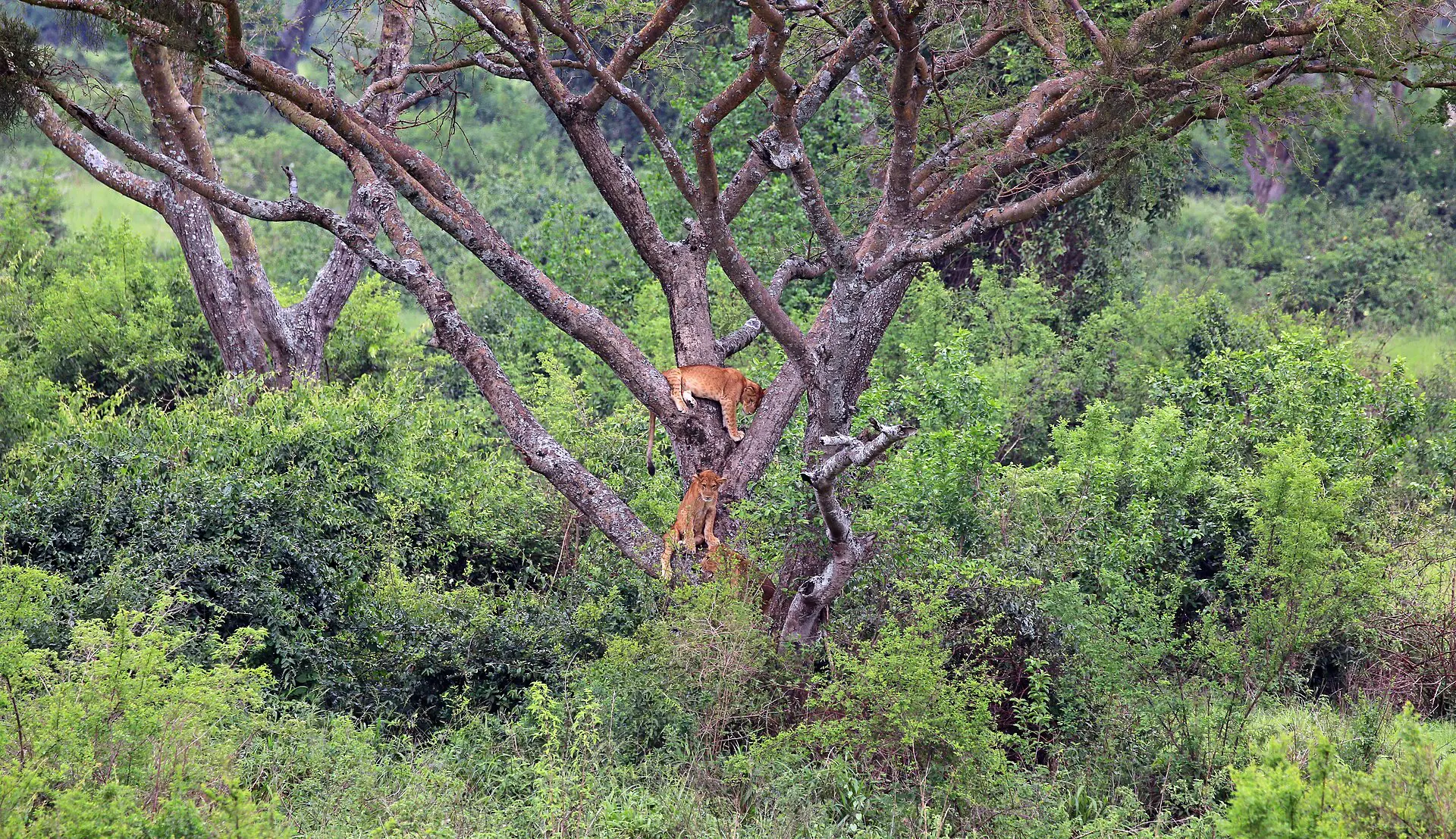
Known for the Kazinga Channel boat cruise, large hippo and buffalo numbers and tree-climbing lions in the Ishasha sector. It links neatly with Bwindi on the way south.
Kibale National Park and Fort Portal
Kibale has one of the highest densities of primates in Africa, and chimpanzee tracking is the main draw. Fort Portal is a calm highland town set among tea estates, with crater lakes nearby.
Jinja and the source of the Nile
Jinja is the adventure hub, with white-water rafting, kayaking and bungee jumping on the Nile, about two hours from Kampala.
Lake Bunyonyi
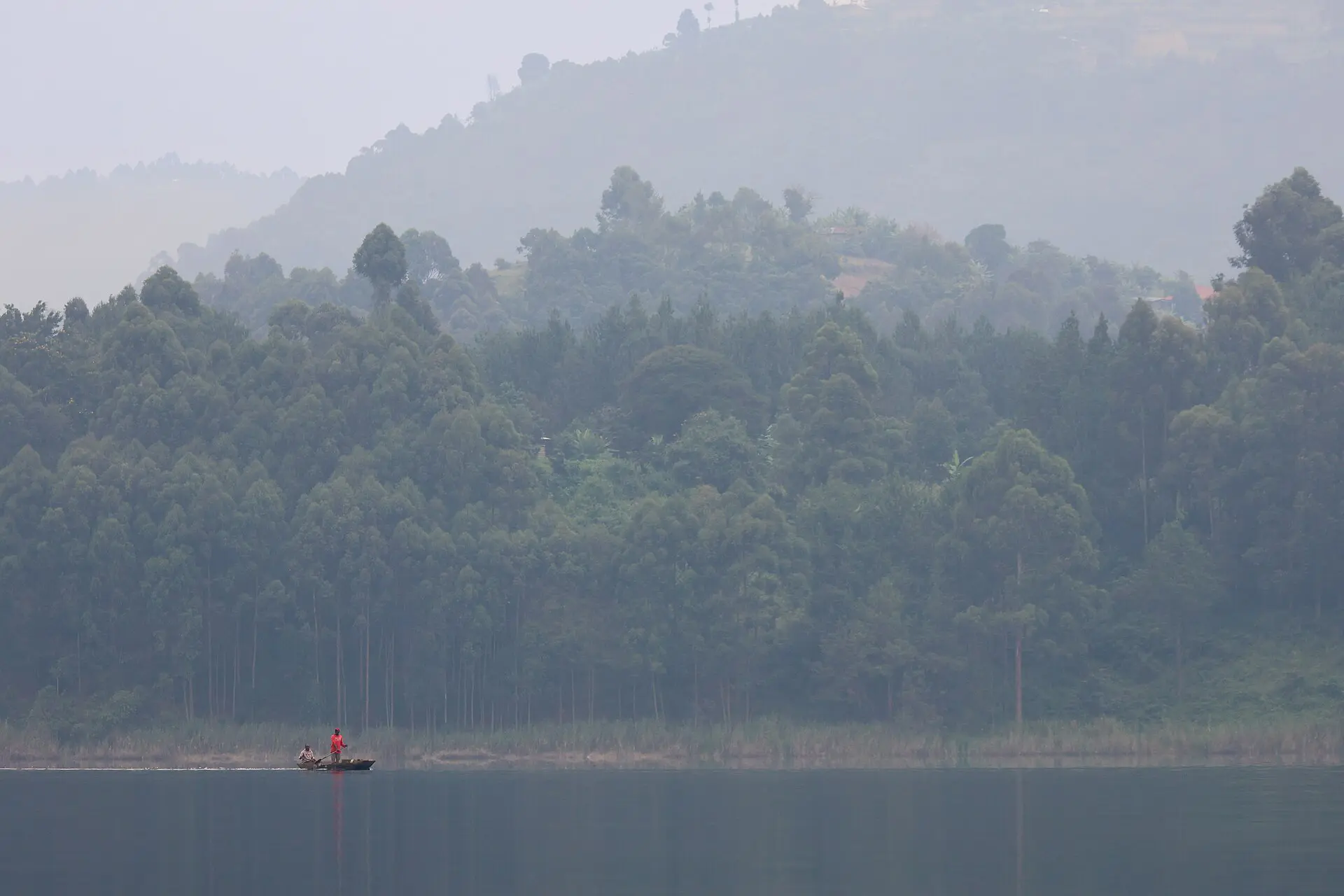
A deep, calm lake near Kabale with terraced hills and islands, ideal for a rest day between gorilla treks.
Top things to do in Uganda
The top things to do in Uganda revolve around primates, water and big game, and most can be combined in ten days or two weeks.
- Trek mountain gorillas: spend an hour with a habituated family in Bwindi or Mgahinga, with a permit booked well in advance.
- Track chimpanzees in Kibale: a morning walk gets you close to wild chimps, with habituation experiences available for a full day.
- Cruise to Murchison Falls: the boat trip passes crocodiles, hippos and elephants on the banks before reaching the base of the falls.
- Raft the Nile at Jinja: grade 5 rapids suit confident swimmers, while gentler options exist for beginners.
- Take a launch on the Kazinga Channel: large herds drink at the water’s edge in Queen Elizabeth National Park.
- Search for tree-climbing lions: the Ishasha sector is the best-known area for them.
- Paddle a dugout on Lake Bunyonyi: a quiet way to see the islands and birdlife.
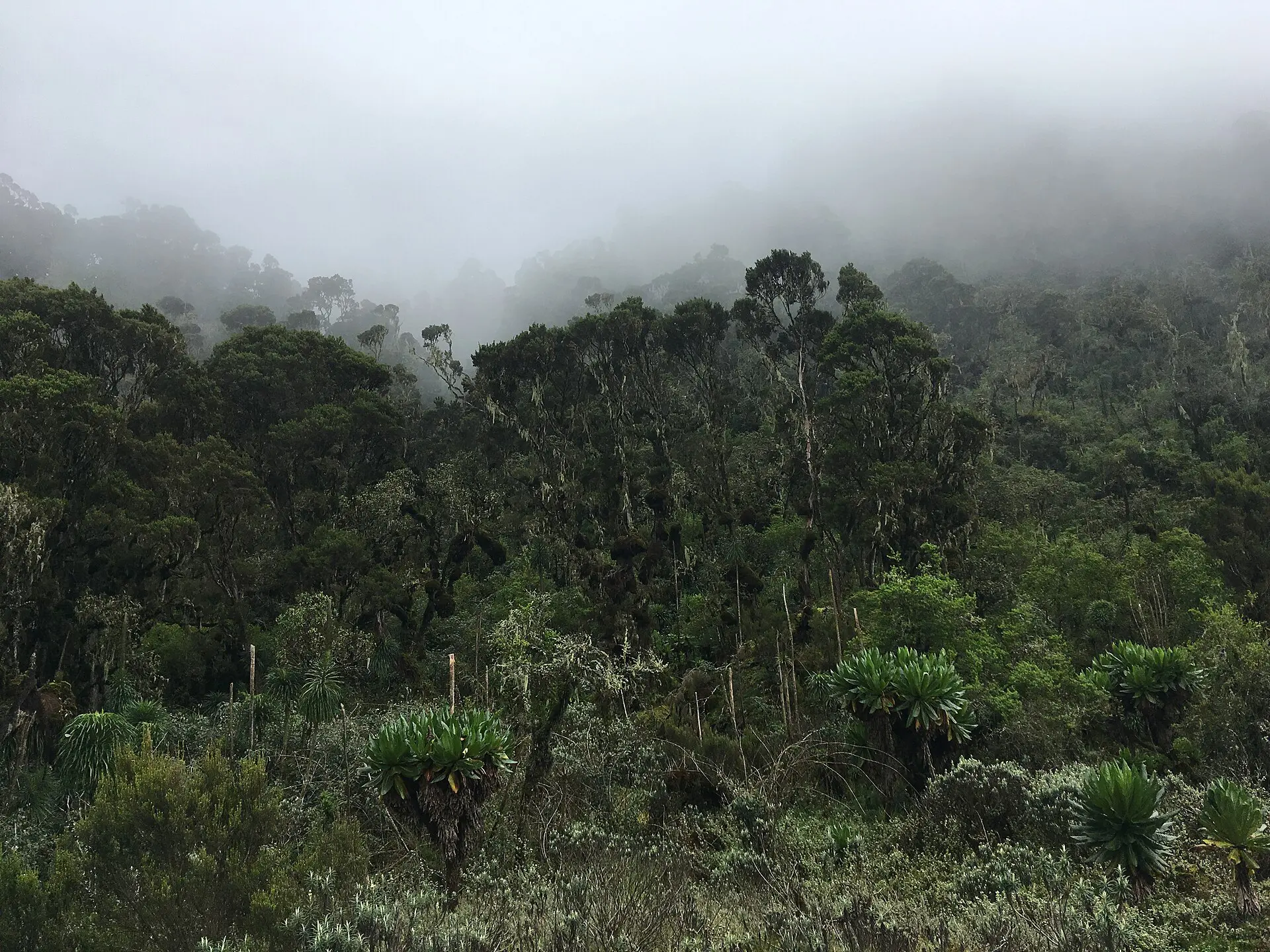
- Hike in the Rwenzori Mountains: day walks and multi-day treks reach glaciers and moorland.
- Look for shoebills: the Mabamba Swamp near Entebbe is the easiest place to see this rare bird.
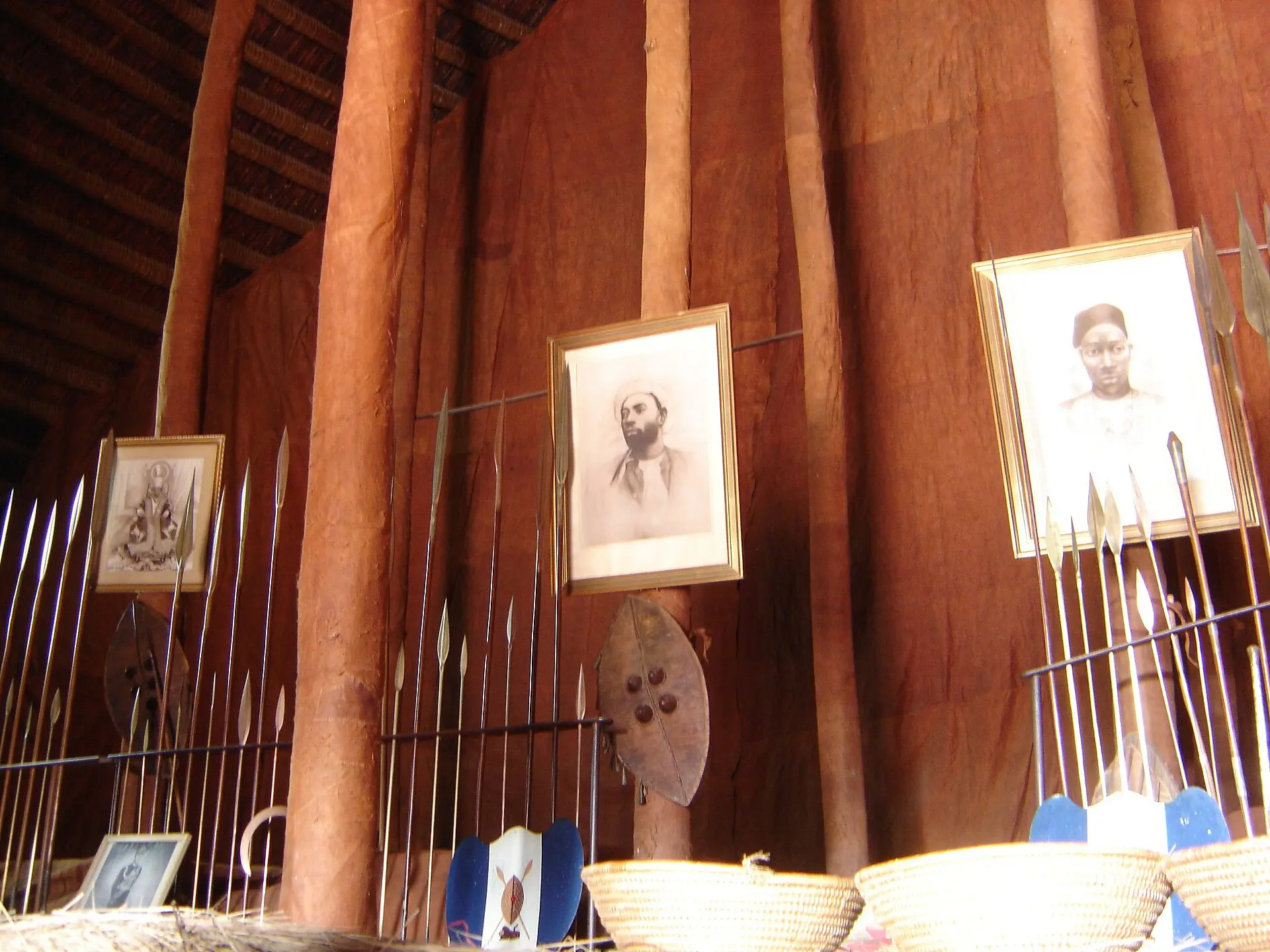
- Visit Kampala’s markets and museums: the Kasubi Tombs and the Uganda Museum add context on the Buganda kingdom.
Best time to visit Uganda
The best time to visit Uganda is during the two dry seasons, June to September and December to February. Trails are firmer, roads are easier and game is concentrated near water. Gorilla and chimp trekking works year round, but rain makes steep forest paths slippery from March to May and October to November.
| Season | Weather | Crowds and prices | Good for |
|---|---|---|---|
| Dec-Feb | Hot, mostly dry | High; book early | Gorillas, savannah game drives |
| Mar-May | Long rains, heavy showers | Low; some lodges discount | Birding, budget trips, green scenery |
| Jun-Sep | Warm, driest period | High; peak for permits | Trekking, safaris, Rwenzori hikes |
| Oct-Nov | Short rains, afternoon storms | Moderate to low | Birdwatching, rafting, quieter parks |
Temperatures stay fairly constant because of the equatorial position, but altitude matters: Kabale, Fort Portal and the Rwenzori are cool in the mornings and evenings. Gorilla permits sell out for the dry seasons, so confirm them before booking flights.
Is Uganda safe to visit?
Uganda is generally safe in the main tourist areas, and most visitors on organised safaris have no problems, but you should check current government advice before you book. Some governments advise against travel to parts of the border with South Sudan and the Democratic Republic of the Congo and to areas of the north-east, so read the UK FCDO or US State Department advice for your trip. Safety varies by region and can change after elections or local unrest.
Roads. Road accidents are the leading practical danger. Avoid driving at night, expect overloaded trucks and boda-boda motorbike taxis, and use a licensed driver for long routes. Wear a helmet if you take a boda-boda.
Crime. Bag snatching and phone theft occur in Kampala, particularly in crowded markets and from motorbikes. Use ride-hailing apps in the capital and keep valuables out of sight.
Health. Malaria is present across the country, so ask a travel clinic about prophylaxis. Yellow fever vaccination is usually required for entry. Drink bottled or treated water.
Laws and politics. Same-sex relations are criminalised and the law is strictly enforced, so LGBTQ travellers should research the risks carefully. Avoid photographing military sites and political gatherings.
Visa and entry requirements for Uganda
Entry rules depend on your nationality. Most visitors from outside East Africa need a visa, and Uganda operates an online e-visa system that should be completed before travel; confirm the current process on the official Ugandan immigration portal or with your nearest embassy. As of 2026, a standard single-entry tourist visa has typically cost around USD 50, but fees and processing times change.
Citizens of several East African Community states enter on different terms, and a joint East Africa Tourist Visa has covered Uganda, Kenya and Rwanda for travellers who want to cross those borders. Check whether it is still offered.
Bring a passport valid for at least six months and with blank pages, plus proof of a yellow fever vaccination certificate, which officials usually ask to see. Keep a printed copy of your e-visa approval and your gorilla permit confirmation. If you plan to hire a car or enter a national park, carry the permit paperwork and your driving licence. The UNESCO page for Uganda is a useful reference for heritage sites, though it does not cover entry rules.
Getting to and around Uganda
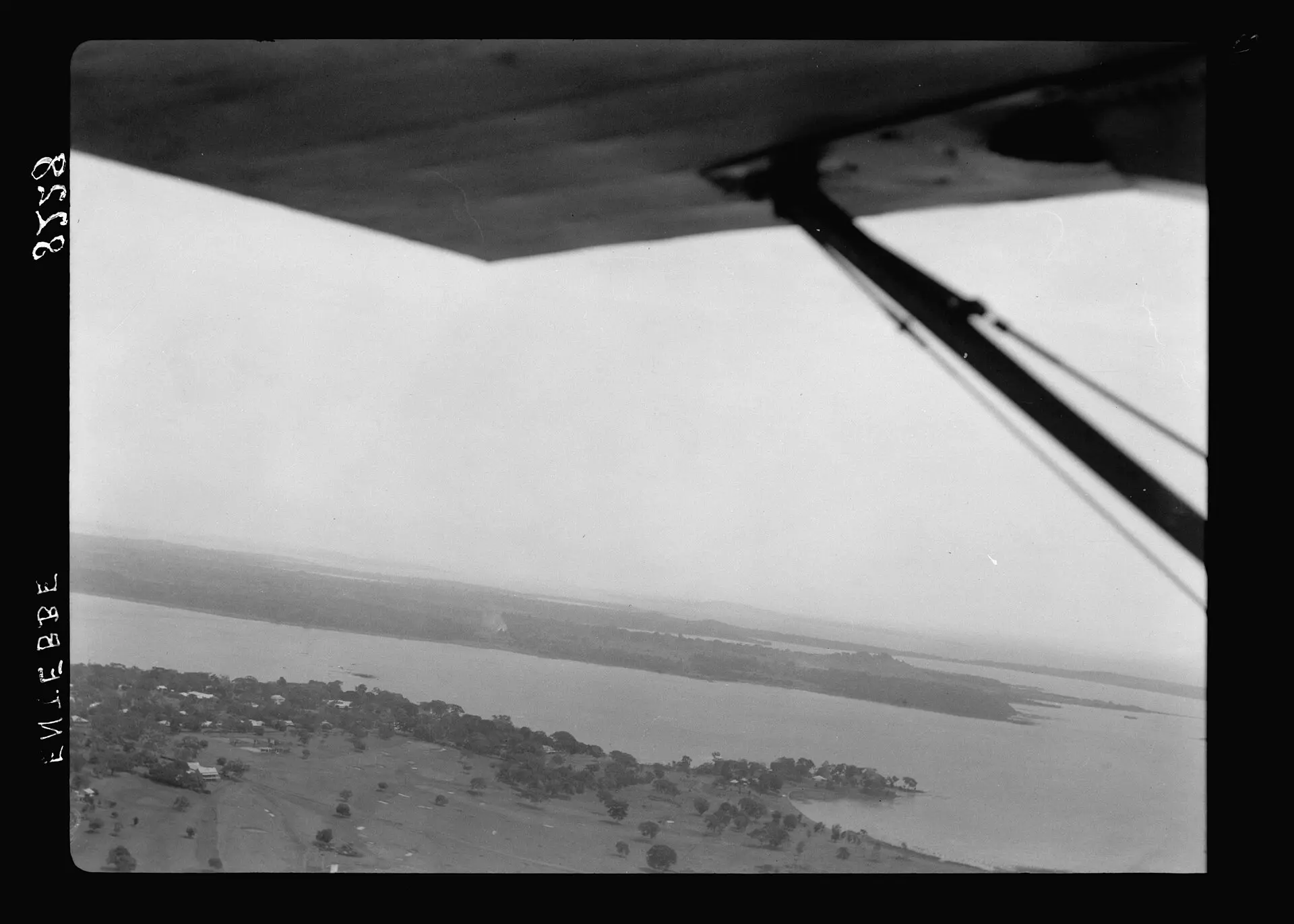
Most visitors arrive at Entebbe International Airport, about 40 kilometres from Kampala, with direct flights from Europe, the Gulf and several African hubs. Land crossings link Uganda with Kenya, Rwanda and Tanzania, and overland buses run between Nairobi and Kampala in around 12 hours.
Uganda has no useful passenger rail network, so travel is by road. Long-distance buses and shared minibuses (matatus) connect the major towns cheaply but slowly. Kampala to Jinja takes about two hours in good traffic, Kampala to Fort Portal around five to six hours, and Kampala to Bwindi or Kisoro roughly eight to ten hours. Many travellers hire a 4×4 with a driver-guide, which also gives access to parks and rough roads that are impassable in the rains.
Domestic flights run from Entebbe or Kajjansi to airstrips near Bwindi, Kidepo and Murchison, and save a full day of driving. Self-driving is possible, with traffic on the left, but expect potholes, speed bumps and unlit trucks after dark. Boda-bodas and shared taxis are useful for short hops in towns.
How much does a trip to Uganda cost?
The cost of a trip to Uganda depends mostly on how many permits and park fees you buy. The currency is the Ugandan shilling (UGX), though tourist services such as permits, lodges and safaris are usually priced in US dollars. Figures below are rough per-person guides and change often.
- Budget: around USD 50 to 90 per day, using dorms, local food, public transport and few park activities.
- Mid-range: around USD 120 to 250 per day, with comfortable lodges, a hired vehicle and driver, and activity fees.
- High-end: from around USD 400 per day, with luxury safari lodges and internal flights.
Permits are the largest single cost. A mountain gorilla permit has been priced at several hundred US dollars for foreign non-residents, with higher rates in the main sectors, while chimpanzee tracking permits cost much less. National park entry fees are charged per 24 hours. Reserve permits through the Uganda Wildlife Authority or a licensed operator, and check current prices, which have changed in recent years.
Meals in local restaurants cost a few dollars, while safari lodge meals are priced separately or included in full-board rates. Vehicle hire with a driver is the second largest expense, and sharing costs among two to four people brings it down.
Uganda food and drink
Uganda food is hearty and based on starchy staples with stews, grilled meat and fresh fruit. Local restaurants and roadside stalls serve the best value, and hotels offer international menus as well.
- Matoke: steamed and mashed green bananas, the staple of the south and west, served with groundnut sauce or beef stew.
- Posho and beans: a stiff maize porridge with beans, common for cheap lunches.
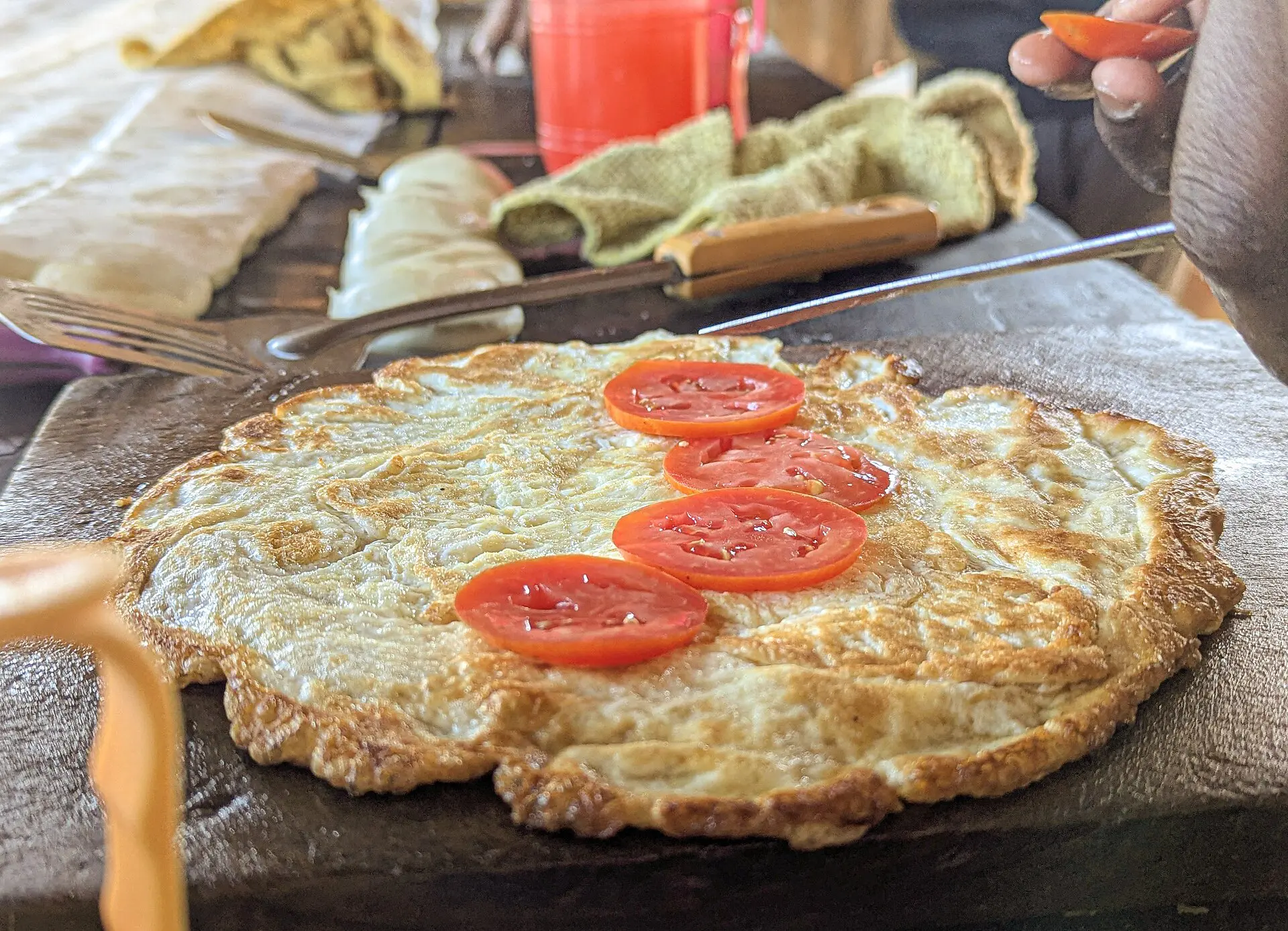
- Rolex: a street snack of eggs fried in a chapati roll with vegetables, found everywhere in Kampala.
- Luwombo: a Buganda dish of meat or chicken steamed in banana leaves.
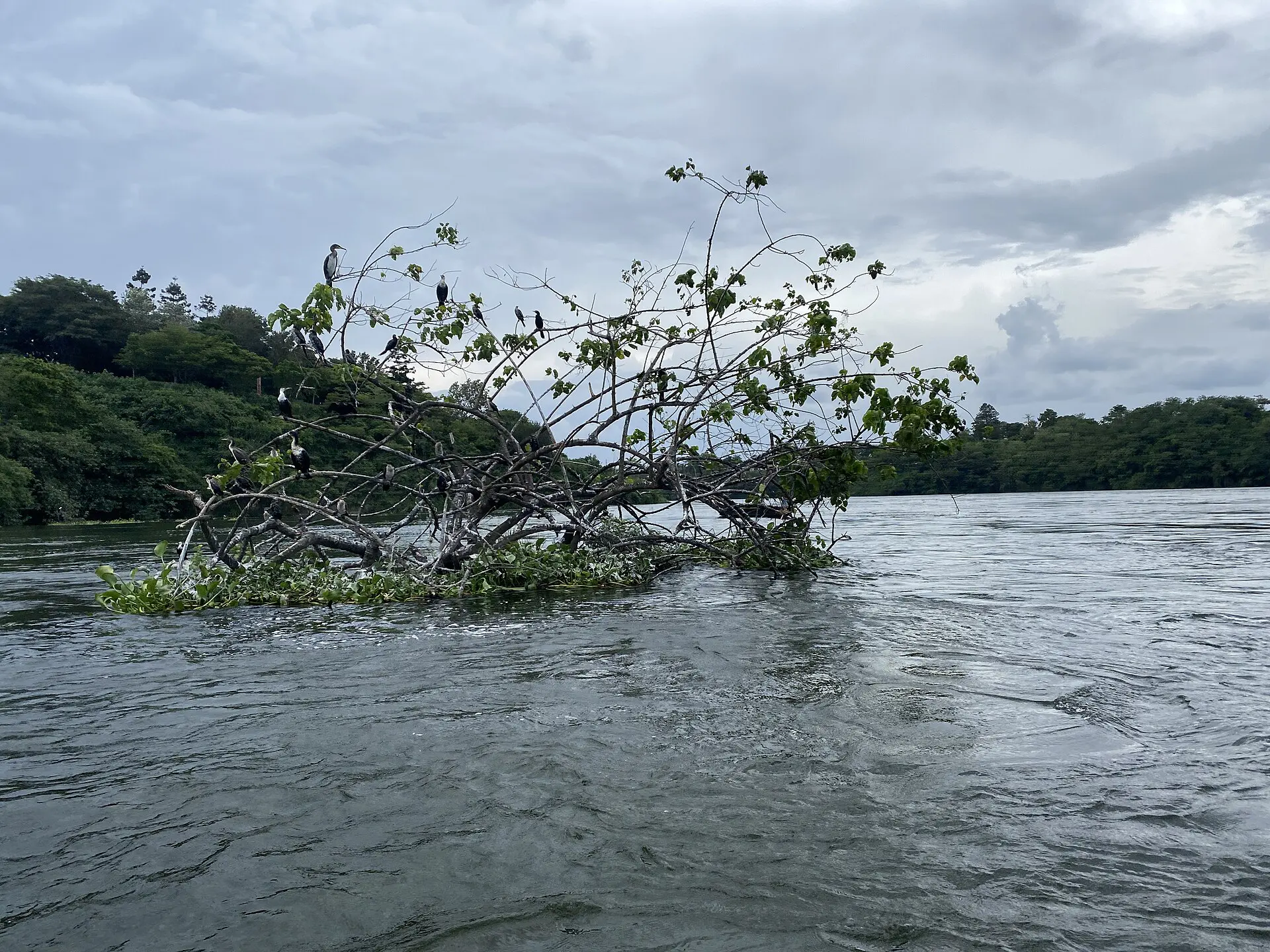
- Nile perch and tilapia: grilled or fried lake fish, best eaten at Lake Victoria or on the Nile.
- Nyama choma: roasted goat or beef, usually with a cold beer.
- Waragi and local beer: Nile Special and Club are the main lagers, and waragi is a strong gin-style spirit.
- Fresh fruit and coffee: pineapple, passion fruit and Ugandan coffee, grown on the Rwenzori and Mount Elgon slopes.
Vegetarians can eat well on beans, vegetables, rice and chapati, though many menus centre on meat. Eat at busy stalls and avoid raw salads in budget places.
Culture, language and etiquette in Uganda
English is the official language and the main language of business, with Swahili recognised as a second official language. Luganda is widely spoken in Kampala and the south, and dozens of other languages, including Runyankole, Acholi and Lusoga, are used regionally. Many Ugandans are bilingual or trilingual, and a few greetings in Luganda, such as oli otya (how are you), are warmly received.
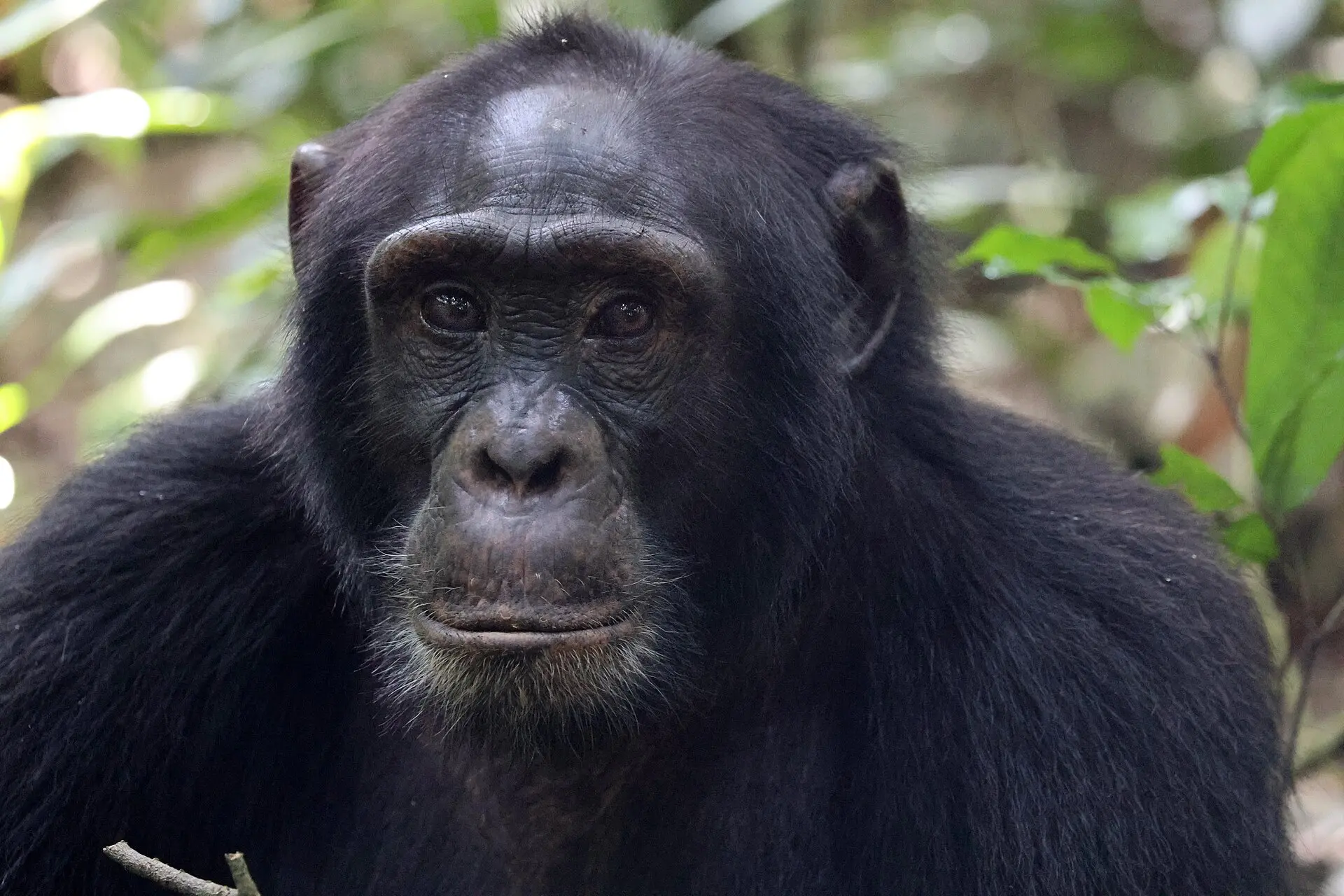
Greetings matter. Take a moment to say hello and ask how someone is before asking for something, and use the right hand for handshakes, giving and receiving. Dress is generally modest, particularly outside Kampala and at religious sites; shoulders and knees covered is a safe approach. Uganda is predominantly Christian, with a significant Muslim minority, and church services and Friday prayers shape the weekly rhythm.
The Buganda kingdom and other traditional kingdoms, such as Tooro, remain culturally important, and royal sites deserve respect. Ask before photographing people, avoid photographing security forces or government buildings, and keep conversations about politics measured. Tipping guides, rangers and drivers is expected, and a small gift or fee is customary when visiting villages or cultural groups.
Uganda itinerary: a 7-day route
This route combines the Nile, chimpanzees and savannah wildlife with a stop at gorilla country, using a hired vehicle and driver. It assumes you have a gorilla permit booked in advance, and it avoids the border and north-eastern regions that some governments advise against visiting.
- Day 1, Entebbe and Kampala: arrive, transfer to Kampala or stay by Lake Victoria, and visit the Kasubi Tombs if time allows.
- Day 2, Jinja: drive about two hours east, go rafting or take a boat to the source of the Nile.
- Day 3, to Fort Portal: a long drive of five to six hours west, ending in the tea country.
- Day 4, Kibale: track chimpanzees in the morning and visit a crater lake in the afternoon.
- Day 5, Queen Elizabeth National Park: take an afternoon cruise on the Kazinga Channel.
- Day 6, Ishasha and Bwindi: drive south via the tree-climbing lion sector to a lodge near the gorilla sector.
- Day 7, gorilla trek: meet your gorilla family in the morning, then rest.
You will need an extra day or two for the return to Entebbe unless you fly from a nearby airstrip. Add Murchison Falls with a separate loop north, and consider Lake Bunyonyi for rest.
Practical tips for Uganda
- Money: the Ugandan shilling is the local currency. ATMs are common in Kampala and larger towns but scarce in rural areas, so carry cash. Mobile money is widely used by locals. Bring recent, undamaged US dollar notes for permits and lodges if needed.
- SIM and eSIM: prepaid SIM cards from the main networks are cheap, and you must register with a passport. Coverage is good on main roads and weaker inside parks.
- Plugs: type G (British three-pin) at 240 V. Bring a power bank, as outages are common.
- Tipping: tip drivers, guides, trackers and porters; a few US dollars per day per person for a driver-guide is a typical range, and rangers and porters receive smaller amounts.
- Health: ask a travel clinic about malaria prophylaxis, yellow fever, hepatitis and typhoid, and carry insurance with medical evacuation cover.
- Packing: a waterproof jacket, long trousers and sleeves for forest treks, sturdy boots, gloves for nettles, binoculars and insect repellent.
- Plastic bags: plastic carrier bags are banned in Uganda, so avoid bringing them in luggage.
For wider background, see the Wikivoyage Uganda guide.
FAQ
Q1Is Uganda safe to visit?
Yes in the main tourist areas, but conditions vary by region. Some governments advise against travel to parts of the borders with South Sudan and the DRC. Road accidents, petty theft in Kampala and malaria are the main risks. Check your government's current advice and use reputable operators.
Q2What is the best time to visit Uganda?
The dry seasons, June to September and December to February, are best for trekking and game drives, with firmer trails and easier roads. The rainy months of March to May and October to November have fewer visitors and lower prices but muddier forest paths.
Q3How much does gorilla trekking in Uganda cost?
A permit for foreign non-residents has been several hundred US dollars, with a higher price in some sectors, and rates change, so check the Uganda Wildlife Authority. Add park entry, a driver, lodging and tips. Permits for dry-season dates often sell out months ahead.
Q4What are the best things to do in Uganda?
Top experiences are mountain gorilla trekking in Bwindi, chimpanzee tracking in Kibale, a boat trip to Murchison Falls, rafting the Nile at Jinja and game drives in Queen Elizabeth National Park. Lake Bunyonyi and the Rwenzori Mountains suit rest days and hikes.
Q5Do you need a visa for Uganda?
Most visitors do. Uganda uses an online e-visa that should be arranged before travel, and a yellow fever vaccination certificate is usually required. Rules and fees depend on nationality and change, so confirm on the official Ugandan immigration source before booking.
Q6What are the best places to visit in Uganda?
Bwindi for gorillas, Kibale for chimpanzees, Murchison Falls for the Nile and big game, Queen Elizabeth for hippos and lions, and Jinja for rafting. Lake Bunyonyi and Fort Portal add calm lakes and tea country between longer drives.
Q7How many days do you need in Uganda?
Seven days covers Jinja, Kibale, Queen Elizabeth and a gorilla trek if you keep moving. Ten to fourteen days is more comfortable and allows Murchison Falls or Lake Bunyonyi, because road journeys are slow and a gorilla trek can take most of a day.