Why visit Seychelles
This Seychelles travel guide starts with the setting: the country is an archipelago of 115 islands in the Indian Ocean, about 1,500 kilometres east of mainland Africa, and it is Africa’s smallest country by area (see the Wikipedia overview). The islands were uninhabited until the 18th century, and the population today, about 100,000, is a mix of African, European, Indian and Chinese ancestry. The country is also sometimes searched as the Seychelles islands.
Seychelles suits travellers who want beaches, snorkelling, protected nature and a relaxed pace more than nightlife or big sights. It works for couples, families, divers and wildlife fans, with the Aldabra Atoll and the Vallée de Mai among its UNESCO sites. It is expensive, so planning matters: stay in guesthouses on Mahé, Praslin and La Digue for better value than resorts.
Best places to visit in Seychelles
The best places to visit in Seychelles are the three main granite islands, plus a few smaller ones reached by boat.
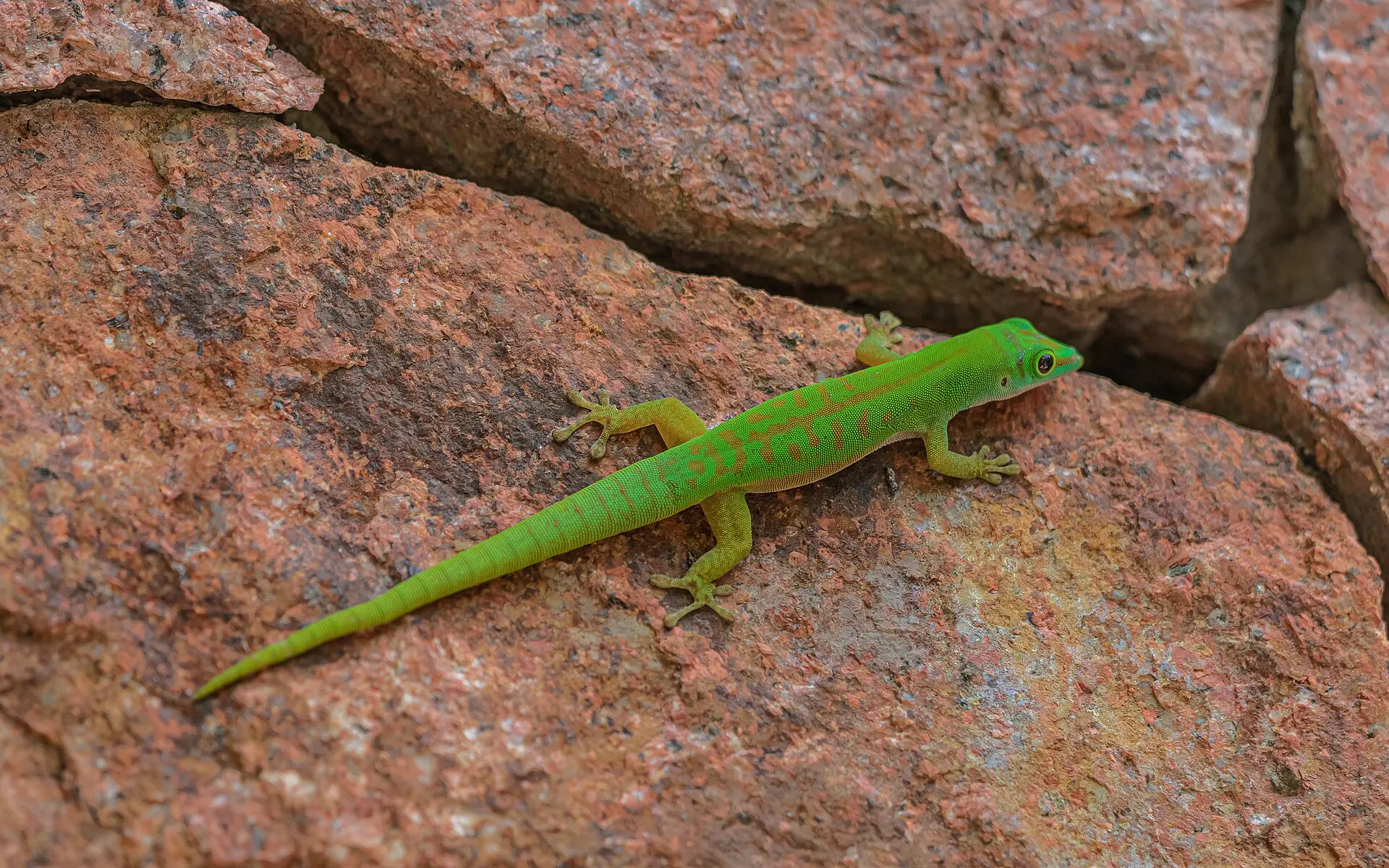
Mahé
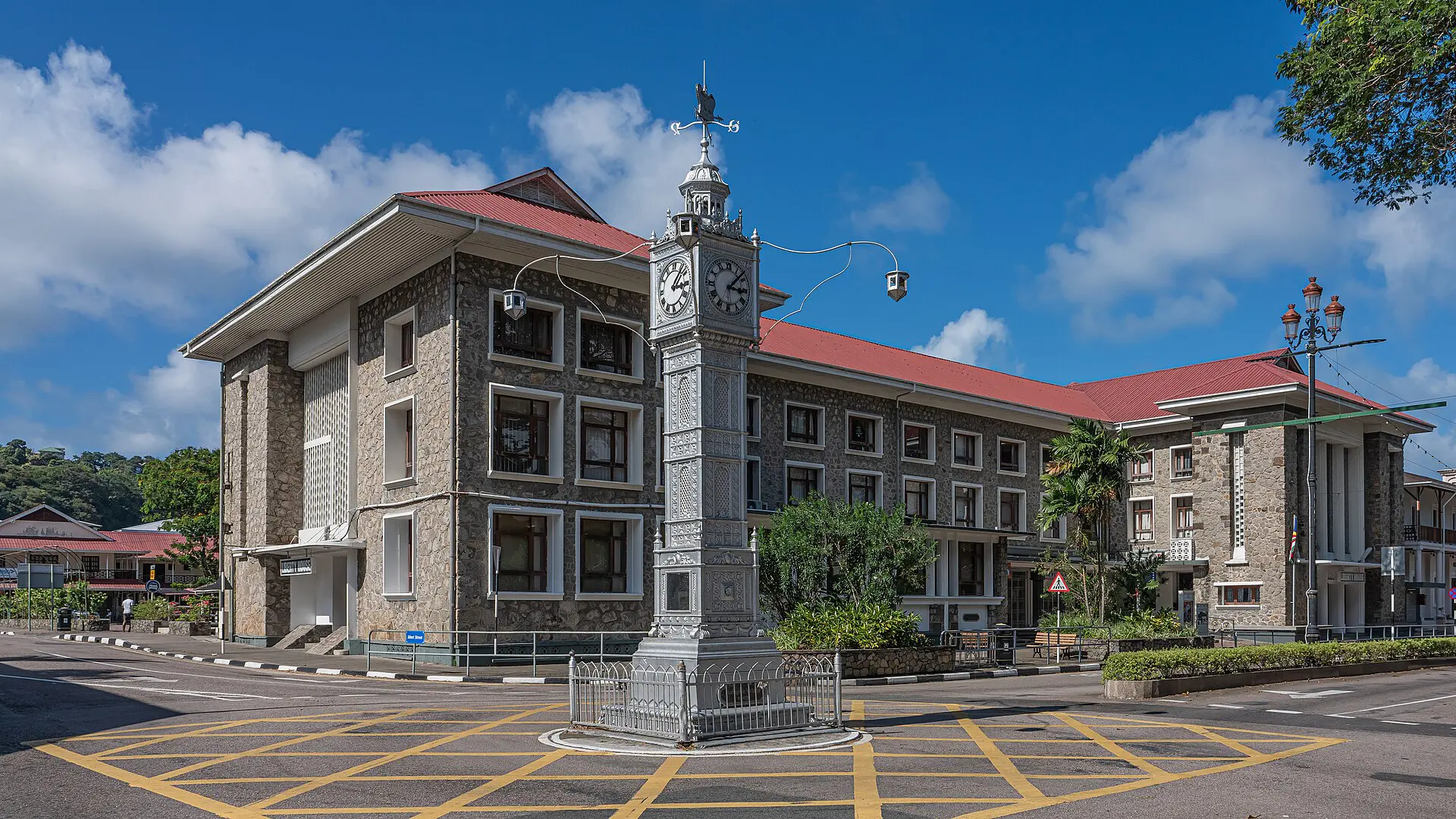
The largest island holds the airport, the small capital Victoria and the most varied beaches, from Beau Vallon’s long, busy sweep to quieter coves such as Anse Intendance. Forested mountains rise in the centre, with walking trails in Morne Seychellois National Park.
Praslin
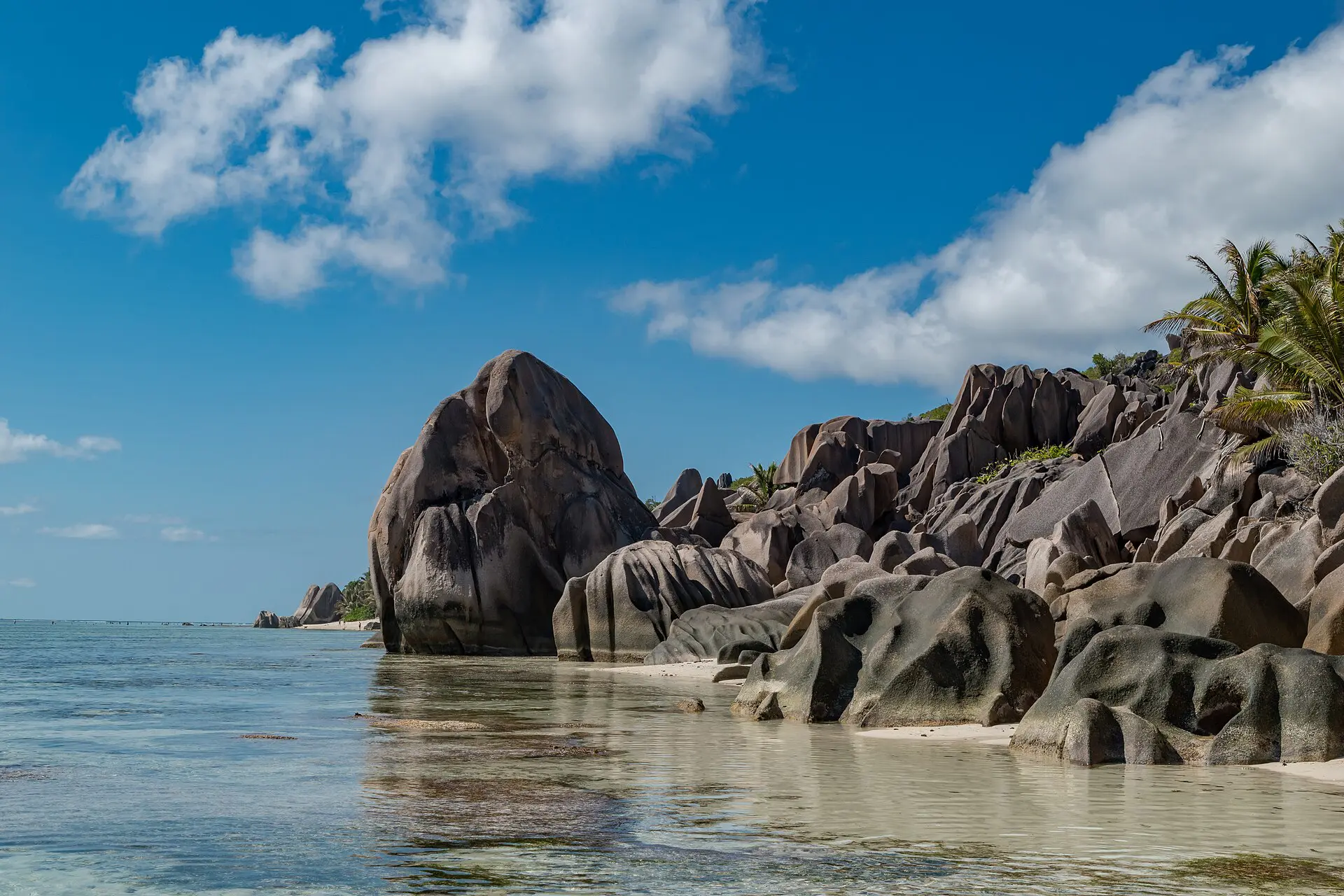
The second island is home to the Vallée de Mai, a UNESCO palm forest where the giant coco de mer grows. Anse Lazio is often rated among the world’s best beaches, and guesthouses are plentiful.
La Digue
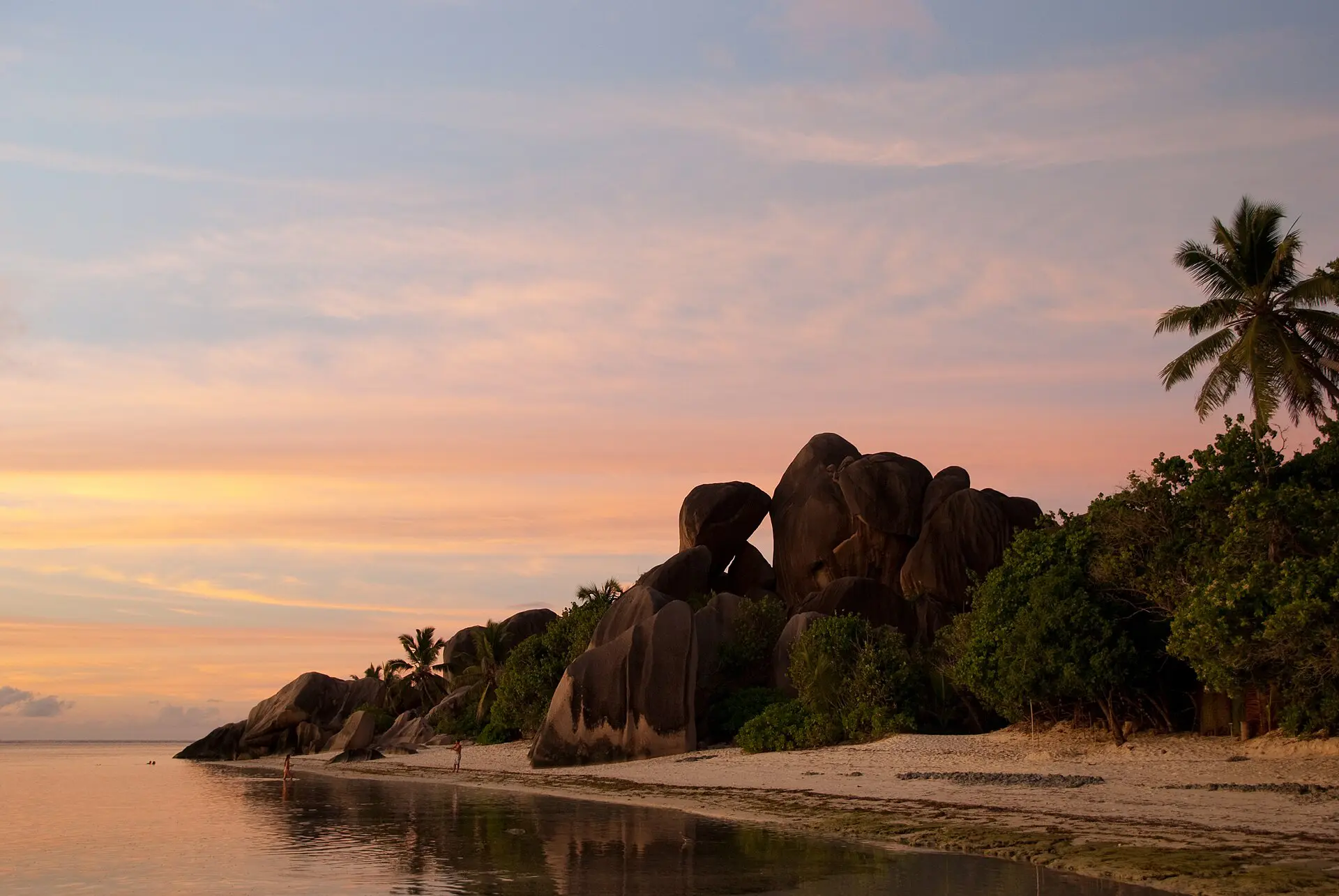
The smallest of the three main inhabited islands has almost no cars; people get around by bicycle. Anse Source d’Argent, with its granite boulders, is the best-known beach, and the island is reached by ferry from Praslin.
Curieuse and Saint Pierre
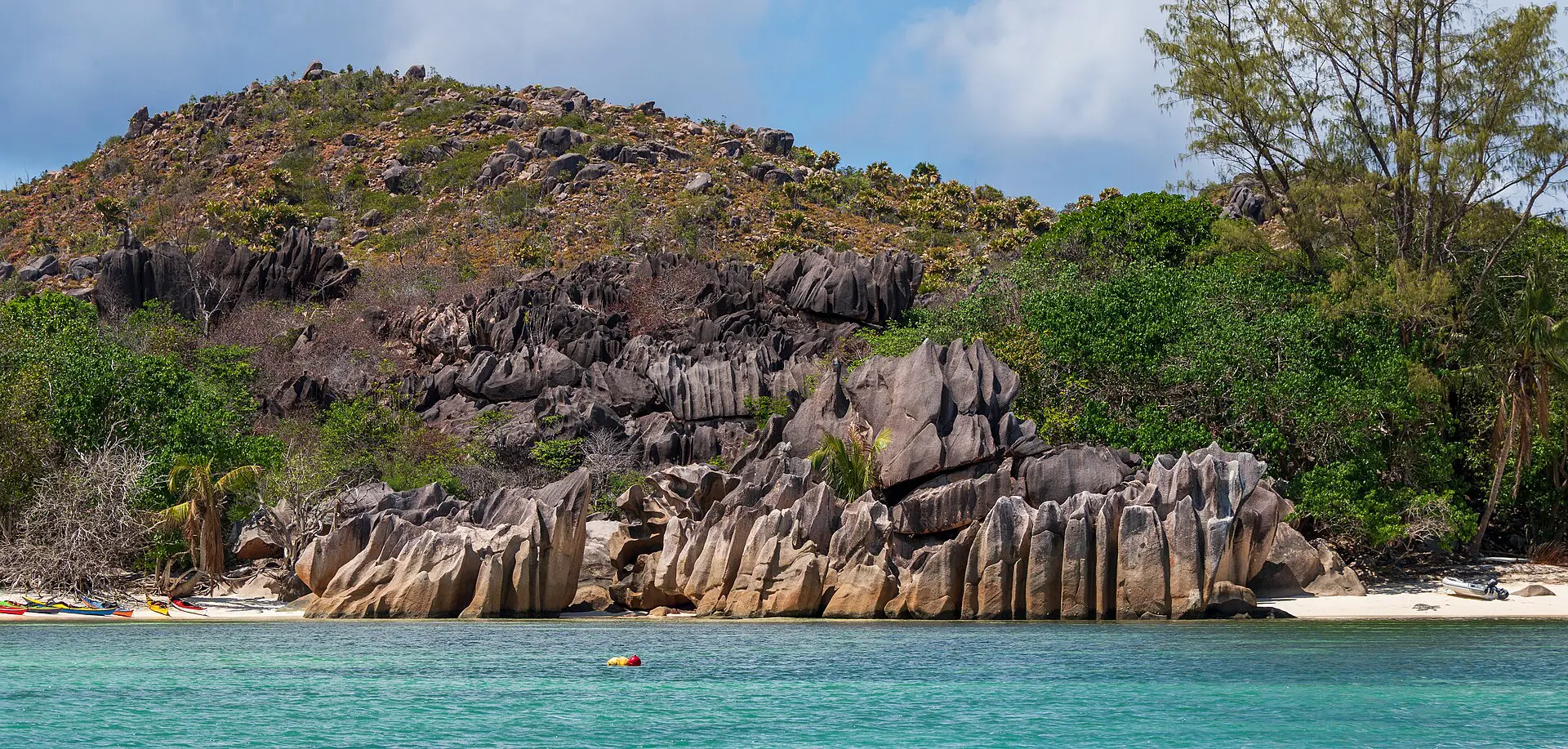
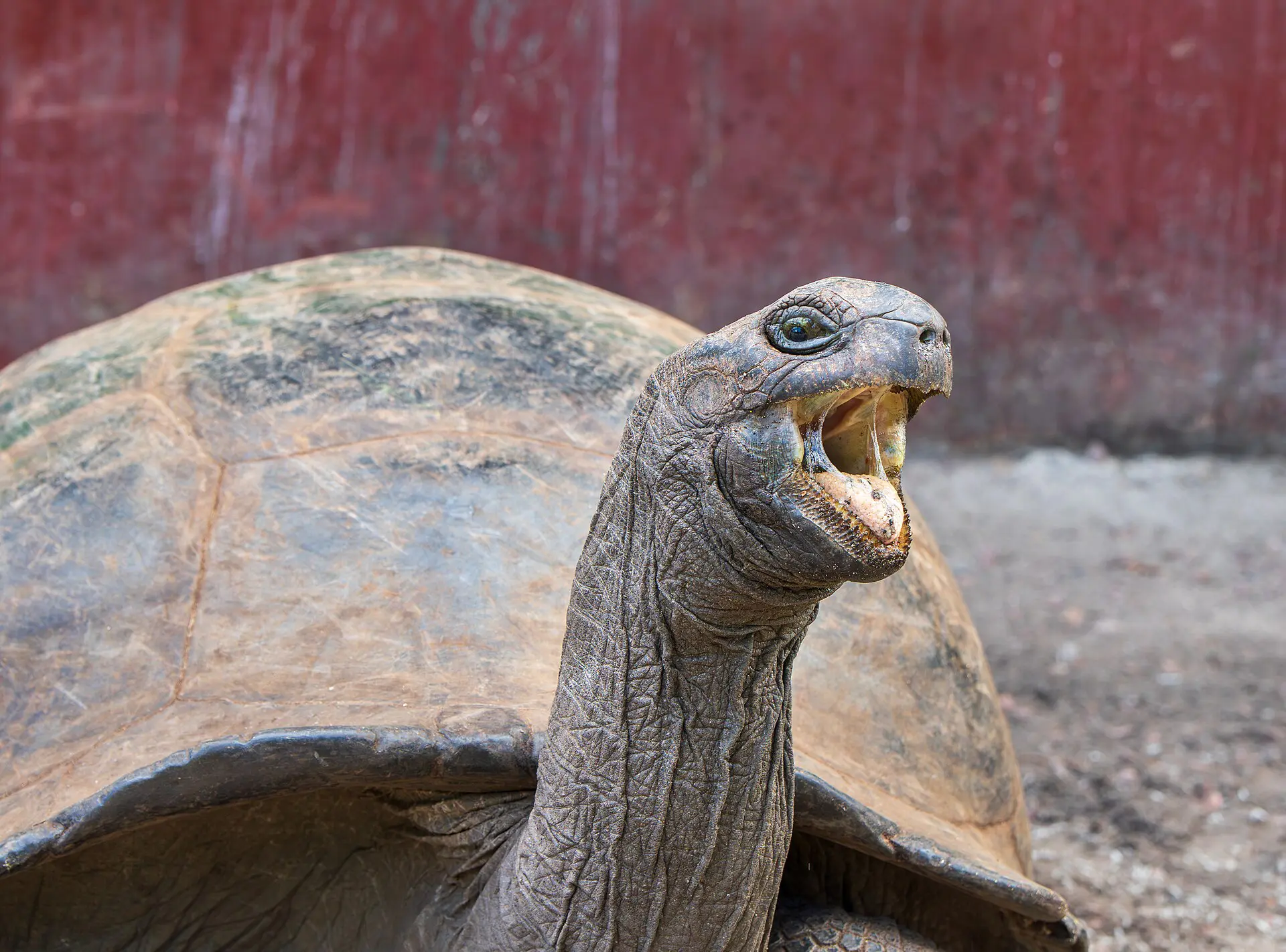
Curieuse, a marine national park island near Praslin, has giant tortoises and mangrove boardwalks, while Saint Pierre is a tiny granite islet good for snorkelling on day trips.
Silhouette and the outer islands
Forested Silhouette is quiet and hilly, while Bird Island, Denis and the coral outer islands are reached by short flights and are mostly luxury stays.
Top things to do in Seychelles
The top things to do in Seychelles centre on beaches, marine life and forest walks.
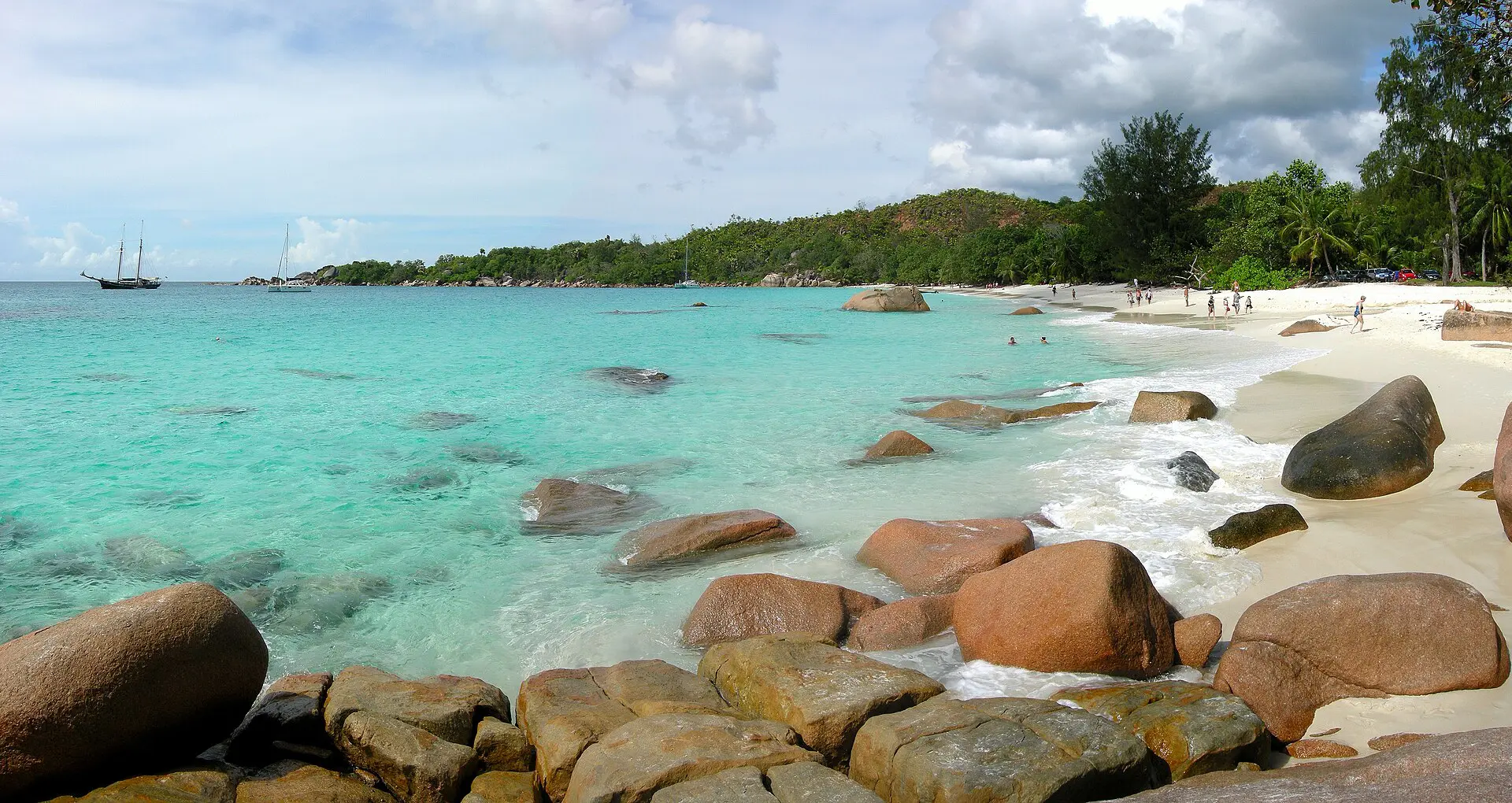
- Swim at Anse Lazio: a curved Praslin beach with clear water and granite boulders at each end.
- Cycle around La Digue: rent a bike and ride between beaches, an ox-cart and the old plantation house.
- Walk the Vallée de Mai: look for the huge double-lobed coco de mer nut and black parrots.
- Snorkel Saint Pierre or Curieuse: boat tours visit reefs and calm bays.
- Dive or snorkel with turtles: several sites off Mahé and Praslin suit beginners and certified divers.
- Meet giant tortoises: see Aldabra tortoises on Curieuse and at conservation sites.
- Hike Morne Blanc or Copolia: short trails on Mahé reach high viewpoints over the coast.
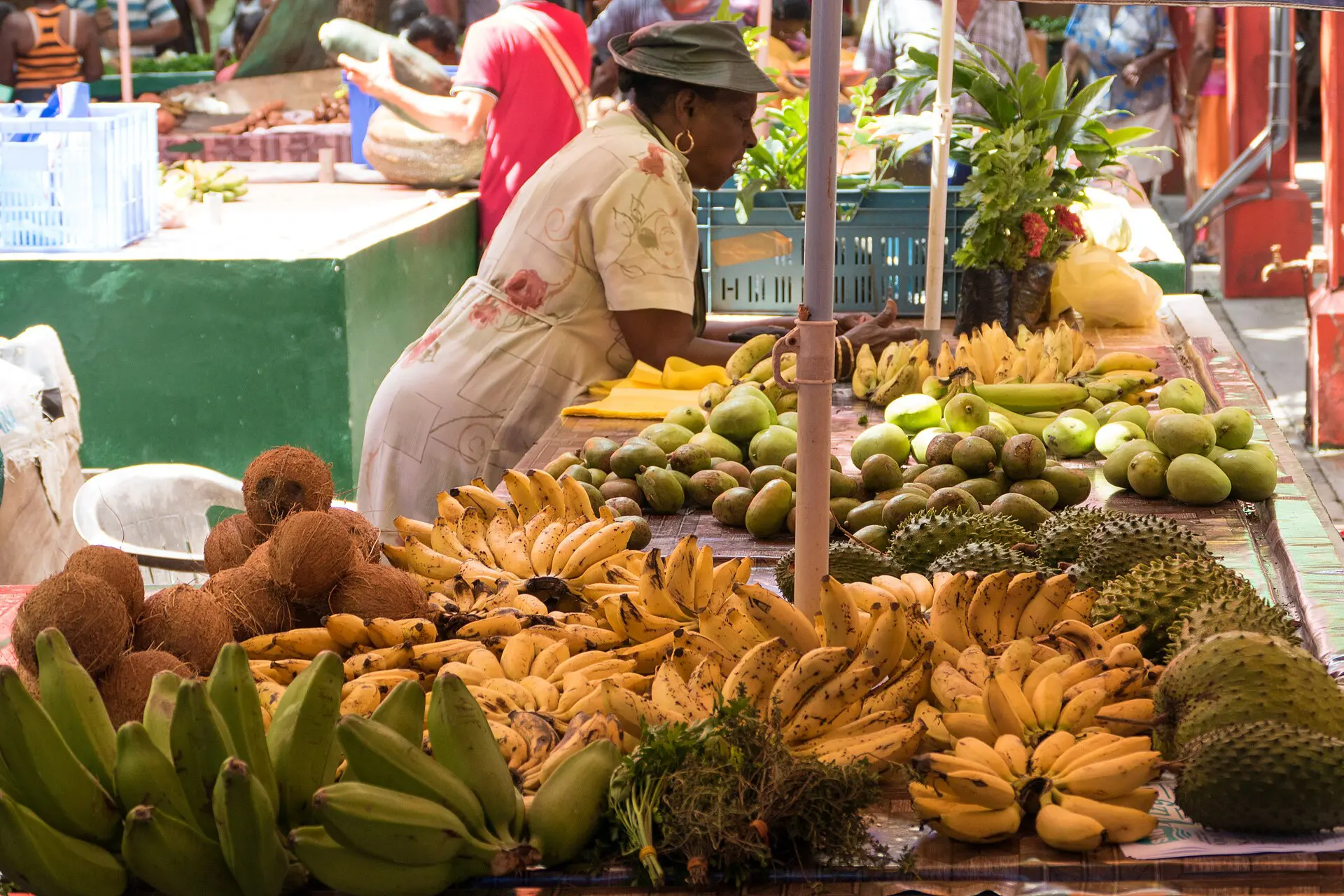
- Visit Victoria market: the Sir Selwyn Selwyn-Clarke Market sells fish, spices and crafts, best on Saturday morning.
- Take a sunset sail: catamaran and sailing tours leave from Mahé and Praslin.
- Try island-hopping: combine ferries with a day trip to a remote islet.
Best time to visit Seychelles
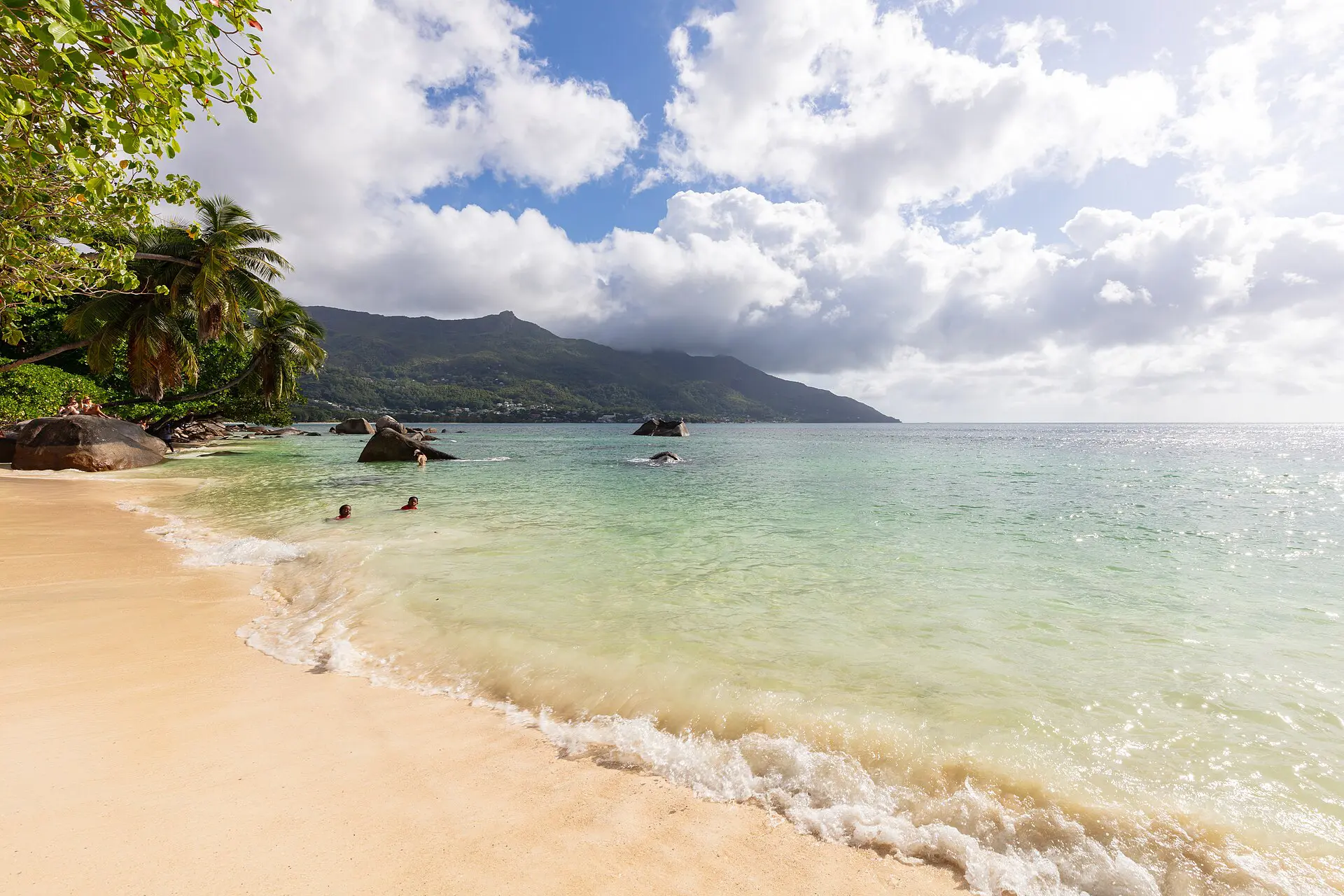
The best time to visit Seychelles is April to May and October to November, the shoulder months between monsoons, when winds are light, seas are calm and visibility for snorkelling and diving is at its best. Temperatures are warm all year, usually around 27 to 31 C, and rainfall is highest from December to February. The southeast trade winds from May to September bring drier but breezier weather and rougher seas on some southeastern beaches.
| Season | Weather | Crowds and prices | Good for |
|---|---|---|---|
| Dec-Feb | Hot, humid, heavier rain | High prices at holiday peaks | Warm sea, family trips |
| Mar-May | Hot, calm, lighter winds | Moderate, Easter peak | Diving, snorkelling, beaches |
| Jun-Sep | Cooler, drier, windy | Busy in July and August | Hiking, west-coast beaches, surf-free swimming |
| Oct-Nov | Hot, calm, little wind | Moderate | Diving, island-hopping |
Ocean conditions vary by beach, so ask locally which coast is sheltered. Book early for July, August, Christmas and New Year.
Is Seychelles safe to visit?
Yes, Seychelles is safe for most visitors, and it is generally regarded as one of the safer countries in Africa. Violent crime against tourists is rare, but petty theft and sea conditions need care. Check the UK FCDO or your own government’s current travel advice before booking.
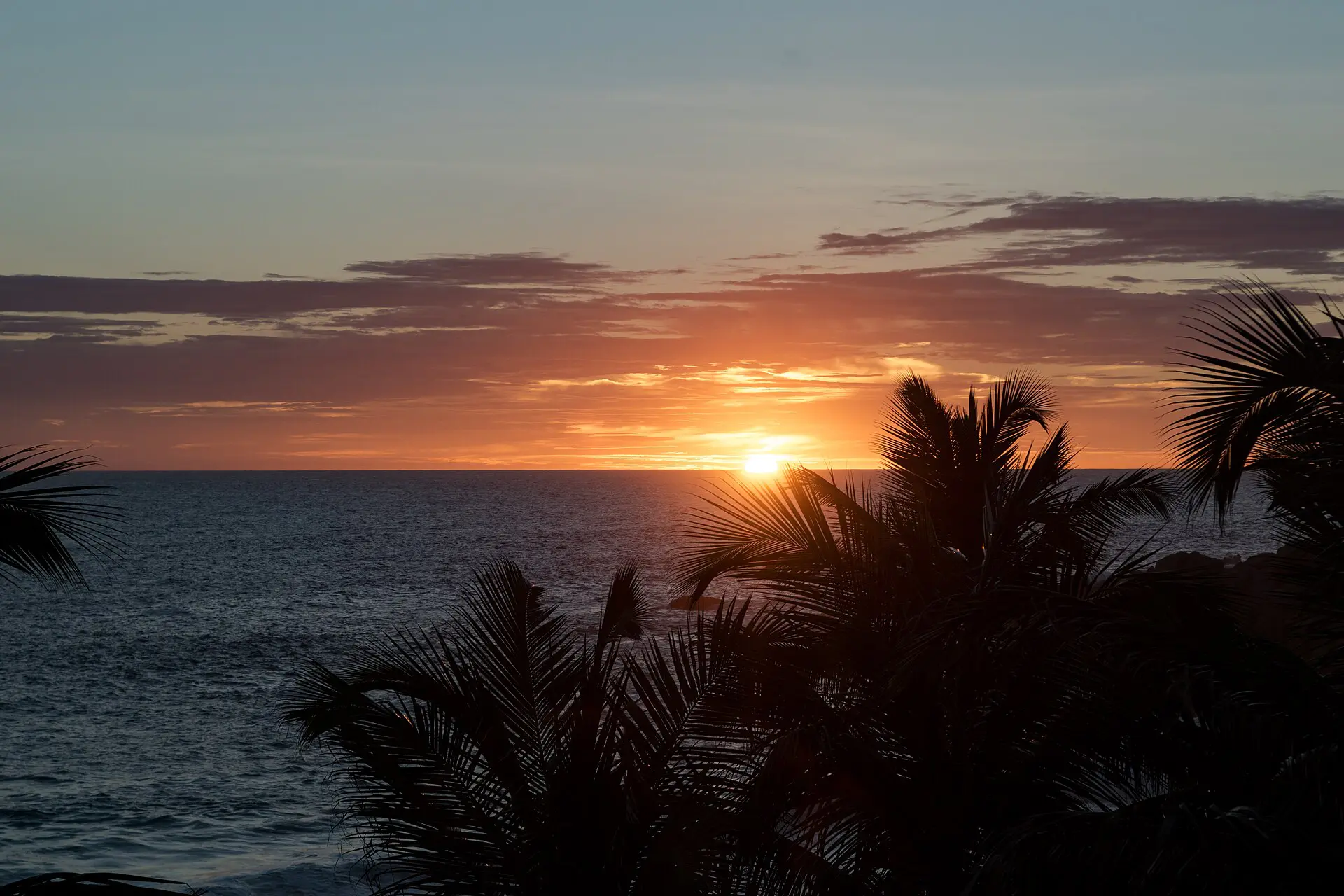
Theft. Opportunist theft from beaches, hire cars and unattended rooms can occur, especially on Mahé. Leave valuables in the hotel safe, lock vehicles and avoid walking alone on isolated beaches or roads at night.
Sea. Strong currents, shore breaks and rip tides affect some beaches, especially in the trade-wind seasons, and many lack lifeguards. Follow local flag signs and advice, and do not swim alone. Take care with boat trips, and use licensed operators with life jackets.
Health and sun. The sun is strong, so use reef-safe sunscreen and drink water. Dengue and chikungunya cases occur occasionally, and insect repellent is advised. Medical facilities are limited on smaller islands, so carry insurance covering evacuation.
Visa and entry requirements for Seychelles
Seychelles has long allowed most nationalities to enter without a visa, but entry requirements can change, and nationality matters. Visitors have been required to complete an online Travel Authorisation before arrival, which is typically valid for a stay of up to three months. Confirm the current process, fees and exceptions with the Seychelles immigration authority or your nearest embassy.
You will usually need a passport valid for the length of your stay, a confirmed hotel or guesthouse booking, a return or onward ticket and proof that you can afford your stay. Immigration officers can ask for these, so keep copies handy. Yellow fever certificates may be required if you arrive from a country at risk.
If you plan to travel between islands by ferry or small plane, carry your passport. The UNESCO page for Seychelles lists the Aldabra Atoll and the Vallée de Mai, though it does not cover entry rules.
Getting to and around Seychelles
Nearly all visitors arrive at Seychelles International Airport on Mahé, with direct or one-stop flights from Europe, the Gulf, East Africa and Asia. Cruise ships and yachts also call at Victoria.
Between islands, the main option is the Cat Cocos ferry, which links Mahé, Praslin and La Digue, with Mahé to Praslin taking about an hour. A smaller ferry runs between Praslin and La Digue in around 15 minutes. Small planes operated by Air Seychelles fly from Mahé to Praslin in about 15 minutes, and to some outer islands. Book ferries in advance in high season, and check the weather, as rough seas can disrupt services.
On the islands, local buses cover Mahé and Praslin cheaply, but they are slow. Taxis are expensive, and fares should be agreed in advance. Hire cars are available, and the country drives on the left, with narrow, winding roads. La Digue is best explored by bicycle.
How much does a trip to Seychelles cost?
Seychelles is among the most expensive destinations in Africa and the Indian Ocean, mainly because of accommodation, imported goods and ferries. The currency is the Seychellois rupee (SCR), but tourist services are often quoted in euros. Figures below are rough per-person guides for 2026.
- Budget: around EUR 90 to 150 per day, with guesthouse rooms, self-catering, local food and buses.
- Mid-range: around EUR 200 to 350 per day, with a comfortable hotel or guesthouse, restaurant meals, ferries and excursions.
- High-end: from around EUR 600 per day, with luxury resorts and private islands, which can cost many times more.
Accommodation is the biggest cost, followed by flights to the archipelago and inter-island transport. Eating at takeaway counters called takeaways keeps costs down, and many guesthouses offer breakfast. Excursions, diving trips and ferry tickets add up quickly, so budget for several.
Seychelles food and drink
Seychelles food is Creole, shaped by African, French, Indian and Chinese influences, with fresh fish, coconut, spices and tropical fruit. Meals are usually mild to medium spicy, with chilli on the side.
- Fish curry: fish in a coconut or tomato curry sauce, served with rice, the most common local meal.
- Grilled fish: red snapper, tuna and kingfish with Creole sauce, lemon or garlic.
- Octopus curry: sliced octopus cooked in coconut milk, widely served on Praslin and Mahé.
- Ladob: a sweet dish of banana or cassava cooked in coconut milk, eaten as dessert.
- Shark chutney: a tangy mix of shredded fish, lime and spices, more traditional than common.
- SeyBrew and Takamaka rum: local beer and rum are the main drinks.
Takeaways on Mahé and Praslin sell inexpensive meals, and Creole restaurants offer set menus. Vegetarians can choose from vegetable curries, salads and fruit, but should ask about fish stock. Tap water is generally safe on the main islands, though many visitors prefer bottled.
Culture, language and etiquette in Seychelles
Seychelles has three official languages: Seychellois Creole (Kreol), English and French. English is widely used in tourism and government, and Creole is the everyday language of most people. Learning a few Creole phrases such as bonzour (good day) and mersi (thank you) is welcome.
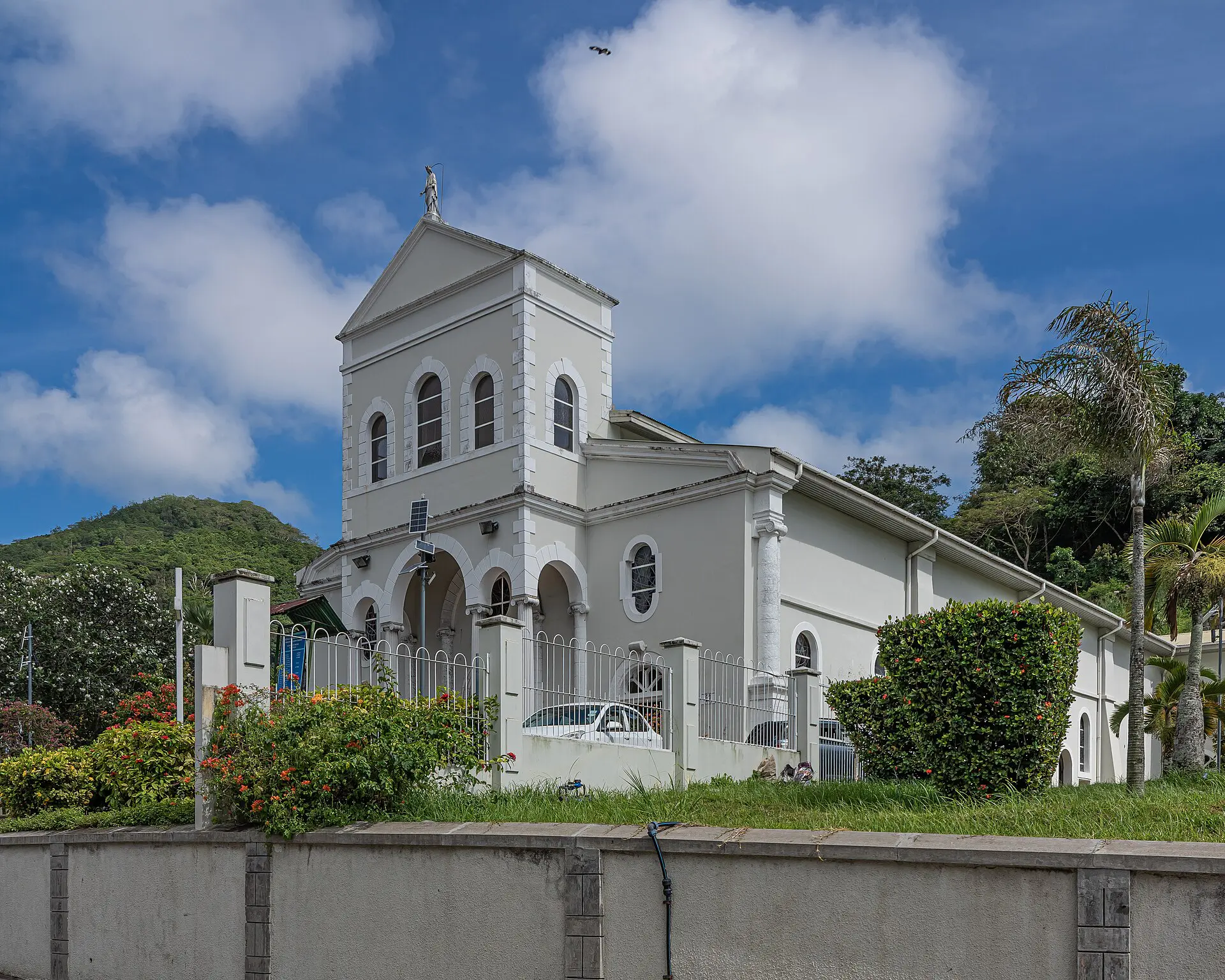
The population descends from European settlers and enslaved Africans brought during the colonial period, with later Indian and Chinese communities. Most people are Roman Catholic, with Anglican, Hindu, Muslim and other communities. Daily life is relaxed, and people greet one another politely.
Dress is casual, but cover up when away from the beach, and especially in churches and in Victoria. Topless sunbathing is not generally accepted on public beaches, and nude bathing is illegal. Take care not to remove shells, coral or sand from protected areas. Do not touch or feed wildlife, and be careful on trails. Locals are proud of conservation efforts, so respecting marine parks is important.
Seychelles itinerary: a 7-day route
This route uses the three main islands and relies on ferries, so check schedules and book early.
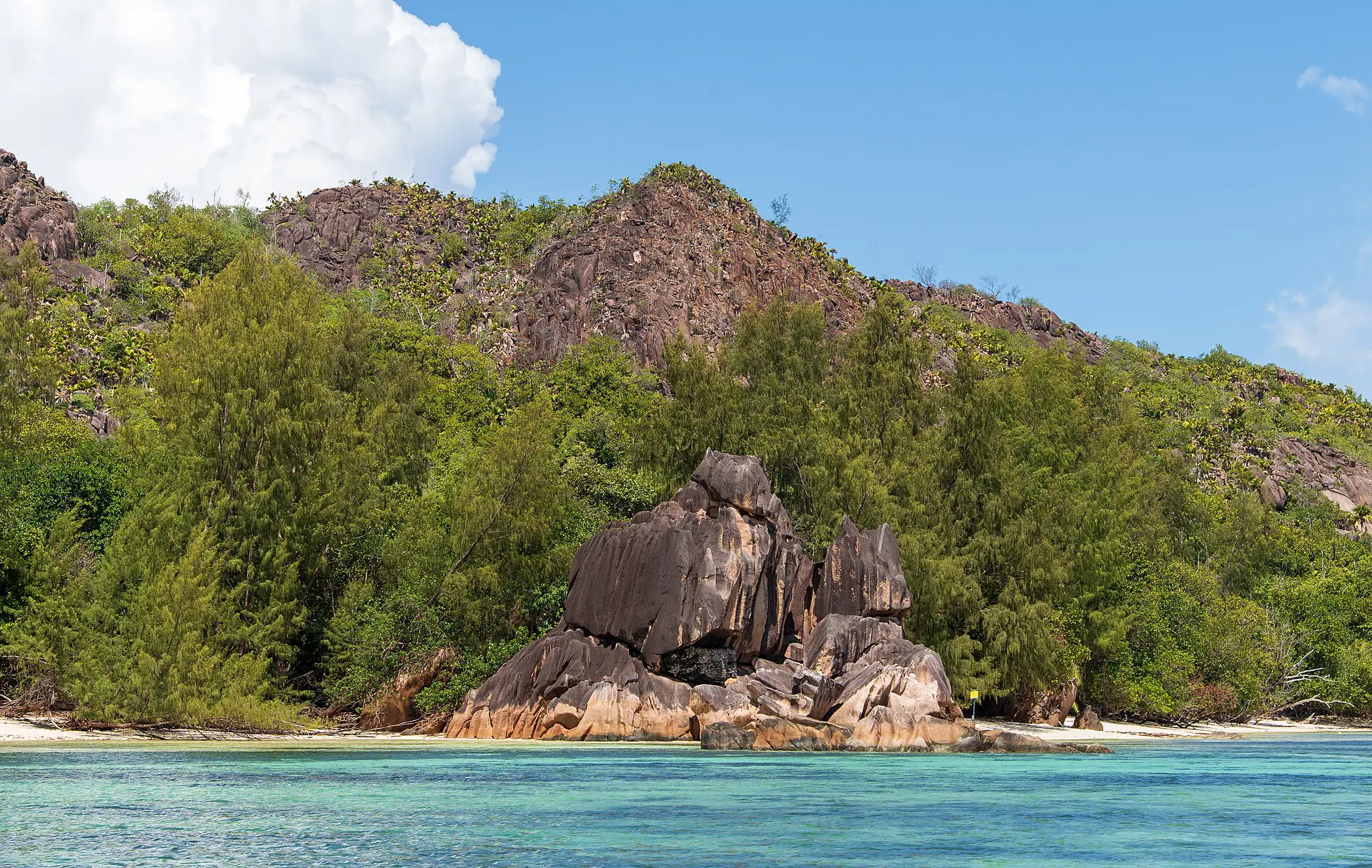
- Day 1, Mahé: arrive, transfer to your base, and relax at Beau Vallon.
- Day 2, Mahé: visit Victoria market, then Anse Intendance or Anse Takamaka, and hike a short trail such as Copolia.
- Day 3, ferry to Praslin: allow about an hour, then see the Vallée de Mai in the afternoon.
- Day 4, Praslin: spend the day at Anse Lazio and Anse Georgette, with lunch at a local takeaway.
- Day 5, Curieuse and Saint Pierre: take a boat tour for tortoises and snorkelling.
- Day 6, La Digue: take the short ferry, hire a bicycle and ride to Anse Source d’Argent.
- Day 7, return: ferry back via Praslin to Mahé for onward flights, leaving a generous buffer.
With extra days, add Silhouette or an outer island by air. Leave a spare night before long-haul flights because ferry cancellations in rough weather are possible.
Practical tips for Seychelles
- Money: the Seychellois rupee is the currency, though many tourist prices are in euros. ATMs are on Mahé, Praslin and La Digue, and cards are widely accepted, but carry some cash for buses and small shops.
- SIM and eSIM: local tourist SIMs and eSIMs are available at the airport and in Victoria, with good coverage on the main islands.
- Plugs: type G at 240 V, as in the UK; bring an adaptor.
- Tipping: not obligatory, though 10 percent in restaurants without a service charge is appreciated.
- Health: bring sunscreen, repellent and any regular medicines, and carry insurance with evacuation cover. Pharmacies are limited on small islands.
- Packing: light clothes, a rain jacket, reef shoes, a snorkel set and a dry bag for boat trips.
- Booking: reserve accommodation and ferries well ahead for July, August and the year-end holidays.
For wider background, see the Wikivoyage Seychelles guide.
FAQ
Q1What is the best time to visit Seychelles?
April to May and October to November are best, between the monsoons, with calm seas, light winds and good snorkelling visibility. Temperatures stay warm all year, December to February is wetter, and June to September is drier but windier.
Q2Is Seychelles safe?
Yes, it is generally very safe, and violent crime against tourists is rare. The main risks are opportunist theft from beaches and cars, strong currents on some beaches and sunburn. Lock valuables away and check your government's current travel advice.
Q3Do you need a visa for Seychelles?
Most nationalities do not need a visa, but visitors have been required to complete an online Travel Authorisation, show accommodation and onward travel, and meet passport rules. Confirm the current process with the Seychelles immigration authority before booking.
Q4Is Seychelles expensive?
Yes, it is one of the most expensive places in Africa and the Indian Ocean. A mid-range trip costs roughly EUR 200 to 350 per day, while guesthouses, self-catering and local takeaways can cut costs. Flights, ferries and excursions add significantly.
Q5What are the best things to do in Seychelles?
Swim at Anse Lazio and Anse Source d'Argent, cycle around La Digue, walk the Vallée de Mai, snorkel at Saint Pierre or Curieuse, meet giant tortoises, hike on Mahé and enjoy Creole fish curry at local takeaways.
Q6Which Seychelles island is best to visit?
Mahé suits first stays with the most beaches, shops and trails, Praslin has the Vallée de Mai and Anse Lazio, and La Digue is best for cycling and Anse Source d'Argent. Most visitors combine two or all three by ferry.
Q7How many days do you need in Seychelles?
Seven days is enough for Mahé, Praslin and La Digue at a relaxed pace. Four or five days covers two islands, and ten days or more lets you add Silhouette, an outer island or extra time for diving.