Traditional Greek food is built on a short list of ingredients: olive oil, wild greens, beans, lamb, goat, fish, feta and bread. Start with a horiatiki salad and a plate of mezedes, then order one slow-cooked main such as gemista or kleftiko. Eat lunch late, from about 14:00, and dinner later still. Below: how a Greek day of eating runs, eight dishes with their ingredients and price bands, market timing, etiquette and what to leave on the menu.
How meals work in Greece: timing and structure
Greek eating runs later than in northern Europe or North America. Breakfast is light: coffee and a pastry, often a koulouri (sesame bread ring) from a street seller or a slice of pie from a bakery. Lunch is the main meal for many people, usually between 14:00 and 16:00. Dinner often starts after 21:00, especially in summer and on the islands.
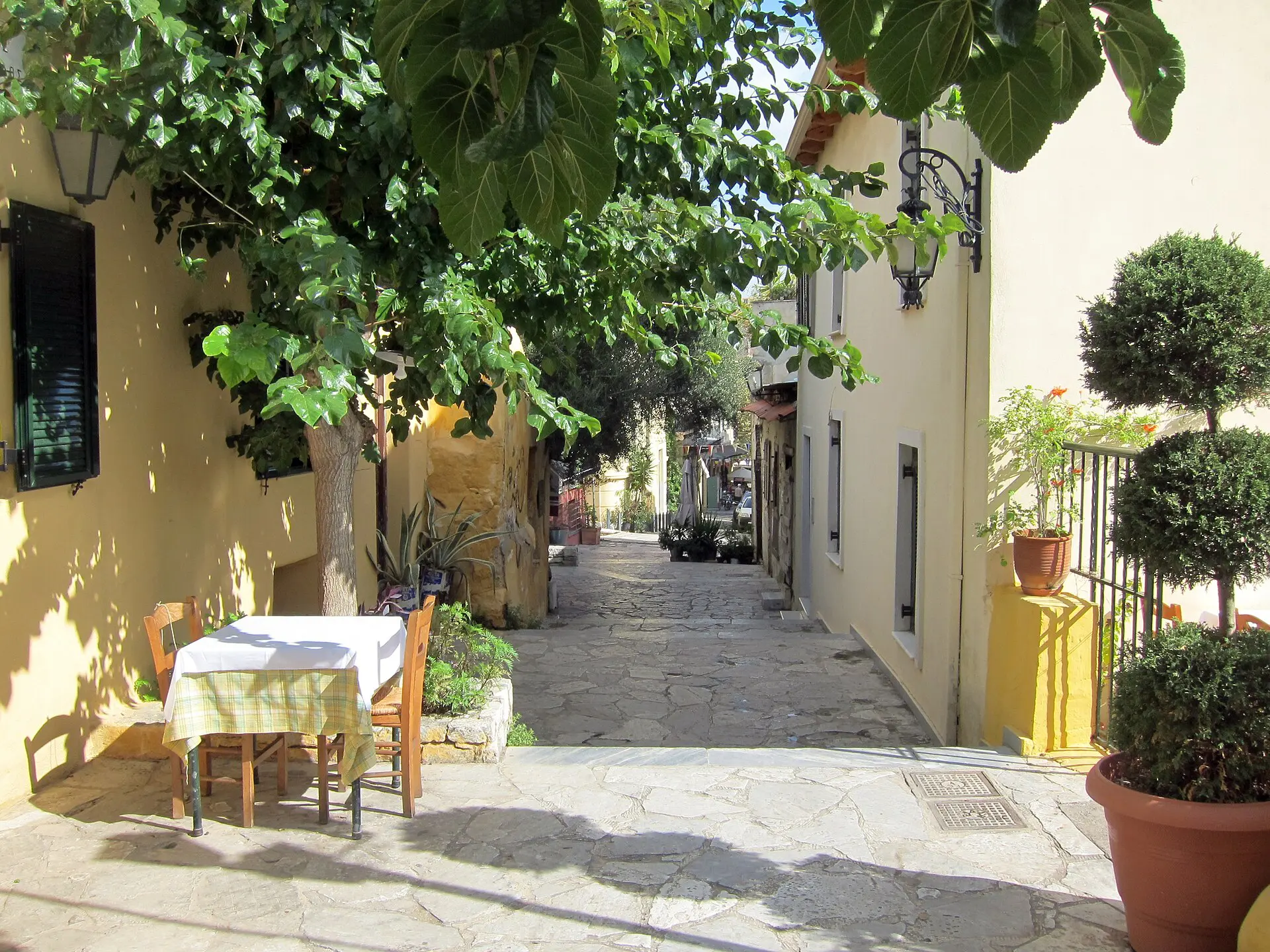
The table is built for sharing. Dishes arrive as they are ready, bread sits in the middle, and nobody expects a strict starter, main and dessert order. A group of four typically orders four to six plates and adds more if the table is still hungry. That rhythm is why a plain taverna menu can look long and still cost less than a restaurant with fixed courses.
Orthodox fasting also shapes the cooking. On fasting days, including much of Lent, cooks make dishes without meat, dairy or, in the strictest version, oil. This is why Greece has so many good bean, vegetable and seafood dishes, and why a vegetarian can eat well here. Check the Orthodox calendar if you travel in spring, as fasting menus appear in many tavernas.
8 traditional Greek dishes to order
These eight cover most of what a first-time visitor should try. Prices are hedged bands as of 2026 and vary by island, season and tourist exposure. Check the menu before you sit down.
1. Horiatiki and the mezedes table
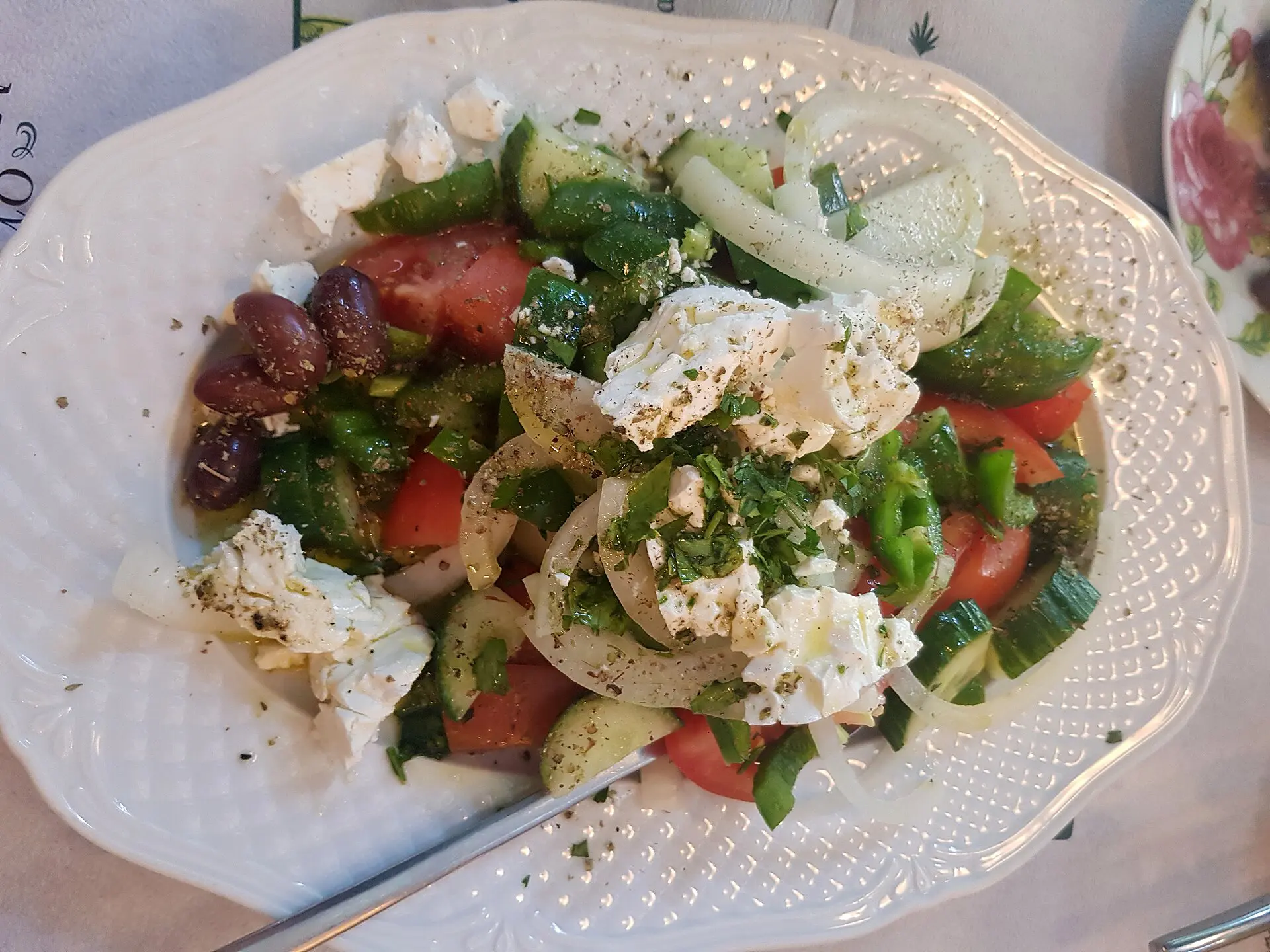
Horiatiki is the village salad: tomato, cucumber, onion, green pepper, olives, oregano and a slab of feta, dressed with olive oil, with no lettuce. Around it come mezedes: tzatziki (strained yoghurt, cucumber, garlic), melitzanosalata (smoked aubergine), taramosalata (fish roe), fried courgette and saganaki, which is cheese fried in a pan. Order these first, as they show the quality of the oil and the tomatoes. Price band: about 6-12 EUR for the salad, 4-8 EUR per dip.
2. Souvlaki and gyros
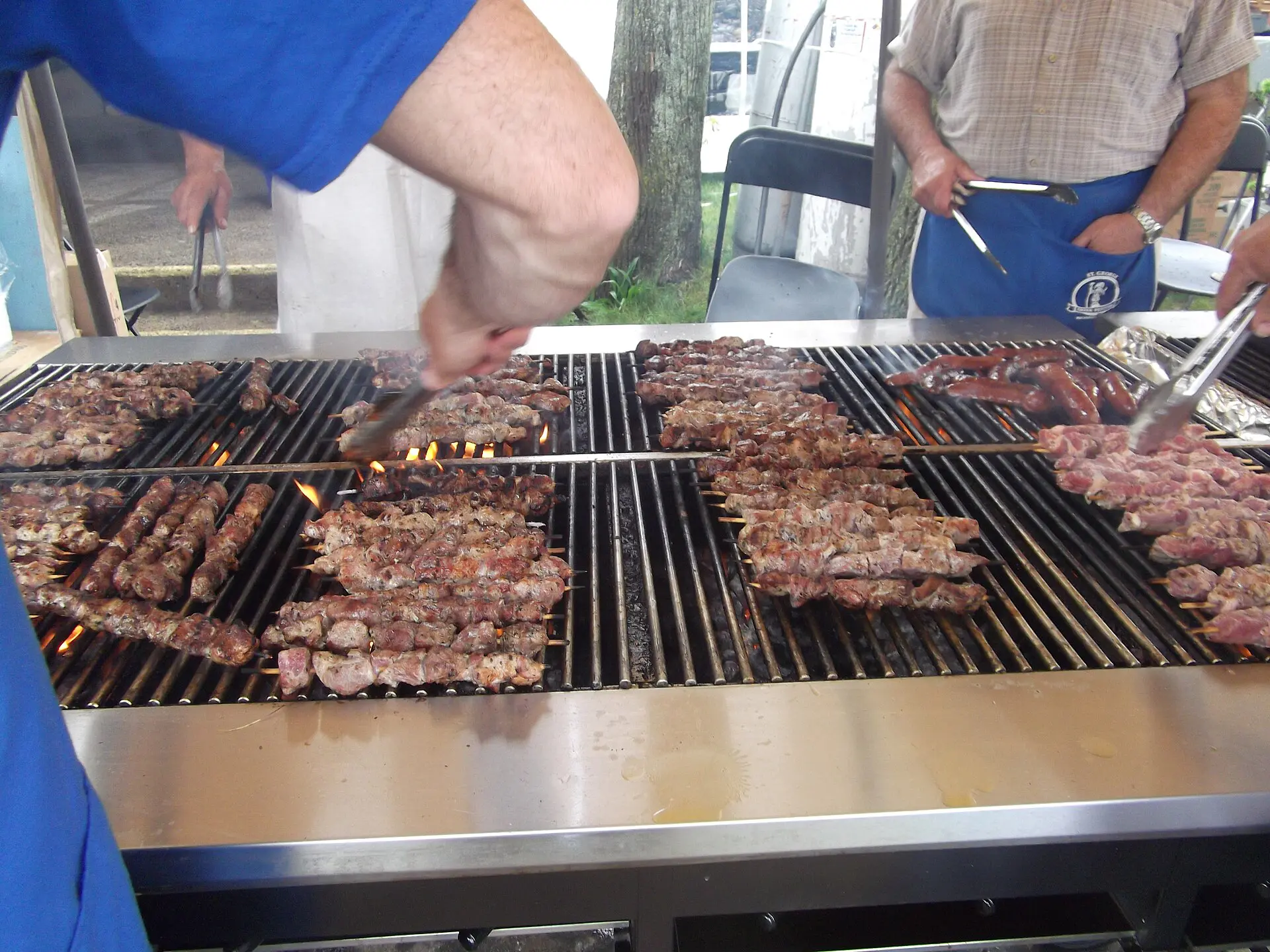
Souvlaki is skewered pork or chicken grilled over charcoal. Gyros is meat stacked on a vertical spit, shaved off and wrapped in pita with tomato, onion, tzatziki and often fried potatoes. In Greece a souvlaki can mean the skewer on its own or the wrapped pita, so say which you want. It is the quickest cheap meal in the country, eaten standing or on a bench. Price band: roughly 3-6 EUR for a wrap, more in tourist squares.
3. Moussaka and pastitsio
The dish most visitors know. Moussaka layers fried aubergine, potato, spiced minced meat and a thick béchamel, then bakes until the top is set. Pastitsio is its cousin: tubular pasta, minced meat and béchamel. Both are oven dishes, cooked in the morning and served warm, not hot, so they suit lunch. A good one holds its layers when cut. Price band: roughly 9-15 EUR a plate, usually a full meal with salad and bread.
4. Gemista
Gemista are tomatoes, peppers and sometimes courgettes or aubergines stuffed with rice, herbs and often a little minced meat, then roasted in olive oil until the edges brown. The dish exists because summer vegetables are cheap and plentiful, and rice stretches them into a meal. It is usually served at room temperature with a piece of feta and bread to mop the oil. Price band: roughly 8-13 EUR.
5. Kleftiko and slow-baked lamb
Kleftiko is lamb or goat baked slowly with garlic, lemon, oregano and potatoes, traditionally sealed in parchment or in a clay oven so the meat steams in its own juices. The name refers to thieves (klephts), who were said to cook in hidden pits. The result should fall off the bone. These are heavy dishes, best at a long lunch. Price band: roughly 12-20 EUR, often by weight for roast lamb on Sundays.
6. Grilled octopus and small fish
Octopus is dried in the sun on lines by the harbour, then grilled over charcoal and finished with olive oil and lemon. Small fish such as sardines, anchovies and gavros are fried or grilled whole. Larger fish are sold by the kilo, and the waiter will bring the fish to the table to be weighed. Ask the price per kilo before you agree. Price band: roughly 10-18 EUR for octopus, with large fish costing much more.
7. Spanakopita, tiropita and bougatsa
Greek pies are made with thin phyllo and cooked in large trays. Spanakopita is filled with spinach and feta, tiropita with cheese. Bougatsa, closely tied to Thessaloniki, is phyllo wrapped around semolina custard (or cheese or mince), baked, cut into squares and dusted with sugar and cinnamon. Bakeries sell all three by the slice for breakfast and a mid-morning snack. Price band: roughly 2-5 EUR a slice.
8. Fasolada and gigantes
Fasolada is white bean soup with tomato, carrot, celery and olive oil, long regarded as the national dish. Gigantes are large white beans baked in tomato and herbs. They are the clearest case of the Greek pantry at work: dried beans, oil and vegetables. Both are fasting-day food and also everyday home cooking. Order gigantes as a side to any grilled meat. Price band: roughly 5-9 EUR.
Market timing in Greece
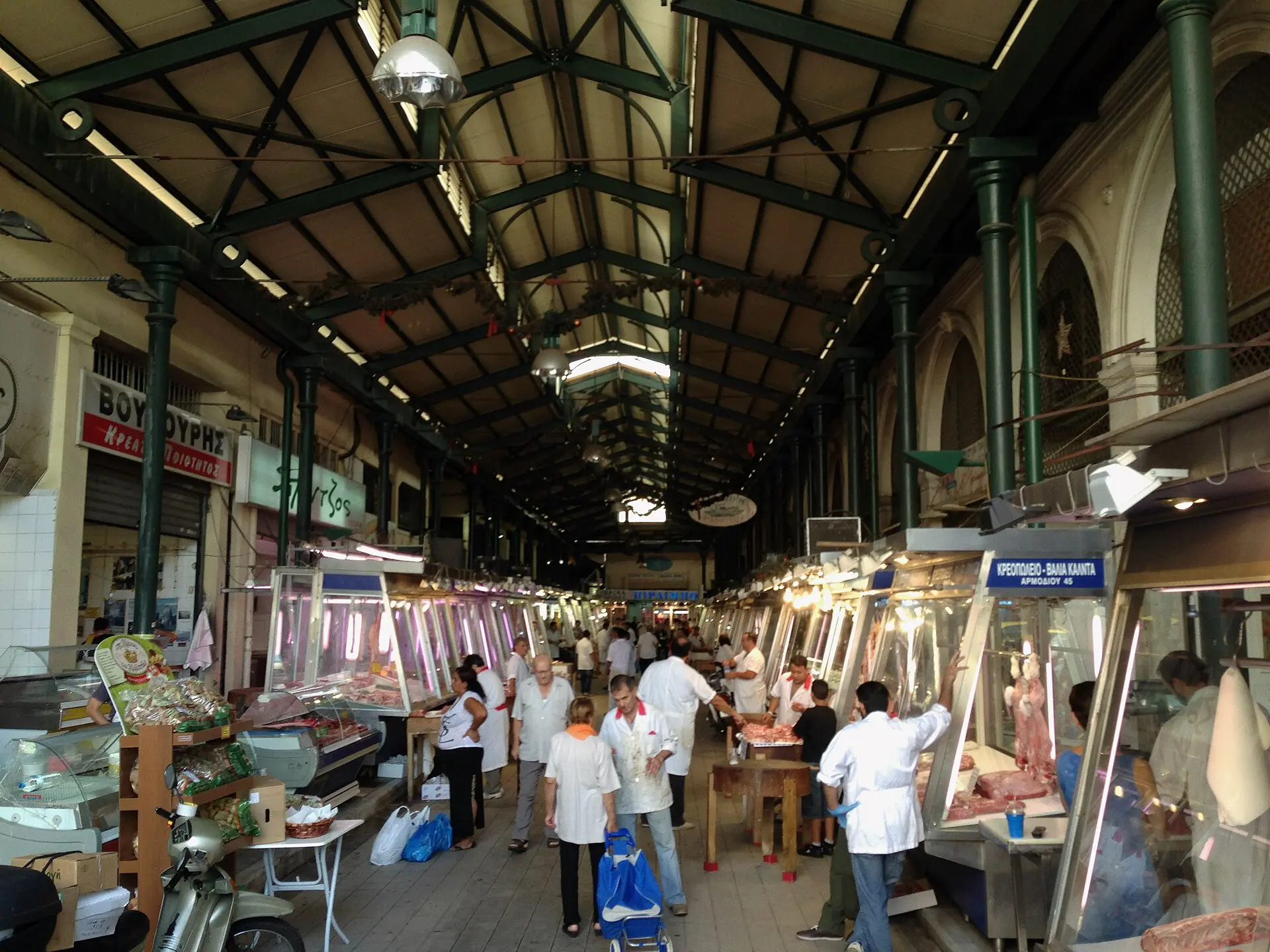
Most towns have a laiki agora, a weekly street market, where growers sell vegetables, fruit, herbs and cheese straight from the truck. Stalls set up early and the best produce is gone by late morning. Go between about 08:00 and 11:00, bring a bag and expect sellers to call prices out. Many stalls pack up by early afternoon.
The central covered markets in the larger cities, such as Athens and Thessaloniki, run daily except Sundays and are best in the morning for fish, meat and cheese. Midday heat in July and August makes mid-afternoon visits unpleasant, and many shops close for a rest before reopening in the evening. Check local opening times, as they vary by place and season.
How much does traditional Greek food cost?
Greece is cheaper than much of western Europe for casual eating, but islands in high summer cost more. These are hedged bands per person, as of 2026.
| Meal | Type | Typical band |
|---|---|---|
| Breakfast | Coffee and a pie or koulouri | 3-7 EUR |
| Street lunch | Souvlaki or gyros wrap | 3-7 EUR |
| Taverna lunch | Shared plates, one main, water, house wine | 12-25 EUR |
| Seafood dinner | Fish by the kilo, salad, sides | 25-50 EUR |
| Sweet stop | Yoghurt with honey, loukoumades | 4-8 EUR |
Many places add a small cover charge per person for bread. This is normal, and it is not a trick. Check the menu footer or ask.
Etiquette at a Greek table
- Share: put dishes in the middle and help yourself with the serving spoon or your own fork.
- Tipping: service is usually included in the bill. Leaving a few euros or rounding up is customary for good service, but it is not compulsory.
- Toasts: say “yia mas” (to us) and make eye contact when you clink glasses.
- Hosts: if a Greek family invites you, bring something small, such as sweets, and expect to be offered more food than you can finish.
- Bread: use it to mop up oil and sauces. This is expected.
How to read a Greek menu
Many menus are bilingual, but the Greek side is often more accurate. A few words go a long way. Orektika are starters, psita are grilled or roasted dishes, mageirefta are cooked dishes (stews, stuffed vegetables, oven bakes) and thalassina is seafood. Tis oras means grilled to order, usually meat or fish.
The cooked dishes are often listed in a counter or a kitchen display. Point at what looks good. Ask what is fresh and what is frozen, since menus in many places are required to mark frozen fish and seafood. If a menu has photographs on every page and seven languages, I would walk on and find the next street.
What to skip when eating in Greece
- Restaurants with a hostess outside who calls to passers-by. Quality is usually patchy.
- Plates of “Greek” food in airports and port terminals. Better food is a short walk away.
- Fish ordered without confirming the price per kilo.
- Late-afternoon moussaka in a place that serves it all day. The best versions are cooked fresh at lunch.
For planning around the seasons and the island ferries, see our guides on the best time to visit Greece and the Greece travel guide. For background, see Wikivoyage’s Greece guide.
FAQ about traditional Greek food
What is the most traditional Greek dish?
There is no single answer, but horiatiki salad, fasolada bean soup and moussaka come up most often. Souvlaki is the best-known street food. Regional dishes, such as Cretan dakos or Thessaloniki’s bougatsa, can matter more locally than any national symbol.
What time do Greeks eat dinner?
Often after 21:00, particularly in summer and on the islands. Kitchens open earlier for visitors, so you can eat at 19:30, but the room may be empty. Late dinner is a good time to watch how a Greek table fills slowly and stays long.
Is traditional Greek food vegetarian-friendly?
Yes, more than most European cuisines. Fasting traditions have produced many meat-free dishes: gigantes, fasolada, gemista without meat, spinach pie, fava and wild greens (horta). Always ask, because some stuffed vegetables and beans are cooked with meat or stock.
Do I need to tip in Greece?
Service is generally included in the price, so tipping is a courtesy. Rounding up or leaving a few euros on the table for a meal for two is common. In busy tourist areas some bills add an explicit service line, so check before adding more.
What should I order first in Greece?
Order a horiatiki and two or three dips, with bread, then choose one cooked main to share. This shows you the oil, the vegetables and the cooking in one sitting. Add grilled octopus or a bean dish on a second round if the table is still hungry.