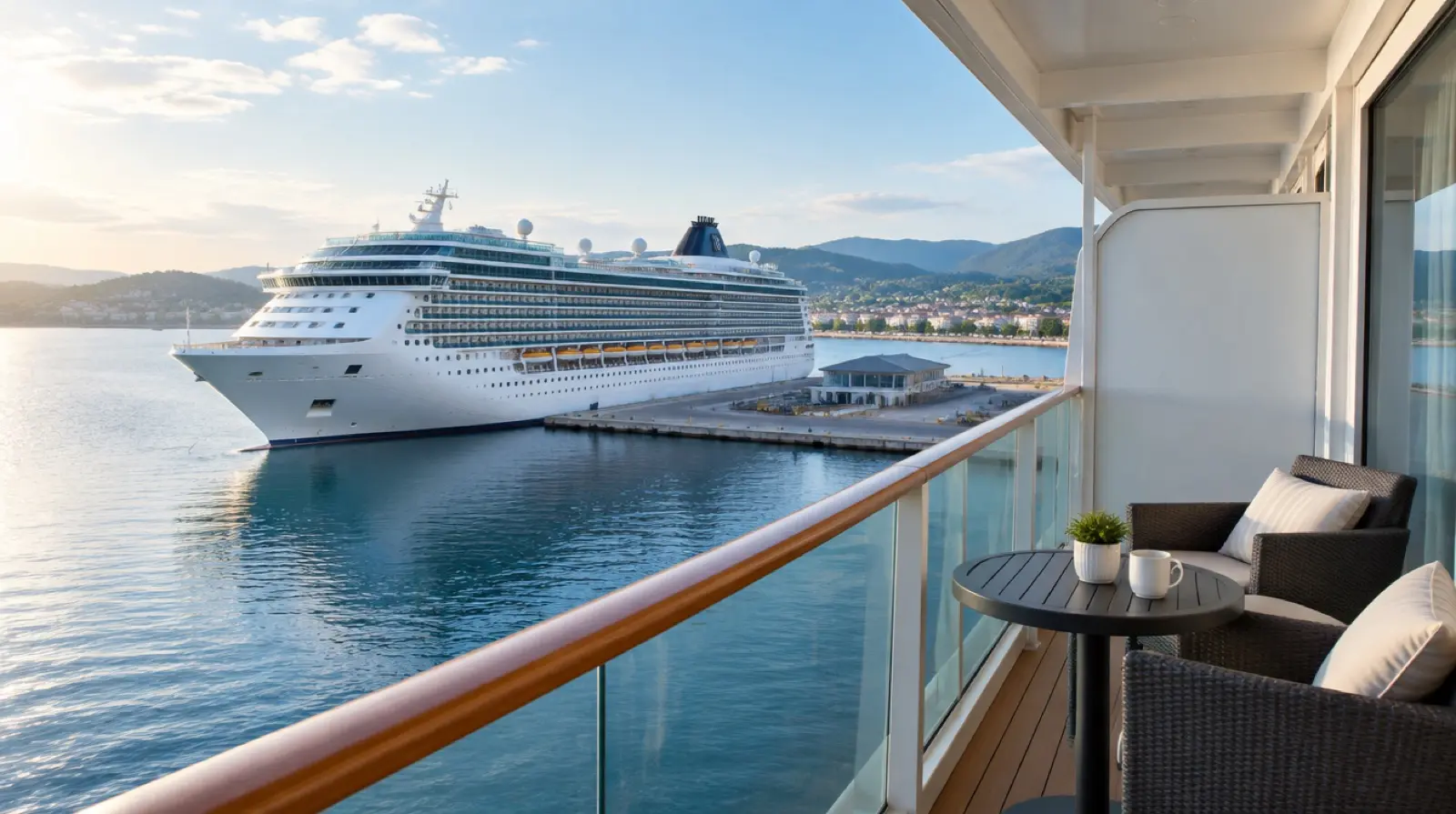
Kid friendly cruises are the ones with a kids club for your children’s ages, a cabin that lets everyone sleep, and port days that do not overfill the day. For most families that means a larger ship with a full programme, a sailing of five to seven nights and one planned activity per port. Everything else is a trade-off, laid out below.
How to choose kid friendly cruises: the method
A cruise concentrates travel logistics into one place. The ship is the hotel, the transport and the restaurant, so the planning questions shrink to five: how big is the ship, what does the cabin look like, how long is the sailing, what does the kids club cover and how much will each port day ask of children. Weigh them in that order, because the first two decide most of the rest.
Each criterion below is scored against three age groups. Use it to cut a long list of sailings to two or three, then confirm the details with the cruise line, since age limits, fees and itineraries change.
Kid friendly cruises compared: the main table

| Choice | Suits ages 1 to 4 | Suits ages 5 to 8 | Suits ages 9 to 13 | Main trade-off |
|---|---|---|---|---|
| Large ship, many facilities | Often yes, with nursery or play areas on some lines | Strong fit | Strong fit | Crowds, longer walks, queues |
| Mid-size ship | Good | Good | Fair, fewer activities | Fewer clubs and slides |
| Small or expedition ship | Rarely suitable | Depends on age policy | Good if curious | Few activities for children |
| Inside cabin | Dark helps naps | Fine for sleeping | Fine | No daylight, tight space |
| Balcony or family cabin | Best for naps and evenings | Best | Best | Higher fare |
| Short sailing, 3 to 4 nights | Easier to manage | Good first trial | May feel rushed | More of the trip is embarking and disembarking |
| Week-long sailing | Possible with rest days | Strong fit | Strong fit | More sea days to fill |
Seven things that decide a family cruise
1. Ship size and layout
A large ship has the widest range of children’s facilities, such as pools, splash areas, climbing walls, clubs and theatres. The cost is distance: it can take ten minutes to cross the ship, and a tired four-year-old will not walk it twice. Stamina: choose a cabin near the lifts and the main pool, and treat the ship as a place to rest as much as to play.
2. Cabin type and sleeping layout
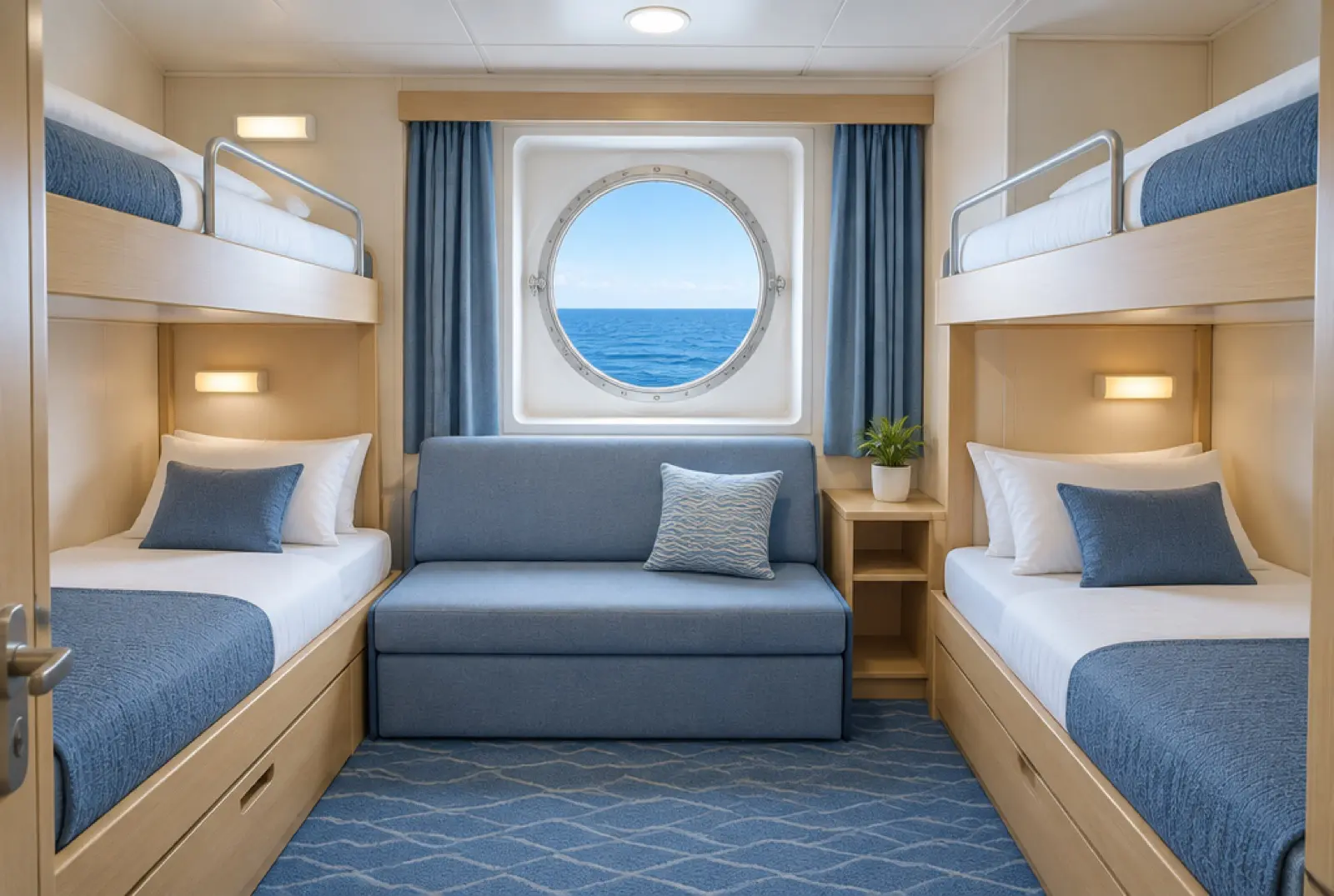
Cabin choice shapes every evening, and most inside and outside cabins measure roughly 15 to 20 square metres, so space is tight for four people. Inside cabins are the cheapest and darkest. Balcony cabins give a private place to sit once children are asleep. Family and connecting cabins offer more beds and floor space, and many lines publish how many people each cabin sleeps, so check the exact maximum. Decision point: if your youngest is under three, put the money into the cabin before the ship.
3. Sailing length and itinerary
For a first cruise, three to five nights tests the format without a long commitment. Seven nights suits a family that likes routine. Look at the pattern of sea days and port days: one sea day between two ports gives a built-in rest. A flight to the departure port is often the hardest day of the trip, so arrive the day before if you can.
4. Kids club age bands
Most large lines run supervised clubs split by age band, often starting around three years old and running through the teens, though the exact bands and the toilet-training rule vary. Many clubs are free for set hours and charge for evening or night care. Ask what the club covers, how check-in works and whether babies and toddlers have a separate nursery. Age note: children under three are usually kept with a parent.
5. Port-day pacing
Port days are where families overdo it. A safe plan is one planned activity per port, finished by early afternoon, with the ship as the rest anchor. Walking tours and long coach rides tend to fail with children under seven. Beach stops, short boat rides and a single easy attraction near the pier work better. In ports that need a tender boat, add extra time. Tired-day fallback: stay aboard, as the ship is quieter when most guests are ashore.
6. Meals, naps and routine
A cruise has the advantage of regular meals. Buffets cover fussy eaters, and main dining rooms often offer a children’s menu and set times. Keep bedtimes close to normal, and use the afternoon for a nap or quiet cabin time. A pacing grid for a typical day: breakfast and club or pool in the morning, lunch and cabin rest between 1:00 and 3:00, an activity or show in the late afternoon, and an early dinner.
7. Costs and extras
The fare is the base, and extras change the total. Service charges, drinks packages, shore excursions, Wi-Fi and kids’ club evening care are all possible additions. As of 2026, children sharing a cabin with two adults are often priced lower than adults, but the discount depends on the line and the sailing. Ask for the full price, and compare it against a resort stay such as those in the Caribbean.
A pacing grid for a 7-night family cruise
A week works when sea days and port days alternate and every day has a block you can drop. Use this as a template and adjust it to the route. Cap any shore excursion at about three hours.
- Day 1, embarkation: board by early afternoon, find the cabin, do the safety drill and keep dinner early. Do not plan anything else.
- Day 2, sea day: club or pool in the morning, cabin rest after lunch, a show in the evening. Use it to learn the ship.
- Day 3, port: one easy outing, back on board by 1:00 for lunch and rest.
- Day 4, port: a beach or short boat trip, or stay aboard if the first port tired the youngest.
- Day 5, sea day: the lightest day of the week, with unstructured pool time.
- Day 6, port: the longest outing, with a firm return time at least an hour before the ship leaves.
- Day 7, last sea day: pack the night before, because disembarkation often means an early start.
Decision point: if two ports in a row feel like too much, make the second a ship day. Nothing in the itinerary is lost, and the quiet decks are a reward.
Common mistakes and edge cases
- Booking too many excursions. Two excursions in a week of seven nights is plenty for children under eight.
- Ignoring minimum age rules. Lines set a minimum age for sailing, often six to twelve months, and some itineraries, such as transatlantic crossings, set a higher one.
- Underestimating motion. Sea sickness affects some children more than adults. Pick a mid-ship cabin on a low deck, and ask a doctor before using any remedy.
- Forgetting travel documents. Passport and visa requirements apply per port and depend on nationality, so verify them early.
- Underestimating the first day. Embarkation takes hours of queues, and the cabin may not be ready until the afternoon.
What to verify before you rely on kid friendly cruises
Facts about kid friendly cruises change often, so check each of these on the cruise line’s official site or with your agent before paying.
- The minimum age for sailing and for the kids club, and any toilet-training rule.
- The maximum number of people in the cabin you have chosen.
- Which clubs, pools and activities are free and which carry an extra fee.
- The ports, whether each needs a tender and how long you will be ashore.
- Health, insurance and documentation rules for every stop on the route.
Where to go next
If a cruise looks like too much movement, a fixed base may suit your family better. See family vacation packages compared with self-planned trips for the cost and control trade-off, or family resorts in Mexico for a beach week with a short transfer. For a cruise port city, the San Diego with kids plan pairs well with a pre-cruise night.
FAQ about kid friendly cruises
What age is best for a first cruise with kids?
Children from about five to ten usually get the most from a ship, since they can join a club and handle simple port days. Babies and toddlers can sail on many lines, but the logistics are harder, so choose a short trip and a larger cabin.
Are cruises good for toddlers?
They can be, if you choose a short sailing, a cabin with space and a ship with a nursery or play area. Be ready to run your own naps and meals, and keep port days short. Check the line’s minimum age and the rules for toilet training in pools.
How many nights is best for a cruise with children?
Four to seven nights suits most families. Three nights is a good trial but spends a larger share of the time embarking. Longer itineraries work for older children, provided there are enough sea days with things to do.
What type of cabin should a family choose?
Choose the cabin with the most sleeping space your budget allows. For children under five, a balcony or family cabin is worth it because evenings in a dark room are easier. For older children, an inside cabin is often enough, since they will spend the day out.
Are all-inclusive cruises cheaper for families?
Not always. Packages simplify budgeting, but many extras are still charged separately, so compare the full total, including service fees, drinks, excursions and children’s club costs, before choosing. A package makes sense only if you will use most of what it includes.