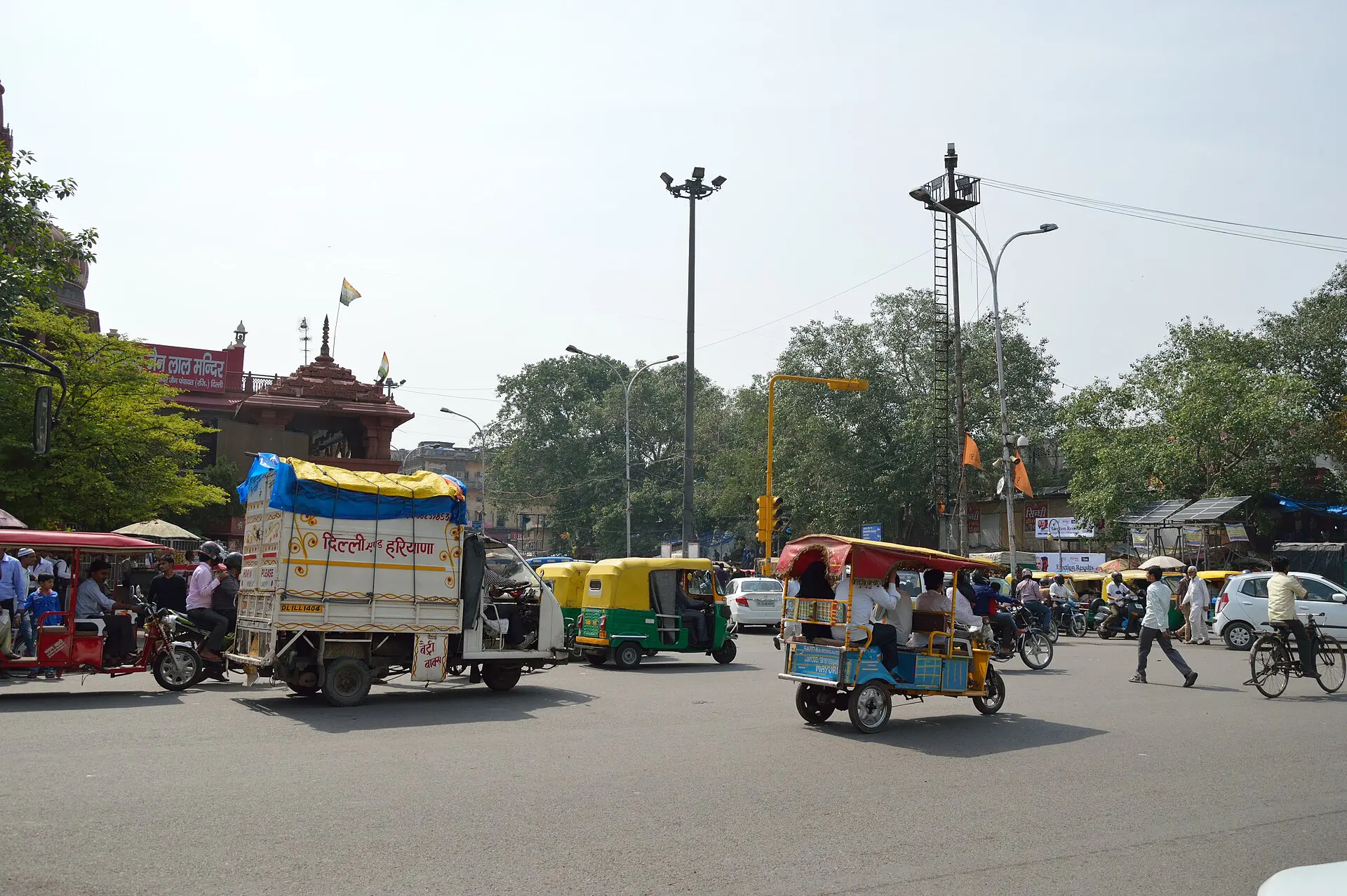
Indian street food is a day of small plates, each tied to a time and a stall type. Chai and fried breads come first, chaat and snacks fill the afternoon, and grills and sweets run after dark. Order the dish the stall is built around, pay a few rupees to a few hundred, and eat it standing. Prices vary by city and are hedged below as of 2026. This guide sets out what to order first, when stalls work, what each dish costs and how to eat without offending anyone.
How Indian street food is timed through the day
Street eating in India follows the same logic as a home kitchen: each hour has its dish. The stalls are specialists, so one cart makes one family of foods and does it all day. You choose the cart by the hour, not by the menu.
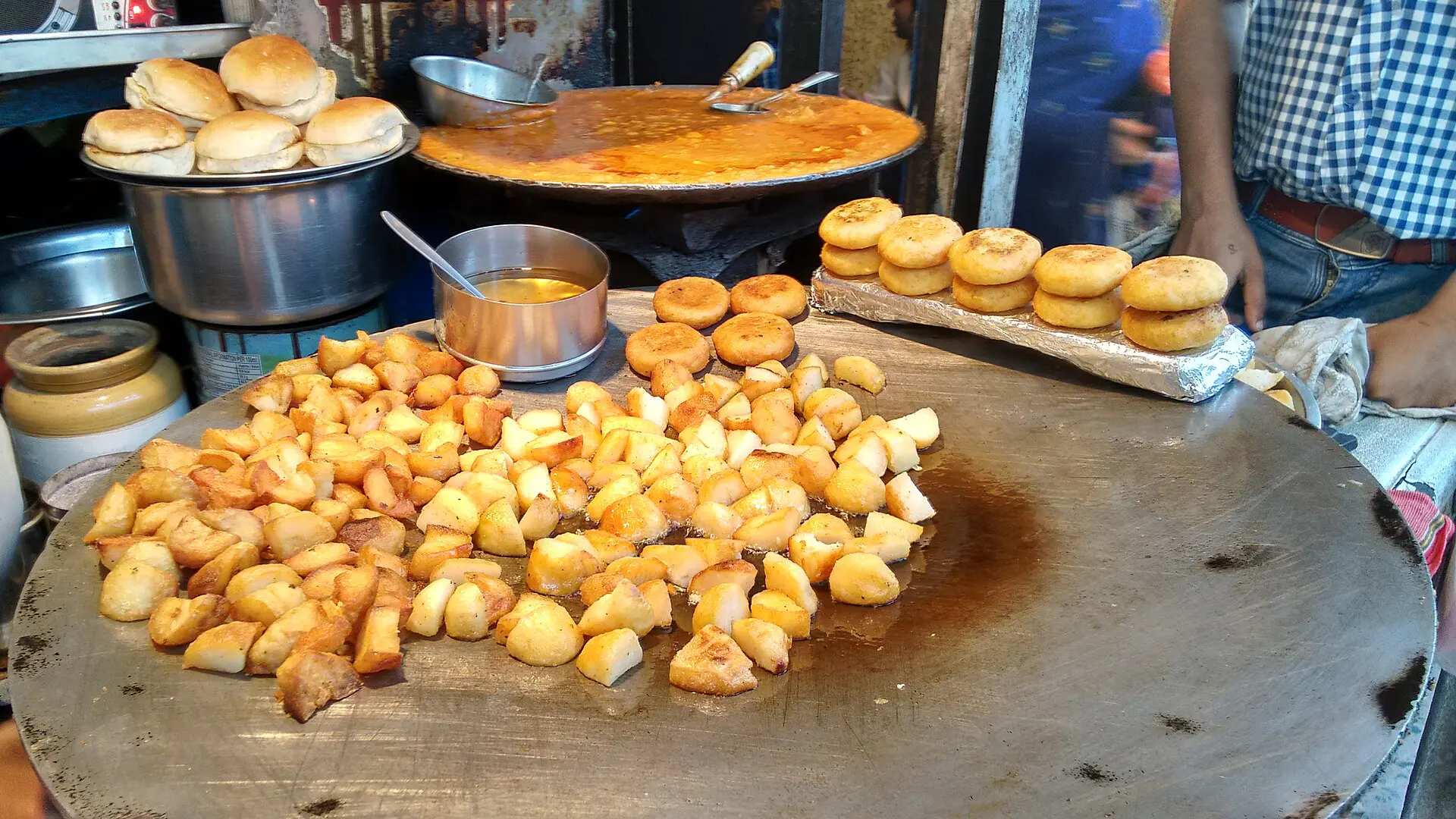
- Early morning: tea, boiled or fried breads, lentil-and-potato preparations, steamed rice cakes in the south.
- Late morning to lunch: rice plates, thalis and stuffed flatbreads in office districts.
- Afternoon (about 15:00-18:00): chaat, the tangy snack family built on crisp shells, potatoes, yoghurt and chutney.
- Evening: grills, kebabs, fried snacks, egg dishes and, in many cities, sweet milk and fried dough.
The system exists because streets feed commuters and market traders who need cheap, quick, hot food at fixed hours. That is why the busiest carts are near stations, bus stands, wholesale markets and colleges, and why a stall can be empty at 11:00 and crowded at 17:00.
Best Indian street food to order first: 8 dishes
India has dozens of regional food traditions, so any short list is a sample. These eight cover the main families: fried, steamed, griddled, tossed and grilled. Check the India travel guide for the regional picture.
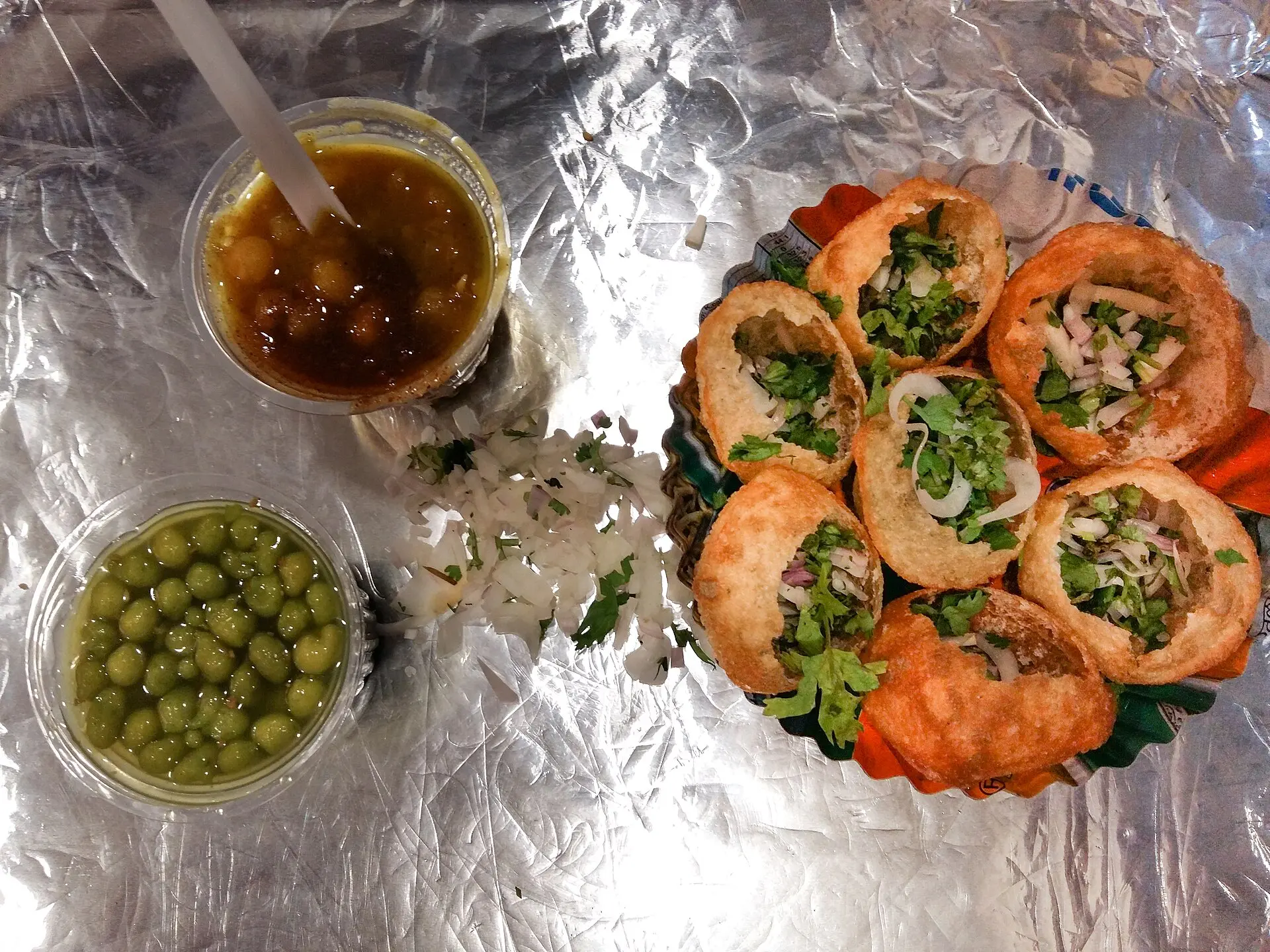
1. Chaat, the tangy snack family
Chaat is a category, not one dish. Typical versions combine crisp fried dough, boiled potato or chickpeas, whipped yoghurt, tamarind and mint chutney, and a dusting of spice. Pani puri is the hollow shell filled with spiced water. Sev puri and bhel puri use puffed rice and fine gram-flour noodles. Eat it at once, because the crunch lasts only minutes. A plate usually costs well under a dollar in most cities, as of 2026.
2. Samosa and kachori, the fried pastries
Samosas are triangular pastries filled with spiced potato and peas, fried until the shell blisters. Kachori is round, often filled with lentils or onion. Both come hot from the pan in the morning and again mid-afternoon, usually with chutney or a chickpea curry. They are cheap, filling and safe because they are fried to order. A pair costs a small coin amount, often under a dollar.
3. Vada pav, the Mumbai commuter roll
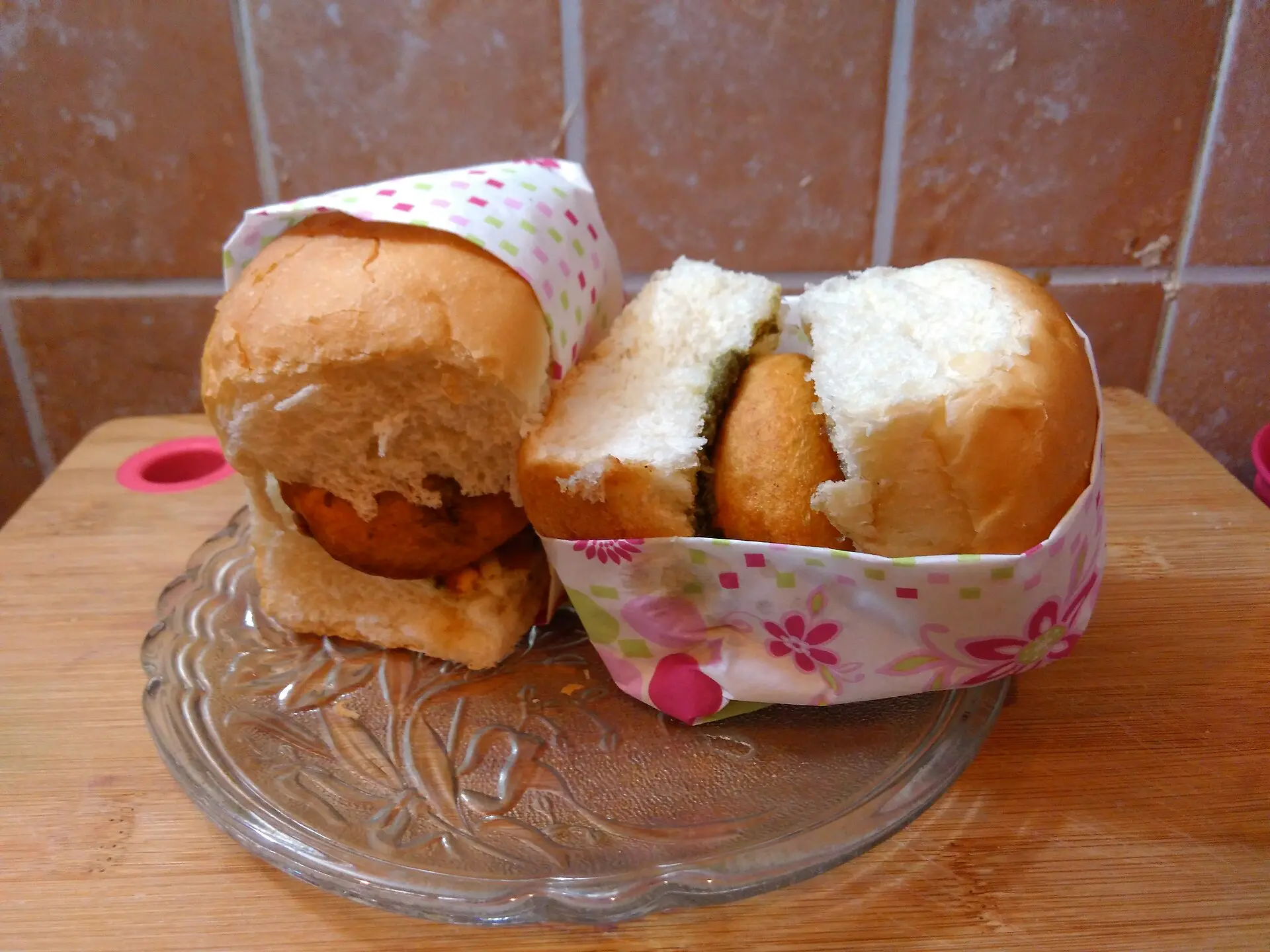
A spiced potato fritter in a soft bun with dry garlic chutney and a green chilli. It was built for the city’s working day: portable, cheap and eaten with one hand on a train platform. Stalls cluster near stations and offices, and the best time is late afternoon when the fritters come straight out of the oil. Expect a very low price, usually less than a dollar.
4. Dosa and idli, the south Indian breakfast
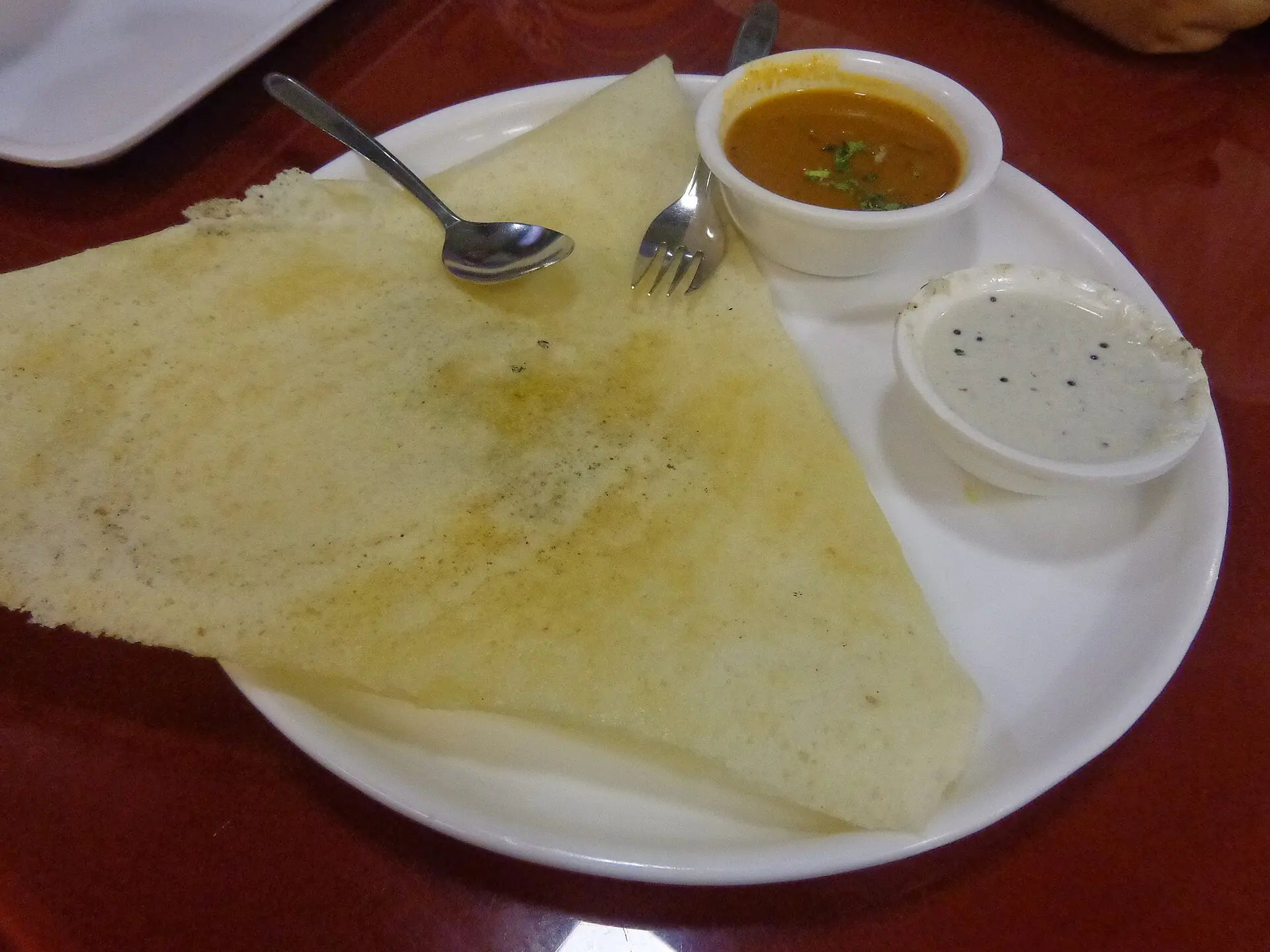
The batter is fermented rice and black gram, which gives the dosa its sourness and crisp edge. Idli is the same batter steamed into soft rounds. Both arrive with sambar (a lentil and vegetable broth) and coconut chutney. Morning is the right time, since the batter is freshest at the start of service. A plate is typically cheap, in the region of one to two dollars.
5. Kathi rolls and parathas, the griddled breads
A paratha is a layered or stuffed flatbread cooked on a flat iron plate with plenty of ghee or oil. In Kolkata-style kathi rolls, egg-coated bread is wrapped around grilled meat or paneer with onion and lime. Look for a flat griddle and a cook rolling dough to order. These are heavier meals, good for a late lunch or supper, and cost a little more than snacks.
6. Kebabs and tikka from the evening grill
Skewered meat marinated in yoghurt and spices, cooked over charcoal or in a clay oven. Old-city lanes in northern cities are known for evening kebab counters, often paired with a flatbread and sliced onion. Watch that the meat is cooked through and served hot. Evening is the time, since the coals are strongest after dusk. Meat dishes are priced higher than vegetarian snacks.
7. Pav bhaji and misal, the spiced vegetable plates
Pav bhaji is a mashed vegetable curry cooked on a wide griddle and served with buttered bread rolls. Misal is a sprouted-bean curry topped with crisp gram-flour noodles. Both are made in bulk and kept hot, which helps food safety. They suit a hearty evening meal and are commonly vegetarian, which is useful for travellers who avoid meat.
8. Jalebi and kulfi, the sweet finish
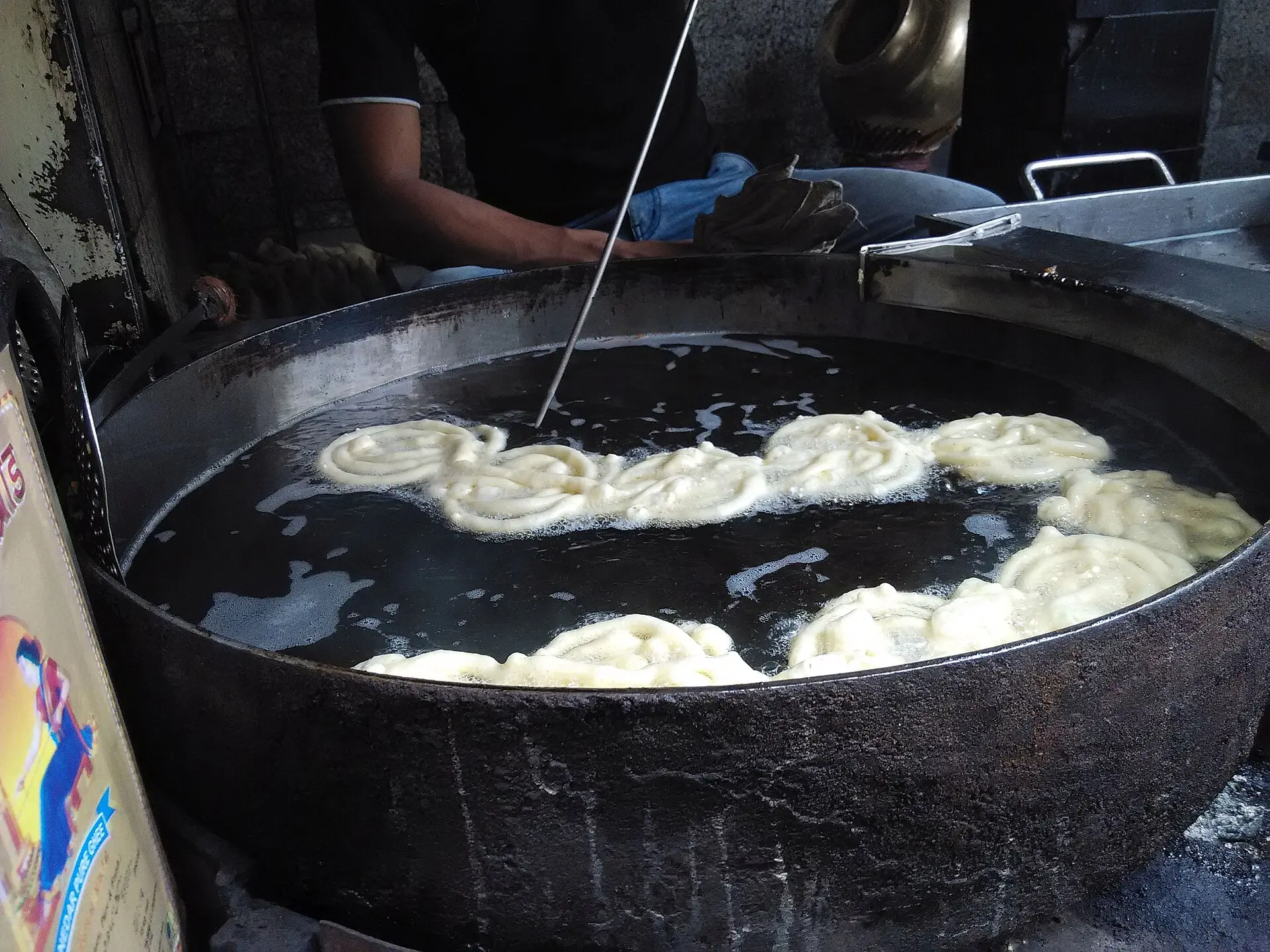
Jalebi is batter squeezed into hot oil in spirals and soaked in sugar syrup. Kulfi is dense, slowly cooked milk ice cream, often flavoured with cardamom, pistachio or saffron. Both are finishing foods rather than snacks. Jalebi is traditionally eaten warm in the morning or evening, and kulfi is a cool treat on a hot night. Both are inexpensive.
Market timing for Indian street stalls
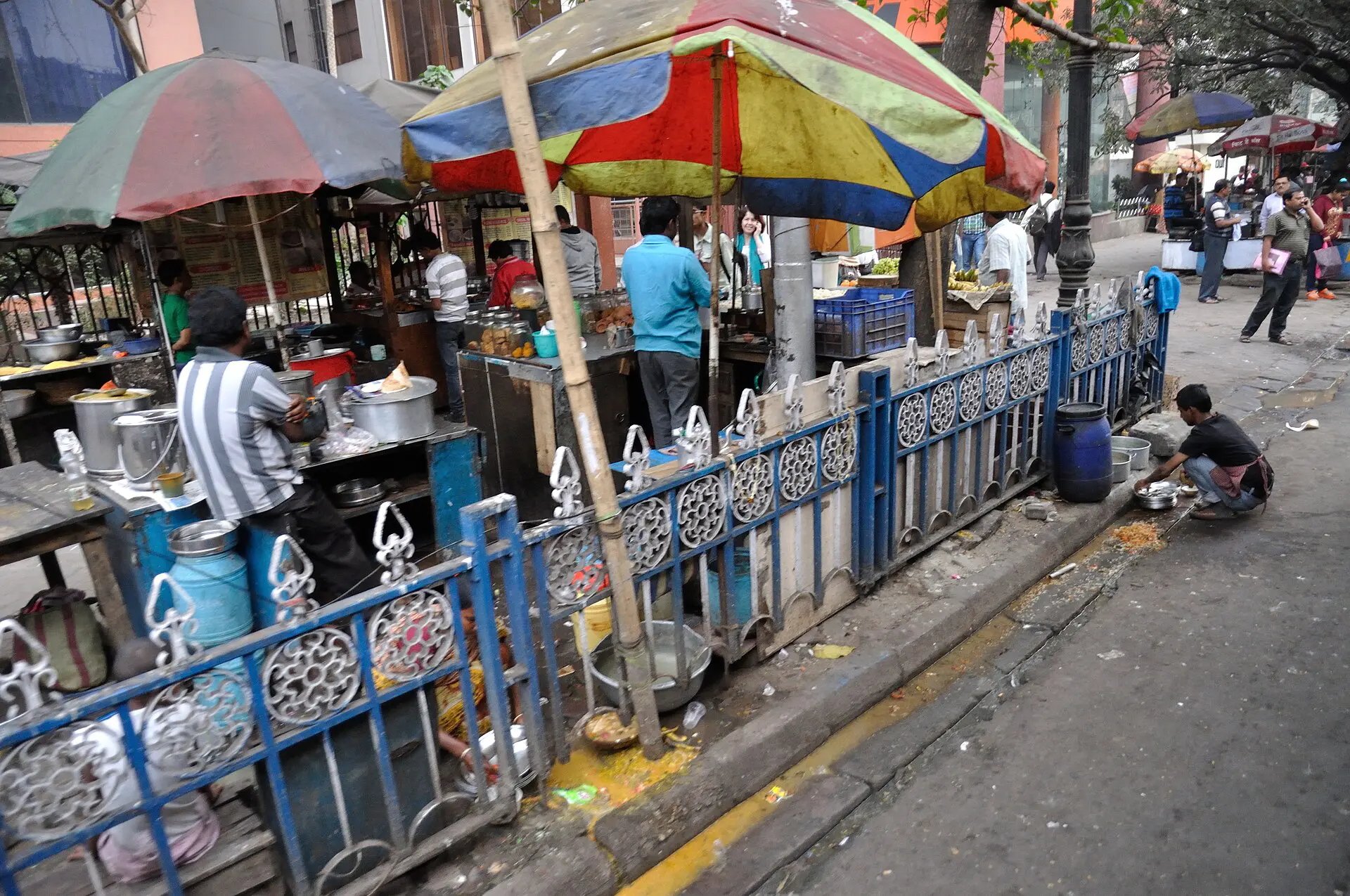
Learn the rhythm of the market before you choose a cart. Wholesale markets start around 04:00-05:00, and stalls serving traders open early. Residential neighbourhoods wake later, and fried snack stalls often start about 15:00. In many cities the busiest evening lanes fill from about 18:00 and carry on until 22:00 or later.
- Look for a queue of locals, especially office workers at lunch. High turnover means fresh oil and fresh ingredients.
- Watch the oil and the water. Food cooked hot in front of you is safer than anything that sat out. Sealed bottled water is the usual choice for visitors, and ice from unknown sources is best avoided.
- Check hours locally. Festival days and monsoon weather change when stalls open and which ones close.
How much does Indian street food cost?
Costs differ between a small town and a metropolitan business district, and tourist areas can be higher. The bands below are rough per-person ranges in USD, as of 2026. Check before you go and compare with what locals are paying.
| Meal | Typical street option | Rough band (USD) |
|---|---|---|
| Tea or coffee | Milk tea at a roadside stall | Under 0.50 |
| Snack | Chaat, samosa, vada pav | 0.30-1.50 |
| Breakfast plate | Dosa, idli, paratha | 1-3 |
| Full meal | Rice plate, pav bhaji, kebab and bread | 2-6 |
| Sweet | Jalebi, kulfi | 0.30-2 |
Prices are generally fixed and posted or understood. Haggling over a plate of food is not usual, though you should confirm the price first if there is no board.
Etiquette at Indian food stalls
The right hand is the eating hand. The left is traditionally used for hygiene, so pass money, take plates and eat with the right. Wash your hands before eating: many stalls have a basin or a bottle of water nearby.
- Eat at the stall. Most carts expect you to stand or perch nearby and return plates. Some use leaf plates or paper, which you drop in the bin provided.
- Do not share a half-eaten plate. Food touched by a mouth is considered contaminated in many households, so avoid offering bites from your own food to others.
- Tipping is not expected at carts. At sit-down places a small tip or rounding up is common.
- Ask about meat. Many stalls are strictly vegetarian, and mixing meat in is a serious matter for some customers. Follow the stall’s own rules.
How to read a stall menu in India with a language barrier
Most carts have no menu. Point at what the person ahead of you ordered, hold up fingers for quantity and ask for the price first. Many vendors use English numerals and know the names of the main dishes. Learn a few phrases and use a translation app for ingredients.
- Veg or non-veg: green dot means vegetarian, red or brown means it contains meat or egg.
- Spice level: ask for “less spicy” or “no chilli” to scale down.
- Plain, masala, special: “plain” is the base, “masala” adds filling or sauce, “special” adds extras and costs more.
What to skip when eating Indian street food
I would skip anything that has been sitting in the open on a hot afternoon, pre-cut fruit with unknown water on it, and raw salads at carts where you cannot see the water source. Avoid ice and fresh chutneys that look watery. First-time visitors often do well by starting with foods that are fried or cooked to order, then adding raw items gradually. Ask your doctor or travel clinic about vaccines and stomach precautions before travel.
Also skip the idea that you can cover India in one trip of one menu. Regional cooking differs sharply, and a snack that is standard in Mumbai may not exist in Chennai. For general background see Wikivoyage’s India guide and the Wikipedia entry for India.
FAQ about Indian street food
Is Indian street food safe to eat?
It can be, with sensible choices. Food that is fried or cooked hot in front of you carries less risk than raw or reheated items. Choose busy stalls, use sealed bottled water, skip ice from unknown sources and wash your hands first. Many travellers still get stomach upsets in the first 3-4 days, so carry rehydration salts.
What should I order first from an Indian street stall?
Start with something fried and hot, such as a samosa or vada pav, or a steamed idli with sambar. These are made to order and are mild enough for a first try. Move to chaat once your stomach has adjusted, and add grilled meat last.
How much should I spend on Indian street food per day?
A traveller eating only at street stalls can often manage on roughly 5-12 USD per day, as of 2026, depending on city and appetite. Tourist-heavy districts and bigger meals push this higher. Treat this as a rough range and check local prices on arrival.
Is the food very spicy?
Not always. Heat varies by region and by stall, and some dishes such as idli, jalebi and kulfi are not spicy at all. You can ask for less chilli, and a cooling yoghurt-based side or a sweet drink helps. Chutneys are where most of the burn sits.
Can vegetarians eat Indian street food easily?
Yes, more easily than almost anywhere. Chaat, dosa, pav bhaji and most fried snacks are vegetarian, and many stalls are strictly so. Look for the green dot, and ask whether the cooking fat or stock contains animal products if that matters to you.