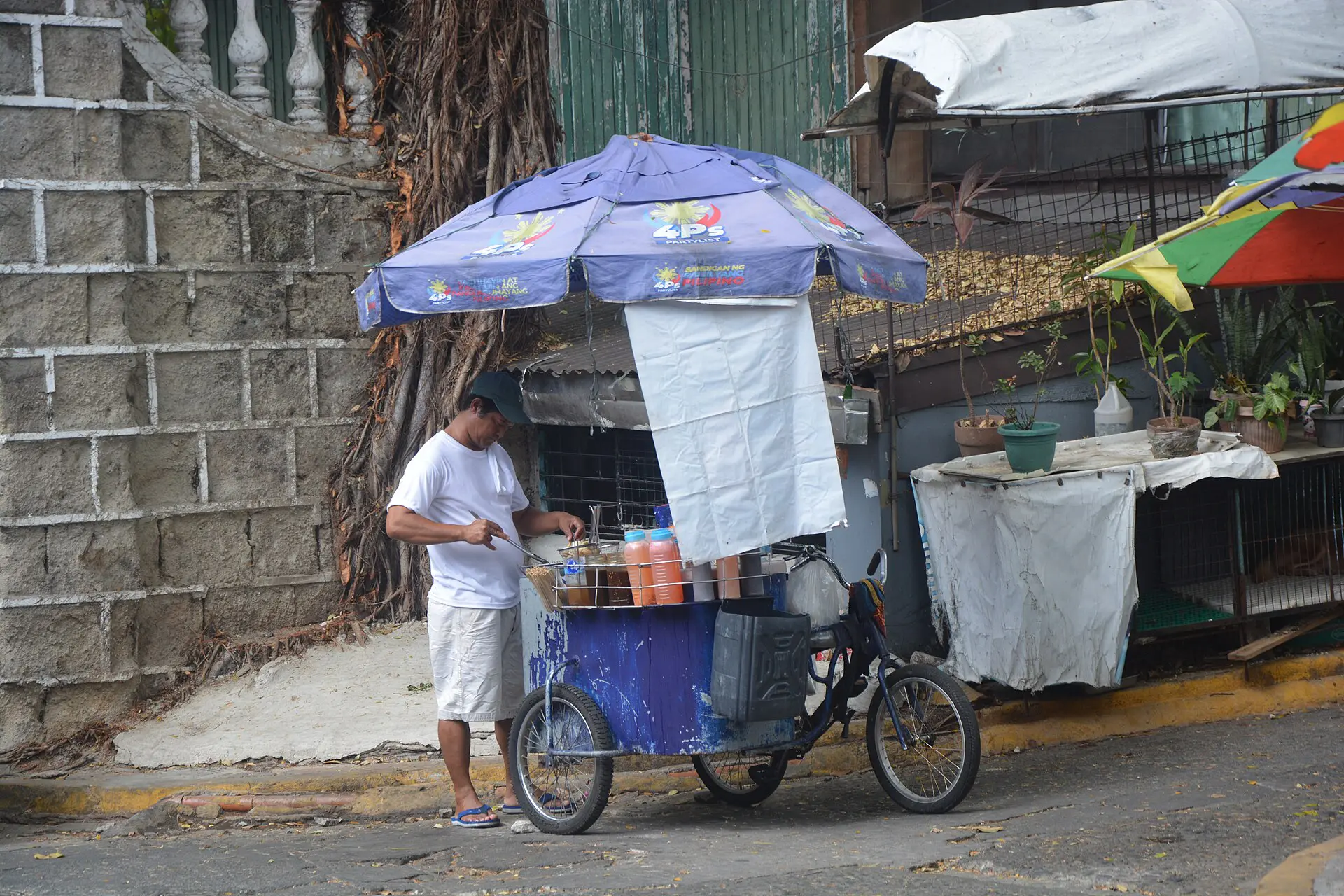
Filipino street food is built around the grill, the fryer and the vinegar pot. Start with isaw (grilled intestine skewers), kwek-kwek (battered quail eggs) and fish balls, eat balut only if you are curious, and finish with taho or a sweet fried banana. Most snacks cost a few pesos to about a hundred, and the best stalls are busy, hot and cooking in front of you. Below: how the day eats, eight snacks, market timing, price bands and etiquette.
How Filipinos eat: meals, merienda and the street
Filipino eating is frequent and social. The standard day has almusal (breakfast), tanghalian (lunch) and hapunan (dinner), but the meal that matters for street food is merienda, a snack break in mid-afternoon. Office workers, students and market vendors all stop around 15:00 for something sweet or fried, and street carts are timed to that rhythm.
Rice sits under almost everything. A stick of barbecue is often sold with a scoop of rice wrapped in banana leaf or plastic, and sour, salty and sweet flavours are balanced with vinegar, soy sauce, calamansi (a small citrus) and chilli. Pork, chicken offal, eggs and fish are the common proteins because they are cheap, quick to cook and travel well on a cart.
The food system is a colonial layer cake. Spanish rule from 1565 to 1898 brought pork fat, sausage and sweet pastries, and American rule to 1946 brought fast food and canned goods. Under it all is an older Austronesian base of rice, coconut, fish and fermented seasoning. Street food is where these layers are cheapest to taste, and the same stall can sell a Spanish-era pastry next to a coconut sweet that predates it by centuries.
Market timing: when to find Filipino street food
Street food follows foot traffic, so timing matters more than location. As a rough guide:
| Time | Where | What to order |
|---|---|---|
| 05:00-09:00 | Wet markets (palengke) and roadside carts | Taho, rice porridge, pan de sal, fried breakfast snacks |
| 11:00-14:00 | Near offices and schools | Barbecue with rice, fish balls, kwek-kwek |
| 15:00-18:00 | School gates, jeepney stops, plazas | Banana cue, turon, halo-halo, isaw |
| 18:00-23:00 | Night markets and busy corners | Grilled skewers, balut, noodles |
Vendors often sell until the day’s stock runs out, and balut sellers work late. Rain closes many carts, and street food thins out during typhoon weather. The wet markets are the other side of the system: early morning is when vendors buy fish, vegetables and eggs for the day, and a walk through one shows what the carts later cook. Check local conditions if you travel from about June to November.
8 Filipino street foods to order
Prices are hedged bands in Philippine pesos (PHP), as of 2026, and vary by city and by how touristy the corner is. Ask the price before you take the stick or cup.
1. Isaw
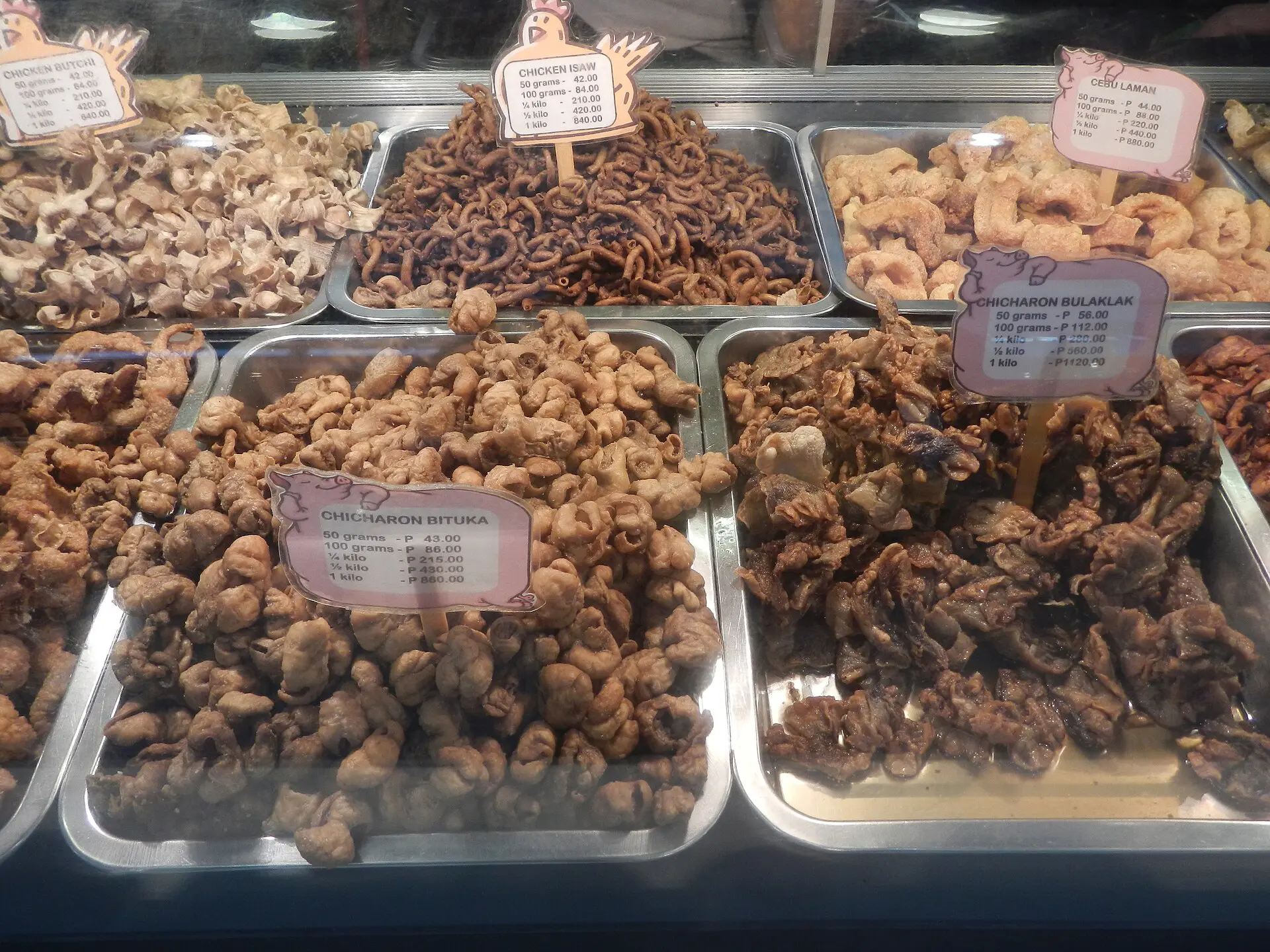
Isaw is chicken or pork intestine, cleaned, boiled, threaded on a bamboo skewer and grilled over charcoal while being basted with a sweet-savoury sauce. It is chewy and smoky, then dipped in a spiced vinegar. It is the standard beginner’s introduction to Filipino offal. Order one or two sticks to start, and ask for the vinegar with chilli if you want heat. Price band: roughly 10-25 PHP a stick.
2. Balut
Balut is a fertilised duck egg boiled at a developed stage, usually around 17 to 18 days, and eaten hot from the shell with salt or vinegar. It is a late-evening snack, sold by vendors who call out as they walk. Crack the top, drink the broth, and eat the yolk and the white. It is a social dare as much as a food. Price band: roughly 20-40 PHP.
3. Kwek-kwek
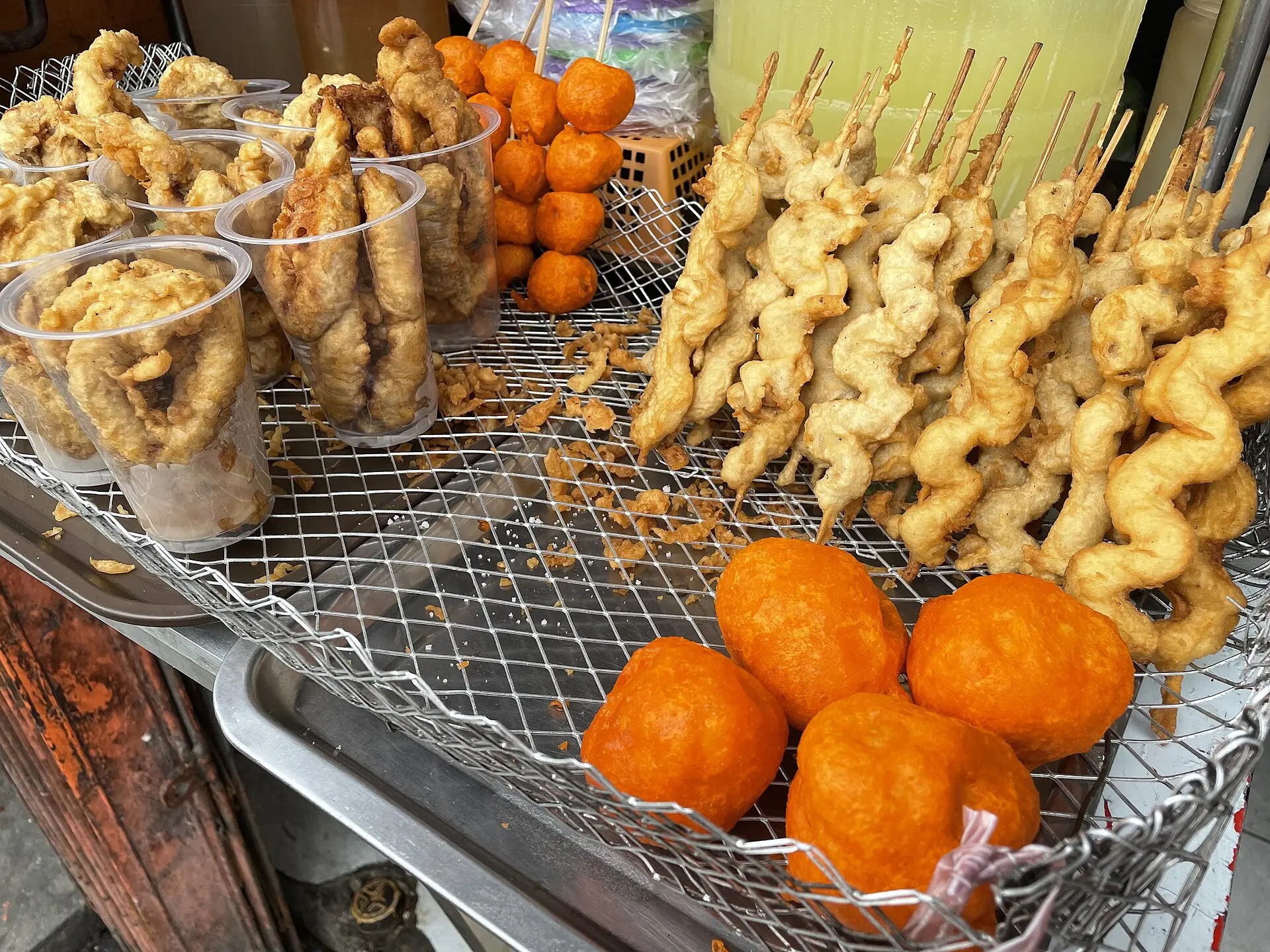
Quail eggs are boiled, coated in a bright orange batter and deep-fried until crisp. The larger version made with duck eggs is called tokneneng. The orange colour comes from food colouring, and the sauce, a sweet-sour mix thickened with starch, does the work. Eat them hot, straight off the skewer. Price band: roughly 20-50 PHP for a small cup.
4. Fish balls and squid balls
Fish paste or squid paste is shaped into balls, fried in a pan of hot oil and sold on skewers in portions of three to five. The sauces are the choice: sweet, spicy or sour with vinegar and onion. This is the cheapest standing snack in the country. Pick vendors who fry in front of you, and avoid balls that have sat in a tray. The skewers are stuck into a paper cup and eaten while walking, which is part of the appeal. Price band: roughly 10-35 PHP.
5. Pork barbecue skewers
Filipino barbecue is marinated pork, often in soy, calamansi, banana ketchup, garlic and sugar, grilled over charcoal in thin slices on a bamboo stick. It is sweeter than most Asian skewers and comes with rice. The same grill may also carry chicken feet, chicken skin, and sausages. Order a stick and a cup of rice. The same marinade is used for chicken, and the fatty pieces char best, so ask for the ones with a little fat on them. Price band: roughly 20-60 PHP per stick, higher in cities.
6. Banana cue, camote cue and turon
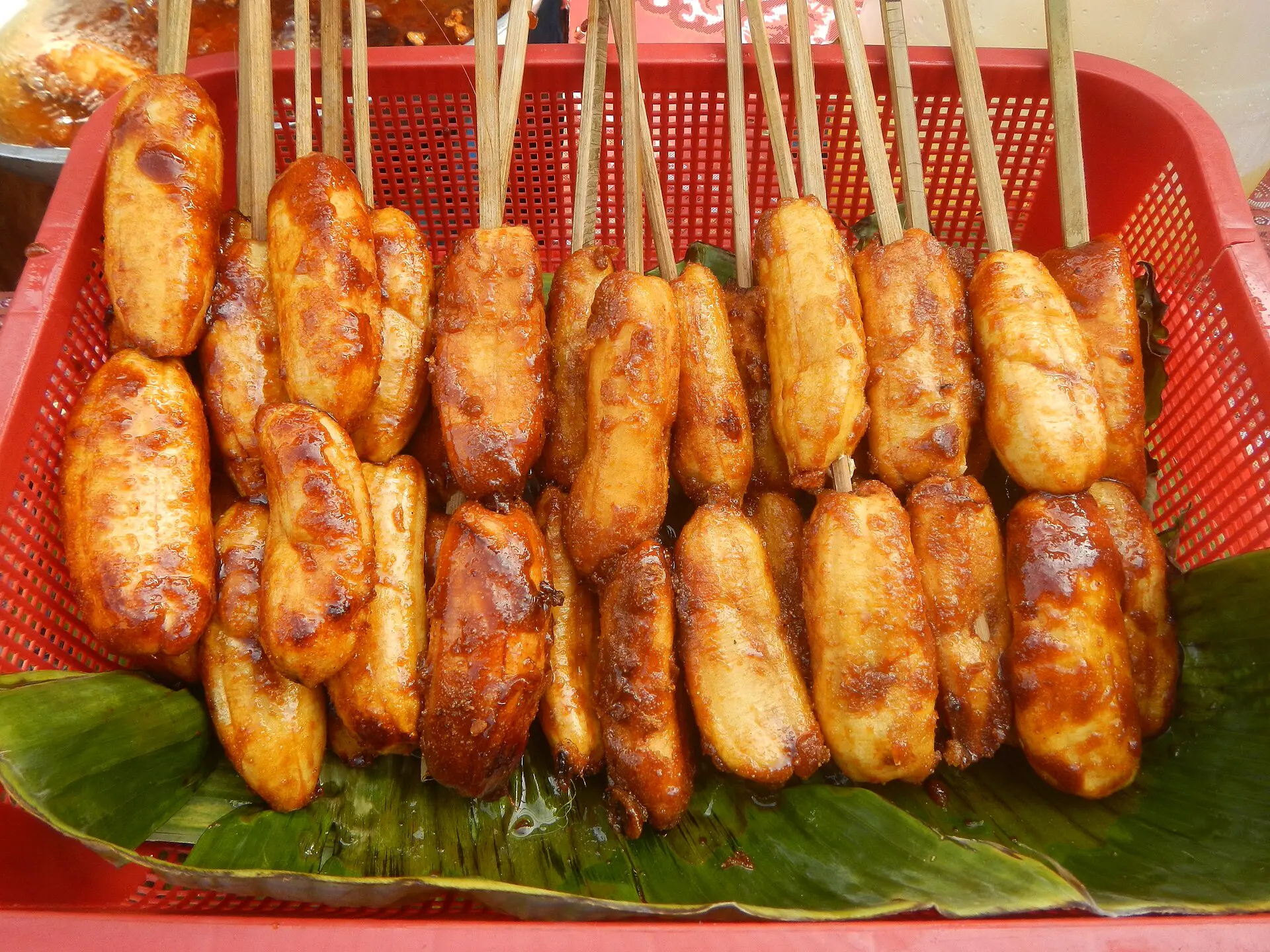
Banana cue is saba banana (a cooking banana) deep-fried in brown sugar until the coating hardens into caramel. Camote cue uses sweet potato in the same way. Turon wraps banana and sometimes jackfruit in spring-roll wrapper and fries it. They are merienda foods, eaten from a paper cup or bag in the afternoon. Price band: roughly 10-30 PHP.
7. Taho
Taho is warm silken tofu, ladled in layers with arnibal (brown-sugar syrup) and small tapioca pearls called sago. Vendors carry two metal buckets on a pole and call “tahoooo” through residential streets in the morning. It is a soft, sweet breakfast, and it is cheap. Eat it from the plastic cup with a spoon, and return the cup if the vendor asks. Price band: roughly 15-30 PHP.
8. Halo-halo and kakanin
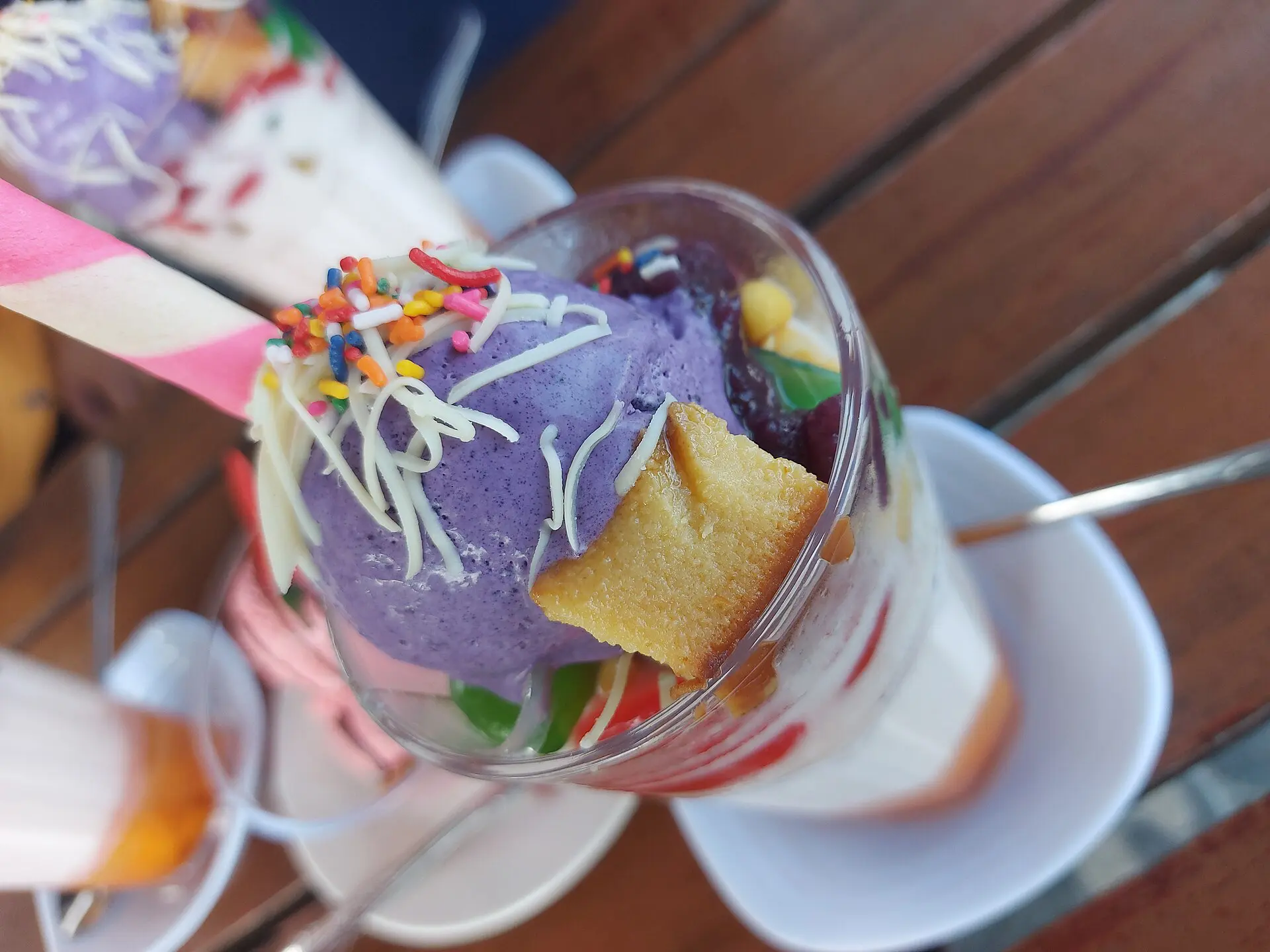
Halo-halo is shaved ice with sweet beans, jelly, fruit, milk, leche flan and often purple yam ice cream, mixed together before eating (halo means mix). Kakanin are rice cakes: puto (steamed), kutsinta, suman (rice in banana leaf) and bibingka, a coconut-flavoured cake baked in clay with charcoal, associated with Christmas mornings. Price band: roughly 30-120 PHP, with bigger halo-halo bowls costing more.
Price bands: what do snacks and street meals cost?
Hedged ranges per person, as of 2026. Check the current exchange rate, and treat these as orders of magnitude, not fixed prices.
| Meal | What | Typical band |
|---|---|---|
| Morning snack | Taho, pan de sal, coffee | 30-70 PHP |
| Street lunch | Barbecue, rice, soup | 80-200 PHP |
| Merienda | Banana cue, halo-halo | 30-120 PHP |
| Street dinner | Mixed grill, kwek-kwek, rice, drink | 100-300 PHP |
Tourist areas, malls and island resorts cost more. A food-hall or sit-down meal costs several times these figures.
Etiquette for eating Filipino street food
- Cutlery: most street food is eaten with hands or a bamboo stick. At a table, Filipinos use a spoon and fork, with the fork pushing food onto the spoon. Chopsticks are for noodle shops.
- Sauce pots: vendors often keep one shared pot of vinegar or sweet sauce. Dip once, or ask for a separate cup.
- Politeness: “po” and “opo” are markers of respect. A smile and “salamat po” (thank you) are enough.
- Tipping: not expected at carts. Rounding up is welcome but unnecessary.
- Sharing: food is offered. Declining once politely is fine, and a small taste is a good compromise.
How to order with a language barrier
English is widely understood, as Wikivoyage notes, and most vendors will meet you halfway. Point at what you want, hold up fingers for the number and ask “magkano?” (how much?). Say “isa” for one and “dalawa” for two. Many signs list only a dish name and a price in pesos.
When a cart sells a mixed tray, take one of each stick with tongs and let the vendor count. Watch what locals pick and copy the order. For planning beyond the snacks, see the Philippines travel guide, and for background see Wikivoyage’s Philippines guide.
What to skip at the street stalls
- Food sitting in lukewarm trays with no turnover. Choose stalls with a queue and fresh cooking.
- Ice and drinks from unknown sources, if your stomach is sensitive.
- Raw or lightly cooked seafood at unlabelled roadside stalls.
- Anything priced by weight without a posted scale or price. Ask first.
- Balut, if the idea puts you off. Nobody will mind, and there is plenty else to eat.
I would also avoid the busiest tourist strips at night, where prices are higher and the quality lower than a few blocks away.
FAQ about Filipino street food
Is Filipino street food safe to eat?
It can be, with sensible choices. Pick busy stalls, eat food that is cooked hot in front of you, avoid ice from unknown sources and wash or sanitise your hands. Travel clinics advise checking vaccines and local advice before you go.
What is balut?
Balut is a fertilised duck egg, boiled and eaten from the shell with salt or vinegar. It is a traditional evening snack and a popular dare for visitors. It is rich and savoury, with broth, yolk and a firmer white.
How much does a street meal cost in the Philippines?
Most single snacks cost roughly 10-50 PHP, and a full street meal with rice is roughly 80-300 PHP, as of 2026. Prices rise in tourist areas and on resort islands. Ask the price before you eat and keep small notes.
What should I try first?
Start with fish balls or pork barbecue, since both are familiar. Then try isaw and kwek-kwek for something distinctive. Add banana cue or taho for a sweet finish. Save balut for a day when you feel adventurous.
Can vegetarians eat Filipino street food?
It is harder, since meat, fish paste and shrimp seasoning are common. Taho, banana cue, turon, kakanin, boiled corn and fried sweet potato are meat-free. Ask about ingredients, and note that fried snacks may share oil with meat.