The Athens to Santorini ferry takes roughly 4.5 to 5 hours on a high-speed boat and 7.5 to 9 hours on a conventional one, as of 2026. Both leave from Piraeus, with some sailings from Rafina and Lavrio. Wind, not demand, decides whether a boat runs. Summer is the main season, and the strong northerly wind that peaks in July and August cancels sailings. Book a flexible ticket, keep one spare day, and know your flight fallback before you leave Athens.
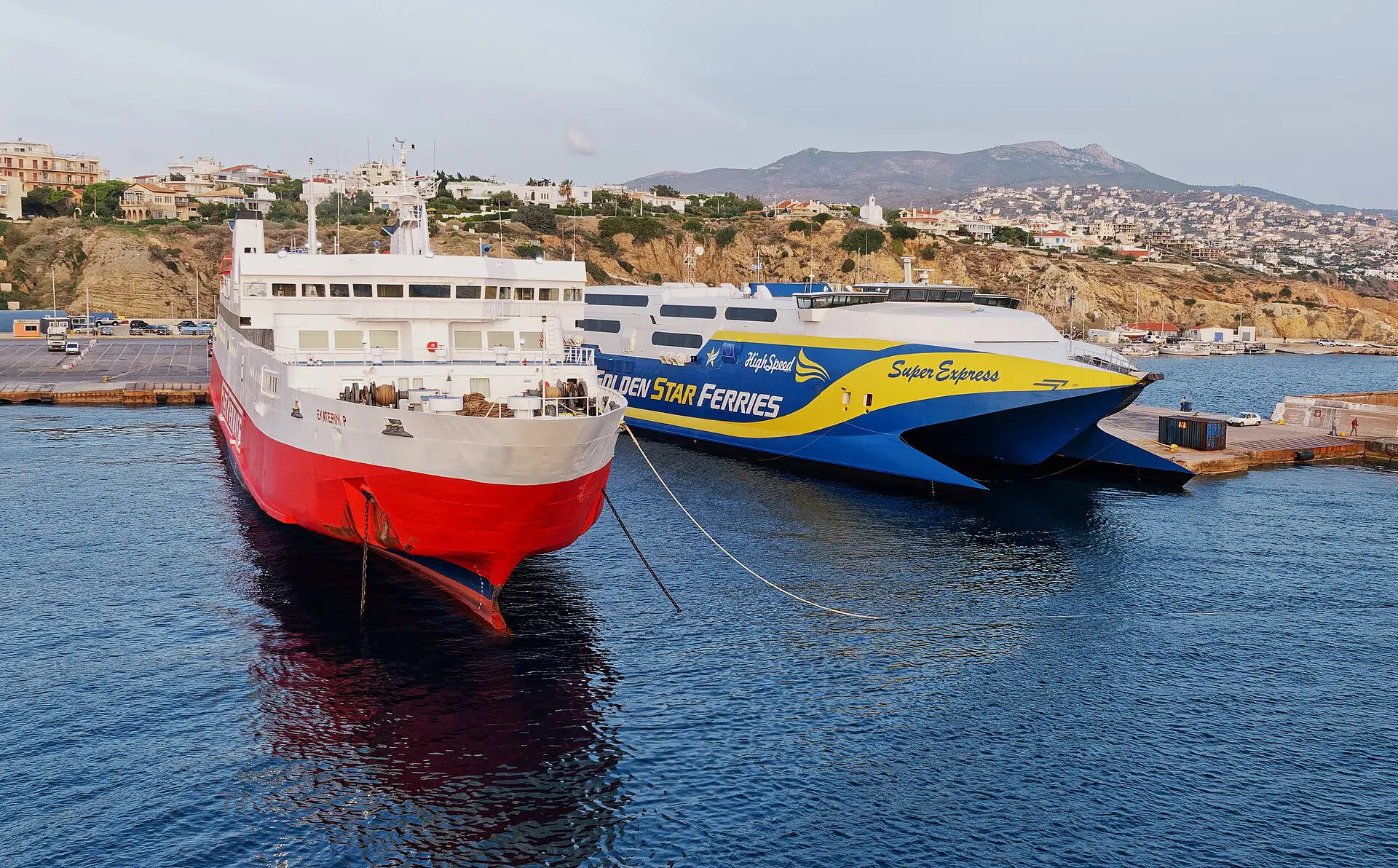
Athens to Santorini ferry: the two boat types
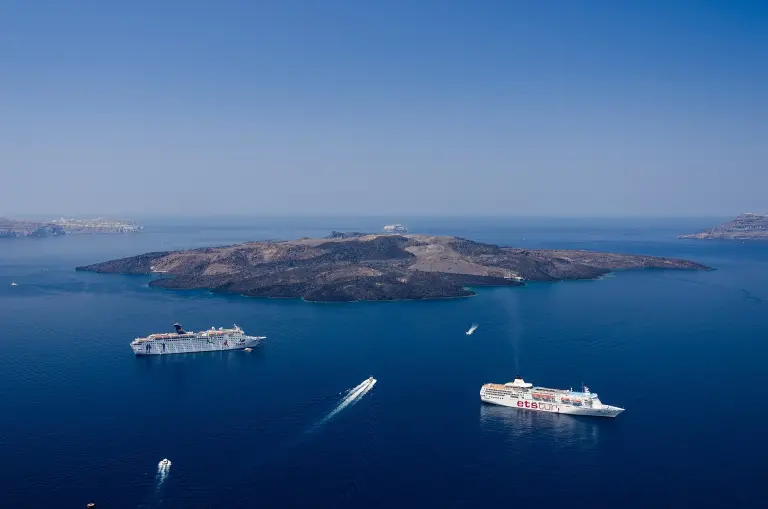
Santorini sits about 200 km south-east of the mainland, in the southern Cyclades. Every boat is one of two kinds, and the type decides both the crossing time and how often the weather stops it.
- High-speed catamarans and hydrofoil-style boats: fast, seated only, no cabins and a firm limit on the sea state they can handle. They are the first to be cancelled.
- Conventional ferries: large, slower, with outside decks, cafeterias and sometimes cabins. They are more stable and more often sail when fast boats stay in port.
Operators, timetables and vessel names change each season, so I name none here. Use a booking site that shows several operators on the same screen, then check the operator’s own page the day before.
Athens to Santorini ferry times and cancellations by route
| Route | Typical crossing | Frequency by season | What cancels it |
|---|---|---|---|
| Piraeus to Santorini, high-speed | About 4.5 to 5 hours, longer with island stops | Several daily in summer, a few weekly in winter | Strong wind and high swell, often announced the evening before |
| Piraeus to Santorini, conventional | About 7.5 to 9 hours | Daily or near daily in summer, fewer in winter | Port bans in gale conditions, rare below force 8 |
| Rafina or Lavrio to Santorini | Varies: often 5 to 8 hours with island calls | Limited, mostly summer | The same wind, plus fewer replacement boats |
| Flight Athens to Santorini | About 45 to 55 minutes | Several daily in summer | Rarely weather, sometimes strikes or fog |
Treat the times as ranges. Many routes stop at one or two islands on the way, which adds an hour or more.
How ferry cancellations work in Greece
The Aegean has a strong northerly wind in summer. It is steady rather than sudden, but it builds a swell that fast boats cannot hold. Port authorities can ban departures when the wind passes a set force on the Beaufort scale. Fast craft have a lower limit than large ferries, so they stop sooner.
In practice, cancellations are announced from the evening before, and sometimes only on the morning itself. If a sailing is cancelled, operators normally offer a refund or a move to the next available boat. The next boat may be a day later in winter. Keep your ticket confirmation and the operator’s contact details, and read the changes and refund terms before you pay, because they differ by fare.
Ports for the Athens to Santorini ferry
Piraeus is the main port, about 10 km south-west of central Athens. The metro runs to Piraeus station on Line 1 in roughly 25 to 30 minutes from the centre. From Athens airport, a metro or a dedicated express bus takes around an hour or more, so leave margin. Taxi times vary widely with traffic.
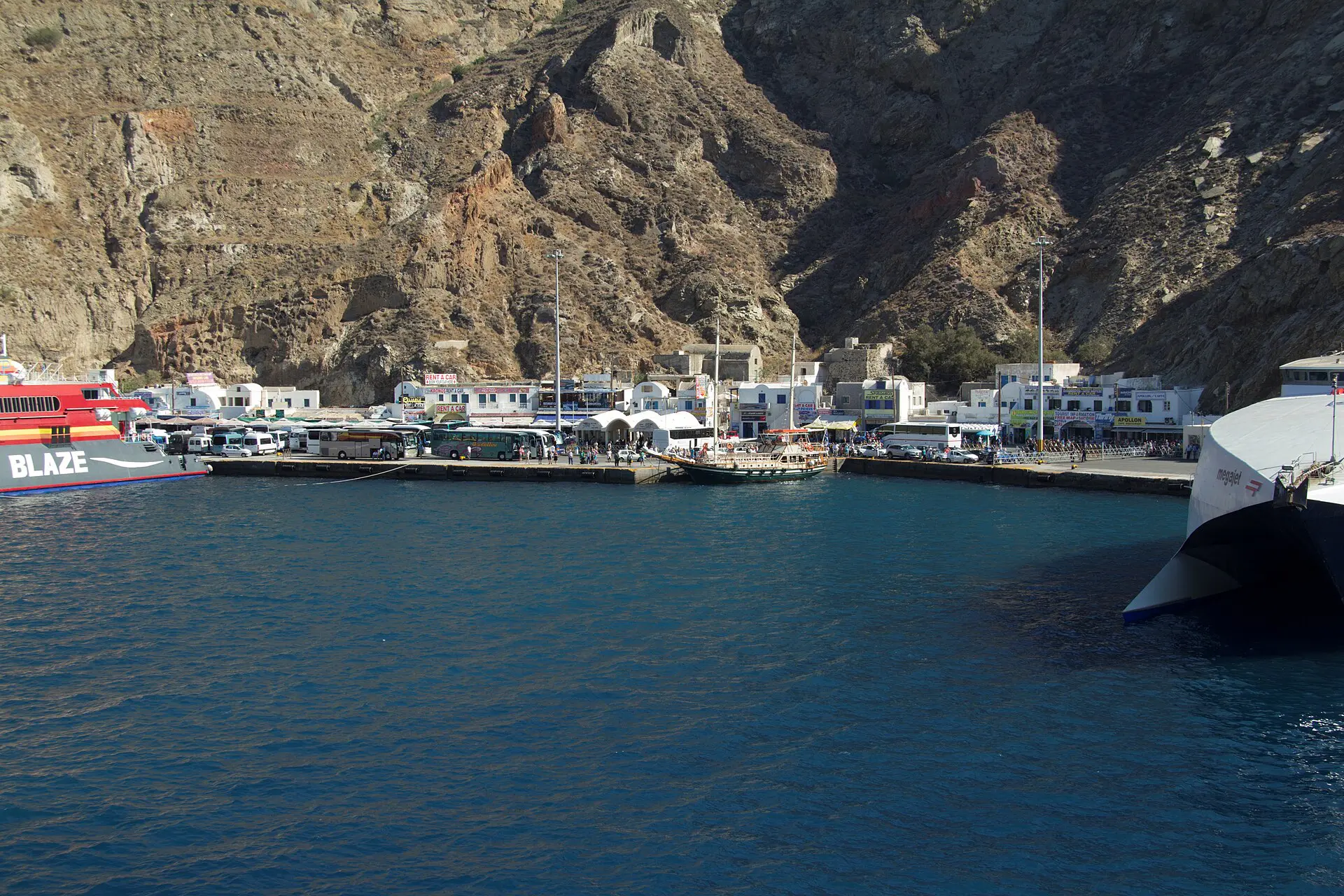
Rafina is about 30 km east of the airport and suits an early boat if you stay on the east side. Lavrio is further south-east and has few services. On Santorini, boats arrive at Athinios, a working port at the foot of a cliff, about 10 km from Fira. Buses and taxis meet most arrivals. Queues are long when several boats dock together, and the cliff road is steep, so allow an hour before you reach your bed. See where to stay on the island in our Santorini accommodation guide.
Carry water and a snack. Port kiosks are limited at night and the longer boats serve food at island prices.
Buffer days and what to book flexible
The wind raises one rule above all others: do not connect a ferry to a fixed-date flight on the same day.
- Leave one full day between the ferry and any international flight, in either direction.
- Book the ferry on a flexible fare if you can, and keep hotel nights that allow free changes.
- Prefer the morning departure. A cancelled morning sailing leaves a chance for an afternoon replacement.
- Avoid the weakest weeks of the schedule: late October to April has far fewer sailings.
- Check the forecast and the operator’s page two days out, then again the evening before.
Fallback options if the Athens to Santorini ferry stops
1. Switch to a conventional ferry
If the fast boat is cancelled, ask for the next large ferry. It takes longer, but it often runs in conditions that stop the catamaran. Expect a night sailing or an overnight in Piraeus.
2. Fly instead
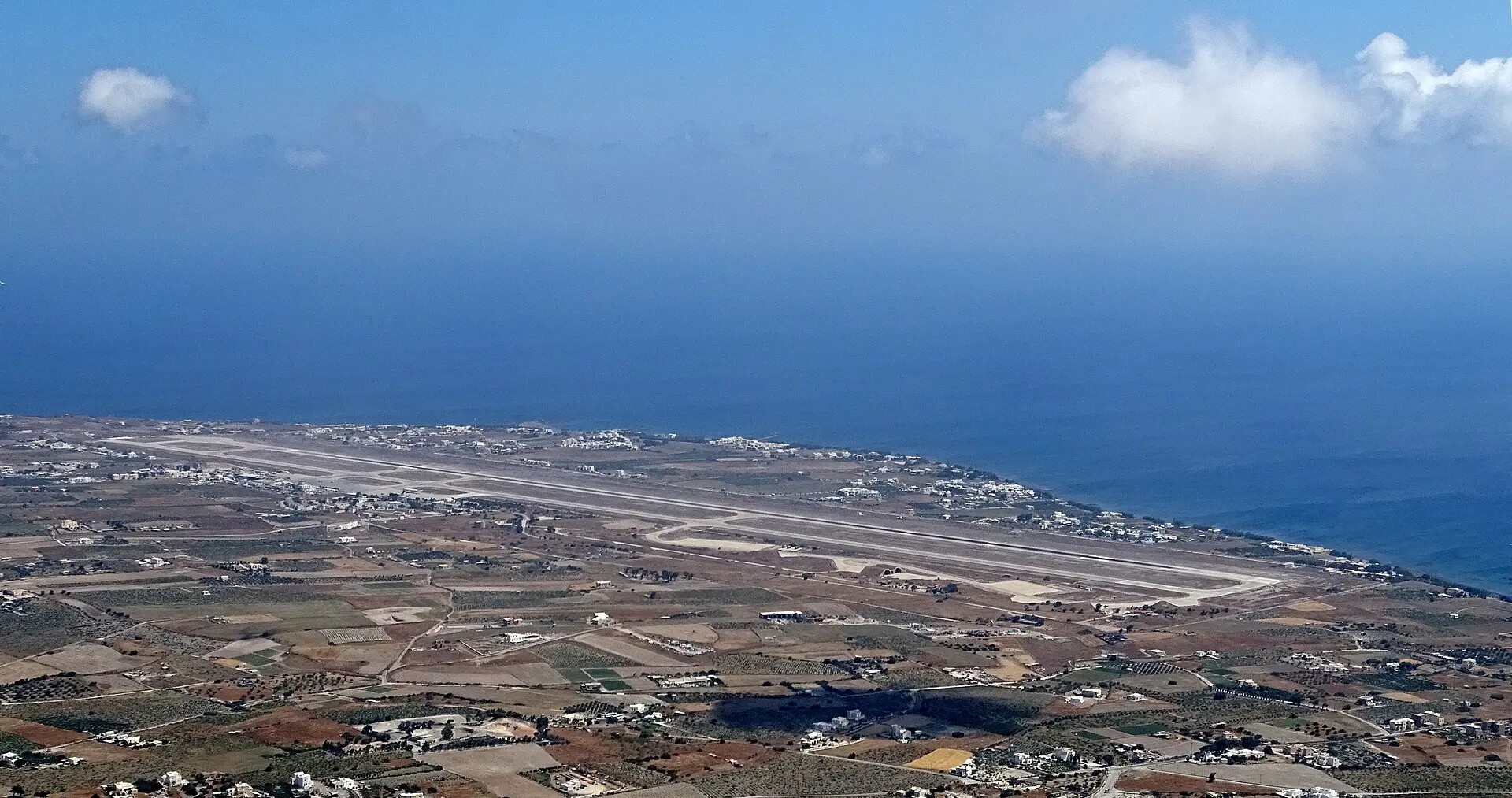
Athens to Santorini flights are short and frequent in summer. Prices rise sharply when ferries stop, so book early if the forecast is bad. Cheaper seats go first.
3. Sail from another Athens port
If Piraeus services are cancelled, check Rafina and Lavrio. Their boats are fewer and the road transfer is long, so confirm the ticket before you commit.
4. Go through an island hub
Paros, Naxos and Ios are linked to Santorini and to Piraeus. A split journey with a night on an island can recover a day lost to wind. Paros to Santorini is a common hop, often 2 to 4 hours depending on the boat. Check times for both legs and keep a buffer between them.
5. Wait a day
Wind often drops within 24 to 48 hours. If you have a spare day, waiting is the cheapest fallback, provided your ticket is changeable.
Skip the ferry if
- You have only two or three days on the island. A flight saves most of a day each way.
- You get seasick. Fast boats pitch in swell, and the conventional crossing is long.
- Your return flight leaves the day after you arrive back. The risk is not worth the saving.
- You travel in winter and cannot absorb a cancelled sailing, because replacements are scarce.
The island itself is covered in the Santorini guide, with background in Wikivoyage on Santorini and Wikipedia. For the wider country, see the Greece travel guide.
FAQ about the Athens to Santorini ferry
How long is the ferry from Athens to Santorini?
A high-speed boat usually takes about 4.5 to 5 hours, and a conventional ferry about 7.5 to 9 hours. Stops at other islands add time. Check the exact timetable of your sailing, as schedules change every season.
Which port do ferries to Santorini leave from?
Most leave from Piraeus, Athens’ main port. A smaller number leave from Rafina or Lavrio. Check the departure port on your ticket, because the three are far apart and the transfer from the airport differs.
What is the best time of year to take the ferry?
May, June and September give frequent sailings with less wind than July and August. Winter has few boats and more weather cancellations. High summer has the most sailings but the strongest wind, so keep a spare day.
Should I book the Athens to Santorini ferry in advance?
Book ahead for July, August and holiday weekends, when cheaper seats and car spaces sell out. Outside peak season, you can often buy a few days ahead. Pick a flexible fare if one is offered.
What happens if my ferry is cancelled?
The operator normally offers a refund or a seat on the next sailing. Keep your confirmation, contact them early and ask about conventional ferries. If you have a flight to catch, move to a plane rather than waiting.