Why visit Santorini
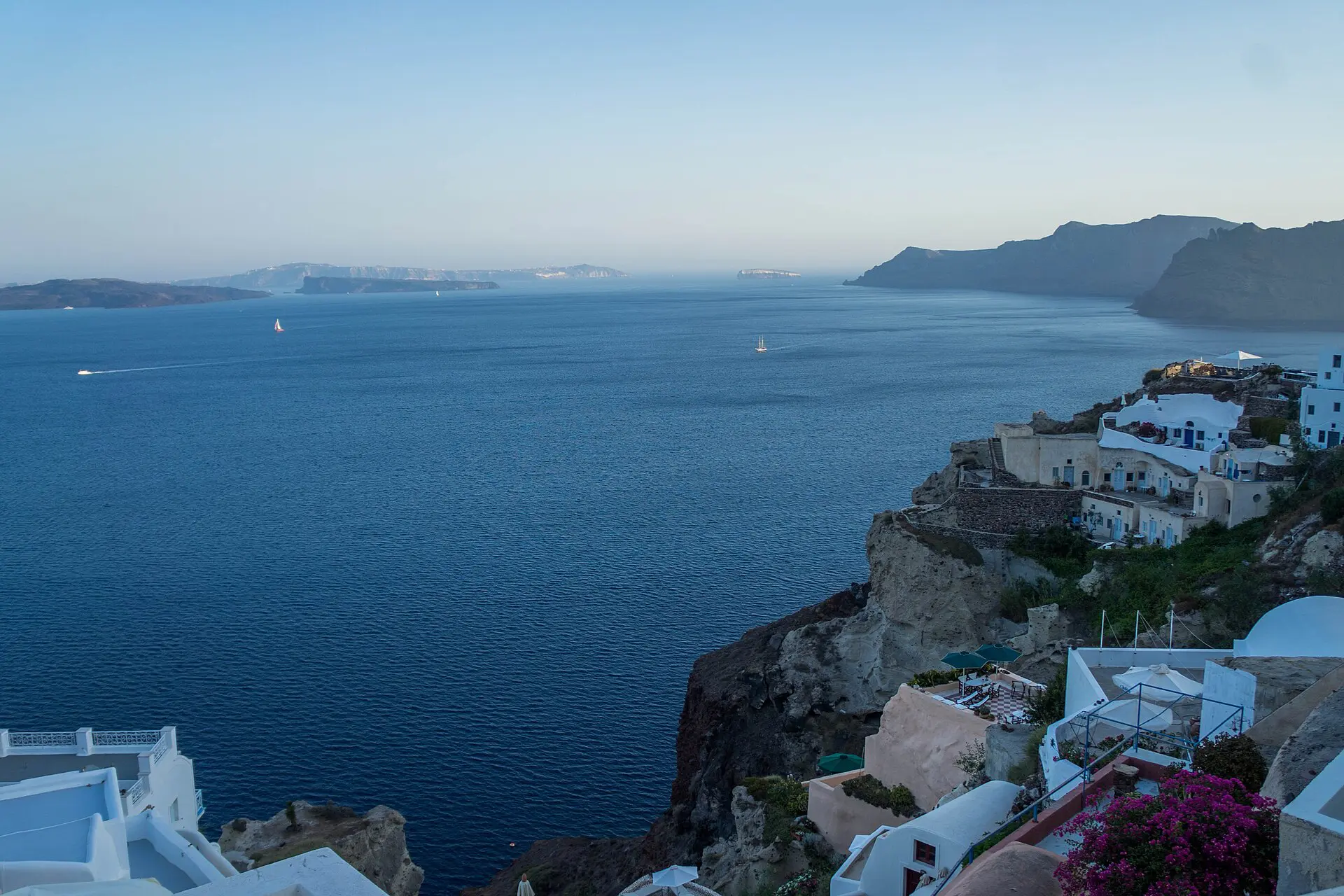
If you are planning things to do in Santorini, start with the landscape. The island is the largest remnant of a volcanic caldera in the Cyclades, formed by a huge eruption in the Bronze Age. What remains is a crescent of steep cliffs around a flooded crater, with white-washed villages perched along the rim and a small volcanic island in the middle of the bay.
The main draws are simple: caldera views, sunsets, volcanic beaches, wine grown in unusual black soil and the preserved Bronze Age town at Akrotiri. Fira, the main town, and Oia, at the northern tip, are the best known settlements, while quieter villages inland give a different pace.
The island is small, but it is also one of the most visited in Greece, so crowds, cruise-ship days and high summer prices are part of the picture. Visiting in spring or autumn, booking ahead and getting out early in the morning makes a big difference. Beaches here are pebbly and dark rather than soft and sandy, which surprises some visitors.
Top things to do in Santorini
Oia sunset and village walk
Oia is famous for its sunset views over the caldera. It gets very crowded in the hour before dusk, so arrive early or enjoy the village in the morning instead. Allow two to three hours, wear shoes with grip for the stone paths, and expect high prices for cafe tables with a view.
Fira to Oia caldera walk
A marked path follows the caldera rim from Fira through Firostefani and Imerovigli to Oia. It is roughly 10 km and takes around three to four hours at a steady pace. Start early, carry plenty of water and avoid the midday heat, as there is little shade.
Akrotiri archaeological site
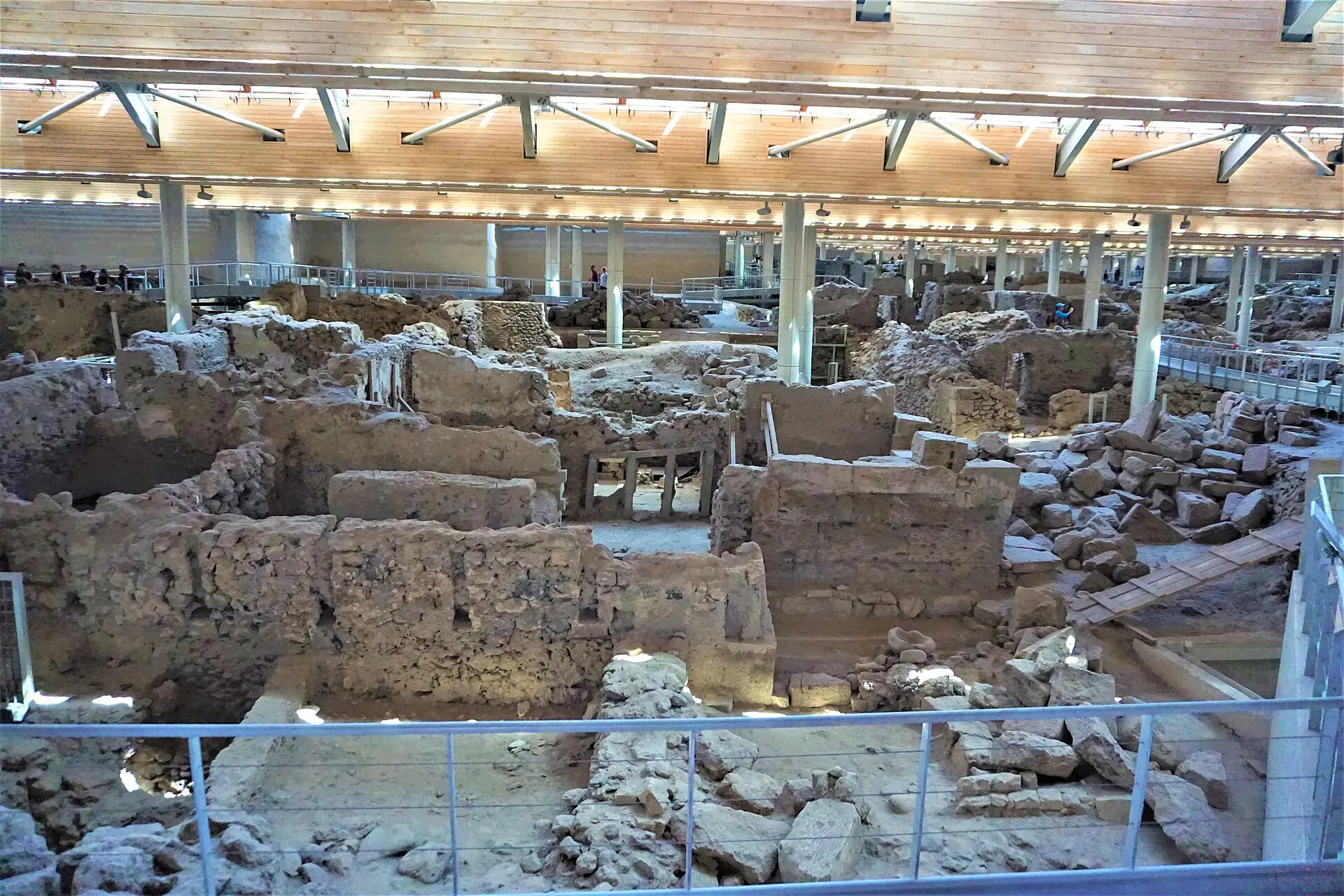
Akrotiri is a Bronze Age settlement preserved under volcanic ash, now protected by a covered structure. Allow about 90 minutes to two hours. Visit early or late to avoid tour groups, and check current opening hours and ticket details, as they change by season.
Red Beach and black sand beaches
Red Beach, near Akrotiri, has dramatic red cliffs, while Perissa and Kamari have long stretches of dark volcanic sand. Rockfall warnings have affected access to Red Beach in the past, so check before you go. Bring water shoes, as the sand and pebbles can be very hot.
Caldera boat trip and volcano
Boat tours cross the caldera to the volcanic islets in the centre, often with a walk on the crater and a swim at hot springs. Trips typically last half a day to a full day. Compare itineraries, check what is included and book with a licensed operator.
Winery visits
Santorini’s vineyards are grown low to the ground in coils to cope with wind and dry conditions, and the island is known for its crisp white wines. Several wineries offer tastings, usually one to two hours. Reserve ahead in peak season and arrange transport, since drinking and driving is a real risk on narrow roads.
Fira and the old port
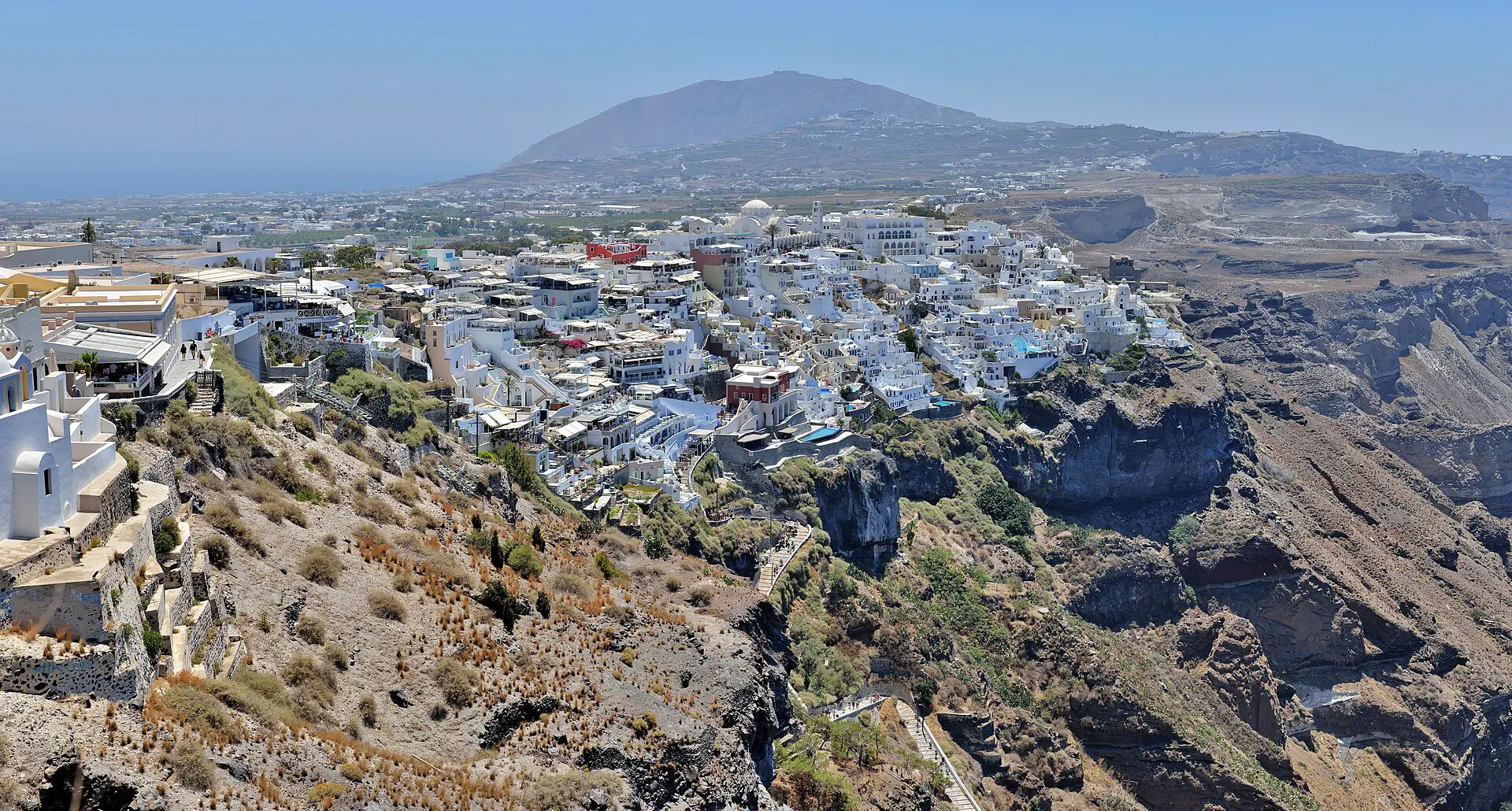
Fira is the island’s busiest town, with shops, museums and restaurants along the caldera edge. Below it, steps lead down to the old port. You can walk down, take a cable car or hire a donkey. Allow one to two hours, and avoid the steps at midday.
Best time to visit Santorini
The island has a Mediterranean climate with hot, dry summers and mild, wetter winters. Many hotels, restaurants and ferries operate on a seasonal schedule, so winter is much quieter and some businesses close.
| Season | Weather | Crowds and prices |
|---|---|---|
| Spring (Apr-Jun) | Mild to warm, mostly dry | Rising crowds, moderate prices |
| Summer (Jul-Aug) | Hot, dry and windy | Peak crowds and prices |
| Autumn (Sep-Oct) | Warm, sea still swimmable | Busy early, then easing |
| Winter (Nov-Mar) | Cool, wet and breezy | Quiet, some closures |
Late April to June and September to October balance weather, open venues and manageable crowds. July and August are best for swimming but also the most expensive and crowded.
How to get to Santorini and around
Santorini (Thira) Airport has flights from Athens and seasonal connections to other European cities. The airport is on the east side of the island, roughly 15 to 20 minutes by road from Fira. Check schedules, as flights vary by season.
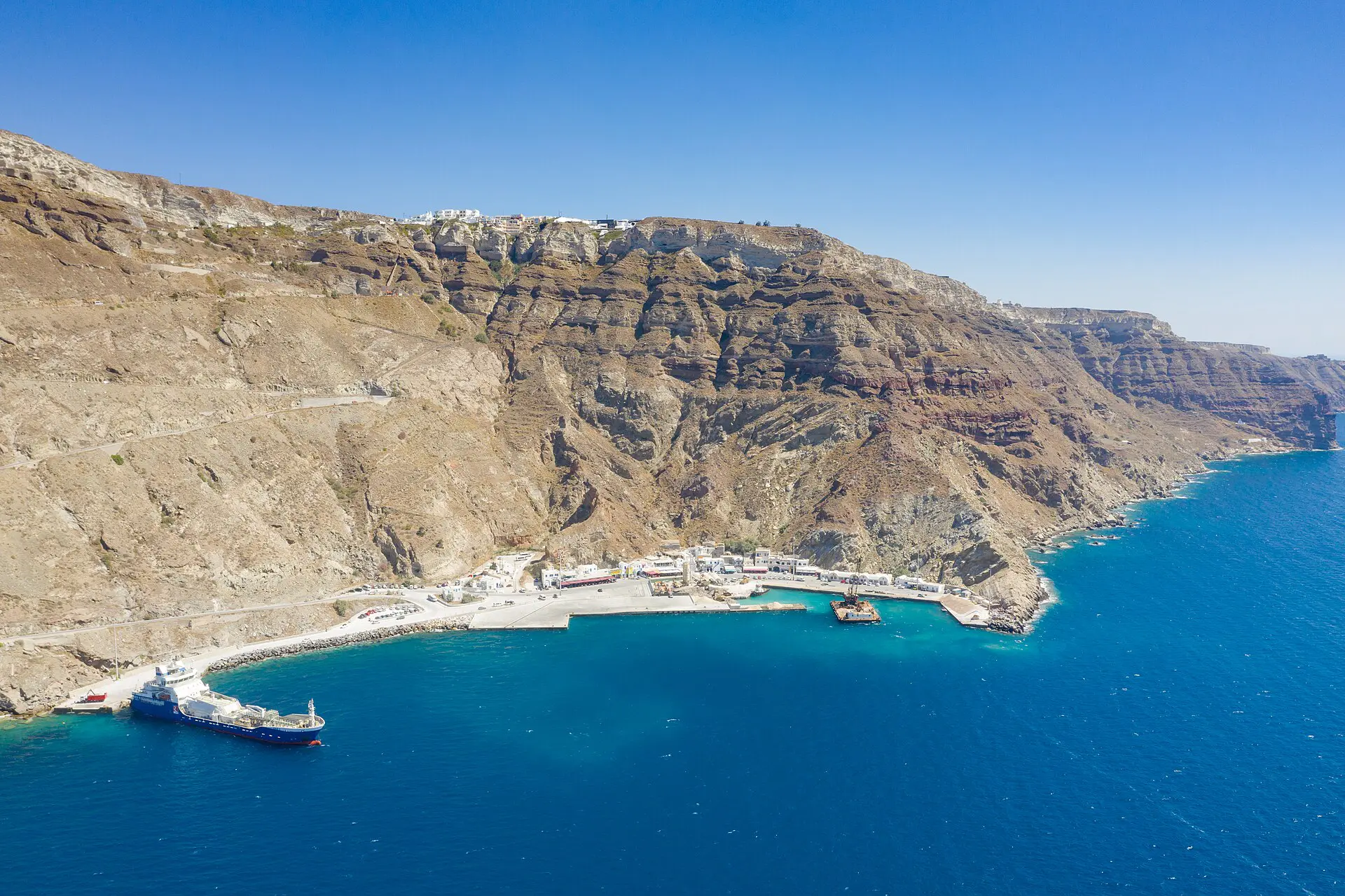
Ferries arrive at Athinios port, below the cliffs in the southwest, from Piraeus, other Cyclades islands and Crete. High-speed boats are quicker, and slower conventional ferries are often cheaper. Crossings from Athens usually take several hours, so check timetables and book ahead in summer.
On the island, public buses run mostly between Fira and other main villages and beaches. Taxis are limited and can be hard to find in peak season, so book ahead. Many visitors rent a car, quad or scooter, but roads are narrow and parking is tight in Oia and Fira. Take care and check your licence requirements.
Where to stay in Santorini
Where you sleep affects both your budget and your daily routine, because the island changes a lot from caldera to coast.
- Fira is the most practical base, with buses, shops, restaurants and nightlife. It suits first-time visitors but can be busy and noisy.
- Oia offers the classic caldera view and a quieter morning atmosphere, but prices are high and it is further from beaches.
- Imerovigli and Firostefani are calmer caldera-edge villages, good for couples who want views without the crowds of Oia.
- Kamari and Perissa are beach resort areas with lower prices and easy access to the sea. They suit families and travellers on a tighter budget.
Book early for summer, and check whether a cave-style room has stairs or luggage access if mobility is a concern.
How many days do you need?
Two nights is the minimum to see the highlights, and three nights gives a more relaxed rhythm that includes a beach day and a boat trip. If you want to hike, visit wineries and explore quieter villages, add another day. Day-trippers from cruise ships see very little of the island and face the biggest crowds.
- Day 1: Explore Fira and the caldera edge, then walk or drive to Oia for sunset.
- Day 2: Visit Akrotiri early, then spend the afternoon at Red Beach or Perissa.
- Day 3: Take a caldera boat trip in the morning, then visit a winery in the late afternoon.
Choose your hotel by the kind of days you want, and avoid packing too much into the hottest part of the day.
Day trips and nearby
Naxos
Naxos is the largest island in the Cyclades, with long sandy beaches, mountain villages and a lively old town. Ferries from Santorini usually take around two to three hours, so it is better as an overnight or longer stop than a day trip.
Paros
Paros is a popular ferry stop with fishing villages, beaches and a relaxed pace. Many travellers combine it with Naxos or Antiparos. Check ferry times carefully, as sailings vary by season and weather.
Milos
Milos is a volcanic island known for colourful rock formations and unusual beaches. It is further from Santorini and best treated as a multi-night stop. Ferry connections are seasonal, so check availability in advance.
Crete
Crete is the largest Greek island, with Heraklion and Chania as the main gateways. Fast ferries link it to Santorini in a few hours in season. Plan at least a few nights to see its beaches, gorges and ancient sites.
FAQ
Q1When is the best time to visit Santorini?
Late April to June and September to October offer warm weather, open venues and fewer people than July and August. Summer is the best season for swimming but is crowded and expensive. Winter is quiet and cool, and many businesses close, so check before booking.
Q2How many days do you need in Santorini?
Two nights is enough for the main sights, such as Oia, Fira and Akrotiri. Three nights gives time for a beach day and a boat trip without rushing. Add more if you want to hike, taste wine or explore quieter villages at a slow pace.
Q3How do you get to Santorini?
You can fly to Santorini (Thira) Airport, usually from Athens or on seasonal European routes, or take a ferry from Piraeus or other Greek islands to Athinios port. Fast ferries are quicker, slower ferries are cheaper. Check timetables and book ahead in summer.
Q4Is Santorini expensive?
Santorini is one of the pricier Greek islands, especially in July and August and in caldera-view villages like Oia. Staying in Kamari or Perissa, travelling in shoulder months and eating away from the cliff edge can cut costs noticeably. Check current prices before you book.
Prices, schedules and entry rules change. Check current details with official sources before you travel. Read the Greece travel guide.