If you feel unsafe on public transport travelling alone, move toward other people and staff: change seats or carriage, or get off at the next busy stop. You do not need proof that something is wrong. Acting on a feeling early is simply good planning, and most situations end right there with nothing more than a new seat.
What to do if you feel unsafe on public transport travelling: the short version
- Move first and decide later: change seat, then carriage, towards staff and other passengers.
- Say something short and firm if someone is bothering you, and speak loudly enough for others to hear.
- Get off at the next busy stop if the feeling does not ease, and wait in a lit, staffed area.
- Tell someone afterwards and report it to staff or the transport operator if you want to.
Step by step: decisions in the order you will need them
1. Choose your seat before anything happens
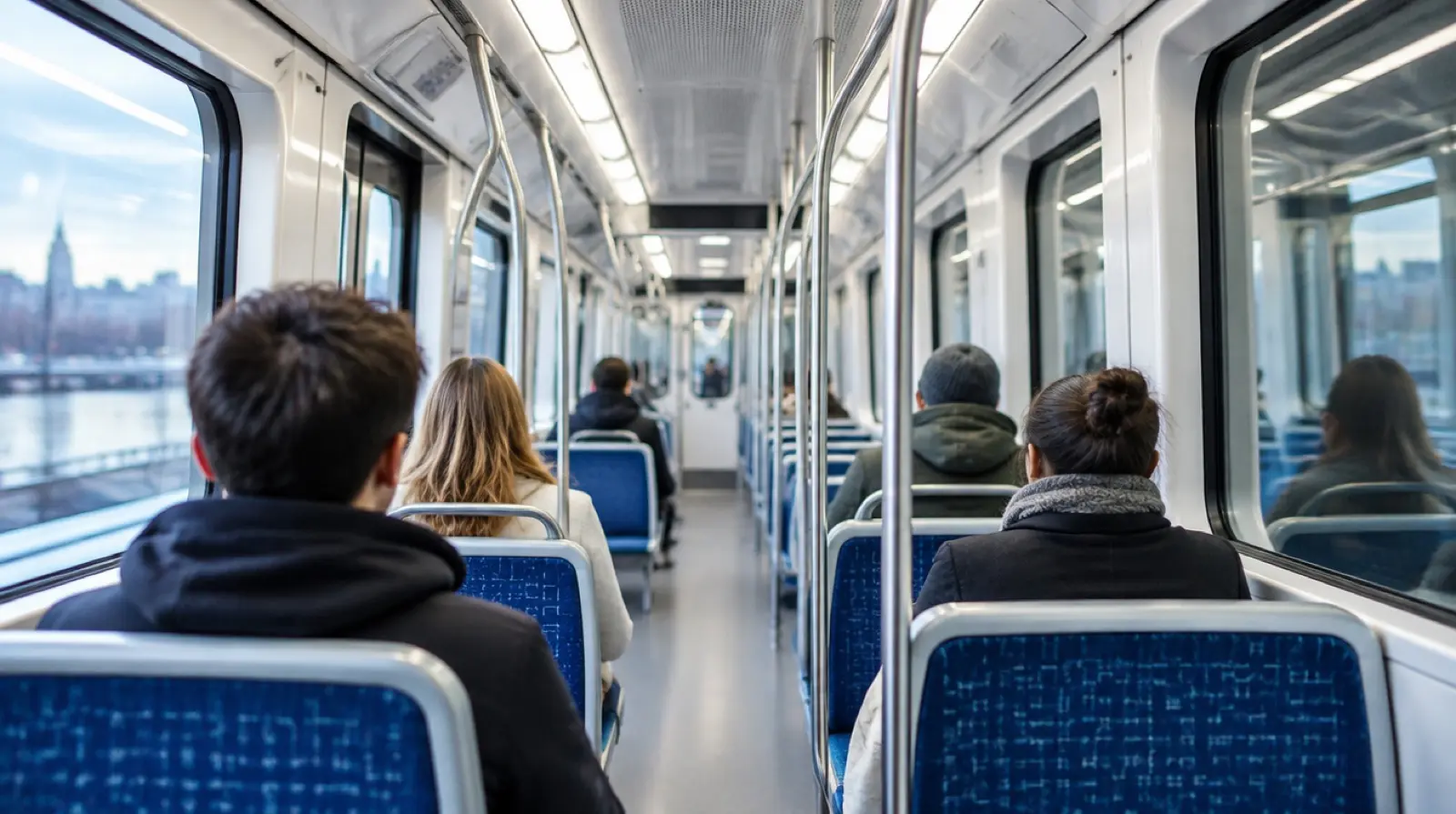
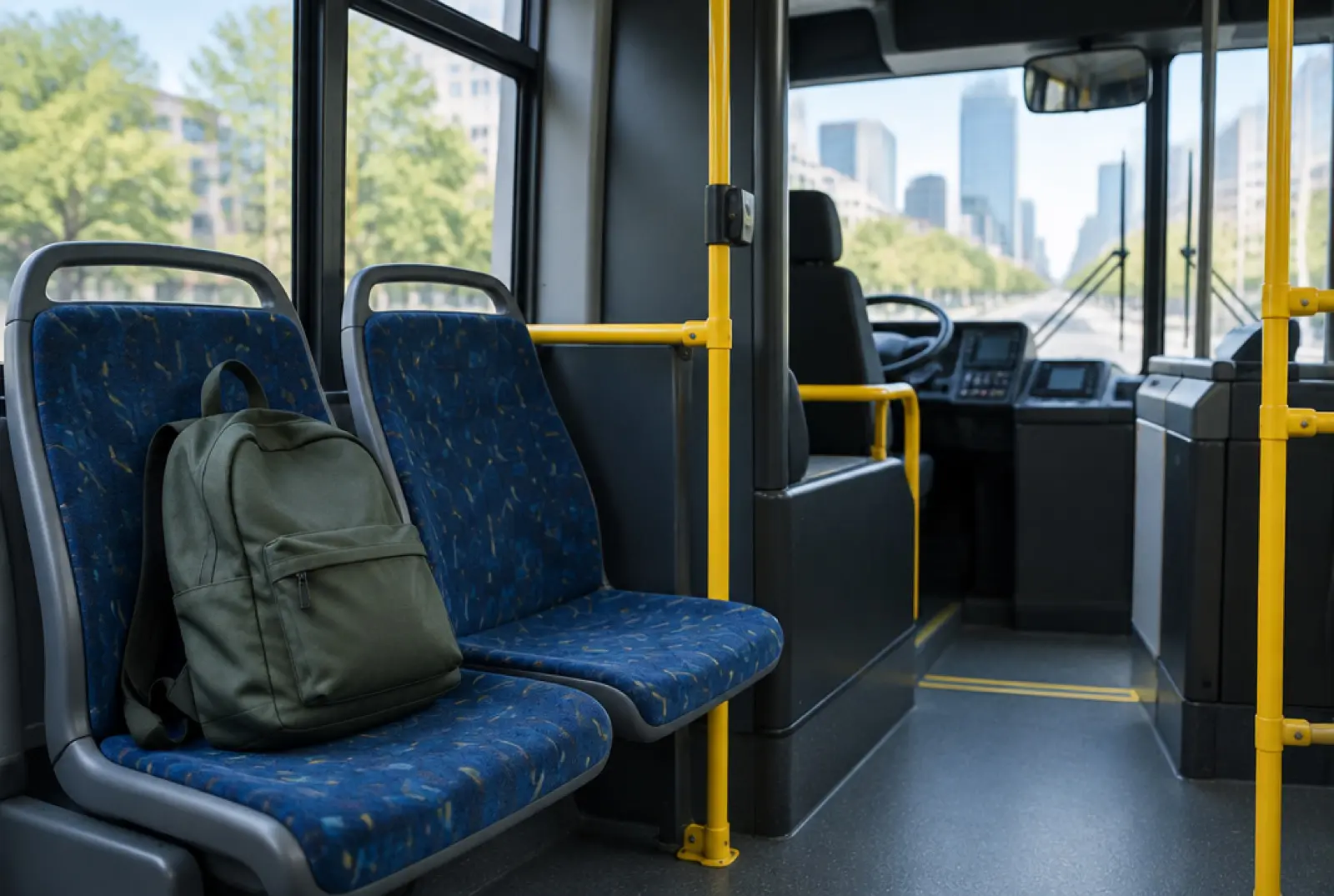
Most of the useful decisions happen on boarding. On a train or metro, pick a carriage with other people in it, ideally close to the driver or the guard, and sit where you can see the doors. On a bus, sit near the front, close to the driver. Avoid empty carriages at the ends of a train. If you are boarding late, choose a busier platform area and a carriage that other passengers are heading for.
2. Notice the early signals and act on them
Typical triggers are someone sitting very close in an almost empty carriage, repeated staring, being followed from the platform or comments that ignore your signal to stop. You do not have to judge intent. If the situation bothers you, treat that as enough. Stand up, take your bag and move. Changing seat is a normal thing to do and rarely draws attention.
3. Move towards people, not away
Walk down the carriage, or through to the next one, and stand or sit near other passengers or a staff member. On many systems there is an emergency intercom or alarm in each carriage; learn where it is when you board. A crowded carriage is less comfortable and less private, but it usually offers far more help than an empty one. Keep your bag zipped and in front of you as you move.
4. Use a boundary script
You can be clear without being rude. Try “Please stop” or “I’d like some space” in a firm, level voice, and look at the person once. If it continues, say it louder so that others notice: “Please move away from me.” Then walk towards other passengers. Speaking to a stranger nearby (“Excuse me, can I sit here?”) also changes the dynamic and often prompts someone else to step in.
5. Get off at the next busy stop
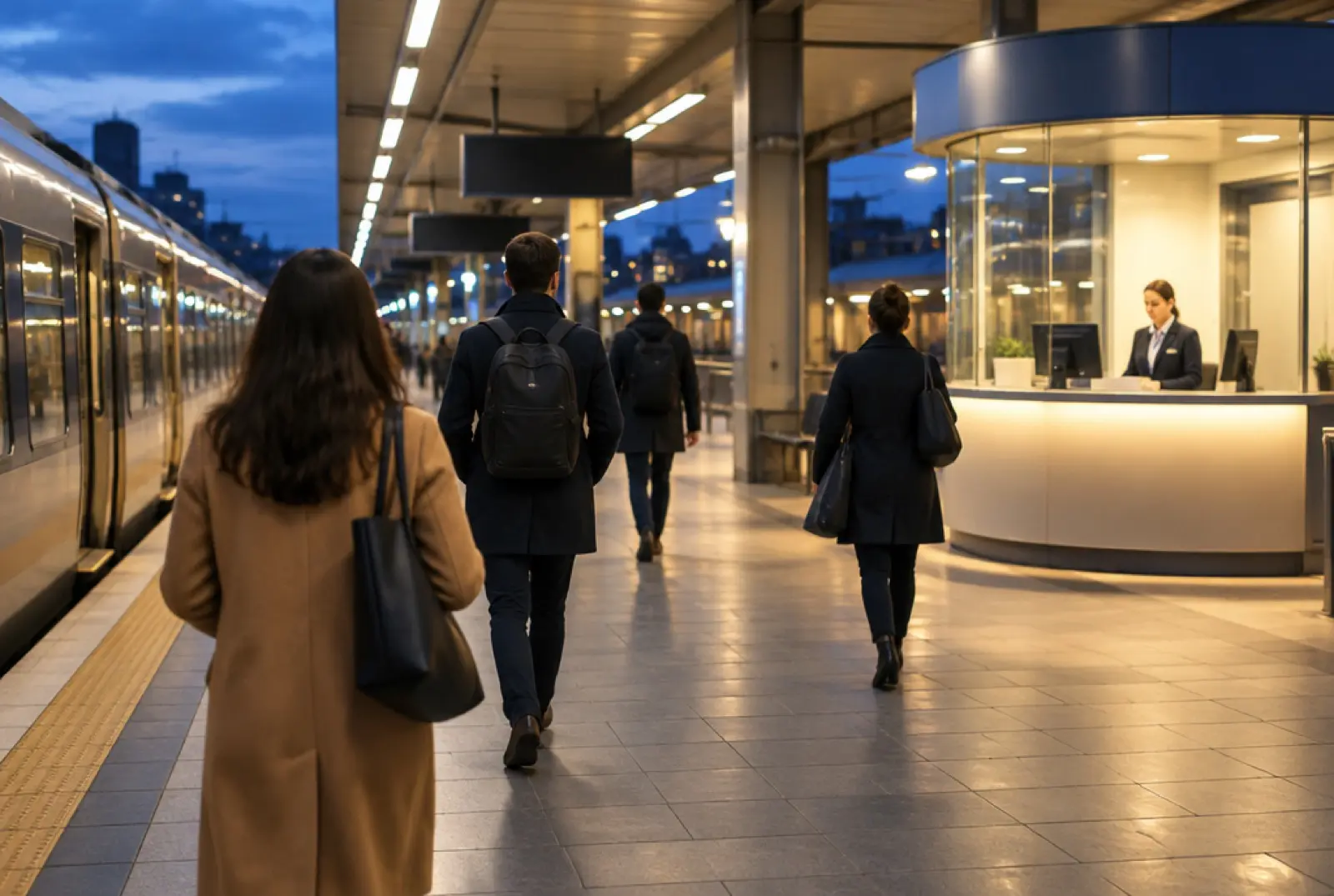
If moving carriage does not help, leave at the next stop that has lights, staff or a crowd, even if it is not yours. Do not get off at a quiet stop where you would be alone on the platform. If someone follows you off, walk back towards the station staff, a shop or a main road and say clearly that you are being followed. Then take another service or a ride booked from a lit, busy place. Stopping a trip is a small cost; your route can be rebuilt.
6. Plan what to do after dark, and what comes after
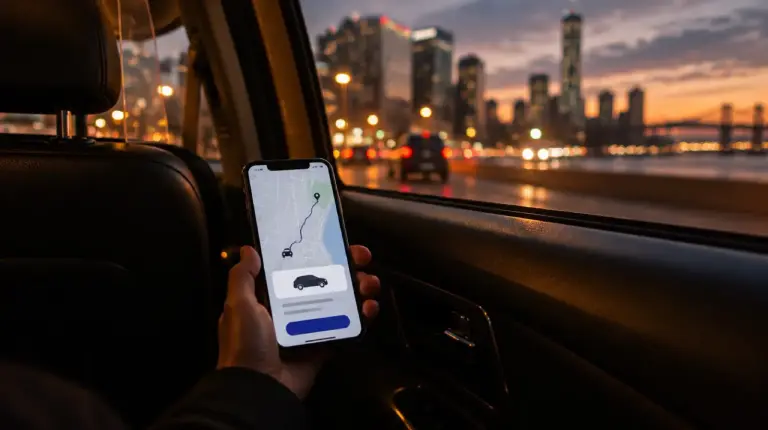
Late services are quieter, so plan the last leg in advance: know the last departure, and have a ride app and a backup payment method ready. The arriving alone at night travel tips explain how to time arrivals. Afterwards, message someone you trust, and report it to staff or the operator if you want it on record. If you are shaken, sit somewhere public and have a drink and some food before you carry on.
Decision guide: what you notice and what to do
| What you notice | First move | If it continues |
|---|---|---|
| Empty carriage, someone sits close | Change seat, then carriage | Move to the driver or guard area |
| Staring or unwanted comments | Move towards other people | Firm script, then speak to staff |
| Being followed on the platform | Walk towards lights and staff | Ask staff for help or go to a shop |
| Intoxicated or aggressive passenger | Get distance and keep eyes forward | Leave at the next busy stop |
| Missing the last service | Book a ride from a lit place | Wait inside a station, lobby or cafe |
Common mistakes on public transport
- Staying seated to avoid a fuss. A seat change costs nothing.
- Going deeper into an empty carriage because it feels private.
- Having headphones in at both ears on a late, quiet service. Keep one out or the volume low.
- Falling asleep on a night journey without setting an alarm for your stop.
- Waiting until a stop where you are alone. Leave early at a busy one.
Good neighbourhood choice helps too. If you choose accommodation within a short walk of a busy station, your last leg is shorter and better lit. In places with dependable systems, such as solo female travel in Japan, many travellers rely on public transport at all hours, but the same habits apply anywhere.
What to verify before you go
Transport systems differ a lot between cities. Check whether there are women-only carriages or seating on your route, when the last services run, whether staff are present late, and what the emergency number and in-carriage alarm look like. Read the local transport section of your government’s advice: the UK foreign travel advice or the US State Department travel advisories. Also save the local emergency number and the transport operator’s help line, and check with your insurer how to claim for anything lost or taken.
Feeling unsafe on public transport FAQ
Is it rude to change seats if someone makes me uncomfortable?
No. Changing seats is ordinary on busy and quiet services alike, and most people will not notice. You do not need a reason that you could explain to anyone. If you want, say you want a window seat, or just stand near the door. Your comfort matters more than a stranger’s impression.
Which carriage or part of a bus is safest for a solo traveler?
Generally the busiest one, close to the driver, guard or an intercom. On a bus, the front seats near the driver are usual. On trains, avoid empty end carriages late at night. Where women-only carriages exist, they can be an option, but check how they work locally.
What if someone follows me off the train?
Walk towards station staff, a shop, a ticket hall or a busy road, and avoid quiet exits. Speak up clearly so people nearby notice. If you can, stay on the phone with a friend. Report it to staff or the local emergency number, and do not go to your accommodation until you are sure you are alone.
Should I take public transport at night when travelling alone?
That depends on the city and the line. In many cities it is routine, especially on busy routes. Where services are sparse or stations are quiet, a pre-booked ride is simpler. Ask your accommodation which lines are busy late, and plan your last leg before you go out for the evening.