Kolymbithres Beach Paros is a small, shallow bay of sand and sculpted granite boulders on the Monastiri peninsula, across the water from Naoussa. It is reachable by road, bus or boat and is worth the trip in calm weather. It is also exposed to the summer meltemi wind, which can turn it rough and crowded with spray. Check the wind first, go early, and keep a sheltered fallback in mind.
Getting to Paros
Paros is a central Cycladic island, so most routes pass through its main port, Parikia. Ferries from Piraeus take roughly 3 to 5 hours depending on whether you take a conventional ship or a high-speed boat. Rafina is an alternative port from Athens, as Wikivoyage’s Paros guide notes.
Fares vary by season, vessel and operator, so check as of 2026 before booking. Expect roughly 25 to 60 EUR one way for foot passengers. Ferry timetables change and sailings can be cancelled in strong wind, so do not tie a flight home to a same-day ferry. Leave a buffer night.
From Parikia to Kolymbithres is around 10 to 12 km. A bus runs to Naoussa, then you walk or take a short taxi or boat across the bay. Driving takes about 20 minutes, with parking near the beach.
What it is like there
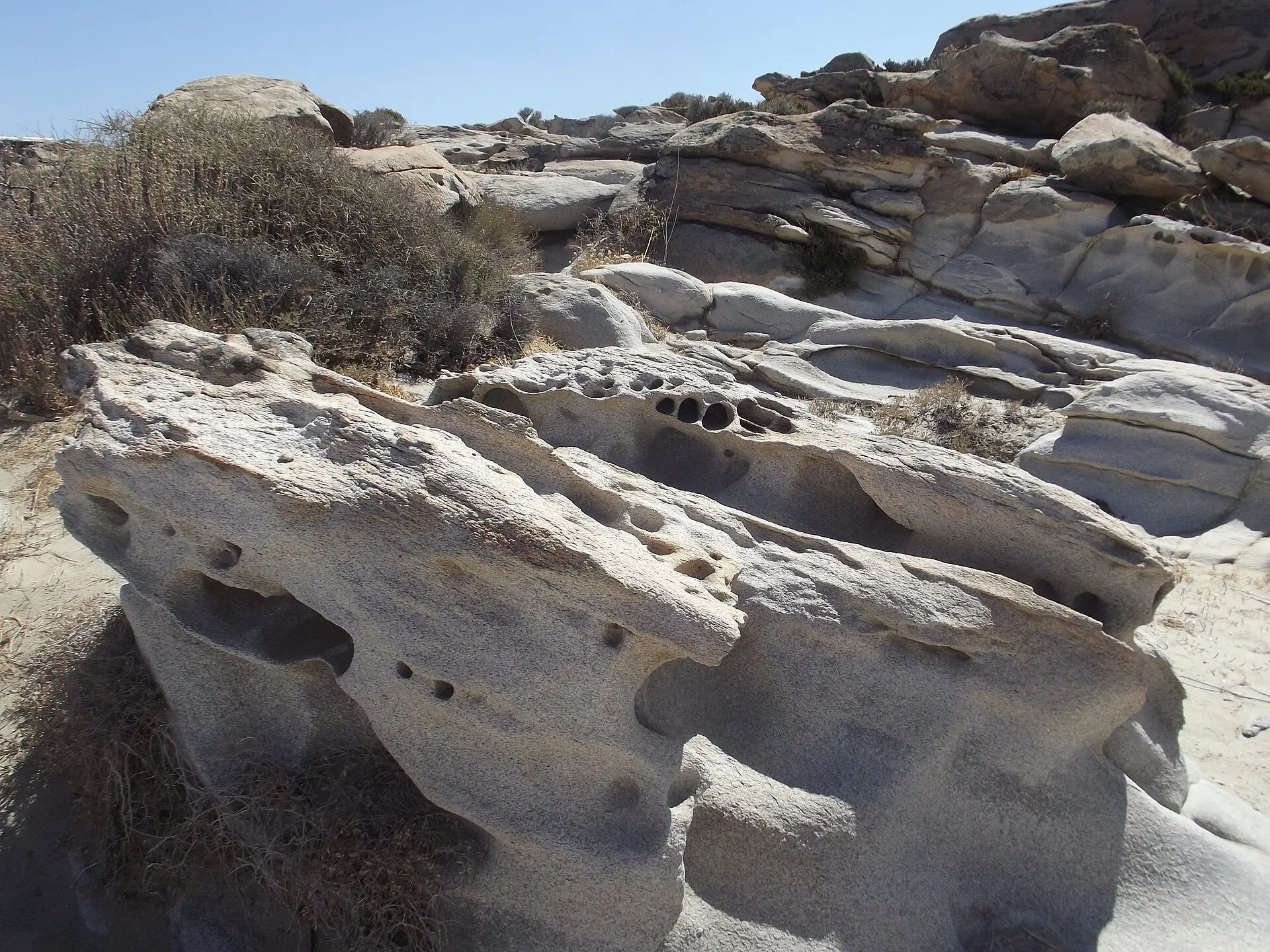
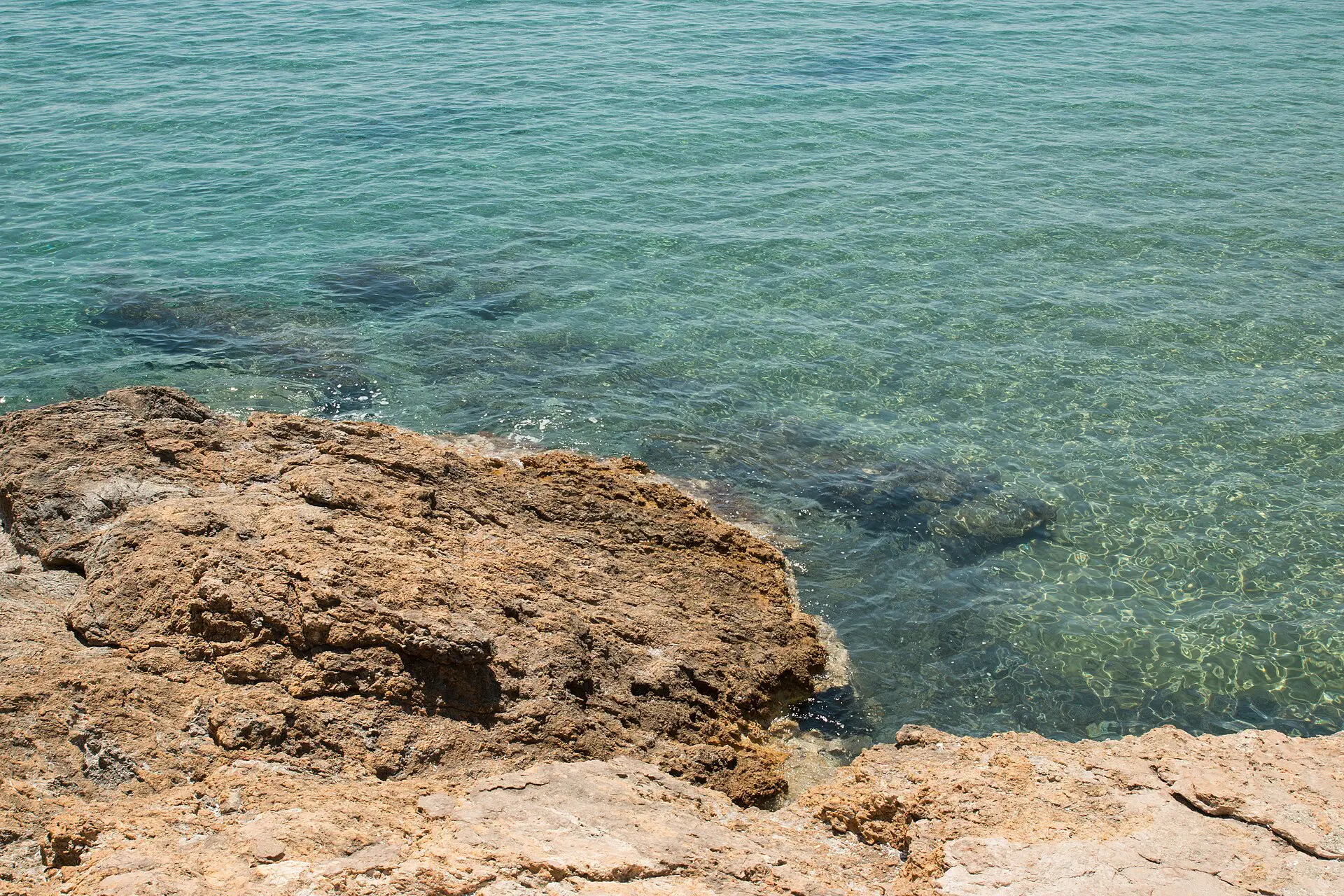
The beach is made of several small coves separated by rounded granite outcrops. The rocks are the feature: smooth, wind-carved, and good for scrambling and shade. The water is clear and mostly shallow with a sandy bottom, so it suits children and weak swimmers on a calm day.
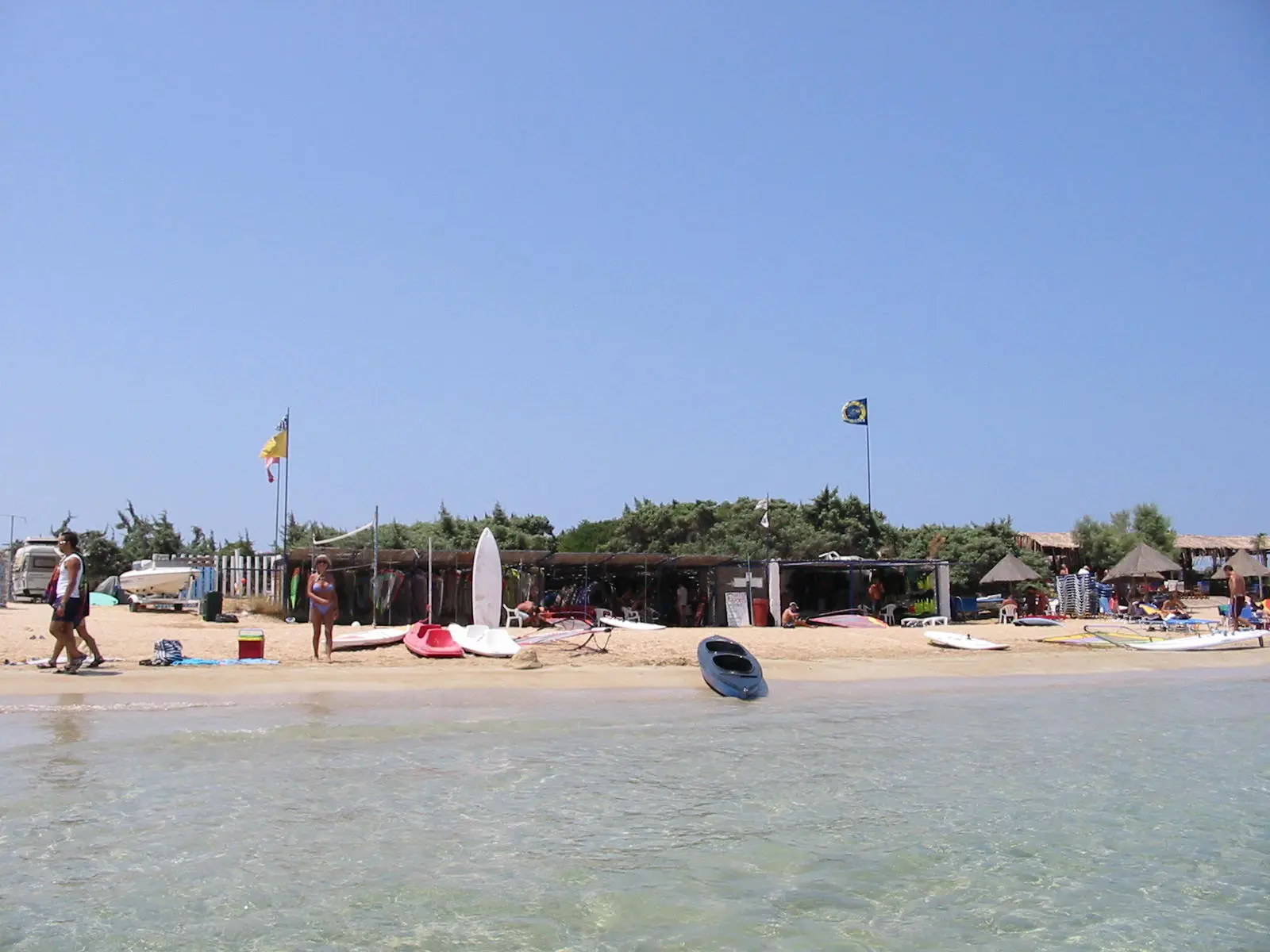
Facilities include sunbeds and umbrellas run by beach bars, plus a few tavernas. Space is limited, so on busy summer days sunbeds fill by late morning. Shade outside the rented umbrellas is scarce apart from the rocks. Bring water, a hat and shoes for scrambling over rough stone.
The main risk is wind. On meltemi days the bay is exposed to the north, with choppy water, blown sand and spray. Waves can be strong enough to knock a child off balance in the shallows.
Best time to go to Kolymbithres Beach Paros
Late May to June and September are the best months: warm sea, lighter wind and fewer people. July and August bring the strongest meltemi and the heaviest crowds, with peak prices. The sea is generally cold before late May. Go in the early morning or after 5 pm if you must visit in high summer. In October services start to wind down.
What to do and see
1. Scramble the granite formations
The wind-carved boulders form hollows, ledges and small walkways. They are slick when wet and sharp when dry, so wear shoes with grip. Do not jump unless you have checked the depth.
2. Swim the shallow coves
Each cove has its own entry. The sandy floor drops gently, and the water stays clear on calm days. Swim near the shore, as there are no lifeguards that you should count on. If flags or visible whitecaps appear, stay out.
3. Snorkel along the rocks
The rock edges give small fish somewhere to hide, and visibility is usually good. Stay close to shore and do not go around the points when waves build.
4. Walk or drive to the Monastiri viewpoint
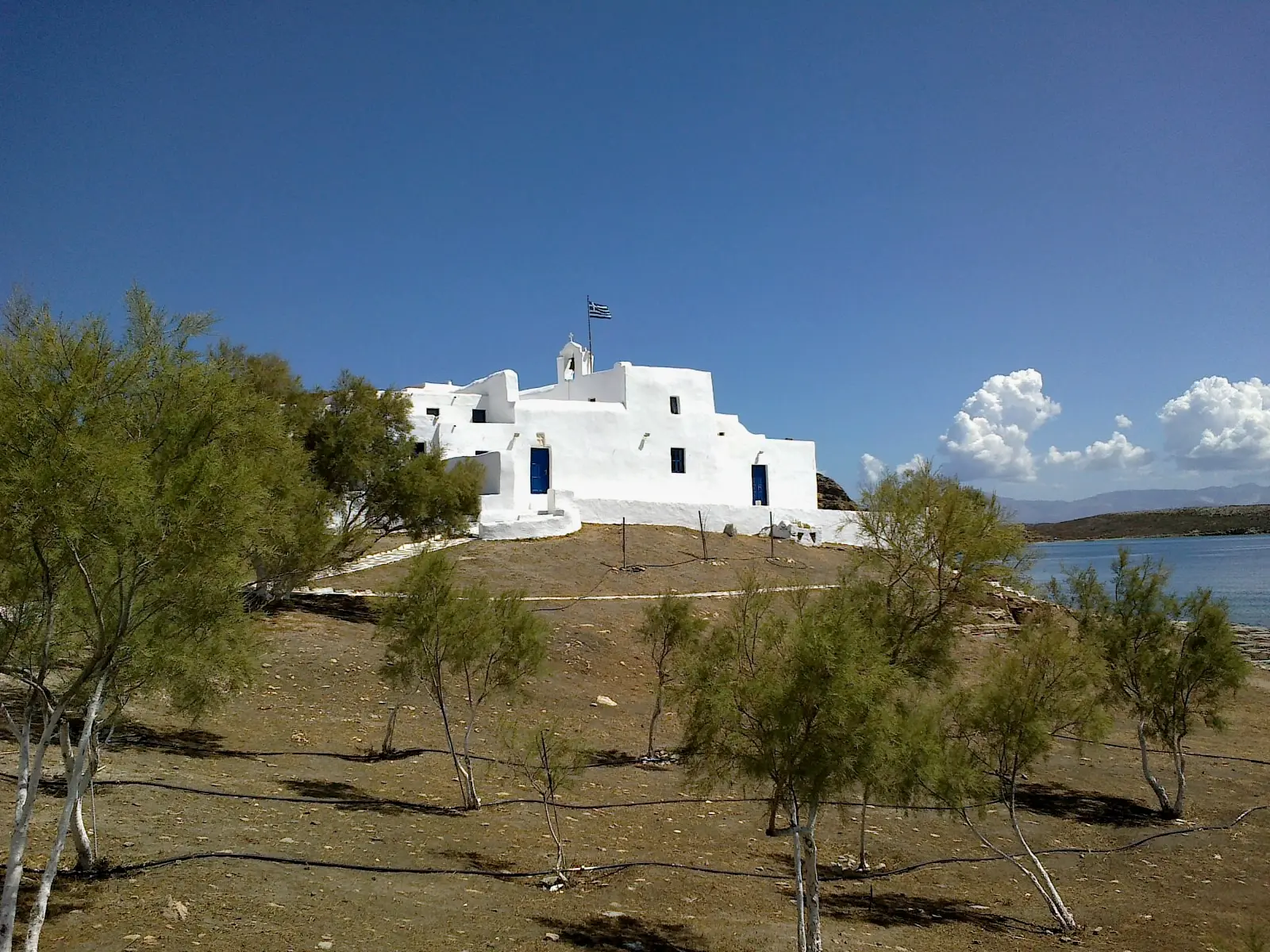
The peninsula rises behind the beach, with the Agios Ioannis Detis monastery and a view over Naoussa bay. It is a short walk on a rough road with almost no shade. Go early or late in summer. The view helps you judge sea conditions before you commit to a swim.
5. Eat at a beachside taverna
Several beach taverns serve grilled fish, salads and Greek standards. Prices are higher than in the villages, so expect roughly 12 to 25 EUR per person for a simple meal. Booking is useful in high season.
6. Combine with Naoussa harbour
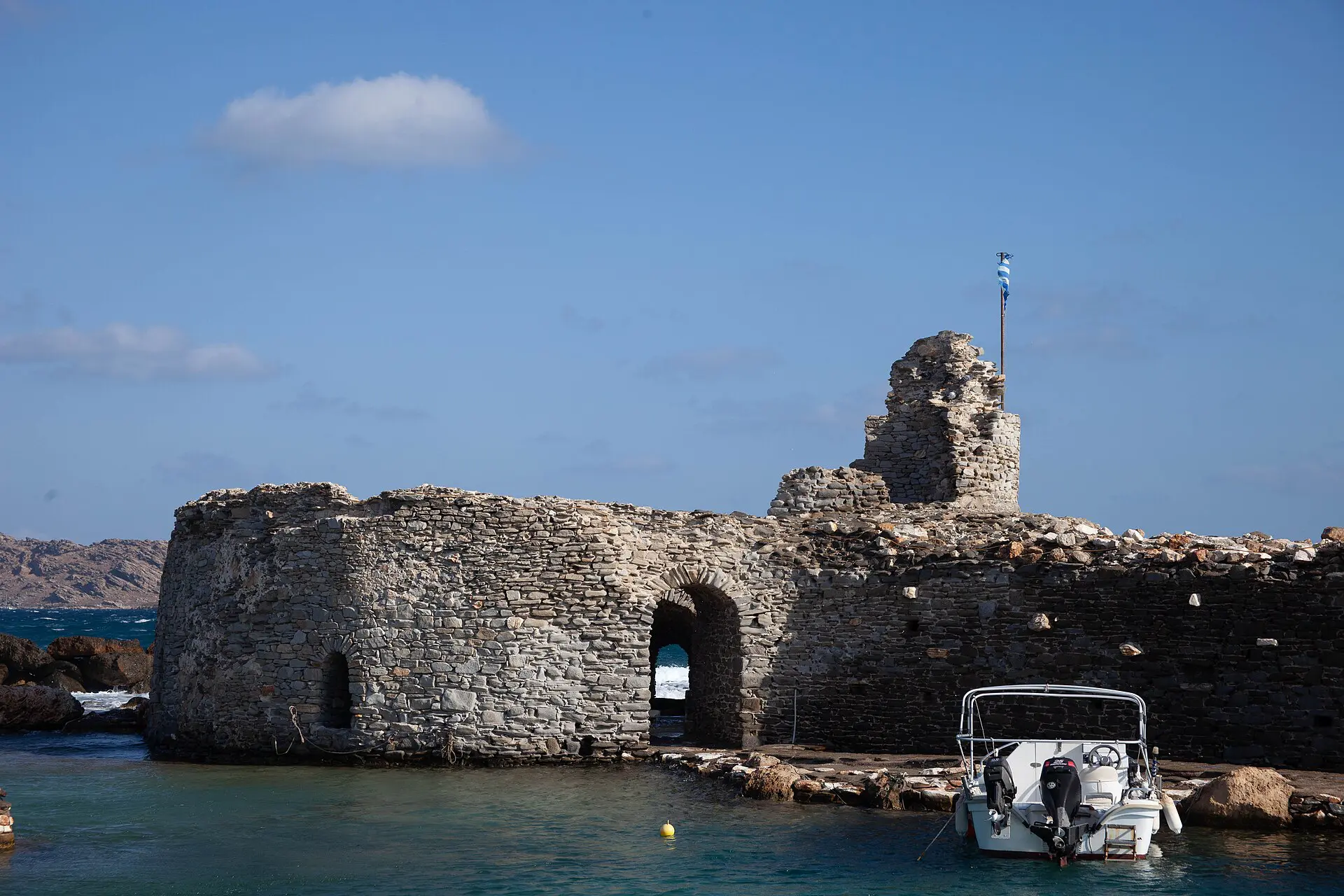
Naoussa is a fishing port with a small Venetian fort and plenty of restaurants. It is about 10 minutes from the beach by boat or taxi. It is the practical place for cash, supplies and a later bus back.
Safety, rules and practical tips
- Check the wind forecast the night before. If gusts run strong from the north, pick another beach.
- Do not swim alone beyond the cove mouths. There is no reliable lifeguard cover.
- Wear sun protection: shade is limited and the granite reflects heat.
- Take footwear for the rocks and carry your rubbish out.
- Parking fills early in peak summer. Arrive before 10 am or use the bus.
- Carry cash. Not every beach bar takes cards, and ATMs are in Naoussa.
Nearby alternatives
When the meltemi makes Kolymbithres Beach Paros rough, switch to a south-facing or sheltered beach. Paros has long coastlines, and the south and east usually stay calmer when the north is rough. Check local forecasts and pick by wind direction rather than by name. Always have a second beach picked before you set out.
Costs of a Kolymbithres Beach Paros day
The beach itself is free. Sunbed and umbrella sets typically cost around 20 to 40 EUR per day in high season, less in shoulder months. Local buses are cheap, a few euros, while taxis are more expensive. Budget roughly 40 to 90 EUR per person for a beach day with lunch, as of 2026. Check Wikipedia’s Paros article for island background.
FAQ
Is Kolymbithres Beach good for swimming?
Yes, on calm days. The water is clear, shallow and sandy in most coves. In strong wind the bay turns choppy and swimming becomes tiring and unsafe. Check conditions from the shore first and stay close to land.
How do I get from Parikia to Kolymbithres?
Take a bus to Naoussa, then a short taxi or boat to the beach. By car it is around 20 minutes. Check current bus timetables locally, as they vary by season and thin out in the evening.
Is Kolymbithres suitable for children?
Mostly yes. The shallow sandy coves are good for children on calm days. The rocks are slippery and the edges drop off, so supervise closely and bring water shoes. Avoid the beach when waves are breaking.
Do I need to book a sunbed?
In July and August, arrive early or reserve with the beach bar if you want a sunbed. Outside peak weeks you can usually walk up. Sunbed sets typically run around 20 to 40 EUR per day in high season, and the wind can make umbrellas awkward, so ask about both.