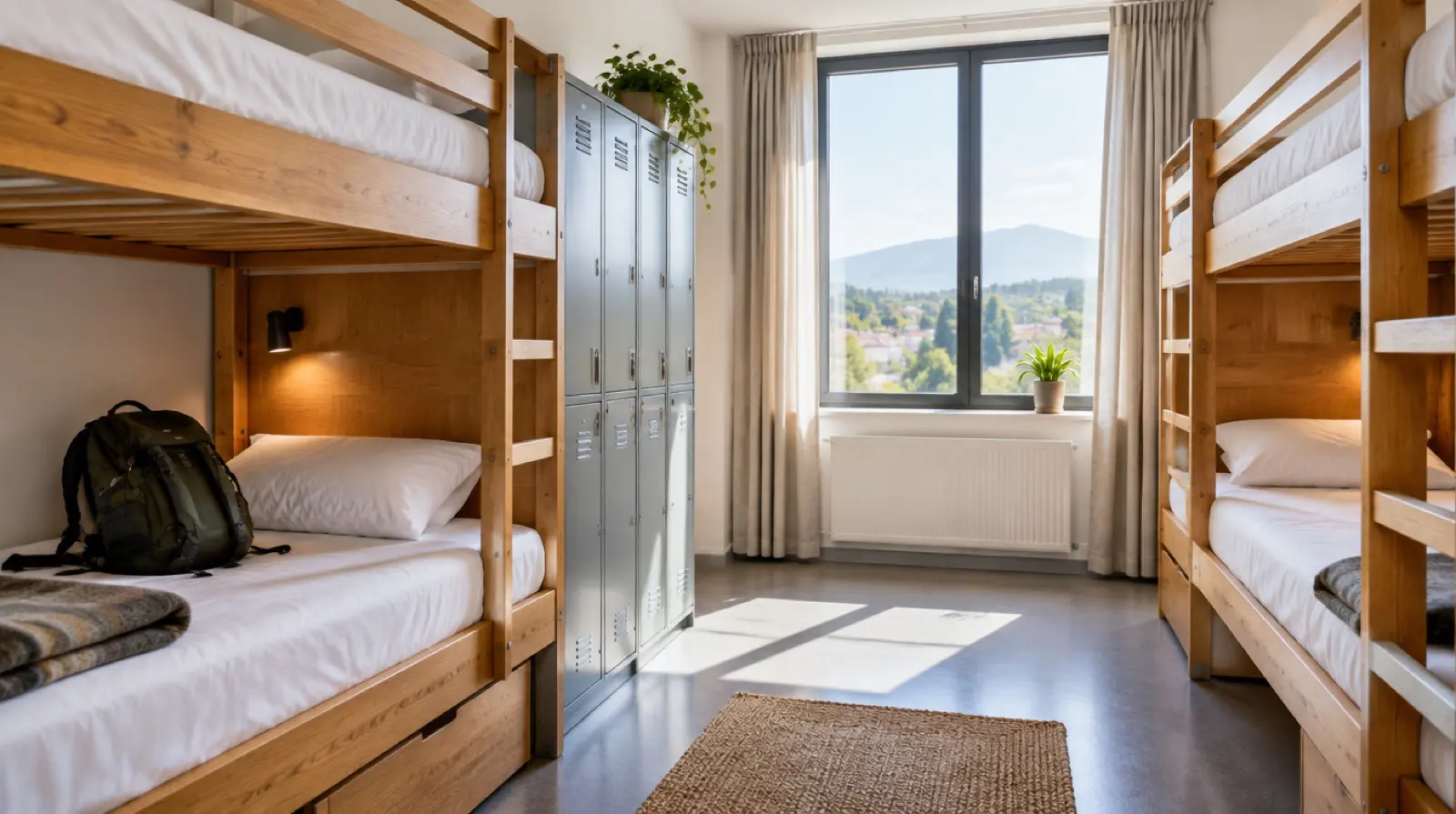
Hostel vs hotel for a solo traveler: a hostel wins on cost and company, a hotel wins on sleep, privacy and control. Most people do best mixing the two. Book a hostel for your first nights in a new city, when you want to meet people and learn the area, and a private room when you are tired, working or arriving late. A good hostel is not a lower-safety choice, and a hotel is not automatically safer. What matters is the specific building and the neighbourhood.
Hostel vs hotel: cost side by side
Prices vary by country and season, so treat these as rough bands for 2026 and check live rates on your dates.

| Type | Typical cost per night (one person) | Where it is cheapest | Where it is dearest |
|---|---|---|---|
| Dorm bed (6 to 12 beds) | Roughly 10 to 45 USD | Southeast Asia, parts of Latin America, Eastern Europe | Nordic countries, Japan’s big cities in peak season, Western Europe in summer |
| Small dorm (4 beds) or female-only dorm | Often 10 to 30 percent above a large dorm | Same regions | Same regions |
| Hostel private room | Roughly 30 to 100 USD | Southeast Asia, Eastern Europe | Capitals and island resorts |
| Budget hotel or guesthouse | Roughly 35 to 120 USD | Southeast Asia, Central America | Big European and North American cities |
| Mid-range hotel | Roughly 90 to 220 USD | Much of Asia and Latin America | Major cities in peak season |
The gap between a dorm bed and a budget room is smaller than it looks in expensive places and wider in cheap ones, because a dorm bed in a costly city may only be a few dollars below a basic guesthouse. Always compare per person, not per room.
Where a hostel vs hotel costs more or less
These seven situations shift the balance. Check the ones that match your trip.
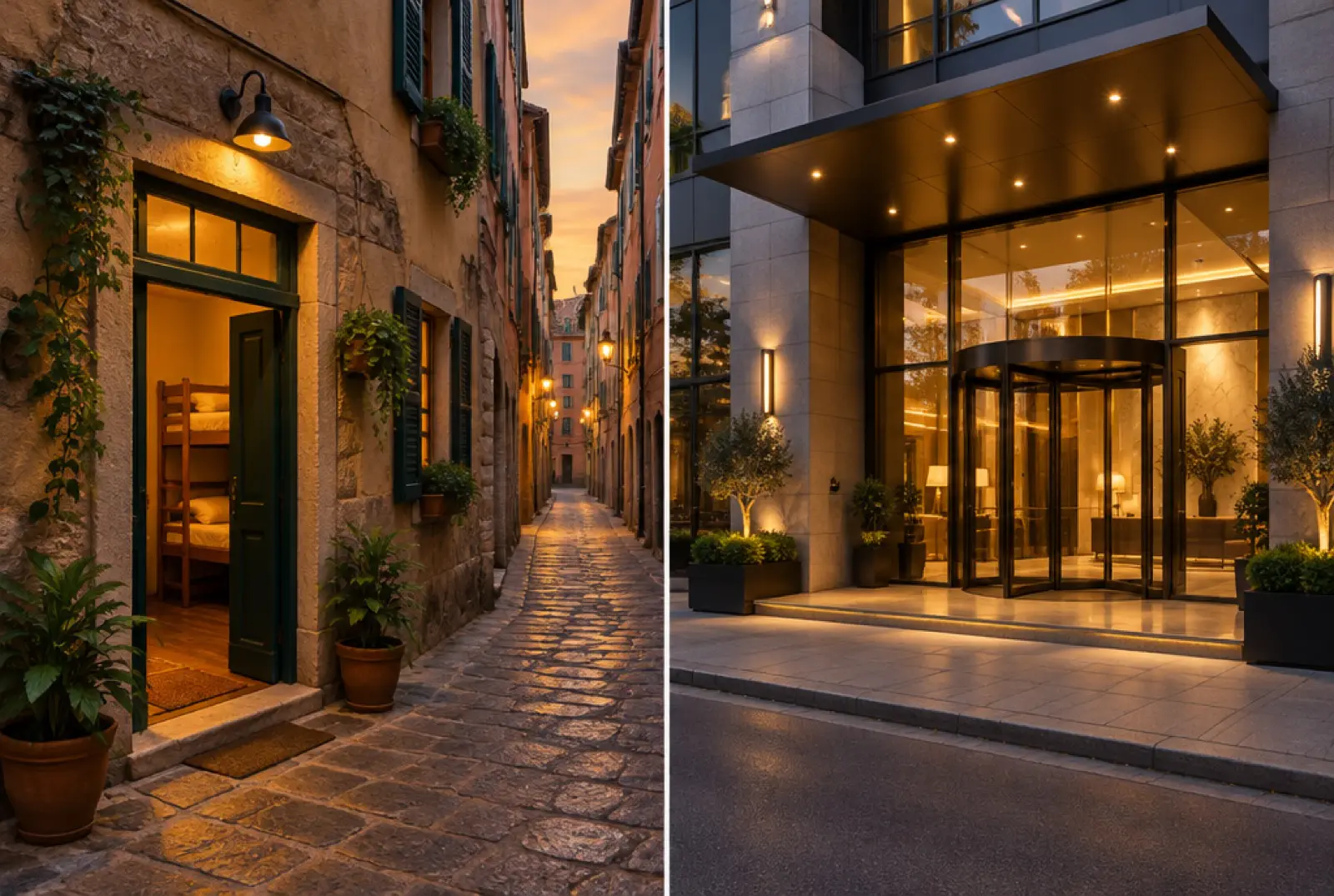
Capital cities and tourist hubs
Prices rise fast here, and a dorm bed can cost almost as much as a guesthouse room. If the city is expensive, compare a small private hostel room with a budget hotel before you assume the dorm is cheaper. Places such as London, Tokyo, Reykjavik and Sydney run high, while Hanoi, Oaxaca, Krakow and Chiang Mai are far more forgiving.
Southeast Asia and Latin America
This is where dorms save the most, and where a clean private room is also cheap. In towns across Vietnam, Thailand, Mexico and Colombia you can often afford a private room most nights and a dorm only when you want company.
Europe in summer
Dorm prices climb in July and August, and hotels climb even more. A hostel often wins on cost in this season, and a private room in a hostel is a good middle option.
Winter and shoulder season
Prices drop 20 to 40 percent in both categories in many destinations. Hotels often drop further, so the savings from a dorm narrow. If you value sleep, off-season is when a private room is best value.
Stays of a week or longer
Many hostels and guesthouses offer weekly rates after 5 to 7 nights, and shared kitchens cut food costs. For longer stays, the dorm saving adds up more than the nightly gap suggests.
Solo supplement on tours and islands
On islands and in tour-heavy towns, rooms are priced per room. A single traveler pays the full price, so a dorm bed can be much cheaper than a room.
Late arrivals and one-night stops
If you land after dark or leave at dawn, a hotel with a 24-hour desk can be worth the extra. Check that a hostel has staff at the desk when you arrive, since some close the doors late at night.
Transport and lodging deltas for a solo traveler
The nightly rate is only part of the cost. Location changes what you spend on getting around, and that matters more when you are alone.

- Central hostel vs outlying hotel. A hotel an hour from the centre can cost more in rides than you save, especially after dark when you will want a taxi rather than a late bus.
- Airport and station transfers. Some hostels and hotels offer pick-ups. This is worth asking for if you arrive at night, and it is often cheaper than a street taxi.
- Breakfast and kitchens. A hostel kitchen or free breakfast can save you a few dollars a day. Hotels with breakfast included often cost more but can be worth it for time.
- Luggage storage. Most hostels hold bags for free or for a small fee on checkout day, which helps with late buses.
Pick the area first, then the building. A well-reviewed place within walking distance of lit, busy streets is worth more than a cheaper bed that needs a late ride home.
Hostel vs hotel: which suits which solo traveler
Verdicts by priority. Find the line that matches what you care about most, then check the second one.
If you want company. Choose a hostel with a common room and organised events. Even if you book a private room, the lounge is a low-pressure way to meet people. Look for reviews that mention a friendly atmosphere rather than a party one, and a rating of about 8 out of 10 or higher on the big booking sites.
If you want sleep and privacy. Choose a hotel or a hostel private room. Dorms of 8 to 12 beds mean snoring, early alarms and bags being packed at 6 a.m. A private room is also easier if you are working or recovering from a long journey.
If you want flexibility. A hotel usually has longer check-in hours, a desk and a more predictable service. A hostel can also work, but check the reception hours and the curfew before you book.
If you want to save money. A dorm, ideally a small or female-only one, is the lowest-cost way to stay in a city. Cook in the kitchen and book ahead so you are not paying last-minute rates.
If it is your first solo trip. Many first-timers do best with a hostel for the first two nights, then a private room. The first nights are when meeting people matters most, and you can leave the party scene behind once you have your bearings.
If you are arriving late at night. Book a hotel or a hostel with 24-hour reception for the first night, especially if you land after 10 p.m., and confirm check-in in writing. Arrive with the address saved offline and a ride arranged.
If you plan to explore after dark. Choose a place on a busy, well-lit street, close to transport. A good location matters more than the type of lodging.
How to meet people, and what to do after dark
This is where the two types differ most. In a hostel, company comes built in: a shared kitchen, a rooftop, a family dinner night or a free walking tour posted on a board by reception. You can join for ten minutes and leave. In a hotel, you have to make the plan yourself, so book a small-group tour, a cooking class or a day trip in the first two days.
After dark, a hostel often gives you people to walk out with. Ask at the desk for a group heading to dinner, and agree on a time to head back together. If you stay in a hotel, pick a restaurant within a short walk, or have the front desk call a taxi for the return. Either way, save your address offline and check how late the door is staffed.
What the cheaper option costs you
A dorm saves money, but it has costs of its own. Sleep is the first: noise, light and other people’s schedules. Privacy is the second, and so is security, because your things sit in a shared room. Use the locker, carry valuables on you when you leave and bring your own padlock. Choose a hostel with key-card access, a front desk and recent reviews that mention safety.
Female-only dorms exist in many hostels, usually for a small premium, and are worth it if shared rooms make you uneasy. Reviews from other women are the best guide. Look for comments on lockers, lighting, bathrooms and whether staff respond when guests raise an issue.
Hotels have their own trade-offs. You pay more, you may meet nobody and a lone traveler can end up eating every meal alone. If you choose a hotel, build company into the trip: a group tour, a cooking class or a walking tour on day one.
Whichever you pick, a few lines help. If a stranger asks which room you are in, say “I am not sure of the number” and leave. If someone in a dorm will not stop talking when you want to sleep, say “I am going to sleep now, goodnight.” If a person does not respect your space, tell the front desk, and ask for a different bed or room. Reasonable places will act.
Hostel vs hotel: FAQ
Are hostels safe for solo female travelers?
Well-run hostels are a common and generally comfortable choice for women travelling alone. Pick one with recent positive reviews, lockers, a staffed desk and, if you prefer, a female-only dorm. Choose a location on a busy street and trust your read of the place when you arrive.
Is a hostel cheaper than a hotel?
Usually, per person, especially a dorm bed in a large room. The gap is smaller in expensive cities and in peak season, and a hostel private room can cost as much as a budget hotel. Always compare the full price, including fees and breakfast.
Is it better to stay in a hostel or hotel when travelling alone?
It depends on what you need. A hostel is better for meeting people and saving money, and a hotel is better for sleep and privacy. Many solo travelers combine both, starting in a hostel and moving to a private room when they want rest.
What should I look for in a hostel?
Check reviews from the last 6 to 12 months, security features such as lockers and key cards, 24-hour reception, a central location and a social space. Look at reviews that mention cleanliness, noise and how staff handled problems, and avoid places with a pattern of complaints.
Can I book a private room in a hostel?
Yes. Many hostels offer private rooms, with shared or private bathrooms, and you still get access to the common areas. It is a good middle option when you want privacy and a social space, though prices can be close to a budget hotel.