This Akureyri travel guide treats the town as a base, not a destination. Akureyri is the largest town in North Iceland, and most of what you came for is a 40 to 160 km drive from it. The roads are mostly paved and open year-round on the main routes, but wind, ice and snow decide the day. Plan every route with a second option. Below: how to arrive, what the roads cost in time, how to read the conditions, and what to do when the plan fails.
Getting to Akureyri
By air, Akureyri Airport (AEY) is about 3.5 km from the centre and takes domestic flights from Reykjavik several times a day, around 45 minutes. Some seasonal international flights also land here; check the current schedule. Domestic flights cancel in high wind and low cloud, so keep a day of slack on either side of an international connection.
By road, Reykjavik to Akureyri is roughly 390 km on the Ring Road, about 4.5 to 5.5 hours without stops in dry summer conditions. In winter, allow 6 to 8 hours or more, and be ready to stop for the night in Blönduós or Borgarnes if a pass closes. By bus, Strætó route 57 has run a daily Reykjavik to Akureyri service of about 6.5 hours; the winter timetable differs, so check it before you commit. A fallback is simple: if the road is shut, fly, or wait.
Akureyri transport and terrain at a glance
These are approximate distances from the town centre, not promises. Times assume summer and dry roads, and every winter figure is longer.
| Route | Distance | Drive time | Surface and terrain | Reliability |
|---|---|---|---|---|
| Goðafoss | about 50 km | 40 min | Ring Road, paved, a toll tunnel on the way | High; ice and wind in winter |
| Lake Mývatn | about 90 km | 1 h 15 | Ring Road, paved, exposed after Goðafoss | Medium in winter |
| Húsavík | about 90 km | 1 h 15 | Paved, tunnel, then a coastal road | High in summer |
| Dettifoss (west side) | about 160 km | 2 h to 2 h 30 | Paved to the falls via road 862 | Medium; snow closes it in winter |
| Siglufjörður | about 90 km | 1 h 15 to 1 h 30 | Paved, tunnels, a narrow fjord road | Medium; avalanche risk in winter |
| Highland F-roads | varies | half a day or more | Gravel, river crossings, 4×4 only | Summer only, and not every summer week |
No public transport covers these routes in a useful way. A rental car or a guided tour is the realistic choice. The town has a free city bus, but it does not leave town.
Akureyri travel guide: six day routes
1. Goðafoss and the Ring Road east
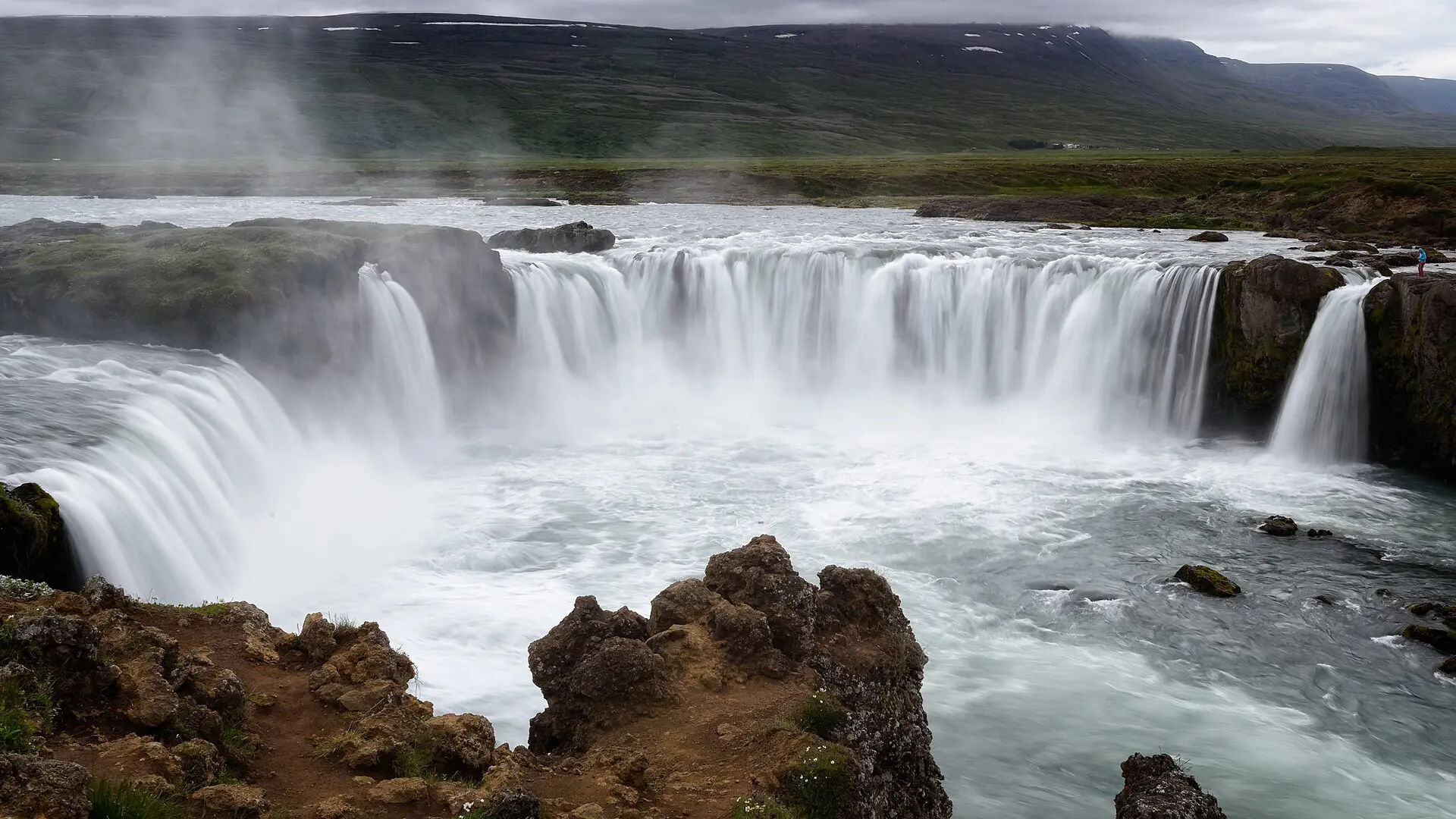
Goðafoss is the easy first outing: a 40-minute drive, a short walk from the car park, and the waterfall is wide rather than tall. Combine it with Mývatn and you have a full day of 180 km or more return. Fallback: if the road east is icy, stay in town and visit the botanical garden and the small museums.
2. Lake Mývatn circuit
The lake sits in a volcanic area with pseudo-craters, lava fields and geothermal ground. The ring road around the lake is about 36 km. Wind and midges are the problems: in summer the flies are thick on calm days, so bring a head net. In cold months, the roads here freeze first. Fallback: if wind is strong, choose the sheltered geothermal sites and skip the lava walks.
3. Húsavík and the coast
Húsavík is a harbour town about 90 km away, known for whale-watching boats. Boats cancel in rough seas, and sightings are never guaranteed, so book a flexible slot or leave a spare day. Fallback: the whale museum and the harbour walk work in any weather.
4. Dettifoss and the canyon
Dettifoss is one of Europe’s most powerful waterfalls by volume. The paved approach on the west side (road 862) is the sensible route. The east side road has been gravel and rough; ask the rental company before you use it. This is a 5 to 6 hour round trip with stops. Fallback: if road 862 is closed or snowy, Goðafoss and Mývatn are the realistic replacement.
5. Siglufjörður and the Trollaskagi peninsula
The drive crosses a narrow peninsula by tunnel and fjord road, with steep mountains above you. In winter, avalanche warnings can close sections, so look at the road status before you start. Fallback: turn at Dalvík, which is about 45 km from Akureyri, and take the ferry-town walk instead.
6. Hrísey and Grímsey
Hrísey is a small island reached by a short ferry from Árskógssandur, about 25 minutes by road from Akureyri. Grímsey, on the Arctic Circle, is a long ferry or a short flight away, and both are weather-dependent. Do not book a same-day return across the Arctic Circle. Fallback: if the ferry stops, you lose the day, not the trip, so keep the next day open.
Best time for an Akureyri travel guide plan: seasons and daylight
- June to August: the main season. Roads are open, daylight lasts nearly all night, and tours run. July and August are the only reliable months for the highland F-roads, and even then a late melt can delay opening.
- September and October: good light, fewer people, first snow possible on high ground. Aurora season starts.
- November to February: daylight is short, roughly 4 to 5 hours around midwinter. Drives must be done between about 10:00 and 15:00. Snow cover is very common, so winter tyres and a plan to turn back are not optional.
- March to May: longer days, but roads can still close without warning and the thaw makes some tracks soft.
Daylight is a hard limit. Do not plan a 160 km route that ends after dark in December unless you are used to the road.
Road conditions: where to check before you drive
Three official sources matter. The Icelandic Road and Coastal Administration (road.is) shows road status and closures, the Icelandic Met Office (vedur.is) gives wind and snow forecasts, and SafeTravel (safetravel.is) posts alerts and lets you register a travel plan. Check all three the evening before and again that morning. Wind above about 20 m/s makes some exposed roads unsafe for high-sided vehicles and can damage car doors.
The F-road reality check
F-roads are unpaved mountain tracks, marked with an F on the map. They are usually closed until late June or July. Regular rental cars are not allowed on them, and insurance often does not cover river crossings or underbody damage. Only drive them in a proper 4×4, and only if you can read the water level. If you cannot, book a guided highland tour. Fallback: the paved roads listed above give you most of North Iceland’s waterfalls and volcanic ground without the risk.
Where to sleep in Akureyri
Akureyri has hotels, guesthouses, hostels and farm stays in the surrounding area. Staying in town gives the best fuel, food and shop access and the most flexibility if the weather turns. A farm stay near Mývatn cuts the drive for the eastern routes, but you commit to a longer drive back if the weather shifts. In July and August, rooms fill early; book months ahead. In winter, prices drop and some places close, so confirm they are open before you arrive.
Skip this Akureyri travel guide plan if
- You need a fixed schedule. This region does not give you one.
- You are visiting in December or January with a short stay and no winter driving experience. Take a guided day tour, or go elsewhere.
- You have only one day and want the highlands. They are not reachable in a day by normal car in most months.
- You expect a bustling city. Akureyri has about 19,000 residents and a quiet evening.
If you only need background reading, the Akureyri guide on Wikivoyage and the Akureyri article on Wikipedia cover the town. For the town itself, see our Akureyri guide, and for the wider picture, the Iceland travel guide.
FAQ about Akureyri
How many days do you need in Akureyri?
Two to three days is a workable minimum: one for the town and short trips, one or two for longer drives. Add a spare day in winter, because weather can cancel a route and you will want a second chance at it.
Is Akureyri worth visiting in winter?
Yes, with limits. Snow, short days and closed roads reduce what you can reach, and the Mývatn and Dettifoss routes become unreliable. The town itself, the geothermal pools and aurora nights away from lights work well. Keep every outing short.
Can you drive from Reykjavik to Akureyri in a day?
Yes. It is about 390 km, 4.5 to 5.5 hours in summer. In winter, start early, check road.is first and accept that you may stop short. Do not drive it at night in snow unless you have experience.
Do you need a 4×4 around Akureyri?
Not for the paved routes in summer. In winter, a 4×4 with winter tyres is safer. For F-roads, a high-clearance 4×4 is required by law and by rental contracts, and you should not enter rivers you cannot judge.
What is the weather like in Akureyri?
Colder than Reykjavik, with less rain but earlier snow. July is the warmest month, usually cool, with the odd day above 20 degrees C. Wind funnels along the fjord and across mountain passes, so check the forecast for each route and not just for the town.