Traditional Hawaiian food starts with taro (kalo), pork cooked in an underground oven, fish eaten raw or salted, and coconut. Order kalua pig, laulau and poke first, add poi if you are curious and finish with haupia, a coconut dessert. Plate lunch is the everyday local meal, though it grew from the plantation era and is not strictly ancient Hawaiian. Below: how eating works in the islands, market timing, seven dishes with price bands, etiquette and what to skip.
How eating works in Hawaii
Hawaii eats on island time, and the biggest meal is often lunch. Mornings are light: coffee, fruit, pastries or rice and eggs. Lunch is the plate lunch, from about 11:00 to 14:00. Dinner runs early compared with the mainland US, with many local kitchens closing by 20:00 or 21:00 outside resort areas.
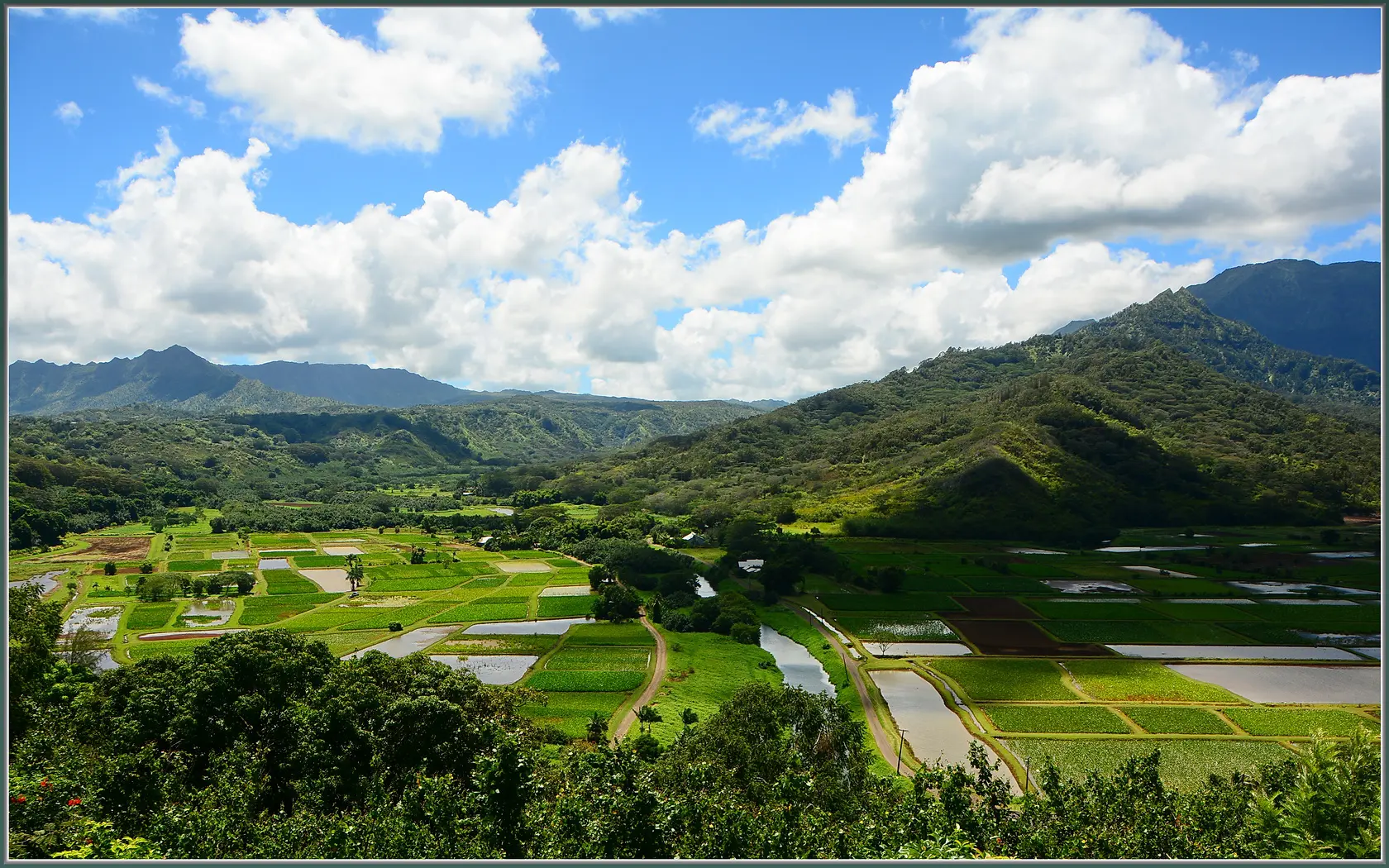
The food system rests on three things. First, kalo, the staple Polynesian voyagers brought, grown in wet terraced fields (lo’i). Second, the sea: reef fish, tuna, octopus, seaweed (limu) and salt. Third, the plantation era, when workers from Japan, China, the Philippines, Portugal and Korea packed lunches that mixed with Hawaiian cooking. That is why a Hawaiian plate can hold rice, macaroni salad, pork and pickled vegetables at once.
Wikivoyage describes Hawaii as an archipelago with eight main islands, six open to tourism, and food changes with each. Fresh fish is local; much else, including beef and many vegetables, is imported, which is one reason restaurant prices run high compared with the mainland.
Market timing: when and where to eat in Hawaii
Hours vary by island and season, so check ahead. The table gives a typical rhythm.
| Time | Where | What to order |
|---|---|---|
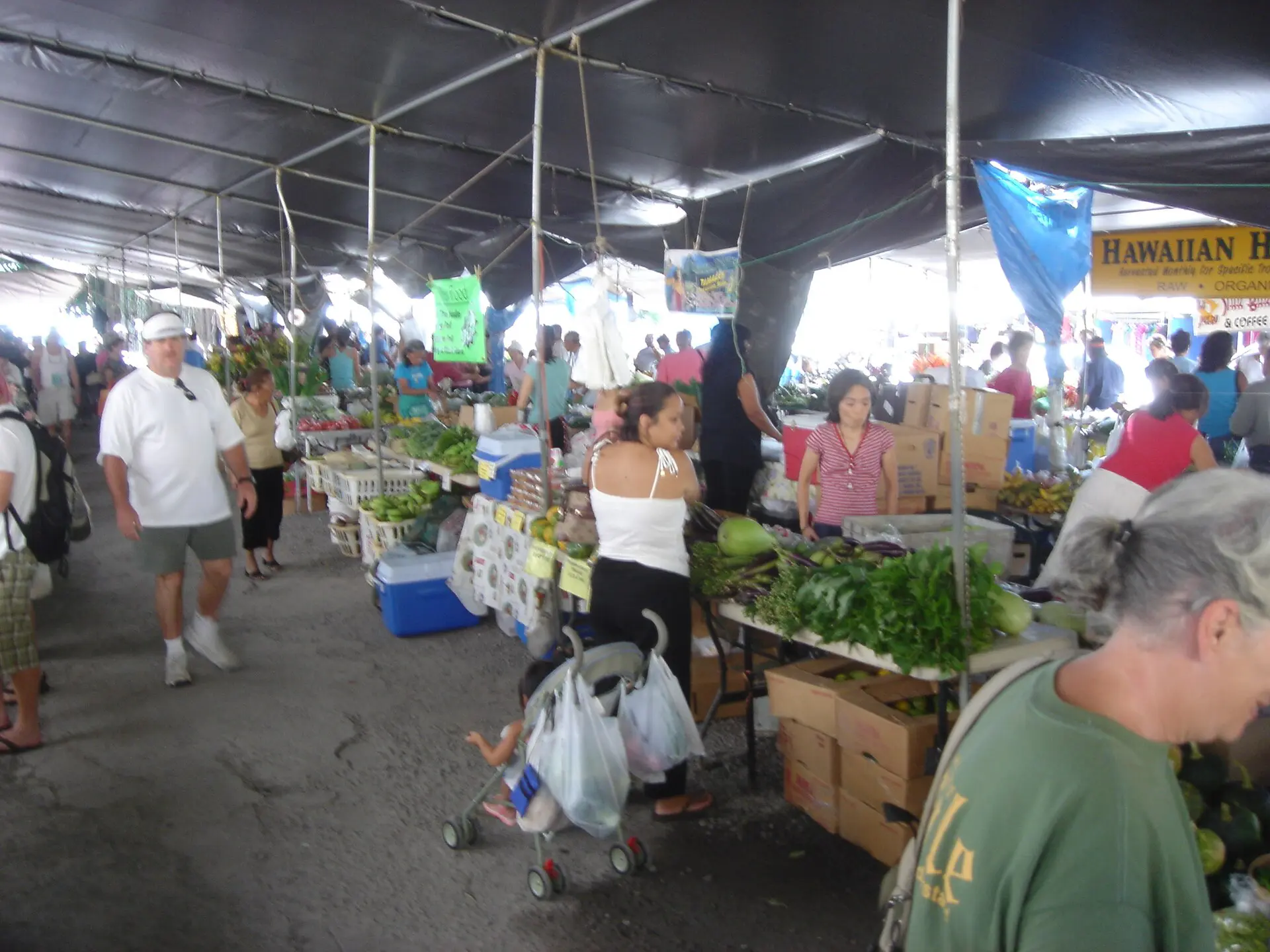
| 07:00-11:00 | Saturday farmers’ markets on the main islands | Tropical fruit, fresh-baked breads, coffee, poi and taro products |
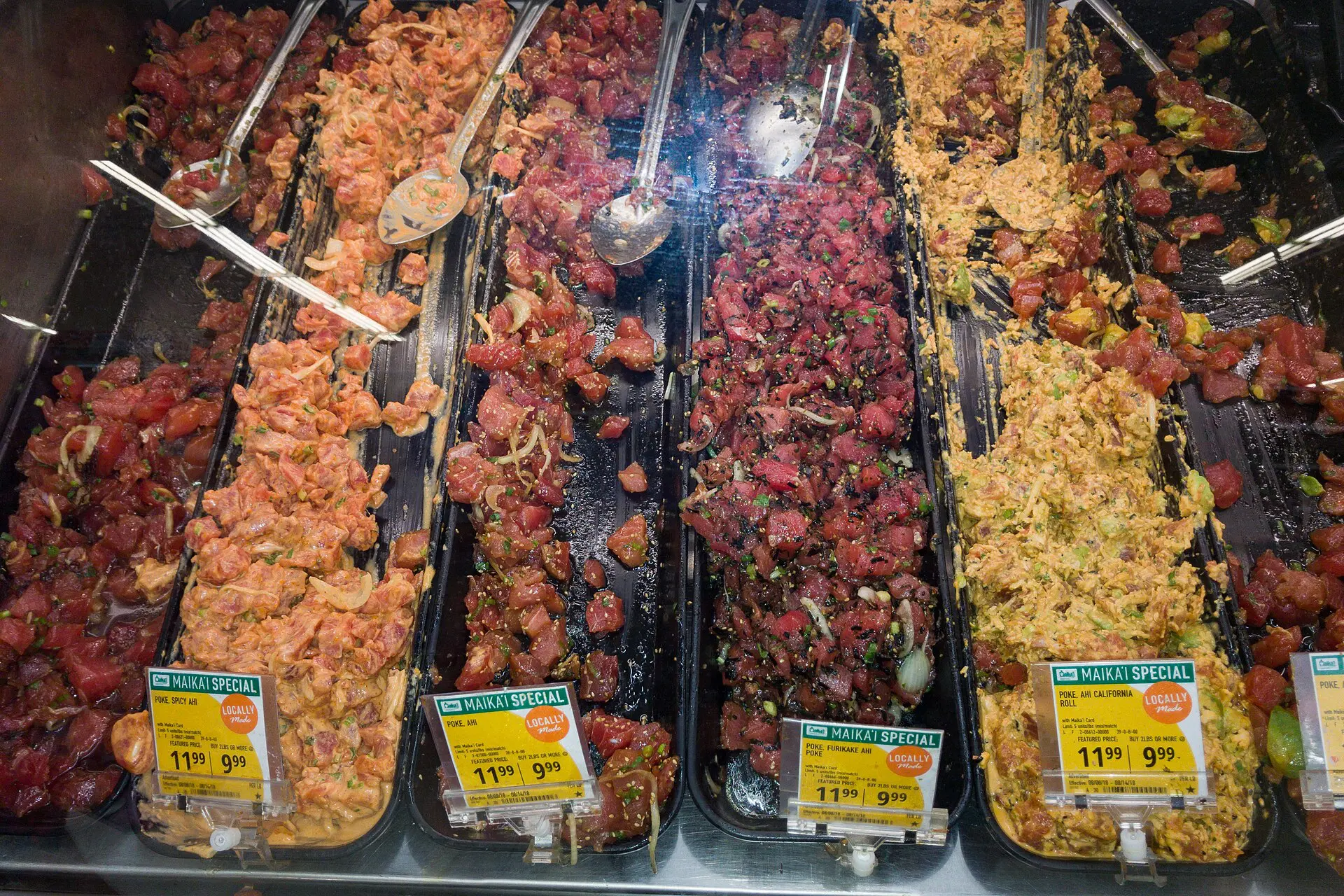
| 10:00-14:00 | Supermarket poke counters and fish markets | Poke by the pound, fresh that day |
| 11:00-14:00 | Plate lunch counters and lunch wagons | Kalua pig, laulau, rice, macaroni salad |
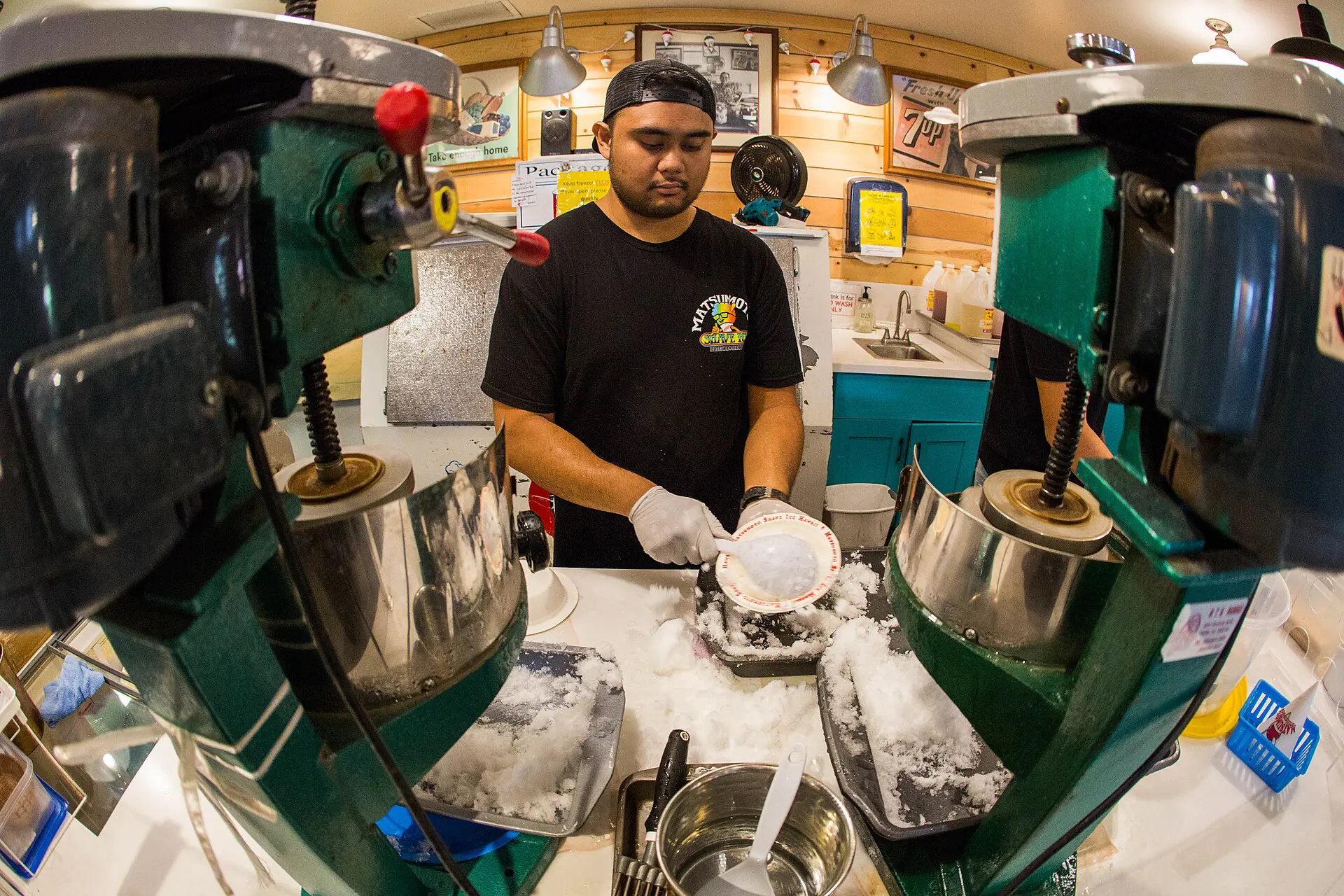
| 12:00-16:00 | Roadside stands and food trucks | Shave ice, garlic shrimp, fruit |
| Evening | Luau at resorts or community events | Kalua pig, poi, lomi-lomi salmon, haupia |
Fish is best bought in the morning or at lunch, when the counter has turned over. Many small vendors close when they run out.
What to eat: 7 traditional Hawaiian dishes
Prices are hedged bands in US dollars, as of 2026, and are higher in resort areas. Check menus before you order.
1. Kalua pig
Kalua means to cook in an underground oven (imu). A whole pig is salted, wrapped in leaves and buried with hot stones for hours, then shredded. The result is smoky, salty and tender. Today many kitchens use an oven and a smoky seasoning, but luau still show the traditional method. Order it as a plate with rice and greens. Price band: roughly 12-22 USD a plate.
2. Laulau
Laulau is pork, sometimes with butterfish, wrapped in taro leaves (luau leaves) and ti leaf, then steamed for hours until the leaves turn silky and dark green. You eat the filling and the leaves, but not the ti-leaf wrapper. The flavour is deep, salty and a little earthy. It is a standard plate lunch order. Price band: roughly 12-20 USD.
3. Poke
The traditional version is cubes of raw fish, often ahi (yellowfin tuna) or octopus, seasoned with sea salt, limu and inamona (roasted, crushed kukui nut). Modern poke adds soy sauce, sesame oil and onion. Buy it from a counter with a high turnover, and ask what came in today. Eat it the same day, with rice. Price band: roughly 15-30 USD a pound, or 12-20 USD a bowl.
4. Poi
Poi is cooked taro corm pounded to a smooth paste, then thinned with water. It is purple-grey, starchy and slightly sour when fermented. Locals describe poi by consistency: thin, medium or thick. It is eaten with salty foods, as a counterweight to kalua pig and lomi-lomi salmon, not by itself. Many first-timers find it bland. Try a small portion. Price band: roughly 3-8 USD.
5. Lomi-lomi salmon
This is salted salmon, hand-massaged (lomi means to rub) with diced tomato and sweet onion until it forms a cool, juicy salad. Salmon arrived with western traders, so the dish is a post-contact one, but it is now fixed in the luau table. It cuts through rich pork. It is often a side and rarely a main. Price band: usually included in a luau or plate, or about 5-10 USD as a side.
6. Haupia
Haupia is a set coconut-milk pudding, cut into squares, firm like a soft jelly and lightly sweet. Older recipes used arrowroot (pia) as the thickener, while modern ones use cornstarch. It appears as a dessert at luau, in plate lunch counters and on top of chocolate pie. Order a square after a salty meal. Price band: roughly 3-7 USD.
7. Plate lunch
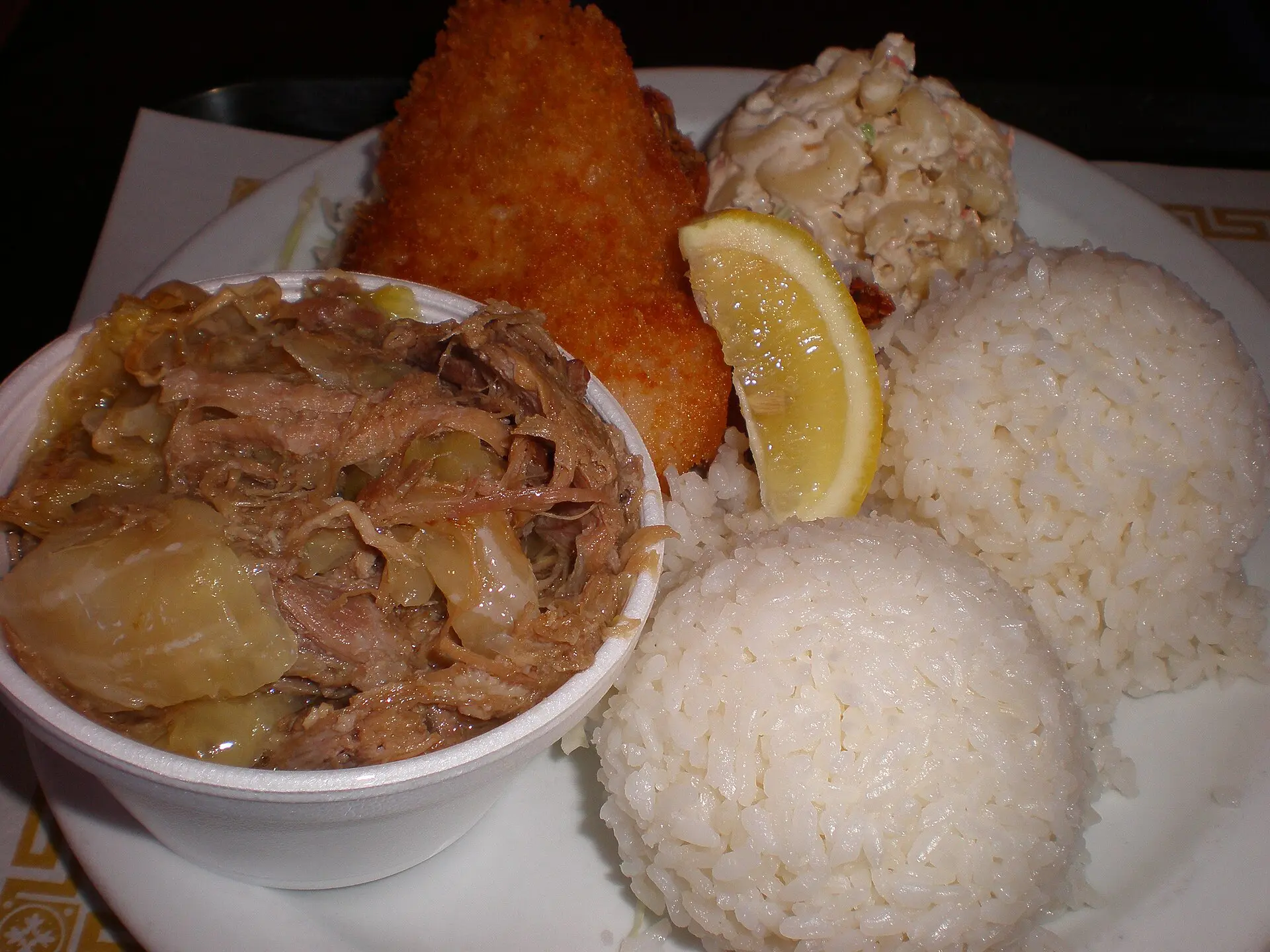
The plate lunch is two scoops of rice, a scoop of macaroni salad and a main such as kalua pig, teriyaki chicken, fried fish or katsu, served in a foam box or on paper. It is a working-class lunch from the plantation and dock era and is the single best-value meal in the islands. It reflects Hawaii’s mixed immigrant history. Price band: roughly 10-18 USD.
Price bands per meal in Hawaii
Hawaii is among the more expensive US states for eating. Hedged ranges per person, as of 2026:
| Meal | Type | Typical band |
|---|---|---|
| Breakfast | Bakery or local diner | 8-18 USD |
| Plate lunch | Counter or lunch wagon | 10-18 USD |
| Poke bowl | Supermarket or fish counter | 12-20 USD |
| Casual dinner | Local restaurant | 20-45 USD |
| Commercial luau | Dinner, show, buffet | 100+ USD |
State and local taxes are added at the register, and tipping applies on top. Supermarket deli counters and lunch wagons are the cheapest way to eat well.
Etiquette when eating Hawaiian food
- Tipping: follow US norms, around 18-20 percent at sit-down restaurants. At food trucks and counters, a dollar or two is a courtesy, but not a rule.
- Aloha and mahalo: a greeting and “mahalo” (thank you) cost nothing and are noticed.
- Shoes: take them off at the door of a home, and often at small shops where you see a pile of slippers.
- Poi: eat it with a fork or fingers, in small amounts, and do not add sugar to impress. It is a staple with deep cultural meaning for many Hawaiians.
- Sharing: food is passed around. Take what you will eat and finish it.
- Luau: arrive on time, and respect the ceremony, such as the imu unearthing and any blessing.
Where to eat in Hawaii by type
- Plate lunch counters and lunch wagons: the core of local eating. Look for a queue of workers at 12:00.
- Supermarket poke counters: a trusted local habit, with many varieties by the pound.
- Roadside stands: fruit, shave ice, banana bread and coconut sold from tables or trucks, especially on rural coasts.
- Farmers’ markets: best for fruit, local produce, taro and ready-to-eat breakfast.
- Food trucks on the north shores: garlic shrimp and fish plates are a popular type on Oahu’s North Shore.
- Luau: staged evening events with kalua pig, poi and lomi-lomi salmon.
For wider planning, see the United States travel guide, and for background see Wikivoyage’s Hawaii guide.
What to skip when looking for Hawaiian food
- Resort restaurants selling poke at several times the counter price. Buy it from a fish counter.
- Luau that put a dance show ahead of the food. Ask what is on the buffet.
- Shave ice made with artificial syrup only, if you want fruit flavour. Ask for natural.
- Poi bought in a plastic tub far from the island of origin. Fresh is better.
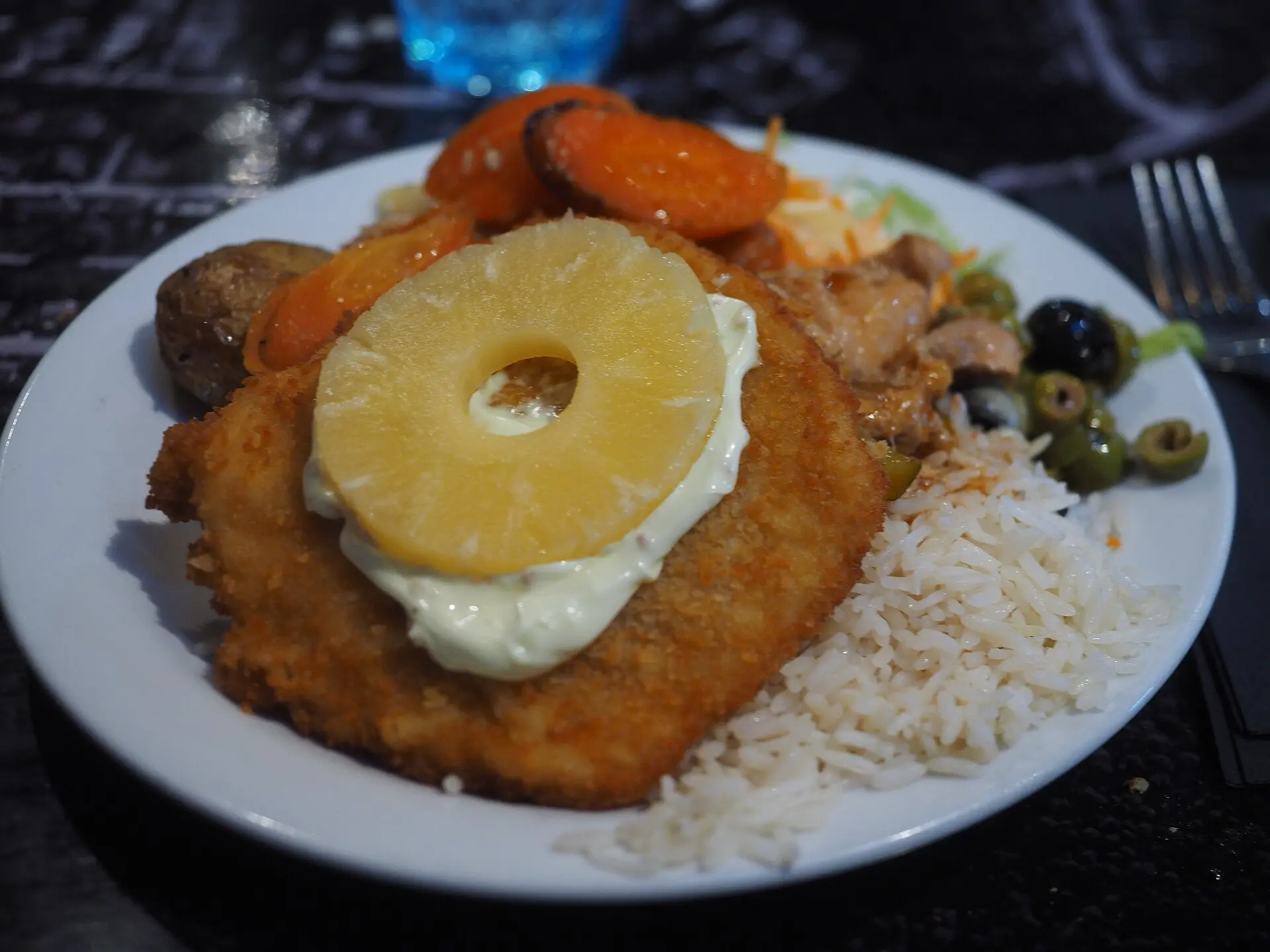
- Pineapple pizza under the label “Hawaiian.” It was invented in Canada.
FAQ about traditional Hawaiian food
What is the most traditional Hawaiian dish?
Poi, made from taro, is the oldest staple. Kalua pig, laulau and poke are also central. These dishes come from Polynesian settlers and later influences. At a luau, kalua pig and poi are the core of the table.
What does poi taste like?
Mild, starchy and a little tart. It resembles a thick, smooth paste, and the flavour depends on freshness: fresh poi is sweeter, and one-or-two-day-old poi is sour. It is meant to be eaten with salty dishes, which balances it.
Is a plate lunch traditional Hawaiian food?
It is local, not strictly traditional Hawaiian. The plate lunch came from plantation and dock workers who brought rice, noodles and meat from different cultures. Many plates feature Hawaiian dishes such as kalua pig, so it is a good entry point.
How much does a meal cost in Hawaii?
A plate lunch or poke bowl is roughly 10-20 USD, as of 2026. A casual dinner is roughly 20-45 USD, and a commercial luau is often 100 USD or more. Prices run higher than the mainland US and rise in resort areas.
Is poke safe to eat?
Raw fish carries some risk. Buy it from a busy counter, confirm it is fresh, keep it cold and eat it the same day. Pregnant women, young children and people with weak immune systems should ask a doctor first.